
Reviewed · ITALY
Skip the Line: Pavarotti Museum – Official Ticket + Audioguide
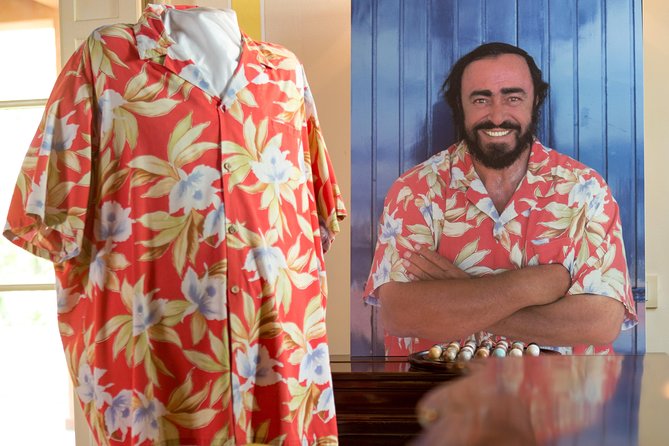
Pavarotti’s private home is the heart of this experience. You walk through the kitchen, living spaces, bedroom, and rooms filled with costumes, awards, photographs, paintings, letters, and personal objects. The house still feels personal, not like a distant hall of fame.
I like the freedom to move at your own pace, and I like the English audioguide, which gives shape to Pavarotti’s remarkable career and private life. The main drawback is the location: you’ll likely need a car or taxi, since the museum is outside central Modena and public transport is not especially convenient.
Key points to know before you go
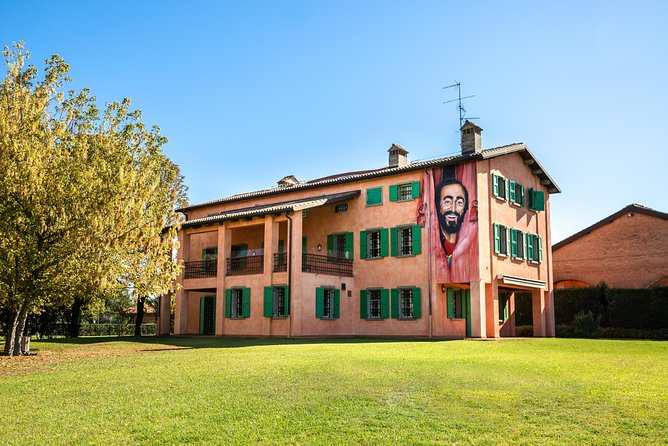
- Pavarotti’s actual home: See rooms such as the kitchen, living room, bedroom, and piano area, along with museum displays added by the Pavarotti Foundation.
- A self-guided visit: The English audioguide lets you choose your pace and spend extra time with the objects that interest you most.
- More than opera costumes: Expect awards, paintings, family photographs, letters, personal notes, memorabilia, and material about Pavarotti’s charitable work.
- Plan 60 to 90 minutes: An hour is enough for a brisk visit, but you’ll want longer if you listen carefully and pause in the music rooms.
- Outside Modena: The house is easiest to reach by car or taxi. The museum staff can help call a taxi for your return.
- Good value for fans and curious newcomers: At $14.51, the ticket costs less than many major attractions and gives you access to a very personal setting.
Entering Pavarotti’s private home
Casa Museo Luciano Pavarotti is not simply a display of stage clothing behind glass. It is the home Pavarotti built in his beloved Modena, later turned into a museum by the Pavarotti Foundation. That difference matters.
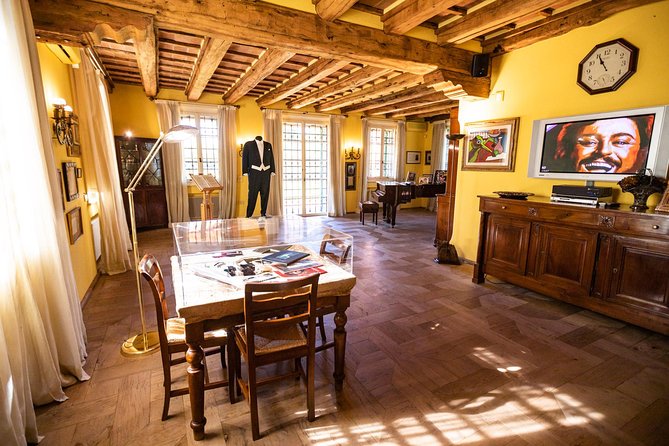
You begin with the setting itself. Instead of entering a grand opera house or a formal gallery, you enter a place shaped by everyday life. The kitchen, living room, bedroom, and other domestic spaces help you picture Pavarotti away from the stage. His paintings and furnishings remain part of the story, alongside the more traditional museum displays.
The emotional effect comes from this mixture. One room may show an important costume or award, while the next contains a household object or a family photograph. You get the public figure and the private man in the same visit.
The house is arranged across two floors, and an elevator is available. You can take the visit slowly, but the museum does not require a full day. Most people should allow one hour at minimum, with 90 minutes being more comfortable if you listen to the audioguide in full.
More Museum Audio Tours in Italy
- Florence: Uffizi Priority Ticket & Masterpieces Audio App
★ 4.2 · 6,402 reviews - Venice: St. Mark Basilica Ticket, Audioguide+History Gallery
★ 3.9 · 4,780 reviews - Rome: Borghese Gallery Skip-the-Line Ticket & Audioguide
★ 4.3 · 4,318 reviews
What you see on the ground floor
The domestic rooms are among the most appealing parts of the visit. Pavarotti’s kitchen, living room, and bedroom give the museum its sense of intimacy. They show the spaces where he ate, relaxed, worked, and spent time with family and friends.
The kitchen is especially useful for understanding the difference between Pavarotti the celebrity and Pavarotti the man. His public career was enormous, but the kitchen brings the story back to ordinary routines and familiar surroundings.
You’ll also see paintings created by Pavarotti. They are not just decorative items placed around the house. They add another side to his personality, one that may be less familiar if you know him mainly from opera recordings or major performances.
The piano is another important object. Pavarotti’s voice is heard in the house, and the second level is known for creating a particularly strong musical atmosphere. You may want to pause instead of rushing from display to display. The audio and the rooms work together better when you give them a little time.
Costumes, awards, and a global career
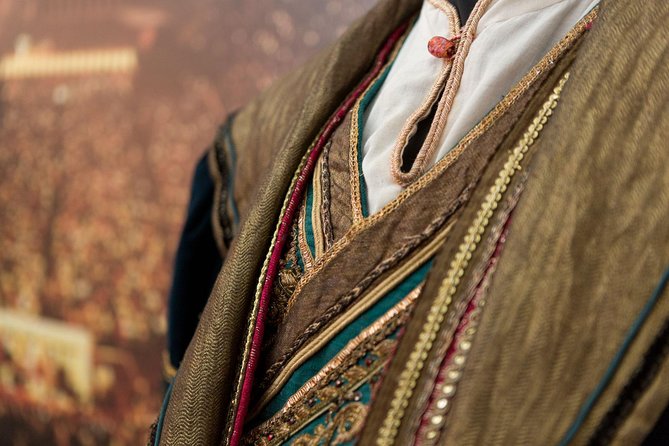
The museum also shifts from home to career archive. Here you see stage costumes, hats, scarves, awards, photographs, and other items gathered during Pavarotti’s artistic life.
His awards include Grammys and Emmys, reminders that his reach went well beyond the traditional opera audience. The displays also help explain how he became an international celebrity, not only a celebrated tenor.
Personal letters and photographs add human detail. Some material shows friendships with well-known figures, including letters connected with Princess Diana. Other photographs show Pavarotti with people from many parts of his life. Together, these objects make the scale of his social and professional world easier to grasp.
The collection is strongest when it avoids treating him as only a voice. You see the performer, painter, host, family man, public personality, and philanthropist. If you come expecting a simple costume exhibition, the house gives you much more context.
The English audioguide and your own pace
The audioguide is included and offered in English. It is an important part of the experience, especially if you do not already know much about Pavarotti’s life.
Because the visit is self-guided, you are not tied to a group schedule or a guide’s speaking pace. You can spend more time in the bedroom, linger near the piano, or move quickly through objects that matter less to you. That flexibility works well in a private home, where different rooms invite different levels of attention.
The audioguide is described as easy to use and informative. It helps connect the objects to Pavarotti’s career and personal life rather than leaving you to guess why a particular costume, photograph, or award matters.
I would listen carefully in the rooms that interest you most, then use the freedom of the format to pause when the music fills the house. This is not a place to race through with a checklist. The best parts are often small: a personal note, a painting, a familiar room, or the way a costume looks very different away from the stage.
The experience is offered in English, so check that this suits your group before booking. The provided information does not list additional audioguide languages.
Another self-paced route in Italy:
- Rome: Pantheon Fast-Track Ticket and Official Audioguide
★ 4.5 · 27,353 reviews - Rome: Colosseum & Forum with Audio Guide App -Optional Arena
★ 4.2 · 24,770 reviews - Florence: Timed Entry to Michelangelo’s David + Audio App
★ 4.6 · 19,496 reviews - Rome: City Sightseeing Hop-on Hop-off Bus with Audioguide
★ 4.0 · 16,045 reviews
Pavarotti’s charitable work

One of the more valuable parts of the museum is its attention to Pavarotti’s humanitarian work. His support for people in need, especially children in war-torn countries, is included in the story of his life.
This section gives the visit added weight. Pavarotti’s fame could easily dominate the museum, with one award after another and a parade of famous photographs. The charitable displays show how he used that fame to support causes beyond music.
You may arrive mainly interested in opera and leave with a broader picture of the person. That is one reason the museum can work even if you are not a committed opera fan. His career is the framework, but his generosity and relationships are part of the subject too.
How long you should allow
The advertised visit takes roughly one hour to one hour and 30 minutes. I would treat one hour as the shortest sensible visit, not the ideal target.
An hour can work if you move steadily and listen only to the main audioguide sections. Allow closer to 90 minutes if you want to examine the costumes, photographs, paintings, awards, and household rooms without hurrying.
The museum is open daily from 10 a.m. to 6 p.m. for the stated operating period, which runs through February 16, 2027. A morning visit may be appealing if you prefer a quiet start. One booking at 10 a.m. had the museum nearly empty, though no time can guarantee that level of calm.
The self-guided format also makes timing easier. You are not waiting for a scheduled tour to finish, and you can stay with a particularly moving display for as long as you wish.
Getting there from Modena
The location is the main practical issue. Casa Museo Luciano Pavarotti is outside the center of Modena, and public transportation is described as difficult. You should plan on arriving by car or taxi rather than assuming you can walk from the historic center.
One useful detail is that museum staff can help call a taxi for your return to Modena. That can remove some of the stress of getting back, especially if you did not arrange a round trip in advance.
If you are driving, the out-of-center setting may fit naturally into a wider day around Modena. If you do not have a car, add taxi time and cost to the $14.51 admission when judging the total value. The ticket itself is inexpensive, but transportation can become the larger part of the outing.
The museum allows service animals, and most people can participate. An elevator serves the two floors, which is helpful for anyone who would rather avoid stairs.
Is the $14.51 ticket good value?
At $14.51 per person, the admission is fairly priced for access to a private home, a substantial personal collection, and an English audioguide. You are not paying only to see a few costumes. The ticket covers the house, the domestic rooms, career displays, awards, paintings, photographs, and memorabilia.
The value is strongest if you already admire Pavarotti or enjoy museums focused on artists’ everyday lives. You get something that a standard biography or concert recording cannot provide: a sense of his surroundings and personal habits.
It is also a reasonable choice for a mixed group. Opera fans will have plenty to study, while people with less interest in opera can focus on the home, paintings, family material, international friendships, and charitable work.
The value is weaker if you are making a long detour solely for a quick look. The museum is out of town, so the taxi or car journey must be part of your calculation. Several hours of transport for a short visit would make the bargain ticket less attractive.
Still, the visit takes only one to 90 minutes, and the experience can fit neatly into a Modena itinerary if you plan it rather than treat it as a last-minute stop.
Who will enjoy Casa Museo Luciano Pavarotti?
You should consider booking this experience if you fit one of these profiles:
- You are a Pavarotti fan and want to see where he lived.
- You enjoy music museums with original costumes and awards.
- You prefer self-guided visits over fixed group tours.
- You want a personal story that includes family life and charity work.
- You are visiting with someone who is curious about Italian culture but not a serious opera follower.
- You are willing to arrange a taxi or drive outside central Modena.
I would be more cautious if you have only a short time in Modena and no transport arranged. The museum is worthwhile, but its location makes it less spontaneous than a city-center attraction.
Photography is allowed, according to the information provided, so you can record details of the house and collection. Even so, the most memorable parts may be the rooms where you stop listening to the commentary and simply take in the setting.
Should you book this Pavarotti museum visit?
Yes, if you want more than a conventional celebrity exhibition. The combination of Pavarotti’s real home, personal objects, famous costumes, awards, paintings, music, and charitable work gives the visit an unusual sense of closeness.
Book it with enough time for the taxi journey and at least an hour inside. The official ticket and English audioguide keep the visit simple, while the self-guided format lets you choose what deserves your attention.
I would skip it only if transport from Modena is too awkward or if you have no interest in Pavarotti, music, or personal-history museums. For everyone else, this is a modestly priced and unusually intimate stop.
FAQ
Where is Casa Museo Luciano Pavarotti?
The museum is in Modena, Italy, at the private home Pavarotti built in his hometown. It is outside central Modena.
How much does admission cost?
The listed price is $14.51 per person.
Is an audioguide included?
Yes. The experience includes an audioguide offered in English.
Is the visit guided by a live tour guide?
No live guide is specified. You explore the house independently with the audioguide.
How long does the visit take?
The estimated duration is about one hour to one hour and 30 minutes.
What are the museum’s opening hours?
The museum is open Monday through Sunday from 10 a.m. to 6 p.m. for the stated operating period, which runs through February 16, 2027.
What can I see inside Pavarotti’s home?
You can see domestic rooms, including the kitchen, living room, and bedroom, as well as costumes, awards, paintings, photographs, letters, personal notes, and other memorabilia.
Can I see Pavarotti’s awards and costumes?
Yes. The collection includes stage costumes and awards gathered during his artistic career, including Grammys and Emmys.
Is the museum suitable for people who are not opera fans?
Yes. The displays also cover Pavarotti’s home life, paintings, family, friendships, personal objects, and charitable work.
Can I cancel for a full refund?
Yes, if you cancel at least 24 hours before the experience start time. Cancellations made within 24 hours are not refunded, and changes within that period are not accepted.
More Skip-the-Line Audio Tours in Italy
- Pantheon Reserved Entry Ticket with Audio Guide
★ 4.0 · 4,486 reviews - Skip the Line: Vatican & Sistine Chapel Ticket with Audio Guide
★ 4.0 · 3,271 reviews - Pompeii: Skip-the-line Entry Ticket with Audio Guide & Map
★ 3.9 · 3,153 reviews - Mount Vesuvius: Skip-the-Line Ticket and Smart Digital Guide
★ 4.2 · 2,780 reviews
Latest audio tours in Italy
- Orgosolo Multilingual Audioguide★ 4.5 · 42 reviews
- Pantheon Skip the Line Entry Tickets with Digital Audio Guide★ 3.5 · 52 reviews
- St. Peter’s Basilica: Dome Climb with Lift & Audioguide★ 4.5 · 13 reviews
- Audio guide in Vatican Museums and Sistine Chapel★ 4.5 · 12 reviews
- The Roman Jewish Ghetto: A Self-Guided Audio Tour★ 4.0 · 8 reviews
- Experience: The Pantheon Audio Tour★ 4.5 · 4 reviews
- Trastevere: A Self-guided Audio Tour of Rome’s Medieval Village★ 4.5 · 3 reviews
- Navova square underground with audioguide★ 4.5 · 17 reviews
Museum Audio Tours, compared.

Uffizi Priority Ticket & Masterpieces Audio App
Read our review →
Louvre Museum Hosted Entry and Mona Lisa Audioguide
Read our review →
St. Mark Basilica Ticket, Audioguide+History Gallery
Read our review →
Borghese Gallery Skip-the-Line Ticket & Audioguide
Read our review →
Borghese Gallery Ticket + Audioguide or Guided Tour
Read our review →
Orsay Museum Entry Ticket and Digital Audio Guide App
Read our review →
Uffizi Gallery Timed Entry Ticket & Audio Guide
Read our review →
Acropolis Museum Ticket with optional Audio Guide
Read our review →Browse the lists this tour appears in