
Reviewed · ROME
Navova square underground with audioguide
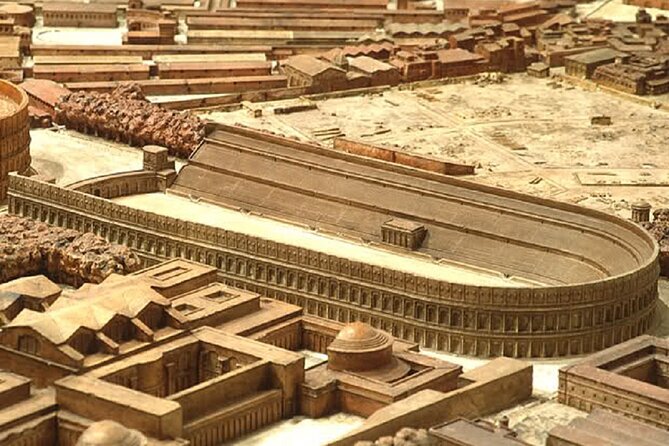
Beneath Piazza Navona, Rome keeps one of its best surprises: the remains of Domitian’s Stadium, hidden about five metres below today’s square. This was the first and only known masonry stadium in ancient Rome, built for athletic contests and public spectacles. You enter with a PDF ticket, then explore with an English audioguide rather than follow a fixed tour group.
I like the freedom to set your own pace and the way the displays connect Roman sports with earlier Greek traditions. I also like the practical advance booking, especially since buying at the site may offer a lower base price but does not guarantee a place. The main drawback is value: at $25.53 per person for roughly 45 minutes, this costs much more than the basic admission price quoted for buying at the museum desk.
Key points at a glance
- Five metres below Piazza Navona: See the archaeological remains beneath one of central Rome’s most famous squares.
- The first known masonry stadium in Rome: Learn how this unusual structure differed from the city’s better-known arenas.
- English audioguide with child-friendly material: Use recorded explanations, panels, and a 3D video to make sense of the ruins.
- About 45 minutes: This is a compact stop that fits neatly between major sights in central Rome.
- Self-guided admission: You avoid a fixed schedule and move through the site at your own speed.
- Advance entry through a PDF ticket: The higher price buys convenience and a reserved opportunity to visit, not a private tour.
What lies beneath Piazza Navona
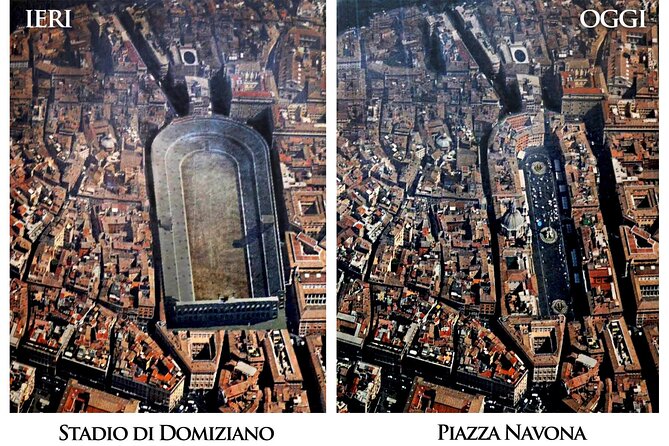
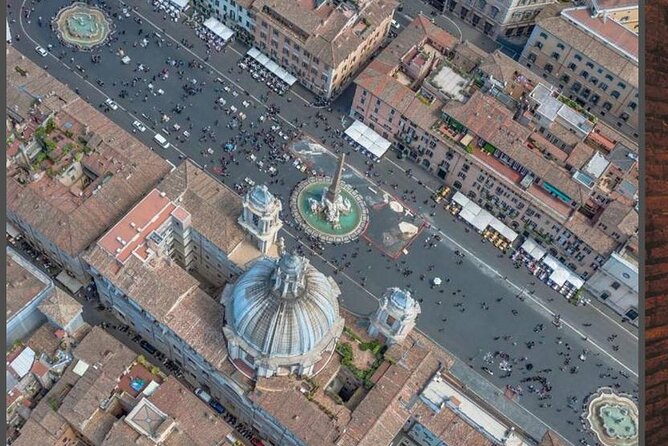
Piazza Navona looks like a grand Baroque gathering place, but its long, narrow shape follows the footprint of an ancient stadium. The archaeological site below preserves part of that earlier world, about 4.5 to 5 metres under the modern street level.
The Stadium of Domitian is important because it was built in masonry. The site is described as the first and only known example of a masonry stadium in Rome. That gives your visit a clear focus: you are not simply looking at scattered ancient walls. You are tracing the remains of a purpose-built venue for sports and public events.
The contrast between the lively piazza above and the excavations below is the main appeal. Up top, you see fountains, restaurants, and Rome’s grand urban scenery. Down below, you encounter the older shape that helped define the square itself.
This is a good stop for anyone who wants ancient Rome beyond the Colosseum, Forum, and Pantheon. It is not as large or dramatic as those headline sights, but its setting makes it unusually easy to connect the ancient and modern city.
More Audio Tours in Rome
- Rome: Colosseum & Forum with Audio Guide App -Optional Arena
★ 4.2 · 24,770 reviews - Rome: City Sightseeing Hop-on Hop-off Bus with Audioguide
★ 4.0 · 16,045 reviews - Rome: St. Peter’s Basilica & Dome Entry Ticket & Audio Tour
★ 4.2 · 7,537 reviews
Following the Stadium of Domitian route
The experience has one main stop, the underground archaeological area beneath Piazza Navona. Since the visit lasts about 45 minutes, you should expect a focused introduction rather than a full morning of ruins.
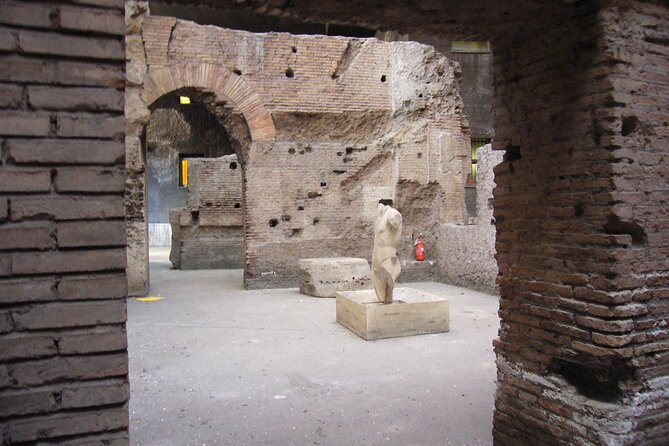
You descend approximately five metres below street level into the excavated remains. The site first opened to the public in 2014, so this is a relatively recent addition to Rome’s collection of archaeological attractions. The underground setting helps explain why most people walking across Piazza Navona never realize the stadium is there.
As you move through the excavations, the audioguide explains the history of the stadium, Piazza Navona, and ancient sporting practices. The material begins with sports in ancient Greece and follows their development into the Roman Imperial period. That broader context matters. Without it, ruined foundations can be difficult to read. With it, you can better understand why a stadium was built here and what audiences may have come to see.
The route also uses information panels and a 3D video. These are useful additions because the surviving ruins do not give you a complete picture of the original structure. A reconstruction can help you imagine the stadium as a working venue rather than a low line of ancient masonry.
The 3D presentation and child-friendly audioguide make this more approachable for families. Parents should still expect an educational visit, not an entertainment attraction. The site’s strength is its clear story and unusual location.
Ancient Roman sports, explained without a fixed tour
The audioguide is the backbone of the visit. It lets you stop when you want, replay information if needed, and move ahead when a section interests you less. That flexibility is useful in Rome, where many sightseeing days are built around tight schedules and long walks.
The content covers sports and sports practices from ancient Greece through Imperial Rome. This gives you more than a basic explanation of the walls. You gain a sense of how sporting traditions changed as they moved into Roman culture.
The site also places the stadium within the story of Piazza Navona. That connection is particularly valuable. You are not visiting an isolated ruin outside the city center. You are looking at the buried structure that explains the square’s shape and long history as a public place.
Because the tour is self-guided, the quality of your visit depends partly on how much time you give the material. You can rush through in less than the suggested 45 minutes, but that would reduce the value of the audioguide and displays. If you enjoy historical interpretation, allow the full time.
The English option is helpful for international visitors, and the child-friendly material gives families a way to share the visit. No guide names are provided because this is not a live guided tour. You receive an audioguide instead.
What the $25.53 price really buys
The listed price is $25.53 per person. That is a noticeable premium for a 45-minute archaeological visit, especially when compared with the basic admission price quoted by one customer as about €8 at the museum desk.
The provider explains the difference as a presale charge, along with fees and taxes from booking through a reseller website. That explanation is important, but it does not erase the price gap. You are paying for advance booking and convenience, not for a private historian or a long guided walk.
The value depends on your priorities. If you are happy to visit the ticket desk and accept the possibility of no availability, buying in person may cost less. If you have a carefully planned Rome itinerary, advance entry can be worthwhile. You reserve one place before arriving and avoid the uncertainty of trying to fit the site into a busy day.
The ticket also includes the audioguide and other educational material, so there are no separate charges for those features based on the information provided. Still, you should think of this as a convenience purchase. The experience itself is compact, and the higher price does not lengthen the visit.
For a history enthusiast, the unusual setting may justify the cost. For someone simply looking for the cheapest way to see another ancient ruin, it may not.
Another self-paced route in Rome:
- Colosseum, Roman Forum & Palatine Hill with Audioguide App
★ 4.4 · 6,291 reviews - Vatican & Sistine Chapel Ticket with Optional Audio Guide
★ 4.1 · 5,405 reviews - Rome: Castel Sant’Angelo Entry Ticket & Digital Audioguide
★ 4.7 · 5,347 reviews - Rome: Castel Sant’Angelo Entry Ticket & Audio App
★ 4.3 · 4,952 reviews
Timing, entry, and the PDF ticket
You receive the admission ticket as a PDF. Show it at the entrance and proceed into the site. Confirmation is provided when you book, which makes the process fairly simple.
The experience is offered in English. There is no fixed tour departure time described, so you can explore at your own pace once inside. That is a practical advantage if you are combining Piazza Navona with nearby sightseeing.
The attraction is near public transportation, and most people can take part. Specific accessibility details are not provided, so you should check directly if you need information about stairs, lifts, or the underground route.
The site normally takes about 45 minutes. I would place it between other central Rome stops rather than build an entire half-day around it. You could visit the piazza first, go underground, and then return to the square for a wider look at how the modern streets follow the ancient footprint.
The information says the experience requires good weather. If poor weather causes cancellation, you are offered another date or a full refund. Since the attraction is underground, this condition may relate to access or operating arrangements rather than the viewing area itself.
Who will get the most from this visit
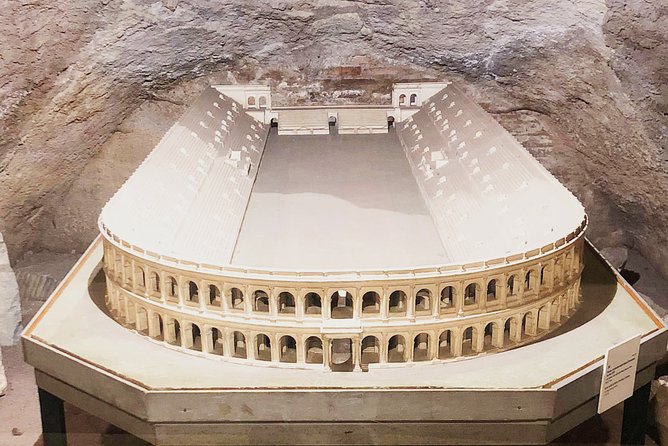
This is best for history fans who have already seen Rome’s major ancient sites or want something less obvious. It adds another layer to a visit centered on Piazza Navona without requiring a long trip across the city.
Families may also find it useful. The child-friendly audioguide, panels, and 3D video offer several ways to understand the site. Children who need a visual explanation of ruins may get more from the reconstruction than from bare walls alone.
Independent visitors will appreciate the lack of a tour schedule. You do not need to match your day to a guide’s departure time, and you can spend more time on the subjects that catch your interest.
This may be less suitable if you want a large, dramatic monument or a live guide who can answer questions. The underground area is compact, and the visit centers on interpretation rather than spectacle.
You should also consider your Rome priorities. If this is your first day in the city and you still have not seen the Colosseum, Pantheon, or Roman Forum, those major sights may deserve your limited time first. If you have room for a smaller archaeological stop, the stadium offers a fresh angle on a place you may already plan to visit.
The main strengths and limits
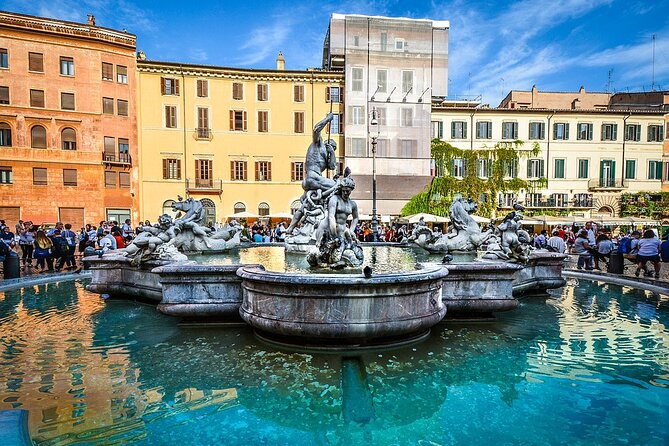
The strongest feature is the location. You are not taking a special excursion to see the stadium. It sits directly below one of Rome’s most familiar squares, turning an ordinary city-center stop into a two-period visit.
The second strength is the self-guided format. You can listen, read, watch the 3D material, and continue without being tied to a group. That matters if you prefer quiet observation or have children with different attention spans.
The educational design is another plus. The site does not rely on ruins alone. The audioguide, panels, and video work together to explain ancient sports, the history of the stadium, and the relationship between the stadium and Piazza Navona.
The limits are just as clear. The visit is short, and the admission price is high compared with the basic on-site rate quoted by the provider’s response. You should also remember that advance booking does not mean a guided tour. You are receiving entry and interpretation, not personal commentary from a live expert.
The rating shown for the experience is 4.6 out of 5 from 17 ratings, which suggests a generally positive reception. One published complaint focused on price rather than the archaeological content. That is the central decision point for you as well: decide if advance access is worth the extra cost.
Practical booking advice for Rome
If you want to book, compare the online price with the on-site base price before paying. The online amount includes presale, tax, and reseller charges according to the provider, so the difference should not come as a surprise.
Book ahead if your schedule is tight and you want to protect a particular time for the underground visit. The provider says on-site visitors may risk finding no availability. If your itinerary is flexible and saving money matters more, you may prefer to ask at the museum desk.
Keep the PDF available on your phone. You show it at the entrance, so you do not need a separate printed voucher based on the information provided.
The experience is offered in English only. Make sure that suits everyone in your group before booking, especially if you are visiting with children or with someone who prefers another language.
Free cancellation is available if you cancel at least 24 hours before the start time. Cancellations or changes made within 24 hours are not refunded or accepted. The cut-off follows local Rome time, so check the timing carefully if your plans are changing.
Should you book the underground stadium?
Book this experience if you want a short, focused look at an unusual Roman site and value the security of advance admission. The combination of underground ruins, ancient sports, child-friendly explanations, and a 3D reconstruction gives Piazza Navona a side most people miss.
Think twice if your main goal is the lowest possible price. The basic on-site admission quoted in the available information is far lower, and the online fee is mainly for convenience and availability.
For my money, this makes sense as a compact add-on to a Piazza Navona day, especially for history-minded visitors and families. It is not a replacement for Rome’s major archaeological sites, but it is a smart way to spend 45 minutes below one of the city’s most famous squares.
FAQ
Where is the archaeological site located?
It is beneath Piazza Navona in Rome, about 4.5 to 5 metres below the modern street level.
What does the admission ticket include?
Admission to the Stadium of Domitian archaeological site is included, along with the English audioguide and the site’s information material.
How long does the visit take?
The visit lasts approximately 45 minutes.
Is the tour led by a live guide?
No live guide is specified. You explore independently with an English audioguide, information panels, and a 3D video.
How do I enter the site?
A PDF ticket is sent to you after booking. Show it at the entrance to access the archaeological area.
Can I cancel for a full refund?
Yes. You can cancel at least 24 hours before the experience start time for a full refund. Cancellations or changes made less than 24 hours before the start time are not refunded or accepted.
Latest audio tours in Rome
- Pantheon Skip the Line Entry Tickets with Digital Audio Guide★ 3.5 · 52 reviews
- St. Peter’s Basilica: Dome Climb with Lift & Audioguide★ 4.5 · 13 reviews
- Audio guide in Vatican Museums and Sistine Chapel★ 4.5 · 12 reviews
- The Roman Jewish Ghetto: A Self-Guided Audio Tour★ 4.0 · 8 reviews
- Experience: The Pantheon Audio Tour★ 4.5 · 4 reviews
- Trastevere: A Self-guided Audio Tour of Rome’s Medieval Village★ 4.5 · 3 reviews
- The Colosseum’s Attic with 3rd, 4th & 5th Levels with Audio Guide★ 4.5 · 20 reviews
- Self-Guided Audio Tour – The gods of the Palatine★ 3.5 · 5 reviews
Rome Audio Tours, compared.
Colosseum & Forum with Audio Guide App -Optional Arena
Read our review →
City Sightseeing Hop-on Hop-off Bus with Audioguide
Read our review →
St. Peter’s Basilica & Dome Entry Ticket & Audio Tour
Read our review →
Colosseum, Roman Forum & Palatine Hill with Audioguide App
Read our review →
Vatican & Sistine Chapel Ticket with Optional Audio Guide
Read our review →
Castel Sant’Angelo Entry Ticket & Digital Audioguide
Read our review →
Colosseum, Forum, & Palatine Hill with Audio Guide
Read our review →Browse the lists this tour appears in