Reviewed · FLORENCE
Florence: Uffizi Priority Ticket & Masterpieces Audio App
The Uffizi’s greatest strength is also its challenge: one long corridor leads you through centuries of art, from medieval gold-ground paintings to Leonardo, Botticelli, Michelangelo, and Caravaggio. This ticket gets you past the ticket-buyers line and places a multilingual audio app in your hand, so you can linger over the works that matter most to you.
I like the clear meeting point beneath the Benvenuto Cellini statue and the freedom to set your own pace. I also like that the audio content points you toward major works without forcing you into a live group. The catch is that this is not a live guided tour, and the fast-track ticket does not remove the mandatory security check.
Key points to know before you go
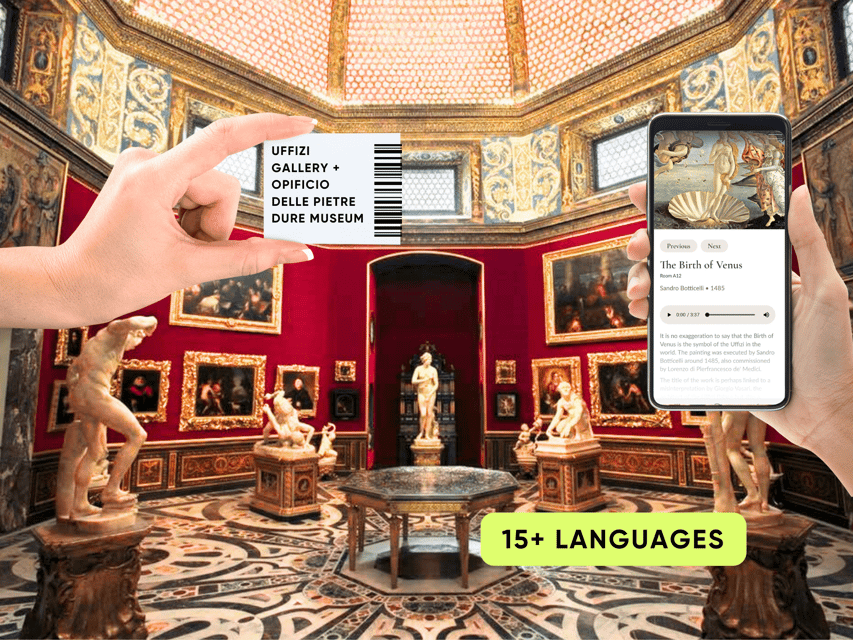
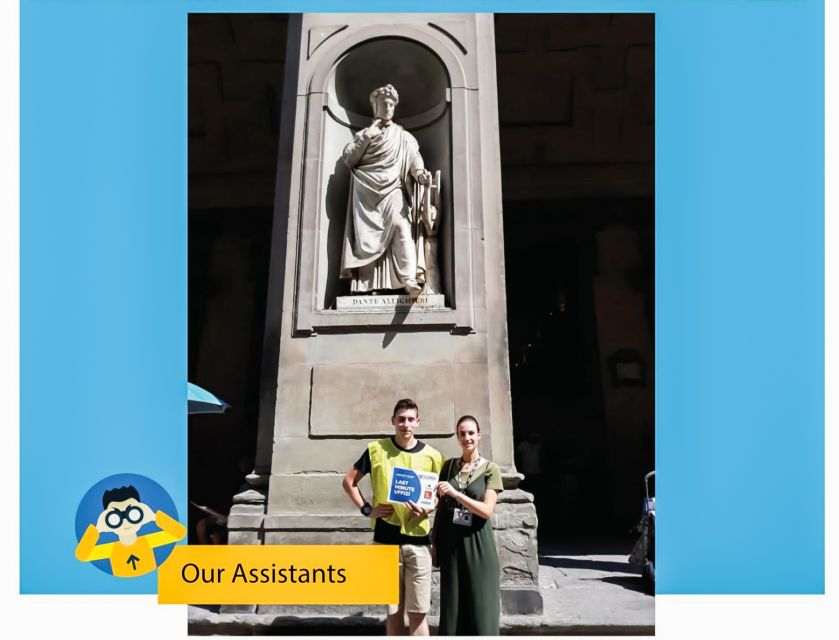
- Meet beneath Benvenuto Cellini’s statue: Look for an ACCORD host in a yellow vest at the corner of the Uffizi ticket office and Via Lambertesca.
- Install the audio app early: Download it over Wi-Fi before reaching the museum, and bring your own charged phone and headphones.
- Expect security, even with priority entry: The security line can take about 10 to 15 minutes at busy times.
- Plan on two to four hours: You can move quickly through the highlights, but the collection can easily fill half a day.
- See Florence’s headline paintings: Botticelli’s Birth of Venus, Leonardo’s Annunciation, Caravaggio’s Medusa, and Michelangelo’s wooden panel are key stops.
- Pack light: Large bags and luggage are not allowed, and only one water bottle of up to 500 milliliters per person is permitted.
Why this Uffizi ticket can save your morning
The Uffizi is one of those museums where a bad entry plan can eat up a valuable part of your day. The regular ticket-buyers line and ticket-pickup line can be long, especially in summer and during the busiest morning periods. With this experience, you arrive with a reserved date and time, meet the local host, collect your ticket, and join the appropriate entry route.
That does not mean you walk straight through every doorway. All visitors must pass the museum’s security check, and this can take around 10 to 15 minutes when the building is crowded. Still, avoiding the ticket office queue is useful, particularly if you have a timed lunch, a train, or another Florence sight planned.
I would arrive at least 15 minutes early. The meeting point is beside the Uffizi ticket office and Via Lambertesca, under the statue of Benvenuto Cellini along the Loggia. Look for the yellow ACCORD vest. This is a much better plan than wandering around the Uffizi frontage hoping to spot the right entrance.
The host provides your ticket and directs you to Door No. 1. Staff members speak English and Italian, and their main job is to get you into the museum smoothly. Do not expect a long orientation or a room-by-room briefing. This is an entry service with audio support, not a traditional guided tour.
More Museum Audio Tours in Florence
- Florence: Uffizi Gallery Timed Entry Ticket & Audio Guide
★ 4.2 · 2,794 reviews - Florence: Uffizi & Accademia Priority Tickets with Audio App
★ 4.4 · 1,253 reviews - Florence: Uffizi Gallery Reserved Entry Ticket & Audioguide
★ 4.5 · 970 reviews
What the audio app adds to the visit
The audio app is designed for self-guided sightseeing. Its content was prepared by art historians and is available in English, Italian, Turkish, Spanish, French, German, Chinese, Portuguese, Polish, Japanese, Russian, Dutch, Korean, Hungarian, Greek, Croatian, Romanian, and Ukrainian.
That language range is one of the better features here. You can choose the language that lets you concentrate on the art rather than translate in your head. The app focuses on important works, giving you useful context and details beyond the short labels beside the paintings.
You control the pace. Pause when a room catches your attention, skip a work that does not interest you, or return to a painting later. This is especially helpful in the Uffizi, where a live group can move on just as you are beginning to look closely.
The content is practical rather than exhaustive. Some people will find it clear and efficient, while others may want more detail. The app also does not replace a museum map. The galleries are marked, and arrows above doorways help you follow the route, but first-time visitors may still want to pay attention to the building layout.
Download the application before you reach the museum, using a Wi-Fi connection. Bring headphones, since they are not included. A charged smartphone matters just as much. A few visitors struggled because they tried to install the guide near the meeting point, and one download video did not match the browser being used. The safest approach is to install and test the app the day before.
Following the Uffizi from medieval art to the Renaissance

Once inside, you begin a long journey through Italian art. The collection moves from medieval religious painting toward the new sense of space, human form, and observation that shaped the Renaissance.
Giotto is one of the important early stops. His work helps you see the shift away from flatter, more formal Byzantine traditions toward figures with greater weight and human presence. You do not need an art degree to appreciate the change. Look at how bodies, faces, and emotions begin to feel more present.
The museum then opens into the Florentine Renaissance, where Botticelli becomes one of the major attractions. The Birth of Venus is the painting most people have come to see, and it deserves time rather than a quick photograph. Notice the graceful pose, flowing hair, pale colors, and the unusual blend of classical mythology with the ideals of Renaissance Florence.
Botticelli’s Primavera is another important work if it is included in your route. The Uffizi experience is not only about ticking off one famous image. It is about seeing how artists, patrons, myths, religion, and politics met in the same rooms.
Leonardo’s Annunciation offers a different kind of reward. It shows the artist at an early stage, already attentive to nature, atmosphere, gestures, and the small details that make a scene feel observed rather than simply arranged. The audio commentary can help you slow down and look at the landscape, figures, and composition as connected parts.
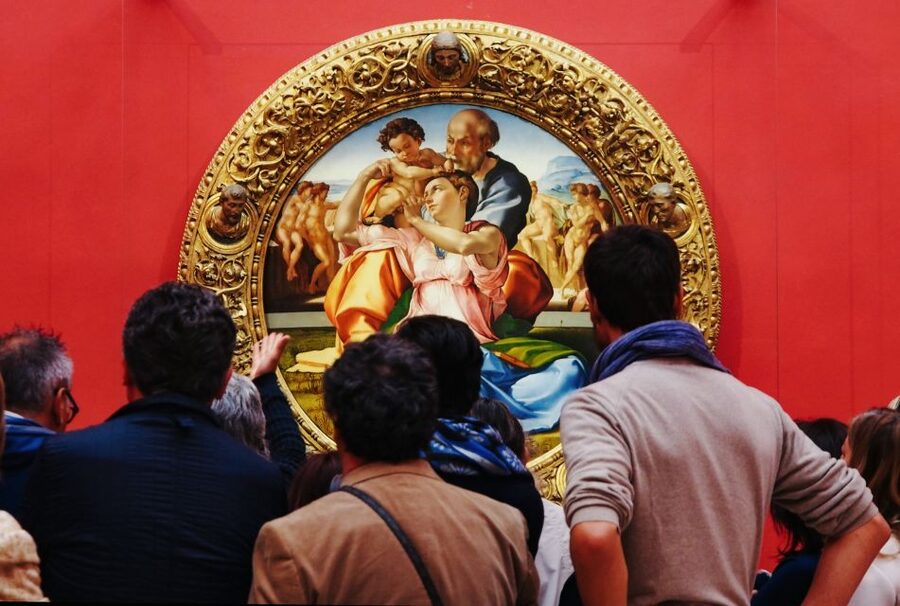
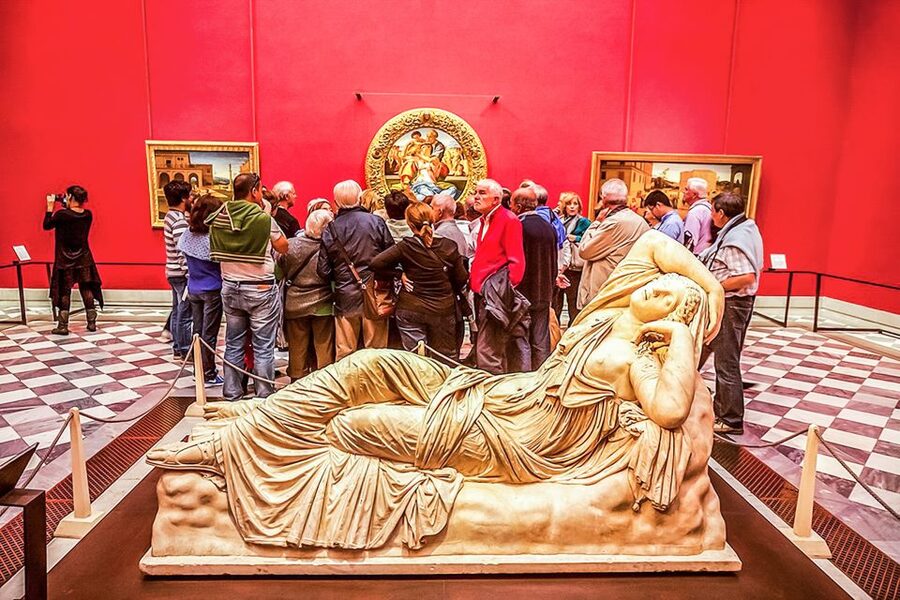
The gallery also includes work by Michelangelo, including the wooden panel often identified as the Doni Tondo. It is particularly interesting because it is the only surviving finished panel painting on wood by Michelangelo. Its bold figures and strong colors look very different from Botticelli’s elegant line. Seeing those works in the same museum makes the changes in Florentine art easier to understand.
Caravaggio, ancient statues, and the Uffizi corridors
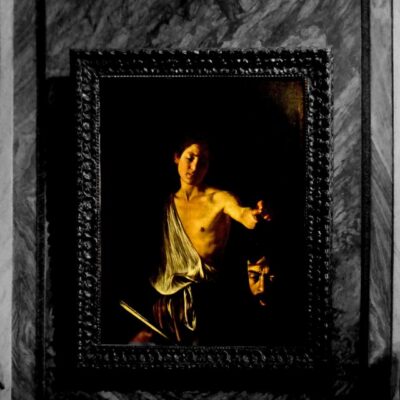
Caravaggio’s Medusa is one of the museum’s most dramatic sights. The painted shield shows the severed head of Medusa with a twisting expression and open mouth. It is a compact work, but the force of the image can stop you in your tracks.
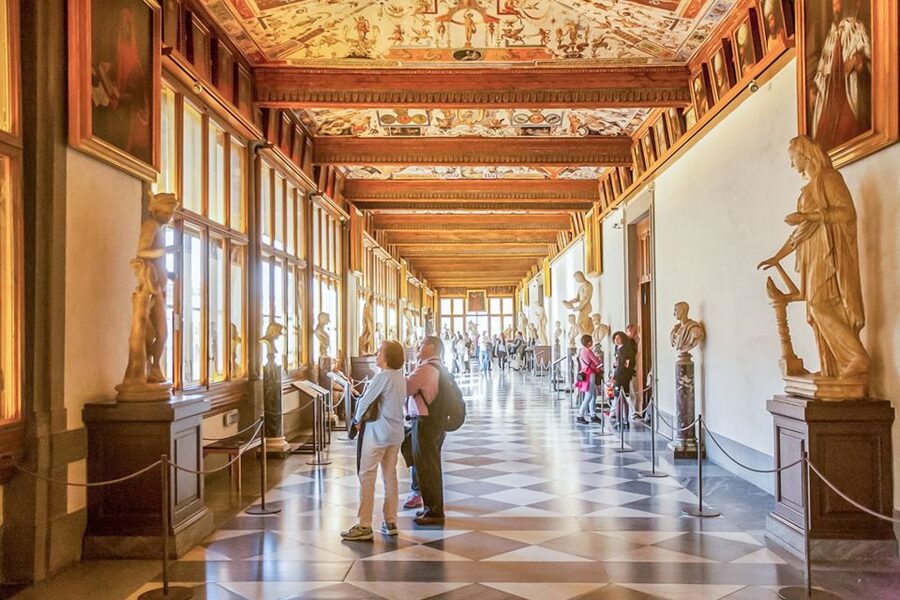
Do not rush through the corridors between the major paintings. The Uffizi’s ancient statues and busts came largely through the Medici collections. Many are Roman copies of Greek sculptures that no longer survive in their original form. They line the passageways, so even the route from one painting room to another becomes part of the museum visit.
This is one reason the Uffizi can feel overwhelming. The headline works are only a fraction of what is on display. If you try to study every room equally, you may run out of energy before reaching the pieces you most wanted to see.
I suggest using the audio app as a filter, not as a command. Listen to the major stops, then give yourself permission to explore nearby rooms without commentary. If a portrait, sculpture, or religious panel catches your eye, stop. Your reserved entry time gives you access for the day, not a fixed one-hour sprint.
The museum route includes stairs, with roughly 120 steps needed to reach the starting point according to the practical information supplied for this experience. An elevator is available for the descent. The museum is wheelchair accessible, but anyone with mobility concerns should be prepared for the route and use the available lift when needed.
More Museum Audio Tours in Italy
- Florence Duomo, Baptistery & Opera Museum Audioguided Tour
★ 4.2 · 607 reviews - Florence: Accademia Gallery Reserved Entry & Audio Guide
★ 4.3 · 600 reviews - Florence: Uffizi Gallery Tickets with Optional Audio Guide
★ 4.1 · 503 reviews - Florence: Accademia Gallery David Entry & Audio Guide App
★ 4.2 · 406 reviews
How long should you allow?
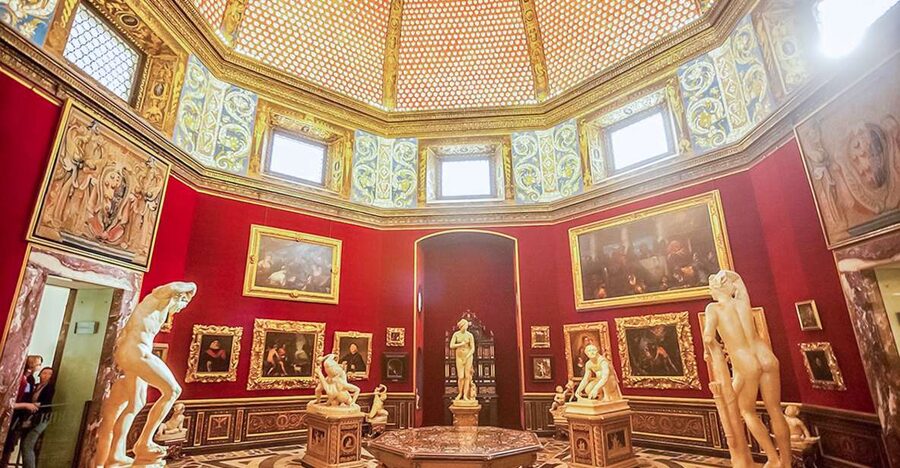
Two hours is enough for a focused visit to the principal works. You can follow the audio highlights, see Botticelli, Leonardo, Michelangelo, Caravaggio, Giotto, and the main sculpture corridors, then leave with a clear sense of the collection.
Three to four hours gives you more breathing room. You can stop for works that are not on the audio route, revisit favorite paintings, and take a break at the small cafeteria on the terrace. The museum can also fill most of a day if you want to examine the collection in detail.
The experience is sold as a one-day activity, but that refers to the valid visit day rather than a fixed tour length. You are not being led from room to room by a guide, so your timing is your own.
Morning entry is a smart choice if you want a calmer start. One timed visit at 9:30 a.m. worked well for seeing the museum before the heaviest crowds. Conditions vary, but an early slot generally gives you more space around the most famous paintings.
The price and what you actually receive
The listed price is $31 per person. The official adult Uffizi ticket price is stated as €29, while EU visitors aged 18 to 25 may pay €2 and children aged 0 to 17 enter free under the museum’s listed ticket categories.
For a full-price adult, the extra cost is paying for convenience and support. You are not just buying admission. You are paying to avoid the ticket-purchase and pickup process, receive help at the meeting point, and use the audio application in your chosen language.
That value is strongest during crowded periods, when a long standard queue can cost you an hour or more. It is less compelling if you are eligible for the €2 reduced ticket or free admission, since the service price is much higher than the museum admission itself.
The Tuscan food tasting bonus adds some interest, with samples such as extra-virgin olive oil, truffle products, schiacciata, and cantuccini. Treat it as an extra rather than the main reason to book. The real product is timed entry plus independent audio guidance.
The activity is non-refundable, so check your date carefully before paying. Bring identification for every visitor, including children. Large luggage and large bags are not allowed, and the museum permits only one water bottle of up to 500 milliliters per person.
What this experience does not provide

The main limitation is simple: there is no live guide included. You will not have someone beside you explaining the Medici, answering questions, or pointing out details in real time.
That will suit you if you like quiet museum visits and prefer to stop or move on whenever you choose. It may disappoint you if you want a strong narrative, an art specialist at your side, or help understanding how the rooms connect.
The audio app also requires a little preparation. Without headphones, you may not be able to use it comfortably. Without a charged phone, the ticket remains useful, but you lose much of the added value.
Navigation is manageable but not perfect. Arrows above doorways help, and the building’s route naturally leads from room to room. Still, a map would make it easier to plan a short visit or return to a favorite section.
After the museum: the Vasari Corridor from outside
After leaving the Uffizi, walk along the outside of the Vasari Corridor. This historic passage connects the Uffizi with the Pitti Palace and gives you a chance to see Florence’s streets and architecture from a different angle.
The corridor itself is not presented as an interior visit in this experience. Think of it as a useful post-museum walk. After several hours among paintings, the change of pace helps you connect the gallery with the city that supported the Medici court and the artists on display.
The Uffizi sits in a central part of Florence, so this walk fits naturally into a day that continues toward the Arno and the Pitti Palace area. No separate transport is described or needed for this part of the experience.
Who should book this Uffizi experience?
I would choose it if you have limited time in Florence, dislike ticket-office confusion, or want an independent visit with a bit more guidance than wall labels provide. It is also a good fit for couples and families who do not want to stay with a group at one fixed pace.
It works well for first-time Uffizi visitors because the app directs your attention to major works in a very large collection. It is also useful for returning visitors who want to focus on a particular set of paintings without paying for a full live tour.
I would choose a live guide instead if art history is the main reason for your visit. The app gives you facts and context, but it cannot respond to questions or adjust the explanation to your interests.
Should you book it?
Book this ticket if saving time and exploring freely matter more to you than having a live guide. The meeting point is clear, the host helps with entry, and the audio app gives structure to a museum that can otherwise feel like a beautiful maze.
Prepare properly: arrive 15 minutes early, install the app before the day of your visit, charge your phone, bring headphones and identification, and pack light. If you follow those steps, the $31 price is reasonable for a busy Uffizi day, though the value is weaker for visitors who qualify for reduced or free museum admission.
FAQ
Is this a live guided tour?
No. The experience includes an English-speaking or Italian-speaking host for entry assistance, but there is no live guide inside the museum. The audio content is delivered through a mobile application.
Where is the meeting point?
Meet at the corner of the Uffizi Gallery ticket office and Via Lambertesca, beside the Benvenuto Cellini statue. Look for an ACCORD staff member wearing a yellow vest.
How early should I arrive?
Arrive 15 minutes before your reserved entry time. This allows time to find the host, receive your ticket, and join the security process.
Do I still need to pass through security?
Yes. Every visitor must pass through the museum security check. During busy periods, this can take approximately 10 to 15 minutes.
Are headphones included?
No. You must bring your own headphones. You also need a charged smartphone to use the audio application.
When should I install the audio app?
Install it before your visit using a Wi-Fi connection. The application instructions are provided with your voucher, and installing it in advance avoids problems near the museum.
How long does a Uffizi visit take?
Plan on about two to four hours, depending on your pace. You can see the key works in less time, while a careful visit may take much longer.
Can I bring a large bag or luggage?
No. Large bags and luggage are not allowed inside. You may bring one water bottle of up to 500 milliliters per person.
Is the Uffizi accessible by wheelchair?
The activity is listed as wheelchair accessible. The route includes stairs, including about 120 steps to reach the starting point, and an elevator can be used to go down.
More Smartphone Audio Tours in Italy
- Uffizi Gallery Reserved Ticket & Digital Audio Guide App
★ 4.3 · 69 reviews - Florence: Opera del Duomo & Baptistery E-Ticket & Audio Tour
★ 3.5 · 52 reviews - Florence: Brunelleschi’s Dome Reserved Timed Ticket & Audio App
★ 4.0 · 49 reviews - Florence Audioguide – TravelMate app for your smartphone
★ 4.1 · 29 reviews
More Smartphone Audio Tours in Florence
- Florence: Timed Entry to Michelangelo’s David + Audio App
★ 4.6 · 19,496 reviews - Florence: Michelangelo’s David Entrance Ticket and Audio App
★ 4.3 · 1,901 reviews - Florence: Duomo Cathedral Timed Entry Ticket & Audio App
★ 3.7 · 472 reviews - Florence: Cathedral & Brunelleschi’s Dome Ticket & Audio App
★ 4.4 · 148 reviews
Latest audio tours in Florence
- Florence: Uffizi Gallery Audio Guided Tour led by Tour Leader★ 3.5 · 6 reviews
- Florence: Uffizi Gallery Timed Entry Ticket with Audio★ 3.0 · 3 reviews
- Uffizi Combined Ticket:UFFIZI, PITTI, BOBOLI & digital audioguide★ 4.0 · 26 reviews
- Florence: Uffizi Gallery Reserved Ticket & Digital Audio Guide★ 4.5 · 3 reviews
- Accademia Gallery Skip the line Tickets with Audio Guide★ 4.0 · 10 reviews
- Uffizi Gallery Audio-Guided Visit with optional Accademia Gallery★ 3.5 · 42 reviews
- Florence Walking Tour with Audioguide on Your Smartphone★ 4.5 · 9 reviews
- Florence Baptistery & Opera Museum Audioguided tour with guide★ 3.5 · 41 reviews
Museum Audio Tours, compared.
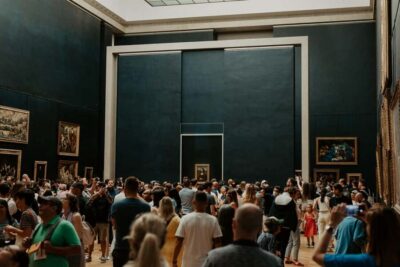
Louvre Museum Hosted Entry and Mona Lisa Audioguide
Read our review →
St. Mark Basilica Ticket, Audioguide+History Gallery
Read our review →
Borghese Gallery Skip-the-Line Ticket & Audioguide
Read our review →
Borghese Gallery Ticket + Audioguide or Guided Tour
Read our review →
Orsay Museum Entry Ticket and Digital Audio Guide App
Read our review →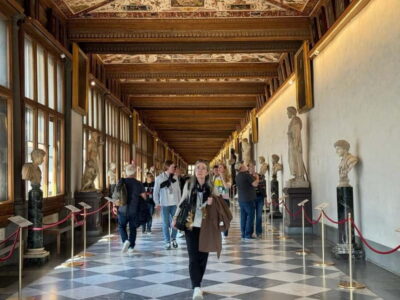
Uffizi Gallery Timed Entry Ticket & Audio Guide
Read our review →
Acropolis Museum Ticket with optional Audio Guide
Read our review →