
Reviewed · CITY
Shared Cartagena Old City Tour with Wireless Audio System
Cartagena’s best stories are packed into a few stone streets, and this walking tour gives you the historical thread to follow. You’ll hear why pirates attacked the city more than 10 times, why the Clock Tower once had no clock, and how colonial buildings revealed status and gossip.
I like the wireless audio system, which should make it easier to hear in crowded streets while you take photos. I also like the practical local advice, from places to eat and buy coffee to good sunset spots. The main drawback is the pace: you’ll walk about 7 kilometers, and the shared format means the guide cannot give you a fully private experience.
Key points at a glance
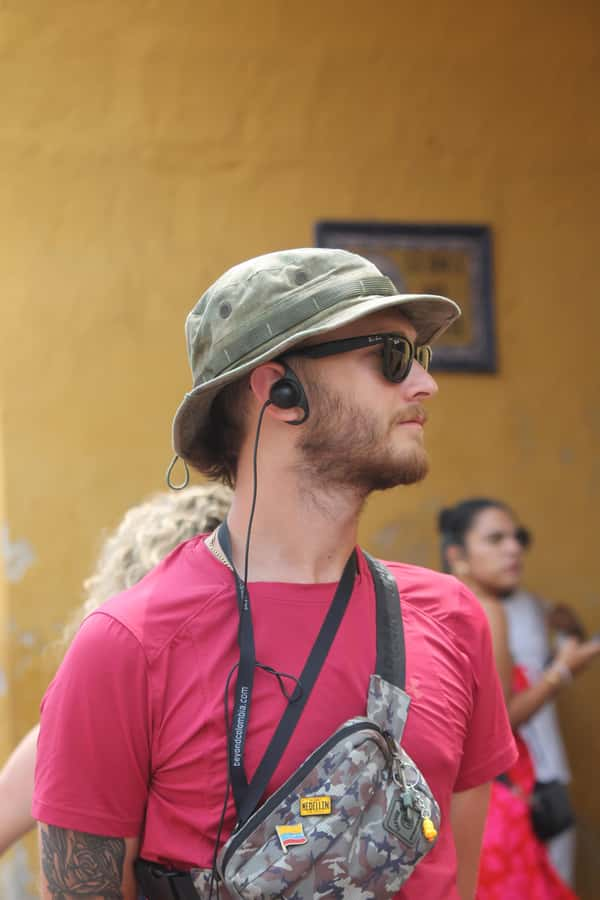
- Hear the guide clearly: Wireless receivers help you follow the story while standing away from the group or taking photos.
- Start at the Clock Tower: Enter Cartagena’s old center through its most famous gateway, then move through former trade and government squares.
- Follow the city’s defenses: Bastions, walls, cannons, and lookout points explain why Cartagena became one of Latin America’s most heavily fortified cities.
- Get more than dates: The tour connects architecture with social class, Afro-Caribbean identity, religion, trade, piracy, food, music, and daily life.
- Walk a serious distance: Plan for about 7 kilometers on foot, with pauses for stories and rest.
- Check the weekend option: From February 1, Saturday and Sunday tours at 10 a.m. or 4 p.m. may include Getsemaní as part of a larger historic center route.
Why this $12 walk is a smart first look at Cartagena
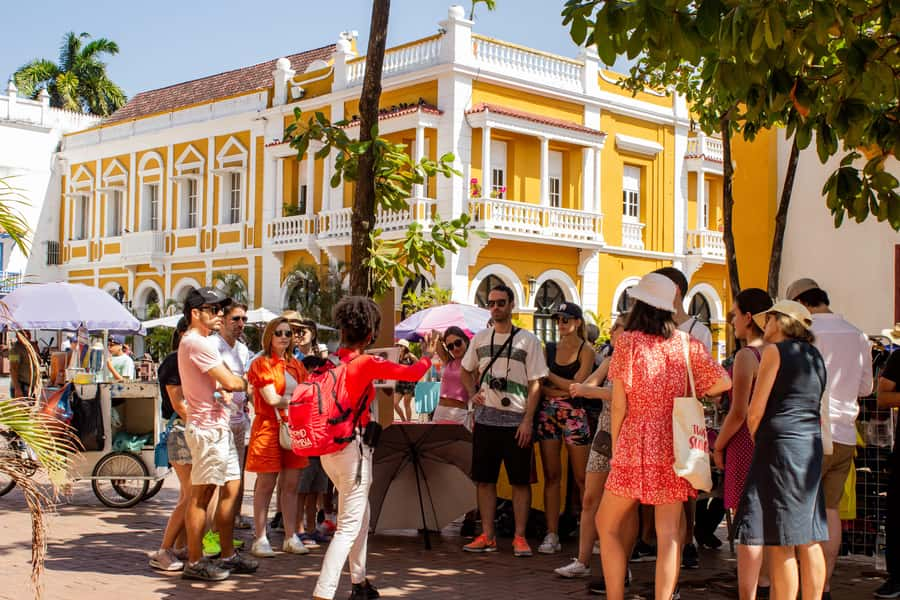
At $12 per person, this is one of the easier ways to get your bearings in Cartagena without paying for a private guide. The price covers a live guide in English or Spanish, the wireless audio system, and a walk past the main sights of the Walled City.
I see the value in the combination of orientation and context. Cartagena can feel like a maze of balconies, churches, plazas, vendors, and narrow lanes. A guide helps you connect those pieces rather than simply snap photos and move on.
You are not paying for attraction tickets, food, drinks, or transport. That keeps the cost low, but it also means this is a walking introduction rather than a full sightseeing package. The tour does not take you inside places where an entrance fee is required, so you should treat it as a street level history walk.
The current score is 4.4 from 28 ratings. The strongest praise centers on the guides’ clear explanations, pleasant manner, answers to questions, and useful recommendations. One guide named Juli received especially warm praise. One less positive assessment found the historical facts somewhat disconnected, so your experience may depend on how smoothly your particular guide shapes the story.
More City Audio Tours in the world
- Rome: City Sightseeing Hop-on Hop-off Bus with Audioguide
★ 4.0 · 16,045 reviews - Milan: City Sightseeing Hop-On Hop-Off Bus with Audio Guide
★ 4.0 · 6,256 reviews - Riga: Canal Boat Sightseeing Tour With Audio guide
★ 4.5 · 1,827 reviews
Entering through the Clock Tower
The Clock Tower, or Torre del Reloj, is the natural opening for this tour. It is the main entrance to the Walled City and a useful place to understand Cartagena’s basic layout.
The gateway is more than a pretty photo stop. It marks the boundary between the modern city and the old fortified center. From here, the tour begins to explain how Cartagena worked as a port, trading post, military stronghold, and colonial capital.
One of the tour’s more unusual stories concerns the clock itself. You’ll learn why the tower did not originally have a clock, a small detail that shows how the city changed over time. Stories like this are more memorable than a list of construction dates.
The area can be crowded, so the wireless receiver matters right away. You can stand a little to one side, frame the entrance with your camera, and still follow the guide. Keep your belongings close here and in other crowded parts of the route. The local reminder don’t give papaya means do not make it easy for someone to take advantage of you.
Plaza de los Coches and the old trade center
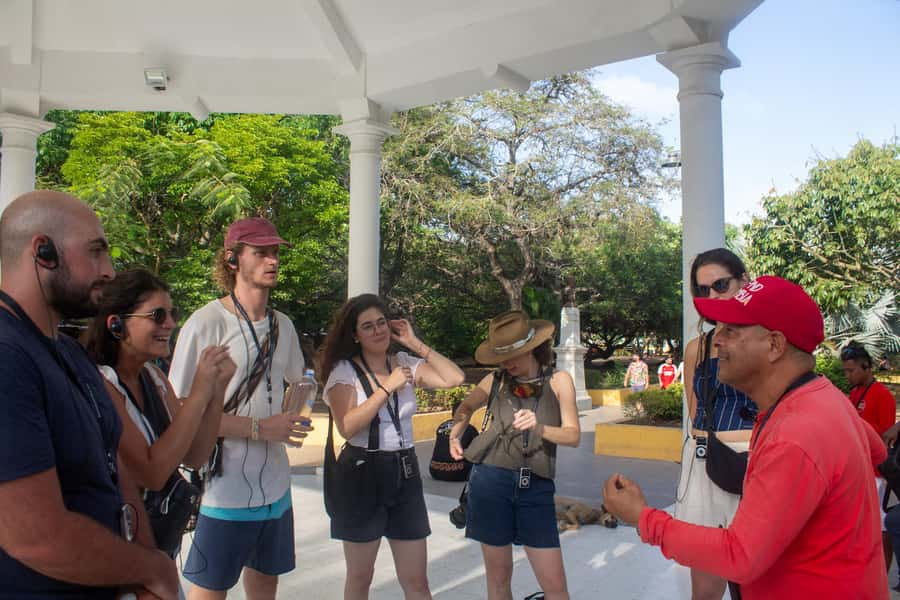
From the entrance, the walk leads into the streets and squares that once powered colonial Cartagena. Plaza de los Coches was a former commercial hub, while nearby Plaza de la Aduana served as a center for colonial trade.
This is where the city’s wealth becomes easier to understand. Cartagena was not simply a military outpost with attractive buildings. Merchants, officials, sailors, enslaved people, and religious orders all shaped life inside the walls.
The guide also uses architecture to explain social class and wealth. Look closely at balconies, doorways, building size, and the placement of homes around the plazas. You may find that a facade tells you who had status, who had money, and who wanted other people to think they did.
This is also a good section for questions. If you want to know how trade affected everyday life, ask. A strong guide can turn these plazas from scenic backdrops into places with human purpose.
Bolívar Square and the colonial center
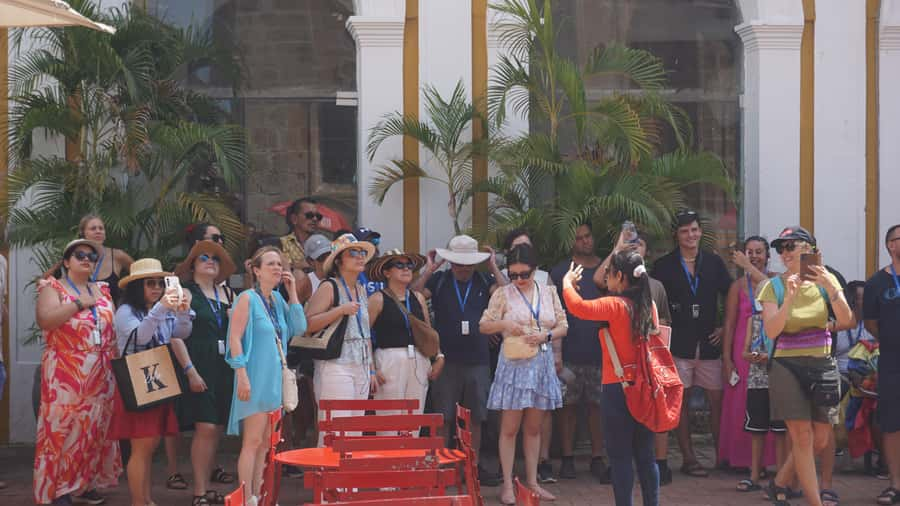
Bolívar Square brings the tour into Cartagena’s political and historical heart. The square offers a pause from the narrower streets and gives you room to listen, look around, and take photographs.
Here, the story shifts from commerce and defense to power, public life, religion, and government. The guide places the square within Cartagena’s wider past, including the forces that made the city important and the communities that gave it lasting character.
I appreciate that the tour does not present Cartagena only through Spanish colonial architecture. It also addresses Afro-Caribbean heritage and the way local identity grew from several cultures and difficult periods. That broader view matters. Without it, the old center can look like a collection of attractive buildings rather than a living city shaped by many communities.
The wireless system should be useful in a square where other groups may be listening to their own guides. You can hear the explanation without needing to press close to the guide.
More Audio Tours in the world
- Barcelona: Sagrada Familia Entry Ticket with Audio Guide
★ 4.6 · 105,312 reviews - Rome: Pantheon Fast-Track Ticket and Official Audioguide
★ 4.5 · 27,353 reviews - Barcelona: Casa Batlló Entry with Self-Audioguide Tour
★ 4.7 · 25,359 reviews - Rome: Colosseum & Forum with Audio Guide App -Optional Arena
★ 4.2 · 24,770 reviews
Cartagena Cathedral and the San Pedro Claver area
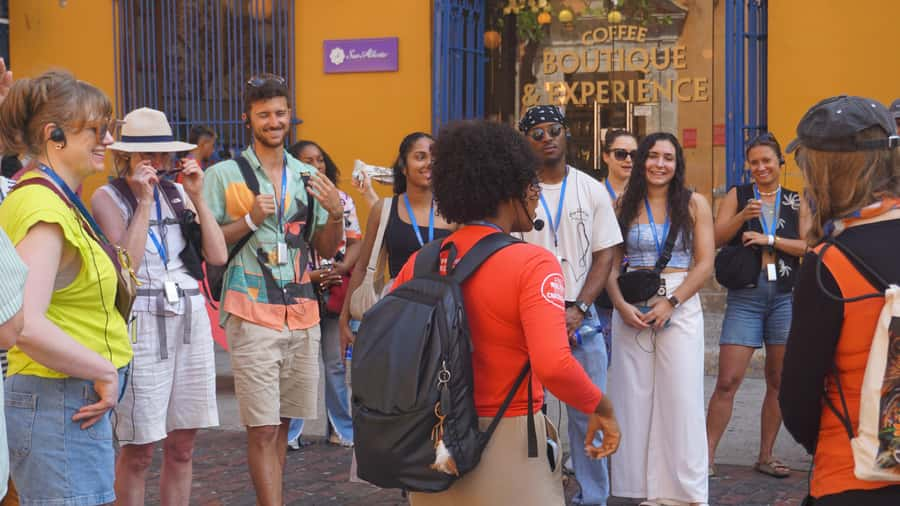
The cathedral is one of the route’s key religious landmarks. Its colonial design and continuing importance make it a useful stop for understanding the role of faith in Cartagena’s public life.
The tour also visits the San Pedro Claver area. Together, these stops add a religious and human dimension to the walk. You’ll hear how churches and religious institutions fit into the city’s colonial structure, not just admire their exteriors.
Do not expect an extended indoor visit. Tickets and entrances are not included, and the tour does not take you to places where sudden extra charges appear. That policy keeps the walk simple, but it also means you should book a separate visit if you want time inside a particular church or museum.
I would use this part of the tour to slow down and study details. Colonial architecture can reveal wealth, rank, religious influence, and changing tastes. A guide’s explanation helps you notice those clues instead of treating every church facade as the same.
The Palace of the Inquisition and stories behind the walls
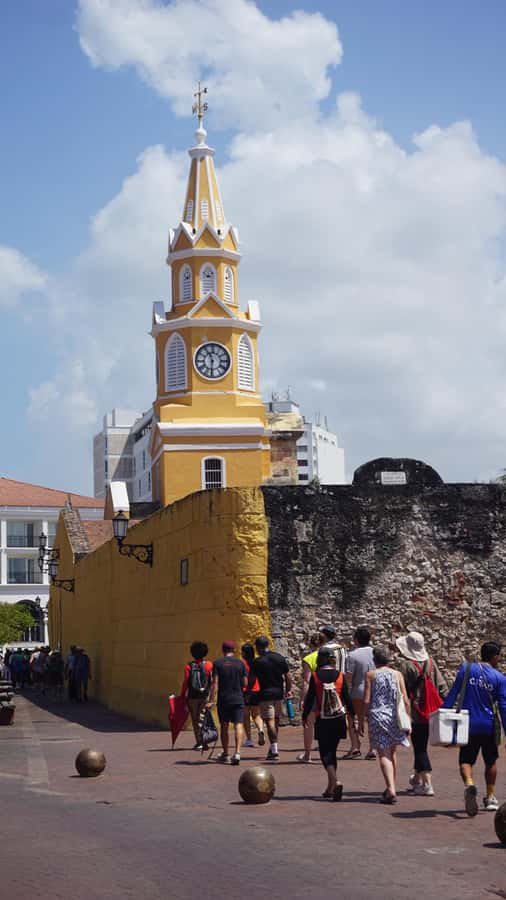
The Palace of the Inquisition adds a darker layer to Cartagena’s past. Its inclusion helps show how religious authority and colonial government operated within the Walled City.
This stop is useful because it moves the tour beyond postcard views. Cartagena’s past includes power struggles, punishment, trade, military threats, and social divisions. A balanced explanation should help you understand those forces without reducing the city to a collection of dramatic legends.
The guide also discusses pirates and the city’s defenses. Cartagena was attacked more than 10 times by French, Dutch, English, and Spanish forces. That history explains why walls, bastions, cannons, and strategic views are such a major part of the tour.
If you prefer a smooth story with clear links from one stop to the next, pay attention to how your guide handles this section. One assessment of the experience found that the historical facts could feel isolated rather than connected. The audio equipment solves the hearing problem, but it cannot guarantee the same storytelling style from every guide.
Walking the walls and bastions
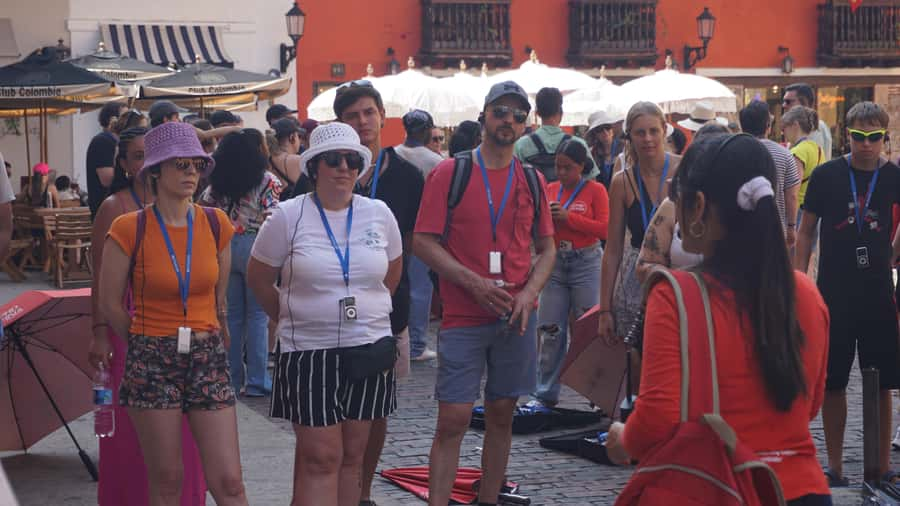
The city walls are the physical high point of the tour. They show how Cartagena defended itself and give you a different view of the old center.
You’ll learn why the city became one of the most fortified places in Latin America. Bastions and cannon viewpoints were not built for decoration. They were part of a system designed to watch approaches, control access, and protect trade.
This section can also be one of the most photogenic. The walls provide open views after the tighter streets and enclosed plazas. Bring water and wear comfortable shoes. The full walk covers about 7 kilometers, and the heat can make that distance feel longer than it looks on a map.
There are resting stops, but this is not a gentle, short stroll. The route is not suitable for wheelchair users, and anyone with limited stamina should consider the distance before booking. An umbrella or rainproof coat is sensible because the weather can change, and the tour continues on foot.
What the wireless audio system changes
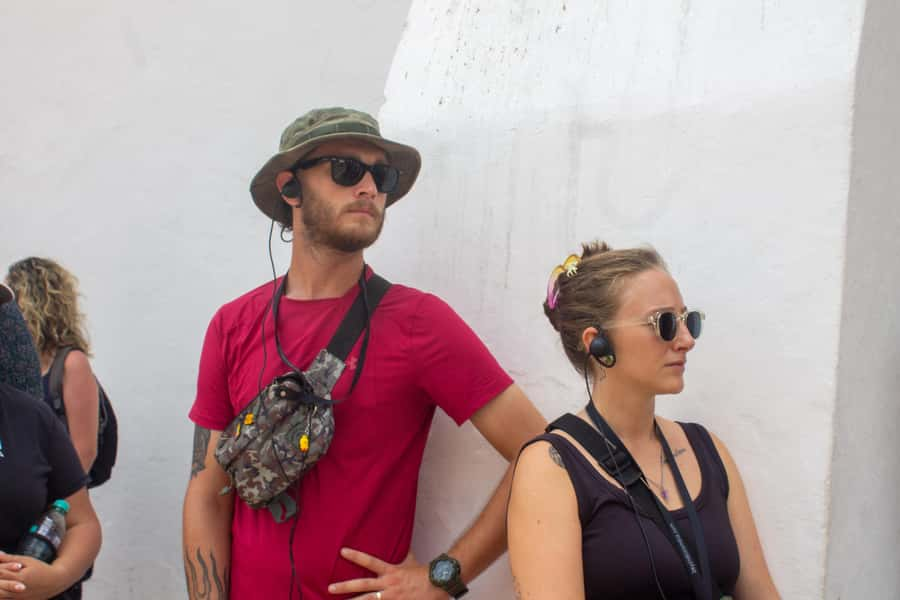
The audio equipment is the feature that most directly affects how the tour feels. You receive a wireless audio receiver, allowing you to hear the guide clearly while moving through busy streets.
That may sound like a small convenience, but it solves a common problem on city walks. Without a receiver, you often have to stay shoulder to shoulder with the guide, miss parts of the explanation, or stop taking photos so you do not lose the group.
Here, you can step aside for a picture and keep listening. You can also hear more easily when traffic, street activity, or other groups compete for attention. The system does not turn this into a private tour, but it gives you a little more personal space.
English and Spanish support is available. The live guide is the main source of information, while English or Spanish audio options are also listed. Confirm your preferred language when booking, especially if the exact meeting point depends on the option you choose.
Getsemaní on weekend departures
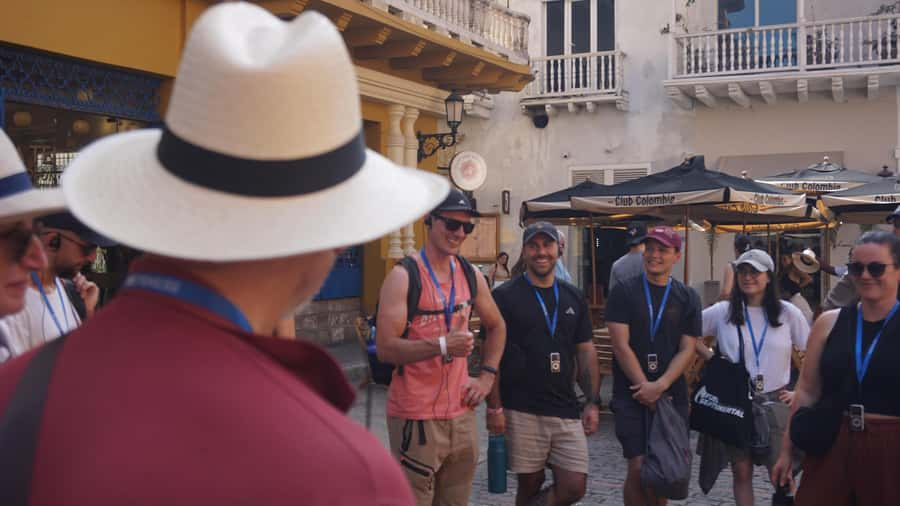
From February 1, Saturday and Sunday departures at 10 a.m. or 4 p.m. may add the Getsemaní district to the Walled City route. The combined route is presented as a broader historic center experience.
That option could be useful if you want to cover both the fortified old center and a nearby district in one outing. It also gives the tour more room to discuss culture and present-day life alongside colonial history.
Check the exact option before you reserve. The meeting point may vary, and not every departure has the same route. The supplied details identify the weekend addition, but you should confirm that your chosen time includes Getsemaní.
The 4 p.m. departure may suit you if you want to walk later in the day, while the 10 a.m. option leaves more time afterward for your own plans. No specific sunset timing is promised, but the guide can point you toward recommended places for sunset, food, music, coffee, and souvenirs.
What to bring for a 2 to 2.5 hour walk
The stated duration ranges from two hours to 150 minutes. Allow the longer amount of time in your schedule, particularly if your group pauses often or includes the Getsemaní addition.
Bring:
- Water or another preferred drink
- Comfortable walking shoes
- Light, comfortable clothing
- An umbrella or rainproof coat
- A secure bag for crowded areas
- An open mind for complicated history
Smoking is not allowed. You will not have transport during the tour, and no hotel pickup or drop off is included. Meet the guide at the assigned point, which can change according to the booking option.
The shared format is worth noting. You will meet other people and will not have an exclusive guide. That keeps the price at $12, but it also means the pace and amount of question time may depend on the group.
Who will get the most from this Cartagena tour
I would choose this walk as a first activity in Cartagena, especially if you want a useful map of the old center before exploring alone. It suits people who enjoy history, architecture, photography, and practical local suggestions.
It is also a good fit if you dislike standing beside a guide in a tight cluster. The receiver gives you more freedom to look around while staying connected to the explanation.
I would think twice if you want museum interiors, a private pace, or a very short walk. The route covers major sights from the street and does not include entry tickets. It also asks you to walk about 7 kilometers, so heat, rain, footwear, and stamina matter.
The guide quality appears to be a key part of the experience. Juli is specifically praised for her work, and the most positive comments highlight clear explanations, a friendly manner, answers to questions, and useful advice. Since the group is shared, your exact guide will shape the tone and flow.
Should you book this tour?
Book it if you want an affordable introduction to Cartagena that explains what you are seeing rather than simply naming it. The $12 price is fair for a live bilingual guide, wireless audio, a route through the main plazas and landmarks, and practical recommendations for the rest of your stay.
The tour is not ideal for wheelchair users, visitors who avoid long walks, or anyone wanting a private, ticketed museum experience. For everyone else, I would schedule it early in your Cartagena visit. You’ll leave with a clearer sense of the city’s walls, churches, trade routes, social divisions, Afro-Caribbean identity, and daily life, plus a list of places worth returning to on your own.
FAQ
How long does the Cartagena Old City Tour last?
The stated duration is between two hours and 150 minutes. The route includes walking and resting stops.
What languages are available?
The live tour guide is available in English or Spanish. English and Spanish audio options are also listed.
Is the wireless audio system included?
Yes. The tour includes a wireless audio receiver designed to help you hear the guide clearly in busy streets.
How far will I walk?
You should expect to walk about 7 kilometers, with stops along the way to listen to the guide.
Does the tour include food, drinks, transportation, or entrance tickets?
No. Food, drinks, souvenirs, hotel transportation, transport during the tour, and entrance tickets are not included.
Is the tour suitable for wheelchair users?
No. The experience is listed as unsuitable for wheelchair users.
Latest audio tours in the world
- Seville Maestranza Bullring Tour with Audio Guide★ 3.5 · 6 reviews
- Seville Scavenger Hunt and Highlights Self Guided Audio Tour★ 5.0 · 5 reviews
- Seville Audio guided walking tour 3h20 and 28 audio commentaries★ 5.0 · 2 reviews
- Royal Alcazar of Seville Entry Ticket with Audio Guide★ 4.0 · 42 reviews
- Seville Cathedral and La Giralda Entry Ticket with Audio Guide★ 3.0 · 9 reviews
- Seville Cathedral and Giralda Entry Tickets with Audio Guide★ 4.0 · 56 reviews
- Essential Seville’s Ancient History: An Audio Tour★ 5.0 · 9 reviews
- Sequoia National Park Self-Guided Audio Tour★ 4.5 · 9 reviews
City Audio Tours, compared.

City Sightseeing Hop-on Hop-off Bus with Audioguide
Read our review →
City Sightseeing Hop-On Hop-Off Bus with Audio Guide
Read our review →
Eco-Friendly Golf Cart City Tour with Audio Guide
Read our review →
City Sightseeing Hop-On Hop-Off Bus Tour with Audio Guide
Read our review →

Openair Double Decker Bus Audio-Guided City Tour
Read our review →
Browse the lists this tour appears in