
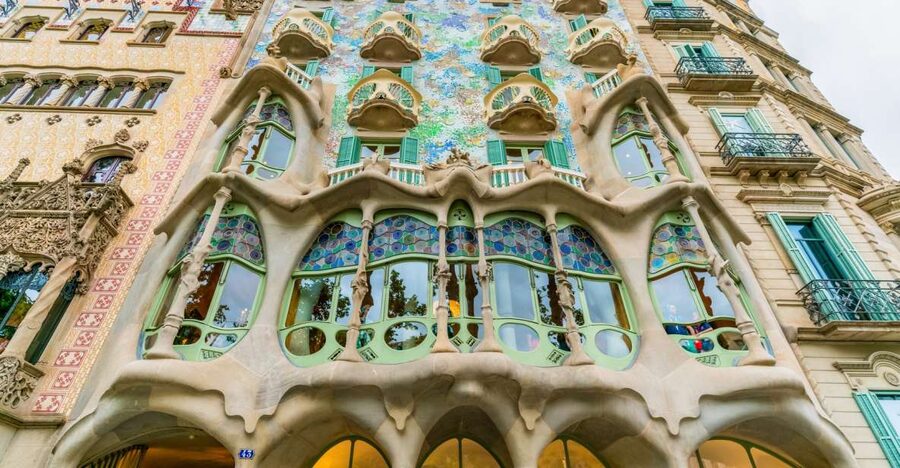
Reviewed · BARCELONA
Barcelona: Casa Batlló Entry with Self-Audioguide Tour
Casa Batlló is not simply a beautiful old house. It is a carefully staged trip through Antoni Gaudí’s imagination, where curved walls, colored glass, strange doorways, and digital effects turn a historic building into a living story. The Gaudí Cube, a six-sided room of LED projections, is the most talked-about finale, but the house itself remains the main event.
I like the freedom of the self-guided format, and I like that the audio guide comes in 15 languages with visual and augmented-reality features to match. The main drawback is price: at about $34 per person, it is not a casual pop-in, and busy periods can bring very long entrance lines.
Key points to know before you go
- The Gaudí Cube is the grand finale: Allow time for the six-sided LED room rather than rushing toward the exit.
- Gold access adds Lord Batlló’s bedroom: Check the exact ticket level before booking if you want the fullest visit.
- The audio guide sets your own pace: You can pause, replay, and spend longer in rooms that catch your eye.
- Expect more than architecture: Sound, motion sensors, artificial intelligence, augmented reality, projected images, and even references to taste and smell shape the visit.
- Plan for about 75 minutes: Some people finish in an hour, while others stay two or three hours to linger, use the patio, or enjoy drinks.
- Go at a quieter time if possible: The early evening, around 5 to 7 p.m., can be calmer than the busiest hours.
Why Casa Batlló feels unlike any other house in Barcelona
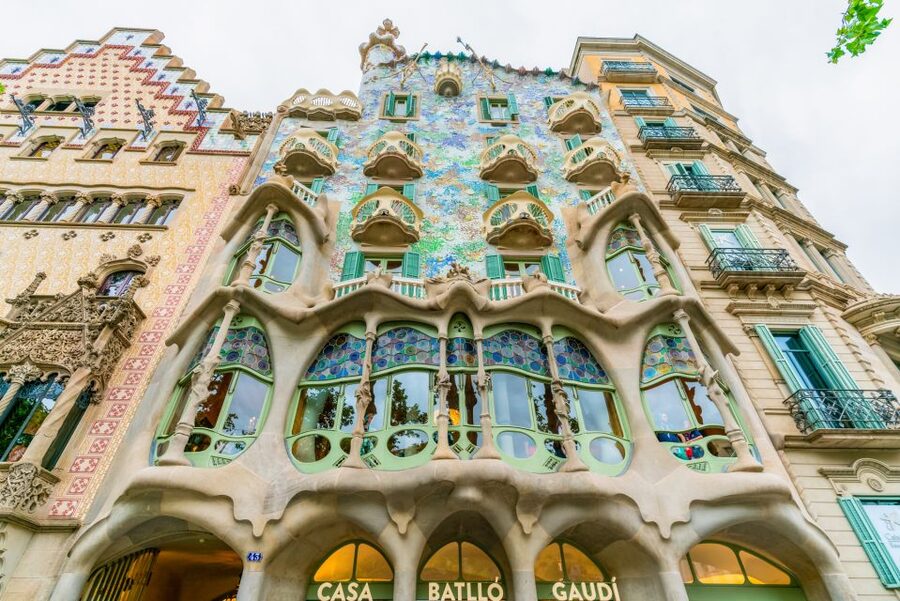
Casa Batlló sits on Passeig de Gràcia, one of Barcelona’s grand central avenues. From the street, its rippling facade already tells you that this will not be a normal house tour. The surface shifts with color, bone-like forms, irregular windows, and a roofline that seems to have grown rather than been built.
Gaudí redesigned the building for Josep Batlló, and the result became one of the great works of Catalan Modernism. You do not need a strong interest in architecture to enjoy it. The shapes are playful, sometimes dreamlike, and easy to appreciate at a glance.
I find the best way to think about the visit is as two experiences running together. One is a close look at a remarkable early-20th-century home. The other is a modern presentation that uses digital tools to suggest how Gaudí may have imagined movement, light, nature, and space.
That blend works best when the technology supports the building rather than replaces it. In most rooms, the real details deserve your attention first. Look at the curves, surfaces, handles, windows, and ventilation ideas before turning to the screen or audio commentary.
More Audio Tours in Barcelona
- Barcelona: Sagrada Familia Entry Ticket with Audio Guide
★ 4.6 · 105,312 reviews - Casa Batllo Admission Ticket with Intelligent Audio Guide
★ 4.5 · 3,168 reviews - La Pedrera-Casa Mila Admission Ticket with Audioguide
★ 4.5 · 1,032 reviews
Entering the house and getting your bearings
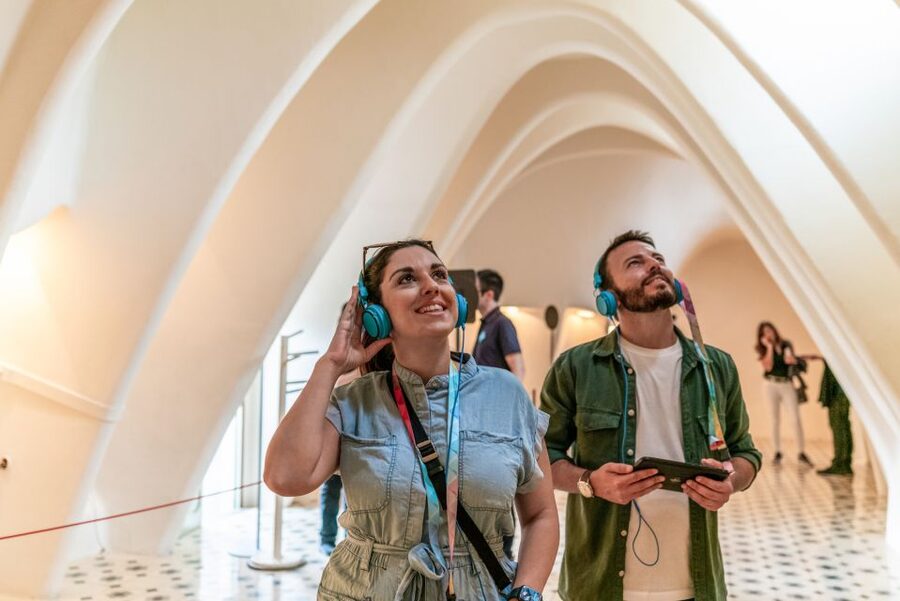
You show your ticket at the Casa Batlló entrance. The attraction is wheelchair accessible, and there is a place to store strollers if needed. At busy times, you may face a long line even with a timed entry, so do not plan a tightly connected activity immediately afterward.
The visit is self-guided. You receive the audio equipment at the entrance and then move through the house independently. This is a useful arrangement for couples and families who do not all walk at the same speed. You can stop for photos, replay a section, or skip ahead without holding up a group.
The audio guide is available in Catalan, Chinese, Dutch, English, French, German, Italian, Japanese, Korean, Polish, Portuguese, Romanian, Russian, and Spanish. That range matters in a place where visual details can be easy to miss. The commentary gives the rooms a clear thread instead of leaving you to guess at every unusual feature.
One practical point: this is not a quiet, empty museum house. Casa Batlló is a major Barcelona attraction, and crowd levels affect the rhythm of the visit. A calmer time lets you examine the windows and stairways without feeling pushed along.
The rooms: Gaudí’s ideas in daily life
The interiors are where Casa Batlló becomes more than a striking facade. Each room has its own shape and mood, yet the house still feels connected through repeated curves, changing light, and natural forms.
Gaudí paid close attention to practical matters, not only decoration. The visit points out early plumbing and air-flow ideas, details that are easy to overlook if you focus only on the famous surfaces. This is one of the strongest reasons to use the guide. Without explanation, a strange vent or cleverly shaped opening may look like a decorative flourish. With context, it becomes part of the house’s working design.
You will encounter rooms with flowing lines, colored glass, unusual doors, and surfaces that avoid the hard corners found in most traditional homes. The architecture keeps asking you to look upward and around corners. A room that seems simple from one angle can reveal a new pattern or opening from another.
The audio and visual material also help explain Gaudí’s place in the Modernism movement. You are not just seeing a rich client’s fashionable home. You are seeing an architect test ideas about nature, light, structure, and human comfort in a domestic setting.
The self-guided pace is especially useful here. I would not rush through the first rooms just to reach the rooftop or the digital finale. The house rewards close looking, and the smallest pieces of workmanship can be more memorable than the larger effects.
The augmented-reality layer and digital storytelling
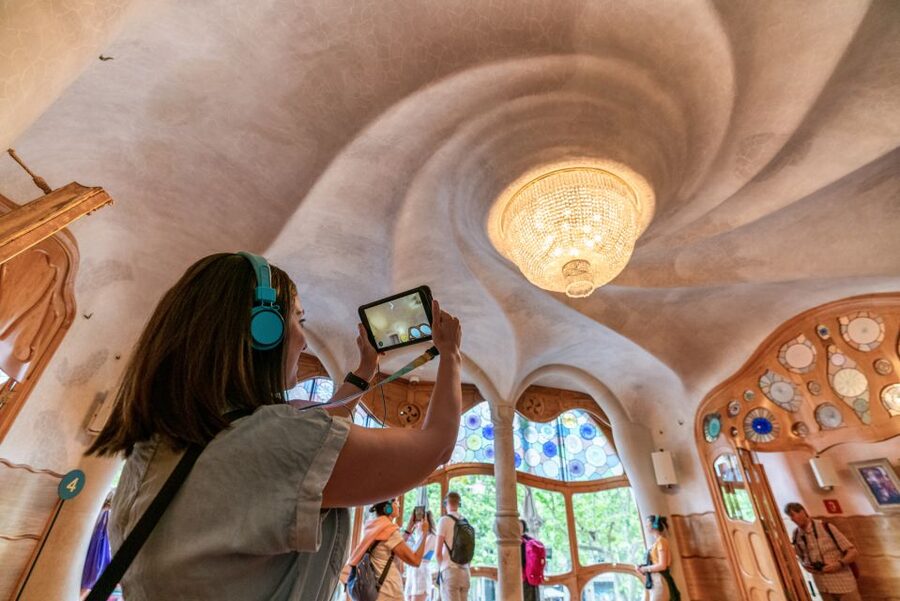
This experience uses artificial intelligence, augmented reality, machine learning, motion sensors, and volumetric projections. In plain terms, parts of the visit respond to your movement or use digital images to show Gaudí’s world in ways a standard audio tour cannot.
Paintings and visual scenes can appear to come alive as you approach. Binaural sound creates a more focused audio effect, and the soundtrack was written by composer Dani Howard and performed by the Berlin Symphony Orchestra. These additions give the visit a cinematic rhythm.
You should know what kind of attraction this is before booking. If you want a strictly traditional architectural tour, some of the digital material may feel like too much. If you enjoy seeing historical places explained through sound, images, and movement, the technology adds energy and makes the ideas easier to grasp.
The strongest sections are the ones that send you back to the real building with fresh eyes. A projection can suggest how light moves through a space, but the original window or ceiling remains the thing worth studying. Give yourself a moment after each effect to look again at the actual room.
The equipment is generally easy to use, and the visual guide can make the information clearer than audio alone. One important warning from the experience itself is that some visitors rush and miss the final visual activity. Keep following the route until you are certain you have reached the end.
Another self-paced route in Barcelona:
- Gaudi´s Casa Vicens Skip the Line Ticket with Audioguide
★ 4.5 · 685 reviews - Erotic Museum Admission Ticket with Audioguide
★ 5.0 · 527 reviews - Barcelona: Mies van der Rohe Pavilion Ticket and Audio Guide
★ 4.6 · 380 reviews - Barcelona: Montjuïc Cable Car Ticket with Audio Guide
★ 3.9 · 270 reviews
The Gaudí Cube and the floating marble stairway
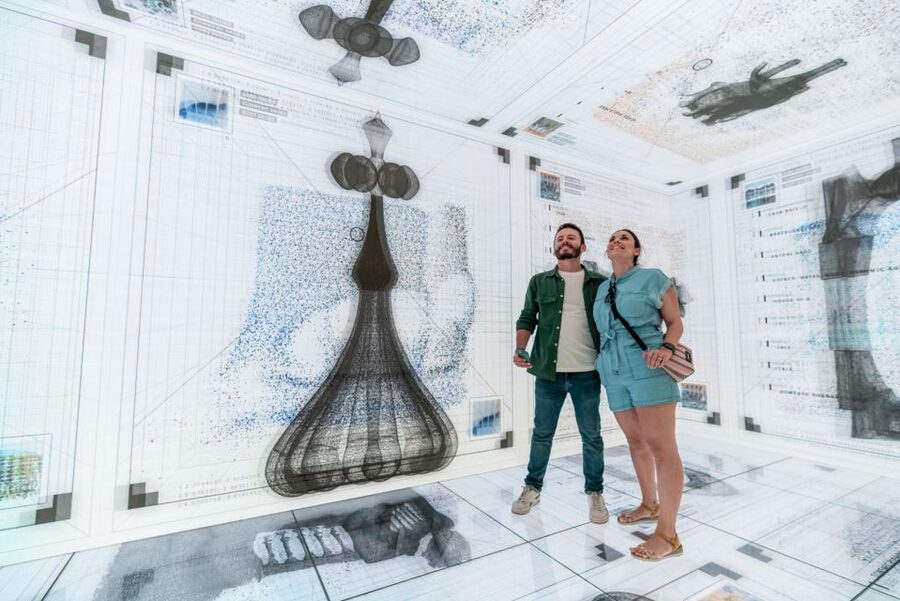
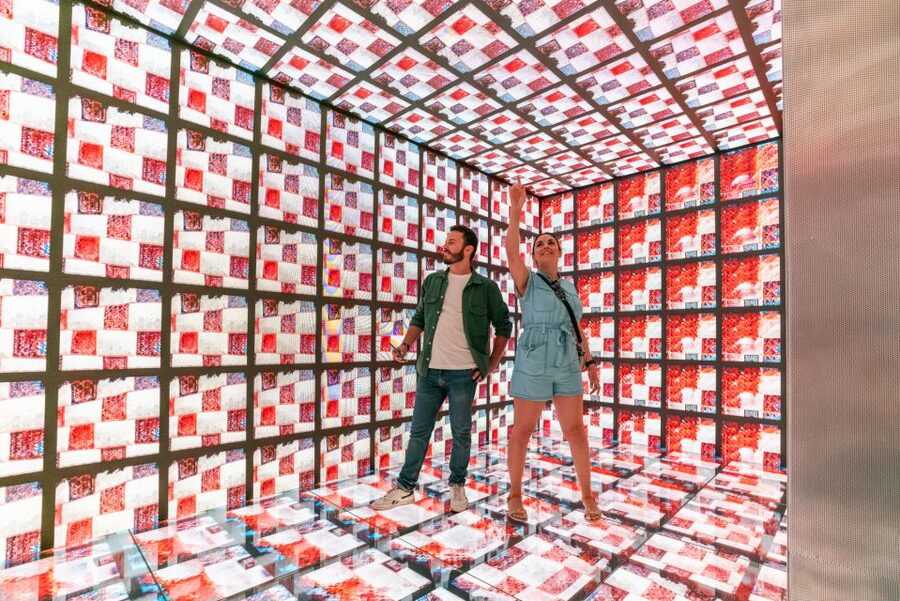
The Gaudí Cube is the visit’s signature digital room. It is described as a six-sided LED cube, with projections surrounding you rather than appearing on a single flat wall. The effect is designed to place you inside an abstract Gaudinian world of light, sound, and shifting forms.
This is the part most likely to delight children and anyone who enjoys visual art. It is also the section that may feel least like a house museum. I see it as a conclusion rather than a replacement for the architecture. Take it in, enjoy the spectacle, then remember that the real achievement is the building you have just crossed.
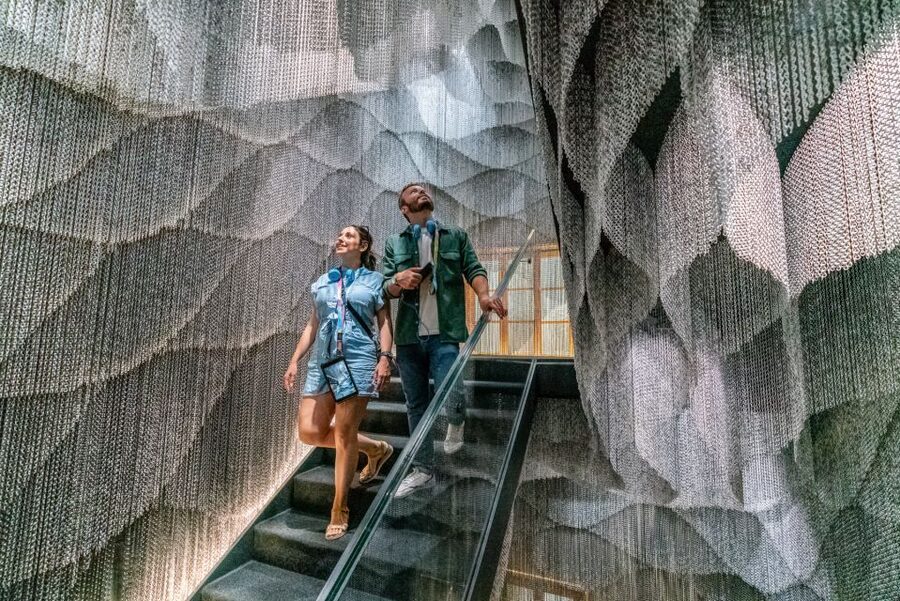
The visit also includes a new vertical communication area designed by Japanese architect Kengo Kuma. Its centerpiece is a floating ladder made from 13 tons of polished marble, suspended in the air. That is an extraordinary modern intervention inside a Gaudí building, and it gives you something to compare with the original design.
There is also a six-sided indoor mapping presentation in a patio connected with Gaudí’s use of light. These additions show how Casa Batlló continues to present itself as a place where architecture and technology meet. They will appeal most to visitors who want a polished, theatrical experience rather than a purely academic one.
Lord Batlló’s bedroom and the ticket choices
The basic entry includes Casa Batlló and the audioguide. Higher ticket levels may add a fast pass, upgraded features, or access to Lord Batlló’s bedroom. The supplied options specifically identify bedroom access with the Gold ticket, while some booking choices use Silver, Gold, or Platinum names.
Check the exact inclusions at the time of purchase. The labels can matter, especially if you want priority entry or the full set of rooms and presentations. Do not assume that every premium option includes the same extras.
Is the upgrade worthwhile? For a first visit, I would consider it if you have a strong interest in Gaudí, dislike waiting in lines, or want to see as much of the house as possible. The bedroom access gives the visit more of a private-home feel, while priority entry can be valuable during crowded periods.
If your time and budget are tight, standard entry still gives you the central experience: the unusual interiors, the audio guide, the visual features, and the Gaudí Cube. The higher price is easier to justify when you plan to stay longer and use the additional access rather than simply passing through.
Rooftop views, patio time, and the evening atmosphere

The upper areas bring the house’s playful character to a close. The rooftop is one of the places where Gaudí’s shapes become easiest to read as a whole. You see the roof details, changing colors, and organic forms that make Casa Batlló so recognizable from the street.
Some parts of the visit also allow you to pause on the patio and roof area. Drinks are available in these spaces, including alcoholic options. That can turn a one-hour architectural stop into a slower late-afternoon outing, although the cost of refreshments adds to an already expensive ticket.
Time of day changes the mood. In daylight, you can study the surfaces and colors more clearly. After dark, lighting on the patio and exterior creates a more theatrical atmosphere. The late afternoon, around 5 to 7 p.m., can be a good compromise because you may experience both the interior in fading light and the illuminated areas outside.
The average visit takes about one hour and 15 minutes. I would allow closer to 90 minutes if you want to listen to the guide carefully, stop for photos, and enjoy the final presentations. If you add drinks or take your time with the rooms, two or three hours is possible.
What $34 buys you

At roughly $34 per person, Casa Batlló costs more than a quick church or museum admission. You are paying for access to a UNESCO World Heritage Site, but also for the presentation system, audio equipment, digital rooms, staff support, and the carefully staged route through the house.
The value depends on how you visit. If you hurry through in 45 minutes and skip the final visual section, the price will feel steep. If you use the audio guide, study the rooms, see the rooftop, and allow time for the Cube, the cost becomes easier to defend.
I would compare it with the kind of experience you want in Barcelona. Casa Batlló is not the same as a quiet collection of paintings or a conventional monument tour. It is more active and theatrical, with plenty of visual stimulation. That makes it a strong choice for families, first-time visitors, design fans, and people who want an easy introduction to Gaudí.
It is less suited to anyone seeking a low-cost activity or a purely factual lecture. There is no standard live guide leading the whole route, so the quality of your visit depends partly on how much attention you give the audio and displays.
Practical advice for a smoother visit
Book ahead if your schedule is fixed. Casa Batlló can develop long entry lines during busy periods, and a popular time may leave you waiting outside before you begin.
Wear comfortable shoes. The route involves moving through several levels and spaces, and you will likely stop often. A stroller storage area is available, and the site is wheelchair accessible.
Do not set your visit immediately before a restaurant reservation. The advertised average is 75 minutes, but a careful visit can take considerably longer. Add a buffer for entry lines and the temptation to stop on the patio.
Keep the audio equipment close and follow the route to the last room. The final visual presentation is easy to miss if you assume the tour ends once you have seen the main interiors.
If you are sensitive to heat, plan accordingly. Casa Batlló can feel hot inside at times, especially when the building is crowded. A quieter evening visit may be more comfortable.
The site also works to support autistic visitors and has a neurodivergent team assisting people, through its collaboration with Specialisterne. That is useful information for anyone who wants to know more about the staff approach before arriving.
Who should book Casa Batlló?
I would book this experience if you want to see Gaudí’s design up close but prefer to explore independently. The 15-language guide, visual tablet-style material, and flexible pace make it accessible even if you know little about Catalan Modernism.
Families should like the moving images, sound, and Cube, while architecture fans will find plenty of real detail in the plumbing, airflow, light, surfaces, and structure. Couples may enjoy visiting late in the day, when the patio and roof areas take on a more atmospheric look.
I would choose a higher ticket level if Lord Batlló’s bedroom, priority entry, or the fullest route matters to you. I would choose standard entry if you mainly want the house, audio guide, and Cube without paying for every extra.
Should you book it?
Yes, if Casa Batlló is high on your Barcelona list and you can accept the price. The building is the reason to come, while the audio, augmented reality, music, and Gaudí Cube give you more ways to understand it.
Book with realistic expectations. This is not a short, cheap stop, and it is not a conventional guided tour. Give it at least 75 to 90 minutes, avoid the busiest time if possible, and do not leave before the final digital presentation. For the fullest visit, Gold or another clearly defined premium option can make sense, but standard entry still delivers the essential Casa Batlló experience.
FAQ
How long does the Casa Batlló visit take?
The average visit takes approximately one hour and 15 minutes. You may spend closer to 90 minutes or several hours if you listen carefully, take photos, visit the rooftop and patio, or stop for drinks.
Is the audio guide included?
Yes. The audio guide is included with the entrance ticket and is available in Catalan, Chinese, Dutch, English, French, German, Italian, Japanese, Korean, Polish, Portuguese, Romanian, Russian, and Spanish.
What is included with the Gold ticket?
The Gold option includes access to Lord Batlló’s bedroom. Ticket levels can include different extras, so check the exact booking details if you also want a fast pass or other premium features.
Is Casa Batlló wheelchair accessible?
Yes, Casa Batlló is wheelchair accessible. A storage area is also available for strollers.
Can I visit Casa Batlló at any time during the day?
The activity is valid for one day, but you need to check availability for the starting times. Busy periods may bring long lines at the entrance.
What is the Gaudí Cube?
The Gaudí Cube is a six-sided LED room with projections and sound. It is part of the digital presentation near the end of the visit, so allow enough time to see it before leaving.
Latest audio tours in Barcelona
- Self-Guided Audio Tour-The Surrealist Barcelona of Dalí and Gaudí★ 3.5 · 8 reviews
- Self-Guided Audio Tour – Legends of the Gothic Quarter★ 4.5 · 6 reviews
- Barcelona Self-Guided Audio Tour★ 3.0 · 6 reviews
- Montjuïc Cable Car Entry Voucher with Audio Tour on Your Phone★ 3.5 · 37 reviews
- Montjuic Park Walking Tour with Audioguide on Your Smartphone★ 3.0 · 4 reviews
- Self-Guided Audio Tour of Barcelona City★ 3.0 · 2 reviews
- Gaudi and La Sagrada Familia Exterior Self-Guided Audio Tour★ 3.5 · 25 reviews
- Sagrada Familia External Audio Tour – The 3 Iconic Facades★ 5.0 · 3 reviews
Barcelona Audio Tours, compared.
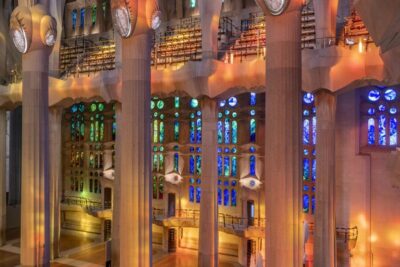
Sagrada Familia Entry Ticket with Audio Guide
Read our review →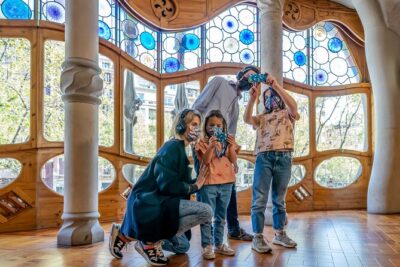
Casa Batllo Admission Ticket with Intelligent Audio Guide
Read our review →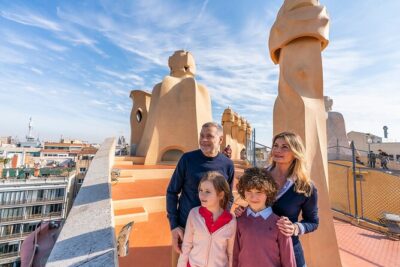
La Pedrera-Casa Mila Admission Ticket with Audioguide
Read our review →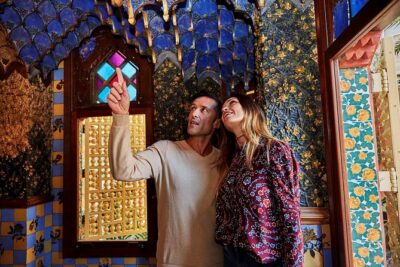
Gaudi´s Casa Vicens Skip the Line Ticket with Audioguide
Read our review →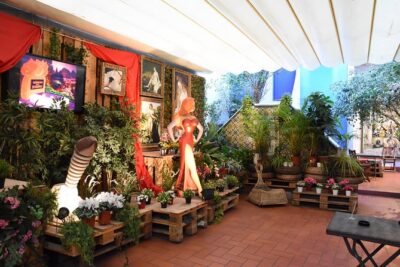
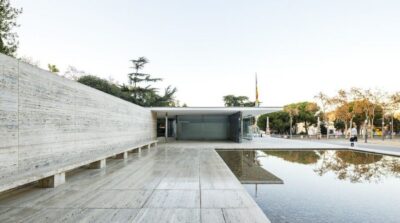
Mies van der Rohe Pavilion Ticket and Audio Guide
Read our review →
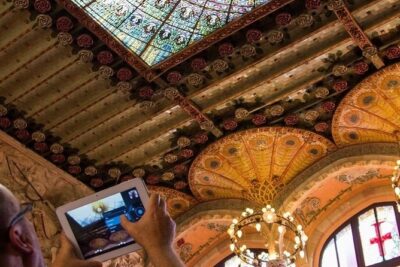
Palau de la Musica Catalana Admission Ticket with Audioguide
Read our review →Browse the lists this tour appears in