
Reviewed · PARIS
Paris: Openair Double Decker Bus Audio-Guided City Tour
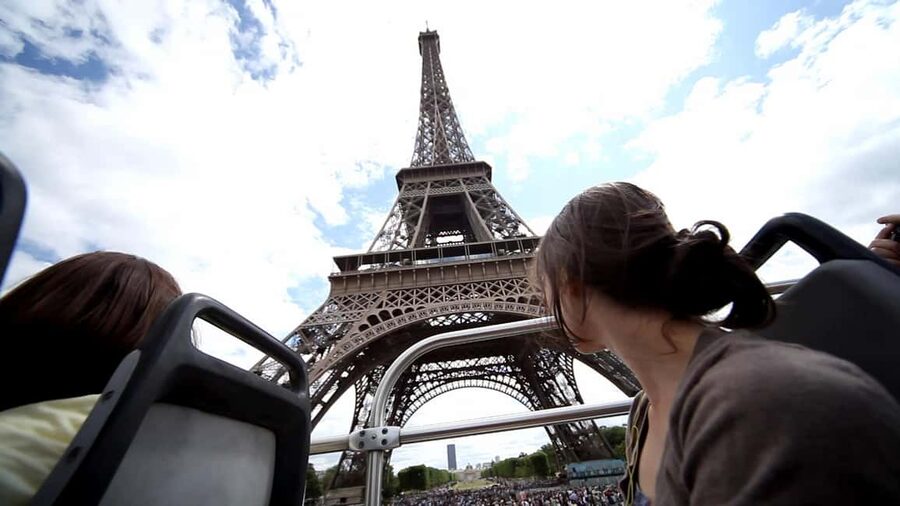
Paris reveals itself quickly from the upper deck of a covered double-decker bus. In about 90 minutes, you can pass the Eiffel Tower, cruise along the Champs Elysees, and see Notre Dame without spending the day walking between monuments. It is a practical first look at the city, especially when rain, heat, or tired feet get in the way.
I like the covered panoramic roof, which keeps the tour comfortable in poor weather, and the wide central Paris route, which links famous sights that are spread across several neighborhoods. The audio commentary also comes in many languages, making this a useful introduction for mixed-language groups.
The main drawback is that this is a sightseeing loop, not a stop-and-explore tour. Traffic can slow the bus, the automatic narration cannot answer questions, and upper-deck seats may be gone if you arrive late.
Key points to know before you book
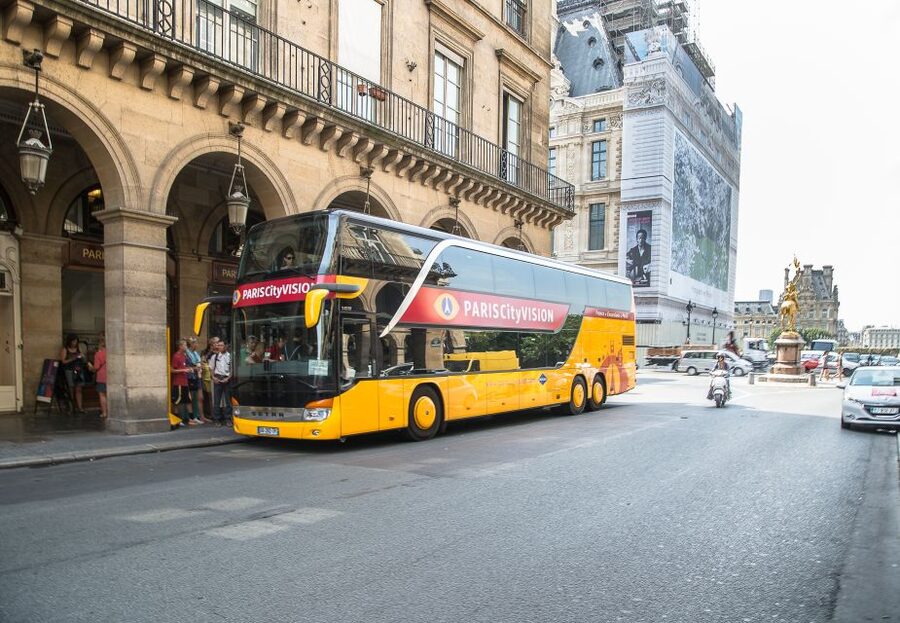
- Covered double-decker bus: You get broad city views without being exposed to rain and wind.
- A fast Paris overview: The 90-minute route passes the Eiffel Tower, Arc de Triomphe, Notre Dame, Les Invalides, Bastille, and Luxembourg Gardens.
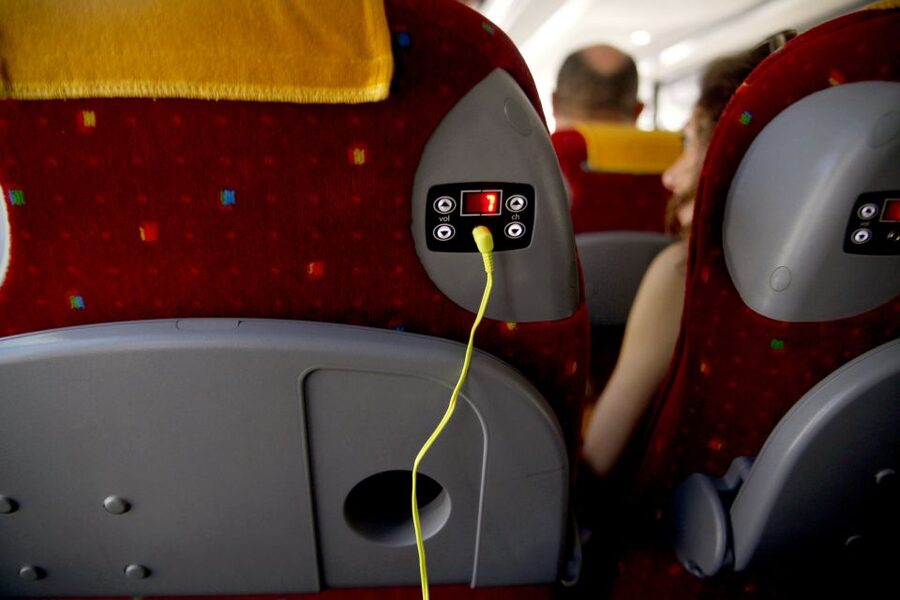
- Audio through an app: Download the audio guide to your device and bring headphones.
- Meeting point near the Eiffel Tower: Meet at Place de Sydney, at the corner of Avenue de Suffren and Rue Jean Rey.
- Good value for a first day: At about $34 per person, the tour gives you an efficient orientation before you explore on foot.
- Not a hop-on, hop-off ticket: You stay on the scheduled tour and do not get repeated loops or free time at each sight.
A quick ride through the Paris you came to see
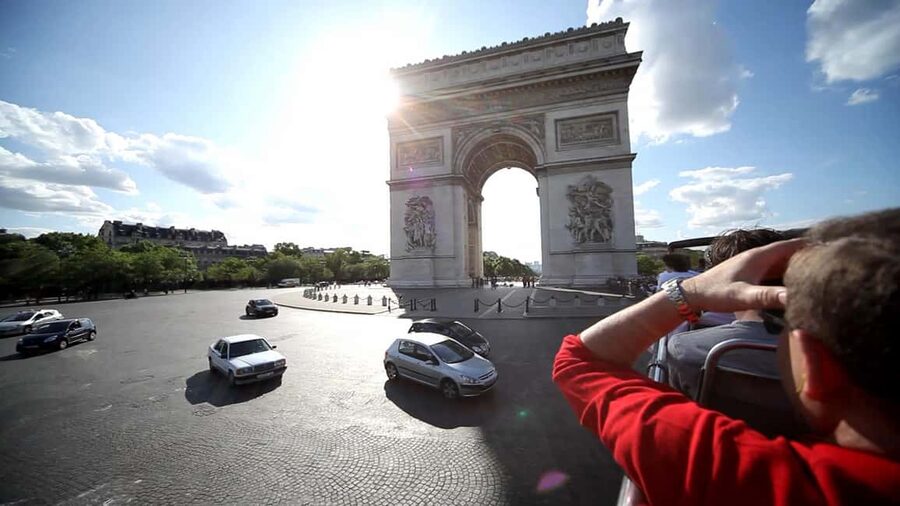
This ParisCityVision outing is built around one simple idea: show you the main sights without asking you to master the Metro on your first day. The bus moves through the center, and the commentary adds dates, architectural details, and background as the monuments pass your window.
You will not get a full visit to any attraction. Instead, you get the outside view and the useful sense of how Paris fits together. I find that valuable because the city’s famous sights are not all clustered around one square. The Eiffel Tower, Arc de Triomphe, Notre Dame, the Opera district, and Luxembourg Gardens require several different walks or Metro rides.
The bus is enclosed and air-conditioned. That matters more than it might sound. Open-top buses can be enjoyable on a sunny afternoon, but rain and wind can turn them into a chilly chore. This bus has a covered upper deck, and past riders found it especially comfortable during wet weather. In hot conditions, the lower level offers the better air-conditioned seat.
The published price is $34 per person. That is reasonable if you want a short orientation, a protected seat, and commentary in your own language. It is less compelling if you already know Paris or want to spend your time inside monuments.
More Bus Audio Tours in Paris
- Paris: Tootbus Panoramic by Night Bus Tour with Audioguide
★ 4.3 · 1,126 reviews - Paris: Audio-Guided Bus Tour & Seine River Cruise
★ 3.6 · 266 reviews - Audio tour + Hop-On-Hop-Off Bus Tour
★ 3.5 · 30 reviews
Starting near the Eiffel Tower at Place de Sydney
The meeting point is Place de Sydney, 75015 Paris, at the corner of Avenue de Suffren and Rue Jean Rey. You can reach it by Metro line 6 at Bir-Hakeim, RER C at Champ de Mars Tour Eiffel, or bus 82 at Champ de Mars.
I would allow extra time to find the exact corner. The meeting point is close to a major sight, but the nearby streets and large public spaces can make the first meeting less obvious than expected. One past rider had trouble locating it, so do not treat the Eiffel Tower as a precise meeting point. Check the street names before you leave your hotel.
There is no hotel pickup or drop-off. The tour begins and ends according to the operator’s arrangement, so read the booking details carefully if you have an evening reservation or a train to catch.
Arrive early if sitting upstairs matters to you. The top level gives you the best view over buildings and monuments, but seats can fill. The lower level is more sheltered and comfortable in heat or rain, though window views can be less clear from some seats.
Opera Garnier and the grand center of Paris
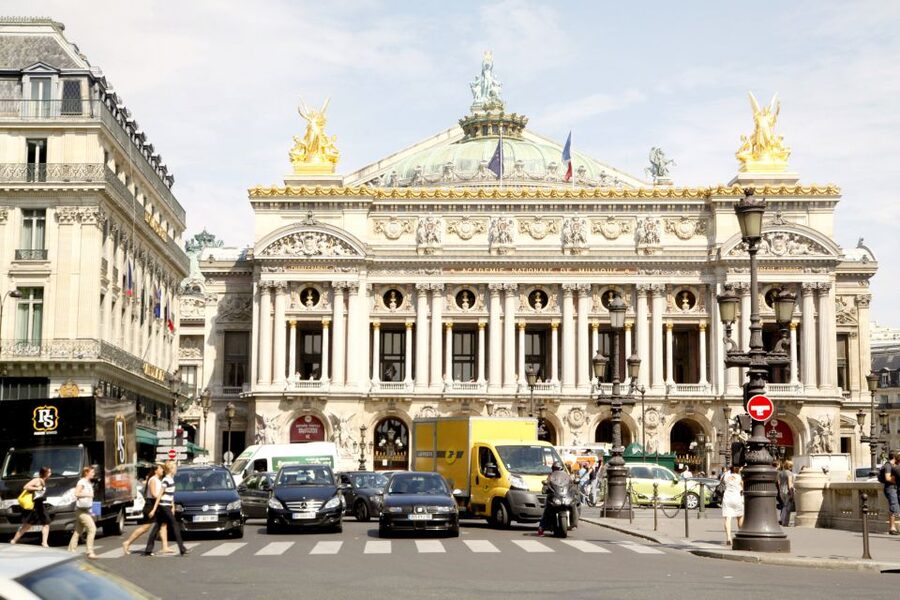
The route takes you through the Opera district, beginning with the area around Opera Square and the Opera Garnier. This part of Paris shows the city at its most formal, with broad avenues, grand facades, and the polished scale of the late nineteenth-century center.
From a bus seat, you get an architectural introduction rather than a detailed visit. You can look for the Opera Garnier’s ornate exterior and listen to the commentary explain how Paris developed around major avenues and public buildings.
This is a good early stop in the mental map of the city. The Opera area connects shopping streets, theaters, boulevards, and several Metro lines. You may not remember every date from the audio, but you will understand why this part of Paris feels different from the narrow streets around the Latin Quarter or the medieval center near Notre Dame.
The audio is delivered through an app on your own device. Commentary is listed in English, French, Spanish, German, Italian, Portuguese, Russian, Japanese, Chinese, and other languages depending on the tour setup. The information provided is not fully consistent about the language list, so confirm your preferred language at booking.
Bring headphones. They are specifically listed as something you need, and headphones are not included in the current inclusions. The audio guide is included through the app, but your phone must be ready to use it.
Place de la Concorde and the Champs Elysees
Next, the bus reaches Place de la Concorde, one of Paris’s great open spaces. The Obelisk of Luxor gives the square an instantly recognizable centerpiece, while the wide roadways help explain the scale of central Paris.
From here, the bus heads along the Champs Elysees. This is one of the route’s most enjoyable stretches because you experience the grand axis rather than simply viewing one isolated monument. The avenue leads toward the Arc de Triomphe, with the city’s formal planning visible in the distance.
Traffic is the catch. The Champs Elysees and the area around the Arc de Triomphe can be slow, particularly when the city is busy. That does not make the route pointless, but it means the 90-minute schedule is not a promise that every minute will contain a new sight. You may spend part of the ride waiting at lights or moving slowly through traffic.
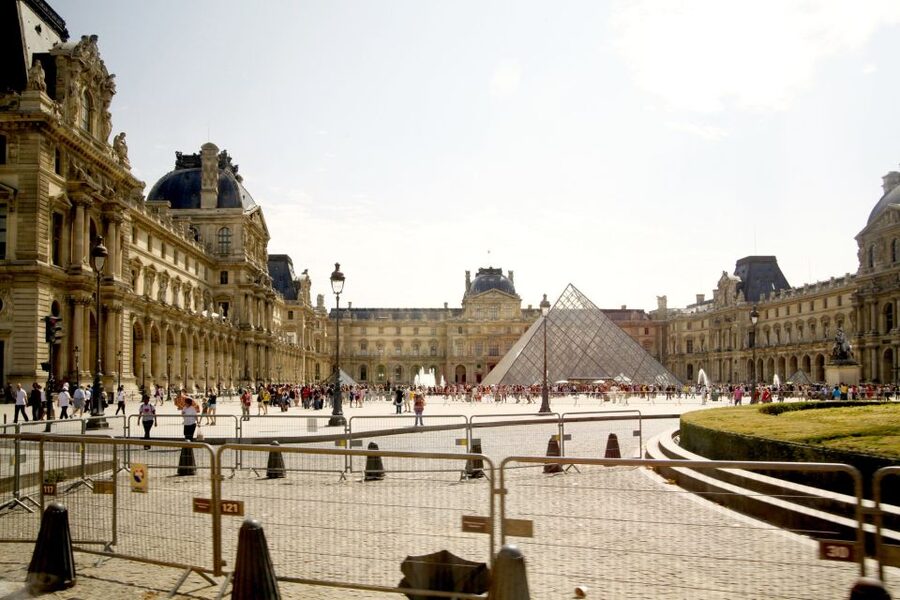
I like this section for a first visit because it helps you place the Louvre, Tuileries, Concorde, Champs Elysees, and Arc de Triomphe on one line. Later, when you explore on foot, the city feels less scattered.
More City Audio Tours in Paris
- Paris Luxury Minivan City Tour with Audio Guide
★ 5.0 · 2 reviews - Private Auto Paris City Tour with Audio Guide
★ 5.0 · 2 reviews - Rome: City Sightseeing Hop-on Hop-off Bus with Audioguide
★ 4.0 · 16,045 reviews - Milan: City Sightseeing Hop-On Hop-Off Bus with Audio Guide
★ 4.0 · 6,256 reviews
The Arc de Triomphe and Paris’s grand avenues
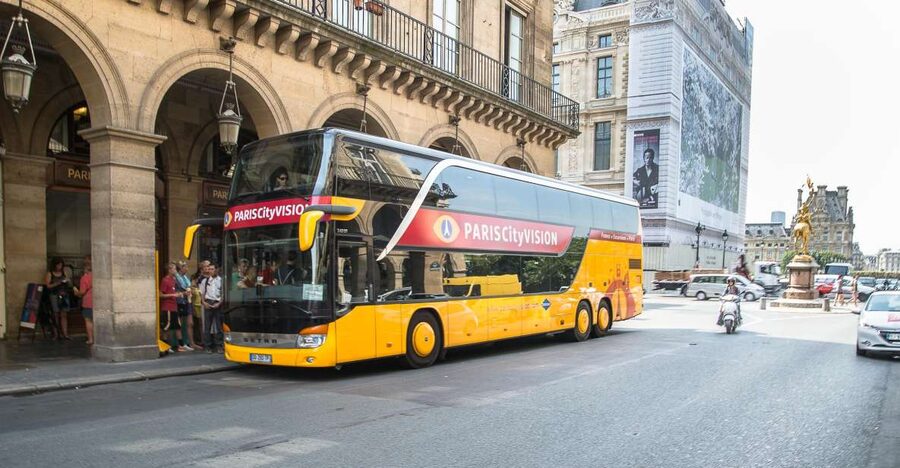
The Arc de Triomphe is one of the tour’s headline sights. From the bus, you see the monument at the end of the Champs Elysees and appreciate the traffic circle and radiating avenues around it.
You will not climb the arch or enter its museum. This is a passing view, so keep your camera ready and listen to the narration before the bus reaches the monument. The view can be difficult from some seats, especially when the bus turns or traffic blocks the sightline.
This is also where the difference between a panoramic tour and a walking tour becomes clear. The bus gives you speed and context. A walking visit gives you time to examine the reliefs, cross the street, and climb for the city view. If the Arc de Triomphe is high on your list, use this ride as an introduction, then return separately.
The Eiffel Tower from Trocadero Square
The Eiffel Tower is the star of the route, and the approach through Trocadero Square provides one of the better outside views. The tower rises above the open space, giving you a strong photo angle and a sense of its size that is harder to grasp from directly underneath.
You should not expect tower entry as part of this basic bus ride. The tour passes the Eiffel Tower, and the published information notes that the tower may be replaced by Montparnasse Tower if the Eiffel Tower is unavailable for reasons outside the operator’s control.
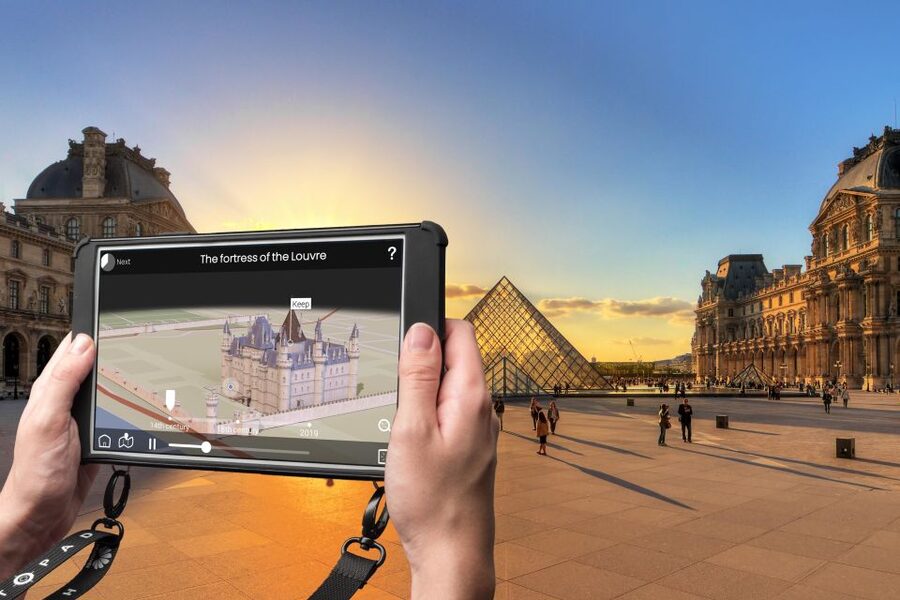
Some booking information also refers to an interactive city tour using a Histopad, with a refundable €30 deposit for the tablet. Treat that as a separate or optional format unless your reservation clearly includes it. The standard details list transportation, an audio app, and a hostess, not admission to the Eiffel Tower.
An evening departure can be especially appealing if the schedule allows it. One past rider enjoyed seeing the tower sparkle after dark. Still, confirm the exact starting time, since availability changes and the tour is not simply an all-day hop-on, hop-off service.
Les Invalides, Pont Neuf, and the city’s historic center
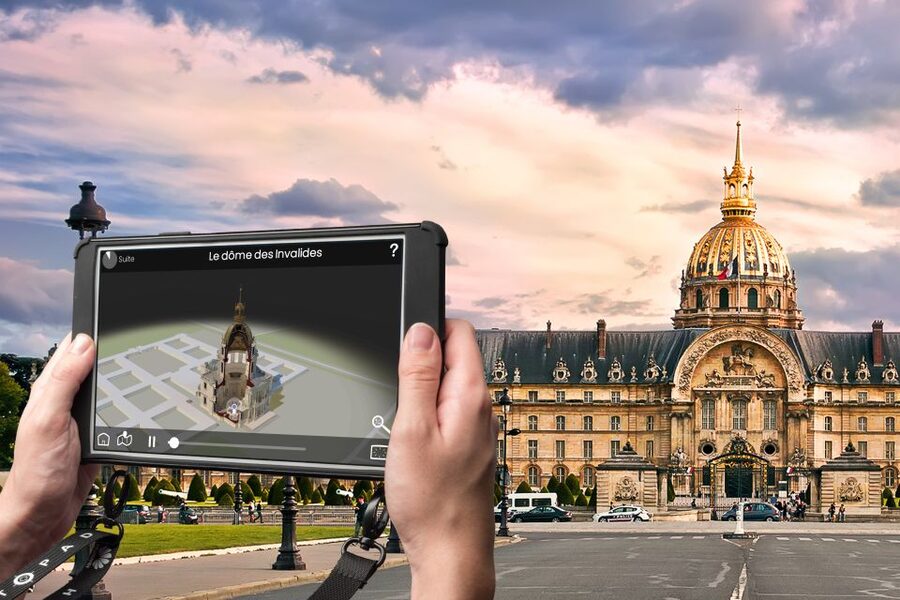
The route continues past Les Invalides, known for its grand dome and military associations. From the bus, the dome is the key visual marker. The audio helps connect the building to France’s national story, but you will not have time to visit the interior or museums during this ride.
Pont Neuf brings the bus toward the Seine and the historic center. Despite its name, the bridge is the oldest surviving bridge across the Seine in Paris. A passing view does not let you study its details, but it gives you a useful sense of how the river shapes the city.
This part of the tour is valuable because it links major sights that can otherwise feel separate. You are not just collecting postcard views. You are seeing how the river, bridges, boulevards, and public buildings form the structure of central Paris.
The bus route can be affected by road conditions. Earlier tour descriptions and rider experiences have reported rides shorter than the advertised two-hour version, with some returning after roughly 85 minutes, while other schedules describe about 90 minutes. I would plan around the stated 90 minutes and allow some flexibility for traffic and route changes.
Notre Dame, Bastille, and Luxembourg Gardens
The tour also passes Notre Dame Cathedral, one of the most important landmarks in the city. You see the cathedral from outside, not through an interior visit. The view still matters because Notre Dame anchors the Ile de la Cite and helps you understand the old heart of Paris.
Bastille Square adds another layer of the city’s story. It is a place of political memory as well as a working city crossroads. The bus gives you an overview, while the commentary explains why this location matters.
Luxembourg Gardens provides a change of mood. The gardens are associated with the Left Bank and the city’s slower, more residential side. From the bus, you get only a glimpse, but it can help you decide which areas deserve a longer walk later.
I would not expect equal detail at every sight. The route covers a lot, and some sections have more commentary than others. One past rider found stretches with little narration while the bus sat in traffic. That is a fair criticism of any recorded city tour, so bring your own curiosity and treat the audio as a guide, not a private lecture.
The audio guide and the role of the hostess
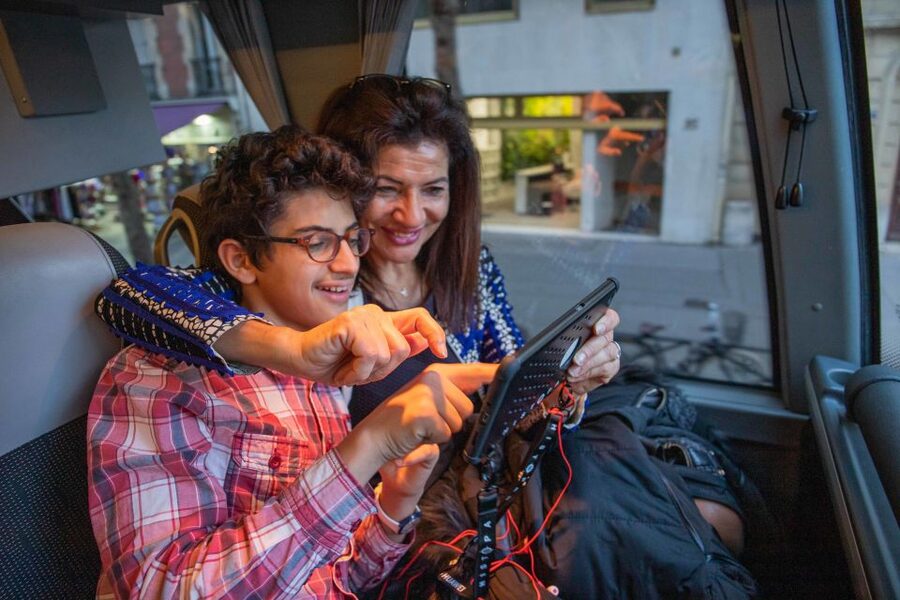
The experience includes a hostess, plus an audio guide accessed through an app. The hostess can help with the basic running of the tour, but the recorded narration cannot respond to questions. If you want a guide who can adjust the explanation to your interests, this is not the right format.
The app-based system is convenient because you can select among several languages. It also means you need a charged phone, a download or connection as required by the app, and headphones. The supplied information specifically tells you to bring headphones, so do not assume the bus will provide them.
Some older descriptions mention earphones being handed out, but the current details list headphones as your responsibility. I would follow the current instruction and bring your own pair.
The commentary works best when you listen before the bus reaches each monument. If you are chatting, taking photos, or watching traffic, you may miss the short explanation before the next sight appears.
Comfort, weather, and choosing your seat
The enclosed design is one of the strongest practical reasons to choose this tour. In rain, you remain dry. In wind, you avoid the unpleasant blast that can make an open-top ride tiring. The bus has air conditioning, though the upper deck may not cool as effectively as the lower level.
For the best overall view, arrive early and try for a window seat upstairs. A seat near the front or along the side can help with photographs, but no seat guarantees a clear view at every turn. Window reflections and traffic can interfere with pictures.
For comfort in hot weather, I would choose the lower deck. For a broad view over Paris rooftops, I would choose the upper deck when the weather is mild. Families and older travelers may appreciate the enclosed cabin and limited walking, while anyone carrying large luggage should choose another plan because large bags are not allowed.
Pets and smoking are also not permitted. These rules are straightforward, but they matter if you are combining the tour with a transfer or a full day of sightseeing.
Who gets the most value for $34?
I think the price works best for three kinds of visitors. First, it suits a first-time visitor who wants to get oriented before walking. Second, it helps you cover major sights during a short stay. Third, it gives you a dry and comfortable alternative when the weather is unpleasant.
It also works well for families or mixed-age groups who cannot spend several hours walking. The bus lets you see a lot while saving energy for a museum, dinner, or evening stroll.
The value drops if you expect a full guided tour with stops. You are paying for transport, a city overview, and multilingual commentary, not monument admission or personal guiding. You also do not get the freedom to hop off, explore, and catch a later bus.
I would compare it with a walking tour if you care most about small streets, local neighborhoods, or detailed stories. I would choose this bus ride if you want the broad outline of Paris with little physical effort.
Booking details that matter
The tour offers free cancellation up to 24 hours before departure, and the booking option allows you to reserve now and pay later. Starting times vary, so check the available departure before making other plans.
The standard duration is 90 minutes. Do not schedule a tight connection immediately afterward, since city traffic can affect the timing.
The experience provider is ParisCityVision. The meeting point is near the Eiffel Tower, and you must make your own way there. Bring headphones, avoid large bags, and keep your phone ready for the audio app.
Should you book this Paris bus tour?
Book it if you want a fast, weather-protected introduction to central Paris. The covered double-decker bus, multilingual audio, and route through the Eiffel Tower, Champs Elysees, Arc de Triomphe, Notre Dame, Les Invalides, Bastille, and Luxembourg Gardens make it a sensible first-day activity.
Skip it if you want long stops, personal questions answered, or entry to the monuments. The ride is best viewed as a moving orientation, not a substitute for visiting Paris’s museums and towers.
For many visitors, I would schedule it early in the trip, arrive ahead of time for an upper-deck seat, and use the route to decide where to return on foot. At $34, that is a fair exchange for seeing the city’s main outline without wearing out your shoes.
FAQ
How long does the Paris bus tour last?
The stated duration is 90 minutes. Traffic and route conditions can affect the exact timing, so allow some flexibility after the tour.
Where does the tour meet?
Meet at Place de Sydney, 75015 Paris, at the corner of Avenue de Suffren and Rue Jean Rey.
How can I reach the meeting point?
You can take Metro line 6 to Bir-Hakeim, RER C to Champ de Mars Tour Eiffel, or bus 82 to Champ de Mars.
Is the Eiffel Tower included inside the tour?
No. The bus passes the Eiffel Tower and views it from the city route, but entry is not included in the standard tour details.
What happens if the Eiffel Tower is unavailable?
The tour information says the route will visit Montparnasse Tower instead if the Eiffel Tower is unavailable for reasons outside the operator’s control.
Do I need to bring headphones?
Yes. Headphones are listed as something to bring, and they are not included in the current tour details.
Is this a hop-on, hop-off bus tour?
No. This is a scheduled panoramic city tour. You remain on the bus rather than getting off at each sight for independent visits.
Latest audio tours in Paris
- The Tuileries Garden’s Classic Sights: A Self-Guided Audio Tour★ 4.0 · 3 reviews
- Audioguide – The Eiffel Tower and its secrets★ 4.0 · 4 reviews
- A Self-Guided Audio Tour Around Parc Montsouris★ 3.5 · 6 reviews
- The French Revolution: Self Guided Audio Tour of Paris★ 4.5 · 3 reviews
- Summit Eiffel Tower Audio Guide Tour with Unlimited Time Access★ 4.5 · 58 reviews
- Self-Guided Audio Tour -The Eiffel Tower, Exterior★ 4.0 · 9 reviews
- Trendy Marais, smartphone audioguided walking tour★ 5.0 · 6 reviews
- Self Guided Tours in Paris with 100 Captivating Audio Stories★ 3.5 · 3 reviews
Bus Audio Tours, compared.
City Sightseeing Hop-on Hop-off Bus with Audioguide
Read our review →
City Sightseeing Hop-On Hop-Off Bus with Audio Guide
Read our review →

City Bus Tour with Audio Guide and Lake Cruise
Read our review →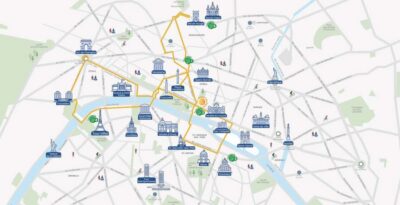
Tootbus Panoramic by Night Bus Tour with Audioguide
Read our review →
City Sightseeing Hop-On Hop-Off Bus Tour with Audio Guide
Read our review →
Trakai Tour with Audio Guide and Minibus Transfers
Read our review →Browse the lists this tour appears in