

Reviewed · FRANCE
Lyon: Museum of Fine Arts Ticket & City Audio Guide
Lyon’s Museum of Fine Arts packs 5,000 years of art into the former Saint-Pierre Palace, and the journey from ancient funerary masks to Picasso gives this experience real range. I like the Egyptian collection for its direct, human glimpse into death rituals, and I like the chance to see major names such as Monet and Picasso without spending a full day in a giant museum.
I also like that the ticket adds a city audio guide, so you can continue exploring Lyon after the museum. The main limitation is simple: the museum ticket covers only the permanent exhibitions, and the city guide is not a live tour. You need your own charged phone and headphones, and you will not receive the museum’s separate audio guide.
Key points to know before you go
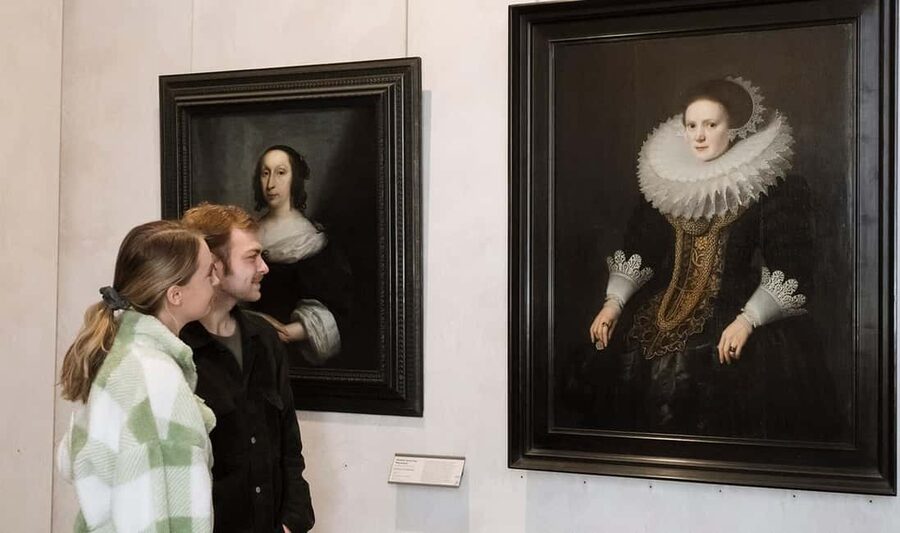
- 5,000 years under one roof: Move from ancient Egypt and Greece through Renaissance ceramics to modern painting.
- Saint-Pierre Palace setting: The museum occupies a former palace at 20, place des Terreaux, making the building part of the visit.
- Egyptian funerary art: See a funerary mask and coffin while learning about ancient death customs.
- Big-name modern art: Look for works by Monet and Picasso, along with Nicolas Poussin’s The Flight into Egypt.
- City sights after the museum: Use the audio guide for landmarks including Saint Jean-Baptiste Cathedral and Place des Terreaux.
- Bring your own equipment: Download the city guide before arrival and carry headphones plus a charged smartphone.
Starting at Lyon’s Saint-Pierre Palace
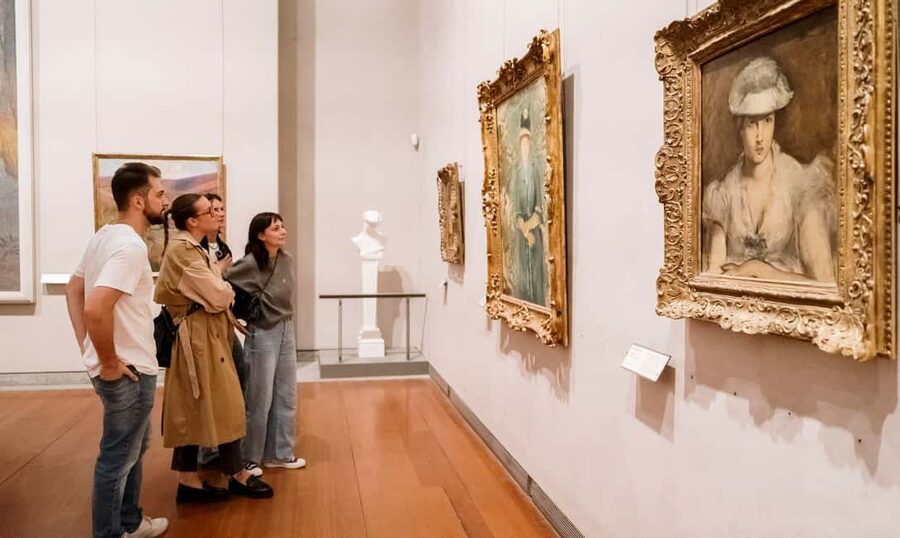
Your visit begins at the Museum of Fine Arts at 20, place des Terreaux. You go directly to the entrance, with your ticket downloaded and ready to show. The voucher’s QR code also gives you the information needed for check-in and lets you download the city audio guide before you arrive.
The address is useful in more ways than one. You are not simply visiting an art collection in a plain gallery building. The museum occupies Saint-Pierre Palace, an old religious and civic setting that gives the first part of the experience a sense of place. The exact architectural details included in your visit can depend on how much time you spend looking around, but the building itself helps separate this from a quick stop at a modern exhibition hall.
The planned duration is two hours. That is enough for a well-chosen visit, but not enough to study every room in detail. I would treat the time as a route through the collection rather than a challenge to see everything. Focus on the ancient Egyptian material, Greek sculpture, Renaissance ceramics, and the artists you most want to see.
You can use the museum visit as the first half of a self-guided day in central Lyon. Afterward, the city audio guide gives you a reason to leave the galleries and continue on foot through the city.
More Museum Audio Tours in France
- Paris: Louvre Museum Hosted Entry and Mona Lisa Audioguide
★ 4.6 · 5,235 reviews - Paris: Orsay Museum Entry Ticket and Digital Audio Guide App
★ 4.4 · 3,170 reviews - Louvre Museum Timed Entrance Ticket with Audio Guide
★ 3.0 · 453 reviews
Ancient Egypt, where objects tell personal stories
The Egyptian section offers some of the most distinctive material in the visit. You can see a funerary mask and coffin, along with objects connected to ancient death rituals. These pieces do more than provide an old-world visual spectacle. They show how people prepared for death and imagined what came after it.
I find funerary objects especially useful in a museum with such a wide time span because they give you a clear starting point. You are looking at practical and spiritual objects made for a specific purpose, not only decorative art. The subject also makes the collection feel personal. A mask and coffin were tied to an individual, a family, and a set of beliefs about the body.
Do not rush through this section simply because the museum also contains famous European paintings. The Egyptian objects supply context for the rest of the visit. You begin with art linked to ritual and survival, then move through sculpture, religious painting, ceramics, and modern art. That broad arc is one of the strongest reasons to choose this ticket.
The supplied information does not identify every Egyptian object or provide a room-by-room route, so I would not arrive expecting a specialist Egyptian exhibition. Instead, think of it as one important chapter in a very large collection.
Ancient Greece and the Kore sculpture
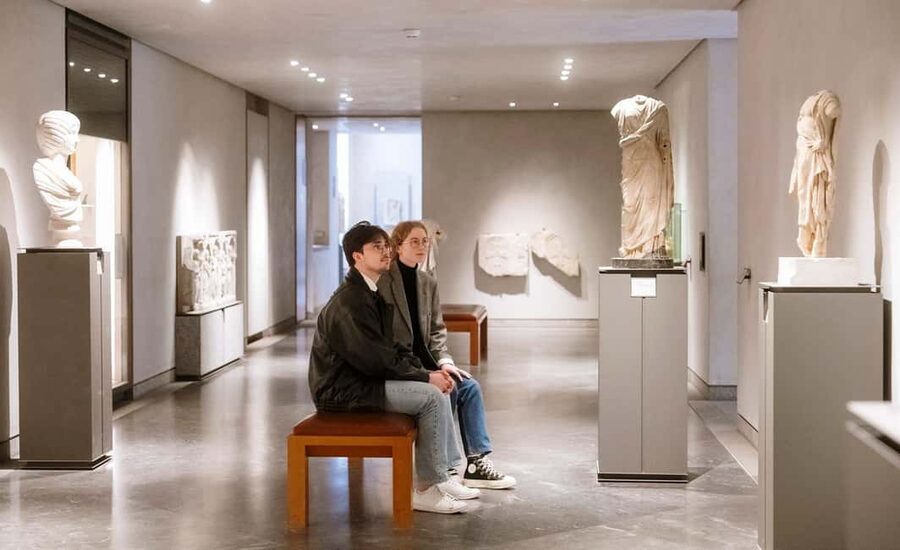
The Greek collection gives you a different view of the human figure. The Kore sculpture is specifically highlighted, and it provides a chance to see how ancient Greek artists represented a standing female figure through pose, clothing, and formal design.
A museum visit can make Greek sculpture seem familiar because you have seen reproductions in books and online. Seeing an original object in a gallery changes the experience. Scale, surface, and the marks of age become easier to notice. You can spend a few quiet minutes looking at the sculpture without needing to treat it as a quick photo stop.
The Greek works also help you compare different artistic aims. Egyptian funerary objects are bound closely to ritual and burial. Greek sculpture focuses more directly on the human form, while later European paintings bring gesture, story, and emotion into the picture. The museum’s long timeline lets you make those comparisons in one place.
The two-hour schedule means you should keep moving at a comfortable pace. If ancient art is your main interest, give Egypt and Greece more of your time, then use the remaining minutes for the works you already know you want to find.
Renaissance ceramics and Nicolas Poussin

The Renaissance collection adds another turn in the story. Here, ceramics show that art is not limited to canvas and marble. Shape, surface, pattern, and use all matter. If you tend to skip decorative arts in favor of painting, this is a good place to slow down and consider how carefully made household or ceremonial objects can carry artistic value.
Nicolas Poussin’s The Flight into Egypt is another named highlight. The painting gives you a clear stop to seek out, especially if you enjoy religious art or the careful arrangement of figures and landscape. The title points to a familiar biblical episode, but the painting belongs to a particular period and artistic tradition, so it fits neatly into the museum’s movement from earlier art toward later European painting.
I appreciate having a few specific works to look for. A very large museum can feel unfocused when you do not know where to begin. Here, the Egyptian mask, the coffin, the Kore sculpture, the Renaissance ceramics, and Poussin’s painting give you anchors.
The collection description does not provide a detailed floor plan or guarantee the position of every work on the day of your visit. Museum displays can change, and you should allow for the possibility that some pieces require a little searching.
Another self-paced route in France:
- Paris: Illuminations River Cruise with Audio Commentary
★ 4.3 · 12,340 reviews - From Paris: Giverny Day Trip with Audio Guide or Live Guide
★ 4.3 · 2,372 reviews - Paris: Eiffel Tower Access w/ Audioguide and Optional Cruise
★ 4.0 · 1,630 reviews - Giverny and Monet’s House Half Day Trip from Paris Guide or Audio
★ 4.0 · 1,319 reviews
Monet, Picasso, and the modern end of the collection

The visit eventually reaches paintings by Monet and Picasso. Their presence gives the museum a strong appeal for people who want recognizable European art but do not want to spend all day in a specialist museum devoted to one period.
Monet offers a chance to consider how light, color, and brushwork can carry a painting. Picasso gives you a sharp contrast in approach, with a more experimental treatment of form and subject. The point is not to compare them as if one must win. Instead, the collection lets you see how artistic choices changed over time.
The invitation to take photos is useful, but check the museum’s own photography rules when you arrive. The experience specifically encourages snapshots of works such as Poussin, Monet, and Picasso, yet individual galleries can have their own restrictions. Keep your phone use respectful, especially in narrow rooms or near other people.
If modern art is your priority, do not spend the whole first hour in the ancient galleries. The two-hour length rewards a little planning. Decide in advance which period matters most to you, then use the collection’s broad range as an introduction rather than trying to inspect every label.
From the museum to Lyon’s major sights
The second part of the experience is a separate city audio guide. After the museum, you can explore Lyon with commentary in English or French. The guide covers major sights including Saint Jean-Baptiste Cathedral and Place des Terreaux.
This is a practical addition because the museum is already at Place des Terreaux. You can start with the square around you, then continue toward other central landmarks. The guide helps supply background as you walk, but it does not replace a live guide who can answer questions or adjust the route.
Saint Jean-Baptiste Cathedral gives the city tour a historic religious landmark, while Place des Terreaux connects directly with the museum’s setting. Hearing about both places helps you understand Lyon as more than a collection of isolated photo stops. The audio format is best for visitors who like to set their own pace and pause when they want.
The tour description calls Lyon the Capital of Lights, but it does not give a full route or exact number of stops. Do not assume that every famous attraction in the city is included. Use the audio guide for the highlighted sights and treat it as a useful orientation tool, not a complete substitute for a full city tour.
How the audio guide works in practice
You need a charged smartphone and your own headphones. Download the city guide before arrival by scanning the QR code on your voucher. Doing this in advance matters because it leaves less to sort out once you are standing outside the museum.
The guide is available in English and French. That makes the activity more useful for visitors who want basic context without joining a group. You can listen while walking, stop the commentary, and continue when you are ready.
There is no headset or mobile device included. The museum’s own audio guide is also not part of the ticket. This distinction is important. You are receiving city commentary through your own equipment, not a guided museum tour with loaned hardware.
I would bring headphones that are comfortable for walking and keep the phone fully charged. If you plan to use your phone for photos as well, a portable battery may be sensible, although one is not listed as required. The core requirement is simply your phone, headphones, and advance download.
What the $16 price really covers
At $16 per person, the ticket is priced as a modest combined museum and city orientation experience. The value comes from getting admission to the permanent collection plus an audio guide for Lyon, rather than paying for the museum alone and then arranging separate city commentary.
That value is strongest if you want a flexible afternoon with two connected parts. You can spend time with the art, then walk outside and listen to city information at your own pace. It is less compelling if you want access to temporary exhibitions, a live guide, or the museum’s own audio system, since none of those are included.
The ticket also avoids the need to choose between a museum day and a city sightseeing activity. You receive both, though neither part is designed as a full specialist experience. Art experts may want more time and a museum guide. City history enthusiasts may want a longer walking tour with a detailed route.
For many visitors, the price works best as an introduction to Lyon. You get a respectable sample of the city’s art collection and a starting point for seeing central landmarks, all within a short two-hour plan.
Who should choose this experience
I would recommend it to first-time visitors who want a manageable introduction to Lyon. It also suits people who enjoy moving between periods rather than spending an entire visit on one artist or century.
Families and mixed-interest groups may find the format useful because the museum offers several entry points. One person can focus on Egyptian funerary art, another can seek out Monet or Picasso, and everyone can regroup for the city walk. The audio guide also avoids the fixed pace of a group tour.
It is a good fit for independent visitors who already know how to use audio content on a phone. You choose your pace, your listening time, and the amount of attention given to each landmark.
I would hesitate if your main goal is a fully guided museum visit. The included commentary is for Lyon’s sights, not the museum collection, and there is no live guide. I would also hesitate if temporary exhibitions are your top reason for visiting, since the ticket does not include them.
Wheelchair access is available, which makes the activity suitable for visitors who need an accessible venue. You should still confirm any personal route requirements directly before arrival, since the supplied details do not describe every part of the building.
Practical timing and cancellation advice
The advertised duration is two hours, and you should check availability for the starting times offered on your date. The museum and city guide are not presented as a long, fixed group itinerary, so your pace will shape how much you see.
Have the ticket downloaded before you reach 20, place des Terreaux. Scan the QR code on the voucher to check in and to access essential information. Download the city guide before arrival rather than waiting until you are outside the museum.
Free cancellation is available up to 24 hours in advance for a full refund. That gives you some flexibility if your Lyon plans change, but the stated cutoff matters.
Should you book the Lyon Museum and City Audio Guide?
Book this experience if you want one affordable plan for art and central Lyon, and you are happy to use your own phone and headphones. The combination of Egyptian funerary objects, Greek sculpture, Renaissance ceramics, Poussin, Monet, and Picasso gives the museum visit plenty of variety.
Skip it if you need a live guide, a museum audio guide, or temporary exhibition entry. For everyone else, it is a sensible two-hour introduction: not a complete study of Lyon’s art or landmarks, but a flexible way to get both on your schedule.
FAQ
Where does the experience begin?
Go directly to the Museum of Fine Arts at 20, place des Terreaux in Lyon.
How long does the experience last?
The stated duration is two hours.
What does the museum ticket include?
It includes entry to the Museum of Fine Arts and access to its permanent exhibitions.
Are temporary exhibitions included?
No. Access to temporary exhibitions is not included.
Is a museum audio guide provided?
No. The museum audio guide is not included. The included audio commentary is for Lyon’s city highlights.
Which languages are available?
The audio commentary is available in English and French.
What should I bring?
Bring headphones and a charged smartphone. You should also download the city audio guide before arrival by scanning the QR code on your voucher.
Is the experience wheelchair accessible?
Yes, the activity is listed as wheelchair accessible.
Latest audio tours in France
- Rouen audio guided tour★ 4.0 · 19 reviews
- Rouen Cathedral Self Guided Audio Tour★ 4.0 · 2 reviews
- Rouen: Audio Guided City and Joan of Arc Tour★ 4.0 · 2 reviews
- The Hardest City to Invade: Saint Malo’s Secrets Audio Guide★ 4.5 · 9 reviews
- The Tuileries Garden’s Classic Sights: A Self-Guided Audio Tour★ 4.0 · 3 reviews
- The French Revolution: Self Guided Audio Tour of Paris★ 4.5 · 3 reviews
- Audioguide – The Eiffel Tower and its secrets★ 4.0 · 4 reviews
- A Self-Guided Audio Tour Around Parc Montsouris★ 3.5 · 6 reviews
Museum Audio Tours, compared.

Uffizi Priority Ticket & Masterpieces Audio App
Read our review →
Louvre Museum Hosted Entry and Mona Lisa Audioguide
Read our review →
St. Mark Basilica Ticket, Audioguide+History Gallery
Read our review →
Borghese Gallery Skip-the-Line Ticket & Audioguide
Read our review →
Borghese Gallery Ticket + Audioguide or Guided Tour
Read our review →
Orsay Museum Entry Ticket and Digital Audio Guide App
Read our review →
Uffizi Gallery Timed Entry Ticket & Audio Guide
Read our review →
Acropolis Museum Ticket with optional Audio Guide
Read our review →Browse the lists this tour appears in