
Reviewed · PARIS
The French Revolution: Self Guided Audio Tour of Paris
The most interesting part of this self-guided Paris walk is the way it ties ordinary streets and squares to the French Revolution. You begin at Place de la Bastille, where the prison once stood, then walk through the Marais toward the Seine and finish at the Palais de Justice. The route turns a pleasant city stroll into a history lesson you can take at your own speed.
I like the offline maps and automatic GPS playback, since you can keep your phone in your hand without stopping to search for every next location. I also like the family-friendly format: the narration is clear and well paced, and the subject can work especially well for families with teenagers who prefer moving through the city to sitting in a museum.
The main consideration is that this is an audio tour, not a guided walk. You will need your own smartphone and headphones, and the $19.99 price does not include museum admission, food, transportation, or any attraction tickets along the way.
Key details before you set out

- Start at Place de la Bastille: Begin beside one of the Revolution’s most famous symbols, then follow the route west through the Marais.
- Finish at the Palais de Justice: The walk ends at 08 Bd du Palais, after crossing the Pont au Change and passing Place du Châtelet.
- Plan for 90 to 105 minutes: That is the stated walking time, not counting long photo stops or time spent entering attractions.
- Use it offline: Download the English audio, maps, and geodata before you start so the walk does not depend on a live connection.
- Pay once for long-term access: The purchase includes lifetime access to the audio tour and its virtual version.
- Expect outdoor sightseeing: Entry fees and attraction visits are not included, so budget extra if you want to visit a museum or other site.
Bastille begins the story with a bang
Place de la Bastille is a smart starting point because the route opens with an event that is easy to picture. The Bastille prison was stormed during the French Revolution, and its fall helped set off the chain of political changes that transformed France.
Today, the square is a broad Paris crossroads rather than a preserved fortress. That contrast is part of the value. You are standing in a place with enormous political meaning, even though the prison itself is no longer there. The audio helps you connect the modern setting with the force of the event.
I suggest starting with a charged phone and a few quiet minutes to orient yourself. The app provides directions, but you still need to pay attention to traffic, crossings, and other people using the busy square.
From Bastille, the route heads into the Marais. The change is noticeable: wide streets give way to older buildings, courtyards, and smaller squares. You are not simply moving from one monument to another. The walk uses the city itself as the setting for the story.
More Self-Guided Audio Tours in France
- The Famous Graves of Père Lachaise – Self-Guided Audio Tour
★ 3.5 · 44 reviews - Montmartre Self-Guided Audio Tour: More Than Meets the Eye
★ 4.5 · 35 reviews - One Hour Père Lachaise Cemetery: A Self-guided Audio Tour
★ 3.5 · 26 reviews
Place des Vosges and the move from monarchy to republic
Place des Vosges offers one of the prettiest pauses on the route. Its orderly architecture and calm square make a sharp contrast with the political turmoil described in the narration.
The stop is useful because it broadens the story beyond the Bastille. You learn about the rapid shift from monarchy to republic and the social upheaval that followed. The square helps you think about how large political changes reached into the neighborhoods and properties of Paris.
I like this part for the pacing. After the dramatic opening at Bastille, you get a quieter place where you can look around while listening. If you are walking with teenagers, this is a good point to pause, take photographs, and discuss how a familiar public square can carry several layers of history.
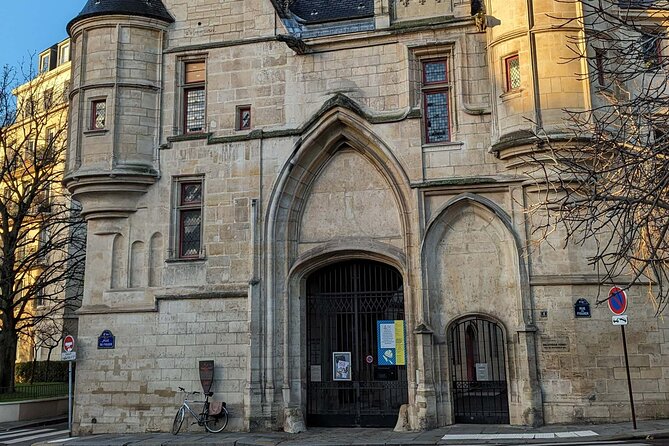
The route then passes the Cour et Jardin de l’Hôtel de Sully. The architectural details point back toward an older Paris, while the narration explains the social and political conditions that shaped the Revolution.
Hôtel de Sully and aristocratic property
Hôtel de Sully gives the tour a useful focus on buildings and ownership. This grand mansion helps explain what happened to aristocratic property during the Revolution.
That subject matters because political change was not only about speeches, battles, and famous leaders. Houses, estates, and possessions were caught up in the conflict. As you walk past the site, you get a clearer sense of how the Revolution affected wealthy families and the physical fabric of the city.
Because this is a pass-by stop, you should not expect an included interior visit. The tour provides the historical explanation from the street, and any decision to enter an attraction would be separate from the $19.99 purchase.
Place Sainte-Catherine and the churches of Saint-Paul
Place Sainte-Catherine brings the walk back to a smaller, more intimate part of the Marais. Its medieval feel suits a tour that is interested in how old Paris experienced a new political age.
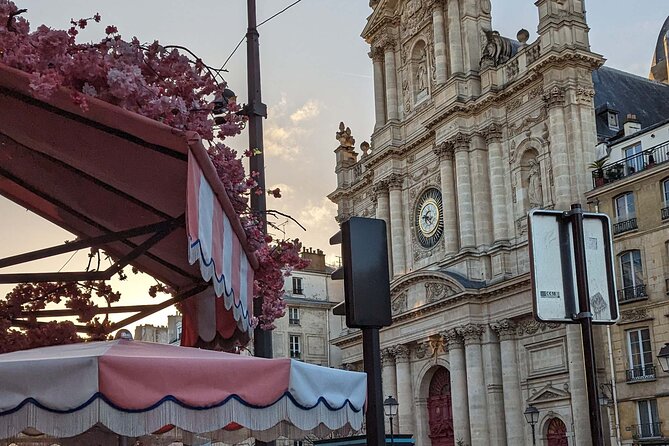
The route also discusses the Parish Church of Saint-Paul of Saint-Louis. This church is tied to revolutionary events and to the moral and political struggles of the period. The stop gives you a chance to consider how religious institutions fit into a time when France was challenging old authority.
Later, the route brings you to the church itself again. That repetition is not wasted. The first reference places the church within the neighborhood, while the later stop gives more room to the revolutionary stories connected with it.
I would keep your audio volume moderate here. You are walking in an active city, and the app cannot replace ordinary street awareness. The route is designed for independent use, so you decide when to pause, replay, or move on.
More Self-Guided Audio Tours in Paris
- Montmartre: Secret Stories of Paris – Self-Guided Audio Tour
★ 4.0 · 13 reviews - Self-Guided Audio Tour -The Eiffel Tower, Exterior
★ 4.0 · 9 reviews - Self-Guided Audio Tour Tickets To The d’Orsay Museum
★ 3.0 · 9 reviews - Self-Guided Audio Tour – Montmartre: The heart of art and bohemia
★ 3.5 · 7 reviews
Musée Carnavalet and the cost of confiscation
The Musée Carnavalet is one of the route’s most relevant museum stops, even if you only pass by. The narration explains how buildings were confiscated from aristocratic owners during the Revolution.
This is a good example of the tour’s approach. It uses a familiar attraction to explain a larger issue: the transfer of property and power from one social order to another. You can appreciate the museum’s location while learning why the surrounding buildings mattered during the political upheaval.
Admission is not included. If you want to visit Musée Carnavalet, treat it as an optional addition rather than part of the 90 to 105-minute walking experience. You will get more from the audio walk if you decide in advance whether you are passing by or planning a separate museum visit.
The Petite Force and everyday hardship
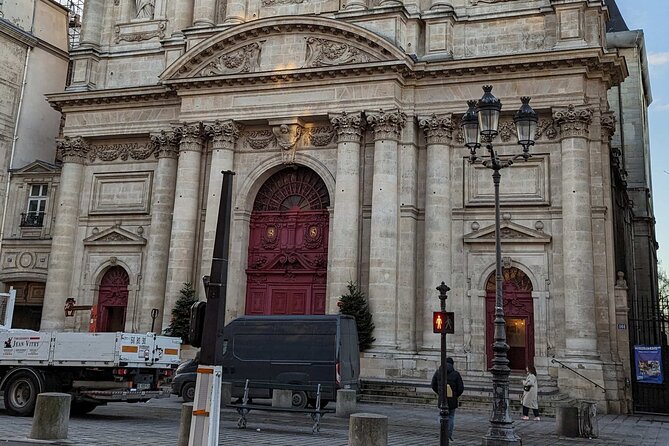
The Vestige de la Petite Force is a smaller historical remnant, but it adds an important social angle. Here, the story turns toward Parisian workers and the burden of extremely expensive bread.
That detail keeps the Revolution from becoming a story only about famous buildings and political institutions. Food prices and daily hardship helped create anger among ordinary people. The stop gives you a closer look at the pressures that made the period so unstable.
I find this kind of stop especially useful because it makes the political story more human. You are still walking past physical remains, but the explanation points to the people who had to live with rising costs and limited choices.
Hôtel de Sens and the city’s older layers
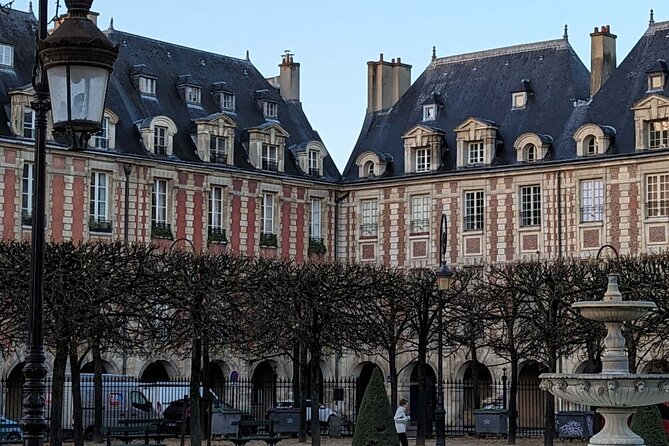
Hôtel de Sens is another architectural stop with a connection to the competing interests of aristocrats and ordinary Parisians. The building gives you something concrete to look at while the narration explains how the Revolution affected different groups.
The route does not treat the city as a collection of isolated monuments. Instead, it links private mansions, religious sites, public squares, and worker concerns. That broad view is one reason the tour works better for someone who wants historical context than for someone seeking only quick facts about famous attractions.
The Marais can be rewarding for slow walking, but the stated route time assumes you keep moving. You can stop for photographs, coffee, or a closer look at a building, yet those pauses will push the total time beyond the advertised hour and a half to hour and forty-five minutes.
Hôtel de Ville and the birth of public politics
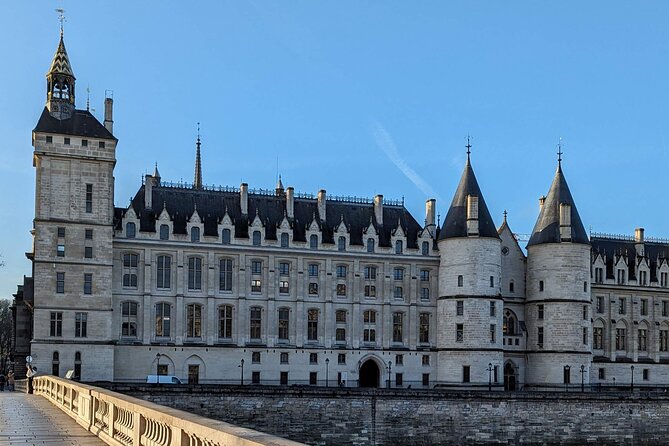
Hôtel de Ville, Paris City Hall, marks a major shift in the walk. The narration connects the building with the final days of the royal family and with the changing political order.
The adjoining courtyard adds another layer. You learn about the birth of the National Assembly and the push by independent citizens for laws. This makes the stop more than a city hall photo opportunity. It gives you a place to think about how political representation and public action began to take new forms.
I like this section because it shows the Revolution as a struggle over who had the right to make decisions. The story moves from attacks on old institutions to the creation of new ones. You can hear that shift while standing in a working part of Paris rather than inside a distant classroom.
Saint-Jacques Tower and the old city wall
The route continues toward the Square of Saint-Jacques Tower. Along the way, you catch a glimpse of a city wall more than 800 years old, a reminder that Paris had already changed many times before the Revolution.
The Tour Saint-Jacques is an eye-catching landmark and an easy place to pause. Its age helps widen the time frame of the walk. The French Revolution was dramatic, but it was one chapter in a much longer story of Paris.
This is also a practical midpoint-to-late-route landmark. If your attention is fading, the tower gives you a clear visual marker and a chance to reset before the final stretch toward the river.
Place du Châtelet and the Pont au Change
At Place du Châtelet, the tour asks you to look at the symbolism of the ornate column. The square is a good place to connect political ideas with public monuments and urban design.
The route then crosses the Pont au Change. This bridge provides a natural transition from the right bank toward the final part of the walk. You are still following the Revolution’s political and social story, but the movement across the river gives the route a satisfying sense of progress.
The audio format is helpful here. You do not have to keep up with a group or wait for a guide to finish explaining a point. If a view catches your eye, you can pause the narration and continue when ready.
Palais de Justice closes the political story
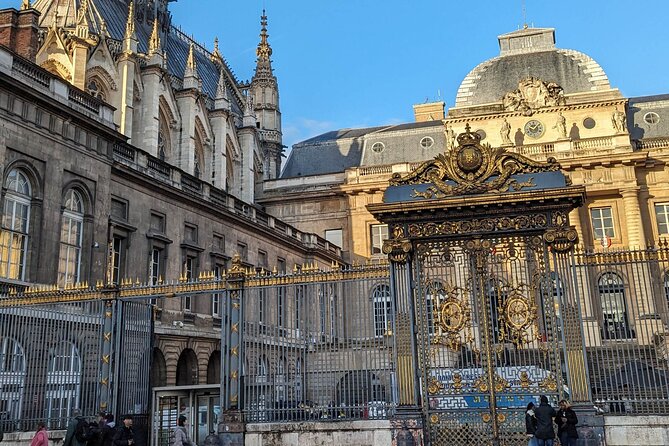
The tour ends at the Palais de Justice de Paris, at 08 Bd du Palais. The final section examines the mix of political upheaval, climate events, and social injustice that helped reshape France and influence the wider world.
Ending at the courthouse makes sense. The walk has moved from the symbolic fall of the Bastille through questions of property, food, representation, and public power. The Palais de Justice gives the story a final setting connected with law and political consequences.
The tour does not include entry to the courthouse or any other attraction. Its endpoint is best understood as the end of the audio route, not the beginning of an included indoor visit.
What $19.99 gets you
At $19.99 per person, the price is reasonable if you value independence and plan to use the tour fully. You receive English narration, turn-by-turn directions, maps, geodata, offline access, and lifetime access to both the audio tour and virtual tour.
The value is lower if you want a live guide who can answer questions or adapt the route. You are paying for a prepared experience in the VoiceMap app, not for personal commentary from a person walking beside you.
The lifetime access also matters for planning. You can use the virtual version before or after your Paris visit, and you are not limited to one short window of access. Still, the booking is non-refundable and cannot be changed, so choose your date and route carefully before buying.
How to make the audio walk work well
Download the audio, maps, and geodata before arriving at Place de la Bastille. Offline access is included, but it only helps if the material is ready on your phone.
Bring your own smartphone and headphones. Neither is supplied. Comfortable shoes are sensible because the experience is a continuous urban walk, and you should leave extra time if you expect to stop often.
The route is private in the sense that only your group participates, but there is no live guide. You control the pace, volume, pauses, and start time within your own plans. The listed opening hours run all day, every day, so the activity is not tied to a narrow departure slot.
Most people can participate, but the walk still requires you to move through city streets for up to nearly two hours. Transportation is not included, and neither are food or drinks, so plan those around the route.
Who should book this French Revolution walk
I would choose this tour if you like history, prefer independent sightseeing, and want a structured route through the Marais without joining a group. It is also a good match for families with teenagers, since the story unfolds while you move between real places.
It suits first-time visitors who want an introduction to several central Paris landmarks, but it may feel too light for someone seeking a specialist lecture on the Revolution. The narration connects many topics, yet the route’s strength is its combination of movement, orientation, and context.
The app received a 4.7 rating from three reviews, with particular praise for the clear narration and smooth app experience. That is a small review sample, so I would treat it as encouraging rather than final proof, but the comments point to the tour’s strongest qualities.
Should you book it?
Book it if you want a low-cost, flexible way to connect Bastille, the Marais, Hôtel de Ville, Place du Châtelet, and the Palais de Justice. The offline function and lifetime access make it practical for independent planning, and the route covers more than a single famous square.
Skip it if you want a live historian, included museum entries, or a fully escorted walk. For everyone else, $19.99 buys a useful route through central Paris, with enough political and social context to make the streets more meaningful.
FAQ
How long does the French Revolution audio tour take?
The tour takes approximately 1 hour 30 minutes to 1 hour 45 minutes.
Where does the tour start?
It starts at Place de la Bastille, Pl. de la Bastille, 75004 Paris, France.
Where does the tour end?
It ends at the Palais de Justice de Paris, also called the Paris Law Courthouse, at 08 Bd du Palais, 75001 Paris.
Is this a guided group tour?
No. It is a self-guided audio tour delivered through the VoiceMap app. Only your group participates, and there is no live guide.
Is the tour available offline?
Yes. The purchase includes offline access to the audio, maps, and geodata.
Is the tour available in English?
Yes. Lifetime access to the tour in English is included.
Do I need to bring anything?
You need your own smartphone and headphones. These are not provided with the tour.
Are museum tickets or attraction fees included?
No. Tickets and entrance fees for museums or other attractions along the route are not included.
Can I cancel or change the booking?
No. The experience is non-refundable and cannot be changed for any reason.
Latest audio tours in Paris
- The Tuileries Garden’s Classic Sights: A Self-Guided Audio Tour★ 4.0 · 3 reviews
- Audioguide – The Eiffel Tower and its secrets★ 4.0 · 4 reviews
- A Self-Guided Audio Tour Around Parc Montsouris★ 3.5 · 6 reviews
- Summit Eiffel Tower Audio Guide Tour with Unlimited Time Access★ 4.5 · 58 reviews
- Self-Guided Audio Tour -The Eiffel Tower, Exterior★ 4.0 · 9 reviews
- Trendy Marais, smartphone audioguided walking tour★ 5.0 · 6 reviews
- Self Guided Tours in Paris with 100 Captivating Audio Stories★ 3.5 · 3 reviews
- Self-Guided Audio Tour – Montmartre: The heart of art and bohemia★ 3.5 · 7 reviews
Self-Guided Audio Tours, compared.

Acropolis Ticket & Optional Self-Guided Audio Tours
Read our review →


Ultimate Acadia National Park Self-Guided Driving Audio Tour
Read our review →

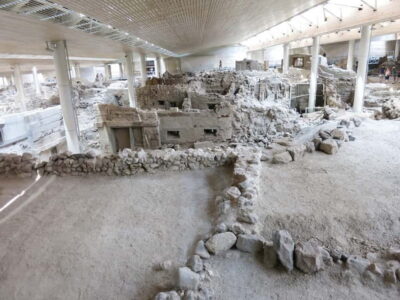
Akrotiri Ticket with Optional Self-Guided Audios
Read our review →
Browse the lists this tour appears in