
Reviewed · PARIS
A Self-Guided Audio Tour Around Parc Montsouris
Paris has a quieter side around Parc Montsouris, where small gardens, unusual architecture, waterworks, and back streets replace the usual museum queue. This self-guided walk is a good way to see that side of the city while letting your phone provide the commentary at each GPS-triggered point. I like the freedom to stop for a coffee or take a wrong turn without holding up a group, and I like that the audio, map, and route work offline.
The main catch is easy to miss: the walk circles Parc Montsouris but does not take you through the park. You also need your own charged smartphone and headphones, and one person had trouble finding the starting point. Save the start location before you leave and keep the app open as you approach Porte d’Arcueil.
Key points to know before you go
- A quiet route through southern Paris: You’ll see parts of the 13th and 14th arrondissements rather than the city’s headline sights.
- The park is viewed from around its edges: Parc Montsouris is part of the setting, but the route does not lead you inside it.
- Water is a central theme: The Montsouris Reservoir and the Pièce d’aqueduc romain Lutetia help explain how Paris gets drinking water.
- The audio starts by GPS: The VoiceMap app plays commentary as you reach points along the route, with offline access to the map and sound.
- A $9.99 private walk: Only your group takes part, but there is no live guide waiting at the start.
- The finish is in the 13th arrondissement: You end at Square des Mimosas, after passing through Cité Florale and several small green spaces.
Why this corner of Paris is worth your time
If you have already seen the Eiffel Tower, Notre-Dame, the Louvre, and Montmartre, this walk gives you a different Paris. It is not designed around famous interiors or grand views. Instead, it points you toward small plazas, neighborhood streets, art nouveau mosaics, gardens, and the city’s water supply.
That change of scale matters. In central Paris, you often move from one major sight to the next with a crowd around you. Here, the interest comes from noticing details in ordinary residential areas. The route passes through the 13th and 14th arrondissements, two large sections of southern Paris with a more local feel than the central tourist belt.
The audio format suits this kind of sightseeing. You can listen while walking, pause when something catches your eye, and continue when ready. The experience lasts about one hour and 30 minutes to two hours, but your actual outing can take longer if you stop along the way.
I would not choose this as your only Paris tour. It does not cover the city’s major landmarks, and it is less useful if you want a traditional guide answering questions in person. I would choose it for a spare morning or afternoon when you want to walk without a fixed group schedule.
More Self-Guided Audio Tours in France
- The Famous Graves of Père Lachaise – Self-Guided Audio Tour
★ 3.5 · 44 reviews - Montmartre Self-Guided Audio Tour: More Than Meets the Eye
★ 4.5 · 35 reviews - One Hour Père Lachaise Cemetery: A Self-guided Audio Tour
★ 3.5 · 26 reviews
Starting at Porte d’Arcueil
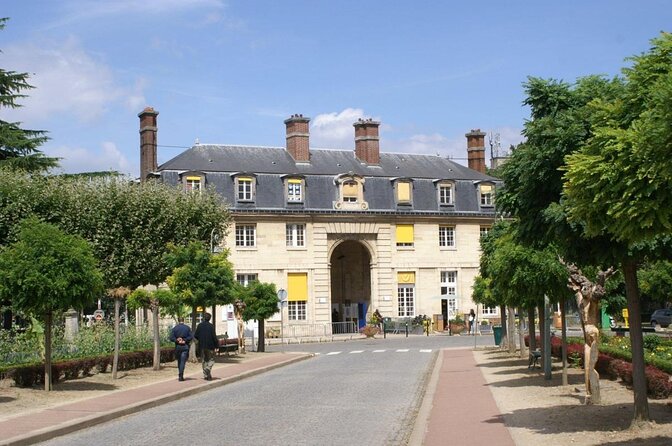
The tour begins at Porte d’Arcueil, in the 14th arrondissement. This is an important practical detail because the start is not a famous central landmark that you can identify instantly. One person lost money after being unable to find the activity location, so you should check the precise starting point in the app before setting out.
The provider’s response to that problem said the customer had contacted Viator rather than VoiceMap, and that VoiceMap could have supplied the address. That tells you something useful: if you have a problem with the starting point, contact the app provider directly at [email protected] rather than relying only on a booking platform’s general number.
You receive confirmation when booking, and the route is near public transportation. Transportation itself is not included, so you must arrange your own way to Porte d’Arcueil. Since the walk uses GPS, give yourself a little time to reach the start, open the map, and confirm that the audio is ready before walking.
The tour is described as a private activity, meaning only your own group participates. In practice, this is a self-guided experience rather than a private live tour. You will not have a person meeting you with a flag or leading the way.
The Montsouris Reservoir and Paris water
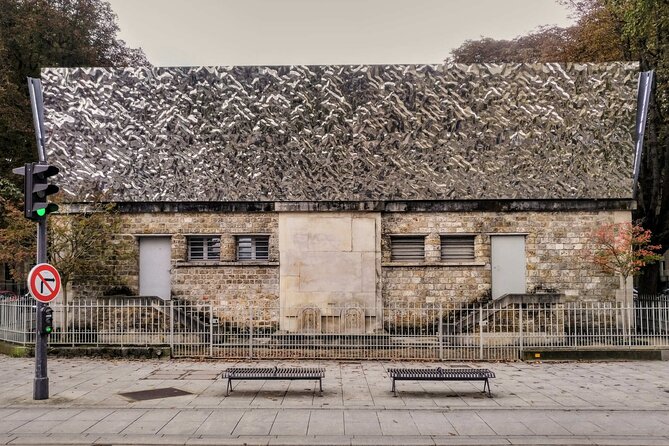
One of the first important points is the Montsouris Reservoir. The stop is brief, but it gives the walk a useful theme: Paris is not only about monuments and cafés. It is also a working city that needs water, storage, and infrastructure.
The reservoir helps explain where some of Paris’s drinking water comes from and how that water is managed. The audio adds context while you look at the site, so you are not simply passing a large piece of municipal infrastructure without knowing its purpose.
This is the sort of stop that makes an audio tour worthwhile. A live guide could explain it, of course, but a written map alone might not prompt you to stop. The recording directs your attention to a part of the city most people would otherwise overlook.
Keep your expectations sensible. The stop is brief, and the experience does not promise an interior visit or a museum-style display. You are learning from the outside while following the neighborhood route.
Circling Parc Montsouris, not entering it
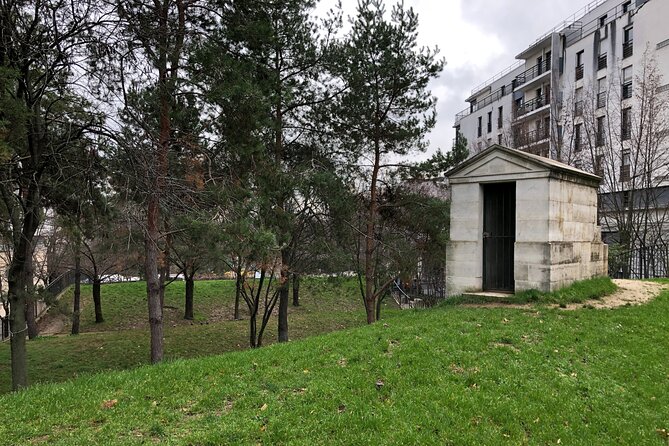
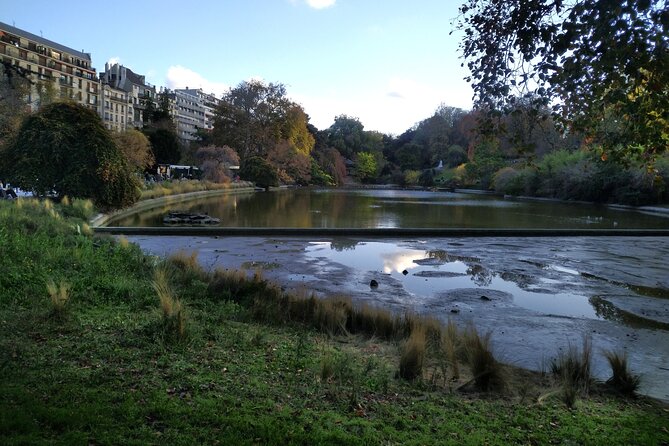
The route goes around Parc Montsouris. That distinction deserves special attention because the park is in the tour’s name and may sound like the main place you will explore. You will experience the area around the park, but the route does not take you through its paths.
For some people, this is a drawback. If you want a leisurely stroll under the park’s trees, you will need to add that yourself. The stated walking time does not include a separate visit inside Parc Montsouris, so allow extra time if you decide to explore it after the audio route.
For others, staying outside the park is the point. The surrounding streets lead you toward details that a park-only walk would miss: small public spaces, water infrastructure, residential architecture, and nearby neighborhoods. The route gives you a wider look at southern Paris instead of spending the entire time in one green area.
I would treat the park as a useful landmark and a pleasant setting, not as the full attraction. Read the route description carefully before booking so you are not disappointed.
More Self-Guided Audio Tours in Paris
- Montmartre: Secret Stories of Paris – Self-Guided Audio Tour
★ 4.0 · 13 reviews - Self-Guided Audio Tour -The Eiffel Tower, Exterior
★ 4.0 · 9 reviews - Self-Guided Audio Tour Tickets To The d’Orsay Museum
★ 3.0 · 9 reviews - Self-Guided Audio Tour – Montmartre: The heart of art and bohemia
★ 3.5 · 7 reviews
Place Mohamed Bouazizi and the smaller public spaces
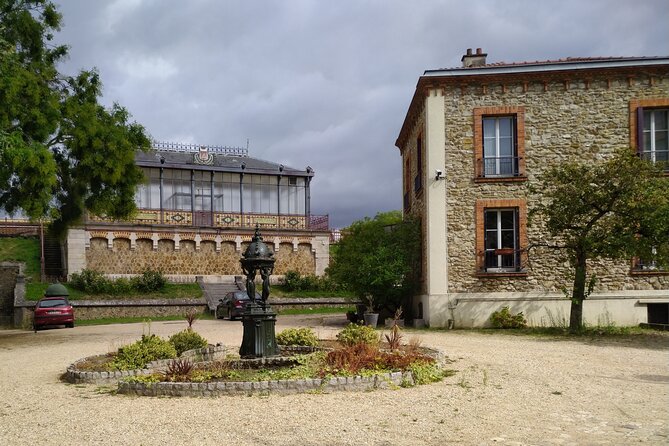
The walk passes through Place Mohamed Bouazizi, one of the smaller public spaces along the route. It is not presented as a grand square on the scale of Place de la Concorde. Its value comes from the way the tour links it with the surrounding residential streets.
This is where the audio format can sharpen your attention. A small plaza may look like a simple pause in the city, but local names, public art, and neighborhood design can add meaning. You will hear the commentary while moving through the area, then continue at your own pace.
The route also includes a brief stop inside the Jardinet de la Rue-de-l’Amiral-Mouchez. The name tells you what to expect: a compact garden rather than a major formal park. Small green spaces like this break up the pavement and give the walk a more relaxed rhythm.
You should not expect a long stop at every point. Some locations receive only a short explanation before the route moves on. If a garden or plaza catches your eye, pause the recording and take a closer look. That is one of the benefits of not being tied to a group timetable.
The Roman aqueduct remains
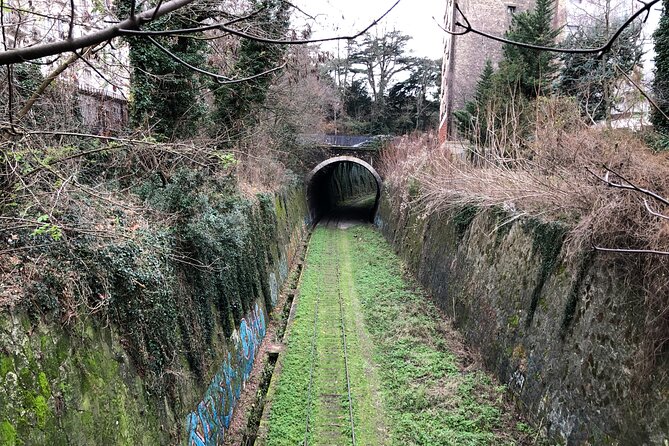
The Pièce d’aqueduc romain Lutetia adds an older layer to the walk. The reference to Lutetia connects the site with the Roman name for Paris and points to the city’s ancient water systems.
This stop works especially well alongside the Montsouris Reservoir. One point concerns the modern city’s water supply, while the aqueduct piece connects you with an earlier period of urban engineering. You get a sense that Paris has had to solve the same basic problem for centuries: bringing water to a growing population.
The remains are not described as a large archaeological site or museum. Think of this as a short outdoor stop where the audio supplies context. If you expect a major Roman monument, you may find it modest. If you enjoy noticing fragments of old infrastructure in ordinary streets, it adds character to the route.
Cité Florale and the residential side of Paris
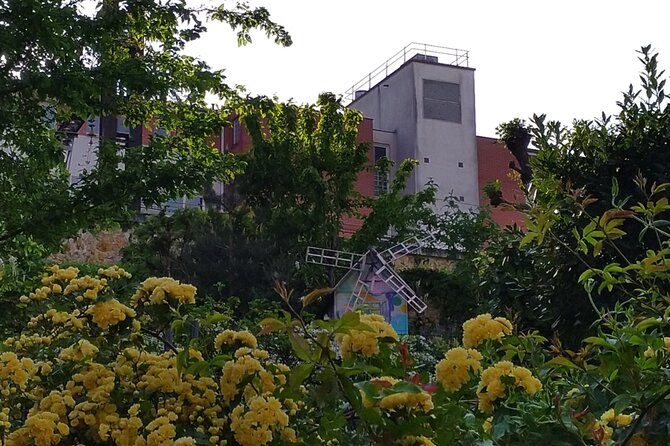
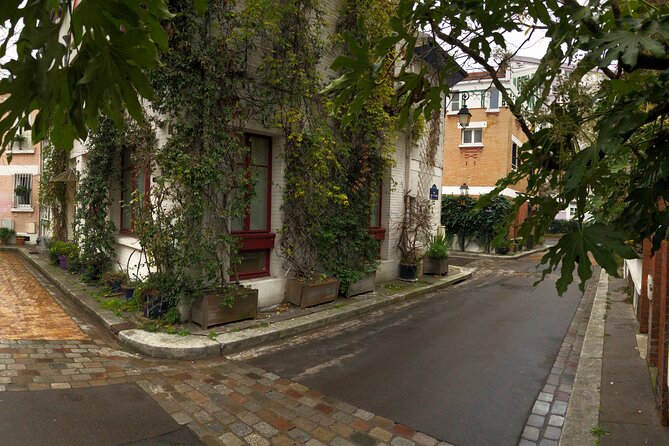
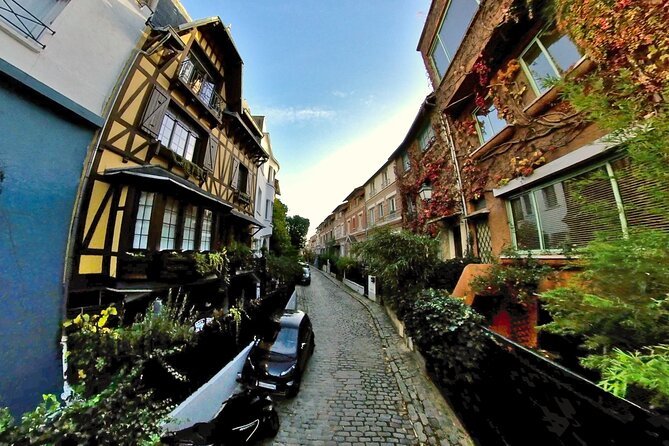
The tour passes through Cité Florale, a neighborhood known here for its pretty, quaint houses and quieter streets. This is one of the most appealing parts of the experience because it shifts the focus from public monuments to the places where Parisians live.
The route’s strongest quality is its attention to these residential details. You may find small houses, garden edges, decorative features, and streets that feel far removed from the usual Paris postcard. The audio helps you understand why the neighborhood matters instead of treating it as a random shortcut.
One participant described enjoying the back streets and the pretty houses, and that matches the appeal of this section. You are not racing toward a single famous sight. You are looking closely at the city’s smaller choices: a garden wall, a mosaic, a street layout, or a house façade.
The route can be briefly confusing in places. One person enjoyed the walk but got momentarily lost on a couple of occasions. GPS audio is helpful, but it is not magic. Watch the map, listen for the next direction, and do not walk too far before checking your position.
Art nouveau mosaics and details along the way
The tour includes art nouveau mosaics among its points of interest. These details reward a slower pace. They are easy to miss if you are focused only on navigation, so keep your eyes up and scan façades, entrances, and nearby walls as you move.
The value of this kind of stop is visual rather than dramatic. You are not visiting a large gallery with a room full of famous works. You are finding decorative art in the public streets, where it becomes part of the neighborhood itself.
Because the tour uses audio, you can hear the explanation before or as you reach the detail. If you want a good look or a photograph, pause the recording. The walk works best when you use the app as a guide, not as a command to keep moving.
Finishing at Jardines bonitos and Square des Mimosas
The route ends at Jardines bonitos, with the final point at Square des Mimosas, 5 Square des Mimosas, in the 13th arrondissement. This gives the outing a clear finish rather than leaving you at an unnamed street corner.
The square is listed as open around the clock, from midnight to 11:59 p.m. daily, for the stated operating period. That makes the endpoint flexible, although your overall timing still depends on daylight, transportation, and how long you stop.
The ending location is useful if you want to continue exploring the 13th arrondissement afterward. No onward transportation is included, so plan your next move once the audio finishes. You can also stop earlier if you are tired, but the app will not turn the experience into a guided transfer to another sight.
What the $9.99 price really buys you
At $9.99 per person, this is a low-cost way to add structure to an independent walk. You are paying for the recorded narration, GPS-triggered route, map, geodata, and lifetime access through the VoiceMap app. You are not paying for food, transportation, museum admission, or a live guide.
The strongest value is repeat access. If you are in Paris for several days, you can use the tour when the timing suits you rather than committing to a particular departure. You can also pause it and return later because the access does not expire.
The price looks less attractive if you already know the area well or prefer to wander without audio. It also offers less personal contact than a live guide. Still, compared with a paid group walk, the cost is modest, and only your own group takes part.
Bring your own smartphone and headphones. The app works offline, which is helpful if you want to avoid mobile data problems, but you still need to download or prepare the tour and make sure your phone has enough battery.
Who should choose this walk
I would recommend it to you if you like:
- Quiet neighborhoods more than headline attractions
- Short urban walks with historical and practical context
- Audio commentary instead of a fixed guide
- Stopping for photos, coffee, or a closer look
- Exploring at your own pace
- Finding smaller gardens, mosaics, plazas, and residential streets
I would be more cautious if you want a live guide, a tour inside Parc Montsouris, or a route packed with famous Paris sights. The walk is also not ideal if you dislike using your phone for navigation or if you need a clearly staffed meeting point.
The route should suit most people who can manage an ordinary city walk, and the supplied information says most people can participate. No special entrance tickets are needed for the listed stops. Food and drink are not included, so carry what you need or plan a break along the way.
The cancellation terms are strict: the experience is non-refundable and cannot be changed for any reason. Check your date, meeting point, phone setup, and transport plan before paying.
Should you book the Parc Montsouris audio tour?
Book it if you have already covered central Paris or want a quieter outing in the 13th and 14th arrondissements. The best parts are the freedom to walk alone, the offline audio, the water-supply theme, Cité Florale, and the small public gardens and mosaics that you might otherwise pass without noticing.
Do not book it expecting a guided visit inside Parc Montsouris. Save the exact Porte d’Arcueil starting point, keep the map visible, and remember that the route can briefly lose you if you stop paying attention. For $9.99, it is a practical, inexpensive way to give shape to an independent Paris walk, as long as you value neighborhood detail more than famous monuments.
FAQ
How long does the audio tour take?
The walk takes approximately one hour and 30 minutes to two hours.
Where does the tour start?
It starts at Porte d’Arcueil, 75014 Paris, France.
Where does the tour end?
It ends at Square des Mimosas, 5 Square des Mimosas, in the 13th arrondissement.
Does the tour go inside Parc Montsouris?
No. The route goes around Parc Montsouris without taking you through the park.
Does the app work offline?
Yes. You receive offline access to the audio, maps, and geodata.
Do I need my own smartphone and headphones?
Yes. A smartphone and headphones are not included, so you must bring your own.
Is a live guide included?
No. This is a self-guided audio tour using the VoiceMap app for Android and iOS.
Can I cancel for a refund?
No. The experience is non-refundable and cannot be changed for any reason.
Latest audio tours in Paris
- The Tuileries Garden’s Classic Sights: A Self-Guided Audio Tour★ 4.0 · 3 reviews
- The French Revolution: Self Guided Audio Tour of Paris★ 4.5 · 3 reviews
- Audioguide – The Eiffel Tower and its secrets★ 4.0 · 4 reviews
- Summit Eiffel Tower Audio Guide Tour with Unlimited Time Access★ 4.5 · 58 reviews
- Self-Guided Audio Tour -The Eiffel Tower, Exterior★ 4.0 · 9 reviews
- Trendy Marais, smartphone audioguided walking tour★ 5.0 · 6 reviews
- Self Guided Tours in Paris with 100 Captivating Audio Stories★ 3.5 · 3 reviews
- Self-Guided Audio Tour – Montmartre: The heart of art and bohemia★ 3.5 · 7 reviews
Self-Guided Audio Tours, compared.

Acropolis Ticket & Optional Self-Guided Audio Tours
Read our review →


Ultimate Acadia National Park Self-Guided Driving Audio Tour
Read our review →

Akrotiri Ticket with Optional Self-Guided Audios
Read our review →
Browse the lists this tour appears in