

Reviewed · ITALY
Tivoli: Villa d’Este Ticket with Audio Guide APP
Villa d’Este is the sort of place where water does most of the talking. Renaissance rooms lead to a steep garden filled with fountains, pools, waterfalls, and long views over Tivoli. The Fountain of Neptune and Water Organ Fountain are the stars, but the sheer number of smaller water features keeps the walk interesting. I especially like the freedom to set your own pace and the chance to pair art with fresh air.
The villa’s frescoed rooms give the visit a strong indoor half, while the gardens provide the real sense of scale. The skip-the-line ticket can save time at the entrance, but there is one important catch: the ticket collection office at Via Inversata 27 may be closed, and some visitors were not given the promised audio guide app. Also, fountains may not operate on every visit.
Key points to know
- More than 50 fountains: The garden is the main event, with Neptune and the Water Organ Fountain among the highlights.
- Renaissance interiors: Frescoed rooms offer a quieter look at the estate before you tackle the gardens.
- Independent visit: You receive entry rather than a guided tour, so you decide how long to spend in each area.
- Audio guide uncertainty: The experience includes an audio guide app in its description, but access was not provided on some visits.
- Ticket pickup matters: Go first to the office at Via Inversata 27 to obtain your ticket.
- Limited accessibility: The activity is not suitable for wheelchair users or people with mobility impairments.
Villa d’Este turns water into theater
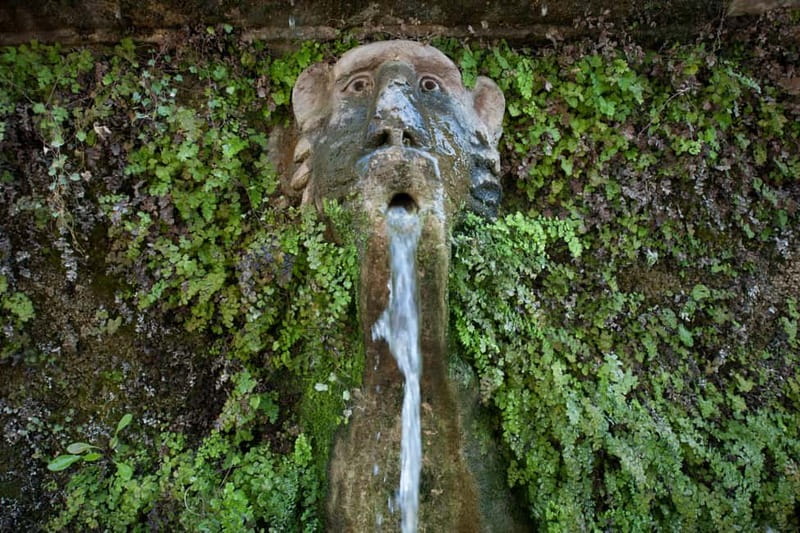
At Villa d’Este, fountains are not scattered garden ornaments. They are the organizing idea of the whole estate. Water runs, falls, sprays, and gathers in pools as you move through the grounds, giving the visit a sense of rhythm.
That is why I would not treat this as a quick palace stop. The interiors are attractive, but the gardens need time. You will be walking between different levels, stopping for views, and pausing wherever a fountain catches your eye.
The estate is in Tivoli, in Italy’s Lazio region, and the experience is valid for one day. You are not tied to a fixed guided route. That makes it a good choice if you like to linger over frescoes, move quickly through rooms, or spend most of your visit outdoors.
The tradeoff is that the visit depends heavily on the fountains. When they are running, they add movement and sound to the garden. When they are switched off, the setting remains beautiful, but the main attraction loses some of its force.
More Smartphone Audio Tours in Italy
- Rome: Colosseum & Forum with Audio Guide App -Optional Arena
★ 4.2 · 24,770 reviews - Florence: Timed Entry to Michelangelo’s David + Audio App
★ 4.6 · 19,496 reviews - Florence: Cathedral & Brunelleschi’s Dome Ticket & Audio App
★ 4.4 · 6,973 reviews
Starting with the frescoed rooms

Your first substantial look at Villa d’Este comes inside the villa itself. The rooms are decorated with frescoes that tell stories from an earlier age, giving you a visual introduction to the wealth and taste behind the estate.
I like this part because it puts the gardens in context. The fountains are not simply a pleasant collection of waterworks. They belong to a grand Renaissance setting, where art, architecture, plants, water, and views were planned together.
The interiors are described as opulent, but you should not expect a full guided explanation of every painting. This is an entry ticket with an audio guide app, not a personal tour. If the app works as intended, it can help you understand what you are seeing without forcing you to stay with a group.
The audio guide is also the biggest uncertainty in the package. The experience is sold with an English audio guide app, yet two separate visits reported that no audio guide was supplied, even after repeated requests. One visitor saw only the gardens because the problem at the entrance prevented access to the expected visit.
That does not mean the app will always fail. It does mean you should treat it as a useful extra, not the only reason to book this ticket. If the audio material is important to you, confirm how you will receive it before leaving the ticket office.
Taking on the gardens and their steep paths
Once outside, the character of Villa d’Este changes. The rooms are controlled and enclosed. The gardens open out, with paths leading past fountains, pools, greenery, and views across Tivoli.
The grounds are not flat. The experience is specifically listed as unsuitable for people with mobility impairments and wheelchair users. Even if you walk without help, expect a garden visit that involves changing levels and plenty of time on foot.
I would wear practical shoes and avoid bringing more than you need. Backpacks are not allowed, and smoking and flash photography are also prohibited. These rules are easy to overlook when you are focused on getting through the entrance, so plan for them before you arrive.
The reward for the walking is variety. One fountain may offer a strong central view, while another creates a quieter corner with water sounds and greenery. You are free to stop often rather than follow a strict sequence.
The phrase at your own pace matters here. You can give the interiors a short look and devote your time to the fountains, or do the reverse. You can also pause for views of Tivoli instead of rushing from one named feature to the next.
Finding the Fountain of Neptune

The Fountain of Neptune is one of the clear targets of the visit. It gives the garden a grand focal point and is the sort of feature you will want to see even if you are making a short visit.
It is best appreciated as part of the wider garden rather than as an isolated monument. The paths, water channels, pools, and planted areas create the setting around it. With the fountains operating, the effect is much stronger because you see the estate behaving as a working water garden rather than a silent collection of stone.
Do not assume the water will be running on the day you visit. One visit took place when the fountains were not functioning, and the reduced spectacle changed the value of the experience. If fountain activity is your main reason for going, this is worth checking before booking or at least keeping in mind when comparing ticket prices.
Another self-paced route in Italy:
- Rome: Pantheon Fast-Track Ticket and Official Audioguide
★ 4.5 · 27,353 reviews - Rome: City Sightseeing Hop-on Hop-off Bus with Audioguide
★ 4.0 · 16,045 reviews - Pompeii: Entry Ticket with Audio Guide
★ 4.1 · 13,491 reviews - Venice: La Fenice Opera House Entry Ticket with Audio Guide
★ 4.6 · 11,742 reviews
Listening for the Water Organ Fountain
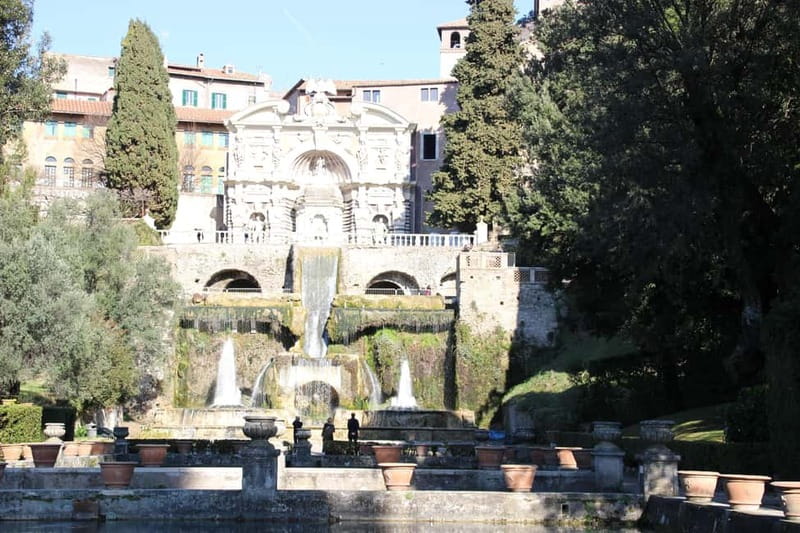
The Water Organ Fountain is another major highlight. Its name points to one of Villa d’Este’s more unusual combinations of music, machinery, and water.
For you, the practical point is simple: this is not just another decorative basin. It is one of the features that gives the garden its distinctive character. The audio guide app should, in theory, add useful context here, though you should not rely on receiving it without checking.
The Water Organ Fountain also shows why the condition of the fountains matters so much. A visit with active water features gives you sound, motion, and spectacle. A visit with inactive fountains still offers the garden layout and architectural setting, but it is a quieter and less complete version of the experience.
Why the views over Tivoli add value
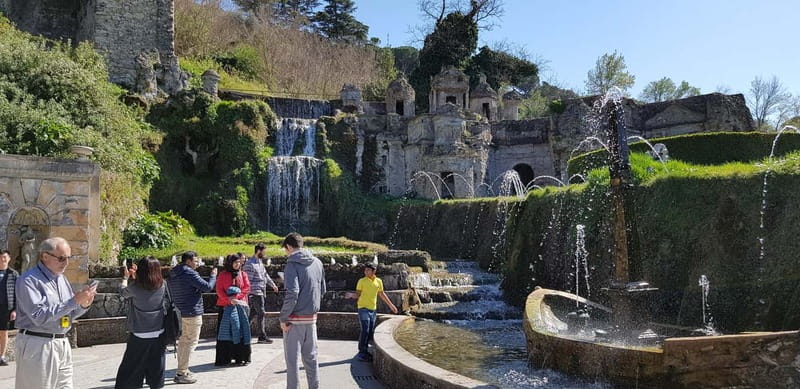
The views are an important part of the visit, especially because they make the estate feel larger than its rooms and paths. From the garden, you can look out across Tivoli and take a break from the close-up details of frescoes and fountains.
I like this change of scale. You spend part of the visit studying painted ceilings and water details, then step back and see the town beyond the estate. It prevents the gardens from feeling like a series of disconnected attractions.
The views also provide a natural pause. This is useful if you are visiting on a warm day or walking slowly through the grounds. You can stop, take in the setting, and continue when you are ready. Just remember that the ticket does not include food or drinks, so bring or buy refreshments separately where permitted.
How the $35 ticket compares with the value

The listed price is $35 per person for one day. The value depends on what you want from your visit.
If you want a simple entry arrangement, independent access, and the chance to spend as long as you like inside the estate during the valid day, the ticket offers convenience. The skip-the-line feature may be worthwhile when queues are long, and the one-day validity gives you flexibility around your schedule.
The value is less convincing if the line is short, the fountains are not operating, or the audio guide is missing. One visitor reported paying about 30 euros through the agency while the on-site price was 15 euros, with a lower price of 10 euros on a day when the fountains were not working. Prices and conditions can change, so I would not treat those figures as a permanent rate sheet. Still, the comparison raises a fair question: how much are you paying for convenience?
For me, the ticket makes the most sense when you value advance booking and potential queue savings. It makes less sense if you are already in Tivoli, can buy directly with ease, and do not need an audio guide. Check the current on-site price before committing if budget is a major concern.
The ticket office at Via Inversata 27

The meeting instruction is specific: go to the office at Via Inversata 27 to obtain your tickets. This is not a detail to leave until the last minute.
One visitor found the office closed and had to try to reach the provider by phone. That created a poor start before the villa was even entered. Give yourself extra time to find the office, collect the ticket, and sort out any app instructions before going to the entrance.
The listed host or greeter speaks English. That is useful for basic ticket help, but this is not the same as having an English-speaking guide accompany you through the villa. You explore on your own.
The entrance staff were described as unfriendly during some visits. You should not expect a polished personal welcome as part of the purchase. Think of the host service as a ticket handoff, not a full visitor service experience.
What the audio guide app changes
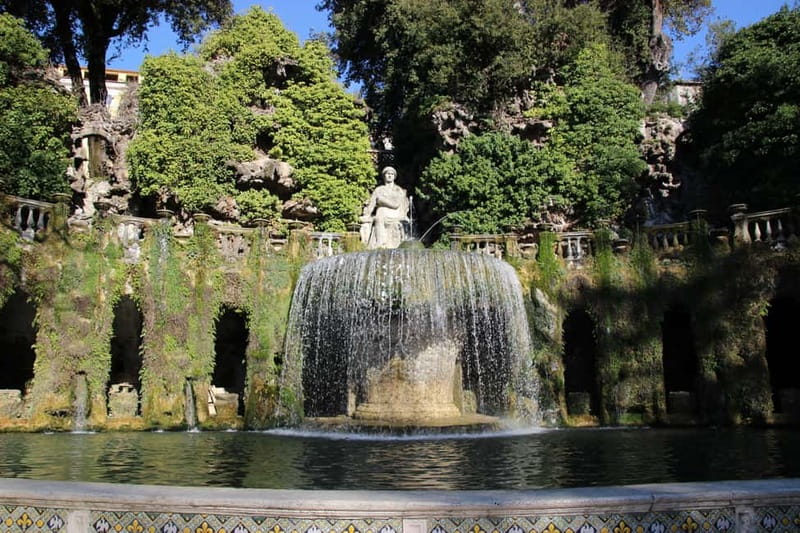
A good audio guide can turn an independent walk into a more informed visit. It can explain the frescoes, point out the purpose of a fountain, and give you a clearer sense of how the estate fits together.
That is the intended benefit here. You can move freely without waiting for a group, while still having commentary in English. For visitors who enjoy setting their own route, that is a strong combination.
But the delivery has been unreliable. Some visitors were not given the audio guide despite having tickets that included it. The issue seems to have occurred at the entrance, where staff did not provide the expected material.
My advice is to ask for the app details immediately at the ticket office. If you receive a code, link, or download instruction, test it before you reach the gate. If nothing arrives, contact the provider while you are still near Via Inversata 27 rather than waiting until the end of the visit.
Who will enjoy this visit most
This experience suits you if you like historic buildings but prefer to explore without a guide. It also works well if fountains, gardens, and outdoor views matter as much to you as paintings and rooms.
You are likely to enjoy it most if you can walk comfortably on uneven or changing levels and are happy to spend a large part of the day outdoors. The one-day validity gives you room to take your time, though the exact starting times depend on availability.
Families and independent sightseers may appreciate the freedom to stop when they wish. Photography fans should note that flash photography is not allowed, and anyone carrying a backpack will need to make other arrangements.
This is not the best fit for a wheelchair user or someone with a mobility impairment. It is also a questionable choice if you want a personal guide, guaranteed audio commentary, or certainty that every fountain will be operating.
A fair look at the 4.2 rating
The overall rating is 4.2 from four reviews, which points to a generally worthwhile attraction with some service problems attached to the ticket arrangement.
The strongest praise centers on the garden and the beauty of the interiors. One short review singled out the wonderful garden and beautiful ceilings inside. Another described the gardens as well worth the trip. Those comments match the basic appeal of Villa d’Este: the setting itself is the reason to come.
The lower ratings focus less on the estate and more on the booking service. Problems included a closed ticket office, missing audio guides, an unfriendly reception, and fountains that were not working. One visitor still found the garden beautiful but left with a poor impression because of the welcome and the lack of promised commentary.
That distinction helps you judge the purchase fairly. Villa d’Este may be excellent, while this particular ticket arrangement can be uneven. You are paying for access and convenience, not a guaranteed perfect handoff.
Should you book the Villa d’Este ticket?
Book it if you want independent access to one of Tivoli’s most striking estates and you value the possibility of skipping the ticket line. The frescoed rooms, more than 50 fountains, Neptune, the Water Organ Fountain, and the views make a strong half-day or full-day outing.
Before paying $35, compare the current direct price and check whether the fountains are operating. At that price, I would also confirm exactly how the English audio guide app will be delivered.
My verdict: book for the gardens and flexibility, but not solely for the audio guide or ticket-office service. Go prepared for a self-guided visit, allow time to collect your ticket at Via Inversata 27, and expect the best experience when the fountains are running.
FAQ
Where is Villa d’Este?
Villa d’Este is in Tivoli, in the Lazio region of Italy.
How much does this ticket cost?
The listed price is $35 per person.
How long is the ticket valid?
The ticket is valid for one day.
Is skip-the-line entry included?
Yes. The ticket includes skip-the-line access.
Is a guided tour included?
No. A guided tour is not included. You explore the villa and gardens independently.
Is an audio guide included?
The activity includes an English audio guide app in its description. However, access to the audio guide was not provided during some visits, so confirm how you will receive it.
Where do I collect my ticket?
Go to the office at Via Inversata 27 to obtain your ticket.
What does admission include?
Admission includes access to Villa d’Este and its gardens, along with the freedom to explore at your own pace.
Can I bring a backpack?
No. Backpacks are not allowed.
Is the visit suitable for wheelchair users?
No. The activity is listed as unsuitable for wheelchair users and people with mobility impairments.
Latest audio tours in Italy
- Orgosolo Multilingual Audioguide★ 4.5 · 42 reviews
- Pantheon Skip the Line Entry Tickets with Digital Audio Guide★ 3.5 · 52 reviews
- St. Peter’s Basilica: Dome Climb with Lift & Audioguide★ 4.5 · 13 reviews
- Audio guide in Vatican Museums and Sistine Chapel★ 4.5 · 12 reviews
- The Roman Jewish Ghetto: A Self-Guided Audio Tour★ 4.0 · 8 reviews
- Experience: The Pantheon Audio Tour★ 4.5 · 4 reviews
- Trastevere: A Self-guided Audio Tour of Rome’s Medieval Village★ 4.5 · 3 reviews
- Navova square underground with audioguide★ 4.5 · 17 reviews
Smartphone Audio Tours, compared.
Colosseum & Forum with Audio Guide App -Optional Arena
Read our review →
Timed Entry to Michelangelo’s David + Audio App
Read our review →
Cathedral & Brunelleschi’s Dome Ticket & Audio App
Read our review →
Michelangelo’s David Priority Ticket & Audio App
Read our review →
Uffizi Priority Ticket & Masterpieces Audio App
Read our review →
Castel Sant’Angelo Entry Ticket & Digital Audioguide
Read our review →
Pantheon Priority Entry Ticket & Audio Guide App
Read our review →Browse the lists this tour appears in