
Reviewed · ITALY
Naples: National Archaeological Museum Ticket & Audio App
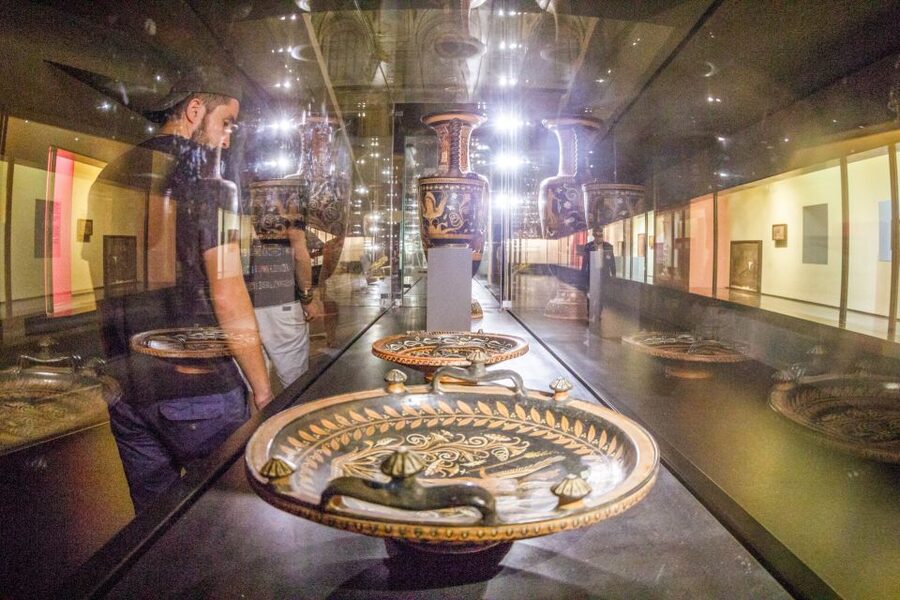
Naples National Archaeological Museum is where the ancient cities of Campania come back to life indoors. Instead of walking past ruined walls at Pompeii or Herculaneum, you can see the frescoes, mosaics, cooking pots, glassware, sculptures, and small household objects that once filled those homes. The Pompeii and Herculaneum collections are the star attraction, especially if you plan to visit either archaeological site.
I like the freedom of a one-day ticket, since you can spend an hour on the Farnese sculptures or stay for half a day without being tied to a group. I also like the museum’s range, from monumental Greek and Roman statues to Egyptian artifacts, coins, and the Secret Cabinet of erotic Roman art. The main catch is the audio app. It is included, but some people found it slow to download or less useful than a proper museum audio guide.
Key points at a glance
- Pompeii and Herculaneum artifacts: See the everyday objects, frescoes, mosaics, and models that give the archaeological sites more meaning.
- Farnese Collection: Admire the Bourbons’ inherited collection, including engraved gems, the Farnese Marbles, and major Greco-Roman sculpture.
- Self-guided freedom: Your ticket is valid for one day and allows a single entry, with no fixed tour route or live guide.
- Secret Cabinet: Explore an exhibit focused on the erotic side of ancient Roman life.
- Allow three to five hours: The museum is large, and a quick visit means skipping some of its best rooms.
- $29 value: The price is reasonable if you plan to stay several hours, but less attractive if you only want a short look at the Pompeii rooms.
Why this museum matters before or after Pompeii
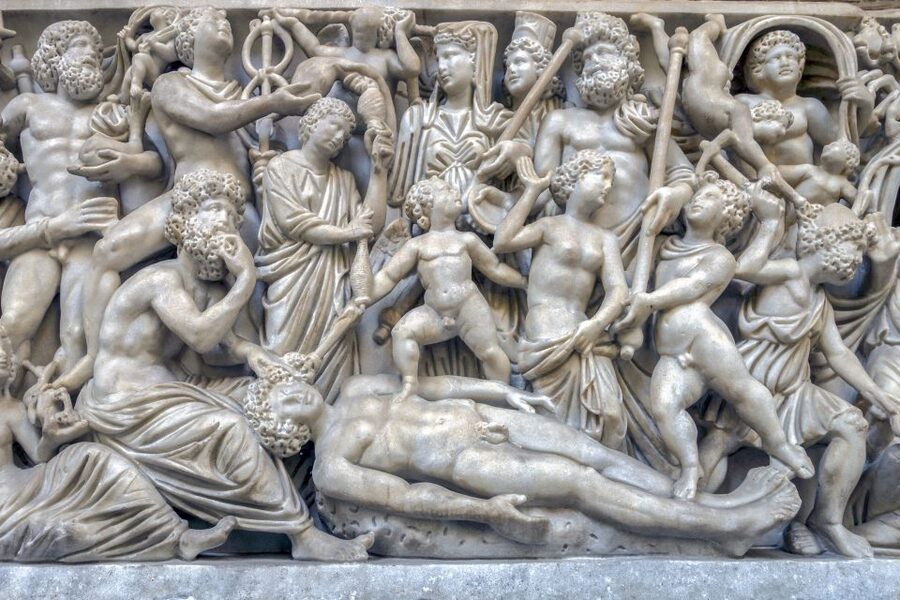
The museum was founded by Charles III of Spain in the mid-18th century, and its holdings grew from two major sources: the Farnese Collection and objects recovered from ancient sites around Naples. Together, they make this more than a standard sculpture museum.
I find the museum most useful when paired with Pompeii or Herculaneum. At the ruins, you see streets, houses, baths, and walls. Here, you see what was inside those buildings. A painted garden fresco, a delicate glass vessel, or a set of cooking pots can make the ruined rooms feel less empty and more connected to daily life.
If you visit the museum first, you will recognize artistic styles and household objects when you reach Pompeii. If you visit afterward, the museum helps fill in the gaps. You may find the archaeological site more meaningful once you have seen the objects removed from it.
The museum also gives you a better sense of the Roman world beyond the disaster of Mount Vesuvius. The Farnese sculpture collection reaches back to Greek and Roman artistic traditions, while the coin display and Egyptian section broaden the story beyond Campania.
More History Audio Tours in Italy
- Colosseum, Roman Forum & Palatine Hill with Audioguide App
★ 4.4 · 6,291 reviews - Venice: St. Mark Basilica Ticket, Audioguide+History Gallery
★ 3.9 · 4,780 reviews - Rome: Colosseum, Ancient Rome Tour or AudioGuided Tour
★ 4.4 · 2,879 reviews
Exchanging the smartphone voucher at the entrance
This is not a guided tour. You begin by taking your smartphone voucher to the Museo Archeologico di Napoli ticket office and exchanging it for the official entrance ticket. That extra step is worth noting because you do not simply walk up and scan the voucher at the museum door.
You will also pass through a security check. Bring your passport or identity card, as this is listed among the required items. Your ticket is valid for one entry only, so plan to see the museum in one visit rather than leaving for lunch and returning later.
The booking can still be useful at busy times. Some people found no line, particularly in the off-season, while others saw a long queue at the entrance. Conditions change with the day and season, so I would rather have a reservation than depend on a quiet morning.
The odd part is that you hold a digital voucher but still exchange it for a paper or official museum ticket. It is not the smoothest system, but once you have completed the exchange, you can visit at your own pace.
The Farnese Collection and monumental sculpture
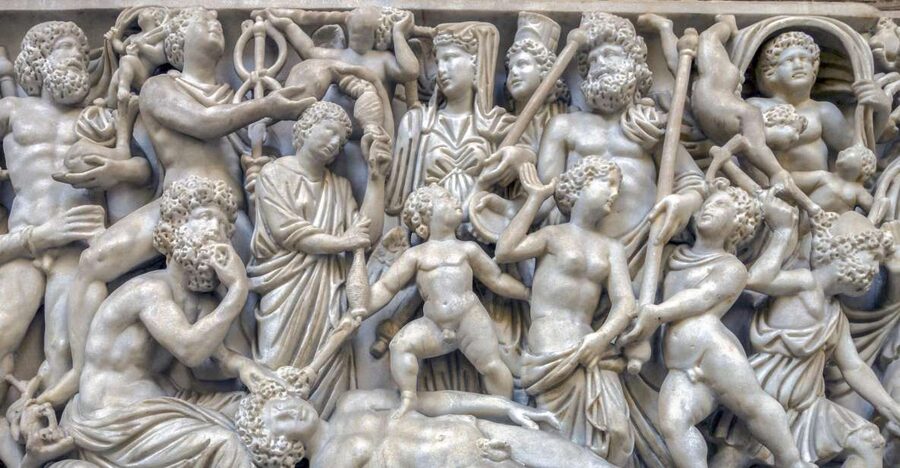
Begin with the Farnese Collection if you want the museum’s grandest introduction. The Bourbon rulers inherited this collection, which includes engraved gems, marble sculptures, and other works gathered by the Farnese family.
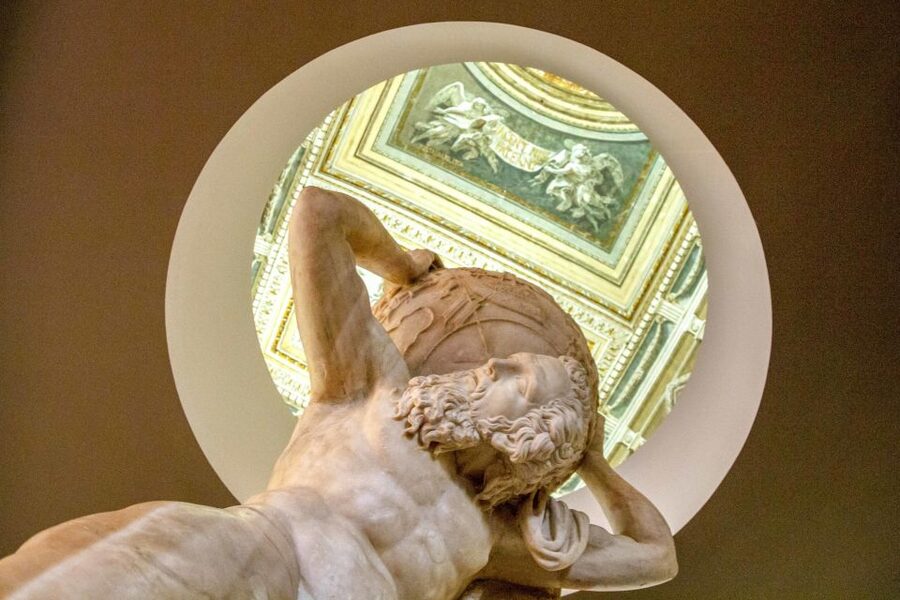
The Farnese Marbles are a major reason to visit. These large-scale works can feel imposing, especially when you have just come from the smaller household finds of Pompeii. They show the public, formal side of ancient art: gods, heroes, athletes, and idealized human bodies.
The sculpture galleries are not simply a parade of famous names. Look at the scale and physical detail. Muscles, hair, drapery, and twisting bodies were carved to be admired from several angles. Some pieces were taken from Roman bath complexes, including the Baths of Caracalla, giving them a connection to the grand public buildings of the ancient city.
You can spend an hour here without feeling rushed, but do not let the large statues take your entire visit. The museum rewards a change of pace. After the dramatic marbles, move to the smaller objects and wall paintings, where the ancient world feels more personal.
Pompeii rooms filled with daily life
The Pompeii collection is the section I would prioritize if you have limited time. It contains far more than statues. You will find frescoes, mosaics, furniture, cooking equipment, glass vessels, and other objects recovered from homes and public buildings.
These pieces help you understand what Pompeii actually looked like as a lived-in town. A house at the archaeological site may now have bare walls and missing doors. In the museum, you can see the painted decoration and household goods that once belonged there.
The miniature model of Pompeii is especially useful. It gives you a clear sense of the city’s layout before you walk through the ruins, or it can help you remember what you saw afterward. A video presentation about the eruption adds another layer, showing how quickly the disaster affected the inhabitants.
I would not rush this section. The larger frescoes deserve time, but the ordinary objects can be just as revealing. Glassware, cooking pots, and small domestic items show a level of daily activity that grand statues cannot.
The displays are generally well organized, and explanations are available in English as well as Italian. Still, this is a large collection. If you try to read every label, you may leave mentally tired. Choose a few rooms and objects to study closely, then keep moving.
More Museum Audio Tours in Italy
- Florence: Uffizi Priority Ticket & Masterpieces Audio App
★ 4.2 · 6,402 reviews - Rome: Borghese Gallery Skip-the-Line Ticket & Audioguide
★ 4.3 · 4,318 reviews - Rome: Borghese Gallery Ticket + Audioguide or Guided Tour
★ 4.6 · 3,219 reviews - Florence: Uffizi Gallery Timed Entry Ticket & Audio Guide
★ 4.2 · 2,794 reviews
Herculaneum, frescoes, and the value of comparison
The Herculaneum material works well beside the Pompeii collection. The two towns suffered the same volcanic event, but their surviving objects can give you different views of Roman life.
You may find it helpful to think in categories rather than race through room after room. Compare wall paintings with household vessels. Look at how decorative art sits alongside tools and kitchen equipment. Notice the difference between objects made for public display and those used in private homes.
This is where the museum earns its place on a Campania itinerary. At Pompeii and Herculaneum, you experience the buildings and streets. At the museum, you see the craftsmanship and belongings that made those buildings useful and beautiful.
If you have already visited Pompeii, reserve plenty of time for this section. Several hours are reasonable for a serious visit, and five hours would not be excessive if you want to read the explanations and examine the major rooms. If your schedule is tight, focus on the Pompeii displays, the Farnese sculpture galleries, and the model before moving on.
The Secret Cabinet and ancient Roman sexuality
The Secret Cabinet presents artifacts connected with the erotic side of ancient Roman life. It is not a side issue in the museum. The objects show that Roman art and household decoration included sexual themes that modern visitors may find direct or surprising.
This area can add useful context to Pompeii, where erotic imagery appears in homes, public spaces, and objects connected with everyday life. It also reminds you that ancient people did not divide art and private life in exactly the same way we do.
Take your time here, but keep the tone historical rather than sensational. The value is in seeing how these objects fit into Roman culture, not simply in treating them as oddities. Families should decide for themselves whether the section suits younger children.
Egyptian artifacts and other collections

The Egyptian section adds a different thread to the museum. It is easy to focus only on Greece, Rome, Pompeii, and Herculaneum, but this gallery shows the wider collecting interests of the institution.
The supplied information notes that the Egyptian section was closed until March 31, 2023. Since that date has passed, check its current status before you visit, particularly if this collection is central to your plans. Museum rooms can change during restoration or reorganization.
The coin collection is another newer display. Coins are small, but they can tell you about rulers, trade, and daily transactions in a way a monumental statue cannot. This is a good section for a quieter stretch of the visit after the crowded sculpture rooms.
How long you need inside
Three hours is a sensible minimum for a first visit. That gives you time for the Pompeii and Herculaneum rooms, a look at the Farnese Collection, and a short break at the museum cafe.
Four hours is better if you want to read labels and visit the Secret Cabinet. Five hours makes sense for anyone with a strong interest in ancient art, archaeology, or Roman domestic life.
The museum can feel mentally tiring because there is so much to absorb. I suggest choosing your priorities before entering:
- Pompeii and Herculaneum objects
- Farnese sculpture
- Secret Cabinet
- Egyptian collection
- Coins and newer displays
The cafe gives you a useful pause, and prices were described as reasonable. There is also a bookstore, which is handy if you want a guidebook or further reading without carrying one across Naples.
Arrive near opening time if you want the calmest experience and the best chance of seeing major rooms with fewer people. Later in the day, narrow galleries can feel crowded, even if the museum itself is not packed.
Is the digital audio app worth using?
The digital audio app is included, but I would treat it as a bonus rather than the main reason to book this option. The app is accessed through a supplied link and login details, so make sure you have the information ready before entering.
Some people found the app useful. Others had trouble downloading it, found that the links did not work, or stopped using it after a few minutes. One important distinction is that this is not necessarily the same as a full museum audio guide purchased directly from the museum.
You may prefer the app if you like short explanations and want to tour independently. If you want a detailed, reliable commentary on the major objects, ask the museum about its own audio guide when you arrive. Do not assume that the included digital app replaces a live guide or a full official audio tour.
The museum labels are available in English and Italian, so you can still have a good visit without using the app. I would download it before you arrive, rather than spending your first minutes inside waiting for it to load.
Price, access, and who gets good value

At $29 per person, this is fair value for a three to five-hour visit. The ticket becomes especially worthwhile when the museum is a major part of your Naples plans and you want the freedom to set your own route.
The value is weaker if you only have one hour or if your main goal is a guided explanation. You are paying for admission and a digital audio option, not for a live guide. If you already know the museum well, buying a basic entrance ticket directly may be enough.
The museum is wheelchair accessible, but the Vittorio Emanuele apartments are not accessible to people with impaired mobility. If that area is important to you, confirm the current route and access arrangements before booking.
The museum is reachable by Metro, and it may also be walkable from the cruise port for people comfortable with a longer city walk. Since the exact travel time depends on your starting point, check your route before choosing an arrival time.
Free cancellation up to 24 hours before the visit and the reserve-now, pay-later option add flexibility. Those terms matter if your Naples plans depend on weather, cruise timing, or a changing day trip schedule.
Should you book this museum ticket?
Book it if you want to understand Pompeii and Herculaneum rather than simply tick them off a list. The combination of frescoes, mosaics, household goods, sculptures, models, and Roman art makes this one of the most useful museum stops in Naples.
I would choose this ticket for a self-guided visit of at least three hours, especially if you value flexibility and do not need a live guide. I would be more cautious if you expect a polished audio tour, since the included app may be slow or limited.
For the best experience, visit early, bring identification, exchange the voucher at the ticket office, and decide your priority rooms before you enter. If you have already seen Pompeii or Herculaneum, this museum is not optional background material. It is the place where many of the most important objects from those sites can be seen up close.
FAQ
How long is the ticket valid?
The ticket is valid for one day. Check the selected availability for the starting time.
Can I enter the museum more than once?
No. The ticket is valid for a single entry and does not include reentry.
Is a live guide included?
No. The package includes museum admission and a digital audio app, but not a guided tour.
Where do I exchange the smartphone voucher?
Exchange it at the Museo Archeologico di Napoli ticket office for the official entrance ticket.
What should I bring?
Bring your passport or identity card. You must also pass through a security check before entering.
Is the museum wheelchair accessible?
The activity is listed as wheelchair accessible. The Vittorio Emanuele apartments are not accessible to people with impaired mobility.
Does the ticket include the Egyptian section?
The supplied information notes that the Egyptian section was closed until March 31, 2023. Check the current status before your visit.
Can I cancel the booking?
You can cancel up to 24 hours in advance for a full refund. A reserve-now, pay-later option is also available.
More Smartphone Audio Tours in Italy
- Rome: Colosseum & Forum with Audio Guide App -Optional Arena
★ 4.2 · 24,770 reviews - Florence: Timed Entry to Michelangelo’s David + Audio App
★ 4.6 · 19,496 reviews - Florence: Cathedral & Brunelleschi’s Dome Ticket & Audio App
★ 4.4 · 6,973 reviews - Florence: Michelangelo’s David Priority Ticket & Audio App
★ 4.4 · 6,812 reviews
Latest audio tours in Italy
- Orgosolo Multilingual Audioguide★ 4.5 · 42 reviews
- Pantheon Skip the Line Entry Tickets with Digital Audio Guide★ 3.5 · 52 reviews
- St. Peter’s Basilica: Dome Climb with Lift & Audioguide★ 4.5 · 13 reviews
- Audio guide in Vatican Museums and Sistine Chapel★ 4.5 · 12 reviews
- The Roman Jewish Ghetto: A Self-Guided Audio Tour★ 4.0 · 8 reviews
- Experience: The Pantheon Audio Tour★ 4.5 · 4 reviews
- Trastevere: A Self-guided Audio Tour of Rome’s Medieval Village★ 4.5 · 3 reviews
- Navova square underground with audioguide★ 4.5 · 17 reviews
Museum Audio Tours, compared.

Uffizi Priority Ticket & Masterpieces Audio App
Read our review →
Louvre Museum Hosted Entry and Mona Lisa Audioguide
Read our review →
St. Mark Basilica Ticket, Audioguide+History Gallery
Read our review →
Borghese Gallery Skip-the-Line Ticket & Audioguide
Read our review →
Borghese Gallery Ticket + Audioguide or Guided Tour
Read our review →
Orsay Museum Entry Ticket and Digital Audio Guide App
Read our review →
Uffizi Gallery Timed Entry Ticket & Audio Guide
Read our review →
Acropolis Museum Ticket with optional Audio Guide
Read our review →Browse the lists this tour appears in