
Reviewed · PHILADELPHIA
Museum of the American Revolution Admission Ticket with Audio Guided Option
George Washington’s original war tent is the star here. You do not simply read about the Continental Army’s commander. You stand before the canvas shelter that followed him through the war, then move through galleries filled with artifacts, life-size scenes, films, and hands-on displays. I especially like the two consecutive days of admission and the way the museum puts military events beside the choices and hardships faced by ordinary people.
I also like the audio-guide option, which adds useful commentary without forcing you into a fixed tour. The main consideration is time: three hours is a sensible minimum, and school groups or large organized parties can make some areas feel crowded.
Key points to know before you go
- George Washington’s original headquarters tent gives the visit its most powerful and memorable moment.
- Two-day admission lets you split the galleries instead of rushing through them.
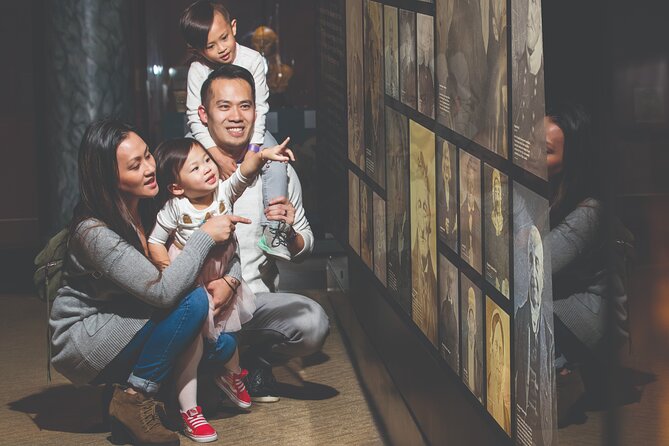
- Life-size scenes and interactive displays make the Revolution easier for children and adults to follow.
- Audio guides are available in English, Spanish, and French and can add useful context at your own pace.
- The museum is an easy walk from Independence Hall and the Liberty Bell, making it a practical part of a Historic District day.
- The $25 ticket offers solid value if you use the return visit or spend at least three hours inside.
Why Washington’s tent is the museum’s emotional center
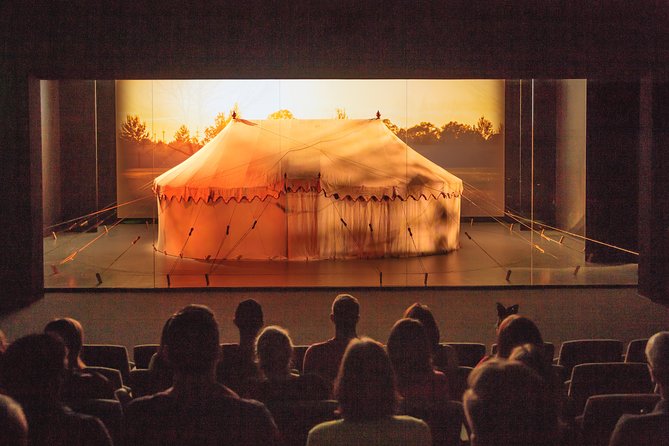
The Museum of the American Revolution begins with a powerful object: George Washington’s original Revolutionary War headquarters tent. It is not a grand ceremonial piece. It is a practical field shelter, tied to the long, uncertain years when Washington directed an army that often lacked supplies, money, and formal military training.
Seeing the tent helps shrink the scale of the war. Washington was not always working from a grand headquarters. He lived and worked in conditions shaped by weather, movement, shortages, and danger. The display gives a human focus to the larger political story.
You will follow Washington’s journey through the war, but the museum does not limit the story to famous leaders. Its exhibits also show the decisions made by soldiers, Indigenous people, enslaved and free Black Americans, women, merchants, and families caught between competing loyalties.
The tent is worth slowing down for. If you are moving quickly through Philadelphia’s many historic sites, this is the place where you should pause rather than simply take a photograph and move on.
More Museum Audio Tours in the USA
- Medieval Torture Museum Ticket with Audio Guide and Ghost Hunting
★ 5.0 · 962 reviews - Pearl Harbor Aviation Museum Ticket with Audio Tour and Shuttle
★ 4.5 · 58 reviews - Skip the Line: Mel Fisher Maritime Museum Admission Ticket and Audio Tour
★ 4.5 · 29 reviews
A clear route from colonial protest to independence
The museum does a good job of arranging the galleries in a logical order. You begin with the tensions that led to open rebellion, then move through the fighting, the political break with Britain, and the uncertain work of creating a new country.
An introductory film helps you get your bearings before you enter the main exhibits. That matters because the Revolution can become a blur of dates, battles, names, and political arguments. The film gives you a basic outline so the objects and displays have a place in the larger story.
One early highlight is a life-size reproduction of the Boston Liberty Tree. The tree became a gathering place for colonists who opposed British policies. The full-scale setting makes the protest movement feel public and physical, not just like a series of documents in glass cases.
You will also see authentic printings of the Declaration of Independence and the list of grievances against King George III. These displays work best when you take time to read a few lines rather than trying to absorb every word. They show that independence was framed as a case against specific acts of government, taxation, military control, and political power.
The museum is at its best when it connects these printed arguments to real people and consequences. The Revolution was not only a debate among political leaders. It affected homes, businesses, farms, military camps, and entire communities.
Life-size scenes make difficult choices easier to understand
Several displays use life-size figures and staged settings to present moments that can be hard to explain with text alone. One especially important scene focuses on members of the Oneida Indian Nation.
You will stand among life-size replicas as you listen to the debate over whether the Oneida should break with the Iroquois Confederacy and support the American cause. This is a useful reminder that Indigenous communities were making their own political and military decisions during the war. They were not simply background figures in someone else’s story.
That display also shows why the Revolution cannot be reduced to a simple contest between Americans and the British. Loyalties differed from one nation, town, family, and individual to the next. The museum presents those divisions in a way that is approachable for younger visitors but still meaningful for adults.
The life-size scenes are one reason the museum works well for families. A child may remember the figures, sounds, and physical settings more easily than a long wall of text. At the same time, adults can stop and read the details behind each scene.
You will find interactive displays throughout the museum as well. These give you a chance to do more than walk past cases. The presentation has been designed as a sequence of visual and participatory experiences, almost like moving through a historical film, but with objects and documents that keep the story grounded.
The Battle of Brandywine and the fear of the front line
The Battle of Brandywine display changes the mood. Instead of focusing on speeches or documents, it places you in the confusion of combat. A British infantry charge comes toward you, recreating the fear and frenzy of the front lines.
This is not a substitute for visiting a battlefield, and anyone hoping for a detailed study of troop movements may want more military analysis. One useful criticism is that the museum could give greater attention to certain individual battles and foreign officers who played important roles, including Casimir Pulaski and Tadeusz Kościuszko.
Still, the display succeeds at showing what battle felt like to people standing in the path of an advancing force. It gives emotional weight to the dry phrases found in military histories. You see why discipline, morale, supply lines, terrain, and timing mattered so much.
If battles are your main interest, read the labels carefully and use the audio guide. The museum provides a broad account of the war, but it is not arranged as a battlefield-by-battlefield study. Its goal is to explain the Revolution as a national and human crisis, not only as a military campaign.
Another self-paced route in the USA:
- Los Angeles: Hop-On Hop-Off Bus Tour with Audio Guide
★ 3.7 · 2,030 reviews - City Sightseeing Hop-On Hop-Off Bus Tour with Audio Guide
★ 3.0 · 1,083 reviews - Gettysburg Battlefield Self-Guided Driving Audio Tour
★ 4.5 · 910 reviews - Joshua Tree National Park Self-Guided Driving Audio Tour
★ 4.5 · 762 reviews
Life at sea and the privateer’s perspective
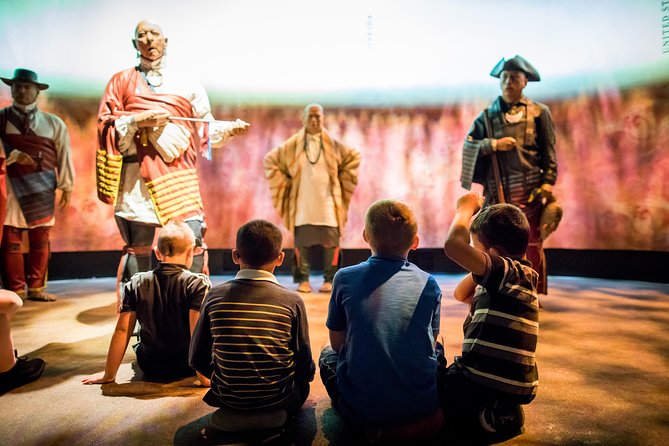
The museum also takes you onto a replica privateer ship. This section broadens the story beyond the better-known land campaigns.
Privateers were privately owned vessels authorized to attack enemy shipping. Their work brought together patriotism, commercial opportunity, danger, and uncertain legal boundaries. The ship replica gives you a physical sense of the cramped world in which sailors operated.
This is a welcome change of setting after the galleries focused on political protest and infantry combat. You get a reminder that the war took place on water as well as land, and that the struggle affected trade and shipping routes.
The replica is particularly useful for younger visitors because it offers something to climb aboard and explore. It also helps break up the reading-heavy sections of the museum. You can expect the experience to shift between documents, films, life-size scenes, objects, and interactive elements rather than relying on one format throughout.
The audio guide is worth adding

I would choose the audio-guide option if you want more than a quick look. It is available in English, Spanish, or French, and you select your language during checkout.
The guide lets you move at your own speed. You can listen closely to the displays that interest you and keep moving through sections that are less important to you. That flexibility is useful in a museum with enough material for three or four hours.
An audio guide also helps when a display raises a question that the short label does not answer. The experience combines commentary with the exhibits, so you are not simply listening to a detached lecture. For many people, it will make the sequence of events easier to follow.
You do not need the audio option to enjoy the museum. The films, objects, replicas, and labels create a complete visit on their own. But if you are visiting Philadelphia specifically to understand the Revolutionary period, the extra commentary is a sensible addition.
The audio guide is not available in every language, so check the three choices before booking. If you are visiting with children, you may also want to share the device or alternate listening rather than expecting everyone to follow every track.
How long to allow, and why two days help
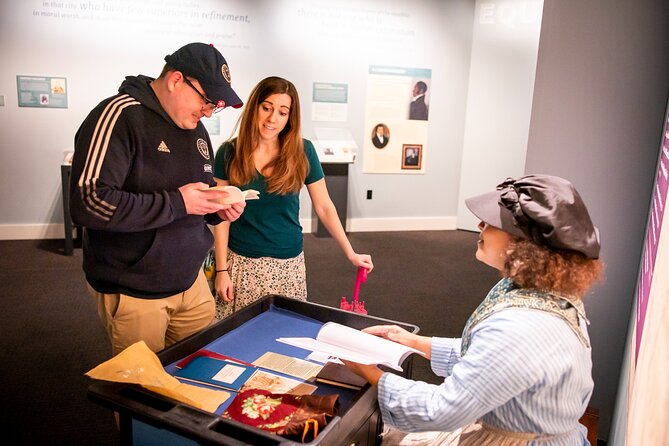
Plan on at least three hours. That gives you enough time for the introductory film, the main gallery route, Washington’s tent, the major interactive scenes, and selected audio stops.
Four hours is reasonable if you read most labels, use the audio guide, or travel with children who want to try the interactive displays. The museum is larger than some first-time visitors expect, so a short stop between Independence Hall and the Liberty Bell can feel rushed.
The ticket is valid for two consecutive days, which is one of its best features. You can make a first visit on the same day as other Historic District sights, then return the next day for the sections you skipped.
This matters because Philadelphia’s historic center can fill a full day before you even enter the museum. You may want to see Independence Hall, the Liberty Bell, the National Constitution Center, and other nearby sites. Two-day access lets you avoid treating the Museum of the American Revolution as one more hurried stop.
The return visit is also useful if your first entry is busy. School groups and large organized groups can affect the pace in certain rooms. If you have flexibility, visit early or use the second day for the busiest sections.
Is $25 a fair price?
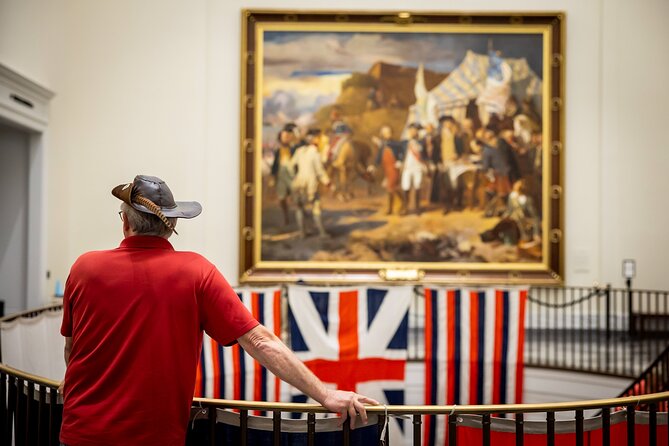
At $25 per person, this is a reasonable museum ticket, especially if you stay for three or four hours. The two-day validity improves the value considerably because you do not have to force the entire museum into one sitting.
The ticket includes admission, the introductory film, special exhibitions when offered, taxes, fees, and skip-the-line entry. Food and drinks are not included, so plan to eat elsewhere during your Historic District day.
The main question is how much time you have. If you only have 45 minutes between other appointments, the price may feel high because you will miss much of the museum. If you can give it a proper afternoon, the ticket compares well with other major Philadelphia attractions.
The audio option is the practical upgrade for visitors who want a guided explanation but do not want a fixed group tour. The museum experience is self-paced, so you remain free to stop, skip, and return to displays.
Getting there from Philadelphia’s Historic District
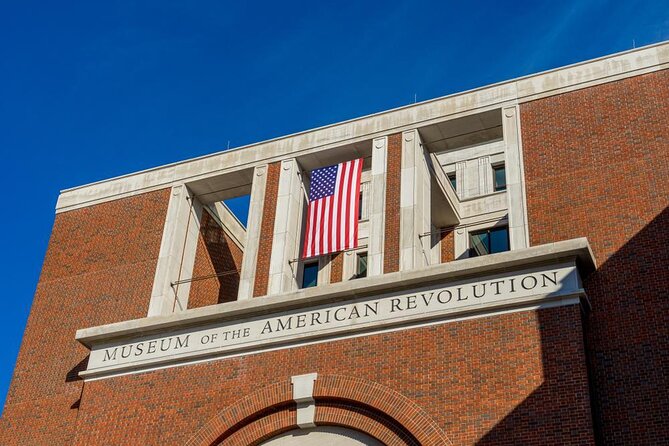
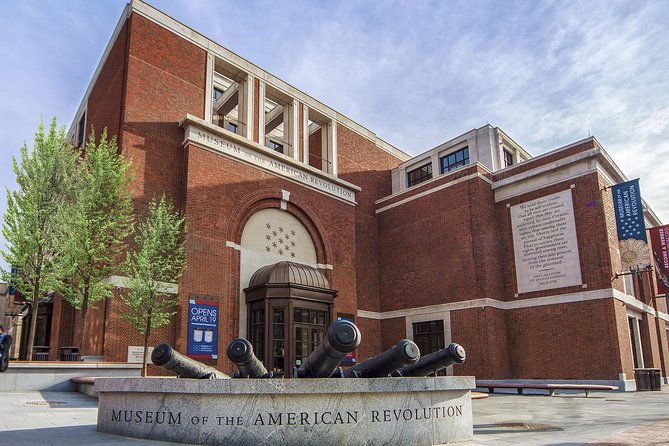
The museum is an easy walk from the Liberty Bell and Independence Hall. That makes it simple to add to a day in the historic center without arranging a separate ride.
It is also near public transportation, and most people can participate. Children must be accompanied by an adult, and service animals are allowed.
Because the museum visit can take several hours, I would avoid placing it at the very end of an overpacked sightseeing day. The content is detailed, and the best exhibits reward attention. Put it earlier in your schedule or use the two-day ticket to split the visit.
Booking ahead is sensible. The experience is booked about 12 days in advance on average, so last-minute availability should not be assumed during busy periods. The mobile ticket makes entry straightforward, and skip-the-line access saves time at the start.
Who will enjoy this museum most?
This is a strong choice for anyone who wants a fuller explanation of the American Revolution than you can get from a quick walk around Independence Hall.
It suits:
- Families looking for visual and interactive exhibits
- Adults who want original objects and historical documents
- Teenagers who respond better to films, replicas, and life-size scenes than long text panels
- Visitors interested in George Washington and the Continental Army
- People who want to examine the Revolution from political, military, Indigenous, and personal viewpoints
- Anyone with two days in Philadelphia’s Historic District
A 15-year-old interested in American history may find this more engaging than a traditional museum filled mainly with small objects and printed labels. Younger children can enjoy the ship replica, large scenes, and interactive displays, though the war’s violence and political complexity may require some explanation from an adult.
If your main goal is a technical study of every battle, the museum may leave you wanting more detail. It gives you a broad, carefully organized account, but it does not cover every event or military figure equally. Some subjects, including the Gaspee affair and the contributions of Pulaski and Kościuszko, receive less attention than some visitors might expect.
Booking, cancellation, and practical limits
Confirmation is provided at booking, and the mobile ticket is included. Audio guides must be selected in English, Spanish, or French during checkout.
The listed activity has a maximum of 14 travelers, though the museum itself can still be busy with school groups or other visitors. That means a small booking limit does not guarantee quiet galleries at every hour.
Free cancellation is available if you cancel at least 24 hours before the scheduled start time. Cancellations or changes made within 24 hours are not accepted for a refund. The stated policy also says that if poor weather causes a cancellation, you will be offered another date or a full refund.
Should you book the Museum of the American Revolution?
I would book it if you want a serious but accessible look at how the United States came into being. The original Washington tent, strong visual presentation, and two-day ticket give this museum more weight than a quick attraction stop.
Choose the audio option if you want extra explanation, especially if this is your main Revolutionary War museum visit. Allow at least three hours, and use the second day if your Philadelphia schedule permits.
I would be more cautious only if your schedule is extremely tight or your interest is limited to detailed battlefield tactics. For most visitors, though, this is one of the most useful additions to a Historic District itinerary. It turns familiar names and dates into people, arguments, risks, and choices you can see at close range.
FAQ
How much does admission cost?
Admission costs $25 per person.
How long does the museum visit take?
The expected visit lasts approximately three to four hours. Allow at least three hours if you want time for the main exhibits and films.
Is the ticket valid for more than one day?
Yes. The admission ticket is valid for two consecutive days.
Is an audio guide included?
Audio-guided options are available at checkout. You must select the option and choose English, Spanish, or French.
What languages are available for the audio guide?
The audio guide is available in English, Spanish, and French only.
Is the ticket a mobile ticket?
Yes. The experience provides a mobile ticket.
Can I skip the ticket line?
Yes. Skip-the-line entry is included.
Is food included?
No. Food and drinks are not included in the admission ticket.
Is the museum near Independence Hall and the Liberty Bell?
Yes. The museum is an easy walk from both Independence Hall and the Liberty Bell.
Can I cancel for a refund?
Yes, if you cancel at least 24 hours before the experience start time. Cancellations made less than 24 hours in advance are not refunded.
Latest audio tours in the USA
- Solvang City Personalized Self-Guided App Tour★ 3.0 · 6 reviews
- Essential Downtown SLO: A Self-Guided Audio Tour★ 4.5 · 27 reviews
- Silicon Valley Self-Guided Driving Audio Tour for Tech Lovers★ 4.0 · 24 reviews
- Self-Guided Audio Tour of the Golden Gate Bridge★ 3.5 · 3 reviews
- The Ghosts of San Francisco Haunted Audio App Walking Tour★ 5.0 · 2 reviews
- Point Reyes National Seashore Self Guided Driving Audio Tour★ 4.0 · 9 reviews
- San Francisco Self-Guided Audio Drive: Explore at Your Own Pace★ 4.0 · 9 reviews
- Explore Coronado Island on a Self Guided Audio Tour★ 5.0 · 2 reviews
Museum Audio Tours, compared.

Uffizi Priority Ticket & Masterpieces Audio App
Read our review →
Louvre Museum Hosted Entry and Mona Lisa Audioguide
Read our review →
St. Mark Basilica Ticket, Audioguide+History Gallery
Read our review →
Borghese Gallery Skip-the-Line Ticket & Audioguide
Read our review →
Borghese Gallery Ticket + Audioguide or Guided Tour
Read our review →
Orsay Museum Entry Ticket and Digital Audio Guide App
Read our review →
Uffizi Gallery Timed Entry Ticket & Audio Guide
Read our review →
Acropolis Museum Ticket with optional Audio Guide
Read our review →Browse the lists this tour appears in