
Reviewed · PARIS
Marais self-guided audio tour: the neighborhood that has it all
Le Marais packs centuries of Paris into a compact walk. This self-guided route leads you from the old Pont Marie through grand mansions, ancient churches, Jewish Paris, famous food stops, Place des Vosges, and the National Archives. You get the story through the VoiceMap app, not a live guide, so the pace is yours.
I like the offline maps and audio, which remove the usual worry about weak phone service. I also like the freedom to pause at a pastry shop, enter a museum, or sit in Place des Vosges without holding up a group. The tradeoff is that you must manage the app yourself, and the tour gives you only about an hour of recorded material rather than a full day of guided sightseeing.
Key points to know before you walk
- The route runs from Pont Marie to Rue des Archives, crossing a useful slice of Le Marais rather than circling one small square.
- The audio lasts about one hour, but you can stop and restart whenever you wish.
- Offline access matters in Paris, giving you maps, audio, and location data without a live connection.
- The route mixes major sights with everyday stops, including churches, fountains, falafel, patisserie shops, and historic streets.
- The tour costs $14.99 per person, a reasonable price if you want historical context without paying for a private guide.
- The experience is private by design, since only your own group uses the tour, though you provide the phone and handle the walking yourself.
Starting at Pont Marie, one of Paris’ oldest crossings
The tour begins at Pont Marie, a good place to enter Le Marais from the Seine. A bridge has occupied this site since 1635. The earliest version was made of wood, as were most Paris bridges at the time, so this crossing gives you an immediate sense of how old the city’s river network is.
From here, you pass into Le Marais, a neighborhood known for old mansions, religious buildings, food shops, and streets that still reveal several chapters of Parisian life. The route does not require you to rush. The recorded section takes about an hour, but you can pause the audio and look around whenever a street, courtyard, or café catches your eye.
That flexibility is the main reason to choose this format. A live walking tour has a fixed pace and a fixed path. Here, you can take a short break at the beginning, get coffee, or return to a point later if you want to examine it more closely.
More Self-Guided Audio Tours in France
- The Famous Graves of Père Lachaise – Self-Guided Audio Tour
★ 3.5 · 44 reviews - Montmartre Self-Guided Audio Tour: More Than Meets the Eye
★ 4.5 · 35 reviews - One Hour Père Lachaise Cemetery: A Self-guided Audio Tour
★ 3.5 · 26 reviews
Hôtel de Sens and the public fountains of Paris
One early stop is Hôtel de Sens, a grand historic residence that helps introduce the architecture of Le Marais. The route passes by rather than promising entry, so treat it as an exterior sight unless you separately confirm access.
You also pass a Wallace fountain. These public fountains were funded by Richard Wallace, a wealthy Englishman who wanted clean drinking water available to people who needed it. The fountains are small details, but they add useful social history to the walk. Paris is not only palaces and churches. It is also the story of how people lived, found water, worked, worshiped, and moved through the city.
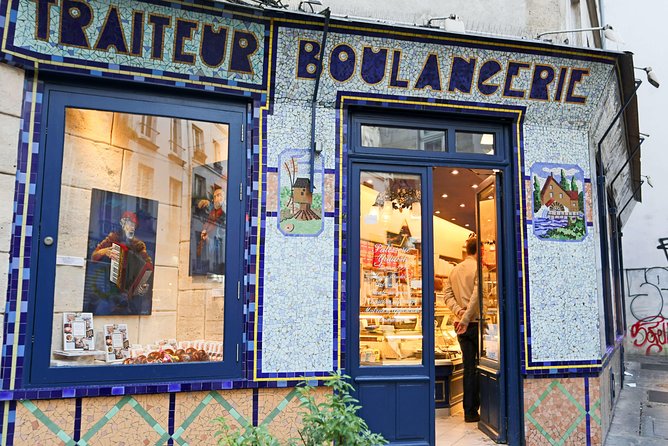
The tour’s food stops begin to appear around this part of the route. You pass Au Petit Versailles du Marais, Au Bourguignon du Marais, and Aux Merveilleux de Fred. These are not included tastings, and the cost of food is separate. Still, their presence makes the route practical. You can turn the walk into a loose food outing, stopping when something looks good instead of treating sightseeing and eating as separate tasks.
Churches that show Paris changing over centuries
The route continues past the Church of Saint-Gervais and Saint-Protais, one of the oldest parish sites in Paris. A church has occupied the location since the 500s. The present building began in 1495, and construction continued for 150 years.
That long building period is worth keeping in mind. This is not a single moment frozen in stone. Churches were altered, expanded, repaired, and completed as Paris changed around them. The audio helps connect the building to the neighborhood instead of leaving you with only a façade to photograph.
Next comes Saint-Paul-Saint-Louis. The site has held churches since around 650. A later church was built in 1125, another in 1430, and construction on the current building began when Cardinal Richelieu laid the first stone in 1627.
These dates give the route a useful rhythm. You move from medieval Paris to the 17th century, then onward to royal planning and private mansions. If you enjoy architecture, you will get more from this section by looking up at details rather than treating the churches as quick photo stops. Keep in mind that the itinerary only promises a pass-by experience, and entrance fees to attractions are not included.
Hôtel de Sully and the formal beauty of Place des Vosges
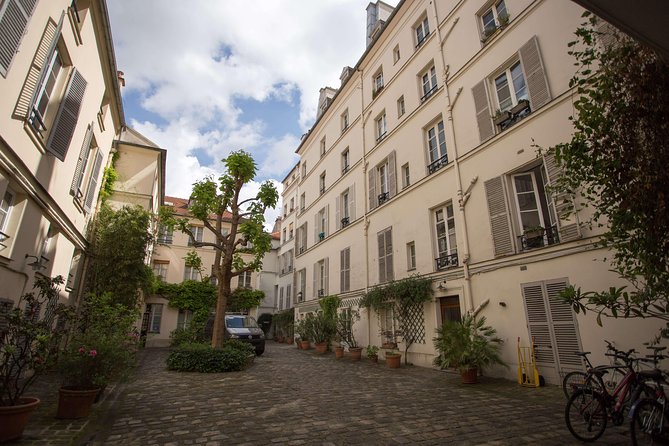
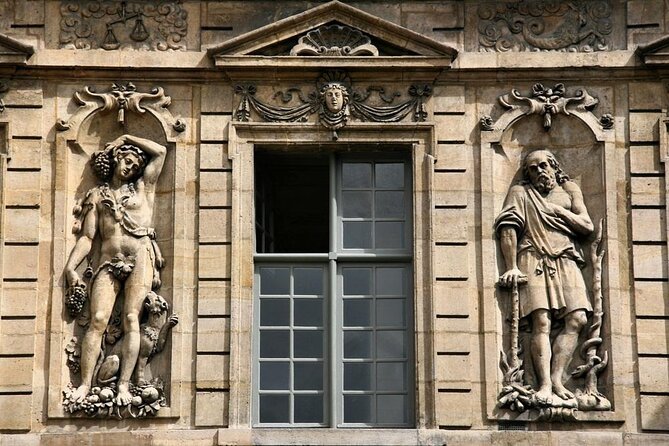
Hôtel de Sully is one of the route’s best examples of a Paris mansion built for power and wealth. It was constructed between 1625 and 1630 for Sully, a minister of Henri IV. He spent heavily on the interiors, and the building remains a fine reminder of how important private residences were to the character of Le Marais.
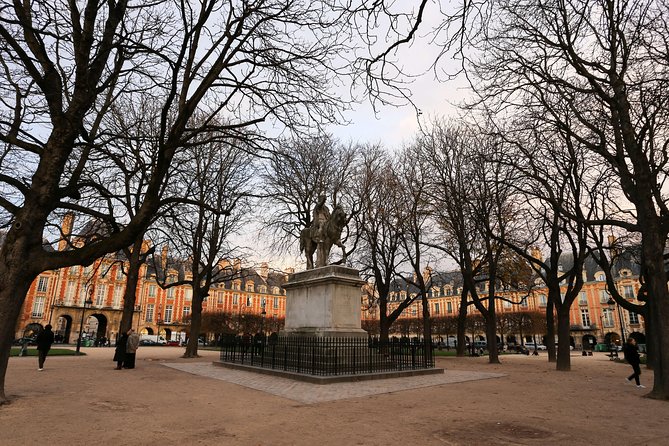
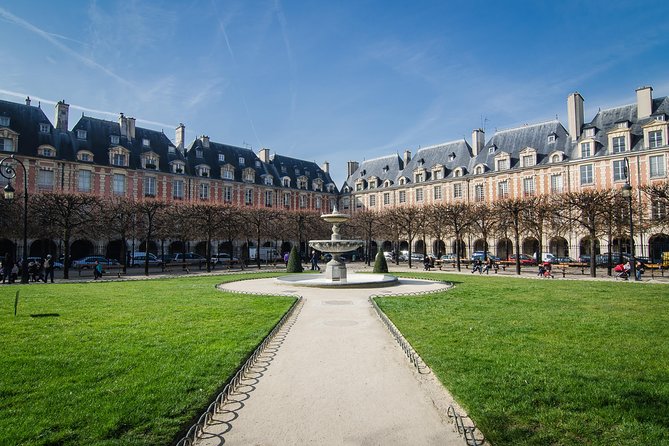
The route then reaches Place des Vosges, one of Paris’ most carefully balanced squares. It was built between 1605 and 1612, with brick and stone façades arranged in a regular pattern on all four sides. In the center is a statue of Louis XIII.
This is a natural place to pause the tour. You can sit, walk under the arcades, or simply take in the unusual harmony of the square. The audio is useful here because the space can look almost too orderly to explain itself. Its design reflects a period when Paris was being shaped with royal ambition and formal planning.
Place des Vosges also works well as a break point. If you are walking with someone who prefers a slower pace, stop here before continuing. Since the tour is not tied to a live group, you do not have to choose between listening and enjoying the setting.
More Self-Guided Audio Tours in Paris
- Montmartre: Secret Stories of Paris – Self-Guided Audio Tour
★ 4.0 · 13 reviews - Self-Guided Audio Tour -The Eiffel Tower, Exterior
★ 4.0 · 9 reviews - Self-Guided Audio Tour Tickets To The d’Orsay Museum
★ 3.0 · 9 reviews - Self-Guided Audio Tour – Montmartre: The heart of art and bohemia
★ 3.5 · 7 reviews
Victor Hugo’s Paris at the Maison de Victor Hugo
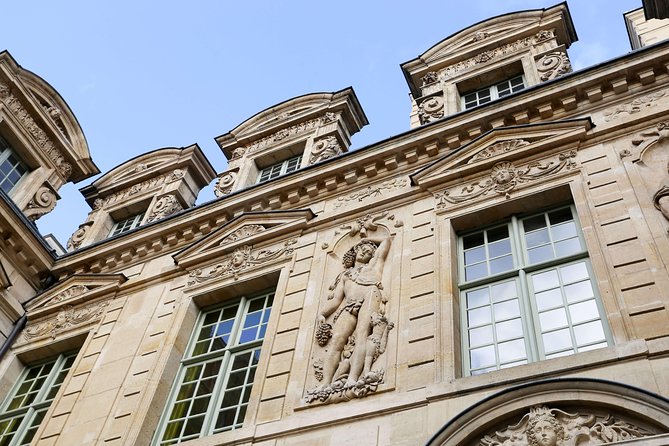
The Maison de Victor Hugo sits on Place des Vosges. Victor Hugo lived from 1802 to 1885 and wrote some of France’s best-known novels, including Les Misérables and The Hunchback of Notre Dame.
The route passes by his former home. If you want to visit the museum, admission is not included, so plan that as a separate stop. This is one place where the self-guided format works in your favor. You can pause the route, visit the house, then resume the audio when you are ready.
I would not try to force every possible museum into the one-hour walk. The point of this tour is to give you a clear path through the neighborhood, then let you add the stops that match your interests. History, literature, architecture, and food all appear, but you decide how much attention each receives.
The tour also passes the Historical Library of the City of Paris. Again, it is an exterior stop within the walking route, not an included museum visit. Together, the library and Hugo’s home add a literary and civic layer to the route after the grand squares and churches.
The Pletzl and Jewish Paris
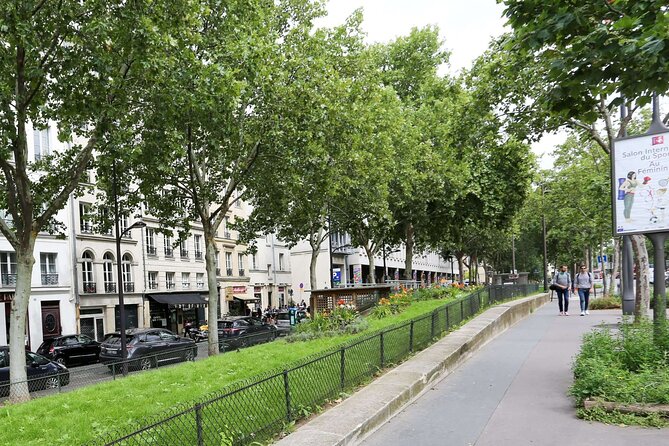
One of the most distinctive parts of the walk is the passage through the Pletzl, the traditional Jewish quarter of Le Marais. You pass the Agoudas Hakehilos Synagogue and L’As du Fallafel, a well-known food stop on Rue des Rosiers.
This section gives the tour a more human scale. Instead of focusing only on royal construction and wealthy residents, it points you toward a community district with its own religious, culinary, and cultural identity. The route is stronger for including this part of Le Marais.
L’As du Fallafel is a pass-by stop, and food is not included. If you decide to eat here, allow extra time and budget separately. The same applies to the patisserie and restaurant stops earlier in the walk. The $14.99 price covers the digital tour, not meals, drinks, or admission to attractions.
For many people, this is where the route becomes especially useful. You can hear the neighborhood’s story, then stop for food without leaving the path. That combination is more satisfying than a walk made entirely of monuments.
Finishing at the National Archives on Rue des Archives
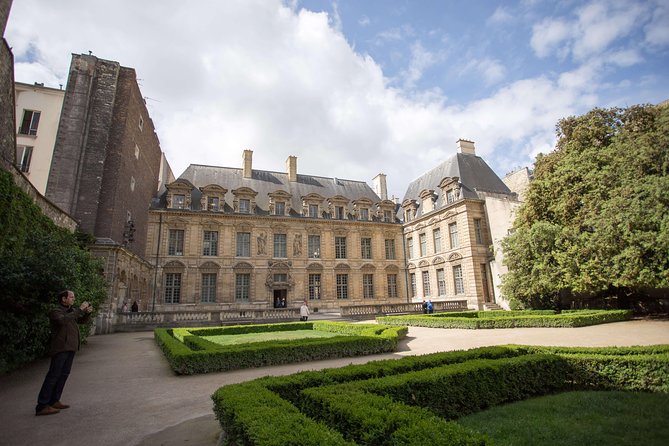
The final stop is the Musée des Archives Nationales, housed in the former Hôtel de Soubise et Rohan. You are directed to pause in front of the grand entrance on Rue des Archives, at number 58.
This is a fitting end because the National Archives connect the personal and political stories heard along the route. The old mansion, its entrance, and the surrounding streets bring the walk back to the private residences and institutions that shaped Le Marais.
The tour ends here rather than returning you to Pont Marie. That matters when you plan your day. You finish in the 3rd arrondissement, while the starting point is in the 4th. The end point is near public transportation, so you can continue elsewhere in Paris, find lunch, or make your way to another sight.
What the VoiceMap format is like in practice
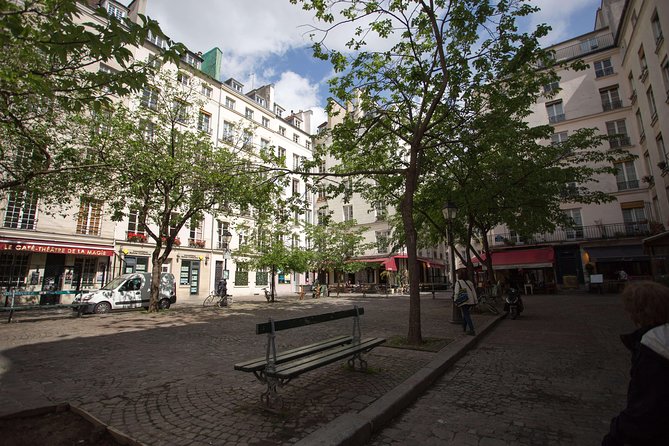
After booking, you receive an online ticket with instructions and a code. Download the VoiceMap application before you start. The app provides the audio, map, and geodata for offline use.
That preparation is important. Do not wait until you are standing at Pont Marie to install everything. Download the route in advance, check that the audio is available, and bring a charged smartphone. A smartphone is not included, and neither transportation nor food is covered.
The route is designed for independent use. The app tells you where to go, while the recorded narration supplies the context. A German-language user praised the clear language and easy-to-follow directions, and also found the experience enjoyable. That matches the main strength of this format: the route is meant to be simple to follow, not a puzzle you need to solve.
You should still pay attention to your surroundings. A phone-based tour can pull your eyes toward a screen at exactly the wrong moment. Listen at low volume when needed, pause before crossing streets, and look up often. The buildings are the reason to come.
Is $14.99 good value?
At $14.99 per person, this is priced below many live guided walks. The value depends on how much structure you want. If you need a guide to answer questions, manage the route, and keep you moving, a live tour may suit you better.
If you want a short introduction to Le Marais and the freedom to stop, the price is fair. You receive lifetime access to the tour, plus offline audio, maps, and route data. You can also return to it later, although the route itself remains the same.
The tour is especially good value for a first visit when you want orientation without giving up your afternoon. It connects Pont Marie, Place des Vosges, the Pletzl, and Rue des Archives in one compact walk. You get enough historical context to understand what you are seeing, while still having time for your own discoveries.
The non-refundable policy deserves attention before booking. You cannot receive a refund or change the reservation for any reason, so purchase only after you know your date and can use the app.
Who should choose this walk?
I would recommend it to independent visitors who like history but dislike fixed group schedules. It also suits couples or families who want to move at their own pace, since only your group participates.
It is a good match for anyone interested in several sides of Paris: old bridges, churches, royal planning, literary figures, Jewish heritage, food, and civic history. You do not need to commit to museum visits in advance, since the route works as an exterior walk with optional stops.
The tour may be less satisfying if you want long interior visits or detailed answers about every building. Most stops are pass-by points, and the recorded portion lasts about one hour. Think of it as a well-planned introduction, not a full-day study of Le Marais.
Most people can participate, service animals are allowed, and the route is near public transportation. The supplied information does not promise a fully step-free route, so check the streets and stops against your own mobility needs before booking.
Should you book the Marais audio tour?
Book it if you want a low-cost, flexible introduction to Le Marais and are comfortable using your own phone. The route has an appealing mix of major sights and ordinary neighborhood life, from Pont Marie and Place des Vosges to Wallace fountains, pastry shops, the Pletzl, and L’As du Fallafel.
Skip it if you want a live guide, included food, interior access, or a tour with plenty of time at each attraction. For everyone else, the offline VoiceMap system, clear route directions, and freedom to pause make $14.99 a sensible way to get oriented before exploring Le Marais on your own.
FAQ
How long does the Marais self-guided audio tour last?
The recorded audio lasts approximately one hour. You can pause the tour and spend additional time at sights, restaurants, food shops, or museums along the route.
Where does the tour begin and end?
The tour begins at Pont Marie in Paris and ends at 58 Rue des Archives, near the National Archives in the 3rd arrondissement.
Does the tour work without an internet connection?
Yes. The VoiceMap application provides offline access to the audio, maps, and geodata after you download the tour.
Is a smartphone included?
No. You need to provide your own smartphone and download the VoiceMap application before starting.
Are food and museum admissions included?
No. Food, drinks, transportation, and tickets or entrance fees for museums and other attractions are not included.
Can I take the tour with only my own group?
Yes. This is a private activity, so only your group participates. You follow the route independently through the VoiceMap application.
Latest audio tours in Paris
- The Tuileries Garden’s Classic Sights: A Self-Guided Audio Tour★ 4.0 · 3 reviews
- The French Revolution: Self Guided Audio Tour of Paris★ 4.5 · 3 reviews
- Audioguide – The Eiffel Tower and its secrets★ 4.0 · 4 reviews
- A Self-Guided Audio Tour Around Parc Montsouris★ 3.5 · 6 reviews
- Summit Eiffel Tower Audio Guide Tour with Unlimited Time Access★ 4.5 · 58 reviews
- Self-Guided Audio Tour -The Eiffel Tower, Exterior★ 4.0 · 9 reviews
- Trendy Marais, smartphone audioguided walking tour★ 5.0 · 6 reviews
- Self Guided Tours in Paris with 100 Captivating Audio Stories★ 3.5 · 3 reviews
Self-Guided Audio Tours, compared.

Acropolis Ticket & Optional Self-Guided Audio Tours
Read our review →


Ultimate Acadia National Park Self-Guided Driving Audio Tour
Read our review →

Akrotiri Ticket with Optional Self-Guided Audios
Read our review →
Browse the lists this tour appears in