
Reviewed · GREECE
Santorini: Akrotiri Ticket with Optional Self-Guided Audios
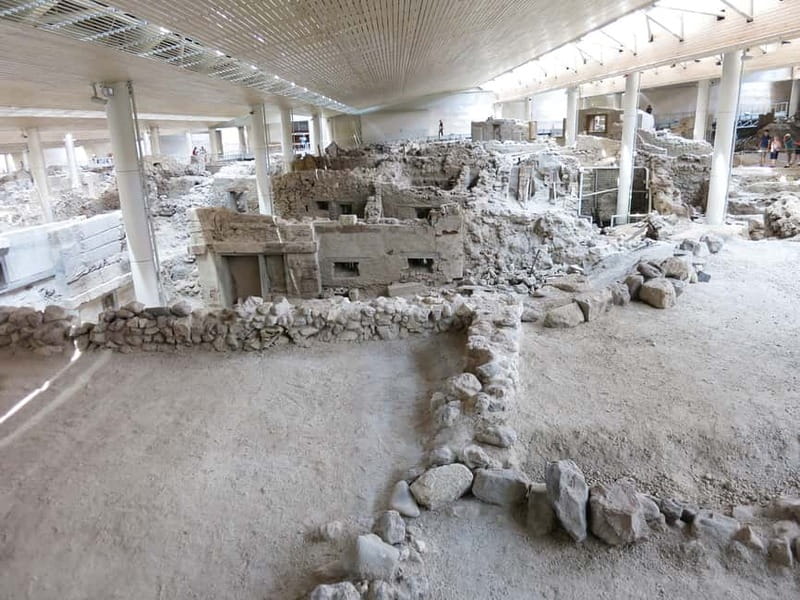
Akrotiri is Santorini’s most remarkable link to the Bronze Age: a city preserved beneath volcanic ash, with streets, buildings, and traces of daily life still visible beneath a huge protective roof. The raised walkways let you look down into the ruins without walking across them.
I like the freedom to arrive on a chosen date and time, and I like that the site is indoors and shaded, a real help on a hot Santorini day. The main drawback is interpretation: signs explain the basics, but you will get more from the visit with the optional English audio guide or a separate guided tour.
Key points to know before you go
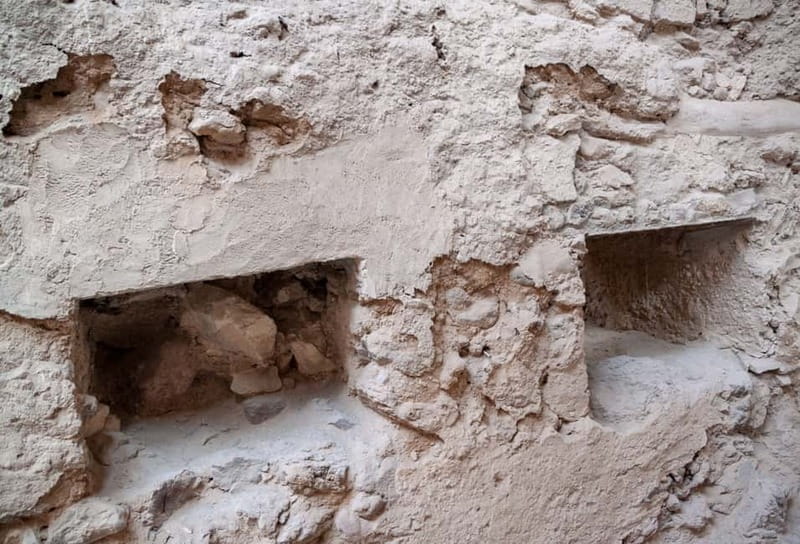
- A preserved Minoan city: See the remains of an important prehistoric settlement buried by volcanic ash.
- Raised walkways above the ruins: Follow the edges of the ancient city from a comfortable, protected route.
- Arrive early: The site can be peaceful at opening, then much busier when tour buses arrive.
- Audio adds useful context: The self-guided Akrotiri audio option helps explain what you are seeing.
- Indoor and wheelchair accessible: The large shelter provides shade, while the walkways make the site easier to explore.
- Good value at $30: The ticket works best for history lovers who want a flexible, self-paced visit.
Why Akrotiri matters on a Santorini visit
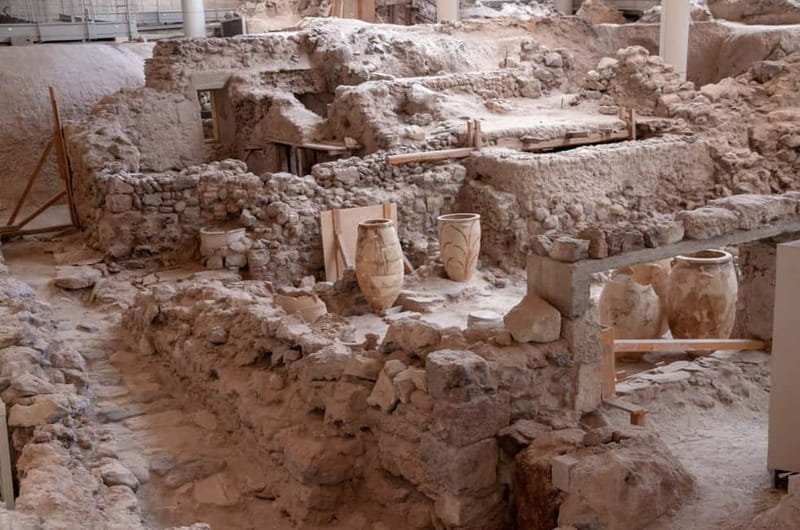
Most people come to Santorini for white villages, sea views, and sunsets. Akrotiri offers something very different. Here, you look at the remains of a prehistoric city that was covered by volcanic ash, preserving parts of a Minoan way of life in a way few ancient sites can match.
The comparison with Pompeii is useful, though Akrotiri belongs to a much earlier period. This was a Bronze Age settlement on the island then known as Thíra. The buried streets and buildings give you a look at urban life long before classical Greece.
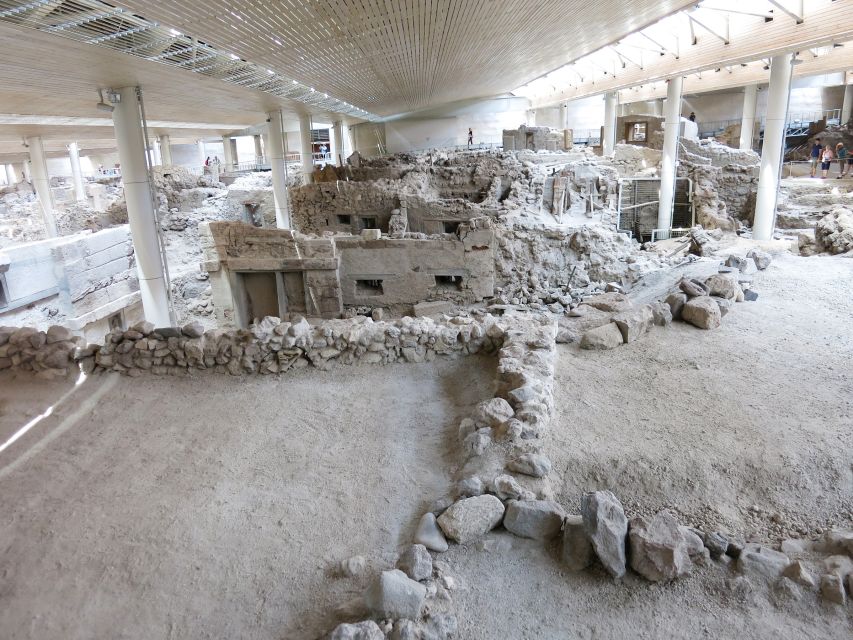
You can see why the site matters even before you start reading the signs. The remains are spread across a broad area beneath an airy modern building. Raised paths cross above the excavated sections, allowing you to study the town from different angles while keeping your feet off the fragile archaeology.
The setting also changes how you understand Santorini. The island is not just a postcard backdrop. It has been shaped by powerful volcanic forces, earthquakes, evacuation, and rebuilding. Akrotiri gives that dramatic setting a human story.
More Self-Guided Audio Tours in Greece
- Athens: Acropolis Ticket & Optional Self-Guided Audio Tours
★ 4.1 · 2,542 reviews - Acropolis & Parthenon Admission Ticket w/ self guided audio tours
★ 3.5 · 172 reviews - Delphi Self-Guided Tour with 3D Models & Audio (No Ticket)
★ 4.1 · 69 reviews
Entering the archaeological site with a timed ticket
This is a pre-booked entry ticket for a selected date and time slot. It is a simple arrangement, but it matters on an island where major sites can become crowded during the middle of the day.
The ticket is regular admission and can be used by people of all ages. Infants from 0 to 5 years old and European Union citizens aged 6 to 24 may qualify for reduced admission, but they must go to the ticket booth to receive a special printed ticket. That reduced-price process is separate from this regular-priced option.
Bring your passport or identity card, since identification may be needed for entry. Sunglasses, a sun hat, and water are sensible additions, especially if you are walking to or from transport in strong sun. The archaeological building itself is shaded, but the journey around Santorini is not always so forgiving.
A pre-booked ticket also saves you from making the site visit depend on an uncertain queue. It does not include hotel transfers, so you need to arrange your own way to Akrotiri. Some independent visitors have found GPS directions less clear than expected. If your map sends you close, walk toward the site rather than assuming you have missed it.
The first walk above the buried city
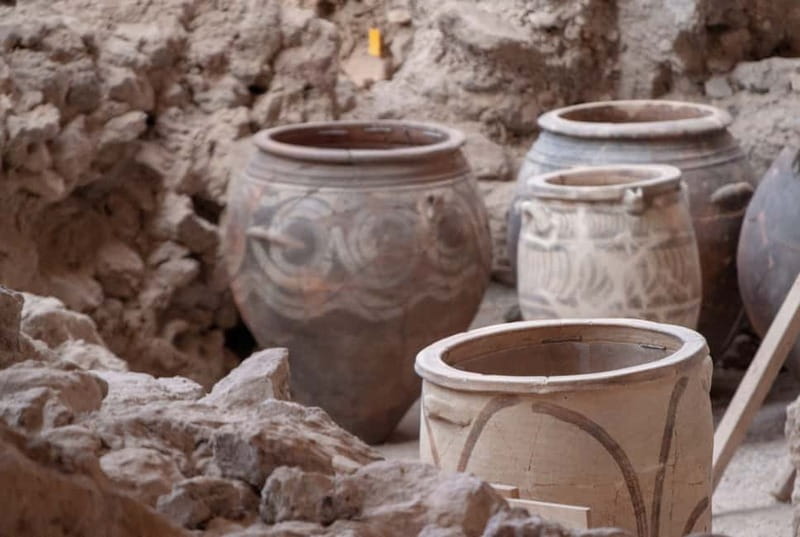
Once inside, you follow the raised walkways around the excavation. This is not a ruin where you simply enter a single temple, take a photograph, and leave. Akrotiri is a settlement, so the experience builds as you move from one section to another.
Look down into the excavated areas and notice how the streets and building remains fit together. The paths give you a broad view, rather than forcing you to study each wall from ground level. That makes the site easier on your legs and useful for anyone who prefers not to negotiate uneven ruins.
The huge shelter over the excavation is part of the experience. It keeps the archaeological remains protected from weather and provides shade for you. On very hot days, this can be the difference between taking your time and rushing through.
The site is wheelchair accessible, and the raised circulation routes are designed to make the visit more comfortable. That does not mean every moment will feel effortless, since archaeological sites can have their own practical limits, but the protected building is a clear advantage over many open-air ruins.
What you can learn about Minoan life
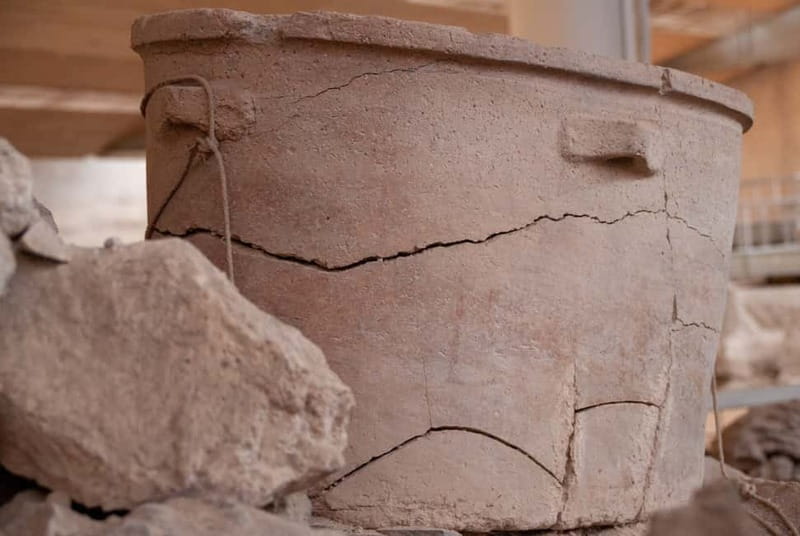
Akrotiri is valuable because it shows a town, not just a grand monument. You are looking at the remains of homes, streets, and a community with an organised way of life. The settlement helps put Santorini into the wider Aegean world of the Bronze Age.
The site also gives you a way to think about disaster without reducing the place to a single dramatic event. The city was covered by volcanic ash, and the settlement’s story is tied to earthquakes, evacuation, and the eruption that transformed the island.
Some of the most useful interpretation explains how ordinary life worked in this prosperous town. You might find the displays and reconstructions more interesting once you consider the people who cooked, stored goods, built homes, and moved through these streets. The archaeology becomes less abstract when you picture the settlement as a functioning community rather than a collection of walls.
A model of the ancient town helps with orientation. Without it, the spread of excavated rooms and streets can feel disconnected. I recommend pausing at the model before walking too far, then using it to understand how the pieces fit together.
Another self-paced route in Greece:
- Athens: Acropolis Ticket with Optional Audio or Live Guide
★ 4.2 · 11,055 reviews - Athens: Cape Sounio & Poseidon Temple Trip with Audio Guide
★ 4.4 · 4,521 reviews - Athens: Acropolis Ticket with Audio Guide
★ 4.0 · 3,575 reviews - From Athens: Delphi Full Day V.R. Audio Guided Tour
★ 4.6 · 3,028 reviews
Why the audio guide is worth considering
The site includes explanatory signs, but the amount of information available on the spot varies. Several parts benefit from more background, particularly the story of how the city was discovered and what the excavations reveal.
The optional self-guided audio tour for Akrotiri is in English. It lets you move at your own pace and stop when you want, which suits this site better than being hurried from one section to the next. If you choose an option that includes the audio tour, bring your own earphones because an audio device and earphones are not provided.
The audio tour is not a live guide. You will not be able to ask questions or adjust the explanation to your interests. Some people may find the recording dated, so I would treat it as a helpful layer rather than the entire experience.
If you prefer to read, the displays are enough to give you a basic understanding. If you want the ruins to feel connected, the audio is the stronger choice. A separate guided visit can also add more detail, especially for someone who wants the archaeology explained in a lively, chronological way.
There is also a self-guided audio tour for Thera Town included with all options. That gives you additional context for Santorini’s historic center, but it is separate from the walk through Akrotiri itself.
Choosing the best time to visit
Timing makes a major difference here. The site opens at 8:30 AM on Monday, Wednesday, and Thursday, with closing at 3:30 PM. On Tuesday, Friday, Saturday, and Sunday, it opens at 8 AM and closes at 8 PM. Special occasions can change these hours, so check before setting out.
I would aim for the first available entry. An early visit gives you a better chance to read the displays without people pressing behind you, and it avoids the strongest midday heat outside. One visitor arrived at 8:50 AM and had a quiet start before several busloads arrived around 9:30 AM. Another had roughly 45 minutes with very few people by arriving at opening time.
This is especially important if you want photographs or plan to study the details. The building is spacious, but a large group can still make the walkways feel crowded. Later in the day, the site may be less peaceful, even though the generous opening hours on some days give you more flexibility.
Allow about one hour to an hour and a half if you want to read signs and move at a relaxed pace. A quick visit can take around 40 minutes, but that will leave less time for the model, displays, and video reconstruction. If archaeology is a main reason for visiting Santorini, give Akrotiri more time than a quick stop between other sights.
The displays, video, and limits of the visit
Akrotiri is an extraordinary archaeological site, but the presentation is not equally strong in every section. The preservation is the star. The interpretation sometimes feels more restrained than the subject deserves.
A short video reconstruction helps show how the settlement may have looked and worked. It is useful, especially after you have walked through the ruins, but you should not expect a large museum-style presentation packed with dramatic visual material.
The signs provide a foundation, yet you may still want more explanation about the excavation and the discovery of the city. This is where the audio option or a separate guided tour becomes valuable. Without one, you may understand what you are looking at but miss some of the larger story.
The site also limits how close you can get. You cannot walk into every room or touch the ruins. That can feel frustrating if you want a more hands-on experience, but the restrictions protect the fragile remains and preserve the site for future study.
I would not choose Akrotiri expecting a fully staged attraction. It is a serious archaeological site with a calm, observational style. You will get the most from it if you enjoy looking closely, reading, and building the picture in your own mind.
How the $30 ticket measures up
At $30 per person, this is not the cheapest short activity on Santorini. The actual walk through the excavation can take less than half a day, and the ticket does not cover transfers, a live guide, or earphones.
Still, I think the price can be fair if Akrotiri is high on your list. You are paying for access to an important and carefully protected archaeological site, not for a long coach excursion filled with extra stops. The indoor building, raised routes, and freedom to set your own pace add practical value.
The ticket is less attractive if you only want a quick photograph or if your schedule is already crowded with expensive transport. One visitor found the cab ride costly compared with the short visit. That is a reminder to consider the full outing, not just the admission price.
The best value comes when you arrive early, use the audio guide, and spend enough time to understand the settlement. Pairing the visit with the Museum of Prehistoric Thera in Fira can also help. Many objects found at Akrotiri are housed there, so the two sites complement each other.
Who will enjoy Akrotiri most
I recommend this experience to anyone interested in archaeology, ancient cities, geology, or the long story of Santorini. It is also a good choice if you need a shaded activity during a hot day.
Families can use the raised paths and broad building to explore without tackling an exposed ruin. Younger children may need help staying engaged, since the experience depends more on observation and explanation than on interactive displays.
History lovers should choose the audio option or plan to read every display. If you like exploring alone and stopping whenever something catches your attention, the self-guided format works well. If you want a story delivered with energy and chances to ask questions, arrange a live guide separately.
This is less suitable for someone who wants a lively group activity, dramatic scenery at every turn, or a highly polished museum presentation. Akrotiri rewards patience more than speed.
Practical details before booking
The ticket is valid for one day and entry is tied to the selected date and time slot. Check the current starting times before you commit, since operating hours can change for special occasions.
The activity is listed as wheelchair accessible. There is no hotel pickup, so transport planning belongs to you. The listed language for the audio material is English.
Because the ticket is non-refundable, choose your date carefully. Keep your passport or identity card with you, especially if you might need to clarify admission status.
Bring water, a hat, and sunglasses for the outdoor parts of your day. Inside, the shade and shelter make the archaeological visit much more comfortable than an exposed ruin, but Santorini’s sun is still waiting when you leave.
Should you book the Akrotiri ticket?
Book it if you want to see the ancient side of Santorini, especially if you can arrive near opening time and are willing to use the audio guide. The preserved city, broad shelter, and raised walkways make this one of the island’s most worthwhile history stops.
Think twice if you have only a short window, dislike reading signs, or expect to enter every building and touch the ruins. In that case, a guided visit may give you more for your time.
For most history-minded visitors, the $30 ticket is a sensible choice. Add the audio, allow about 60 to 90 minutes, and follow it with the Museum of Prehistoric Thera in Fira. That combination gives you both the place and many of the objects that help explain it.
FAQ
How long is the Akrotiri ticket valid?
The ticket is valid for one day, with entry on the selected date and time slot.
What are the opening hours?
On Monday, Wednesday, and Thursday, the site is open from 8:30 AM to 3:30 PM. On Tuesday, Friday, Saturday, and Sunday, it is open from 8 AM to 8 PM. Hours may change for special occasions, so check before visiting.
Is an audio guide included?
A self-guided audio tour for Thera Town is included with all options. The self-guided English audio tour for Akrotiri is included only when you select the option that provides it.
Are earphones provided?
No. An audio device and earphones are not included, so bring your own earphones if you choose an audio option.
Can children use this ticket?
The regular-priced ticket can be used by people of all ages. Infants aged 0 to 5 and European Union citizens aged 6 to 24 may qualify for reduced admission, but they must visit the ticket booth to receive a special printed ticket.
Is Akrotiri wheelchair accessible?
Yes, the activity is listed as wheelchair accessible. The archaeological site is housed in a large covered building with raised walkways above the ruins.
Latest audio tours in Greece
- E-Ticket to Akrotiri with Audio Tour on your Phone★ 5.0 · 2 reviews
- Authentic Santorini: A Self-Guided Audio Tour of Oia★ 4.5 · 3 reviews
- The Palace of the Grand Master E-Ticket with Audio Tour★ 4.0 · 9 reviews
- Explore Lindos Acropolis in 3D & Audio★ 4.0 · 4 reviews
- The Palace of the Grand Master. Self-guided Audio Tour★ 3.5 · 15 reviews
- Acropolis of Lindos E-Ticket with Audio Tour on your Phone★ 4.5 · 8 reviews
- Olympia Archaeological Site & Museum E-Ticket with Audio Tour★ 4.0 · 11 reviews
- Mykonos: Find your (queer) god Self-Guided Audio Tour★ 4.0 · 2 reviews
Self-Guided Audio Tours, compared.
Acropolis Ticket & Optional Self-Guided Audio Tours
Read our review →


Ultimate Acadia National Park Self-Guided Driving Audio Tour
Read our review →



Self Guided Classic Freedom Trail Location Aware (GPS) Walking Audio Tour
Read our review →Browse the lists this tour appears in