Reviewed · FLORENCE
Florence: David’s Accademia timed Ticket with Audio APP
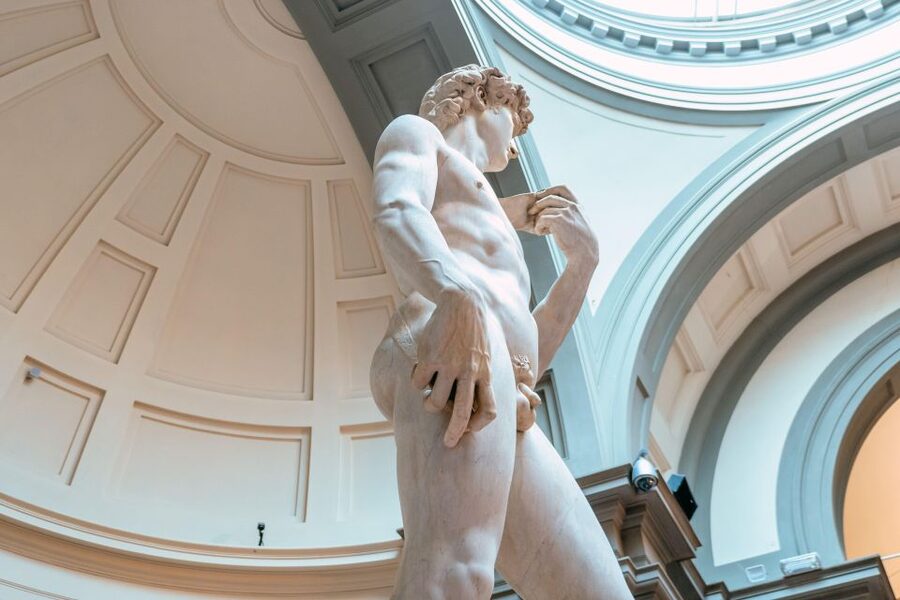
Michelangelo’s David is the reason most people come to the Accademia, and it earns its fame. The statue’s scale, pose, and finely carved details are far more striking in person than in a photograph. This ticket gets you past the regular ticket-office queue and into the gallery through a separate entrance, though security and crowd control can still cause a 15 to 20 minute wait.
I like the freedom to move at your own pace, especially since the audio guide is delivered through the POP GUIDE app rather than tied to a live group. I also like that the visit includes more than David: Michelangelo’s unfinished figures, three Stradivarius instruments from the Medici collection, plaster models, and medieval altarpieces give you a fuller look at Florence’s art. The main drawback is that this is not a guided tour, and you must download the app, collect login details, and bring your own headphones.
Key points at a glance
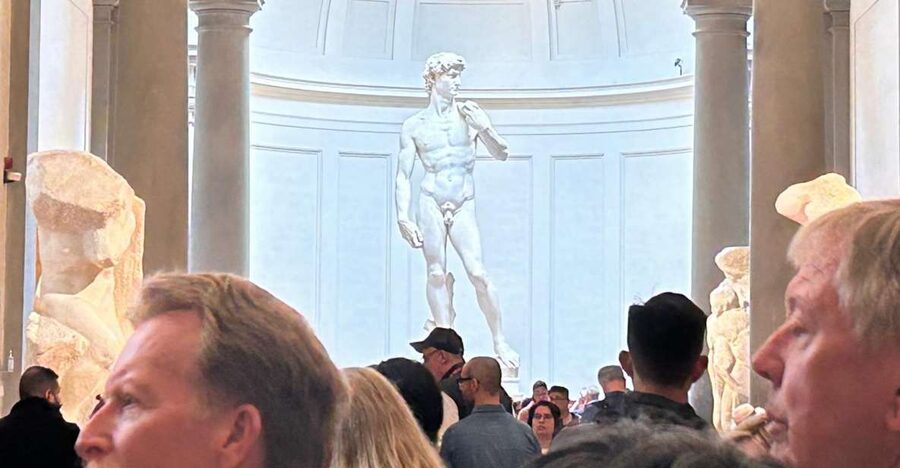
- David takes center stage: See Michelangelo’s famous marble sculpture in the Accademia’s main hall.
- Timed entry saves useful time: Skip the ticket-office line, while allowing extra time for security delays.
- Michelangelo’s unfinished works reveal his method: The partially carved figures show how forms emerge from the marble.
- The POP GUIDE app keeps the visit flexible: Listen at your own speed instead of following a live guide.
- The museum has more than sculpture: See Medici instruments, 19th-century plaster models, medieval altarpieces, and Renaissance paintings.
- The meeting point is simple to identify: Look for the Enjoy Rome staff member with a white flag outside Carrefour Express at Via Ricasoli 115.
Why David is worth the Accademia visit
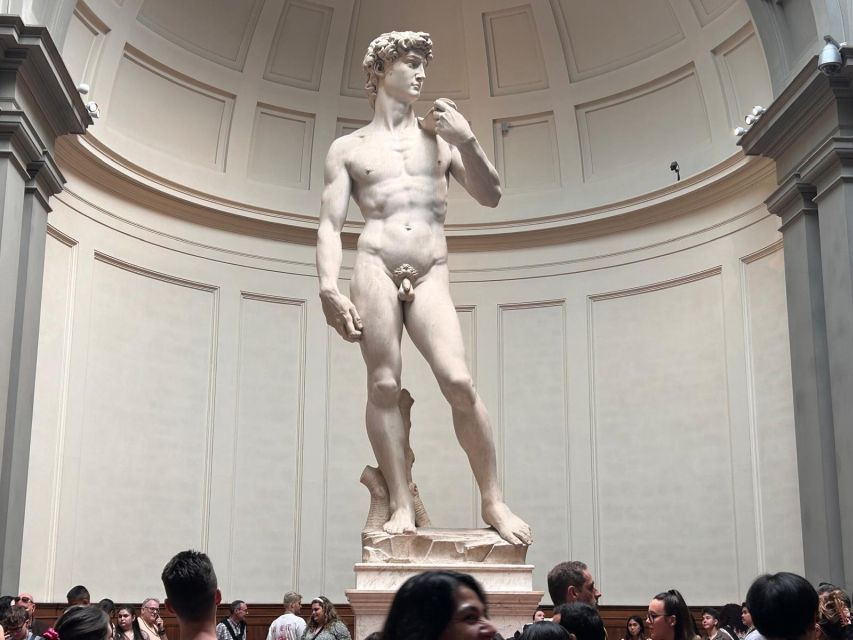
The Accademia is a compact museum by Florence standards, but its main attraction has unusual power. Michelangelo’s David is not tucked into a side room. You approach it in the main hall, where the long view gives you time to take in the whole figure before you get close.
David represents the biblical hero before his fight with Goliath. Michelangelo chose the moment before the action, so the figure feels alert rather than triumphant. His head turns slightly, his hands are tense, and his expression suggests concentration. You can spend a few minutes simply walking around the sculpture and noticing how the pose changes from each angle.
The scale matters. David is much larger than a normal human figure, yet the anatomy is handled with great care. Look at the hands, feet, face, and the veins on the right hand. From a distance, the statue reads as a complete heroic figure. Up close, the surface carries the marks of a sculptor who paid attention to tiny shifts in muscle and skin.
A timed ticket is useful here because Florence can be crowded, especially around the Accademia. You are not promised an instant entry. The museum controls the number of people inside, and your access can be postponed by 15 or 20 minutes when the building is full. Still, avoiding the ticket-office queue gives you a more predictable visit and makes it easier to fit the museum into a busy day in Florence.
More Museum Audio Tours in Florence
- Florence: Uffizi Priority Ticket & Masterpieces Audio App
★ 4.2 · 6,402 reviews - Florence: Uffizi Gallery Timed Entry Ticket & Audio Guide
★ 4.2 · 2,794 reviews - Florence: Uffizi & Accademia Priority Tickets with Audio App
★ 4.4 · 1,253 reviews
Finding the meeting point on Via Ricasoli
You meet the host in front of the Carrefour Express supermarket at Via Ricasoli 115, identified by a red street number. Look for a staff member holding a white flag marked Enjoy Rome. The location is easy to spot, but do not wait until the last minute to search for it. Florence’s central streets can be crowded, and a few extra minutes will make the ticket exchange less stressful.
Your voucher is exchanged for a physical museum ticket. The host or greeter speaks English, but this person is not a live guide who will accompany you through the galleries. Think of the meeting as a practical handoff before an independent museum visit.
Before leaving for the meeting point, download the POP GUIDE app from the App Store or Google Play. Staff provide your login credentials there. This preparation matters because downloading an app on a busy street, with a timed entry approaching, is an avoidable nuisance.
Bring your own headset. The audio guide works best when you can hear it clearly without holding your phone up to your ear. You will also need a passport or photo ID for children aged 6 to 17 if you are using a discounted ticket. Without valid proof of age and a birth date, the full adult fare applies.
Entering the Accademia with a timed ticket
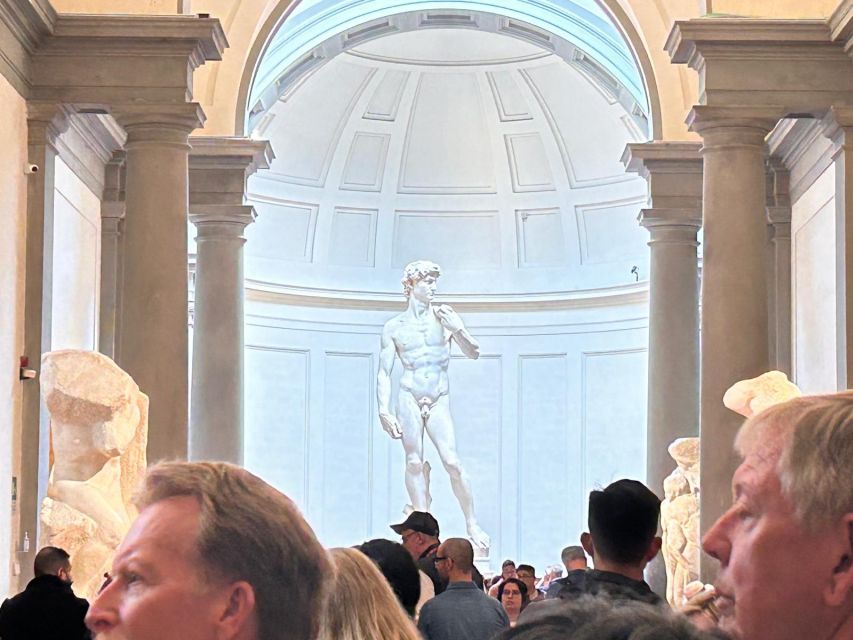
The priority ticket gives you access through a separate entrance and lets you bypass the regular ticket-office line. That is the main practical benefit of paying for this experience rather than buying a standard ticket at the museum.
The phrase skip the line needs a little care. It means you avoid the ticket purchasing queue, not that every other delay disappears. Security checks, museum capacity, and organizational problems at the gallery can still slow entry. Plan for some waiting, particularly when Florence is busy, and do not schedule a train departure or another timed attraction immediately afterward.
The experience is listed at $38 per person. That is a meaningful price for a museum visit, so the value depends on what you need. If you want a timed reservation, help finding the entrance, and an audio guide in one booking, the package is convenient. If you are comfortable handling museum tickets and exploring without commentary, the added cost may feel less attractive.
The flexible cancellation policy helps reduce the risk. You can cancel up to 24 hours in advance for a full refund, and the reserve-now, pay-later option lets you keep your plans open. These terms are useful in Florence, where weather, train schedules, and changing sightseeing plans can affect your day.
Michelangelo’s unfinished sculptures
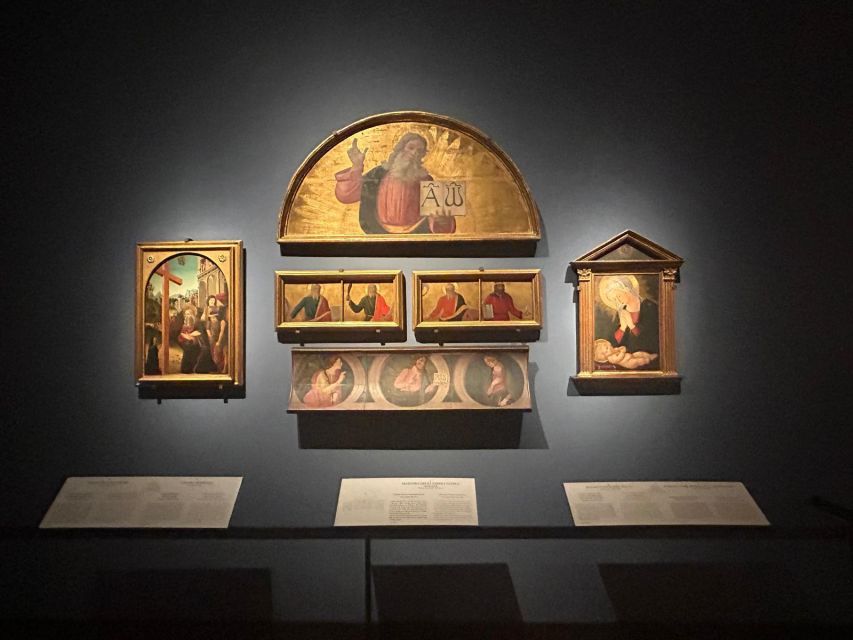
After David, give time to the unfinished Michelangelo works in the main hall. These sculptures are valuable because they show the carving process rather than only the polished result.
The figures appear to emerge from their blocks of marble. Parts of the bodies are defined, while other areas remain attached to the stone. You can see how the sculptor worked from the outside of the block toward the human form. The contrast with David is immediate. David looks complete and controlled. The unfinished works leave the struggle between artist and material visible.
This is where the audio guide can add real value. Without explanation, you may see incomplete statues and move on quickly. With context, the rough surfaces become part of the subject. You start to notice where a limb has been released from the stone, where a torso is still trapped, and how much of the final form depends on what the sculptor chooses to remove.
You do not need to rush from David to the next room. Take a moment to compare the finished statue with the partial figures. It is one of the most useful pairings in the museum because it turns a famous masterpiece into a lesson in technique.
More Museum Audio Tours in Italy
- Florence: Uffizi Gallery Reserved Entry Ticket & Audioguide
★ 4.5 · 970 reviews - Florence Duomo, Baptistery & Opera Museum Audioguided Tour
★ 4.2 · 607 reviews - Florence: Accademia Gallery Reserved Entry & Audio Guide
★ 4.3 · 600 reviews - Florence: Uffizi Gallery Tickets with Optional Audio Guide
★ 4.1 · 503 reviews
The Gipsoteca and 19th-century plaster models
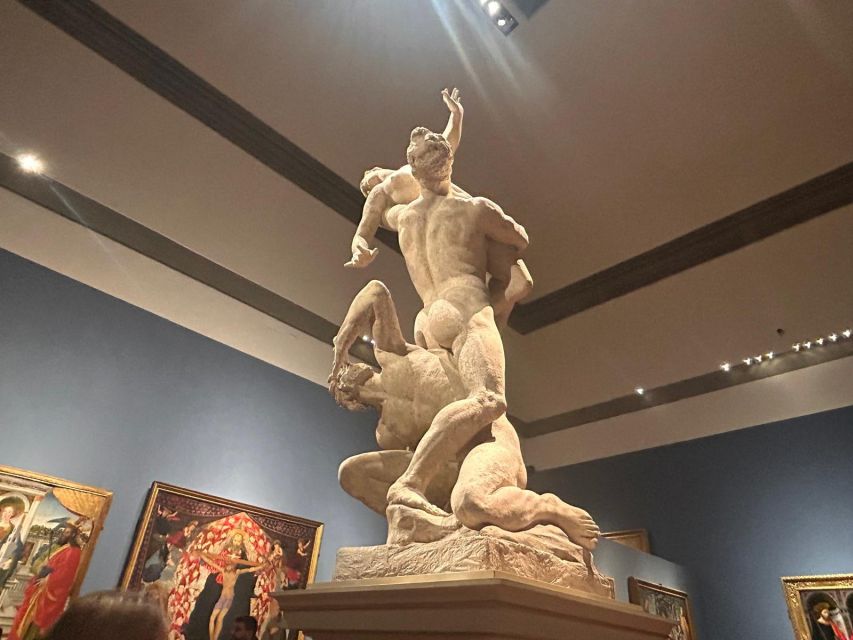
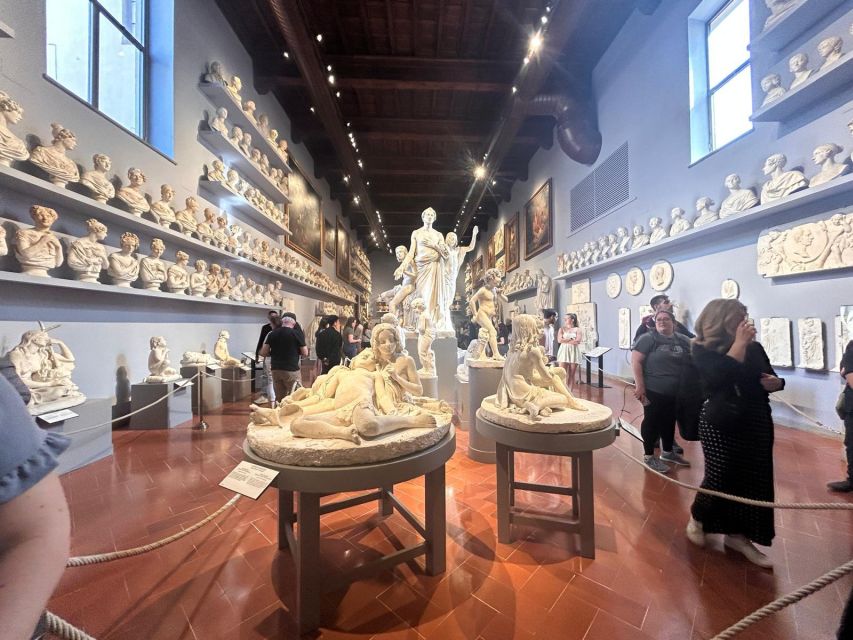
The Gipsoteca contains original plaster models by 19th-century Florentine sculptors. These works have a different character from Michelangelo’s marble, but they broaden your understanding of how sculpture was planned and taught.
Plaster models can look less dramatic than marble statues, yet they help you think about preparation, proportion, and the translation of an idea into a finished work. This section is especially worthwhile if you want more than a single iconic image from the museum.
The gallery’s variety also helps break up the visit. After the visual intensity of David and the unfinished sculptures, the plaster models offer a quieter change of pace. The audio app can help you decide which pieces deserve closer attention, since a self-guided visit gives you control over how much time you spend in each room.
Medici instruments and three Stradivarius pieces
The collection of original musical instruments from the Medici family adds a strong Florence connection to the museum. Among the instruments are three made by Stradivarius, a detail easy to miss if you hurry straight from Michelangelo to the paintings.
These objects show that the Medici world was not only about painting, sculpture, and architecture. Music also played an important role in court life and artistic culture. The instruments are displayed as historic objects, but they also suggest the sound and ceremony that once surrounded the ruling family.
You might find this section particularly rewarding if you enjoy decorative arts, music, or small objects with a clear link to court culture. It is also a good reminder that the Accademia is a museum with several collections, not simply a building created to display David.
Medieval paintings and Renaissance galleries
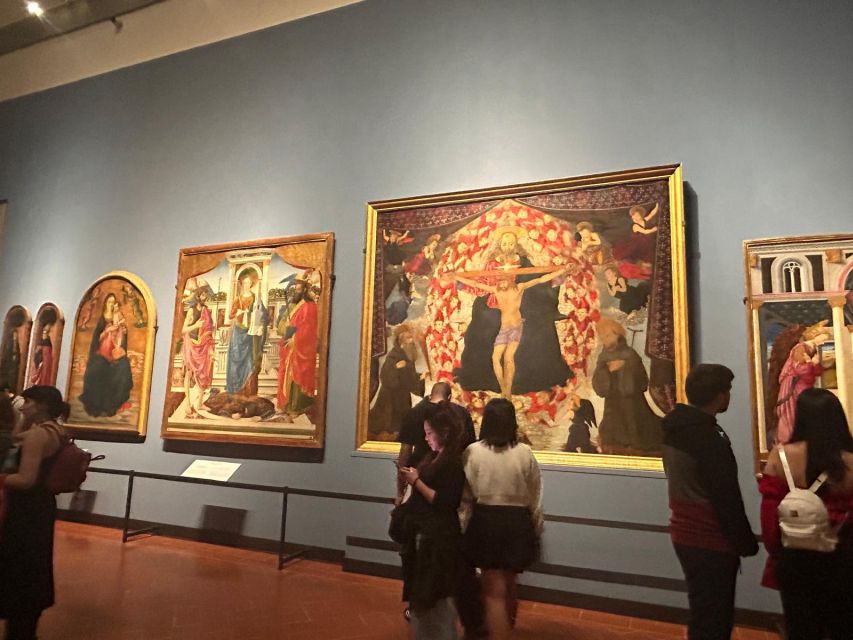
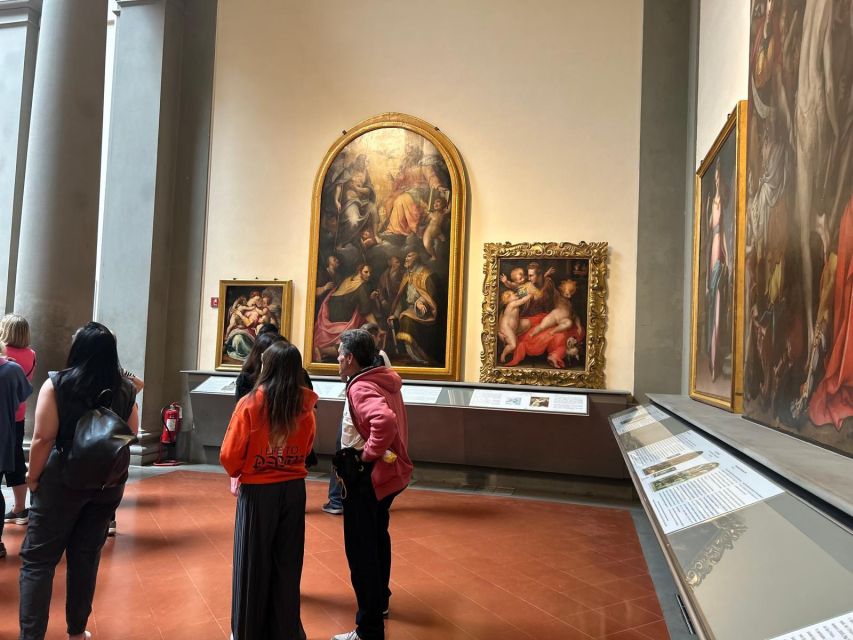
The painting galleries take you beyond sculpture and into Florence’s broader artistic story. You will see works by medieval and Renaissance artists, with the collection covering different styles and periods.
Do not expect every painting to command the same attention as David. Some pieces may feel more formal or less immediately familiar, especially after the main hall’s famous sculpture. Yet the paintings give you useful context for the city’s artistic development and show how religious images, altarpieces, and portrait traditions changed over time.
The audio app is helpful here because you can select information according to your interests rather than listening to a long lecture about every object. If painting is your main interest, slow down in these galleries. If you came mainly for Michelangelo, keep a steady pace and save energy for the top floor.
The top-floor medieval altarpieces
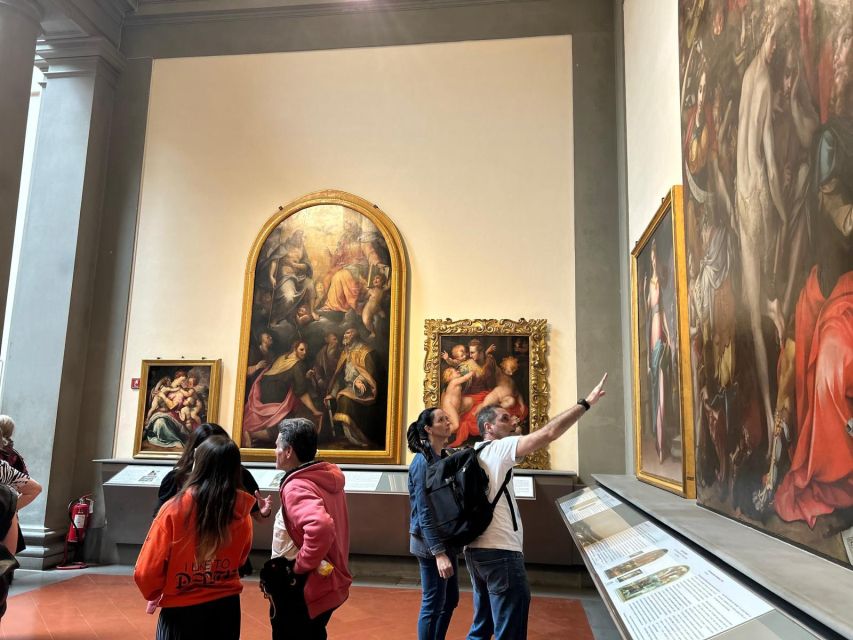
The top floor contains impressive medieval altarpieces and makes a fitting final stop. These works can be more demanding than David because they often use formal compositions and religious subjects that may not be familiar at first glance.
Look at how the figures are arranged, how gold and color guide your eye, and how the altarpiece format organizes a sacred story. The visit ends on a different note from the dramatic central hall, with attention shifting from one monumental figure to larger religious compositions.
The route is not a full-day museum program for most people, even though the booking duration is listed as one day. The ticket gives you access for the scheduled visit, not a reason to spend an entire day inside. A focused visit lets you see David properly, explore the other collections, and leave before the experience becomes tiring.
Using the POP GUIDE app well
The app gives you independence, but it also puts a few tasks in your hands. Download it before meeting the host, bring headphones, and make sure your phone is ready. Staff provide the login credentials at the meeting point.
This format suits you if you like pausing, skipping, and replaying information. You can spend extra time with Michelangelo’s unfinished works, move faster through paintings, or listen only to the objects that catch your eye. It also works well for people who do not want to stay with a group.
The tradeoff is the lack of personal interaction. A live guide can answer questions, adjust the pace, and point out details based on your interests. Here, you receive a digital guide and explore alone. Families and independent sightseers may appreciate that freedom, while visitors who want a deep art lecture may find the format limited.
Who should book this Accademia visit
This experience suits a first-time Florence visitor who wants to see David without spending time at the ticket office. It is also a good fit for independent travelers who prefer a self-guided visit and want the option to move at their own pace.
Families can use it, provided children aged 6 to 17 carry valid photo identification for discounted admission. The museum is wheelchair accessible, which makes the option practical for visitors who need accessible entry, though the supplied information does not describe specific routes or facilities inside.
You should think twice if you want a live guide, a small-group discussion, or a highly personalized art lesson. That is not what you receive here. You get a timed ticket, a host-assisted entry process, and an audio app.
The strongest practical advantages are easy to identify: the meeting point is straightforward, the self-paced format is flexible, and the museum contains more than the one statue most people come to see. The main cautions are the $38 price, the need to prepare the app in advance, and the possibility of waiting even with priority admission.
Should you book it?
Book this experience if David is high on your Florence list and you value a reserved entry time, a separate ticket entrance, and an independent audio visit. The extra collections make the ticket more worthwhile than a bare-bones statue viewing, especially if you take time with the unfinished Michelangelo works and the Medici instruments.
Skip it if you expect a live guide or want the lowest possible museum cost. For everyone else, it is a practical way to see one of Florence’s essential works while leaving enough freedom to explore the Accademia in your own style. Just download POP GUIDE before you arrive, bring headphones, carry identification for children using discounted tickets, and leave room in your schedule for a possible entry delay.
FAQ
Where is the meeting point?
Meet in front of the Carrefour Express supermarket at Via Ricasoli 115, marked by a red street number. Look for staff holding a white flag with Enjoy Rome written on it.
What does the ticket include?
It includes priority admission to the Accademia Gallery and access to the POP GUIDE audio app.
Is a live guide included?
No. A live guide is not included. The experience provides an English-speaking host or greeter for the ticket exchange and an audio guide app for the museum visit.
Do I need to bring headphones?
Yes. You should bring your own headset for the audio guide.
When should I download the audio guide app?
Download the POP GUIDE app from the App Store or Google Play before arriving at the meeting point. Staff provide your login details there.
Can children use a discounted ticket?
Visitors aged 6 to 17 can receive the discounted ticket if they show valid photo identification with their birth date. Without that identification, they must purchase the full adult ticket.
Can I cancel the booking?
Yes. You can cancel up to 24 hours in advance for a full refund. You can also reserve now and pay later.
More Smartphone Audio Tours in Italy
- Florence: Cathedral & Brunelleschi’s Dome Ticket & Audio App
★ 4.4 · 148 reviews - Uffizi Gallery Reserved Ticket & Digital Audio Guide App
★ 4.3 · 69 reviews - Florence: Opera del Duomo & Baptistery E-Ticket & Audio Tour
★ 3.5 · 52 reviews - Florence: Brunelleschi’s Dome Reserved Timed Ticket & Audio App
★ 4.0 · 49 reviews
More Smartphone Audio Tours in Florence
- Florence: Timed Entry to Michelangelo’s David + Audio App
★ 4.6 · 19,496 reviews - Florence: Michelangelo’s David Entrance Ticket and Audio App
★ 4.3 · 1,901 reviews - Florence: Duomo Cathedral Timed Entry Ticket & Audio App
★ 3.7 · 472 reviews - Florence: Accademia Gallery David Entry & Audio Guide App
★ 4.2 · 406 reviews
Latest audio tours in Florence
- Florence: Uffizi Gallery Audio Guided Tour led by Tour Leader★ 3.5 · 6 reviews
- Uffizi Combined Ticket:UFFIZI, PITTI, BOBOLI & digital audioguide★ 4.0 · 26 reviews
- Florence: Uffizi Gallery Reserved Ticket & Digital Audio Guide★ 4.5 · 3 reviews
- Florence: Uffizi Gallery Timed Entry Ticket with Audio★ 3.0 · 3 reviews
- Accademia Gallery Skip the line Tickets with Audio Guide★ 4.0 · 10 reviews
- Uffizi Gallery Audio-Guided Visit with optional Accademia Gallery★ 3.5 · 42 reviews
- Florence Walking Tour with Audioguide on Your Smartphone★ 4.5 · 9 reviews
- Florence Baptistery & Opera Museum Audioguided tour with guide★ 3.5 · 41 reviews
Museum Audio Tours, compared.

Uffizi Priority Ticket & Masterpieces Audio App
Read our review →
Louvre Museum Hosted Entry and Mona Lisa Audioguide
Read our review →
St. Mark Basilica Ticket, Audioguide+History Gallery
Read our review →
Borghese Gallery Skip-the-Line Ticket & Audioguide
Read our review →
Borghese Gallery Ticket + Audioguide or Guided Tour
Read our review →
Orsay Museum Entry Ticket and Digital Audio Guide App
Read our review →
Uffizi Gallery Timed Entry Ticket & Audio Guide
Read our review →