

Reviewed · JAPAN
Discover Stunning Nagasaki: Self-Guided Audio Tour
Nagasaki is a city where beauty and painful memory share the same streets. This self-guided walk links Glover Garden and Peace Park, taking you from Western trade and Christian worship to the atomic bombing and the city’s call for peace.
I like the freedom to pause at Dejima, spend longer at the museum, or skip an entrance fee without holding up a group. I also like the low price, $15.29, and the route’s broad view of Nagasaki, from its foreign links to its Chinese temples and wartime history.
The weak point is the technology. One booking had trouble opening the suggested links in the app, with the audio eventually ending up in the phone’s Files folder. Download and test everything before you leave your hotel.
Key points to know before you go
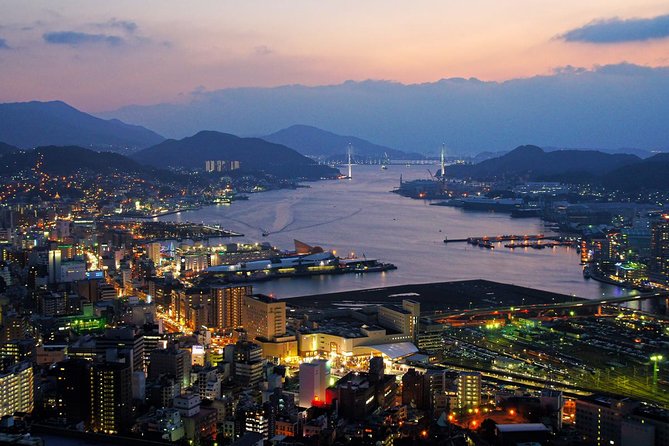
- A 2 to 3 hour walk from Glover Garden to Peace Park: The route crosses several parts of central Nagasaki and finishes at one of Japan’s most important memorial sites.
- English audio with a GPS map: You use your own phone and headphones, with no physical guide supplied.
- Six very different stops: Expect a European-style garden, Japan’s oldest surviving Catholic church, a former trading post, a history museum, a Chinese temple, and the Peace Park.
- Admissions cost extra: The tour price covers the audio files and map, but not the Oura Church, history museum, or Sofukuji Temple.
- No fixed group departure: You choose your start and finish time, although the published start point is Glover Garden and the suggested start time is 9:00 am.
- Download problems can spoil the day: The audio needs to be ready before you begin, and the tour is available only in English.
A thoughtful route through Nagasaki’s past
This walk works because Nagasaki’s story cannot be reduced to one event. The atomic bombing is central, and the final stop at Peace Park gives that subject the weight it deserves. But the route also shows how the city grew through contact with Scotland, France, China, and overseas trade.
That wider frame matters. You begin among the hills and foreign residences around Glover Garden, pass through the legacy of Christianity and Japan’s isolation policy, then move toward the city’s cultural institutions and memorial spaces. By the time you reach Peace Park, you have seen Nagasaki as a port shaped by exchange as well as destruction.
The audio format lets you set the pace. You can stop for photos, enter a site, or take a break without waiting for a guide. I find that useful in Nagasaki, where the route includes both outdoor viewpoints and places that deserve quiet attention.
Still, this is not a guided walking tour with someone beside you to solve problems. There is no person to answer a question, adjust the route, or rescue you if the download fails. The experience depends on your phone, your headphones, and your ability to follow the map.
More Self-Guided Audio Tours in the world
- Athens: Acropolis Ticket & Optional Self-Guided Audio Tours
★ 4.1 · 2,542 reviews - Gettysburg Battlefield Self-Guided Driving Audio Tour
★ 4.5 · 910 reviews - Joshua Tree National Park Self-Guided Driving Audio Tour
★ 4.5 · 762 reviews
Starting at Glover Garden with Thomas Glover
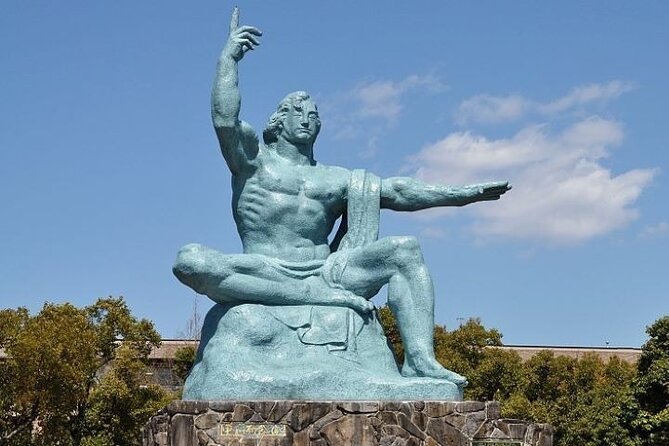
The walk begins at Glover Garden, at 8-1 Minamiyamatemachi. The garden is linked to Thomas Glover, a Scottish entrepreneur who arrived in Japan at age 21 and remained there for the rest of his life.
His story gives the opening stop more substance than a simple garden visit. Glover worked across Japanese business, including mining, and was connected with Gunkanjima, the island often called Battleship Island. He later received the Second Class Order of the Rising Sun, a major Japanese honor.
The garden itself offers a calm beginning. Its setting helps you understand Nagasaki’s long connection with foreign merchants and residents. The suggested audio time here is about 15 minutes, though you can take longer if you want to look around before moving on.
Admission to Glover Garden is listed as free for this experience. That does not mean every site on the route is free, so keep the distinction in mind as you plan the day.
The route begins in a hilly part of Nagasaki, and the entire walk requires a moderate level of fitness. The information does not give a precise distance or a detailed accessibility assessment, so you should be ready for a city walk that may involve slopes and steady movement.
Oura Church and the return of Christianity
At the bottom of Glover Garden, you reach Catholic Oura Church. Built by French Jesuits, it is considered the oldest church in Japan.
This stop adds a human and religious dimension to Nagasaki’s international past. The church is not just another historic building on a sightseeing route. Its location and age connect it with the return of Christianity after a long period when Japan restricted foreign contact and Christian practice.
The planned audio time is about 15 minutes. Admission is not included, so you will need to pay separately if you choose to enter. The tour price is therefore best understood as a fee for interpretation and navigation, not a sightseeing pass.
I like the way this stop follows Glover Garden. You first see the foreign business community, then encounter a place tied to faith and European influence. The two sites make more sense together than they would as isolated stops.
Keep your expectations practical. The supplied information does not promise an interior tour, special access, or a religious service. You are using the audio to understand the place while exploring at your own pace.
Dejima and Nagasaki’s controlled foreign trade
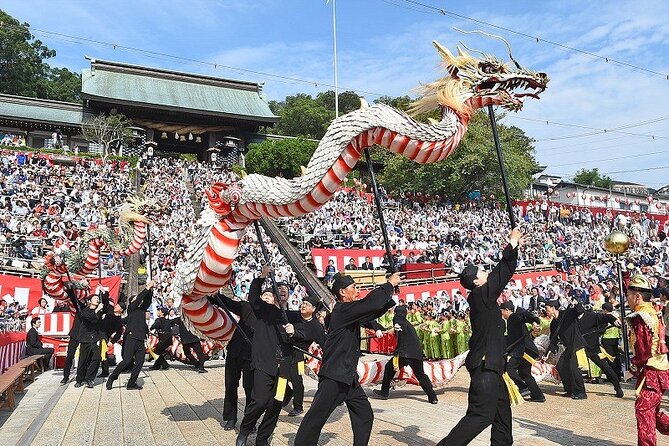
The route then heads to Dejima, an artificial island created in 1634 by local merchants. During the period of national isolation known as Sakoku, Dejima allowed foreign traders to conduct business under strict controls.
This is one of the most important stops for understanding why Nagasaki developed such a distinct character. Japan was not simply cut off from the outside world. Contact was limited, managed, and concentrated in certain locations, with Dejima serving as a carefully controlled point of exchange.
The audio suggests about 15 minutes here. That is enough for a concise introduction, but you may want to allow extra time if the site catches your interest. Dejima’s importance is less about a single dramatic view and more about the system it represents.
This stop also helps prevent the tour from becoming only a memorial walk. Nagasaki was shaped by trade and foreign contact long before 1945. Seeing Dejima between the church and the later museum gives you a clearer sense of the city’s layered identity.
The route and GPS map should help you move between stops, but you should not treat the audio as a substitute for paying attention to the streets. Keep the map available, especially if your phone stores the files separately from the tour app.
More Audio Tours in the world
- Barcelona: Sagrada Familia Entry Ticket with Audio Guide
★ 4.6 · 105,312 reviews - Rome: Pantheon Fast-Track Ticket and Official Audioguide
★ 4.5 · 27,353 reviews - Barcelona: Casa Batlló Entry with Self-Audioguide Tour
★ 4.7 · 25,359 reviews - Rome: Colosseum & Forum with Audio Guide App -Optional Arena
★ 4.2 · 24,770 reviews
The Nagasaki Museum of History and Culture
Next comes the Nagasaki Museum of History and Culture, which holds almost 50,000 items connected with the city’s culture and heritage. The tour allows about 15 minutes for this stop, while admission is extra.
That timing is the main thing to think about. A quarter hour can give you an introduction, but it is unlikely to be enough for a full museum visit. If museums are a priority for you, plan to spend more time here and accept that the total outing will run beyond the stated two to three hours.
The museum is valuable because it widens the story again. Glover Garden and Dejima focus on foreign connections, while Oura Church brings in religious history. The museum can help place those subjects within the larger culture of Nagasaki.
Because the ticket does not include admission, you can decide for yourself if the extra cost and time fit your day. That flexibility is one of the good features of a self-guided route. You are not locked into a group schedule or forced to enter every attraction.
The audio time should be treated as a guide, not a rule. If the museum is closed or you prefer to keep walking, the route can still continue. The information provided does not state opening hours, so check those separately before setting out.
Sofukuji Temple and Chinese influence
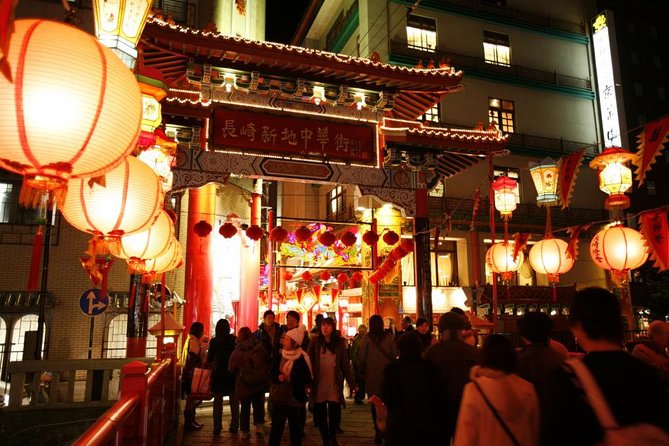
Sofukuji Temple provides another change of pace. It is a Chinese temple regarded as one of the best-preserved full examples of Ming Dynasty architecture, even when compared with Chinese temples in China.
That detail makes this more than a quick religious stop. Sofukuji shows that Nagasaki’s outside influences were not limited to Europe. Chinese trade and culture also shaped the city, and the temple offers a physical reminder of that connection.
The suggested visit lasts about 15 minutes, with admission not included. That is enough time to listen to the main explanation and take in the architecture, but you may want longer if you enjoy temples or want to study the details.
I like this part of the route because it breaks up the sequence of Western and wartime sites. The walk keeps returning to the same larger idea: Nagasaki developed through contact with people and traditions from beyond Japan, even while national policy tried to control that contact.
As with Oura Church and the museum, the ticket price does not cover entry. Keep some flexibility in your budget if you expect to visit all the paid sites.
Peace Park and the human cost of the atomic bombing
The walk ends at Nagasaki Peace Park, at 9 Matsuyamamachi. The park sits north of the atomic bomb’s hypocenter and was designed as a plea for world peace and a hope that war will not happen again.
This is the emotional center of the experience. The tour description makes clear that Nagasaki’s atomic history is not treated as a passing sightseeing topic. You are being led toward a place built to remember the destruction and express a wish for a different future.
The route’s order gives Peace Park greater weight. You do not begin at the memorial and rush through the rest of Nagasaki. Instead, you first see the city’s international connections, religious sites, trade history, and cultural institutions. Then you arrive at the place where the city asks you to consider what war did to all of it.
Admission to the park is free. The information does not include a separate Peace Park museum visit, so do not assume that this audio tour covers every memorial or museum in the area. It provides a route and commentary, not a complete set of admissions.
Allow yourself time here beyond the stated 15 minutes if you want a quiet visit. The tour is self-paced, so you can stop the audio, reflect, and continue when you are ready. That is one situation where the lack of a group leader can work in your favor.
What the $15.29 price really covers
At $15.29 per person, the tour is inexpensive compared with a private walking guide. You receive audio files and a GPS map, and you can use them at your own pace. For someone who wants a basic structure and historical context, that can be fair value.
The price looks less like a bargain if you expect entrance tickets, personal help, or a polished app experience. Admission fees are not included, and you supply the phone, headphones, and audio device. Food and drinks are also your responsibility.
The tour is usually booked about 22 days in advance, but there is no fixed group departure to attend. The published start time is 9:00 am, while the additional information says there are no specific starting times because the tour is self-guided. In practical terms, confirm the instructions on your ticket and choose a time that fits your day.
The maximum group size is listed as 15 people, but since the experience is self-guided, you should not expect a conventional group with a guide leading everyone together. The group limit may matter if several people book together, but the central feature remains individual control.
Free cancellation is available up to 24 hours before the experience start time. Changes or cancellations inside that window are not refunded, so do not leave the decision until the last minute.
The phone setup matters more than you might expect
The clearest warning concerns downloading the tour. One user found the suggested links would not open properly in the app. After hours of trying to fix the problem, the files ended up in the phone’s Files folder instead.
That is not a small inconvenience. A self-guided tour has no physical guide to fill the gaps while you troubleshoot. If the audio is hard to find, your first stop can become a technical support session instead of a visit to Glover Garden.
Here is the sensible approach:
- Download the audio files before you leave.
- Open the files and check that they play.
- Make sure you can find the GPS map.
- Bring headphones and a charged phone.
- Save the instructions from the Before You Go section somewhere easy to access.
The tour is offered only in English. That makes it a straightforward choice for English-speaking visitors, but it is not suitable if you need another language.
There is no physical guide included. Service animals are allowed, and the route is near public transportation, but the information does not provide a detailed accessibility plan. Since a moderate fitness level is advised, you should consider your comfort with walking and possible slopes before booking.
Who will get the most from this walk?
I would recommend this experience to someone who likes to explore independently but wants more structure than a bare map. It suits you if you enjoy deciding how long to stay at a garden, church, museum, temple, or memorial.
It is also a good fit if you have only a few hours and want a route that connects several major themes. The six stops are varied enough to keep the walk from feeling repetitive, and the final arrival at Peace Park gives the day a clear purpose.
The tour is less suitable if you want a live guide, detailed answers to questions, or guaranteed technical support. It is also not ideal if you dislike managing downloads or if you want all entrance costs folded into one ticket.
Families and small groups may appreciate the freedom, but everyone should understand that the tour is in English and that each person may need access to the audio. The maximum group size is 15, yet the experience does not promise a guide speaking to the group.
Should you book Discover Stunning Nagasaki?
Book it if you want a low-cost, flexible introduction to Nagasaki that connects foreign trade, Christianity, Chinese architecture, culture, and the atomic bombing in one walk. The route from Glover Garden to Peace Park has a sensible shape, and the self-guided format gives you room to pause at the places that matter most to you.
Skip it if you want a person beside you, included admissions, or a trouble-free app from the moment you arrive. The price is reasonable for audio files and a map, but only if you prepare the download in advance and accept that paid sites cost extra.
My practical verdict is simple: the content and route are worthwhile, but the technology needs care. Test the files before leaving, bring your own headphones, and allow more than two to three hours if you plan to enter the church, museum, or temple. With that preparation, this can give you a useful and moving introduction to Nagasaki on your own terms.
FAQ
Where does the self-guided tour begin?
The published starting point is Glover Garden at 8-1 Minamiyamatemachi, Nagasaki.
Where does the tour finish?
The suggested ending point is Nagasaki Peace Park at 9 Matsuyamamachi.
How long does the experience take?
The approximate duration is two to three hours, though entering the paid attractions or spending extra time at Peace Park may make it longer.
Is the tour guided in person?
No. It is a self-guided audio tour with audio files and a GPS map. No physical guide is included.
What language is available?
The tour is available only in English.
Do I need my own phone and headphones?
Yes. The audio device is not included, so you should use your own phone and headphones.
Are admission fees included?
No. Admission fees are not included. Glover Garden and Nagasaki Peace Park are listed as free, while Oura Church, Nagasaki Museum of History and Culture, and Sofukuji Temple require separate admission.
Is there a fixed departure time?
No specific departure time is required because the tour is self-guided. A 9:00 am start time is published, but you choose your timing according to your schedule.
Can I cancel for a full refund?
Yes. You can cancel at least 24 hours before the local start time for a full refund. Cancellations within 24 hours are not refunded.
What should I do before starting the walk?
Download the audio files and map before you begin, then check that you can open and play them. The tour information specifically advises preparing the audio in advance.
Latest audio tours in the world
- San Sebastian Scavenger Hunt & Highlights Self Guided Audio Tour★ 4.0 · 7 reviews
- San Marino’s Three Towers: An Audio Tour of the Ancient Republic★ 5.0 · 2 reviews
- San Marino Walking Tour with Audio and Written Guide★ 4.5 · 5 reviews
- Sampling San Sebastián’s History: A Self Guided Audio Tour★ 4.5 · 5 reviews
- Talking Buildings of Old San Juan: A Self-Guided Audio Tour★ 3.5 · 18 reviews
- San Marino: A Self Guided Audio Tour★ 4.5 · 14 reviews
- Essential Downtown SLO: A Self-Guided Audio Tour★ 4.5 · 27 reviews
- Silicon Valley Self-Guided Driving Audio Tour for Tech Lovers★ 4.0 · 24 reviews
Self-Guided Audio Tours, compared.
Acropolis Ticket & Optional Self-Guided Audio Tours
Read our review →

Ultimate Acadia National Park Self-Guided Driving Audio Tour
Read our review →

Akrotiri Ticket with Optional Self-Guided Audios
Read our review →
Browse the lists this tour appears in