
Reviewed · HISTORY
San Marino’s Three Towers: An Audio Tour of the Ancient Republic
San Marino’s Three Towers audio tour takes you from a medieval city gate to high stone fortresses above Mount Titano. For just $5 per person, you get an English GPS tour covering churches, government buildings, museums, old streets, and the dramatic path between the First and Second Towers.
I like the freedom to set your own pace and the fact that the audio, map, and directions work offline. I also like the focused route, which connects San Marino’s religious life, political independence, and military past in about an hour to an hour and a half. The main drawback is that you must bring your own smartphone and headphones, and admission fees are not included.
Key points at a glance
- Start at Porta San Francesco: Enter San Marino’s medieval center through the historic stone gateway on Via Basilicius.
- Hear the republic’s story in sequence: The route links churches, the Palazzo Pubblico, the Statue of Liberty, Garibaldi’s monument, and the State Museum.
- Climb toward two major towers: Reach the First Tower, Guaita, then continue toward the Second Tower, Cesta.
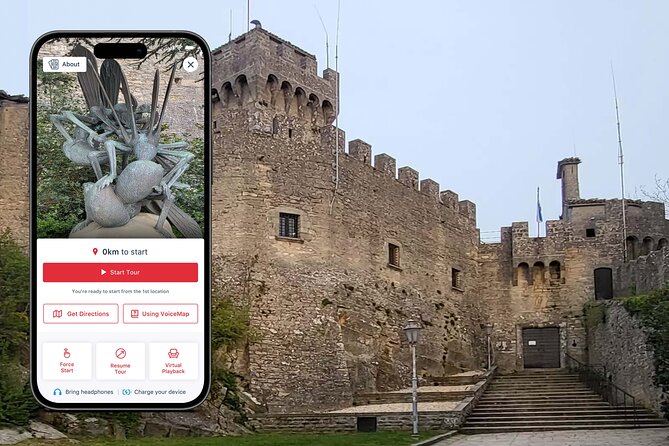
- Use the tour offline: Download the audio, maps, and geodata before setting out.
- Pay only $5 per person: The low price makes this a useful introduction, though fortress or museum admissions may cost extra.
- Finish at the Second Tower: The tour ends at Falesia Second Tower, not back at the starting gate.
Starting through Porta San Francesco
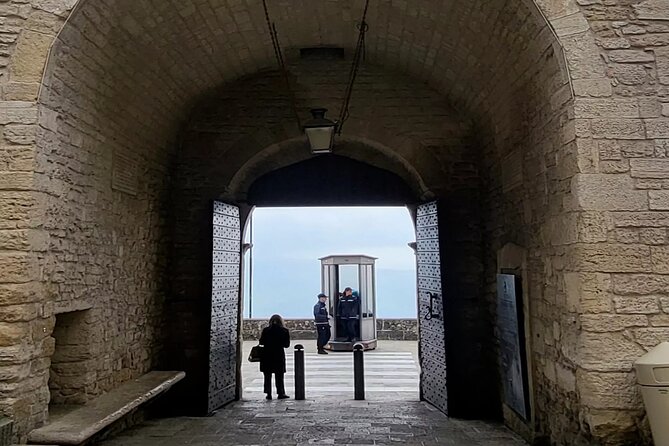
Your route begins at Porta del Paese, also called Porta San Francesco, at Via Basilicius 31. This old stone gateway marks the entrance into San Marino’s historic center, so it gives the tour a clear beginning rather than dropping you into a random street.
I like this opening because the city’s past is visible before the narration has even gathered speed. You pass through the same kind of defensive entrance that helped control access to the medieval republic. From here, the route moves into a compact old town where the streets, walls, and buildings remain part of daily life.
The audio tour uses GPS to guide you from one stop to the next. You do not need to follow a guide holding a flag, and you are not tied to a fixed departure time. Still, you should make sure the app is installed and the content is downloaded before you arrive. Offline access matters in an old stone town, where phone service may not always be dependable.
More History Audio Tours in the world
- Colosseum, Roman Forum & Palatine Hill with Audioguide App
★ 4.4 · 6,291 reviews - Venice: St. Mark Basilica Ticket, Audioguide+History Gallery
★ 3.9 · 4,780 reviews - Rome: Colosseum, Ancient Rome Tour or AudioGuided Tour
★ 4.4 · 2,879 reviews
Churches, cloisters, and San Marino’s spiritual roots
One early stop takes you to a 14th-century church with a monastery and cloisters. The site includes sacred art and unusual symbols carved by medieval stonemasons. The audio gives this religious complex a larger role in the story of San Marino, showing how the republic’s identity was shaped not only by walls and rulers but also by centuries of worship.
You can expect a quieter, more reflective section here than at the government square or the towers. Look closely at the stonework. The carved symbols are the sort of detail easy to miss if you simply walk through the old center with a map.
The route then reaches the republic’s ceremonial heart, where the neoclassical Palazzo Pubblico faces the Statue of Liberty. This is the square where San Marino’s two Captains Regent carry out their duties. The title may sound grand, but the setting is compact and approachable. You are standing in the working center of one of Europe’s oldest continuous constitutional republics.
I like the way the tour moves from monastery to government square. It helps you see San Marino as a living state, not just a hilltop collection of old buildings. The republic’s political story becomes easier to understand when you hear it while looking at the institutions that still represent it.
Garibaldi, baroque stonework, and the main basilica
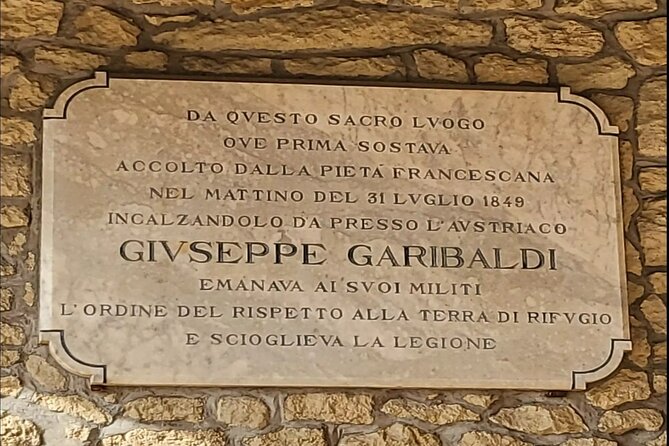
The next section brings you to the world’s first monument dedicated to Giuseppe Garibaldi. San Marino gave the Italian revolutionary asylum during his escape in 1849, and the monument recalls that important connection between the small republic and the wider Italian struggle for unification.
The stop is brief but useful. Garibaldi is often treated as a figure of Italian national history, yet here you see how his story touched San Marino directly. The audio also helps keep the monument from becoming just another statue in a square.
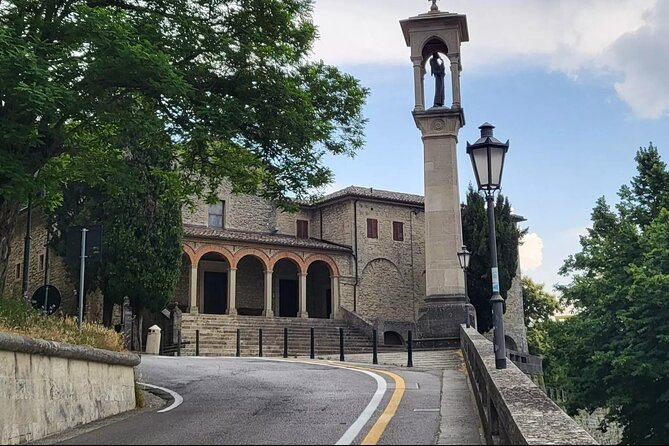
You then pass an elegant church with a distinctive bell tower and baroque design. Its position above the medieval lanes makes the tower an easy landmark as you walk. The building offers another change in mood, moving from political memory to the religious architecture that shaped the town’s skyline.
The route continues to the neoclassical basilica built over the cave where San Marino’s founder is said to have lived. Inside are the relics of Saint Marinus, the figure at the center of the republic’s name and spiritual tradition. This is one of the tour’s most meaningful stops because it joins local legend, religion, and national identity in one place.
I would allow a little extra time here if the basilica is open when you arrive. The audio tour lasts roughly 60 to 90 minutes, but that estimate assumes a steady walk. Pausing inside churches or entering paid sites will change the timing.
San Marino’s 1,700 years in the State Museum
The route also includes the State Museum, where archaeological finds and historical objects cover San Marino’s 1,700-year story. This is the stop that gives context to everything else.
The towers can make San Marino feel like a medieval fortress, but the museum broadens the picture. Its collections show how the republic maintained its independence through periods of European conflict. You get a better sense of the long span between Saint Marinus’s early story, medieval defenses, and the constitutional government you see at Palazzo Pubblico.
Admission fees are not included in the $5 audio tour, and the information provided does not specify which stops require a separate ticket. That means you should treat the tour price as payment for the digital guide, not as a city pass.
The museum is especially useful if you want more than scenic views. If your main goal is simply to reach the towers, you can keep moving. If you want to understand why this tiny state survived, this stop deserves more attention.
More Audio Tours in the world
- Barcelona: Sagrada Familia Entry Ticket with Audio Guide
★ 4.6 · 105,312 reviews - Rome: Pantheon Fast-Track Ticket and Official Audioguide
★ 4.5 · 27,353 reviews - Barcelona: Casa Batlló Entry with Self-Audioguide Tour
★ 4.7 · 25,359 reviews - Rome: Colosseum & Forum with Audio Guide App -Optional Arena
★ 4.2 · 24,770 reviews
The Witch’s Path between the First and Second Towers
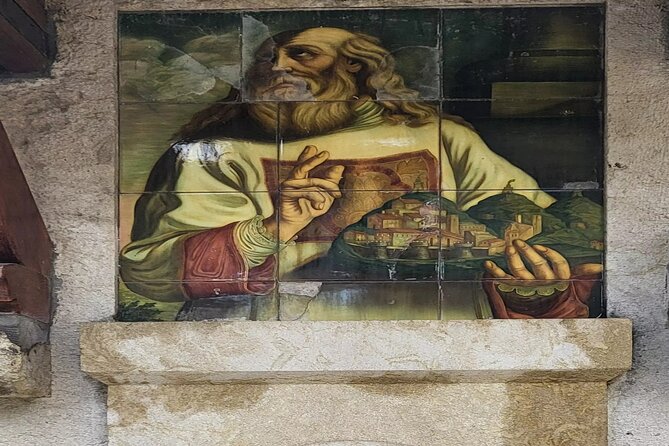
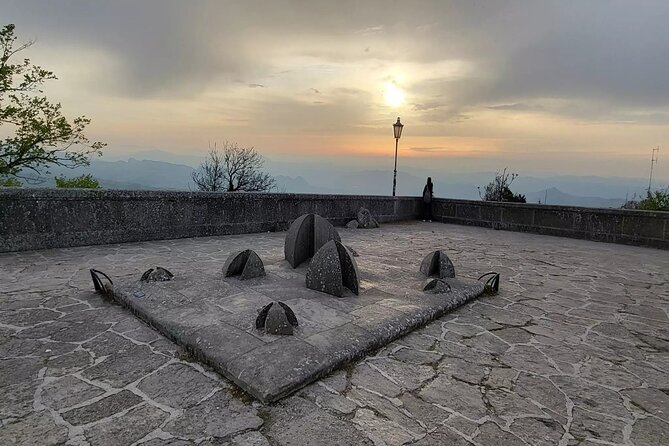
The route becomes more physical when you reach the stone pathway between the towers. Local legend says supernatural whispers echo along this dramatic passage. The setting is windswept and exposed, with the path cut between fortress structures high above the surrounding countryside.
This is one of the most memorable parts of the walk because the route itself becomes part of the story. You are not just hearing about old defenses. You are following the narrow connection that once linked strategic points on Mount Titano.
The path may feel more demanding than the town streets. The tour data does not give a precise accessibility rating or describe the surface in detail, so anyone concerned about steep paths or uneven stone should plan cautiously. Most people can participate, but this is not a smooth, flat museum walk from beginning to end.
Guaita, San Marino’s oldest fortress
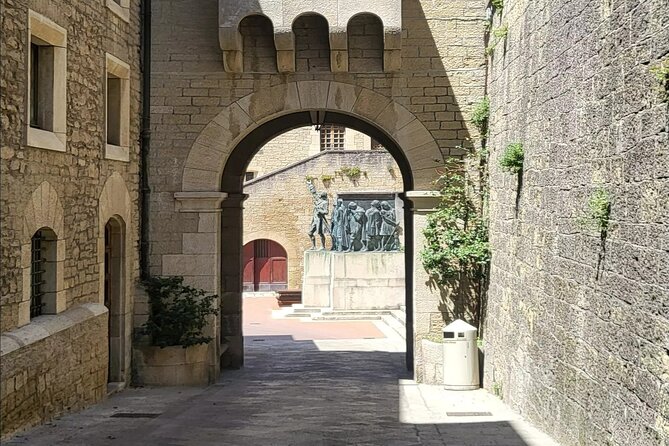
The First Tower, Guaita, is the oldest fortress on the route and dates to the 11th century. It sits on the peak of Mount Titano, where ancient ramparts provide wide views across the Apennine Mountains.
Guaita is the point where San Marino’s defensive purpose becomes most obvious. The fortress was not built for decoration. Its height, walls, and position gave defenders a commanding view of approaching threats and the valleys below.
You can climb the ancient ramparts for the views, although admission may not be included. The audio guide can take you to the tower, but it does not remove the need to check opening arrangements or pay any separate entrance fee.
I like that the tour does not treat the First Tower as an isolated photo stop. It leads you there through the city’s political and religious center, so the fortress feels like the next chapter in a longer story. San Marino’s survival was tied to both its institutions and its high defensive position.
Cesta and the highest point at 751 meters
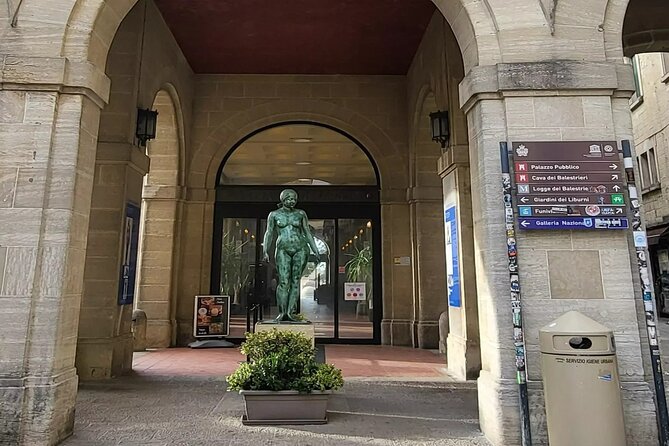
The tour continues to the Second Tower, Cesta, at about 751 meters above sea level. This is the highest point of the route and one of the best places for long views toward the Adriatic coast and the Tuscan hills.
The Second Tower has a different feel from the town below. After narrow streets and formal squares, you reach open air, stone walls, and broad views. The setting helps explain why Mount Titano was such a useful stronghold.
The route ends at Falesia Second Tower on Salita Alla Cesta. This detail matters when you plan your day. You do not return to Porta San Francesco as part of the tour, so arrange your next stop from the Second Tower rather than assuming you will finish where you began.
The listed opening hours run from midnight to midnight, Monday through Sunday, for the period shown in the tour information. That indicates access to the route area at all hours, but it does not guarantee that every interior site or paid attraction will be open all day. The outdoor route is the safer part of your plan. Treat indoor visits separately.
Cisterns, medieval lanes, and the everyday republic
Before the finish, the route passes an old cistern area that once stored essential water supplies for the fortress. This is a small but valuable detail. Medieval defenses depended on basic infrastructure as much as on thick walls. Water storage could determine how long a fortress held out during a siege.
The final section returns your attention to the old streets. You walk among cobbled lanes, medieval walls, stone houses, and hidden courtyards where local residents still live. This is not an abandoned historical park. It is a functioning town with centuries-old architecture woven into ordinary life.
I appreciate this quieter ending. The towers provide the big views, but the lanes provide the strongest sense of place. You see how San Marino’s past survives in everyday surroundings rather than only behind museum doors.
What the $5 price really gives you
At $5 per person, this is an inexpensive way to organize your first walk through San Marino. You receive the Android and iOS app, English audio, offline maps, geodata, directions to the starting point, and lifetime access before and after your booking date.
The value is strongest if you want structure without a scheduled group. A traditional private guide would usually cost more, while a printed map would not explain the meaning of the churches, monuments, towers, and cisterns as you move between them.
The price does not cover your smartphone, headphones, food, drinks, transportation, or personal expenses. Admission fees for sites are also not included. Bring a charged phone and headphones, and budget separately if you plan to enter museums, churches, or fortress interiors.
The tour is private in the sense that only your group participates, but it is not a live private guide. You listen through the app and control your own timing. That distinction matters. You gain privacy and flexibility, but you cannot ask the narrator a question or request a different route.
Who will get the most from this audio walk?
I would choose this tour if you have a short visit to San Marino and want the main story in one compact route. It suits independent visitors who like clear directions, prefer stopping for photographs, and do not want to match a guide’s pace.
It also works well for groups. The $5 per-person price can remain good value when several people are sharing a self-guided route, though each person may need access to the app and audio. One review specifically described the experience as a good price for a large group, which fits the tour’s strongest practical advantage.
The English narration is another plus for anyone who wants more context than signs alone provide. One review identifies Marina as the narrator and praises the clarity of her explanations. The available information does not describe other language versions, so English is the choice to expect.
I would hesitate if you want a fully guided historical conversation, transportation, or guaranteed entry to every major attraction. This is a walking route, not a package that handles the whole day. You need to manage your own phone, admissions, food, and onward plans.
Booking, timing, and cancellation
The tour usually takes about one hour to one hour and 30 minutes. Give yourself longer if you stop at the State Museum, enter the basilica, climb the towers, or pause often for views.
It is often booked about 180 days in advance, so reserving early is sensible if your dates are fixed. Confirmation is provided at booking, and the route is near public transportation.
Free cancellation is available until 24 hours before the experience start time for a full refund. Cancellations or changes made within 24 hours are not refunded or accepted. The cut-off uses San Marino local time.
Should you book San Marino’s Three Towers audio tour?
Book it if you want a very affordable, self-guided introduction to San Marino that covers more than the famous towers. The route gives you a useful sequence: enter through the old gate, hear the republic’s religious and political story, pass Garibaldi’s monument, visit the museum area, and climb toward Guaita and Cesta.
Skip it if you need a live guide, included admissions, or a return to the starting point. For everyone else, the combination of offline access, clear GPS directions, English narration, and a $5 price makes this a sensible first walk through San Marino. Plan for your own headphones, watch your footing on the stone paths, and save time for the views at the Second Tower.
FAQ
How much does the audio tour cost?
The tour costs $5 per person.
How long does the tour take?
The estimated duration is one hour to one hour and 30 minutes.
What language is the tour offered in?
The tour is offered in English.
Where does the tour start?
It starts at Porta del Paese, also called Porta San Francesco, at Via Basilicius 31 in Città di San Marino.
Where does the tour end?
It ends at Falesia Second Tower, also called the Second Tower or Cesta, on Salita Alla Cesta.
Does the tour include a live guide?
No. It is a self-guided GPS audio tour accessed through an Android or iOS app.
Do I need a smartphone and headphones?
Yes. A smartphone and headphones are not included, so you need to bring your own.
Can I use the tour without mobile data?
Yes. The tour includes offline access to the audio, maps, and geodata.
Are admission fees included?
No. Personal expenses for admission fees are not included in the tour price.
Can I cancel for a full refund?
Yes. You can cancel at least 24 hours before the start time for a full refund. Cancellations or changes made less than 24 hours before the start time are not refunded or accepted.
Latest audio tours in the world
- San Sebastian Scavenger Hunt & Highlights Self Guided Audio Tour★ 4.0 · 7 reviews
- San Marino Walking Tour with Audio and Written Guide★ 4.5 · 5 reviews
- Sampling San Sebastián’s History: A Self Guided Audio Tour★ 4.5 · 5 reviews
- Essential Downtown SLO: A Self-Guided Audio Tour★ 4.5 · 27 reviews
- Talking Buildings of Old San Juan: A Self-Guided Audio Tour★ 3.5 · 18 reviews
- San Marino: A Self Guided Audio Tour★ 4.5 · 14 reviews
- Silicon Valley Self-Guided Driving Audio Tour for Tech Lovers★ 4.0 · 24 reviews
- San Juan Self-Guided Walking Audio Tour★ 4.5 · 44 reviews
History Audio Tours, compared.
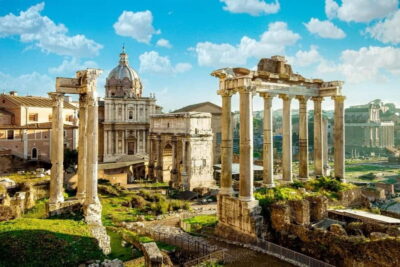
Colosseum, Roman Forum & Palatine Hill with Audioguide App
Read our review →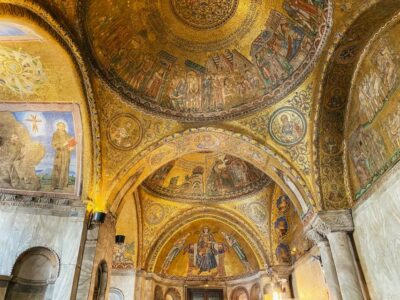
St. Mark Basilica Ticket, Audioguide+History Gallery
Read our review →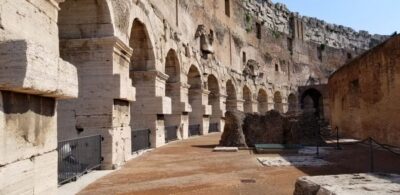
Colosseum, Ancient Rome Tour or AudioGuided Tour
Read our review →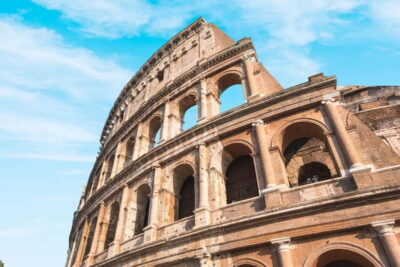
Colosseum, Roman Forum & Palatine Hill Entry and Audioguide
Read our review →
Taormina: Ancient Theater Skip-the-Line Ticket & Audio Guide
Read our review →
Colosseum, Roman Forum & Palatine Hill Visit + Audio Guide
Read our review →
National Archaeological Museum Ticket & Audio Guide
Read our review →
Roman Forum Super Pass Entry with Audio Guide App
Read our review →Browse the lists this tour appears in