
Reviewed · COPENHAGEN
Danish Design Classic and Modern Style Self-Guided Audio Tour
Copenhagen’s design story begins with a hotel, not a museum. At Arne Jacobsen’s former SAS Royal Hotel, now the Radisson Collection Royal Hotel, you meet the clean lines and practical ideas that made Danish design famous. From there, this GPS-guided audio walk leads you past grand churches, old palaces, museums, and modern design landmarks before ending at Designmuseum Danmark.
I like the freedom here. You are not tied to a guide, a group, or a fixed speaking pace. I also like the precise location technology, which can start the narration when you reach the right place and works offline once downloaded. The main consideration is that 70 minutes is a brisk amount of time for roughly 15 points of interest, especially if you stop to enter museums or take photos.
Key points about the Copenhagen design walk
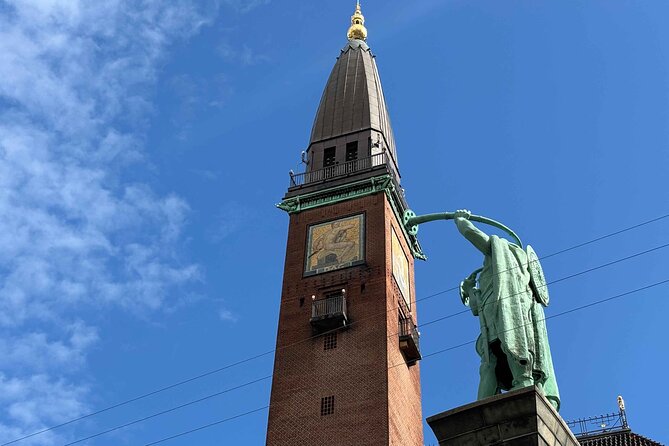
- Start at Arne Jacobsen’s SAS Royal Hotel: Begin with the 1958 building that helped define modern Danish design.
- Follow the story from Viking objects to modern furniture: The route links early Danish craftsmanship with Neo-Classicism, Art Nouveau, and 20th-century design.
- See major Copenhagen landmarks: Stops include Nyhavn, Tivoli Gardens, City Hall, Christiansborg Palace, and Frederik’s Church.
- Use your phone as a private guide: VoiceMap supplies audio, maps, geodata, and directions to the starting point.
- Finish at Designmuseum Danmark: The final stop gives you a natural chance to continue exploring Danish and international design.
- Pay only $11.99 per person: The low price includes lifetime access, though admissions, transport, headphones, and food cost extra.
Begin with Jacobsen at the SAS Royal Hotel
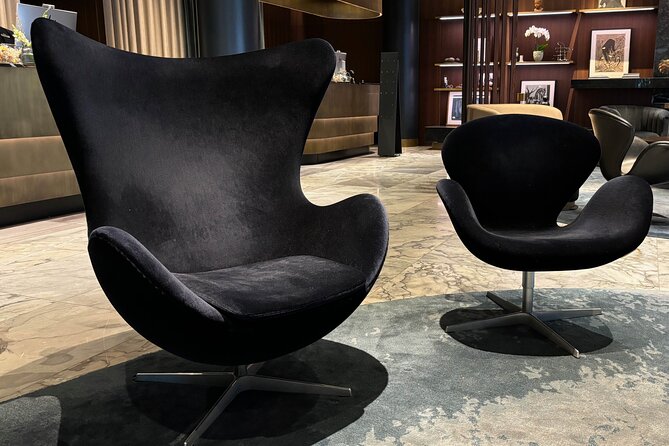
The tour starts at Hammerichsgade 1, outside the Radisson Collection Royal Hotel. This is the former SAS Royal Hotel, completed in 1958 and designed by Arne Jacobsen, one of the key figures in modern Danish design.
The building gives you a strong opening lesson. Jacobsen’s work is associated with smooth forms, simple lines, organic shapes, and practical use. Danish design is not only about making an object look elegant. It is also about making it comfortable, useful, and easy to live with.
That idea matters because the tour is not just a parade of attractive buildings. It presents design as a changing response to daily life, taste, technology, and social ideas. You begin with a modern hotel and then move through centuries of architecture and decorative work.
The hotel is also a useful meeting point. It is easy to identify, and the GPS instructions are meant to guide you into position before the first audio segment begins. You should download the VoiceMap application, audio, maps, and geodata before setting out. Offline access is included, which helps if your connection is weak or you want to avoid using mobile data.
More Self-Guided Audio Tours in the world
- Athens: Acropolis Ticket & Optional Self-Guided Audio Tours
★ 4.1 · 2,542 reviews - Gettysburg Battlefield Self-Guided Driving Audio Tour
★ 4.5 · 910 reviews - Joshua Tree National Park Self-Guided Driving Audio Tour
★ 4.5 · 762 reviews
Tivoli, City Hall, and the first city landmarks
From the modern hotel setting, the route takes you toward some of central Copenhagen’s best-known sights. Tivoli Gardens is an especially interesting early stop because its design is more than amusement rides and entertainment.
The park opened in 1843 and still uses an elaborate Neoclassical stone archway at its entrance. That gives you a clear example of how architecture can shape the mood of a public place. Tivoli is designed to make arrival feel special, and its long history makes it an important part of Copenhagen’s urban character.
You may need to decide how much time you want to spend looking at the entrance. The audio tour is about 70 minutes, so entering Tivoli or spending time inside would change the timing. Admission is not included, and the tour does not include food or drinks.
Copenhagen City Hall offers another useful comparison. Completed in 1905, it is an example of National Romantic style, the Scandinavian version of Art Nouveau. This is one of the points where the route shows that Danish design was not always spare and modern. Earlier styles could be decorative, historical, and strongly tied to national identity.
I like this part of the route because it places design in the middle of ordinary city life. You are not studying objects in isolation. You are looking at public buildings that still shape the way people move through Copenhagen.
Glyptotek and the earliest Danish design ideas
The Glyptotek, officially Ny Carlsberg Glyptotek, focuses on art from before the 20th century. Its collection grew from the personal holdings of Carl Jacobsen, son of the founder of the Carlsberg brewery.
The museum is known for its art collection, winter garden, and café. Even if you only view it from outside during the audio walk, the stop helps explain how Danish taste developed before modern design became the country’s international calling card.
The route also calls at the Danish National Museum. The building itself is not presented as the main attraction, but the Viking objects inside are important to the tour’s larger argument. Gold jewelry and other crafted items show that Danish design did not suddenly begin with Jacobsen or with the 20th century.
This is a useful distinction. The phrase Danish design often brings to mind chairs, lamps, tableware, and clean modern interiors. The tour asks you to look further back, toward skilled metalwork and objects made for use, status, ceremony, or travel.
The National Museum and the Glyptotek are both potential places to spend extra time. Since entry fees are not included, you should treat them as optional additions rather than required parts of the 70-minute walk.
Frederik’s Church and Copenhagen’s grander side
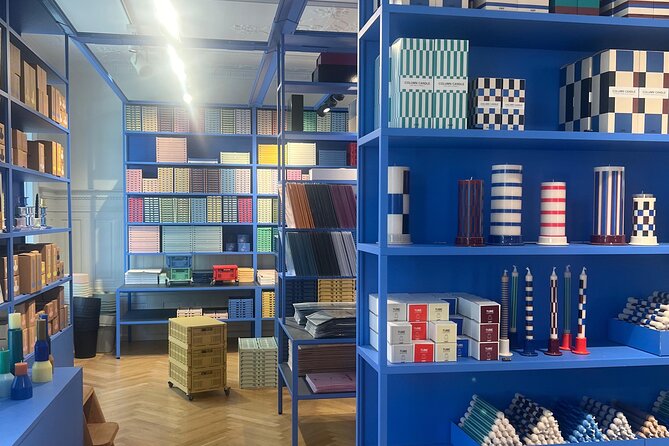
Frederik’s Church is usually called the Marble Church. It was built in the Rococo style and based on St. Peter’s Basilica in Rome.
This stop broadens the tour again. Jacobsen’s smooth, restrained modernism can make Danish design seem almost entirely practical. The Marble Church shows a different side: grand scale, formal composition, and decorative ambition.
You may find the contrast more useful than either building on its own. The tour’s value comes from placing different periods close together, letting you compare them as you walk. The church also helps explain how Copenhagen’s central districts were shaped by royal and religious building projects.
At the Danish Museum of Art and Design, now known as Designmuseum Danmark, the route reaches its natural destination. The museum contains Danish and international design and crafts, with work connected to Arne Jacobsen, Jacob Jensen, and Kaare Klint.
The museum is not simply another exterior stop. It is where you can continue the subject in a more focused setting. The audio tour ends here, so you can enter if you want a longer look at furniture, objects, and craft. Admission is not included, and the tour information does not provide a separate museum ticket.
More Audio Tours in the world
- Barcelona: Sagrada Familia Entry Ticket with Audio Guide
★ 4.6 · 105,312 reviews - Rome: Pantheon Fast-Track Ticket and Official Audioguide
★ 4.5 · 27,353 reviews - Barcelona: Casa Batlló Entry with Self-Audioguide Tour
★ 4.7 · 25,359 reviews - Rome: Colosseum & Forum with Audio Guide App -Optional Arena
★ 4.2 · 24,770 reviews
Nyhavn, Kongens Nytorv, and the royal center
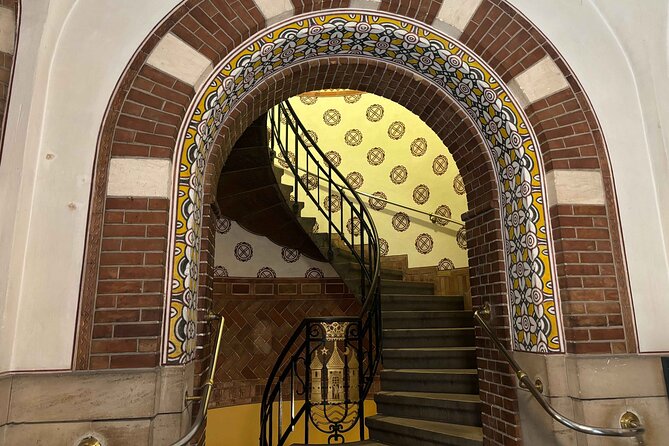
Nyhavn brings color and water into the route. This 17th-century canal and entertainment district stretches from Kongens Nytorv toward the harbor and is lined with brightly painted buildings.
Nyhavn is one of Copenhagen’s most photographed areas, but its use here is not only visual. It shows how the city’s historic waterfront has become part of its public identity. The colorful facades contrast with the restrained forms associated with modern Danish design.
Kongens Nytorv, or King’s Square, is another major city hub. It helps connect several of the route’s themes: royal planning, busy streets, grand buildings, and public space. You get a better sense of how design works at the scale of a whole city, not just in a chair or a single facade.
The Royal Danish Theater is a Neo-Baroque building and is now used mainly for the Royal Danish Ballet. Its decorative style adds another point of contrast with the SAS Royal Hotel. The route also passes Alexander Nevsky Church, the only Russian Orthodox church in Copenhagen, with a patterned facade and golden towers.
These stops are especially useful if you enjoy architecture but do not want a tour devoted only to one period. The audio gives you a reason to notice buildings you might otherwise walk past.
Palaces, churches, and changing public uses
Christiansborg Palace is used for state dinners and is also home to Denmark’s Parliament, the Folketing. It represents the continuing link between architecture, ceremony, and government.
Charlottenborg Palace began as a private mansion for the king’s brother and now houses the Royal Danish Academy for the Fine Arts. That change in use makes it a good example of how old buildings can take on new civic and cultural roles.
The church near Nikolaj Square adds another unusual chapter. The current building is a 1909 restoration of an older church destroyed by fire. It has served as a naval museum and a library, and is now a modern art venue rather than a working church.
The Odd Fellows Palace has a similarly unexpected history. It housed a Masonic Lodge for many years and is now mainly used for weddings and parties.
These are not all obvious design icons. That is part of their value. You get a broader view of Copenhagen, where buildings change function as the city changes. If you are interested in architecture only as a photo subject, some stops may feel brief. If you like the connection between buildings and public life, they add useful context.
Thorvaldsen and the turn away from Classicism
Thorvaldsen’s Museum presents a clear story about changing taste. Bertel Thorvaldsen was a Danish sculptor who went to Italy and learned to carve in the Classical style.
The museum reflects that older ideal. It also helps explain why later Danish designers moved in other directions. Tastes change, and styles once considered refined can later feel formal or dated.
This is one of the strongest conceptual points in the tour. Danish design is not a single look. It includes Classicism, Rococo, National Romanticism, Art Nouveau, modernism, craft, and practical household design. By placing Thorvaldsen’s work near modern design landmarks, the audio route shows that design history is a conversation between periods.
The stop is also a reminder to pace yourself. The tour can take about 70 minutes, but a museum visit requires more time. You will get the most from the route if you decide before starting whether you want a brisk outdoor walk or a longer day with indoor visits.
What the GPS format does well

The VoiceMap application provides the audio, maps, and location data. The tour also gives directions to the starting point, which is useful if you are unfamiliar with Copenhagen’s streets.
The key advantage is control. You can pause the narration, stop for a photo, enter a building, take a coffee break, or return to a section later. You can also take the tour again because access is provided for life.
The precise geolocation is important. One particularly positive point about this format is that the narration is designed to trigger at the right place, rather than forcing you to keep checking a written route. You still need to watch your phone and follow the map, but the technology reduces the work of figuring out which explanation belongs to which building.
The tradeoff is that you are responsible for the experience. There is no guide to answer a question, adjust the pace for your group, or point out something you missed. You also need your own smartphone and headphones.
This is a private activity, so only your group participates. That makes it a good choice for families or companions who want information but do not want to follow a guide with strangers. It also suits independent visitors who prefer quiet listening and flexible stops.
Is $11.99 a good value?
At $11.99 per person, the tour is inexpensive for a private experience in central Copenhagen. The price includes lifetime access to the audio tour and offline access to the maps and location data.
That value is strongest if you will use the freedom. You can take the route once as a quick orientation, then replay parts later or use the same tour on another day. If you plan to enter several museums, your total spending will rise because admission fees are separate.
The tour does not include transport, food, drinks, headphones, or a smartphone. The route is designed around walking between central landmarks, but the supplied information does not give a separate transport plan or accessibility description. Public transportation is nearby, and most people can participate. Service animals are allowed.
The free cancellation rule is practical: cancel at least 24 hours before the local start time for a full refund. Within 24 hours, the payment is not refunded, and changes are not accepted.
Who should book this audio tour?
I would choose this for a first or second visit to Copenhagen when you want a design theme without giving up control of your day. It is especially useful for people who like architecture, furniture, museums, and the story behind ordinary city spaces.
Families may appreciate that nobody has to keep up with a live guide. Couples and small groups can stop when they like. The lifetime access also helps if your schedule changes or you want to split the route.
I would be more cautious if you want a slow museum visit, detailed personal commentary, or a route with guaranteed indoor access. Seventy minutes passes quickly across so many landmarks, and optional entries will take the walk beyond its stated duration.
Should you book it?
Book it if you want a low-cost, private introduction to Copenhagen’s design story, from Viking craftsmanship and Rococo churches to Jacobsen’s 1958 modernism. The combination of offline maps, precise GPS narration, and lifetime access gives you more control than a conventional group walk.
Skip it if you need a live expert or plan to spend most of your time inside museums. For everyone else, it is a smart way to connect Copenhagen’s famous sights through one clear theme, while leaving room for your own stops along the way.
FAQ
Where does the Danish Design Classic and Modern Style tour start?
It starts at the Radisson Collection Royal Hotel, formerly Arne Jacobsen’s SAS Royal Hotel, at Hammerichsgade 1 in Copenhagen.
Where does the tour end?
It ends at Designmuseum Danmark, at Bredgade 68, 1260 København.
How long does the audio tour take?
The approximate duration is 1 hour and 10 minutes.
What does the tour cost?
The listed price is $11.99 per person.
Is this a guided group tour?
No. It is a private, self-guided activity, so only your group participates.
Do I need a smartphone and headphones?
Yes. A smartphone and headphones are not included, so you need to bring your own.
Does the tour work offline?
Yes. Offline access to the audio, maps, and geodata is included through the VoiceMap application.
Are museum admission fees included?
No. Personal expenses and admission fees are not included.
Can I take the tour again?
Yes. The booking includes lifetime access to the Danish Design tour.
What is the cancellation policy?
You can receive a full refund if you cancel at least 24 hours before the local start time. Cancellations or changes made within 24 hours are not accepted for a refund.
Latest audio tours in the world
- Seville Maestranza Bullring Tour with Audio Guide★ 3.5 · 6 reviews
- Seville Scavenger Hunt and Highlights Self Guided Audio Tour★ 5.0 · 5 reviews
- Seville Audio guided walking tour 3h20 and 28 audio commentaries★ 5.0 · 2 reviews
- Royal Alcazar of Seville Entry Ticket with Audio Guide★ 4.0 · 42 reviews
- Seville Cathedral and La Giralda Entry Ticket with Audio Guide★ 3.0 · 9 reviews
- Seville Cathedral and Giralda Entry Tickets with Audio Guide★ 4.0 · 56 reviews
- Essential Seville’s Ancient History: An Audio Tour★ 5.0 · 9 reviews
- Sequoia and Kings Canyon Audio Tour Self Guide National Park Tour★ 5.0 · 3 reviews
Self-Guided Audio Tours, compared.

Acropolis Ticket & Optional Self-Guided Audio Tours
Read our review →


Ultimate Acadia National Park Self-Guided Driving Audio Tour
Read our review →

Akrotiri Ticket with Optional Self-Guided Audios
Read our review →
Browse the lists this tour appears in