
Reviewed · USA
Sequoia and Kings Canyon Audio Tour Self Guide National Park Tour
The biggest surprise here is how much ground this self-guided audio tour covers. Over two days, you move from Kings Canyon overlooks and marble caverns to the giant sequoias of Giant Forest, with the route filling in the stories between stops.
I like the one-price-per-car setup, especially for a family or group of friends, and I like that the narration plays automatically while you drive. The offline map is another real help in a mountain park where a steady data connection should not be assumed.
The drawback is simple: this is a long, ambitious route. You will need your own vehicle, park entry and parking costs are not included, and trying to visit every stop can turn two relaxed days into a race.
Key points to know before you go
- Two national parks in one route: Follow the road through Kings Canyon on the first day, then explore Sequoia’s Giant Forest and high-country viewpoints on the second.
- One purchase covers the vehicle: The $15.99 price applies to a group of up to 15 people, rather than charging each person separately.
- GPS-triggered narration: Stories, directions, travel tips, and music begin as you approach each part of the route.
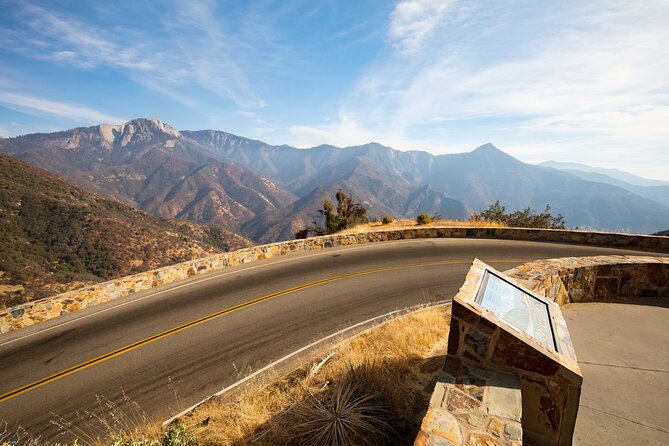
- Major trees and major views: The tour includes General Grant Tree, General Sherman Tree, Moro Rock, Kings Canyon Overlook, and Panoramic Point.
- Optional hikes shape your day: You can stick to roadside stops or add trails such as Crescent Meadow, Tokopah Falls, and Little Baldy.
- Boyden Cavern costs extra: The cavern is operated separately, and its guided tour admission is not included.
How this two-day audio tour works
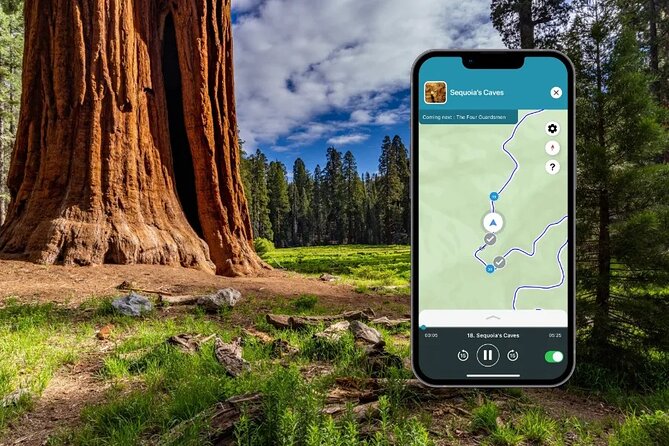
This is not a bus tour and not a traditional guided walk. You drive your own car, open the Shaka Guide app, download the route over strong Wi-Fi, and start the tour from the suggested point. GPS activates the narration and directions as you travel.
That format gives you control. You can pause for lunch, skip a stop, spend longer on a trail, or return to the route later. The tour does not expire, so you are not tied to one calendar day. The stated touring window runs from May 30, 2025, through March 13, 2027, with access listed every day from midnight to 11:30 p.m.
The route is offered in English. Audio stories, music, driving instructions, and an offline map are included. Since the app uses GPS rather than a continuous data connection, downloading everything before entering the parks is an important step.
At $15.99 per group, the value is strongest when several people share one vehicle. A couple still gets a reasonable price, but a group of four, six, or more pays very little per person. You still cover your own transportation, food, park entrance, parking, and any paid attractions, so think of the fee as a road companion rather than an all-inclusive park pass.
More National Park Audio Tours in the USA
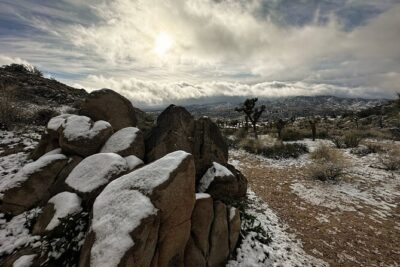
- Joshua Tree National Park Self-Guided Driving Audio Tour
★ 4.5 · 762 reviews - Ultimate Acadia National Park Self-Guided Driving Audio Tour
★ 4.0 · 521 reviews - Arches National Park Self-Guided Driving Audio Tour
★ 4.5 · 288 reviews
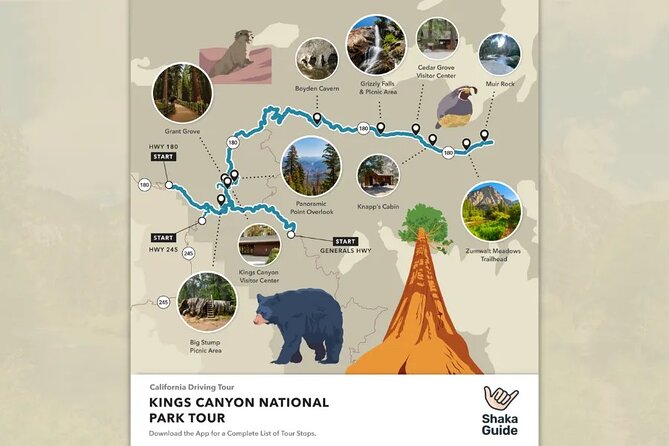
Day one: from Big Stump to the canyon floor
Big Stump explains the cost of the past
Begin at Big Stump Picnic Area, where an easy two-mile loop leads to what remains of the Mark Twain Tree. The tree was once about 16 feet across and more than 300 feet tall. Parts of it were cut and put on display at the American Museum of Natural History in New York and the British Museum in London.
This is a useful first stop because it gives the giant trees a human context. You are not just looking at enormous trunks. You are also seeing evidence of the era when some of these trees were treated as curiosities and timber.
Allow about 45 minutes if you walk the full loop. If you are eager to reach the groves, the picnic area itself can be a quick pause.
Redwood Mountain and the first big canyon views
Redwood Mountain Overlook looks across Redwood Mountain Grove, nearly 2,500 acres and the largest sequoia grove in the world. The overlook itself takes only a few minutes, but it points toward longer hikes in Redwood Canyon.
The Sugarbowl Loop is 6.8 miles, while the Hart Tree Loop is 7.3 miles. Both require extra time and planning. To reach the trailhead, drive about half a mile east from the overlook, then follow the signs and continue roughly two miles on a dirt road.
Next comes Kings Canyon Overlook, a short roadside stop with a wide view into the park’s namesake canyon. The canyon reaches about 8,200 feet in depth, compared with roughly 6,000 feet for the Grand Canyon. You do not need a long hike to appreciate the scale here, which makes this a good stop for anyone managing energy or traveling with children.
More Audio Tours in the USA
- Los Angeles: Hop-On Hop-Off Bus Tour with Audio Guide
★ 3.7 · 2,030 reviews - City Sightseeing Hop-On Hop-Off Bus Tour with Audio Guide
★ 3.0 · 1,083 reviews - Medieval Torture Museum Ticket with Audio Guide and Ghost Hunting
★ 5.0 · 962 reviews - Gettysburg Battlefield Self-Guided Driving Audio Tour
★ 4.5 · 910 reviews
Grant Grove gives you a famous tree without a hard hike
At Kings Canyon Visitor Center in Grant Grove Village, you can watch a short film, pick up maps and books, use the market, or sit down for breakfast, lunch, or dinner at the Grant Grove Restaurant. This is also a sensible place to check practical details before continuing farther into the canyon.
Grant Grove itself is home to the General Grant Tree, one of the park’s signature sequoias and the world’s second-largest tree. The paved loop is only one-third of a mile and takes you past the Fallen Monarch, Gamlin Cabin, and Centennial Stump.
The General Grant Tree measures about 268 feet tall and 107 feet around. The short, level route makes this one of the most accessible major tree stops on the tour. Allow about 45 minutes if you want time for photographs and the nearby features.
Panoramic Point and McGee Vista show the park from above
Panoramic Point gives you a high-elevation view of Kings Canyon and Hume Lake just steps from the parking area. If you want more exercise, the Park Ridge Fire Lookout trail runs about five miles round trip and is considered moderately difficult.
McGee Vista Point shifts the subject from scenery to fire. From the overlook, you can see damage from the Rough Fire, while the audio explains the unusual relationship between wildfire and sequoia trees. This is one of the more useful interpretive moments on the route because it moves beyond simple sightseeing.
The long drive into Kings Canyon rewards patience
Junction View looks toward the meeting point of the Middle and South Forks of the Kings River, with views reaching across the Western Sierra toward Mount Whitney, the tallest peak in the lower 48 states. Yucca Point offers another pause above the Kings River before the road drops deeper into the canyon.
The Scenic Byway Viewpoint focuses on the park’s marble geology. Look for the gray limestone vein against the surrounding ground cover. These stops are brief, but they break up the winding drive and give you reasons to pull over rather than treat the road as dead time.
Boyden Cavern is the one paid attraction on this day. A separate operator leads 45-minute to one-hour tours through a marble cavern filled with stalactites, stalagmites, and other formations. There is a short but steep walk from the parking area to the entrance, and admission is not included. Check operating conditions before building your day around it.
Grizzly Falls is an easy stop for lunch or a short rest. The waterfall drops about 80 feet in a shaded forest setting, and the picnic area has restrooms. The falls are close to the parking area, so you can see them without committing to a long walk.
Cedar Grove ends the day beside the river
Cedar Grove Visitor Center sits in Cedar Grove Village and covers the area’s natural and cultural history. It is seasonal, generally open from around Memorial Day through mid-September, so do not count on it outside that period. The Sequoia Parks Conservancy Store sells clothing, souvenirs, and other small items.
Knapp’s Cabin is reached by a short trail from the parking area. The riverside cabin once belonged to George O. Knapp, who brought friends here on fishing trips, and it is listed on the National Register of Historic Places. The cabin and canyon view make this a quieter stop after the busier overlooks.
Roaring River Falls finishes the first day’s route. The nearly one-third-mile round-trip walk is easy, and the falls offer a peaceful place to slow down. If you still have time and energy, the trail continues toward Zumwalt Meadows, but that is a longer outing.
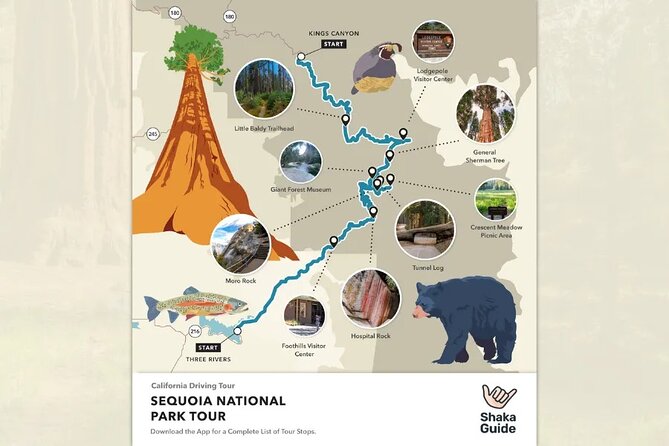
Day two: Sequoia’s giant trees and granite domes
The foothills route starts with small history and big views
Indian Head River Trailhead has the historic Welcome to Sequoia National Park sign and a trail leading down toward the river. The view from the parking area is worthwhile even if you are not ready for a hike.
At Foothills Visitor Center, you can use the restrooms, refill a water bottle, browse displays about park history and wildlife, and pick up souvenirs. It is a practical reset before the road climbs toward the sequoias.
Tunnel Rock is an easy photo stop on Generals Highway. The road once passed directly beneath the rock, but it was redirected. You can walk under it or climb on the rock, provided conditions and local rules allow.
Potwisha Campground is listed as another stop, though the supplied route description repeats the Tunnel Rock information rather than giving separate features for the campground. Treat it as a brief roadside pause rather than a major sightseeing stop.
Hospital Rock has Native American rock art associated with the Potwisha people, along with grinding mortars believed to have been used to process acorns into flour. Picnic tables and restrooms make it useful for a short break, but take care around cultural features and leave the site undisturbed.
The road to Giant Forest is filled with quick viewpoints
Amphitheater Point gives you a broad view of Moro Rock, nearby peaks, and ridges. Vista Point offers another roadside look at Sequoia’s mountain scenery. These stops take only a few minutes, but the audio helps you notice viewpoints that can arrive quickly while you are concentrating on the road.
The Four Guardsmen are four giant sequoias lined up near the highway. This is not a full stop, but you can pull over on the right side when appropriate or slow down to appreciate the trees as you pass.
At Giant Forest Museum, you get an introduction to the sequoia groves and a good starting point for nearby walks. The Big Trees Trail is an easy half-mile route through a meadow and sequoias. This is a sensible choice if you want a short walk before tackling the larger sights.
Moro Rock trades distance for steep stairs
Moro Rock requires about 350 concrete steps to reach the top. The route is short, but the incline makes it tiring. At the summit, you get a wide view from the granite dome, and the effort is concentrated rather than spread over miles of trail.
Tunnel Log is another classic roadside feature. Workers carved a passage through a fallen log that blocked traffic. Vehicles up to eight feet tall can drive through it, while taller vehicles must use the route around it. It is a quick photo opportunity, not a major hike.
Crescent Meadow offers the best choice of optional walks
Crescent Meadow was called the Gem of the Sierras by naturalist John Muir. The one-and-a-half-mile loop around the meadow is easy, and another easy trail of about the same length leads to Tharp’s Log.
The area also marks the start of the High Sierra Trail. You will not complete that long route during this tour, but a little over a mile round trip takes you to Eagle View. Crescent Meadow is a good place to choose your own pace, from a brief picnic stop to a longer morning walk.
General Sherman Tree is the day’s essential stop
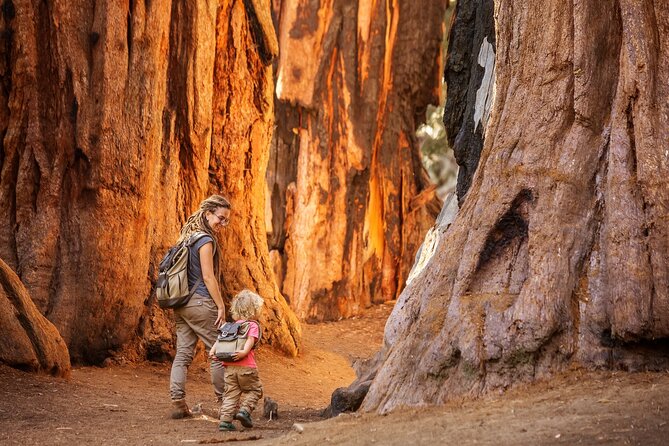
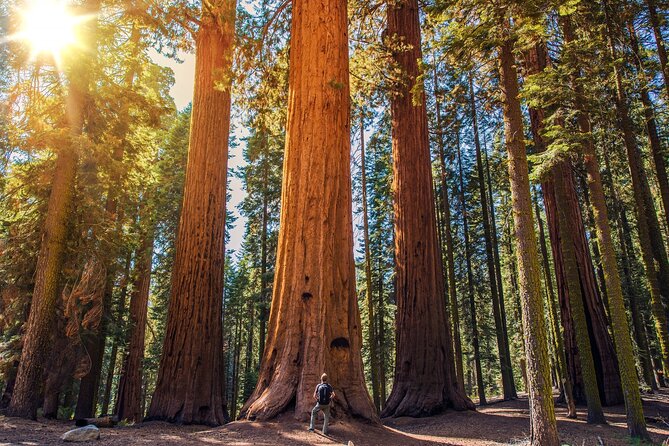
The General Sherman Tree is the world’s largest living tree by volume. A paved one-mile trail leads from the parking area through giant sequoias to the tree, with benches and other notable trees along the way.
The route is easy, but allow time for the walk in both directions and for stopping among the trees. If you still have energy, the Congress Trail adds just under three miles round trip and passes two groups of mature sequoias.
I would not rush this section. General Sherman is the headline sight, but the forest around it is what makes the visit feel complete. The audio gives you context while leaving you free to stop and look instead of following a group schedule.
Lodgepole and Tokopah Falls add a longer finish
Lodgepole Visitor Center offers displays about the park’s natural and human history. The nearby Lodgepole Market sells food and basic necessities, making it a useful place to restock.
Tokopah Falls is a more serious walking stop. The trail runs almost four miles round trip through shady forest and open mountain views, with an easy incline. The waterfall drops about 1,200 feet and flows most strongly in early summer when glacial melt is higher. By late summer, it may be reduced to a trickle.
Wuksachi Lodge gives you a place to pause after the trail. It has two restaurants with full menus, outdoor seating, a deck, and a shop with grab-and-go snacks. Halstead Meadow is a final quiet stop, with picnic tables and open greenery beside Generals Highway.
For a final challenge, Little Baldy Trail climbs a little over three miles round trip to a granite dome. The trail is considered moderately difficult and rewards you with broad views of the Great Western Divide and beyond. It is a fine ending if you want one last hike, but it is also the easiest stop to skip if the day has already run long.
Who gets the best value from this tour?
This tour suits you if you want the freedom to build your own park days but still want direction, stories, and reminders about where to stop. It is especially useful for families, couples, and groups sharing one car, since the $15.99 fee covers up to 15 people.
It also works well for mixed-ability groups. One person can walk to General Sherman Tree while another takes a shorter break, or the group can skip a demanding trail such as Little Baldy and still see major sights from the road.
You should think twice if you want a live guide, private transportation, or a tightly managed schedule. The route covers a lot, and the app cannot replace checking seasonal closures, trail conditions, or road conditions before setting out.
The tour is booked about 25 days ahead on average, so planning early is sensible during popular travel periods. Free cancellation is available if you cancel at least 24 hours before the start time. Inside that window, the payment is not refunded.
Should you book it?
Book this audio tour if you have your own vehicle, plan to spend two days in the parks, and want strong guidance without paying a per-person tour rate. The best features are the automatic GPS narration, offline map, flexible pacing, and access to both the giant trees and Kings Canyon viewpoints.
Skip it if you prefer a human guide, do not want to manage your own driving, or only have a few hours. For most independent road-trippers, though, it is a practical low-cost way to give structure to a huge national park route without turning the trip into a rigid timetable.
FAQ
How much does the Sequoia and Kings Canyon audio tour cost?
The tour costs $15.99 per group, covering up to 15 people in one vehicle. Park entrance fees, parking fees, transportation, meals, and refreshments are not included.
How long does the tour take?
The suggested experience lasts about two days. You can pause, skip stops, and resume later because the tour does not expire.
Is this a guided bus or walking tour?
No. You provide your own transportation and follow the route through the Shaka Guide app. The app supplies GPS directions, automatic narration, music, and an offline map.
Does the tour work without mobile data?
Yes. You should download the tour using strong Wi-Fi before you begin. The included offline map and GPS-triggered audio are designed to work without continuous Wi-Fi or data.
Is Boyden Cavern included?
No. Boyden Cavern is operated by a separate company, and its guided 45-minute to one-hour cavern tour requires an additional admission fee. There is also a short, steep walk from the parking area to the entrance.
Is the tour available in languages other than English?
The tour is offered in English.
Can I cancel for a full refund?
Yes, if you cancel at least 24 hours before the experience start time. Cancellations made less than 24 hours before the start time are not refunded, and changes inside that period are not accepted.
Latest audio tours in the USA
- Sequoia National Park Self-Guided Audio Tour★ 4.5 · 9 reviews
- Kings Canyon National Park Self-Guided Audio Tour★ 4.0 · 4 reviews
- Sedona, Arizona Self-Guided Audio Tour★ 4.0 · 36 reviews
- Sedona & Red Rock State Park Self-Guided Driving Audio Tour★ 3.0 · 30 reviews
- Downtown Seattle Self-Guided Walking Audio Tour★ 4.5 · 6 reviews
- Uncover Seattle: Self-Guided Audio Tour★ 3.5 · 7 reviews
- Haunted Savannah Self-Guided Walking Audio Tour★ 4.5 · 3 reviews
- Johnson Square to Independent Presbyterian: A Self-Guided Audio Tour of Savannah★ 5.0 · 3 reviews
National Park Audio Tours, compared.

Ultimate Acadia National Park Self-Guided Driving Audio Tour
Read our review →
Vesuvius National Park Skip-The-Line Ticket and Audio Guide
Read our review →
Self-Guided GPS Audio E-Bike Tour Hawaii Volcanoes National Park
Read our review →
Browse the lists this tour appears in