
Reviewed · BOLOGNA
Bologna: A Self-Guided Audio Tour from Porta Galliera to Le Tre Frecce
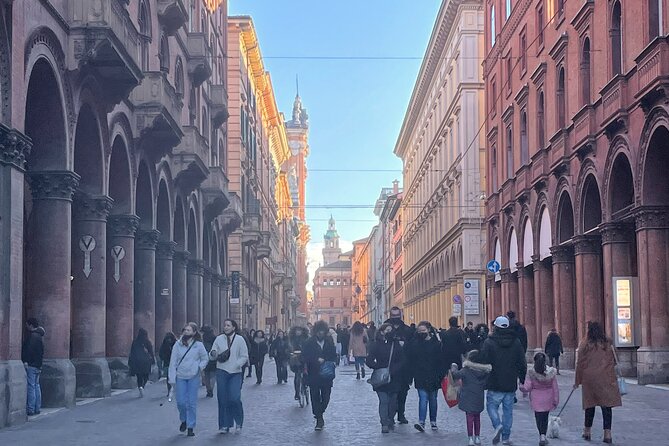
Bologna’s many personalities unfold on this walk: the red-roofed city, the food-loving fat city, the old university town, and the former city of towers and canals. The route also reaches into the city’s rebellious past, including the 1848 uprising that helped keep Bologna from becoming part of the Vatican’s territory. The stories give the walk a clear sense of place, rather than turning it into a simple list of monuments.
I like the app’s location tracking, which starts and pauses the commentary as you reach each point, and I like the freedom to stop for a drink, step inside a church, or search for extra information. The main drawback is that this is not a live guide, so you need your own smartphone and headphones, and museums or churches are not included in the price.
Key points at a glance
- A history-packed route: Follow Bologna from the 1848 rebellion at Porta Galliera to legends surrounding Le Tre Frecce.
- Smart audio navigation: VoiceMap uses your location to deliver commentary at the right places and offers offline maps, audio, and route data.
- Strong city-center coverage: See Canale delle Moline, San Pietro, Piazza del Nettuno, San Petronio, the Quadrilatero, and the Two Towers.
- Flexible timing: The walk takes about one to one and a half hours without long stops, but you can stretch it into a relaxed half-day outing.
- Good low-cost value: At $11.99 per person, it costs far less than a private guide while still giving you a planned route and narration.
- Bring your own kit: A smartphone and headphones are required. Food, drinks, transport, and entry fees are not included.
Start at Porta Galliera and follow Bologna’s rebellious side
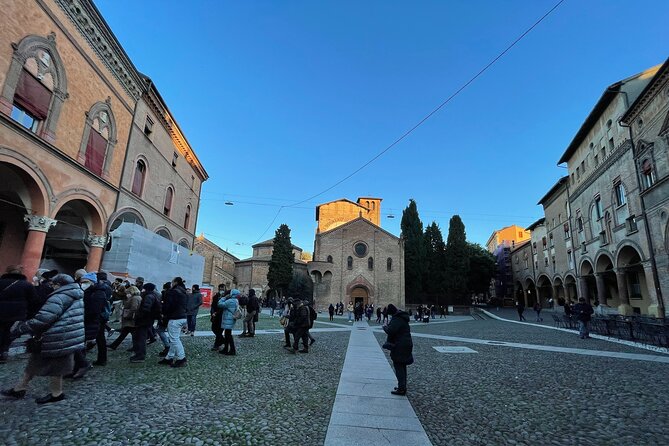
The walk begins at Porta Galliera, at Piazza XX Settembre, beside one of Bologna’s historic gateways. This is more than a convenient starting marker. The stop connects you with the 1848 revolt, when the Bolognese rose up and a retreating Austrian army left the city.
That story gives the tour an early jolt of character. Bologna was not simply a pretty medieval town waiting for visitors. It had political force, local pride, and a habit of resisting outside control. The narration also introduces the city’s better-known labels: red for its roofs and left-leaning politics, fat for its generous cuisine, towered for its medieval skyline, and cultured for its university.
I like beginning here because the audio sets up the rest of the walk. You are not only looking at old buildings. You are listening for the city’s arguments, ambitions, and odd little secrets.
The start can require a little patience if construction affects the area. One person had trouble getting going because of work near the meeting point, though the route became easy to follow once past the obstruction. Downloading the tour before you arrive is sensible, especially if you are making a tight connection later in the day.
More Self-Guided Audio Tours in Italy
- Naples: Pompeii Self Guided Audio Tour
★ 3.9 · 211 reviews - Matera: Sassi di Matera Historical Self-Guided Audio Tour
★ 3.6 · 183 reviews - Self Guided Audio Tour-Coliseum & the Gladiator’s Legends
★ 3.5 · 49 reviews
From Il Pincio to Piazza Otto Agosto
From Porta Galliera, the route passes Il Pincio, the entrance to Parco della Montagnola. The garden was commissioned by Napoleon and designed in a French style, adding a different layer to Bologna’s story. Here, the city’s past is not only medieval and ecclesiastical. It also reflects the political changes brought by French rule and the Napoleonic period.
You then stroll through Piazza Otto Agosto. The route does not treat these places as isolated photo stops. The audio links them into a larger account of how Bologna changed over time, from a fortified and politically contested city to the modern center you see today.
This section should be easy to manage because the audio is designed around walking between points. The app tracks your position and supplies short pieces of background information as you move. If you prefer to pause often, you can stop the tour and restart when ready.
That flexibility matters. A fixed group tour may keep you moving even when you want a closer look at a gate or a quiet break in a garden. Here, the route stays available without rushing you.
Bologna’s old canals along Canale delle Moline
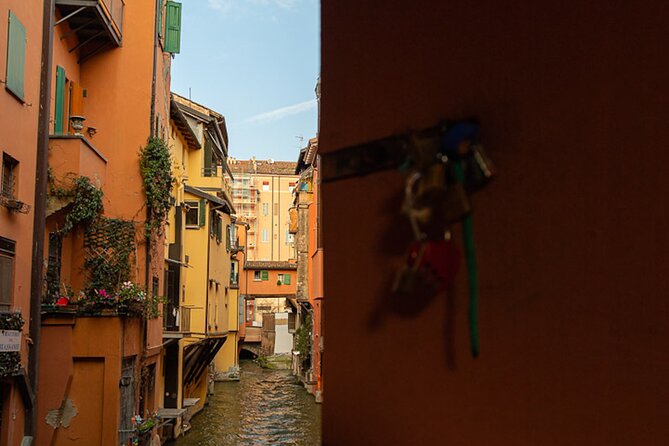
One of the most appealing surprises on the route is the glimpse of Bologna’s former water network. As you pass Canale delle Moline, the narration explains how Bologna once resembled Venice, with canals and rivers crisscrossing the city.
This is exactly the sort of detail that can be easy to miss on a normal walk. Bologna is often introduced through its arcades, towers, university, and food. The canal story gives you another way to picture the city, one based on movement, mills, and water rather than only brick and stone.
The route then continues down Via Indipendenza, one of the city’s major streets. The commentary turns to the post-Risorgimento period, placing the street within the political and urban changes that followed Italian unification.
I find this section valuable because it connects everyday city life with national history. You are walking along a practical modern thoroughfare, but the narration encourages you to notice how the street fits into Bologna’s changing identity.
San Pietro, Piazza del Nettuno, and a clever statue
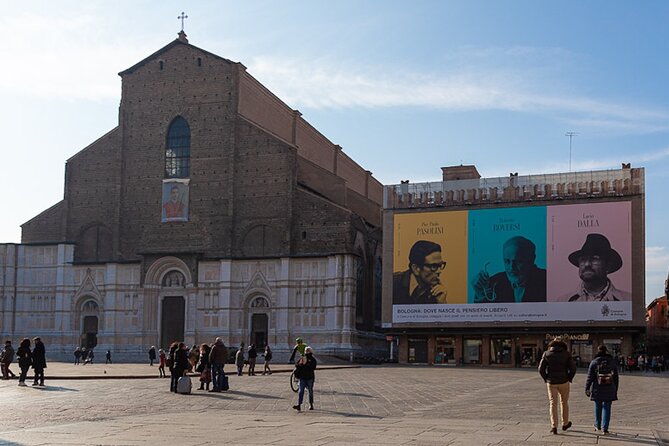
The route passes San Pietro before reaching Piazza del Nettuno, one of Bologna’s key public squares. Here, the audio explains the controversy around the Fountain of Neptune and how its sculptor managed to make the god appear particularly well-endowed despite a church prohibition.
It is a funny story, but it also shows how Bologna’s history is not all solemn dates and grand architecture. The city has always had room for wit, rivalry, and a little rule-bending. That kind of anecdote can help you remember a square more clearly than a list of construction details.
You should note that passing San Pietro or the fountain does not include a guided visit inside any attraction. The tour takes you to the locations and provides commentary from outside or along the route. If you decide to enter a church or another site, you pay any separate admission yourself.
This arrangement keeps the price low, but it also means you should not treat the audio tour as a substitute for a full church or museum visit. It is best used as a city introduction.
Another self-paced route in Italy:
- Rome: Pantheon Fast-Track Ticket and Official Audioguide
★ 4.5 · 27,353 reviews - Rome: Colosseum & Forum with Audio Guide App -Optional Arena
★ 4.2 · 24,770 reviews - Florence: Timed Entry to Michelangelo’s David + Audio App
★ 4.6 · 19,496 reviews - Rome: City Sightseeing Hop-on Hop-off Bus with Audioguide
★ 4.0 · 16,045 reviews
The Whispering Gallery beneath Torre dell’Arengo
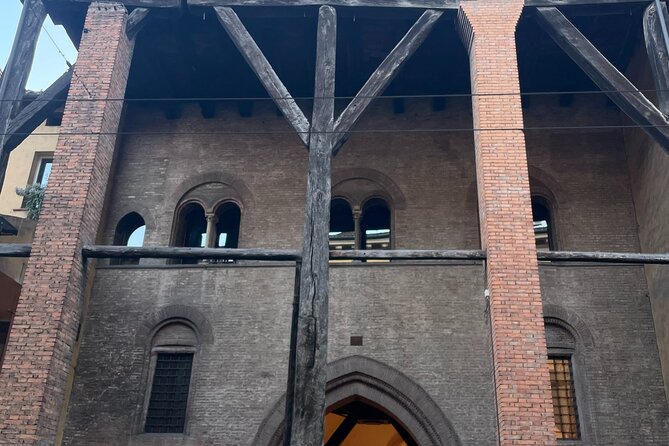
At the Tower of Arengo, the route reaches a particularly atmospheric stop: the Whispering Gallery. The audio tells how lovers could murmur sweet words to one another while avoiding the attention of their legitimate partners.
The story is playful, and the location gives the walk a strong change of mood. After political rebellion, canals, and church sculpture, you get a piece of local folklore tied to the physical shape of the building.
This is one of the route’s better examples of how the audio format can work well. A guide can point out a story, but an app lets you linger in the space and replay the explanation if needed. You can listen again without holding up a group.
The tower is also near several major sights, so this portion of the walk feels central and concentrated. Keep an eye on your route map as you move through the busy heart of Bologna, particularly if you stop to take photographs or browse nearby streets.
San Petronio and Bologna’s grand civic center
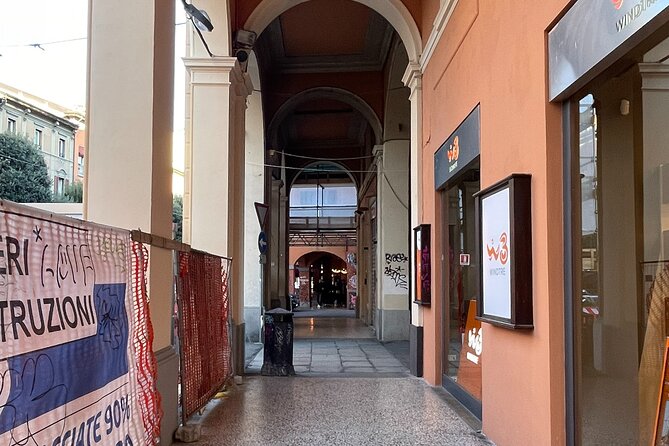
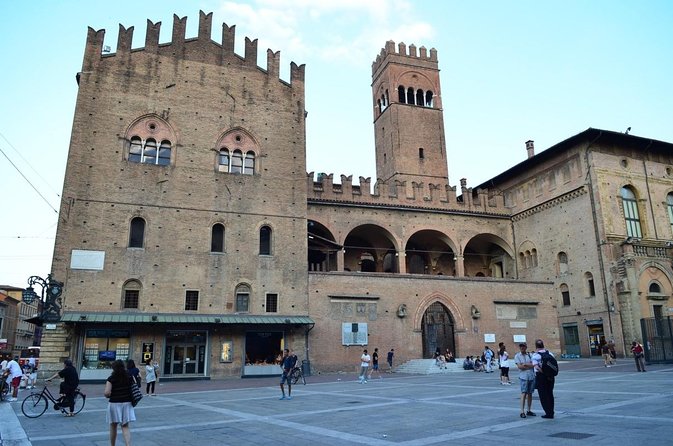
Next comes San Petronio, the largest and most important church in Bologna. Its position near the main squares gives the stop real weight. Even if you only view it from outside, the church helps explain Bologna’s scale and civic confidence.
The narration places San Petronio within the city’s broader story rather than treating it as a separate religious monument. This is useful for a first visit because Bologna’s major buildings make more sense when you understand the competition between civic power, church authority, and local independence.
You are not guided through the interior as part of the tour. That is an important limitation if San Petronio is high on your list. Still, the route gives you a useful orientation, and you can choose to return later for a separate visit.
I would use this stop as a decision point. If your schedule is tight, continue with the audio and save an interior visit for another time. If you have several hours, pause the tour, look inside if open, and resume afterward.
Food streets in the Quadrilatero
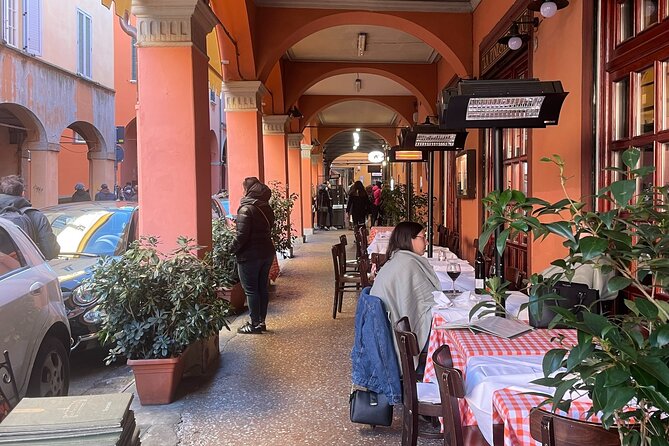
The route then takes you into the Quadrilatero, Bologna’s old market district, known here for its cafes and restaurants. This is where the city’s fat nickname becomes easier to understand. The audio brings you into an area where food is part of the street experience, not simply a meal booked for later.
You will also stroll along Via Rizzoli, one of Bologna’s main central streets. Together, these sections balance grand monuments with the ordinary pleasures of a city walk: shopfronts, places to sit, and streets built for wandering.
I especially like having the Quadrilatero in the middle or later part of the route because it gives you a natural place to pause. One person followed the tour for about 90 minutes without stopping, then extended the outing to roughly three and a half hours by checking extra information, stepping into places, and stopping for an Aperol Spritz.
That is the right way to think about the timing. The stated duration is about one to one and a half hours, but it describes the walking and listening time. It does not include a drink, a meal, a church visit, or time spent examining the city around you.
The Two Towers and Piazza della Mercanzia
The route continues along Via Rizzoli toward Garisenda and Asinelli, Bologna’s famous Two Towers. These towers are among the city’s clearest reminders of the medieval period, when more than 100 towers reportedly dotted Bologna’s skyline.
The audio helps place the Two Towers within that wider image. Instead of seeing them as two isolated landmarks, you get a sense of the former towered city and the rivalry, wealth, and defensive needs that shaped its appearance.
The walk then passes Piazza della Mercanzia, another important central point. This part of Bologna is well suited to an audio route because several major sights sit close together, yet each has a different story. The app’s location-based commentary helps prevent the experience from becoming a blur of similar medieval façades.
Navigation is one of the strongest parts of the tour. The app provides directions and pauses or begins the commentary as you reach the right area. Offline access to maps, audio, and geodata is included, so you do not need a constant internet connection after downloading the tour.
Still, you should bring a charged phone. The experience depends on your device, and the provider does not supply a smartphone or headphones.
Finish at Le Tre Frecce and hear the legends
The walk ends in front of Le Tre Frecce on Strada Maggiore. The final commentary explains the legends connected with the Three Arrows, including one involving nudity.
That ending fits the overall tone. Bologna’s story here moves from rebellion and French gardens to canals, church rules, lovers, food streets, towers, and local legends. The route does not try to tell everything about the city. Instead, it gives you a lively first framework, with enough odd details to make the streets easier to remember.
Because the endpoint is fixed, you can plan what comes next. The tour does not include transport, so you will need to continue on foot or arrange your own way from Strada Maggiore. The end location is open to access at all hours listed for the experience, but the audio tour itself is not a timed entry ticket.
What $11.99 gets you
At $11.99 per person, this is a strong budget choice for an introduction to central Bologna. You receive lifetime access in English, the VoiceMap application, and offline audio, maps, and route data.
The comparison is not with a full private guide. A live guide can answer questions, adjust the route, and take you inside attractions. This audio walk cannot do those things. Its value is different: you get a prepared route, location-based narration, and the freedom to move at your own pace.
The cost becomes especially reasonable if you are visiting at short notice or cannot fit a scheduled tour into your day. It also suits anyone who prefers not to join a group. Although the activity is listed as private, only your group participates, and the narration remains self-guided rather than live.
The non-refundable policy deserves attention. You cannot receive a refund or change the booking after cancellation. Since construction or schedule changes can affect the first few minutes, download the app and check that the route loads before setting out.
Who should choose this Bologna walk?
I would choose this tour if you want a simple first orientation, enjoy history with a sense of humor, and prefer to decide when to stop. It works well for solo visitors, couples, and small groups who do not want to match a guide’s pace.
It is also a good fit for a short visit. In about 90 minutes of steady walking, you cover a useful selection of Bologna’s central sights. If you have more time, the Quadrilatero and nearby churches provide natural places to pause.
I would look elsewhere if you need detailed museum interpretation, interior visits, personal recommendations, or live conversation. You should also avoid booking it if you do not have a smartphone and headphones, since those are not supplied.
FAQ
How long does the self-guided audio tour take?
The walk takes approximately one hour to one and a half hours. That estimate does not include time for food, drinks, photographs, church visits, or other stops.
What language is the tour offered in?
The tour is offered in English.
Where does the tour begin and end?
It begins at Porta Galliera in Piazza XX Settembre and ends in front of Le Tre Frecce at Strada Maggiore 19.
Are museum and church admissions included?
No. The tour does not guide you through museums or other attractions along the route. Any admission costs are paid separately if you choose to enter.
Do I need my own phone and headphones?
Yes. A smartphone and headphones are not included. The tour provides access through the VoiceMap application, with offline audio, maps, and geodata.
Can I cancel or change the booking?
No. This experience is non-refundable and cannot be changed after booking for any reason.
Should you book it?
Book this audio walk if you want an affordable, flexible introduction to Bologna’s center, especially if you like unusual stories as much as major monuments. The route covers Porta Galliera, the old canals, San Pietro, Piazza del Nettuno, San Petronio, the Quadrilatero, the Two Towers, Piazza della Mercanzia, and Le Tre Frecce in a logical sequence.
The best reason to choose it is the combination of easy app navigation and freedom to set your own pace. At $11.99, it is a practical way to get your bearings before exploring further. Just bring a charged phone, download the route early, and remember that the tour stops at the doors of attractions rather than taking you inside.
Latest audio tours in Italy
- Orgosolo Multilingual Audioguide★ 4.5 · 42 reviews
- Pantheon Skip the Line Entry Tickets with Digital Audio Guide★ 3.5 · 52 reviews
- St. Peter’s Basilica: Dome Climb with Lift & Audioguide★ 4.5 · 13 reviews
- Audio guide in Vatican Museums and Sistine Chapel★ 4.5 · 12 reviews
- The Roman Jewish Ghetto: A Self-Guided Audio Tour★ 4.0 · 8 reviews
- Experience: The Pantheon Audio Tour★ 4.5 · 4 reviews
- Trastevere: A Self-guided Audio Tour of Rome’s Medieval Village★ 4.5 · 3 reviews
- Navova square underground with audioguide★ 4.5 · 17 reviews
Self-Guided Audio Tours, compared.
Acropolis Ticket & Optional Self-Guided Audio Tours
Read our review →


Ultimate Acadia National Park Self-Guided Driving Audio Tour
Read our review →

Akrotiri Ticket with Optional Self-Guided Audios
Read our review →
Browse the lists this tour appears in