
Reviewed · JAPAN
Audio Guide App Japan Tokyo Kyoto Takayama Kanazawa Nikko and others
Japan’s scale is the first thing this audio guide tries to solve. For $87, you get roughly eight days of self-guided routes covering major districts, temples, gardens, food areas, and scenic stops in Tokyo, Kyoto, Takayama, Kanazawa, Nikko, and other Japanese destinations. The short audio stops are useful when you want context without standing still for a long lecture.
I especially like the freedom to skip points and build your own day, plus the links to Google Maps and geolocation, which can help you find your way through large city districts. The main concern is setup: one purchaser could not use the app because the access code did not arrive and the instructions were unclear. That makes the price attractive, but only if access works smoothly.
Key points to know before you book
- Six language choices: Audio and written information are available in English, Spanish, Portuguese, German, Italian, and French.
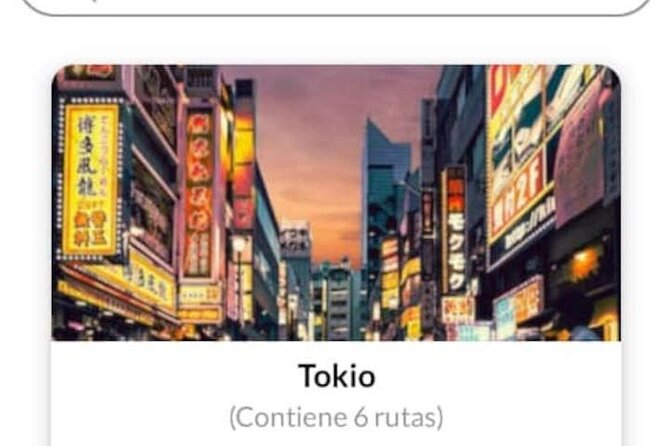
- Tokyo gets the fullest treatment: Routes cover Odaiba, Shibuya, Shinjuku, old Tokyo temple districts, central Tokyo, and the eastern neighborhoods.
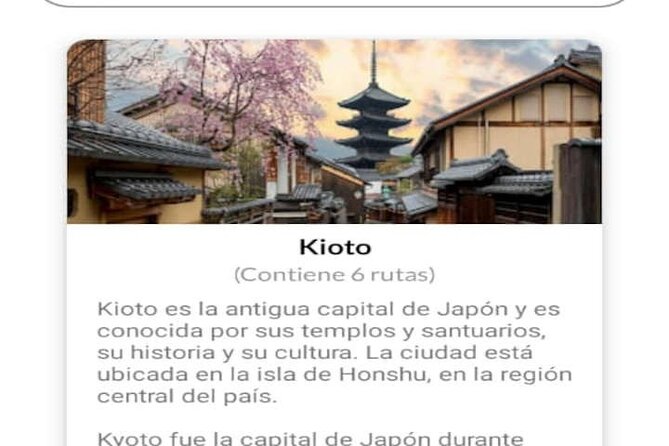
- Kyoto is organized by area: You can follow routes through northern Kyoto, Higashiyama, Arashiyama, Gion, southern Kyoto, and the city’s major temples.
- You choose the pace: Walking routes, car routes, food routes, and individual audio stops let you skip places that do not fit your day.
- Useful planning tools: Google Maps links, geolocation, a custom-route web panel, and a document repository are included.
- Check access immediately: The experience is non-refundable, so confirm that the app and code work before relying on it for your trip.
What the $87 Japan audio guide really gives you
This is not a conventional guided tour with a named local guide leading you from one sight to the next. It is a large digital library of audio stops and suggested routes. You use the app on your own phone, choose an area, and move from point to point by walking or car.
That distinction matters. If you want someone to answer questions, manage transport, or explain what you are seeing in real time, this will feel limited. If you prefer independence and do not want to join a fixed group, the format makes more sense.
The price works best when you use the guide across several cities. At $87 for about eight days, it can be good value for a couple or family that would otherwise buy several separate sightseeing apps or hire guides for multiple neighborhoods. It is less convincing if you plan to spend most of your trip in one small area, or if you mainly want a handful of famous sights.
You also need to check exactly which routes matter to your plans. Tokyo and Kyoto are described in detail. Takayama, Kanazawa, Nikko, and other destinations are included in the product title, but the supplied day-by-day details do not name their individual stops. I would not assume that every destination has the same depth of coverage.
More Smartphone Audio Tours in the world
- Rome: Colosseum & Forum with Audio Guide App -Optional Arena
★ 4.2 · 24,770 reviews - Florence: Timed Entry to Michelangelo’s David + Audio App
★ 4.6 · 19,496 reviews - Florence: Cathedral & Brunelleschi’s Dome Ticket & Audio App
★ 4.4 · 6,973 reviews
Tokyo Day 1: six ways to organize a huge city
Tokyo is too large for one tidy walking tour, so the app divides the city into useful zones. That is one of its strongest features. You can choose a neighborhood that matches your hotel, your energy level, or the kind of day you want.
Odaiba and Tokyo Bay
The Odaiba section includes 18 points of interest and combines walking and car routes. Stops include Tokyo Tower, the Fuji TV Headquarters, Daiba Park, Rainbow Bridge, the Statue of Liberty, Gundam, DiverCity, Miraikan, Aqua City, Decks, and Sumida Cruise.
This is a good example of how the guide mixes major landmarks with modern entertainment areas. Gundam and the Statue of Liberty are quick visual stops, while Miraikan and the Fuji TV building give the area more substance. Daiba Park and Rainbow Bridge offer a change of pace from shopping centers.
The route also reaches Roppongi Hills, Sengakuji Temple, Nezu Museum, Mori Art Museum, Shibakoen, and the Ako Gishi Museum. These are not all next door to one another, so the car route may be more practical than trying to walk every point. The app can tell you what each place is, but it does not state that admission is included. Plan to handle entry fees and opening hours separately.
Central Tokyo and its gardens
The central Tokyo section covers Nezu Shrine, Shinobazu Avenue, Rikugien, Koishikawa Korakuen Gardens, Akihabara, Ginza, the East Gardens, Kitanomaru Park, and other points around Bunkyo, Chiyoda, and Chuo.
I like this spread because it moves beyond the usual neon-and-shopping picture of Tokyo. Gardens and shrines give you quieter places to pause, while Akihabara and Ginza show two very different sides of the city. The included car route is helpful on paper, since these districts are broad and not arranged as one simple walk.
You should still treat this as a menu, not a promise that you can see everything in one morning. A route with gardens, Akihabara, and Ginza could easily become a full day, especially if you stop to eat or visit museums.
More Audio Tours in the world
- Barcelona: Sagrada Familia Entry Ticket with Audio Guide
★ 4.6 · 105,312 reviews - Rome: Pantheon Fast-Track Ticket and Official Audioguide
★ 4.5 · 27,353 reviews - Barcelona: Casa Batlló Entry with Self-Audioguide Tour
★ 4.7 · 25,359 reviews - Amsterdam: 75 Minute City Canal Cruise with Audio Guide
★ 4.4 · 19,938 reviews
Shibuya and Harajuku
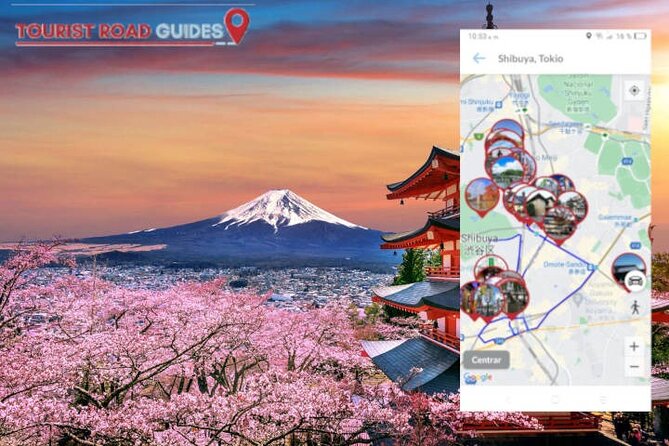
The Shibuya route has 29 audio points and two walking routes. It includes Meiji Shrine, Omotesando Avenue, the Imperial Garden, the Hachiko Statue, Shibuya 109, the Nezu Museum, and Takeshita Street.
This is likely the best section for first-time visitors who want Tokyo’s famous contrasts. You move from the Hachiko Statue and large commercial streets to the calmer grounds of Meiji Shrine, then on to Omotesando and Takeshita Street. The large number of stops gives you room to shorten the route.
The guide’s short-audio format is particularly practical here. You can listen at a landmark, put your phone away while crossing a busy area, and continue when you reach the next stop. Families and teenagers may appreciate that each explanation does not demand a long halt.
Shinjuku
The Shinjuku route offers 13 audio points, including Shinjuku Gyoen National Garden, the Tokyo Metropolitan Viewpoint, and Toho cinemas. A car route is also provided.
Shinjuku can feel confusing because entertainment streets, department stores, offices, and open parkland sit close together. A route that gives you a sequence of points is useful, but do not expect the app to replace detailed transport planning. The information provided does not say whether public transit directions are built into every stop.
Asakusa and the old temple districts
The temple-focused section includes Senso Temple, Kiyomizu Kannon-do Temple, Skytree Tower, Bentendo Temple, the Edo-Tokyo Museum, and Ameya-Yokocho Market.
This part gives you a better sense of older Tokyo and its everyday market culture. Senso Temple is the major draw, but the smaller temple points and Ameya-Yokocho add variety. Skytree provides a modern counterpoint.
The area combines religious sites, shopping, and museums, so you will want to check which locations are open on your chosen day. The app supplies points and explanations, but the supplied information does not promise live opening-hour updates.
Eastern Tokyo
The eastern section includes 14 points in Edogawa and Koto. Stops include Tokyo Big Sight, teamLab Planets, the Edo Museum, Tokyo Disneyland, Tokyo DisneySea, Funabori Tower Hall, and Kiyosumi Garden.
This section is useful if you want to see parts of Tokyo outside the classic center. It also includes large attractions that deserve their own planning. Disneyland, DisneySea, teamLab Planets, and museums are not quick roadside stops, so I would use the audio guide to choose one or two priorities rather than trying to complete every point.
Kyoto Day 2: temples, gardens, and walkable neighborhoods

Kyoto is better suited to area-by-area planning than a checklist of distant sights. The guide’s Kyoto coverage is divided into sections that generally make sense geographically, although the number of temples could tempt you into an exhausting day.
Northern Kyoto
The northern section contains 19 points, including Kinkaku Temple, Ryoan Stone Garden, Shimogamo Shrine, Daikaku Temple, Myoshin Temple, Ryoan Temple, Mount Kurama, Kamigamo Shrine, and Kitano Tenmangu Shrine.
Kinkaku Temple and Ryoan Temple are obvious priorities, but the inclusion of Shimogamo and Kamigamo shrines gives you other ways to experience Kyoto’s religious traditions. Mount Kurama offers a different setting from the city temples.
A car route is provided, which may help connect these spread-out places. The practical drawback is that a route linking all 19 points would be ambitious. Use the audio descriptions to decide which sites deserve your limited time.
Southern Kyoto
The southern section includes Fushimi Inari Taisha Shrine, Daigo Temple, Ninna Temple, Jonangu Shrine, and other stops. Fushimi Inari is the major name here, but the smaller sites can help you build a less repetitive day.
This is a place where flexibility matters. You might spend longer than expected at one shrine, so the ability to skip later stops is more valuable than a rigid schedule. The app does not state how long each audio recording lasts, but the Takayama feedback describes the stops as short and easy to fit around a family day.
Higashiyama and central Kyoto
This is the largest Kyoto section, with 27 points. It includes Heian Shrine, Kyoto National Museum, Sanjusangendo Temple, Eikan Temple, Kyoto Art Museum, Nijo Castle, Chion Temple, and the Kyoto Railway Museum.
The strength here is variety. You can combine major temples with museums and a castle rather than spending the entire day looking at similar buildings. Nijo Castle and Sanjusangendo are especially different in character from the open garden spaces.
The weakness is choice overload. Twenty-seven points is useful as a reference library, but it is not a realistic single-day route for most people. I would select a small group before leaving your hotel, then use the app for context as you go.
Arashiyama
The Arashiyama section covers the Bamboo Forest, Daikaku Temple, Tenryu Temple, Saiho Temple, and other points through a walking route.
Arashiyama works best when you allow time for more than one famous photo stop. The audio route can help you connect the bamboo area with temples and gardens, but the supplied details do not say how long the walk is or where it begins and ends. Check the map before setting out.
Gion and Pontocho
The geisha-district route includes Gion, Yasui Sanctuary, Pontocho Street, and other points. This section is well suited to an evening or late afternoon walk, though no specific timing is promised.
Here the guide can provide useful background as you move through narrow streets and traditional districts. Be respectful around private homes and working establishments. The app gives you information, but good manners still come from you.
Kyoto essentials
The essential Kyoto route gathers Kiyomizu Temple, Ryoan Temple, Higashiyama Street, Heian Shrine, Kinkaku Temple, Nijo Castle, the Philosopher’s Path, and other major sights.
This is a sensible starting point if you do not want to sort through every district. It also repeats some places from the more detailed sections, which is not necessarily bad. You can use the essentials route for your first plan, then return to the area-specific routes when you have more time.
Days 3 through 8: useful breadth, limited detail
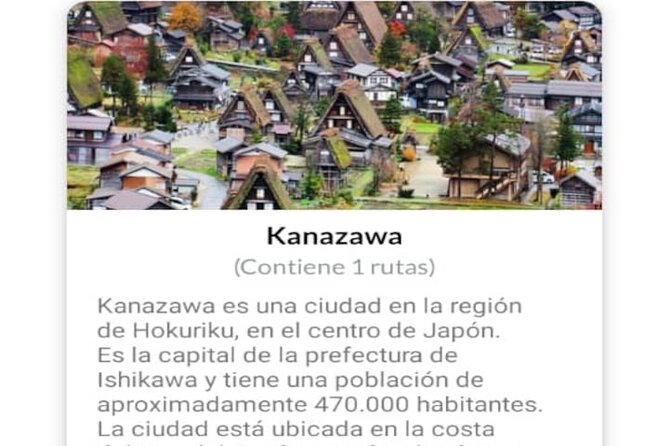
The remaining six days contain many additional audio points, but the available information does not name them individually. The experience is promoted for Japan-wide use, including Takayama, Kanazawa, Nikko, and other destinations, yet you should not assume that every stop has the same level of detail as Tokyo and Kyoto.
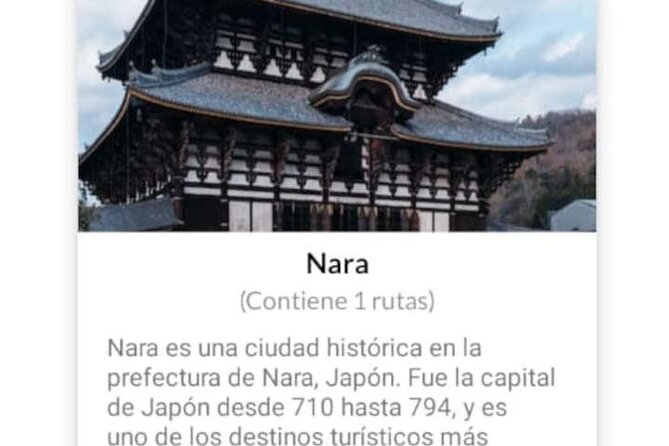
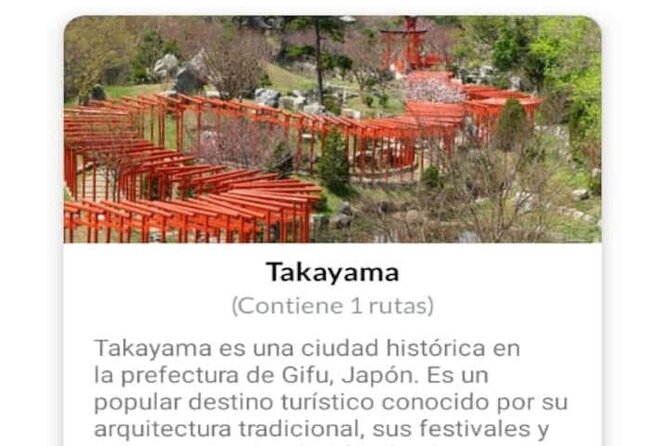
Takayama is the clearest example of what the format can do well. Short explanations at multiple stops can give a family just enough background without slowing the whole day. One useful approach is to play the audio at each selected point, skip places that do not interest you, and keep the route as a flexible guide rather than a command.
The product also includes gastronomic routes. That is promising for a country where food is a major part of the experience, but no specific restaurants, dishes, or neighborhoods are identified in the available information. Treat the food section as an added planning tool, not a guarantee of restaurant reservations or personal recommendations.
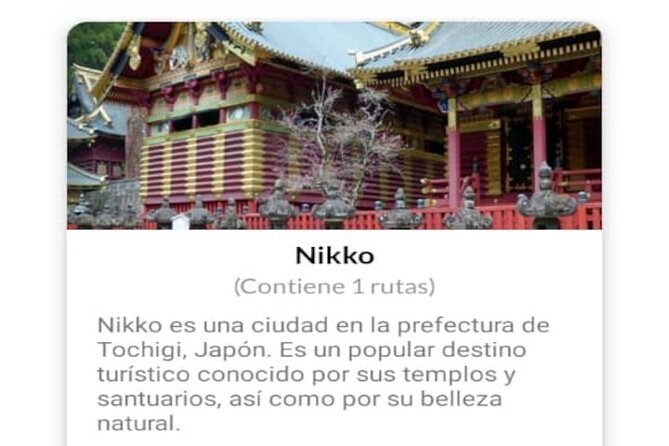
The same caution applies to Nikko and Kanazawa. The title includes them, but the supplied details do not explain their exact stops, route lengths, or transport needs. Before booking, I would confirm that the destinations you care about are fully represented in the app.
Languages, maps, and the web panel
The six language options are English, Spanish, Portuguese, German, Italian, and French. That is a real benefit for couples or families who do not all prefer the same language.
Google Maps links and geolocation may be the most practical technical features. Japan’s major city districts can be confusing, and a point connected to a map is easier to use than a paragraph of directions. The web panel lets you build a custom route and store travel documents, which can keep your sightseeing notes in one place.
Still, the setup deserves care. The experience is delivered as a mobile ticket, and one purchaser reported not receiving the access code and finding the app difficult to use without instructions. Since the booking is non-refundable and cannot be changed, test the access as soon as you receive confirmation. Do not wait until you are standing outside your first temple.
Who will get the most from this experience?
I would choose this app if you:
- Want to explore independently rather than follow a live guide
- Like short explanations and the freedom to skip stops
- Are planning several Japanese cities over about eight days
- Need audio in English, Spanish, Portuguese, German, Italian, or French
- Enjoy building your own route around food, temples, gardens, and neighborhoods
- Are comfortable using a smartphone and checking maps
I would hesitate if you need personal help, exact transit instructions, or guaranteed support when the app fails. The experience does not identify a live guide, and the access problem reported by one user is important because the cancellation terms leave little room for recovery.
The activity is described as private, with only your group participating. In practice, that means you can set your own pace rather than sharing a scheduled group tour. It does not mean a private human guide will accompany you.
Should you book the Japan audio guide app?
Book it if you want a large, flexible set of audio stops and plan to use it in more than one city. The best value comes from the combination of many Tokyo and Kyoto routes, multilingual audio, short explanations, map links, and the ability to skip points. Families, independent planners, and visitors who dislike fixed tour times are the natural audience.
Think twice if your trip depends on flawless app access or if you want detailed destination coverage for every city named. At $87, the product can save money compared with several private tours, but only when you use its breadth. Check the access code immediately, confirm the destinations you care about, and treat the route as a helpful framework rather than a fully managed tour.
FAQ
Where is this audio guide experience based?
The experience is listed in Osaka, Japan, but it provides routes and audio points in Tokyo, Kyoto, Takayama, Kanazawa, Nikko, and other Japanese destinations.
How long does access last?
The experience lasts approximately eight days.
How much does it cost?
The listed price is $87.
Is this a live guided tour?
No live guide is identified. You use audio-guided points, walking routes, car routes, maps, and the web panel on your own.
Which languages are available?
Audio guides are available in English, Spanish, Portuguese, German, Italian, and French.
Can I walk the routes?
Yes. The experience includes walking routes through neighborhoods, temple areas, Kyoto districts, and other points of interest.
Are car routes included?
Yes. Car routes are provided for several Tokyo and Kyoto sections, including central Tokyo, Odaiba, northern Kyoto, southern Kyoto, and Higashiyama.
Does the app include food information?
Yes. Gastronomic routes are included, although specific restaurants and dishes are not identified in the available details.
Can I create my own route?
Yes. The web panel lets you customize your own route and store travel documents.
Is the booking refundable?
No. The experience is non-refundable and cannot be changed for any reason.
Latest audio tours in the world
- Seville Maestranza Bullring Tour with Audio Guide★ 3.5 · 6 reviews
- Seville Scavenger Hunt and Highlights Self Guided Audio Tour★ 5.0 · 5 reviews
- Seville Audio guided walking tour 3h20 and 28 audio commentaries★ 5.0 · 2 reviews
- Royal Alcazar of Seville Entry Ticket with Audio Guide★ 4.0 · 42 reviews
- Seville Cathedral and La Giralda Entry Ticket with Audio Guide★ 3.0 · 9 reviews
- Seville Cathedral and Giralda Entry Tickets with Audio Guide★ 4.0 · 56 reviews
- Essential Seville’s Ancient History: An Audio Tour★ 5.0 · 9 reviews
- Sequoia and Kings Canyon Audio Tour Self Guide National Park Tour★ 5.0 · 3 reviews
Smartphone Audio Tours, compared.
Colosseum & Forum with Audio Guide App -Optional Arena
Read our review →
Timed Entry to Michelangelo’s David + Audio App
Read our review →
Cathedral & Brunelleschi’s Dome Ticket & Audio App
Read our review →
Michelangelo’s David Priority Ticket & Audio App
Read our review →
Uffizi Priority Ticket & Masterpieces Audio App
Read our review →
Castel Sant’Angelo Entry Ticket & Digital Audioguide
Read our review →
Pantheon Priority Entry Ticket & Audio Guide App
Read our review →Browse the lists this tour appears in