
Reviewed · ITALY
Antonio Canova Gypsotheca Museum: ticket and audio guide app
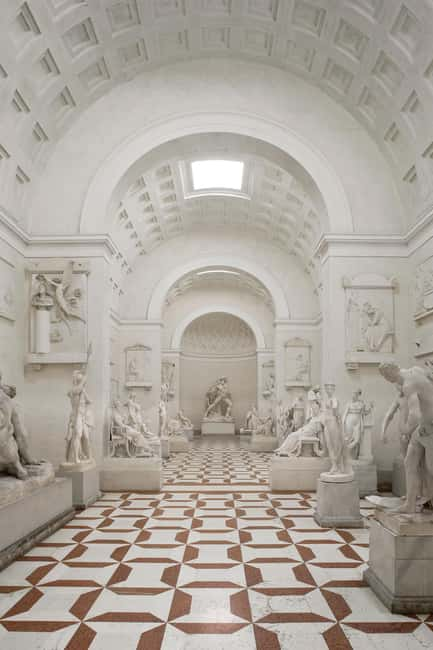
Antonio Canova’s original plaster models are the star here. In Possagno, you see the full-scale working forms behind some of the Neoclassical master’s finished marble sculptures, then follow his story into the house where he was born. It is a more intimate art visit than a standard gallery stop.
I like the scale of the Gypsotheca, where the plaster casts let you study Canova’s process rather than only admire polished marble. I also like the freedom to set your own pace with the official audio guide web app, which adds facts and personal anecdotes without tying you to a group.
The main consideration is practical: the audio guide runs on your smartphone, and earphones are not supplied. The visit averages about 90 minutes, so it works best as a focused stop in Possagno rather than a full-day attraction.
Key points to know before you go
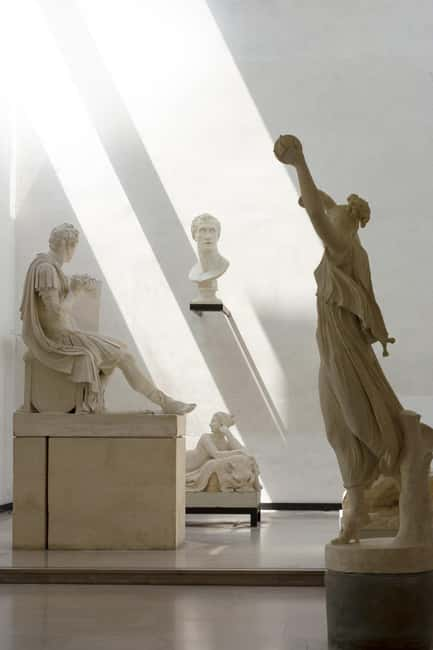
- Original plaster models: See the working casts Canova used while developing his celebrated sculptures.
- Two connected parts: The visit covers both the Gypsotheca and Canova’s birthplace.
- Audio guide app: Listen on your own phone, with content in Italian and other available languages.
- Self-guided timing: Walk through independently and pause when a work catches your eye.
- Possagno setting: Reach the museum at Piazzale A. Canova, in the hills of Veneto.
- Good value for art lovers: At $20 per person, the ticket includes both museum areas and the official audio content.
Why Canova’s plaster models matter
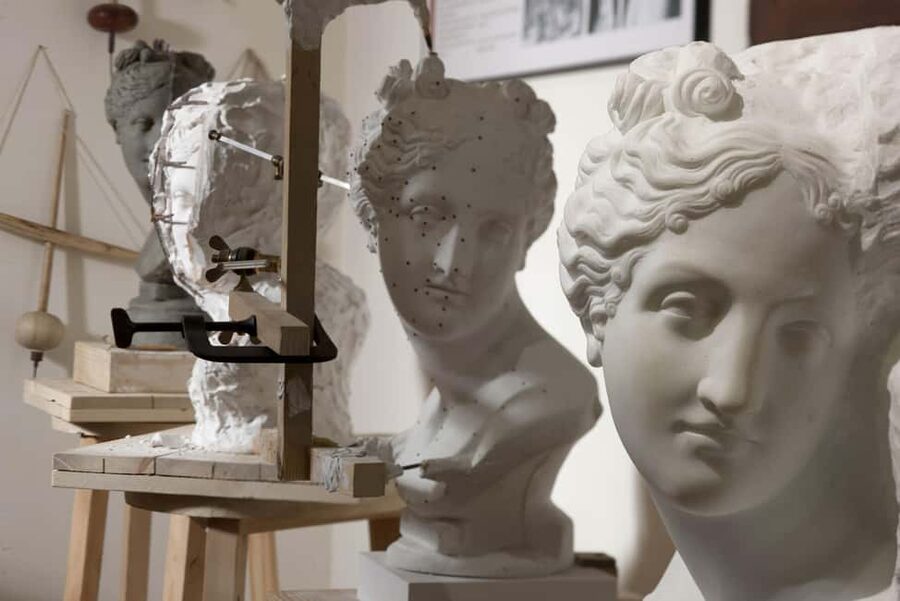
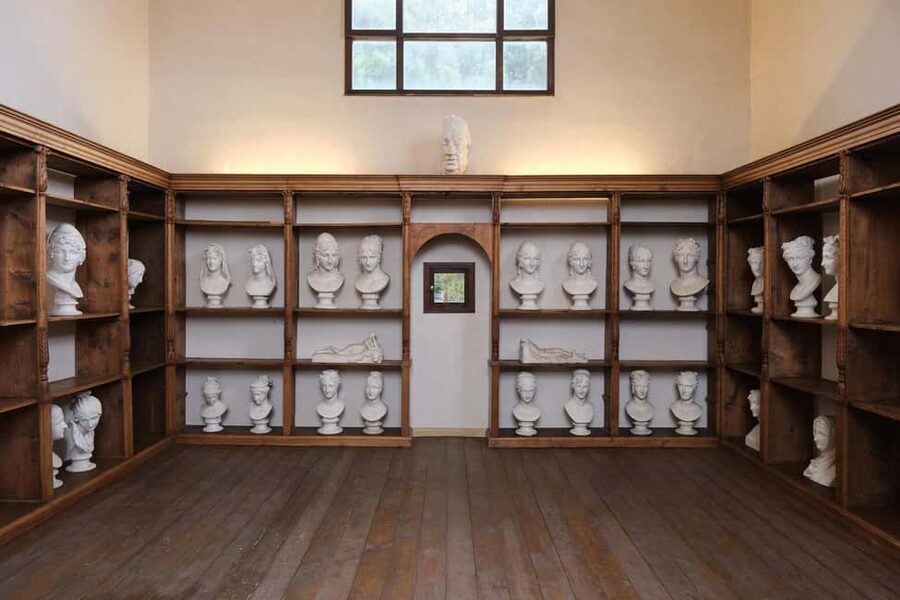
The word Gypsotheca refers to a collection of plaster casts. Here, those casts are not minor copies tucked into a side room. They are the original plaster models connected with Antonio Canova, one of the leading figures of Neoclassicism.
That distinction makes the visit worthwhile. Marble is the final, refined stage of a sculpture. Plaster reveals more about the artist’s working process. You can study the form before it becomes a finished object, including the way Canova developed poses, proportions, and details.
The casts also give you a sense of scale. A sculpture that looks manageable in a photograph may feel imposing when you meet its full-size model. The gallery lets you look closely at the shape and surface without reducing the work to a name on a museum label.
I find this especially useful if you already know a little about Canova. You can compare the plaster model with images of the marble version and think about what changes in the final material. If you are new to his work, the audio guide helps provide a path through the collection instead of leaving you to guess why each piece matters.
The collection has earned strong praise for its setting and the quality of the works. The key point is not simply the number of objects. It is the chance to see the underlying forms of Canova’s art in one place.
More Museum Audio Tours in Italy
- Florence: Uffizi Priority Ticket & Masterpieces Audio App
★ 4.2 · 6,402 reviews - Venice: St. Mark Basilica Ticket, Audioguide+History Gallery
★ 3.9 · 4,780 reviews - Rome: Borghese Gallery Skip-the-Line Ticket & Audioguide
★ 4.3 · 4,318 reviews
Entering the Gypsotheca in Possagno
Your visit begins at the museum entrance on Piazzale A. Canova. The reception area provides a clear starting point, and restrooms are available before or during the visit.
From there, you enter the main Gypsotheca. This is the part of the experience that gives the museum its special character. Instead of moving through a broad collection from many artists, you stay with Canova and the plaster models tied to his own practice.
Take your time at the entrance before rushing ahead. The first impression comes from the size and concentration of the gallery. A quick walk through will give you the general picture, but you will get more from stopping at works that catch your eye and listening to the matching audio material.
The space is suited to independent viewing. You do not have to keep up with a guide or wait for a group to clear a room. That matters when you want to spend several minutes looking at one model, or when children in your party need a short break.
The tradeoff is that a self-guided visit requires a little initiative. There is no live guide included, and the host or greeter is Italian. If you want a traditional guided tour, that option can be arranged separately for an additional cost.
What the official audio guide adds
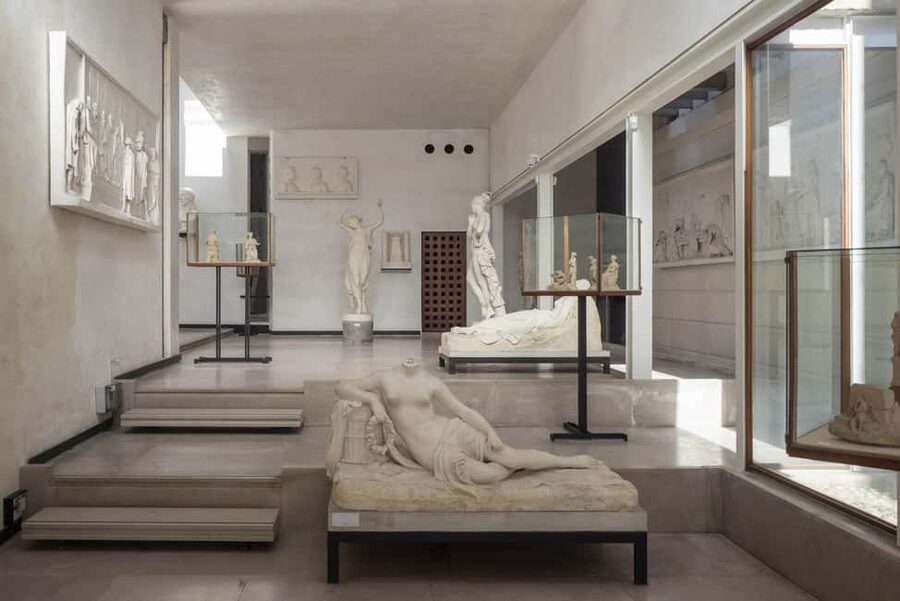
The official audio guide is delivered as a web app on your smartphone. It provides explanations, facts, and anecdotes about Canova’s life and art as you move through the museum.
I like this format for a collection that can otherwise feel demanding. Plaster models may not always explain themselves to a first-time visitor. A well-timed audio explanation can tell you what to notice and why the work belongs in the broader story of Canova’s career.
Bring your own earphones. They are recommended, but they are not included, and no physical audio guide is supplied. Charge your phone before arrival so you can listen without worrying about the battery.
The audio content is available in Italian and other languages, though the activity information identifies Italian as the main language and notes that some content may appear in its original language. If language support is important to your decision, check the current availability when booking.
You can pause the app, replay sections, and move at your own speed. That is useful for families, since you can shorten the listening time for younger children while still giving adults more background.
There is no named live guide attached to this ticket. The official app is the guide included in the price. That keeps the visit flexible, but readers who prefer conversation and questions should consider the separate guided option.
Canova’s birthplace and working world
After the Gypsotheca, the visit continues to Antonio Canova’s birthplace. This changes the mood from a large exhibition space to a more personal setting connected with the artist’s early life.
You will see paintings, sketches, tools, and historic rooms. These objects help fill in the person behind the finished sculptures. A plaster model shows the result of an artistic process, while a sketch or tool suggests how that process began.
The birthplace is valuable because it gives you a different kind of evidence. You are no longer looking only at grand works. You are seeing the everyday materials and rooms associated with Canova, which makes the visit feel more grounded.
Do not expect a separate house tour lasting several hours. The entire museum visit averages about one hour and 30 minutes. That is enough time to see both sections at a sensible pace, listen to the main audio material, and pause for favorite works.
The historic rooms may be particularly useful for families or visitors who want a break from sculpture. Children can often respond more easily to personal objects and a house setting than to a long series of art labels.
More Smartphone Audio Tours in Italy
- Rome: Colosseum & Forum with Audio Guide App -Optional Arena
★ 4.2 · 24,770 reviews - Florence: Timed Entry to Michelangelo’s David + Audio App
★ 4.6 · 19,496 reviews - Florence: Cathedral & Brunelleschi’s Dome Ticket & Audio App
★ 4.4 · 6,973 reviews - Florence: Michelangelo’s David Priority Ticket & Audio App
★ 4.4 · 6,812 reviews
A visit shaped by your own pace
This ticket is designed for independent exploration. You can begin when your reserved time is available, move between the museum areas, and spend more time where your interest is strongest.
That freedom works well for different kinds of visits. An art specialist may want to study the plaster models closely. A casual visitor may prefer a shorter route through the collection followed by the birthplace. Families can adjust their pace without disrupting a scheduled group.
The average 90-minute duration also makes this a practical addition to a day in Veneto. You are not committing to a half-day program, and no transportation is included, so you can fit the museum around your own route.
There is one limit to self-guided viewing. If you have detailed questions about attribution, technique, or the relationship between a plaster model and a finished sculpture, the app may not replace a specialist guide. For that reason, I would choose the included ticket for flexibility and value, but pay extra for a guided visit if personal discussion is central to your plans.
The $20 price and what you receive
The ticket costs $20 per person. That price includes entry to the Gypsotheca, access to the birthplace, and the official audio guide web app.
I consider that a fair price for a focused museum visit, especially because the ticket covers two distinct parts of Canova’s story. You are not paying only to enter a gallery. You also receive the historical and artistic context that helps make the plaster models easier to understand.
The value depends on your interest. If you are curious about Canova, sculpture, or Italian art, the collection gives you a clear reason to visit. If you prefer large museums with many periods and artists, this focused museum may feel limited for the cost.
Books and other publications are available separately in the bookshop. Transportation, guided visits, educational workshops, and special events are not part of the standard ticket. Lockers and cloakroom use are also not included, so pack with the museum’s practical limits in mind.
Advance booking is recommended, especially on weekends and holidays. The booking terms allow cancellation up to 24 hours before the visit for a full refund, and a reserve now, pay later option is available. Check the available starting times because the ticket is valid for one day, not as an open-ended pass across several days.
Who will enjoy this museum most
I would recommend the experience most strongly to:
- Canova admirers: You get unusual access to the artist’s original plaster models rather than only finished marble sculptures.
- Art and design students: The casts, sketches, and tools offer useful clues about process and form.
- Families with older children: The combination of a gallery, historic rooms, personal objects, and an app keeps the visit varied.
- Visitors touring Veneto by car: Parking is available near the museum, and the 90-minute visit is easy to fit into a wider day.
- Independent museumgoers: You can pause, skip, or replay audio content as needed.
I would be less likely to recommend it if you want a live guide included, a large café or entertainment program, or a broad survey of Italian art. This is a focused Canova visit, and that focus is both its strength and its limit.
Access, timing, and simple planning advice
The museum is partially accessible to people with reduced mobility. If you have specific access needs, check with the museum in advance rather than relying on a general assumption about the route.
Parking is available near the museum. Transportation to and from Possagno is not included, so you need to arrange your own way there.
Plan for around one hour and 30 minutes. Add a little extra time if you like to listen to every audio segment or read the material carefully. If you are traveling with children, the actual pace may be shorter or longer depending on how much of the app you use.
Bring:
- A charged smartphone
- Your own earphones
- Your booking details
- Comfortable shoes for standing and walking through the museum
The entrance is on Piazzale A. Canova. Advance booking is sensible for weekends and holidays, when available starting times may be more limited.
The strongest reasons to book
The most praised qualities of this experience are easy to understand. The Gypsotheca is an impressive setting filled with remarkable works, and the collection gives you a rare look at Canova’s original plaster forms. The museum also feels more personal because it includes his birthplace, sketches, paintings, tools, and historic rooms.
The audio guide adds useful structure without taking away your independence. You can learn as you go, rather than standing in front of a sculpture with only a brief label.
I also appreciate that the visit does not demand an entire day. At $20, it gives you a concentrated art experience with enough variety to justify the stop, provided you have some interest in sculpture or Canova.
Should you book the Antonio Canova Gypsotheca Museum?
Book it if you want to understand how Canova’s sculptures took shape, not just see their final polished versions. The combination of original plaster models, the artist’s birthplace, personal objects, and a flexible audio guide makes this a strong stop for art lovers and curious families.
Think twice if you want a live guide included or expect a large, varied museum. The app requires your own phone and earphones, the main host language is Italian, and the visit is focused rather than broad.
For most visitors already exploring Possagno and the Veneto hills, I would book ahead and allow 90 minutes. Bring earphones, slow down in the Gypsotheca, and let the plaster models do what they do best: show you the work before the marble had its final say.
FAQ
How long does the museum visit take?
The visit lasts an average of one hour and 30 minutes.
What does the ticket include?
The ticket includes entry to the Antonio Canova Gypsotheca, access to Canova’s birthplace, and the official audio guide web app.
Is a live tour guide included?
No. The standard ticket is self-guided. Guided visits are available by reservation for an additional cost.
Do I need to bring earphones?
Yes. The audio guide works on your smartphone, and you are advised to bring your own earphones. Earphones are not provided.
What language is the audio guide available in?
The audio guide is available in Italian and other languages. The activity information lists Italian as the host language and notes that some content may appear in its original language.
Where is the meeting point?
The museum entrance is at Piazzale A. Canova in Possagno.
Is the museum accessible to people with reduced mobility?
The museum is partially accessible. You should contact the museum in advance to discuss specific access needs.
Latest audio tours in Italy
- Orgosolo Multilingual Audioguide★ 4.5 · 42 reviews
- Pantheon Skip the Line Entry Tickets with Digital Audio Guide★ 3.5 · 52 reviews
- St. Peter’s Basilica: Dome Climb with Lift & Audioguide★ 4.5 · 13 reviews
- Audio guide in Vatican Museums and Sistine Chapel★ 4.5 · 12 reviews
- Trastevere: A Self-guided Audio Tour of Rome’s Medieval Village★ 4.5 · 3 reviews
- The Roman Jewish Ghetto: A Self-Guided Audio Tour★ 4.0 · 8 reviews
- Experience: The Pantheon Audio Tour★ 4.5 · 4 reviews
- Navova square underground with audioguide★ 4.5 · 17 reviews
Museum Audio Tours, compared.

Uffizi Priority Ticket & Masterpieces Audio App
Read our review →
Louvre Museum Hosted Entry and Mona Lisa Audioguide
Read our review →
St. Mark Basilica Ticket, Audioguide+History Gallery
Read our review →
Borghese Gallery Skip-the-Line Ticket & Audioguide
Read our review →
Borghese Gallery Ticket + Audioguide or Guided Tour
Read our review →
Orsay Museum Entry Ticket and Digital Audio Guide App
Read our review →
Uffizi Gallery Timed Entry Ticket & Audio Guide
Read our review →
Acropolis Museum Ticket with optional Audio Guide
Read our review →Browse the lists this tour appears in