
Reviewed · JAPAN
Tokyo Self-Guided Audio Tour
Tokyo is too large for a tidy four-hour box, and that is exactly what makes this self-guided audio tour useful. It gives you commentary for 22 major sights, from Tokyo Station and the Imperial Palace area to Shibuya, Asakusa, and Ueno, without tying you to a guide or group schedule. You can start anywhere, stop whenever you like, and skip places that do not interest you.
I like the freedom to build a route around your own interests, and I like the low price of $9 per person. The SoundCloud audio link and Google My Maps route are also practical tools if you save them before heading out. The main catch is that transport and entry fees are not included, and visiting all 22 stops in four hours would be a very brisk undertaking.
Key points to know before booking
- Twenty-two stops cover a huge slice of Tokyo: You get commentary for temples, gardens, museums, viewpoints, shopping districts, and modern landmarks.
- You choose the route: Start and finish wherever you wish, and use only the stops that fit your day.
- Two digital links do the work: One opens the audio guides, while the other shows each attraction on an interactive Google map.
- The four-hour estimate needs flexibility: Ten minutes is allocated to each stop, but moving across Tokyo and entering museums takes extra time.
- Budget for added costs: Several gardens, museums, observation decks, and Tokyo Tower attractions require separate admission, while all transport is your responsibility.
- Save access before you go: The links arrive by email on your selected date before your start time, and access is valid for up to six days.
A low-cost way to meet Tokyo on your terms
At $9, this is best understood as a digital orientation tool, not a traditional guided tour. You are paying for recorded explanations and a mapped collection of stops, not for a person who walks beside you, handles tickets, or adjusts the commentary to your exact position.
That distinction matters. A guide can point out a side detail, answer a question, or change direction when rain starts. Here, you follow the map and choose the next audio track yourself. For independent visitors who already feel comfortable using a phone in an unfamiliar city, that can be a fair trade.
The tour is private in the simple sense that only your group takes part. There is no shared departure time and no meeting point to find. Your starting and ending points are both up to you, which is helpful in Tokyo, where your hotel, train station, and evening plans may all sit in different parts of the city.
The low price also makes it easier to use selectively. You might listen to the tracks for Senso-ji and Asakusa, then use the rest of the material to plan another day. You do not need to force every stop into one outing.
More Self-Guided Audio Tours in the world
- Athens: Acropolis Ticket & Optional Self-Guided Audio Tours
★ 4.1 · 2,542 reviews - Gettysburg Battlefield Self-Guided Driving Audio Tour
★ 4.5 · 910 reviews - Joshua Tree National Park Self-Guided Driving Audio Tour
★ 4.5 · 762 reviews
How the audio and map work
Before your chosen start time, you receive an email with two access links. The first opens a SoundCloud playlist containing the audio tracks. You can play individual attractions or listen through the tour to get a sense of the full route before setting out.
The second opens a Google My Maps file. Each point marks one of the 22 attractions and links to its related audio guide. This setup is more useful than a plain list because Tokyo’s sights are spread across several districts, and the map helps you see the gaps between them.
The instructions say the audio can be used without being online. Still, I would open both links while you have a reliable connection, check that the tracks load, and keep the email easy to find. One piece of negative feedback described trouble receiving the audio, while another complaint focused on difficulty reaching support. The stated process is straightforward, but a few minutes of preparation can prevent a frustrating start.
Access remains valid for up to six days. That is important because the 22 locations are not arranged like a compact walking tour. You can use the material over several days, spend more time at a museum, or abandon the route when you have had enough city noise.
Tokyo Station, the Imperial Palace, and Chidorigafuchi
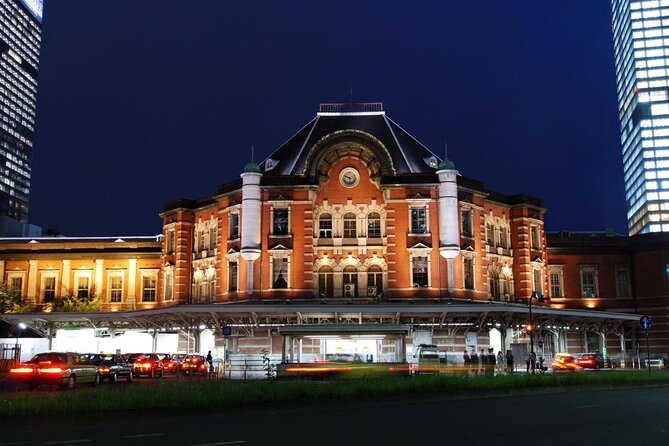
Tokyo Central Railway Station is a sensible opening stop. The audio covers its architectural importance and its part in Japan’s modernization, while the station itself gives you an immediate introduction to Tokyo’s rail-centered life.
From there, the East Gardens of the Imperial Palace lead you toward the remains of Edo Castle. The grounds offer a calmer setting after the station, with landscaped gardens and reminders of the imperial past. Admission is free, but you still need to allow time to enter and walk through the grounds.
Chidorigafuchi follows with a different mood. This moat area is especially well known for cherry blossoms in spring, and the commentary explains its defensive role in feudal Japan. An entry fee is not included, so check the cost as part of your planning. Since the stop is seasonal in its appeal, it may matter more to you in spring than at another time of year.
Yasukuni Shrine adds a serious and politically sensitive stop. It is dedicated to Japan’s war dead and carries a complicated public meaning. The audio’s decision to include it gives you context for a place that is easy to misunderstand if you simply walk through, take a photo, and move on. Admission is free.
These first four points make a strong history-focused cluster, but they are not a simple ten-minute hop from one to the next. Use the map to decide how much ground you really want to cover.
Shinjuku Gyoen, city views, and Meiji Shrine
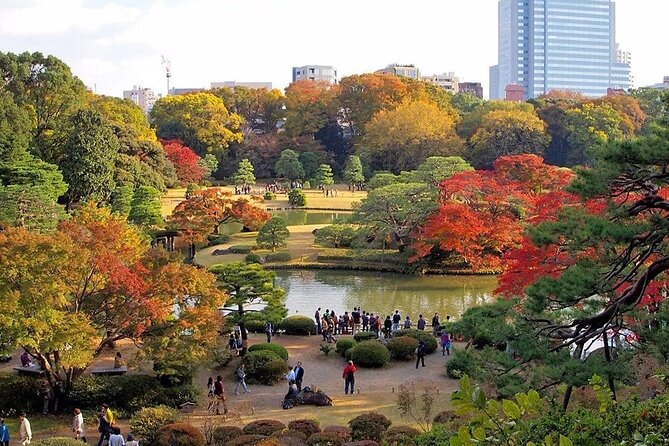
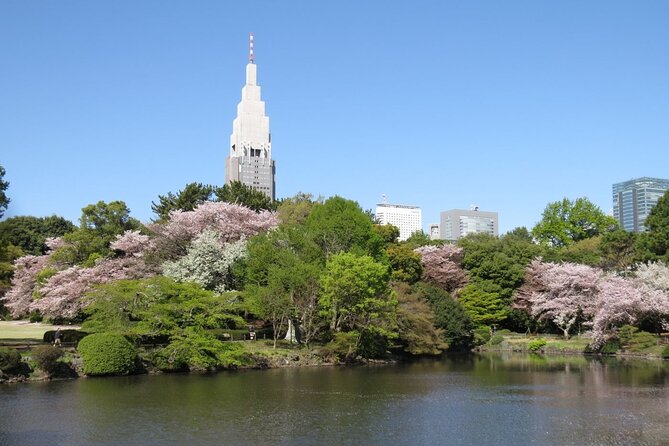
Shinjuku Gyoen National Garden is one of the tour’s best pauses from Tokyo’s hard edges. Its grounds combine Japanese, French, and English garden styles, and the audio traces its imperial beginnings and later postwar transformation. Admission is not included, so this stop adds to the day’s cost.
The Tokyo Metropolitan Government Buildings offer a different kind of pause: a high view over the city. The commentary explains Tokyo’s government and the modern design of the buildings, while the viewpoint gives you a chance to understand the scale of the city you are crossing. Admission is free, making it one of the better-value stops in the package.
Meiji Jingu Shrine brings you into a wooded setting dedicated to Emperor Meiji and Empress Shoken. The audio introduces Shinto customs and the shrine’s imperial connection. Admission is free, but this is still a place where quiet behavior matters. Treat it as a religious site, not simply as another photo stop.
These three locations work well together geographically compared with some of the tour’s longer jumps. You can also pair Meiji Jingu with Shibuya, depending on how much time you want for walking and city observation.
More Audio Tours in the world
- Barcelona: Sagrada Familia Entry Ticket with Audio Guide
★ 4.6 · 105,312 reviews - Rome: Pantheon Fast-Track Ticket and Official Audioguide
★ 4.5 · 27,353 reviews - Barcelona: Casa Batlló Entry with Self-Audioguide Tour
★ 4.7 · 25,359 reviews - Rome: Colosseum & Forum with Audio Guide App -Optional Arena
★ 4.2 · 24,770 reviews
Shibuya Crossing and two very different art museums
Shibuya Crossing is the tour’s most energetic urban stop. The audio explains how the area changed from a residential district into a fashion and youth-culture center. You can spend a few minutes watching the intersection, then move on without paying an entry fee.
The National Art Center, Tokyo, offers a quieter contrast. It is described as an empty museum because it has no permanent collection and instead hosts temporary exhibitions. The commentary focuses on its unusual design and place in Tokyo’s cultural life. Admission to exhibitions is not included, and the cost may vary depending on what is showing.
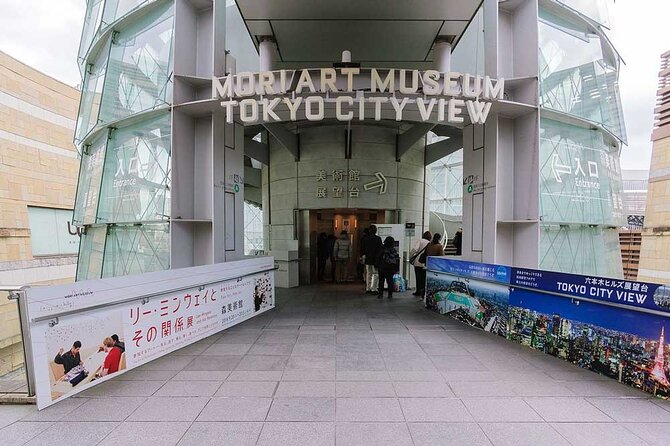
At Mori Art Museum in Roppongi Hills, you get contemporary art in a high-rise setting. The museum adds a modern art stop to a route otherwise heavy on shrines, gardens, and older landmarks. Admission is not included, and the museum’s city views add another reason to check current opening details before you go.
I would not treat either museum as a ten-minute stop unless you only want the building and a quick look around. Exhibition spaces reward time, and entry fees make a rushed visit poor value.
Tokyo Tower, Zojo-ji, and Hama Rikyu Gardens
Tokyo Tower is one of the city’s familiar symbols, built with the Eiffel Tower as an inspiration. The audio places it in the story of postwar Japan and explains why it remains important even after newer towers appeared.
Admission to Tokyo Tower is not included. You can admire it from outside without paying, which may be enough if you are using this tour as a broad introduction. If you want the observation levels, add the ticket cost and extra time.
Nearby Zojo-ji Temple creates one of Tokyo’s most memorable visual pairings, an old Buddhist temple with Tokyo Tower rising behind it. The audio covers the temple’s connection to the Tokugawa shogunate. Admission is free, making this a useful stop for history and atmosphere without another ticket.
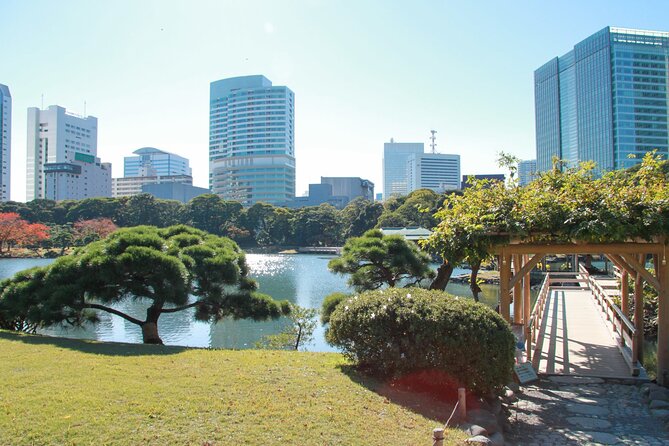
Hama Rikyu Gardens continues the theme of old Tokyo meeting the modern city. The grounds were once the residence of a feudal lord and have changed as Tokyo developed around them. Admission is not included. This is another location where you will get more from a slow walk than from the assigned ten minutes.
The route works well here if you like contrasts: Buddhist tradition, a twentieth-century tower, and a former feudal garden all within one broad part of the city.
Rainbow Bridge and Odaiba’s artificial islands
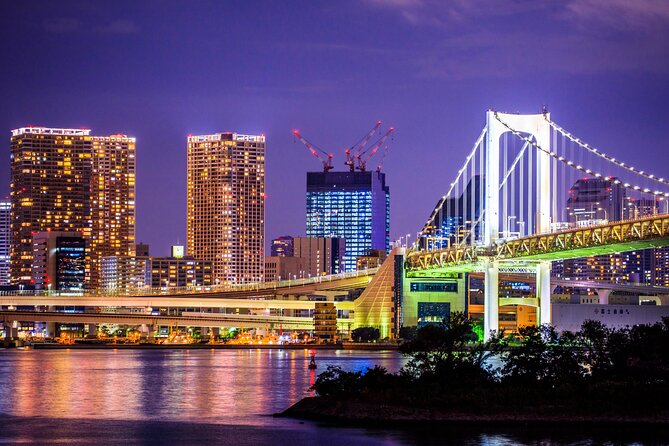
Rainbow Bridge is included as a modern engineering landmark spanning Tokyo Bay. The audio covers its construction and nighttime illumination. Admission is free, though the bridge is mainly a viewing or crossing point rather than a conventional attraction with a single entrance.
Odaiba gives the route a futuristic change of pace. Built on artificial islands, it developed from a defensive project into an entertainment district. Admission to the district itself is not included as a separate ticket, but particular attractions and sites may have their own costs.
This section is best handled with realistic expectations. You are not being transported between stops, and Odaiba sits apart from several of the older central districts. If you include it, plan the transport yourself and consider making it the main part of a separate half-day rather than squeezing it between museums and temples.
Tokyo Skytree, Senso-ji, and Asakusa
Tokyo Skytree is the tour’s tallest landmark. The audio explains its design and its links to traditional Japanese aesthetics. Admission is not included, and an ascent is a separate paid decision. You can simply view the tower from outside if you want to keep costs down.
Senso-ji is Tokyo’s oldest temple and one of the essential stops in Asakusa. The audio covers its founding legend and role in Edo-period life. Admission is free, though the surrounding area can take much longer than ten minutes if you want to look around.
Asakusa gives you a broader setting for Senso-ji. The commentary follows the district’s change from an entertainment area into a cultural center, while your walk lets you see how older Tokyo still shapes the neighborhood.
This is one of the most useful pairings in the entire tour. If you have only one afternoon for the audio, I would give Asakusa and Senso-ji serious consideration, then add Tokyo Skytree if its viewpoint interests you and your budget allows.
Ueno Park and three museums
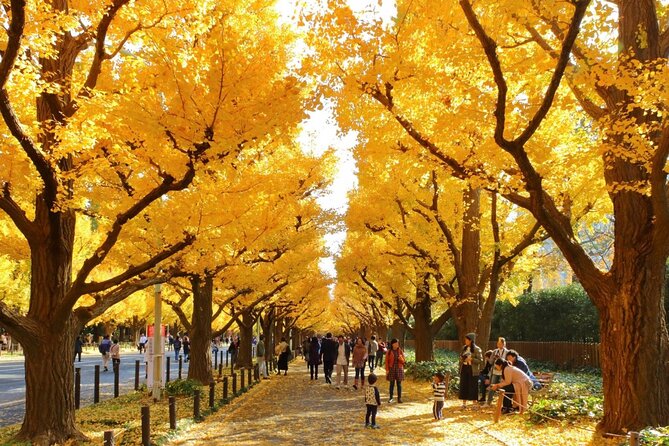
Ueno Park closes the route with a large public space known for its museums and spring cherry blossoms. The audio explains its history and its role during blossom season. Entry to the park is free, so you can use this stop as a low-cost walk even if you skip the museums.
The Tokyo National Museum is Japan’s oldest and largest museum, with Japanese art and antiquities. Admission is not included, and the collection is too large for a quick visit. If you care about art and history, this may deserve its own block of time.
The National Museum of Nature and Science covers Japan’s natural world and technology. Its subject matter makes it a good choice for families or anyone who wants a change from temples and galleries. Admission is extra.
The National Museum of Western Art is housed in a Le Corbusier-designed building and has UNESCO World Heritage status. Again, admission is separate. Its inclusion gives the tour a useful architectural and European art angle, especially if you are already spending time in Ueno.
The Ueno section alone could fill much of a day. The audio is valuable here as a preview, but do not assume you can properly see all three museums in the time allowed for the stop.
What four hours really means
The tour assigns about ten minutes to each of the 22 attractions, which adds up to roughly 220 minutes. That leaves little room for train rides, walking, queues, museum visits, gardens, food, or unexpected pauses.
I would read the four-hour duration as an approximate listening and sightseeing framework, not a promise that you will meaningfully experience every location in one continuous outing. The material is better used in one of three ways:
- Choose four to six nearby stops for a focused day.
- Listen to the full audio in advance, then build your own route.
- Spread the attractions across the six-day access period.
Transport is not provided, and there is no hotel pickup or drop-off. Tokyo’s public transport network is nearby to many of the sights, but you must arrange and pay for your own journeys.
Value, limitations, and who should book
The value is strongest for independent visitors who want basic context at a very low price. You receive one playlist, a map covering 22 sights, and the freedom to use the material over several days. Free stops such as Tokyo Station, the Tokyo Metropolitan Government Buildings, Meiji Jingu, Zojo-ji, Senso-ji, and Ueno Park help keep the outing affordable.
The value is weaker if you expect location-aware narration. The audio does not provide a live guide who knows exactly where you are or responds to your pace. One piece of direct feedback described the commentary as not always matching the listener’s location and found the information unhelpful. That is a fair risk to consider with any prerecorded route.
You should also expect a self-service experience. There is customer support for access questions, but no person waiting at a meeting point. Make sure the email links arrive, test them, and understand that complaints about missing audio or unclear transport arrangements can turn a cheap booking into a poor day if you do not prepare.
The non-refundable policy is another reason to read the details carefully before paying. You cannot cancel or amend the booking for a refund.
Should you book the Tokyo audio tour?
Book it if you want an inexpensive introduction to Tokyo, prefer setting your own pace, and are comfortable navigating with a phone. It is especially suitable for solo visitors, couples, and small private groups who want to mix free sights with a few paid museums or viewpoints.
Skip it if you want a live guide, included transport, timed admission, or commentary that automatically follows your exact position. I would also avoid treating it as a complete 22-stop tour in four hours.
My practical choice would be to use it as a planning and orientation aid. Pick one district cluster, save the audio links, confirm the paid attractions you want, and leave enough time for trains and actual exploration. At $9, that is a reasonable use of the product, as long as you understand that the flexibility is yours because the logistics are yours, too.
FAQ
How much does the Tokyo Self-Guided Audio Tour cost?
The tour costs $9 per person.
How long does the tour take?
The stated duration is approximately four hours. Since the route includes 22 attractions across Tokyo, you can also split it across multiple days.
Can I choose where the tour starts and ends?
Yes. You decide your own starting and ending points because this is a self-guided experience.
Is transportation included?
No. Transportation, including pickup and drop-off, is not included.
Are attraction entry fees included?
No. Entry fees are not included where admission is required. Several museums, gardens, Tokyo Tower, Tokyo Skytree, and Mori Art Museum require separate payment.
How do I receive the audio guide?
On your selected travel date, before your start time, you receive an email with a private SoundCloud link to the audio playlist.
How do I find the attractions?
You receive a second private link to a Google My Maps route. Each map point corresponds to one of the 22 attractions and connects to its audio guide.
Can I use the audio without an internet connection?
The tour information states that you do not need to be online to use the audio tour. It is still sensible to open and prepare the links before setting out.
How long are the access links valid?
The private audio and map links are valid for up to six days.
Is this a group tour?
No. It is a private self-guided activity, so only your own group participates.
Latest audio tours in the world
- San Sebastian Scavenger Hunt & Highlights Self Guided Audio Tour★ 4.0 · 7 reviews
- San Marino Walking Tour with Audio and Written Guide★ 4.5 · 5 reviews
- Sampling San Sebastián’s History: A Self Guided Audio Tour★ 4.5 · 5 reviews
- San Marino’s Three Towers: An Audio Tour of the Ancient Republic★ 5.0 · 2 reviews
- Talking Buildings of Old San Juan: A Self-Guided Audio Tour★ 3.5 · 18 reviews
- San Marino: A Self Guided Audio Tour★ 4.5 · 14 reviews
- Essential Downtown SLO: A Self-Guided Audio Tour★ 4.5 · 27 reviews
- Silicon Valley Self-Guided Driving Audio Tour for Tech Lovers★ 4.0 · 24 reviews
Self-Guided Audio Tours, compared.
Acropolis Ticket & Optional Self-Guided Audio Tours
Read our review →

Ultimate Acadia National Park Self-Guided Driving Audio Tour
Read our review →

Akrotiri Ticket with Optional Self-Guided Audios
Read our review →
Browse the lists this tour appears in