
Reviewed · FLORENCE
Florence Accademia: David of Michelangelo & Audio Guide
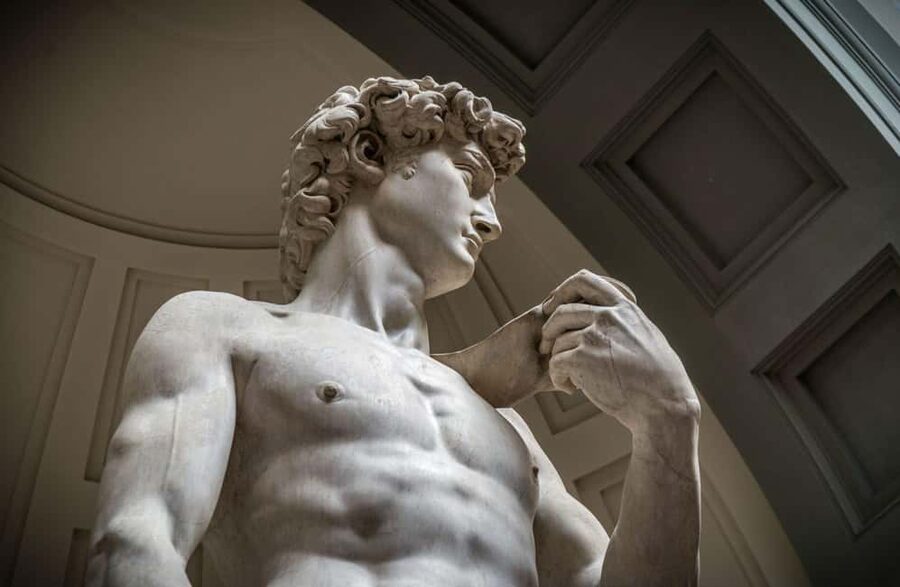
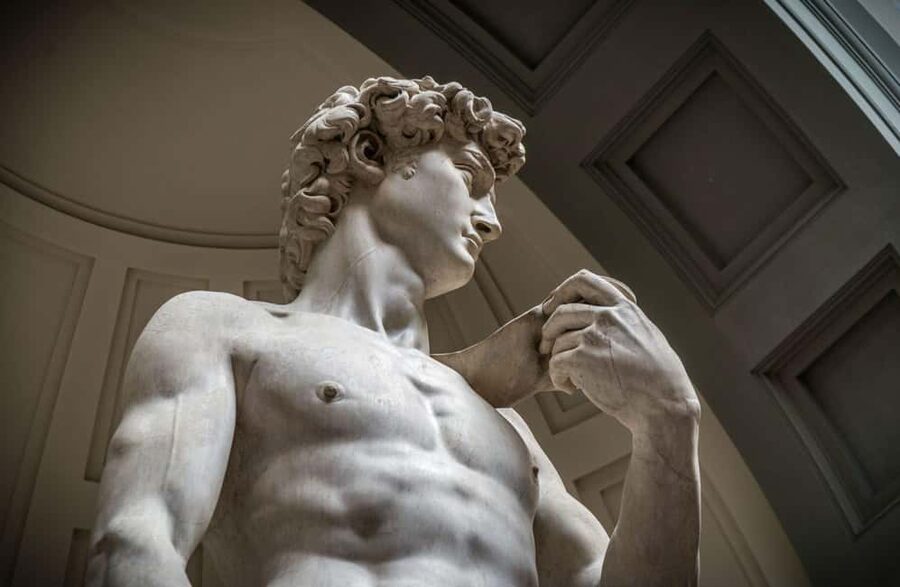
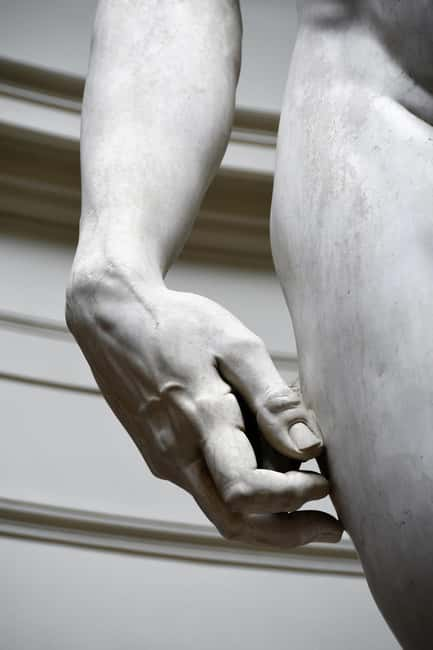
Michelangelo’s David is the star here, and seeing the statue at close range gives you time to notice details that photographs flatten: the alert eyes, the oversized hands, and the tense posture just before action. This is a short, focused visit rather than a full-day museum outing.
I like the friendly arrival help and the freedom to set your own pace. The audio app can add useful context without tying you to a guide’s schedule, and the separate entrance may save valuable time in Florence. The catch is that this is not a private guided tour, and you need your own smartphone, an internet connection, and headphones.
Key points to know before you go

- David gets the attention he deserves: Use the audio guide to learn about the statue’s symbolism, technique, and place in Renaissance Florence.
- A local host handles the first step: Meet the EU Tours host outside Via Ricasoli 43 for check-in and your entry credentials.
- You explore independently: There is no live tour inside the museum, so you control the pace and order of your visit.
- The audio guide covers many languages: Options include English, Italian, French, Spanish, German, Chinese, Japanese, Korean, Portuguese, and many others.
- The visit lasts about one hour: That makes it easy to fit before lunch, after a city walk, or between other Florence sights.
- Dress and baggage rules matter: Backpacks, large bags, oversized luggage, shorts, short skirts, sleeveless shirts, and pets are not allowed.
Meeting the host on Via Ricasoli 43
Your visit begins outside the Accademia Gallery, in front of Via Ricasoli 43. Look for the EU Tours sign and the English-speaking host. The host checks you in, helps with the entry process, and provides the credentials you need at the museum entrance.
That small amount of assistance matters in Florence. The Accademia is one of the city’s most popular museums, and a timed booking is only useful if you know where to go and whom to meet. Clear directions and a phone number for help are provided if you cannot locate the meeting point.
I suggest arriving with your booking details ready and giving yourself enough time to find Via Ricasoli 43. The meeting point is near the gallery, but busy streets and groups waiting around entrances can make the first few minutes confusing. Look for the sign rather than approaching an unofficial-looking person at random.
The host service is also where this activity differs from simply buying a museum ticket. You are not hiring a guide for the full visit, but someone helps you get past the most awkward part: check-in, ticket handover, and finding the correct entry route.
More Museum Audio Tours in Florence
- Florence: Uffizi Priority Ticket & Masterpieces Audio App
★ 4.2 · 6,402 reviews - Florence: Uffizi Gallery Timed Entry Ticket & Audio Guide
★ 4.2 · 2,794 reviews - Florence: Uffizi & Accademia Priority Tickets with Audio App
★ 4.4 · 1,253 reviews
Entering the Accademia through a timed slot
Your ticket is reserved for a specific time. You still need to pass the museum’s security checks, so skip-the-line access does not mean walking straight through without any waiting at all. It means using a separate entrance and avoiding the standard ticket-buying queue.
That distinction is worth understanding. At busy times, the time saved can be more useful than the short visit itself. Florence rewards careful planning, and a fixed entry slot helps you build the rest of your day around the museum rather than gambling on a long walk-up line.
The group is limited to 10 people for the hosted meeting and entry process. Once you are inside, though, the visit is independent. You do not need to stay with the other people who arrive at the same time.
Bring headphones. The audio guide is digital, and you use your personal smartphone to access it. You also need an internet connection, so check that your phone is charged and ready before meeting the host. Personal earphones are recommended, both for sound quality and for keeping the gallery quieter for everyone else.
Michelangelo’s David, seen from several angles

The first major reason to come is obvious: Michelangelo’s David. The statue was carved from a single block of marble and represents the biblical David before his battle with Goliath. Rather than showing victory, Michelangelo chose the moment of concentration and preparation.
That choice explains the statue’s unusual tension. David is not relaxed. His head turns slightly, his brow tightens, and his body appears ready to move. The audio guide helps you connect those physical details with the larger idea of civic strength that the statue carried for Florence.
Take time to walk around it if the museum flow allows. From the front, the face and stance dominate. From the side, you can better understand the balance of the body and the way the figure was designed to be viewed in three dimensions.
You may also notice that some features seem unusually large. The hands and head were made prominent because the statue was intended to be seen from below, and because they support the story of David’s focus and physical power. These are the sorts of details that are easy to miss if you simply enter, take a photograph, and move on.
The room itself gives you a useful pause from Florence’s crowded streets. You can stand near the statue, listen to the relevant audio section, and look again with a clearer idea of what Michelangelo was trying to achieve. That is the best use of this activity: not rushing through a famous object, but giving it a little structure.
Beyond David: Renaissance paintings and overlooked works

The Accademia is more than a single statue. After seeing David, continue through the galleries containing work by Botticelli, Ghirlandaio, and other Renaissance artists.
The museum’s paintings give you a broader view of the period. David shows Michelangelo’s control of the human figure in marble, while the paintings reveal how Florence’s artists handled religious scenes, faces, clothing, gesture, and space on a flat surface.
The audio guide is useful here because the paintings can blur together if you do not know what to look for. It points you toward stories and artistic choices that may otherwise pass unnoticed. You can pause, replay sections, or skip ahead according to your interest.
This format suits you if you like choosing your own emphasis. Spend more time with a painting that catches your eye, then return to the main route. If you have already seen several Renaissance churches and galleries in Florence, you can use the app selectively rather than listening to every stop.
The limitation is equally clear. A live art historian can respond to your questions and adjust the explanation to your interests. An app cannot do that. It offers structure and information, but you must decide how much attention to give each work.
More Museum Audio Tours in Italy
- Florence: Uffizi Gallery Reserved Entry Ticket & Audioguide
★ 4.5 · 970 reviews - Florence Duomo, Baptistery & Opera Museum Audioguided Tour
★ 4.2 · 607 reviews - Florence: Accademia Gallery Reserved Entry & Audio Guide
★ 4.3 · 600 reviews - Florence: Uffizi Gallery Tickets with Optional Audio Guide
★ 4.1 · 503 reviews
What the audio guide adds

The digital guide is available in a large range of languages, including English, Italian, French, Spanish, German, Russian, Greek, Portuguese, Chinese, Japanese, Dutch, Korean, Polish, Swedish, Turkish, Vietnamese, and many more.
That choice is valuable for families and mixed-language groups. You can listen in your preferred language while moving at your own speed. The English-speaking host handles the meeting and entry process, but the museum commentary does not have to be in English.
The guide is best treated as a tool rather than a complete tour. Listen to the introduction for David, then use the painting sections that interest you most. You do not need to keep your eyes on a screen all the time. In fact, the point is to look at the art while the explanation plays.
Bring wired or wireless headphones that connect reliably to your phone. The supplied information specifically recommends headphones, and you should not count on borrowing them at the museum. An internet connection is also required, so resolve any phone-data issue before you arrive.
If you prefer a human voice, this format may feel spare. If you dislike being hurried from one room to the next, it is a strong fit. You get context without surrendering control of the visit.
Is one hour enough?
One hour is enough for the main purpose of this booking: David, selected Renaissance paintings, and a quick look at other works in the Accademia.
You should not think of the duration as a promise that every room will receive equal attention. The museum contains more than the famous statue, and art lovers could easily spend longer if they study each gallery carefully. The one-hour format works best when you arrive with a simple plan.
I would use the time this way:
- Allow the host and entry process to take the first few minutes.
- Give David a proper look instead of treating it as a photo stop.
- Listen to the key audio sections about the statue.
- Continue to Botticelli, Ghirlandaio, and other Renaissance works.
- Leave a few minutes for anything that catches your eye.
This is also a useful stop for a tight Florence schedule. You can visit in the morning before other central sights, or place it between walks through the historic center. The fixed time means you need to organize your day around the booking, but that structure can prevent wasted time in a crowded city.
The practical rules that can affect your visit
The Accademia does not allow pets, backpacks, large bags, or oversized luggage. Shorts, short skirts, sleeveless shirts, and similar clothing are also listed as prohibited. Pack light and dress conservatively so you are not delayed or turned away at security.
Do not arrive with a large suitcase expecting to carry it through the museum. The information for this activity does not promise luggage storage, so the safest choice is to leave big items elsewhere before you go.
Security checks remain mandatory even with reserved entry. Keep this in mind if you have another timed booking soon afterward. The ticket gives you a scheduled route into the museum, but it does not remove every step at the door.
The meeting point is outdoors, so pay attention to updates from the operator and keep your phone available. If you cannot find the host, the supplied contact method allows you to call or send a message for help.
What you pay for at $43
At $43 per person, this is not the cheapest way to see the Accademia. You are paying for more than official museum admission: the timed reservation, hosted check-in, separate entry route, and audio app are bundled together.
The value depends on what you need. If you are comfortable navigating Florence, finding the correct entrance, and arranging a museum ticket yourself, you may prefer a basic admission option. If this is your first visit, or if you want help at the door without joining a full live tour, the additional cost can be reasonable.
I especially like the middle ground. You avoid the uncertainty of a completely independent arrival, but you are not locked into a guide’s commentary for the whole hour. That is a practical compromise for couples, families, and solo visitors with different interests.
The price is less attractive if you expect personal attention inside the galleries. There is no private guide, no extended art lecture, and no promise that a host will accompany you from room to room. The product is best understood as assisted entry plus self-guided interpretation.
The current rating is 4.3 out of 5 from 100 reviews, which fits the nature of the activity: strong organization and useful entry support, with the usual limits of an app-based visit. Be especially careful about meeting-point instructions, since the host and sign are essential to the experience.
Who should book this Accademia visit?
I would choose this activity if you want to see David but do not want a long, formal museum tour. It works well for:
- First-time Florence visitors who want help at the entrance.
- Art lovers who prefer to stop and start an audio guide.
- Couples or friends with different levels of interest in Renaissance art.
- Families who need flexibility rather than a fixed lecture.
- Visitors with limited time who want a reserved slot.
- People who need commentary in a language other than English.
I would look elsewhere if you want a full live tour with questions and discussion. I would also think twice if you dislike using your phone in museums or do not have reliable internet access.
The visit is not physically demanding in the way a bell tower climb is, but you will be standing and walking through galleries. The supplied rules about clothing and bags are more important here than physical fitness.
Should you book it?
Book this if David is a priority, your Florence schedule is tight, and you like learning through an app rather than following a guide. The host removes much of the entry stress, while the self-guided format lets you give the statue and paintings the attention they deserve.
Skip it if you want a personal art expert beside you or if you can easily arrange a timed museum ticket on your own. At $43, the value comes from convenience and flexibility, not from an extended guided lesson.
For most visitors seeking a focused Accademia visit, this is a sensible middle option. Arrive at Via Ricasoli 43 with headphones, a charged phone, light luggage, suitable clothing, and a few spare minutes before your booking time. That preparation lets you spend your hour looking at Florence’s art instead of sorting out the basics.
FAQ
Where is the meeting point?
Meet the EU Tours host in front of Via Ricasoli 43. Look for the host holding an EU Tours sign.
Is a live tour guide included?
No. An English-speaking host assists with the meeting and entry process, but the museum visit is self-guided through the interactive audio app.
What is included in the ticket?
The experience includes timed-entry access to the Accademia Gallery, official museum fees, hosted assistance at the meeting point, entry credentials, and use of the interactive app.
Do I need my own smartphone?
Yes. The audio guide is provided digitally, so you need a personal smartphone and an internet connection.
Should I bring headphones?
Yes. Headphones are listed as something to bring, and personal earphones are recommended for the best experience.
How long does the experience last?
The activity is valid for one hour. Check the available starting times when booking because entry is tied to a reserved time slot.
What languages are available for the audio guide?
The audio guide is offered in many languages, including English, Italian, French, Spanish, German, Portuguese, Chinese, Japanese, Korean, Dutch, Turkish, Swedish, Polish, and others listed with the activity.
Latest audio tours in Florence
- Florence: Uffizi Gallery Audio Guided Tour led by Tour Leader★ 3.5 · 6 reviews
- Uffizi Combined Ticket:UFFIZI, PITTI, BOBOLI & digital audioguide★ 4.0 · 26 reviews
- Florence: Uffizi Gallery Reserved Ticket & Digital Audio Guide★ 4.5 · 3 reviews
- Florence: Uffizi Gallery Timed Entry Ticket with Audio★ 3.0 · 3 reviews
- Accademia Gallery Skip the line Tickets with Audio Guide★ 4.0 · 10 reviews
- Uffizi Gallery Audio-Guided Visit with optional Accademia Gallery★ 3.5 · 42 reviews
- Florence Walking Tour with Audioguide on Your Smartphone★ 4.5 · 9 reviews
- Florence Baptistery & Opera Museum Audioguided tour with guide★ 3.5 · 41 reviews
Museum Audio Tours, compared.

Uffizi Priority Ticket & Masterpieces Audio App
Read our review →
Louvre Museum Hosted Entry and Mona Lisa Audioguide
Read our review →
St. Mark Basilica Ticket, Audioguide+History Gallery
Read our review →
Borghese Gallery Skip-the-Line Ticket & Audioguide
Read our review →
Borghese Gallery Ticket + Audioguide or Guided Tour
Read our review →
Orsay Museum Entry Ticket and Digital Audio Guide App
Read our review →
Uffizi Gallery Timed Entry Ticket & Audio Guide
Read our review →
Acropolis Museum Ticket with optional Audio Guide
Read our review →Browse the lists this tour appears in