
Reviewed · INDIA
Old Delhi – Hidden Gems Tour on Rickshaws with Guide & Audio Headsets
Old Delhi is easiest to appreciate when someone else handles the turns. This tour takes you through Chandni Chowk’s narrow lanes by luxury rickshaw, stopping at temples, mosques, a Sikh shrine, a poet’s former home, and spice warehouses that are hard to find on your own. Guide Jeswin provides live commentary through wireless headsets, so you can listen without fighting the street noise.
I like the mix of major sights and lesser-known stops, especially Mirza Ghalib’s haveli and Naughara’s row of old houses. I also like the practical extras: food tasting, snacks, bottled water, and a complimentary book on Indian history. The main drawback is the pace. With about ten to fifteen minutes at most stops, this is a fast introduction rather than a slow, thoughtful visit to each place.
Key points to know
- Old Delhi by rickshaw: Ride through Chandni Chowk without having to navigate its winding lanes yourself.
- Nine contrasting stops: See Hindu, Jain, Sikh, and Muslim religious sites alongside markets and historic homes.
- Clear live commentary: Wireless headsets help you hear Jeswin over the noise of traffic and commerce.
- Useful food break: Food tasting, snacks, and bottled water are included in the $85 price.
- Short and private: The experience lasts about two to four hours, and only your group participates.
- Important timing note: Most stops are brief, so expect an overview rather than extended sightseeing.
Why a Rickshaw Is the Right Way Into Old Delhi
Old Delhi can feel like several cities packed into one. A mosque may sit close to a Hindu temple, a spice warehouse may open onto a crowded commercial lane, and a quiet historic house can be hidden behind a street full of shops.
A rickshaw gives you a moving view of this mix without asking you to solve the route yourself. You can watch the streets pass by, then get out for short walks and explanations. That matters here because the best parts of the area are not always marked clearly on a map.
The rickshaw is also a practical choice for a short visit to Delhi. You cover more ground than you would on foot, but you still move close enough to see the lanes and daily activity around you. This is not a polished sightseeing circuit built around grand viewpoints. It is a close look at an old commercial and religious quarter.
The tour is private, so your own group participates. That gives you more room to ask questions and adjust the pace within the limits of the schedule. Still, the listed visit times are short. You should think of the route as a sampler of Old Delhi, not a series of full guided visits.
More Audio Tours in the world
- Barcelona: Sagrada Familia Entry Ticket with Audio Guide
★ 4.6 · 105,312 reviews - Rome: Pantheon Fast-Track Ticket and Official Audioguide
★ 4.5 · 27,353 reviews - Barcelona: Casa Batlló Entry with Self-Audioguide Tour
★ 4.7 · 25,359 reviews
Starting Beside the Red Fort
The meeting point is at the Charity Birds Hospital next to Shri Digambar Jain Lal Mandir, opposite the Red Fort in Chandni Chowk. This gives you a clear landmark in an otherwise confusing part of the city.
The first stop is the Red Fort, the Mughal complex built by Emperor Shah Jahan and now a UNESCO World Heritage site. The scheduled stop is about ten minutes, and admission is not included because the visit is an exterior introduction rather than a full tour through the fort.
That short stop works best as an orientation. The Red Fort helps explain why this part of Delhi became such an important center of Mughal power. If you want to explore the fort’s courtyards, halls, and grounds, you would need separate time and admission. Do not book this tour expecting a full Red Fort visit.
From here, the route shifts quickly from imperial Delhi to the religious life of the surrounding streets.
Four Faiths in a Few Streets
One of the strongest parts of the route is its range of religious sites. In a short stretch, you see places connected with Jainism, Hinduism, Sikhism, and Islam. The point is not to rush through a checklist of buildings. It is to see how closely different traditions exist within Old Delhi’s tight street pattern.
At Sri Digambar Jain Lal Mandir, the guide explains Jainism and its similarities to Buddhism, as well as the fact that both traditions began in India around 599 BC according to the tour’s historical presentation. The visit lasts about ten minutes and admission is free.
The Jain temple is also connected with the Charity Birds Hospital at the meeting point. The tour uses this stop to introduce Jain beliefs and the broader religious setting of Old Delhi. You will want to follow the guide’s instructions about respectful behavior at every place of worship.
Next comes Gauri Shankar Temple, an important center of Shaivism. The temple is associated with Shiva and includes an 800-year-old brown lingam, along with bejeweled statues of Gauri. The scheduled visit is again about ten minutes.
At Gurudwara Sis Ganj Sahib, the focus shifts to Sikhism. The guide explains the meaning of the word gurudwara and the role of the ten Gurus in the development of the faith between 1469 and 1708. This stop adds another layer to the route because it connects the streets of Chandni Chowk with the religious and political history of the Mughal period.
Jama Masjid closes the religious portion of the route. It is described as India’s largest mosque and among the ten largest in the world, with a tall brick minaret. The stop lasts about fifteen minutes, and admission is not included.
These stops are close together in theme but not repetitive. Each introduces a different tradition, building style, and set of historical connections. The limitation is time. Ten or fifteen minutes is enough to hear an explanation and see the setting, but it may not be enough if you want a long visit, quiet reflection, or detailed architectural study.
Ghalib’s Haveli and the Quiet Side of Chandni Chowk
Mirza Ghalib’s haveli is one of the route’s most appealing stops for anyone interested in literature. Ghalib was a major poet of the Mughal period, and the haveli is where he spent many years.
The house is tucked inside a narrow lane, which is exactly why a guide is useful here. You could pass through the larger streets of Chandni Chowk without knowing that the poet’s former home was nearby. The ten-minute visit gives you a compact introduction to Ghalib’s life and work.
This stop changes the mood of the tour. The Red Fort and Jama Masjid are grand public monuments. Ghalib’s haveli is more personal and enclosed. It shows how Old Delhi’s importance is not limited to imperial buildings. The area also holds the homes, workshops, and everyday spaces linked to the people who shaped its culture.
If poetry is not a major interest for you, the stop may feel brief and specialized. If you like literature or want a break from the big monuments, it is one of the most distinctive parts of the route.
Another self-paced route in the world:
- Rome: Colosseum & Forum with Audio Guide App -Optional Arena
★ 4.2 · 24,770 reviews - Amsterdam: 75 Minute City Canal Cruise with Audio Guide
★ 4.4 · 19,938 reviews - Florence: Timed Entry to Michelangelo’s David + Audio App
★ 4.6 · 19,496 reviews - Amsterdam: City Centre Canal Cruise including Audioguide
★ 4.3 · 16,901 reviews
Naughara’s Nine Houses
Naughara means nine houses, and this lane contains a group of nine 18th-century mansions that have retained their traditional appearance. The street also includes an ornate Jain temple.
The appeal here is visual and spatial. Instead of another huge monument, you see a smaller residential lane with a strong sense of its older form. The ten-minute stop gives you a look at how historic homes survive within the commercial center of Old Delhi.
This is also a good example of why the tour needs a local guide. Some places are easy to locate from a major road. A lane such as Naughara is less obvious, and you might not know what you were looking at without context.
Because the stop is short, do not expect a detailed architectural lecture or extended time inside the houses. The value is in seeing the lane, understanding its name, and connecting it with the Jain presence in the area.
Spice Warehouses at Gadodia Market
Gadodia Market provides the strongest change of scene. The area once served as a palace connected with a man named Gadodiya. After his death, with no legal heir, the space became a group of spice warehouses.
The tour includes about fifteen minutes here, longer than most other stops. That makes sense because the market is not just a building to look at. You walk through open warehouses where spices are stored, with the smell and activity providing a direct link to Old Delhi’s trade.
This is one of the places where the rickshaw tour becomes a walking tour for a while. You will want comfortable shoes and a willingness to deal with a busy commercial setting. The lanes can be crowded and active, and the point is to see a working market rather than a display arranged for sightseeing.
Food tasting and snacks are included, though the specific items are not stated. That keeps the food element flexible, but you should not book this expecting a long meal or a full cooking tour. It is a small taste within a broader history and street experience.
Fatehpuri Mosque and the Western End of Chandni Chowk
Fatehpuri Mosque marks the western end of Chandni Chowk. It was commissioned by Fatehpuri, one of Shah Jahan’s wives, and was considered an attractive mosque when it was built. The British troops later damaged it, adding another chapter to the building’s story.
The visit lasts about ten minutes and admission is free. The stop works well after Gadodia Market because it brings you from trade back to religion and architecture.
The tour’s route makes clear that Old Delhi is not a single-period museum. Mughal construction, later changes, colonial damage, religious practice, and present-day commerce all sit close together. You get the most from Fatehpuri Mosque if you pay attention to that layered story rather than viewing it only as a photo stop.
Why the Headsets Matter
The wireless headsets are more than a comfort item. Old Delhi is full of sound, and a guide speaking at normal volume can easily be lost. With the headset, you can listen while standing near the group, walking through a lane, or sitting in the rickshaw.
Live commentary also gives the route flexibility. Jeswin can explain what you are seeing as the streets change, rather than leaving you with a printed description. The headsets are especially helpful for a private tour because you can focus on the explanation without having to stay shoulder to shoulder with the guide.
The tour includes a complimentary book on Indian history as well. That is a useful extra if you want to continue reading after the ride, though the information provided does not specify the book’s title or length.
Is $85 Good Value?
At $85 per person, the price is not the cheapest way to see Old Delhi. It includes a private rickshaw experience, a local guide, audio equipment, food tasting, snacks, bottled water, and the route planning needed to connect nine very different stops.
The value depends on what you would otherwise arrange. If you want only a ride through Chandni Chowk, the cost may feel high. If you want a guide to locate the lesser-known sites, explain four religious traditions, handle the route, and keep the commentary audible, the price is easier to justify.
The tour also saves time. Its stated length is about two to four hours, making it useful if Delhi is one stop on a larger trip or if you have only part of a day available. The variation in duration likely reflects the route, traffic, and time spent at the stops, so keep some flexibility around the schedule.
Admission to Jama Masjid is not included. The other listed stops have no admission charge. Hotel pickup and drop-off are also not included, so you must make your own way to the meeting point opposite the Red Fort.
Who Will Like This Old Delhi Route
I would choose this tour if you want a guided introduction without spending a full day on foot. It suits first-time visitors who want context for the streets, especially people interested in architecture, religion, Mughal history, markets, and literature.
It also fits you if you are nervous about getting lost in Old Delhi. The route includes places that are difficult to locate from broad map searches, and the guide handles the turns while you focus on the surroundings.
You may want another kind of experience if you prefer long visits at major monuments. Ten minutes at the Red Fort, Ghalib’s haveli, Naughara, and the temples is enough for an overview but not for careful study. You also need to be comfortable moving through busy markets and visiting several religious sites in one outing.
Most people can participate, and the activity is private for your group. The exact accessibility arrangements are not provided, so anyone with specific mobility needs should confirm details before booking.
Final Recommendation
Book this tour if you want to see Old Delhi’s variety in a compact, well-guided route. The strongest reasons are the private rickshaw, the clear headsets, Jeswin’s live commentary, and the mix of sites that range from the Red Fort and Jama Masjid to Ghalib’s haveli, Naughara, and the spice warehouses.
Skip it if your priority is a slow Red Fort visit, a full food tour, or extended time inside each temple and mosque. For a short, practical introduction to Old Delhi, though, this is a well-balanced choice. Free cancellation is available up to 24 hours before the start time, which gives you some room to adjust your plans.
FAQ
How long does the Old Delhi rickshaw tour last?
The experience lasts approximately two to four hours.
What is the price per person?
The listed price is $85 per person.
Is the tour private?
Yes. Only your group participates in the activity.
Where does the tour start?
It starts at the Charity Birds Hospital next to Shri Digambar Jain Lal Mandir, opposite the Red Fort in Chandni Chowk, Delhi.
Where does the tour end?
The activity ends back at the meeting point.
Is hotel pickup included?
No. Hotel pickup and drop-off are not included.
Is food included?
Yes. Food tasting and snacks are included, along with bottled water. The specific food items are not stated.
Is admission to Jama Masjid included?
No. Admission to Jama Masjid is not included. The listed admission for the other stops is free.
Latest audio tours in the world
- San Sebastian Scavenger Hunt & Highlights Self Guided Audio Tour★ 4.0 · 7 reviews
- Sampling San Sebastián’s History: A Self Guided Audio Tour★ 4.5 · 5 reviews
- San Marino’s Three Towers: An Audio Tour of the Ancient Republic★ 5.0 · 2 reviews
- San Marino Walking Tour with Audio and Written Guide★ 4.5 · 5 reviews
- Talking Buildings of Old San Juan: A Self-Guided Audio Tour★ 3.5 · 18 reviews
- San Marino: A Self Guided Audio Tour★ 4.5 · 14 reviews
- Essential Downtown SLO: A Self-Guided Audio Tour★ 4.5 · 27 reviews
- Silicon Valley Self-Guided Driving Audio Tour for Tech Lovers★ 4.0 · 24 reviews
India Audio Tours, compared.
Old Delhi: Food Tasting Tour On Rickshaws With Audio Headsets
Read our review →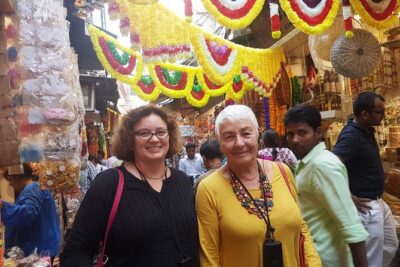
Old Delhi – Walking Tour with wireless audio head sets for live commentary
Read our review →
Audio Guided Tour Of Ellora Buddhist Caves, Aurangabad on HopOn India App
Read our review →
Audio Guided Walking Tour of Qutub Minar & Mehrauli, Delhi
Read our review →
Audio Guided Walking Tour of Ajanta Caves, Aurangabad on HopOn India App
Read our review →
Audio Guided Tour – Mumbai Cricket Walk by HopOn India
Read our review →
Audio Guided Walking Tour on HopOn India App – From Gateway to Fountain, Mumbai
Read our review →
Audio Guided Walk of Humayun’s Tomb & Nizammudin Basti, Delhi on HopOn India App
Read our review →Browse the lists this tour appears in