
Reviewed · INDIA
Old Delhi – Walking Tour with wireless audio head sets for live commentary
Old Delhi is best understood at street level, where a mosque courtyard, a working kitchen, a spice stall, and a crowded market can appear within the same short walk. This three-hour tour keeps the guide’s voice in your ear through the noise, so you can look around instead of fighting to stay close.
I like the wireless headsets, especially once you reach Chandni Chowk and the busy market lanes. I also like the food tastings and the chance to visit Gurudwara Sis Ganj, where the live kitchen gives you a look at a working place of worship rather than only a photo stop.
The main drawback is simple: this is a walking tour in Old Delhi, not an easy stroll. Uneven streets, crowds, heat, and the three-hour length may be tiring, and the $56.67 price makes the experience better suited to visitors who want context, not just a quick look.
Key points to know before you book
- Jama Masjid begins the walk, with a visit to one of India’s largest mosques.
- Wireless headsets matter most in the market, where street noise can drown out a normal walking commentary.
- Gurudwara Sis Ganj includes a live kitchen, adding a useful cultural stop to the route.
- Food tastings, snacks, and bottled water are included, so you are not paying for a bare sightseeing walk.
- The group is capped at 15 people, giving you a fair chance to ask questions.
- Guides such as Ritu and Saurav are praised for patience and flexibility, though your assigned guide may differ.
Why the headsets help in Old Delhi
Old Delhi is not a quiet museum district. It is a working part of the city, with people moving in several directions, shops close to the pavement, and plenty of sound competing for your attention. A guide walking several steps ahead can easily become hard to hear.
That is where the wireless audio system earns its place. You listen directly to the live commentary while keeping your eyes on the street. The headsets may feel slightly formal at the start, particularly around the open space near Jama Masjid, but their value grows once you enter the market lanes.
I would treat the headsets as a practical safety and learning tool, not a gimmick. You can stay aware of your footing and surroundings without constantly turning back toward the guide. In a group of up to 15 people, that makes the walk less frustrating.
The system also lets the guide explain smaller details without stopping the whole group every few minutes. You get a running account of the buildings, religious sites, markets, and food as the walk moves along.
More Audio Walking Tours in the world
- Sofia: City Monuments Guided Walking Tour with Audio Guide
★ 4.5 · 825 reviews - Florence: 2.5 hour Audio Guided Walking Tour led by Host
★ 4.6 · 293 reviews - Self Guided Classic Freedom Trail Location Aware (GPS) Walking Audio Tour
★ 4.5 · 258 reviews
Starting at Jama Masjid
The tour begins at Jama Masjid in Old Delhi, in the 110006 postal area. It is a strong starting point because the mosque gives you an immediate sense of the district’s scale, age, and religious importance.
Jama Masjid is described as the largest mosque in India. The visit also sets the tone for the rest of the walk, which moves between major sights and the everyday streets around them.
Dress conservatively for this stop and the other religious places on the route. Comfortable shoes are essential. The tour does not include hotel pickup, so you need to arrange your own way to the meeting point, though the starting area is near public transportation.
The information provided does not promise a long formal mosque lecture or a separate entry experience. Think of Jama Masjid as the opening stop in a guided walk, not as a full architectural tour by itself. Your guide’s live explanation is the main way you receive context.
From religious sites to daily life
One of the tour’s strengths is the change of setting. Instead of keeping you among monuments, the route links places of worship with markets, homes, public buildings, and food stalls.
Gurudwara Sis Ganj is especially useful in this regard. The stop includes a live kitchen, giving you a view of service and community life inside a religious setting. It is a different experience from simply admiring a doorway or taking a photograph.
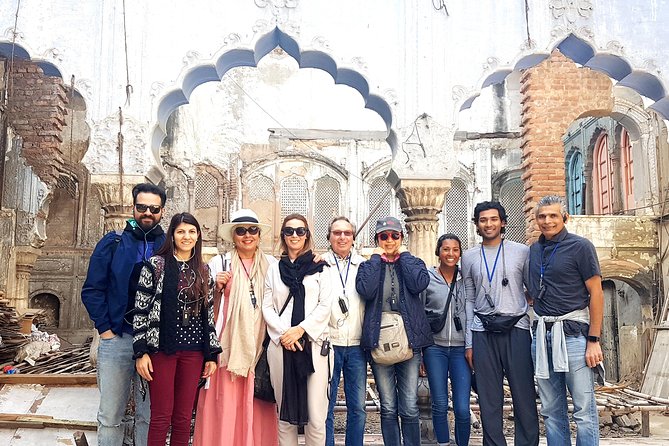
The route also includes a haveli. These traditional residences help show how Old Delhi was built around courtyards, narrow passages, and dense neighborhoods. The supplied details do not specify the exact haveli or its interior access, so you should not expect a guaranteed private-house visit. The value is in seeing how residential architecture fits into the wider district.
Your guide may also explain cultural practices and local customs along the way. Ritu, named in several tour accounts, is described as patient, welcoming, and willing to tailor the walk around particular interests. Saurav is also noted for keeping the commentary going across mosques, temples, streets, and markets.
Those names are useful indicators of the company’s guiding style, but they do not guarantee who will lead your departure. The experience provider is When in India Tours, and guide assignment can vary.
Reading Old Delhi through its markets
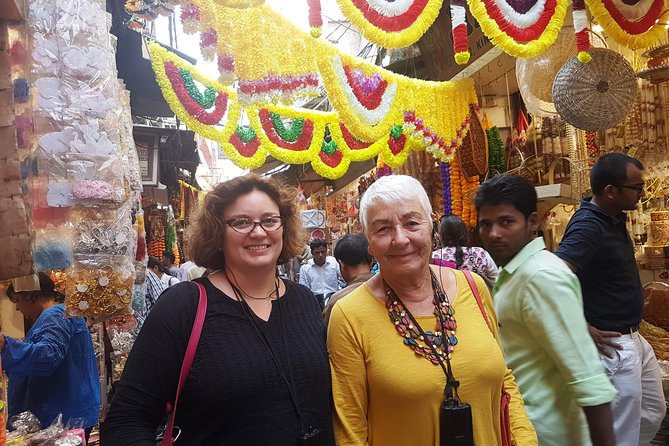
The market section is likely to be the most energetic part of the walk. The route includes a wedding bazaar and a silver bazaar, both of which give you a more specific look at trade than a general shopping street would.
A wedding bazaar points you toward the goods and services tied to marriage celebrations. A silver bazaar adds another layer, with its focus on metalwork and adornment. The supplied information does not promise shopping time or purchases, so I would approach these as guided viewing stops rather than a chance to complete a shopping list.
Town Hall provides a change of scale. After narrow commercial lanes, a civic building gives the guide another way to explain how Old Delhi functions as a city district. The walk is not limited to old religious buildings or food stalls. It also includes public space and urban history.
Then comes the spice market. This is where the headsets become particularly useful. Smells, color, movement, and close-packed stalls can pull your attention in several directions, while the guide continues explaining what you are seeing.
The tour does not promise a cooking class or a market purchase. What you do get is a guided introduction to the role of food and trade in Old Delhi. That is a better fit for you if you want to understand the setting rather than simply pass through it.
More Audio Tours in the world
- Barcelona: Sagrada Familia Entry Ticket with Audio Guide
★ 4.6 · 105,312 reviews - Rome: Pantheon Fast-Track Ticket and Official Audioguide
★ 4.5 · 27,353 reviews - Barcelona: Casa Batlló Entry with Self-Audioguide Tour
★ 4.7 · 25,359 reviews - Rome: Colosseum & Forum with Audio Guide App -Optional Arena
★ 4.2 · 24,770 reviews
Food tastings that add context
Food is not an afterthought here. Traditional street-food tastings and snacks are included, along with bottled water.
That matters because food can turn a cultural explanation into something you remember. A guide can describe local eating habits, but tasting a specialty gives you a more direct connection to the neighborhood. The exact dishes are not specified, so you should not book this expecting a fixed menu or a full meal.
The included food is best viewed as a sampling experience. You may still want to eat before or after the tour, depending on your appetite and dietary needs. No dietary arrangements are stated, so raise any concerns with the provider before booking rather than assuming substitutions will be available.
Water is a welcome practical inclusion. Three hours on foot in Old Delhi can be tiring, and having a bottle supplied removes one small task from your morning or afternoon.
The food stop also gives the group a natural pause. This helps break up the walking and gives you a chance to ask about ingredients, customs, and the places you have just passed.
What the three-hour pace feels like
The advertised duration is about three hours. That is enough time for a meaningful introduction, but not enough for long visits at every stop.
You should expect a continuous walk with several points of interest, rather than a series of extended monument visits. The guide needs to keep the group moving through markets and streets while still allowing time for questions.
That balance seems to be one of the better features of the experience. Ritu is described as flexible and willing to adjust the route around individual interests, while Saurav is noted for explaining the surroundings consistently. Flexibility has limits on a group tour, but a small group makes questions more realistic than they would be in a large crowd.
The maximum group size is 15. That is not a private tour, yet it is small enough for the guide to keep track of people and respond to questions. If every person wants a long discussion at each stop, the pace may slow. If the group stays engaged and mobile, three hours should provide a useful overview.
You should also be ready for the physical side. The activity is not recommended for people who have difficulty walking. Wear shoes made for several hours on city streets, and dress for religious visits as well as outdoor conditions.
Is $56.67 a fair price?
At $56.67 per person, this is not the cheapest way to look around Old Delhi. You are paying for more than a basic walk, however. The price includes a local guide, live headset commentary, food tastings, snacks, and bottled water.
The audio equipment is a real part of the value. A standard guide-led walk can lose its usefulness when a group spreads out or traffic noise takes over. Here, you should be able to hear explanations while looking at the street instead of standing shoulder to shoulder with the guide.
The food tasting also adds value, provided you want a cultural introduction rather than a full meal. The cost is easier to justify if this is your first visit to Old Delhi and you want the sights explained in one organized session.
I would be less likely to recommend the price to someone who already knows the area, dislikes group activities, or mainly wants unstructured time for shopping and photography. Since hotel pickup and drop-off are not included, you must also factor in your own transport to and from Jama Masjid.
Group discounts are available, though the supplied details do not state the discount amount. If you are booking for several people, check the final price carefully before payment.
The guides and the feel of the walk
The strongest pattern in the available feedback is the quality of the guiding. Ritu is repeatedly described as warm, patient, flexible, and well informed about the area. Saurav is praised for explaining each setting as the group moved from mosque to temple, street, and market.
That tells you what this tour is trying to do. It is not simply a route from one sight to the next. The guide is expected to connect the places and answer questions about Indian culture and daily life.
One useful detail is the ability to adjust the experience around particular interests. That does not mean the route becomes a private tour, but it suggests you can ask for more explanation about architecture, religion, food, or markets instead of receiving a fixed speech.
The guide’s personality will still affect your experience. The named guides receive very positive attention, but no specific guide is guaranteed at booking. If having Ritu or Saurav is important to you, ask When in India Tours before confirming.
Practical details that affect your choice
Confirmation is sent within 48 hours of booking, subject to availability. You receive a mobile ticket, which is convenient, but keep your phone charged and accessible for meeting details.
The start and finish are both at the Jama Masjid meeting point. Since there is no hotel pickup or drop-off, allow time to reach the starting location on your own.
Wear conservative clothing because the route includes religious places. Comfortable shoes are not optional for most people. The tour is near public transportation, but the supplied information does not identify a specific station or route.
Most people can participate, but the activity is not recommended if walking is difficult. The group size can reach 15, so this is intimate compared with a large coach outing, though it is not a private experience.
The cancellation rule is strict. The experience is non-refundable and cannot be changed for any reason, so confirm your schedule before paying.
Who should book this Old Delhi walk?
I would recommend it to a first-time Delhi visitor who wants an organized introduction to Old Delhi without spending a whole day on foot. It suits you if you care about context, want to taste local food, and prefer asking a guide questions as you go.
It is also a good choice if you worry about losing the guide in crowded streets. The headsets reduce that problem and let you pay attention to the surroundings.
I would hesitate if you have limited mobility, dislike narrow markets, need a full meal rather than snacks, or want hotel transportation included. I would also compare the cost carefully if you only want to see Jama Masjid and take photographs.
Should you book it?
Book this tour if you want Old Delhi explained as a living neighborhood, not presented as a short list of monuments. The combination of Jama Masjid, Gurudwara Sis Ganj, the haveli, markets, Town Hall, spice stalls, and food tastings gives you a broad three-hour introduction.
The best reasons to choose it are the headsets, the small group limit, and the guide-led cultural context. Before booking, confirm that you can manage the walking, dress appropriately for religious sites, reach Jama Masjid independently, and accept the strict no-refund policy.
FAQ
How long does the Old Delhi walking tour last?
The tour lasts approximately three hours.
Where does the tour start and finish?
It starts at Jama Masjid in Old Delhi, Delhi 110006, India, and ends back at the meeting point.
What sights are included?
The route includes Jama Masjid, Gurudwara Sis Ganj with its live kitchen, a haveli, the wedding bazaar, silver bazaar, Town Hall, and the spice market.
Are food and drinks included?
Yes. Food tastings, snacks, and bottled water are included.
Are hotel transfers provided?
No. Hotel pickup and drop-off are not included. You need to reach the Jama Masjid meeting point independently.
How many people can join the tour?
The activity has a maximum of 15 travelers.
What should I wear and bring?
Wear conservative clothing for the religious sites and comfortable shoes for the walk. The tour includes headsets and bottled water, and you will use a mobile ticket.
Latest audio tours in the world
- San Sebastian Scavenger Hunt & Highlights Self Guided Audio Tour★ 4.0 · 7 reviews
- San Marino’s Three Towers: An Audio Tour of the Ancient Republic★ 5.0 · 2 reviews
- San Marino Walking Tour with Audio and Written Guide★ 4.5 · 5 reviews
- Sampling San Sebastián’s History: A Self Guided Audio Tour★ 4.5 · 5 reviews
- Talking Buildings of Old San Juan: A Self-Guided Audio Tour★ 3.5 · 18 reviews
- San Marino: A Self Guided Audio Tour★ 4.5 · 14 reviews
- Essential Downtown SLO: A Self-Guided Audio Tour★ 4.5 · 27 reviews
- Silicon Valley Self-Guided Driving Audio Tour for Tech Lovers★ 4.0 · 24 reviews
Audio Walking Tours, compared.

City Monuments Guided Walking Tour with Audio Guide
Read our review →

Self Guided Classic Freedom Trail Location Aware (GPS) Walking Audio Tour
Read our review →
Self-Guided Historical Walking Tour (Audio Guide)
Read our review →
Cape Cod & Provincetown Self-Guided Driving & Walking Audio Tour
Read our review →
Verona Walking Tour with Audio and Written Guide by a Local
Read our review →
Royal Walking Tour and Buckingham Palace Audio Tour
Read our review →
Bologna Walking Tour with Audio and Written Guide
Read our review →Browse the lists this tour appears in