
Reviewed · FRANCE
Lyon WWII and Resistance Tour with Audio Guide
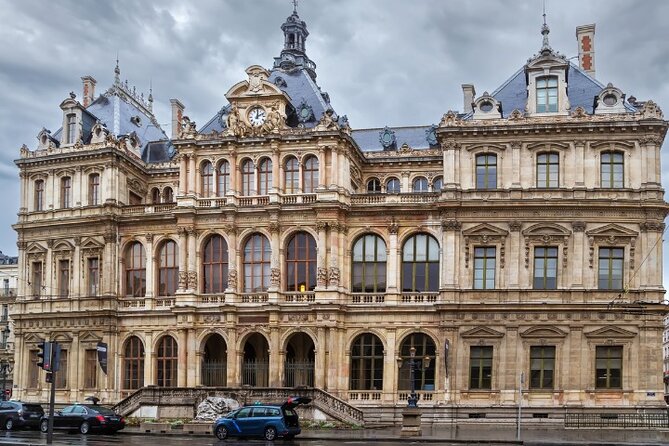
Lyon’s WWII story is told best through its streets, plaques, bridges, churches, and narrow passageways. This self-guided audio tour links more than 30 points, from the Gestapo’s former headquarters to the traboules of Croix-Rousse, where the final stop carries some of the strongest atmosphere.
I like the freedom to stop, replay a section, or pause for lunch. I also like the price: at $12.99, you get a detailed route and offline map without joining a fixed group. The main drawback is your phone. One full run can drain the battery, so bring a portable charger and download what you need before setting out.
Key points to know before you go
- Follow Lyon’s wartime story at your own pace: The audio guide lets you walk, pause, and listen between locations without keeping up with a group.
- Reach the former Gestapo headquarters: The CHRD preserves testimony, objects, and stories connected with Lyon’s Resistance.
- Visit the arrest site at 9 Cours Gambetta: Six young Resistance leaders were captured there in 1944 and later executed.
- Finish among Croix-Rousse traboules: Cour des Voraces connects WWII Resistance history with the older story of silk workers and secret passageways.
- Use the offline map: Directions and narration work without Wi-Fi or mobile data, a useful feature on a long city walk.
- Plan for your phone battery: A portable charger is one of the smartest things to pack for the 3 to 4 hour route.
Why this Lyon Resistance walk is worth your time
This is not a museum-only history lesson. It is a walk through the places where occupation, arrest, rescue, secrecy, and public remembrance took shape. Lyon’s streets do not always announce what happened there. A busy shopping street, a grand square, or a quiet fountain can carry a wartime story that you would otherwise miss.
The Trippy Tour Guide app supplies English narration, directions, and an offline map. You begin at Parking 7 Rue Jeanne Hachette in the third arrondissement and finish at Croix-Paquet in Croix-Rousse. The route is listed at about 3 to 4 hours, though your pace will decide the final time.
I would treat this as a half-day walking route, not a quick attraction stop. The itinerary includes fourteen named locations, with several other narration points along the way. Some stops need only five minutes, while the larger squares and memorial sites deserve longer pauses.
The tour is private in the sense that only your group participates, but it is not led by a live person. You receive a mobile ticket and use the app as your guide. That makes the experience flexible, but it also means you must watch the directions, manage your battery, and decide how much time to give each place.
More Audio Tours in France
- Paris: Illuminations River Cruise with Audio Commentary
★ 4.3 · 12,340 reviews - Paris: Louvre Museum Hosted Entry and Mona Lisa Audioguide
★ 4.6 · 5,235 reviews - Paris: Orsay Museum Entry Ticket and Digital Audio Guide App
★ 4.4 · 3,170 reviews
From young Resistance leaders to the CHRD
At 9 Cours Gambetta, the tour begins with one of its most direct stories. Six young Resistance leaders were arrested there by the Gestapo in 1944. Their lives ended in execution, but the location gives the subject a human scale: these were young people making dangerous choices under occupation, not distant names in a textbook.
Allow about ten minutes here. It is a short stop, yet it sets the tone for the rest of the walk. You are not only seeing grand civic monuments. You are also being asked to notice ordinary addresses linked to arrest, courage, and loss.
The CHRD, Lyon’s Centre for the History of Resistance and Deportation, is housed in the former Gestapo headquarters. The site preserves testimonies, objects, and accounts connected with the Resistance and the fight for justice during WWII.
The route presents the CHRD as an important part of Lyon’s wartime story. Check how much time you want to spend around it, since the supplied tour information does not set out a separate museum visit or admission arrangement. If you want a fuller museum experience, you should account for that outside the 3 to 4 hour walking estimate.
Crossing the Rhône and remembering the dead
Pont Gallieni gives the route a change of mood. The bridge crosses the Rhône and is linked with wartime crossings and Resistance missions. Today, the water and traffic make the setting feel calm, which can make the contrast with its wartime role sharper.
This is another ten-minute stop. Do not expect a large memorial display here. The value comes from hearing how a working bridge could become part of a secret network, then looking at the same crossing as it functions in present-day Lyon.
At Place Carnot, the Monument aux Morts honors those who died in both World Wars and the Resistance. The square also connects with Liberation Day and VE Day commemorations. Give it about fifteen minutes if you want time to read, listen, and consider how public memory is placed in the middle of daily city life.
The stop works well because it broadens the story. The tour is not only about clandestine operations. It also asks how a city remembers sacrifice in public, through monuments and ceremonies.
Rue Victor Hugo and the pressure of occupation
Rue Victor Hugo is now a shopping street, but the audio places it within Lyon’s wartime network. Secret messages, quiet meetings, and Resistance activity moved through this central artery. The contrast between its modern purpose and its former danger is the point.
You spend about ten minutes here. This is a good example of why a self-guided route can be useful. Without an explanation, you might simply pass through on the way to another attraction. With the narration, the street becomes part of the larger chain of places where ordinary movement could conceal extraordinary risk.
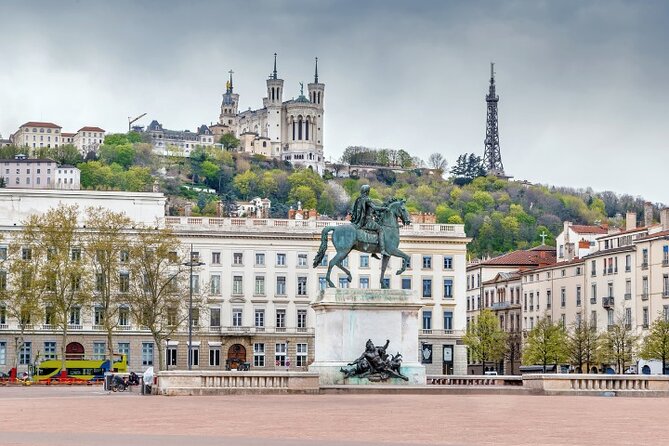
Place Bellecour offers a larger view of occupation and resistance. Lyon’s central square was connected with arrests and secret activity during WWII. Today it is an open, active public space, but the route asks you to picture it under military occupation rather than as a normal city center.
Allow fifteen minutes. The square is broad, so the audio can give you context while you look around. I would not rush this stop. Its importance lies in the tension between a public gathering place and the fear that would have shaped how people moved through it.
Another self-paced route in France:
- From Paris: Giverny Day Trip with Audio Guide or Live Guide
★ 4.3 · 2,372 reviews - Paris: Eiffel Tower Access w/ Audioguide and Optional Cruise
★ 4.0 · 1,630 reviews - Giverny and Monet’s House Half Day Trip from Paris Guide or Audio
★ 4.0 · 1,319 reviews - Paris: Catacombs Entry & Seine River Cruise with Audio Guide
★ 4.4 · 1,150 reviews
Jacobins, Saint-Nizier, and the stories churches carry
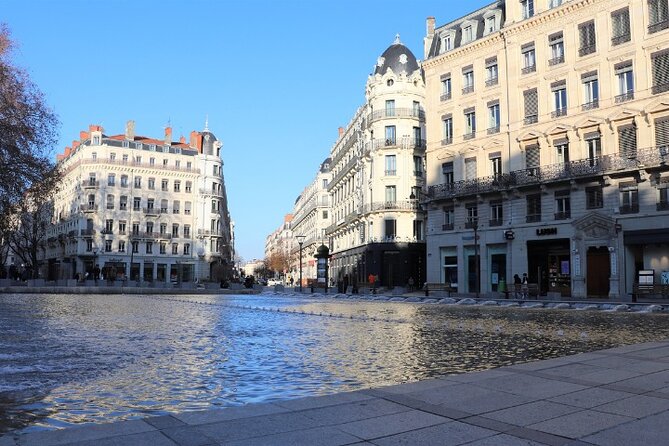
Place des Jacobins continues the theme of hidden work. The square is linked with underground presses, rescue efforts, and Resistance activity in the Ainay Quarter. The tour uses this location to show that Resistance work depended on more than fighting. Printing, carrying messages, hiding people, and passing information all required nerve.
You have about fifteen minutes here. Listen before moving on, since the square itself may not make every wartime connection obvious. This is also a natural place to take a short break, though meals are not included in the experience.
Église Saint-Nizier brings a more visible landmark into the route. This Gothic church has a long record of faith, survival, and defiance. The tour connects it with the preservation of relics, wartime survival, and a 1975 protest that echoed the spirit of Resistance.
The stop lasts about ten minutes, and admission is included. That is useful because the church gives the route an interior setting rather than another street corner or square. Still, the supplied information does not promise a guided church visit, so you should expect the app to provide the historical framing.
Terreaux and Lyon’s civic center
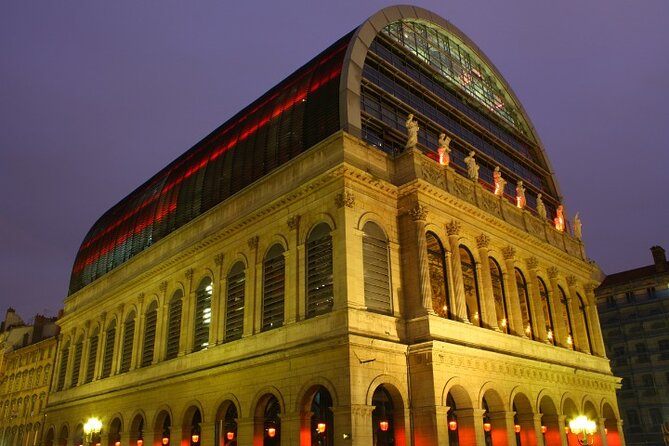
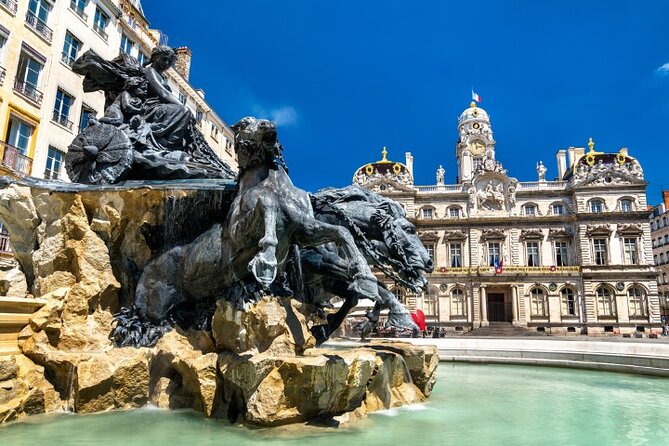
Place des Terreaux blends architecture and wartime memory. The square was connected with covert Resistance activity, secret presses, and quiet defiance. Its beauty can make the past easy to overlook, which is exactly why an audio explanation adds value.
Plan on fifteen minutes. The stop is less about one single dramatic event than about the city’s network of people and places. You hear how public spaces could hide private work, then continue toward Lyon’s civic heart.
Hôtel de Ville de Lyon was a witness to Resistance efforts and the city’s liberation. It also became a place for public celebration after occupation. This gives you an important shift in the story: the route moves from secrecy and danger toward the moment when liberation could be marked openly.
The ten-minute stop is short, but it helps tie the scattered locations together. Lyon’s Resistance was not separate from the city’s institutions. By the end of the war, civic buildings and public squares became places where the city could show what had changed.
Rue Sainte-Catherine and the cost of persecution
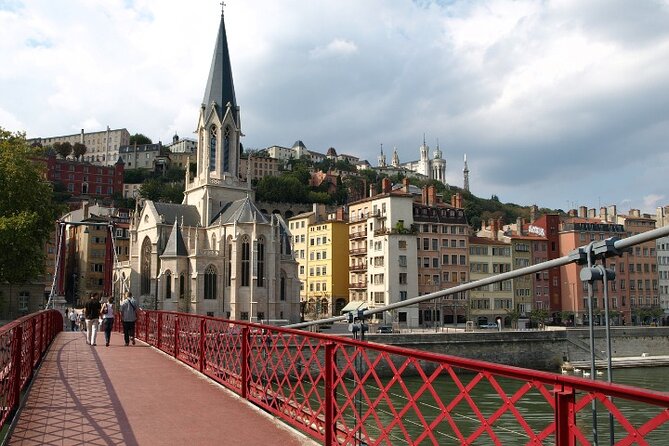
At 12 Rue Sainte-Catherine, a plaque remembers 86 Jews arrested by the Gestapo in 1943. This is one of the hardest stops because the address marks a specific act of persecution rather than a general wartime atmosphere.
Only five minutes are assigned, but I would give yourself time to listen without rushing. The point is not to search for a grand monument. It is to recognize how a quiet address can preserve the memory of a devastating event.
The route’s attention to this plaque matters. A WWII walk can easily focus on heroic exploits and leave out the victims of racial persecution. Here, the story turns directly toward the Holocaust and the people who were arrested.
The letterbox where General Delestraint was caught

At 14 Rue Bouteille, you learn about a hidden Resistance letterbox connected with the arrest of General Delestraint in 1943. The location shows both the ingenuity and the danger of underground communication.
The stop takes about five minutes. It is brief, but the idea of a letterbox makes the mechanics of the Resistance easier to picture. Messages needed places to be left and collected, and every such place could become a trap.
This is one of the route’s more intimate addresses. You do not need a huge square or a formal monument to understand the risk. A small meeting point could influence the fate of important figures and wider operations.
Fontaine Burdeau and the many layers of Lyon
Fontaine Burdeau offers a quieter pause. The fountain is connected with Auguste Burdeau and with Lyon’s endurance during wartime. A missing statue adds another layer, showing how memory can involve loss, absence, and changing public spaces.
The stop is listed at fifteen minutes, which may seem long for a fountain. The audio likely gives the place its meaning, so do not judge it only by what you see at first glance. This is a stop for listening and reflection rather than a major visual attraction.
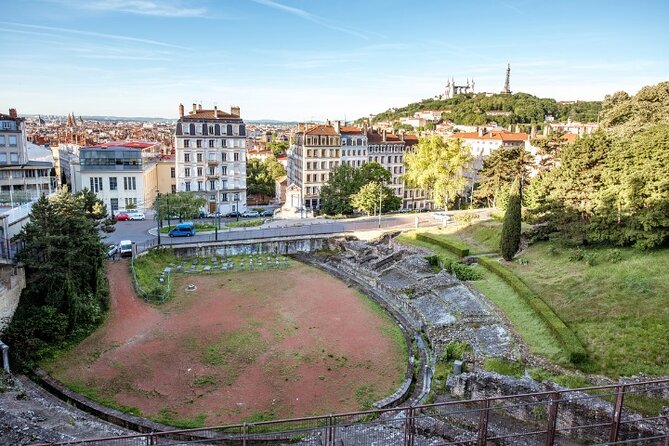
The Amphitheater of the Three Gauls widens the time scale again. Its Roman remains connect with ancient Lyon, Christian martyrdom, and the city’s long association with courage and defiance. The WWII route places modern Resistance memory beside much older stories of persecution and belief.
Allow fifteen minutes. The amphitheater is not presented as a WWII site alone, and that is part of its value. You begin to see Lyon as a city where different eras overlap, each adding another way to understand courage under pressure.
Cour des Voraces, where the route earns its finish
The final stop is Cour des Voraces, reached at Croix-Paquet in Croix-Rousse. This is one of the most distinctive places on the walk. Its famous stairway and traboule connect with the revolts of silk workers as well as WWII Resistance activity.
The passageways served as escape routes and secret strongholds. That makes this ending more physical than many of the earlier stops. You are not only hearing about hidden movement. You are looking at the kind of built environment that could help people disappear, pass messages, or evade capture.
The tour ends here, not back at the starting point. That matters for your plans. You will need to arrange your next connection from Croix-Paquet, but the ending also feels purposeful. It leaves you in Croix-Rousse, a district with its own strong working-class and Resistance associations, rather than sending you back to the beginning.
Give this final stop its full fifteen minutes. The traboules are easy to hurry through, especially if you are eager to finish. The best part of the route may be the combination of the audio story and the physical passages, so resist the urge to treat the final location as a quick photo stop.
How the app changes the pace
The audio guide is offered in English and works through the Trippy Tour Guide app. You get more than a list of places: the package includes narration at 30 or more points, directions to well-known attractions and less obvious addresses, and an offline map.
The offline feature is a real practical benefit. Lyon streets can be confusing during a long walk, and you do not need to depend on Wi-Fi or mobile data for the map and route. Download and set up the app before you leave, then keep your phone accessible as you move between stops.
The tradeoff is that the experience depends on your device. The full route can use a great deal of battery. Bring a portable charger, and start with a well-charged phone. You should also allow extra time if you pause often, replay narration, or stop for food.
There is no meal included, so plan your own break. The route passes through central parts of Lyon, but the supplied information does not specify food stops or a set lunch pause. A self-guided format gives you freedom, but planning is your responsibility.
Is $12.99 good value?
At $12.99 per person, this is a low-cost way to build a focused history walk into your Lyon visit. The value comes from the number of locations, the English audio, the offline map, and the freedom to take 3 to 4 hours without paying for a private live guide.
It is especially good value if you enjoy walking and want more context than a standard city sightseeing route provides. You can pause at a square, replay a section, or take a break without holding up a group.
The price is less attractive if you prefer a guide who can answer questions on the spot. You are buying a structured route and recorded narration, not a conversation with a local expert. You will also need to supply your own battery power and manage your own timing.
The tour has a five-star rating from seven published ratings, but the sample is small. I would place more weight on the clear strengths of the format: detailed content, flexible pacing, and the chance to hear the audio while walking between landmarks.
Who should book this experience?
You should book it if you want to connect Lyon’s streets with WWII Resistance history and prefer independent sightseeing. It suits visitors who are comfortable using a phone app, walking for several hours, and giving serious attention to memorials and difficult wartime subjects.
It is also a good choice if you have already seen Lyon’s main squares and want a different reason to revisit them. Place Bellecour, Terreaux, Hôtel de Ville, and the Jacobins are not presented as empty photo stops. The audio gives them another layer.
You may want something else if you need a live guide, a fixed schedule, or a shorter route. The number of stops can feel demanding, and the full experience depends on your phone working well.
Should you book the Lyon WWII and Resistance Tour?
I would book this for a self-guided half-day in Lyon, especially if WWII history and urban walking are high on your list. The strongest reasons are the specific arrest sites, the former Gestapo headquarters, the Holocaust memorial plaque on Rue Sainte-Catherine, and the final traboules at Cour des Voraces.
Pack a portable charger, allow more than a quick three hours if you listen carefully, and remember that the route ends at Croix-Paquet. At $12.99, it offers a lot of historical structure for a modest price, as long as you are happy being your own guide.
FAQ
How long does the Lyon WWII and Resistance Tour take?
The tour takes approximately 3 to 4 hours. Your final time can vary because the audio format lets you pause, replay sections, take breaks, and move at your own pace.
What language is the audio guide offered in?
The audio guide is offered in English.
Where does the tour start?
The tour starts at Parking 7 Rue Jeanne Hachette, 69003 Lyon, France.
Where does the tour end?
The final stop is Croix-Paquet, 69001 Lyon, France.
Does the tour include an offline map?
Yes. The Trippy Tour Guide app includes a fully offline map, so you do not need Wi-Fi or mobile data while following the route.
Is the tour led by a live guide?
No live guide is specified. You use the self-guided audio tour in the Trippy Tour Guide app, with narration and directions between locations.
Are meals included?
No. Meals are not included.
Can I cancel the tour for a full refund?
Yes, if you cancel at least 24 hours before the experience start time. Cancellations made within 24 hours are not refunded, and changes within that period are not accepted.
Latest audio tours in France
- Rouen audio guided tour★ 4.0 · 19 reviews
- Rouen Cathedral Self Guided Audio Tour★ 4.0 · 2 reviews
- Rouen: Audio Guided City and Joan of Arc Tour★ 4.0 · 2 reviews
- The Hardest City to Invade: Saint Malo’s Secrets Audio Guide★ 4.5 · 9 reviews
- The Tuileries Garden’s Classic Sights: A Self-Guided Audio Tour★ 4.0 · 3 reviews
- The French Revolution: Self Guided Audio Tour of Paris★ 4.5 · 3 reviews
- Audioguide – The Eiffel Tower and its secrets★ 4.0 · 4 reviews
- A Self-Guided Audio Tour Around Parc Montsouris★ 3.5 · 6 reviews
France Audio Tours, compared.
Illuminations River Cruise with Audio Commentary
Read our review →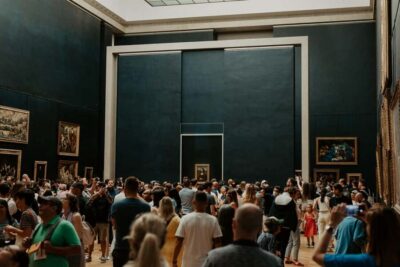
Louvre Museum Hosted Entry and Mona Lisa Audioguide
Read our review →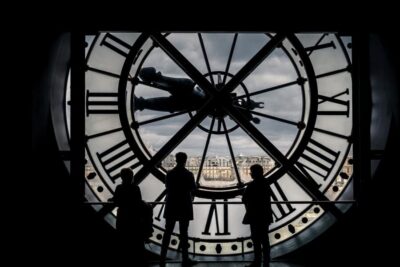
Orsay Museum Entry Ticket and Digital Audio Guide App
Read our review →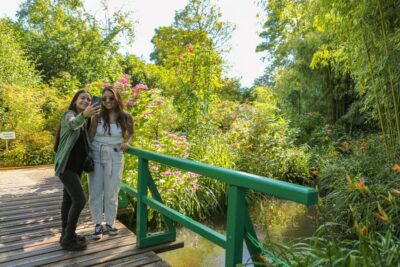
Giverny Day Trip with Audio Guide or Live Guide
Read our review →
Eiffel Tower Access w/ Audioguide and Optional Cruise
Read our review →
Giverny and Monet’s House Half Day Trip from Paris Guide or Audio
Read our review →
Catacombs Entry & Seine River Cruise with Audio Guide
Read our review →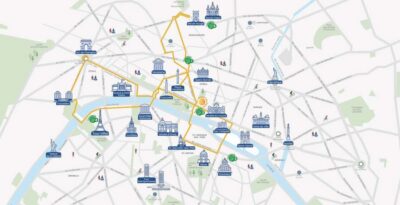
Tootbus Panoramic by Night Bus Tour with Audioguide
Read our review →Browse the lists this tour appears in