
Reviewed · ROME
Rome: Borghese Gallery Skip-the-Line Tickets with Audioguide
The real prize here is not simply skipping a queue. It is entering Cardinal Scipione Borghese’s former villa, where the art is displayed in rooms as ornate as the collection itself. Bernini’s marble figures, Caravaggio’s dark drama, and Raphael’s calm grace are all packed into a manageable museum visit.
I like the limited timed entry, which keeps the gallery from feeling like a train station, and I like the freedom to set your own pace with the audioguide. The main caution is price: at $53 per person, this can cost far more than buying directly from the gallery, although it may be the practical way in when official tickets are sold out.
Key points to know before you book

- Bernini’s Apollo and Daphne is the star attraction: Look closely at the marble leaves, bark, and startled movement frozen in stone.
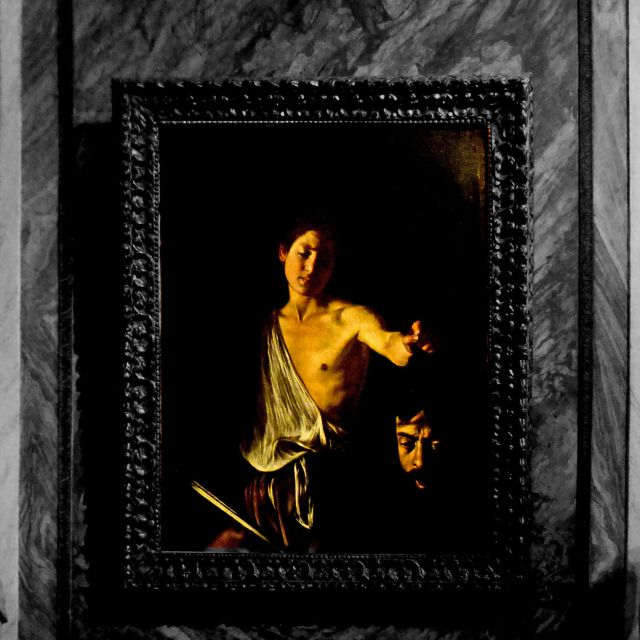
- Caravaggio gets serious attention: David with the Head of Goliath and other paintings show why his light and shadow still feel so forceful.
- The meeting point is Fontana dei Mascheroni: Look for a host in a purple Crown Tours shirt and holding a flag.
- The visit is self-guided unless you select a guided option: The host usually handles tickets and entry, then you explore independently.
- Small bags only: Larger luggage goes into the free cloakroom, and baby strollers, electric wheelchairs, and large bags are not allowed.
- Book ahead when possible: The gallery often sells out, even though skip-the-line matters less at quiet opening times.
Why the Borghese Gallery deserves a place in your Rome plans
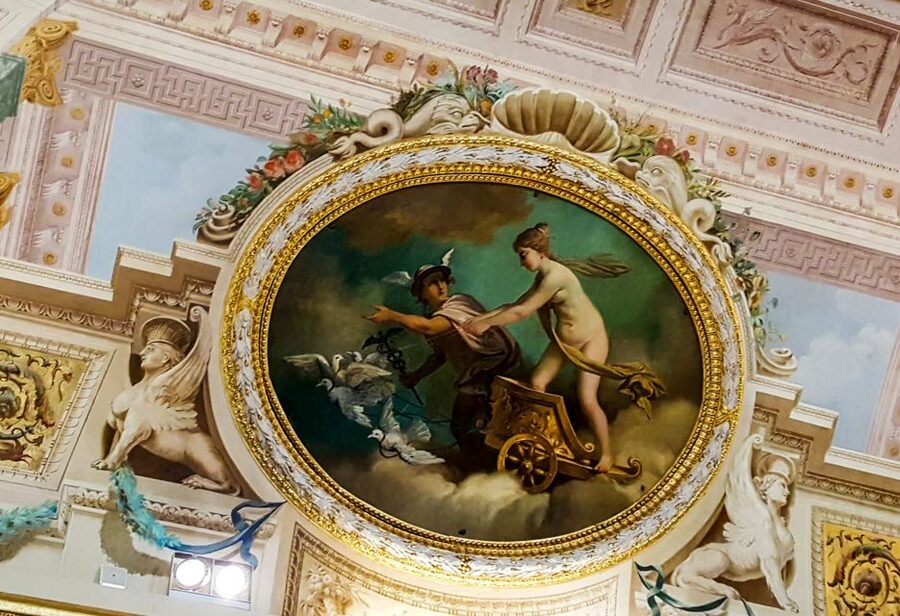
The Borghese Gallery is one of Rome’s easiest museums to enjoy in a single morning or afternoon. It is not a sprawling complex where you need a map, stamina, and a packed lunch. The villa is compact, the rooms are highly decorated, and the best-known works are close together.
That compact size matters. You can spend real time with a sculpture instead of racing past it to reach the next wing. You can also return your attention to a painting after listening to its background, something that is harder in a huge museum.
The collection began with Cardinal Scipione Borghese, a powerful 17th-century patron with a sharp eye and an appetite for art. The building still gives you a sense of how art once functioned inside an elite Roman home. Statues, paintings, ceiling decoration, and polished floors work together, so you are looking at both a collection and its setting.
I would not treat this as a general museum of Italian art. Its strength is the concentrated mix of ancient Roman, Renaissance, Baroque, and Neoclassical work. If Bernini and Caravaggio are high on your Rome list, this is one of the most rewarding stops in the city.
More Museum Audio Tours in Italy
- Rome: Borghese Gallery Skip-the-Line Ticket & Audioguide
★ 4.3 · 4,318 reviews - Rome: Borghese Gallery Ticket + Audioguide or Guided Tour
★ 4.6 · 3,219 reviews - Rome: Borghese Gallery Skip the line ticket and Audioguide
★ 4.3 · 1,535 reviews
Meeting the Crown Tours host at the fountain
The meeting point is Fontana dei Mascheroni, a small drinking-water fountain on Viale del Museo Borghese, directly in front of the gallery. Your host should be wearing a purple Crown Tours shirt and carrying a purple flag.
This sounds simple, but the fountain can be easy to miss. It may look more like a pair of garden statues than a clearly marked meeting point from the road. One useful rule is to look for the color purple rather than relying only on the fountain name.
From the Pinciana or Museo Borghese bus stop, walk along Viale dell’Uccelliera for about two minutes. From S. Paolo Del Brasile, allow about eight minutes along Viale del Museo Borghese. Give yourself extra time if you do not know the park roads, since arriving late can turn a calm museum visit into a hurried one.
Hosts named Migo, Amanda, Frederica, Sylvia, Amjad, and Victoria have been praised for being helpful before entry. Their role varies by booking. Some simply hand over your timed ticket and point out the entrance. Others explain the Borghese family, identify major works, help with the app, or answer questions before you go inside.
That distinction matters. Do not assume the person at the fountain is leading a full museum tour unless you selected the guided option. For the basic ticket, the host is mainly an entry assistant.
Getting inside with a timed reservation
The gallery limits the number of people in each time period. That makes the interior more pleasant, but it also makes advance planning important. Same-day entry can disappear, particularly in the busier months, and direct tickets may be gone even when this option is still available.
The skip-the-line benefit is most useful when the ticket office has a long queue. At opening time or during a quieter period, you may not see much of a line to bypass. The bigger benefit in those cases is having a confirmed reservation in a museum that can sell out.
At the entrance, large bags must go into the free cloakroom. Bring only a small purse or small bag, and do not count on taking a water bottle inside. Baby strollers and electric wheelchairs are not allowed, and the activity is not suitable for wheelchair users or people with mobility impairments.
Wear shoes that can handle walking and choose comfortable clothes. The building is not enormous, but you will want to stand close to sculptures and spend time looking upward at the decorated rooms.
The gallery’s entry period is limited. One account describes a two-hour ticket window marked by a colored stamp, which is enough time for the principal rooms but not for a slow study of every object. Plan your priorities before you arrive.
First-floor highlights: Bernini’s marble in motion

Begin with the sculpture rooms, where Bernini supplies the gallery’s biggest theatrical moments. Apollo and Daphne shows the instant Apollo catches Daphne as she transforms into a laurel tree. Look at Daphne’s fingers, hair, and toes. Bernini makes hard marble appear to change from flesh into bark and leaves.
The sculpture is best understood from several angles. Walk around it slowly, if space allows, rather than treating it as a single frontal image. Apollo’s forward motion and Daphne’s retreat make the work feel like a scene caught halfway through an action.
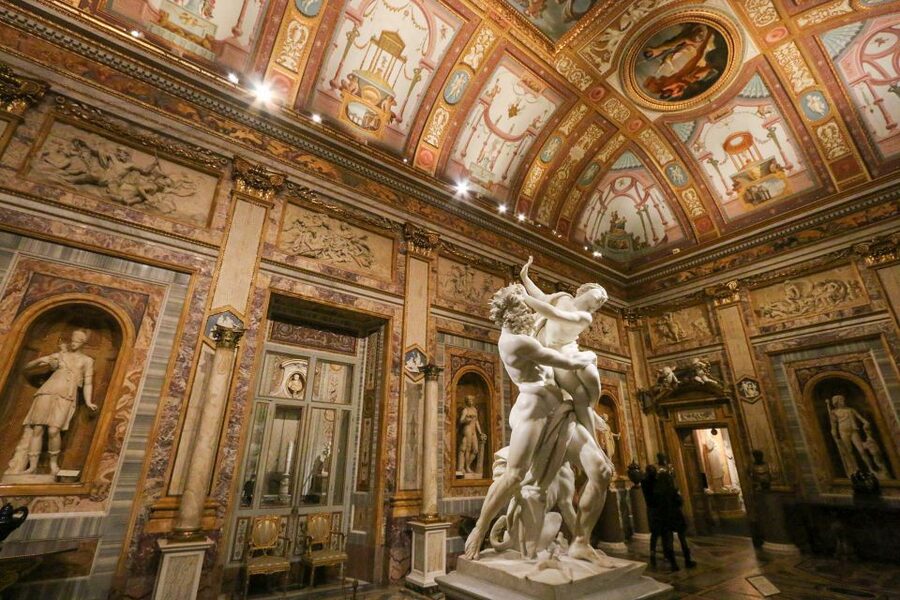
Bernini’s The Rape of Proserpina is another powerful stop. The famous detail is Pluto’s hand pressing into Proserpina’s thigh. The point is not that marble resembles skin in a general way. The point is that Bernini makes your eye feel the pressure, weight, and struggle.
You may also encounter David, shown not as a calm biblical hero but as a body twisting into action. The sculpture works best when you notice its unusual viewpoint. Bernini’s David reaches beyond his own space, so you feel pulled into the path of the stone he is about to throw.
This is where a guide can add real value. A good guide helps you read the body language, the viewpoint, and the technical tricks. A basic host may only get you through the door, so the audioguide or the museum’s own labels become more important.
More Museum Audio Tours in Rome
- Rome: Borghese Gallery Ticket and Optional Audio Guide
★ 4.3 · 902 reviews - Borghese Gallery, Home to Canova’s Art – Entry with Audioguide
★ 4.0 · 884 reviews - Rome: Borghese Gallery Skip-the-Line Ticket & Audioguide
★ 4.0 · 768 reviews - Borghese Gallery entry ticket and audioguide App
★ 4.7 · 570 reviews
Caravaggio’s rooms and the power of a single glance
The Caravaggio paintings offer a sharp change from the white drama of Bernini. His figures emerge from darkness with dirty feet, tired faces, and sudden flashes of light. The scenes feel physical and immediate, not polished into distant perfection.
David with the Head of Goliath is especially unsettling. Caravaggio used his own face for the severed Goliath, turning a biblical victory into a strange act of remorse. David’s expression is not simple triumph, and the painting rewards a quiet pause.
Look also for the directness of Caravaggio’s religious figures. His saints and biblical characters often look like people who could have walked in from the street. That choice was startling in its time, and it helps explain why the paintings can still feel modern.
The gallery holds several important Caravaggio works, so this is not a case of finding one famous painting and moving on. Let your eyes adjust to the darker rooms, then watch how the light picks out a face, hand, or piece of fabric.
The supplied digital audioguide is intended to explain the background, technique, and cultural meaning of the works. Some visitors find it easy to use and helpful, while others prefer the QR-linked information beside many objects. My advice is to try the app, but do not force yourself to listen to every entry. Choose a few works and look first, listen second.
Raphael, Titian, Rubens, and Canova

The gallery is not only a Bernini and Caravaggio stop. Raphael brings a different kind of beauty, built on balance, calm expression, and classical ideals. His paintings can feel quieter after Bernini’s energetic sculpture, so give them a little time rather than judging them by volume.
Titian and Rubens add strong color and a different sense of movement. The contrast helps you see how varied the collection is. One room may ask you to study the surface of a painting, while the next pulls you toward the texture of marble.
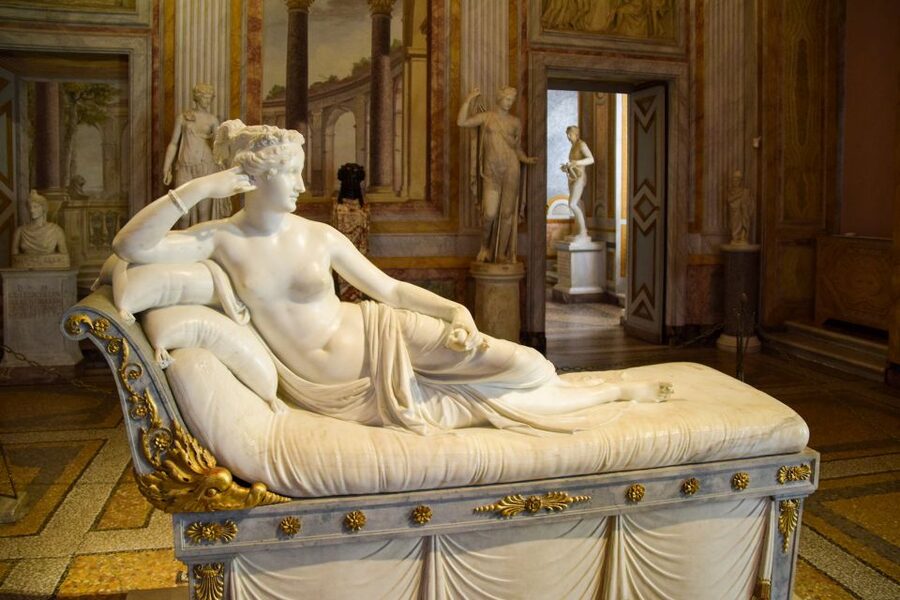
Canova’s Neoclassical sculpture brings another change. His figures are smoother and more restrained than Bernini’s, with an idealized elegance that favors poise over struggle. The audioguide can help explain how Canova’s approach differs from the Baroque artists around him.
You will also see ancient Roman pieces and decorative details tied to the villa itself. The result is a visit that moves across centuries without feeling like a textbook. The rooms create the connections for you.
What the audioguide adds, and where it falls short
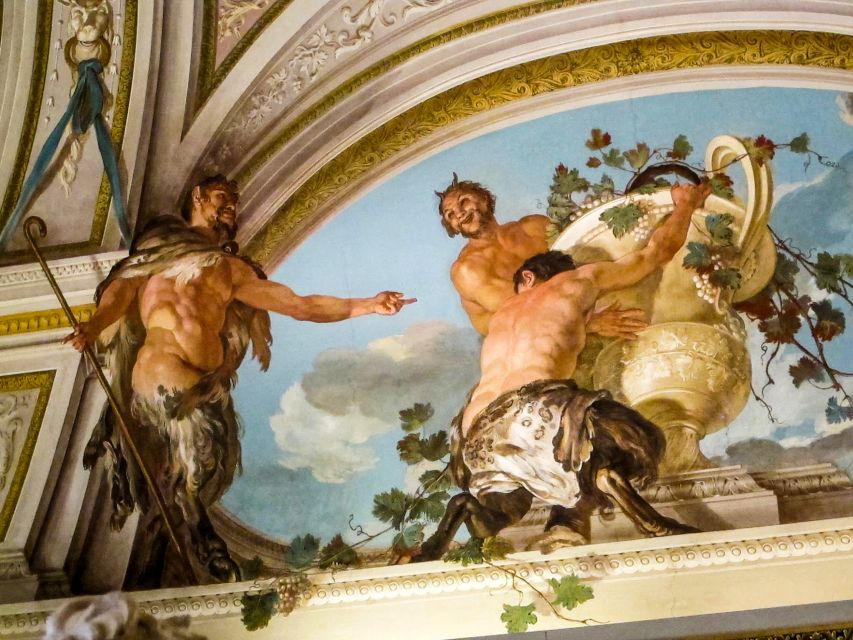
The digital audioguide is a useful middle ground between wandering without context and joining a full guided tour. It can explain how Raphael combined classical beauty with human feeling, how Caravaggio used dramatic light, and how Canova shaped marble into soft-looking skin.
It also lets you stop and start as you please. That is valuable if you are visiting with children, different interests, or someone who prefers to read rather than listen.
The setup takes a little attention at the meeting point. A host may help you download the app, connect to Wi-Fi, or confirm that the QR code is working. It is smart to arrive with your phone charged and enough space for an app, although the activity information specifically identifies the digital audioguide as included.
Do not confuse this with a guaranteed live tour. The standard experience is a timed ticket with independent exploration. Guided tours are available only when that option is selected. Some hosts provide a useful introduction, but that is different from walking through every room with an art historian.
The gallery itself may offer QR codes near many paintings and sculptures. These can be more useful than the supplied audio for certain objects, so use both sources as tools rather than deciding in advance that one must replace the other.
How long you need inside the villa
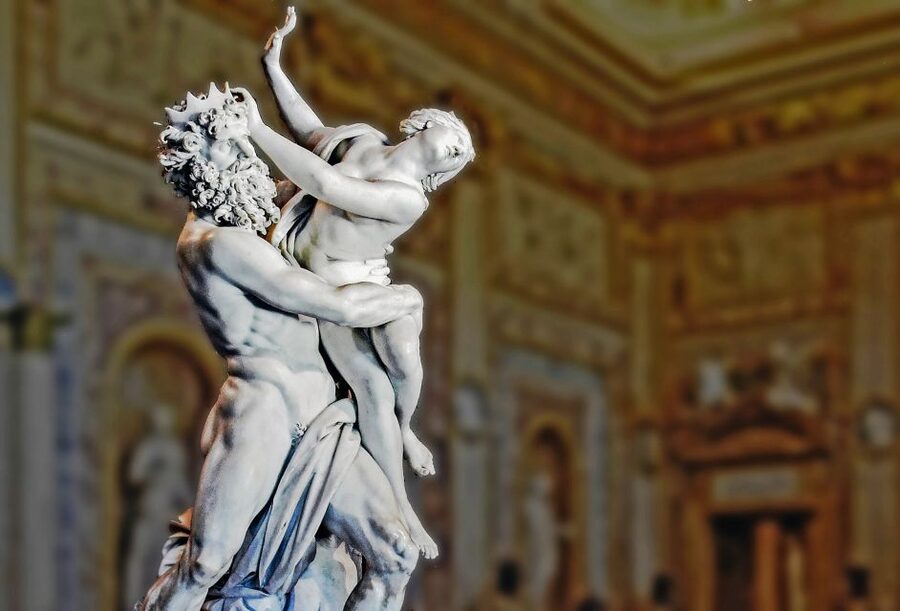
The listed duration is two to four hours, but the actual gallery entry is built around a limited timed visit. For most people, about two hours is enough to see the main rooms and spend meaningful time with the famous works.
You can make two hours work by choosing priorities:
- Give Bernini’s major sculptures several viewing angles.
- Spend quiet time with the Caravaggio paintings.
- Pick a few Raphael, Titian, Rubens, and Canova works rather than trying to read every label.
- Leave a little time for the villa’s ceilings, floors, and decorative details.
A guided option may move you at a set pace. The self-guided version gives you more control, but you must watch the clock yourself. Re-entry is not something to count on. One account specifically notes disappointment at being unable to return to skipped works, so do not rush past a room assuming you can come back later.
The surrounding Villa Borghese Park is a pleasant place to extend your outing, but access to the Borghese Gardens is not included in this ticket. Treat the gallery and the park as separate parts of your day.
Is $53 a fair price?

At $53 per person, this is a convenience purchase rather than a bargain. Several people have noted that official tickets can cost around half as much when bought directly and early.
The calculation changes if the official gallery is sold out. In that situation, paying more may be the difference between seeing the collection and missing it entirely. The ticket also saves you from searching for a last-minute opening and gives you a host who can help with the entrance process.
If you are booking well ahead and can obtain a direct timed ticket, compare prices before paying. If you are in Rome now, finding the gallery sold out, or arranging a visit at short notice, this option has a practical value that goes beyond the admission fee.
Free cancellation up to 24 hours ahead and reserve-now, pay-later terms also help if your schedule is still moving. Check the exact booking conditions for your chosen option before confirming.
Who should book this Borghese experience?
I would choose it for a first visit to Rome if you want major art without spending an entire day in a huge museum. It suits couples, small groups, families with older children, and anyone who prefers to pause at a sculpture instead of following a guide’s pace.
It is especially useful for an art-focused visit planned at short notice. The collection itself is the reason to go, but the host system can remove some of the stress around sold-out tickets and finding the correct entrance.
I would be more cautious if you need step-free access, travel with a stroller, carry large luggage, or expect a full live tour for the standard price. I would also compare the cost with direct admission if your dates are flexible.
Should you book it?
Book this experience if the Borghese Gallery is high on your list and direct tickets are unavailable. The limited entry, helpful meeting-point staff, and freedom to explore make it a dependable way to see Bernini, Caravaggio, Raphael, Titian, and Canova in one concentrated visit.
If you can reserve directly weeks ahead, $53 is hard to justify. If not, the extra cost buys certainty, assistance, and access to one of Rome’s most memorable art collections. Just confirm whether your booking includes the audioguide or a live guide, arrive early at the fountain, and keep your bag small.
FAQ
Where is the meeting point?
Meet at Fontana dei Mascheroni on Viale del Museo Borghese, directly in front of Galleria Borghese. The Crown Tours host wears a purple shirt and carries a flag.
How do I reach the meeting point by bus?
From Pinciana or Museo Borghese, walk along Viale dell’Uccelliera for about two minutes. From S. Paolo Del Brasile, walk along Viale del Museo Borghese for about eight minutes.
Is a live guide included?
The standard activity includes a host or greeter and a digital audioguide. A guided tour is included only if you select that option.
How long does the activity take?
The listed duration is two to four hours. The gallery visit itself is organized around a timed entry, and one booking description identifies a two-hour ticket period.
What artists can I see?
The collection includes works by Bernini, Caravaggio, Raphael, Titian, Rubens, and Canova, along with ancient Roman and Renaissance pieces.
Can I bring a large bag or luggage inside?
No. Only small bags and purses are allowed in the gallery. Larger bags can be left in the free cloakroom at the entrance.
Are strollers and wheelchairs allowed?
Baby strollers and electric wheelchairs are not allowed. The activity is not suitable for wheelchair users or people with mobility impairments.
Can I cancel the booking?
You can cancel up to 24 hours in advance for a full refund. The reserve-now, pay-later option lets you hold a place without paying immediately.
More Skip-the-Line Audio Tours in Rome
- Borghese Gallery Skip-the-Line Entry Ticket with Audioguide
★ 4.0 · 345 reviews - Rome Pantheon Fast Track Experience With Audio
★ 4.5 · 66 reviews - Rome Pantheon Guided Audio Tour Skip The Line Escorted Entrance
★ 4.0 · 63 reviews - Pantheon Skip the Line Entry Tickets with Digital Audio Guide
★ 3.5 · 52 reviews
Latest audio tours in Rome
- Pantheon Skip the Line Entry Tickets with Digital Audio Guide★ 3.5 · 52 reviews
- St. Peter’s Basilica: Dome Climb with Lift & Audioguide★ 4.5 · 13 reviews
- Audio guide in Vatican Museums and Sistine Chapel★ 4.5 · 12 reviews
- The Roman Jewish Ghetto: A Self-Guided Audio Tour★ 4.0 · 8 reviews
- Experience: The Pantheon Audio Tour★ 4.5 · 4 reviews
- Trastevere: A Self-guided Audio Tour of Rome’s Medieval Village★ 4.5 · 3 reviews
- Navova square underground with audioguide★ 4.5 · 17 reviews
- The Colosseum’s Attic with 3rd, 4th & 5th Levels with Audio Guide★ 4.5 · 20 reviews
Museum Audio Tours, compared.

Uffizi Priority Ticket & Masterpieces Audio App
Read our review →
Louvre Museum Hosted Entry and Mona Lisa Audioguide
Read our review →
St. Mark Basilica Ticket, Audioguide+History Gallery
Read our review →
Borghese Gallery Skip-the-Line Ticket & Audioguide
Read our review →
Borghese Gallery Ticket + Audioguide or Guided Tour
Read our review →
Orsay Museum Entry Ticket and Digital Audio Guide App
Read our review →
Uffizi Gallery Timed Entry Ticket & Audio Guide
Read our review →
Acropolis Museum Ticket with optional Audio Guide
Read our review →Browse the lists this tour appears in