
Reviewed · JAPAN
Tokyo: 60min Panoramic Open Top Bus Tour with Audio Guide
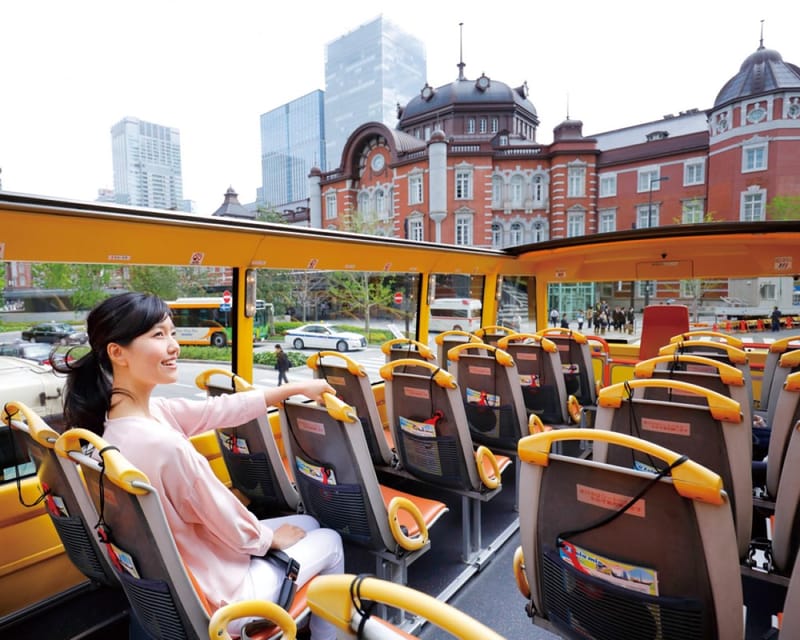
Tokyo looks different from the upper deck of a moving bus. You get wide views of the National Diet Building, Tokyo Tower, Rainbow Bridge, and Tokyo Bay without stopping every few minutes to cross a street or find the next train. The route gives you a quick, lively first look at central Tokyo.
I like the excellent $14 price and the simple one-hour format. I also like the eight-language GPS guidance, which lets you follow along in English, Chinese, Korean, Spanish, French, Thai, Indonesian, or Vietnamese while a Japanese guide handles the tour.
The main catch is the weather. Rain can close the roof or cancel the ride, and this is a sightseeing loop, not a hop-on hop-off bus. You see many places, but you do not get off to explore them.
Key points to know before you board
- Tokyo Tower from several angles: The moving route gives you changing views that are hard to get from one ordinary lookout.
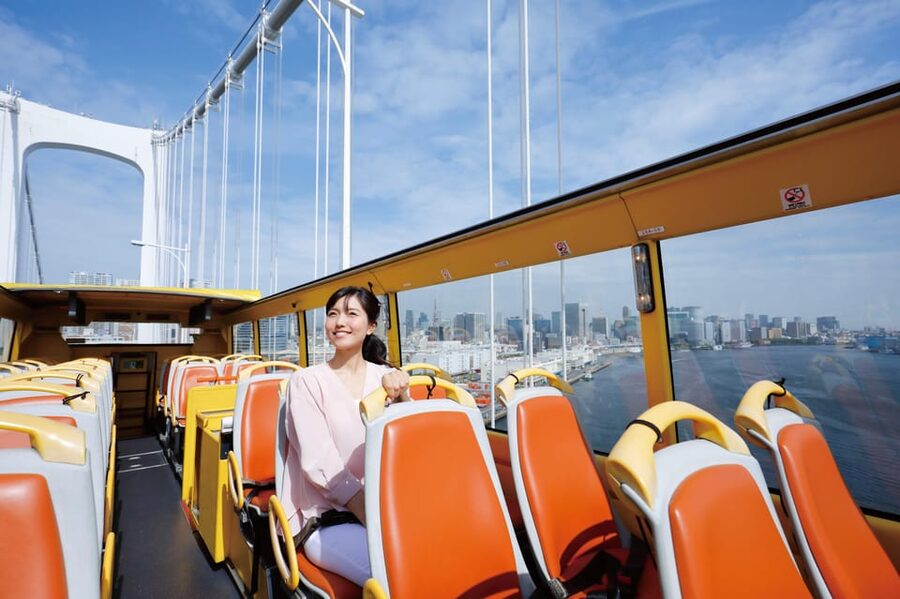
- Rainbow Bridge with open air above you: When the roof is open, the breeze across Tokyo Bay is part of the experience.
- Eight-language GPS audio: Bring a Japan-ready smartphone and your own earphones because neither is supplied.
- A full central Tokyo circuit in one hour: You pass government buildings, shopping districts, waterfront areas, and old-market streets without changing transport.
- A very low-cost introduction: At $14 per person, it works well as a first look before choosing where to spend more time.
- Rain affects the ride: The roof may close, and heavy rain or bad weather can lead to cancellation.
What this Tokyo bus ride is really like
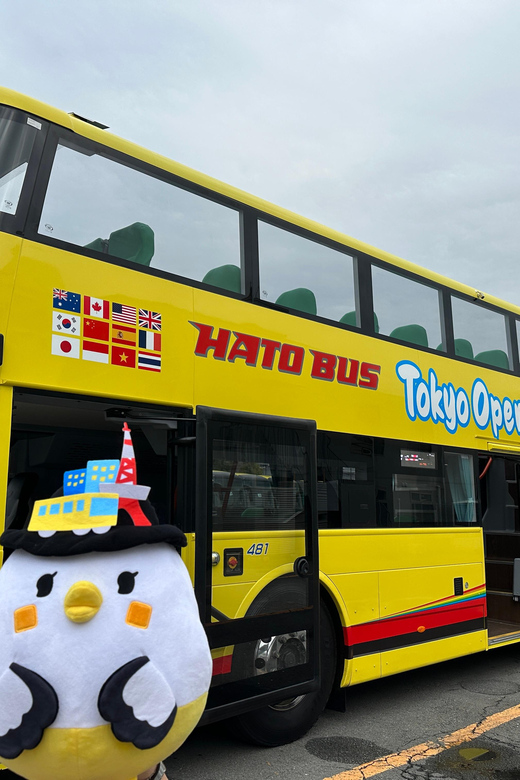
This is a compact sightseeing circuit that begins and ends at the Hato Bus Tokyo Office near Tokyo Station. The bus is a double-decker with an open top when conditions allow. You stay on board for the full hour, so the experience is closer to a moving viewpoint than a traditional guided walking tour.
The Japanese-speaking guide gives live direction, while the GPS system provides recorded information in eight languages. That split matters. You can understand the main commentary in your own language, but you should still expect the live guide to operate in Japanese.
I see this as a useful way to get your bearings early in a Tokyo visit. You will not receive a detailed stop-by-stop tour with time on the ground. Instead, you get a broad sweep of the city and a chance to note places you want to revisit by train or on foot.
The bus passes each sight rather than stopping for visits. Keep your camera ready, but do not expect long photo breaks. Tokyo traffic can also affect how quickly each view appears, so the route should be treated as a sightseeing ride, not a tightly timed collection of guaranteed photo stops.
More Bus Audio Tours in the world
- Rome: City Sightseeing Hop-on Hop-off Bus with Audioguide
★ 4.0 · 16,045 reviews - Milan: City Sightseeing Hop-On Hop-Off Bus with Audio Guide
★ 4.0 · 6,256 reviews - Rome: Hop-on Hop-off Sightseeing Bus Tour with Audioguide
★ 4.1 · 4,801 reviews
Starting at Tokyo Station and Hibiya Park
The meeting point is the Hato Bus Tokyo Office near the Marunouchi South Exit of JR Tokyo Station. After leaving the station, turn left and walk straight for about two minutes. Look for the yellow Hato Bus stop.
Tokyo Station is large, so allow extra time if you are unfamiliar with its exits. The stated meeting point is near the Marunouchi South Exit, not simply any part of the station. The listed coordinates are 35.678964, 139.765781, which can help if you use a map app.
Once the bus leaves, the route passes Hibiya Park. This green space sits beside some of Tokyo’s major government and business districts. From the bus, you get a quick contrast between formal city blocks and open parkland.
Because Hibiya Park is only a pass-by point, you should not plan to get off here. If you later want a slower look at the area, note its location and return independently.
The National Diet Building and Toranomon
The next part of the route moves past the National Diet Building. Japan’s parliament is one of the city’s most recognizable government buildings, and its formal design makes a strong sight from the upper deck.
You will see it from the road rather than enter the building. That is typical of this tour. The value is the quick visual connection between several important parts of Tokyo, not an inside visit or a long explanation at one location.
The bus then passes through Toranomon, a central district known for offices, major roads, and new development. From an open-top bus, you can watch the city change block by block. Government buildings give way to tall commercial structures, with Tokyo Tower soon becoming the main visual reward.
I would keep your phone or camera ready here. The bus continues moving, and the best view may last only a short time.
Tokyo Tower from a moving upper deck
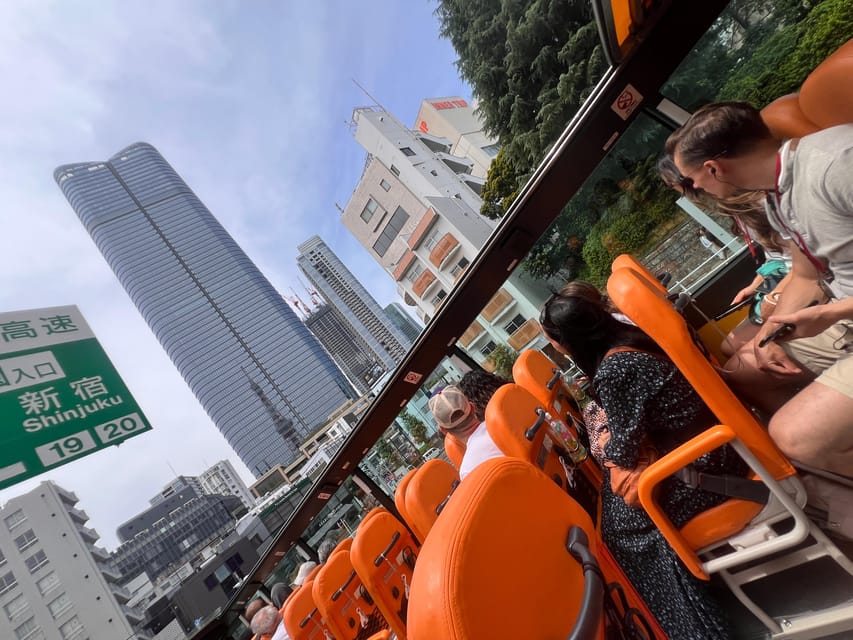
Tokyo Tower is one of the strongest parts of the ride. The route gives you views from different angles rather than one fixed overlook. That changing perspective is useful because Tokyo Tower can look very different depending on the surrounding streets and buildings.
You will not go up Tokyo Tower on this experience. You will also not stop for a dedicated photo session. Still, seeing it rise above the city from an open-top bus gives you a clear sense of its place in central Tokyo.
This is one reason the tour works well near the start of a trip. You can see the tower, understand roughly where it sits, and decide later if you want to visit it directly. The audio guidance should add context as the bus approaches and passes it, provided your phone and GPS connection work as expected.
The system is free to use, but it comes with practical limits. You must bring a smartphone that works in Japan and your own earphones. No GPS device or earphones are available for rental. If the system fails or your earphones do not work, there is no refund for that technical problem.
More Audio Tours in the world
- Barcelona: Sagrada Familia Entry Ticket with Audio Guide
★ 4.6 · 105,312 reviews - Rome: Pantheon Fast-Track Ticket and Official Audioguide
★ 4.5 · 27,353 reviews - Barcelona: Casa Batlló Entry with Self-Audioguide Tour
★ 4.7 · 25,359 reviews - Rome: Colosseum & Forum with Audio Guide App -Optional Arena
★ 4.2 · 24,770 reviews
Crossing toward Rainbow Bridge and Tokyo Bay
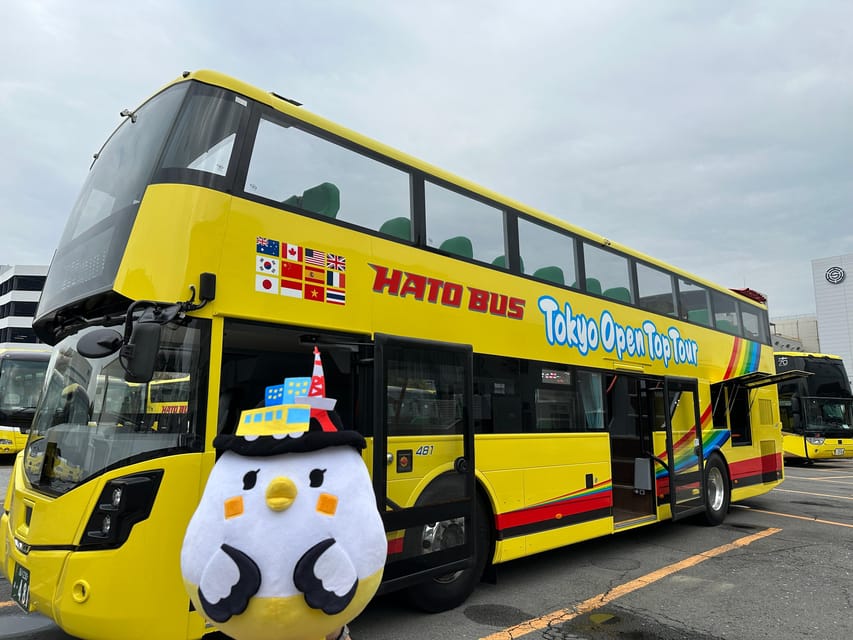
The ride then heads toward Rainbow Bridge, one of Tokyo’s most memorable road crossings. With the roof open, this is where the bus format makes the biggest difference. You can feel the wind and get broad views rather than looking through a side window.
The route passes the bridge instead of stopping on it. That means the experience is about movement: the city opens out, the water comes into view, and the skyline changes as the bus continues toward the bay area.
Weather matters most here. A rainy day may mean the roof is closed, which changes the feel of the ride. Heavy rain or poor conditions can cancel the tour altogether. If the open-air part is your main reason for booking, check the forecast and keep your schedule flexible.
Even with the roof closed, the route still covers the same general sights, but the panoramic effect will be reduced. I would not book this as your only Tokyo activity on a day when bad weather could leave you disappointed.
Odaiba and Toyosu from the road

After Rainbow Bridge, the bus passes Odaiba. This waterfront district is known for broad roads, modern buildings, and open views. From the upper deck, you get a useful sense of how separated the bay districts feel from the older central neighborhoods.
Again, Odaiba is not a stop. You cannot leave the bus to explore its attractions or waterfront spaces. The tour gives you orientation rather than a complete visit.
Toyosu follows as the route continues around Tokyo Bay. The area is another example of how quickly Tokyo changes across a short distance. You move from central government and shopping districts to wide waterfront development, then later return toward older commercial streets.
The bus does not promise a detailed explanation of every building. The GPS narration is best viewed as a guide to the general sights and route. You will get more from it if you listen while also watching the city around you.
Tsukiji Outer Market, Kabuki-za, and Ginza

The return leg passes Tsukiji Outer Market, one of the city’s best-known food areas. Since the bus does not stop, you will not have time to browse stalls or eat during this tour. Treat the view as a reminder to come back separately if the market interests you.
Food is not allowed on the bus, and drinks are restricted to plastic bottles. This is worth knowing before you board. Do not bring a meal for the ride, and finish anything you have purchased before departure.
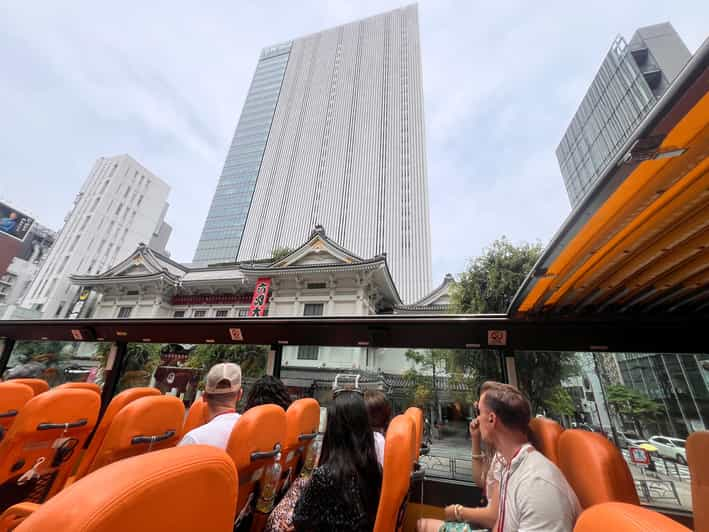
Next comes Kabuki-za, the famous theater in Ginza. Even from a passing bus, its distinctive appearance gives the route a cultural touch after the waterfront and government districts. You will not attend a performance or enter the theater on this one-hour circuit.
The final section passes through Ginza, Tokyo’s polished shopping district. Ginza gives you a strong finish because the route brings together large avenues, department stores, commercial buildings, and busy city movement before returning to Tokyo Station.
I like this sequence because it avoids showing only one side of Tokyo. In one hour, you see official Tokyo, old market Tokyo, waterfront Tokyo, and high-end shopping Tokyo. The tradeoff is that each part receives only a brief look.
The audio guide and what you need to bring

The GPS automated guidance is available in English, Chinese, Korean, Spanish, French, Thai, Indonesian, and Vietnamese. That is a useful range, especially for a short ride where you do not want to spend time reading a printed guide.
Bring your own smartphone and earphones. Your phone must work in Japan, and the GPS system depends on that device. The operator does not provide a phone, GPS unit, or earphones.
The live guide speaks Japanese. The automated system supplies multilingual information, but it does not turn the tour into a live English-language tour. If you want personal questions answered in English, this may not be the right format.
I would test your earphones before reaching the bus stop. Since the guidance is free, technical problems do not qualify for a refund. This is a small detail, but it can make a big difference on a one-hour experience.
What $14 gets you
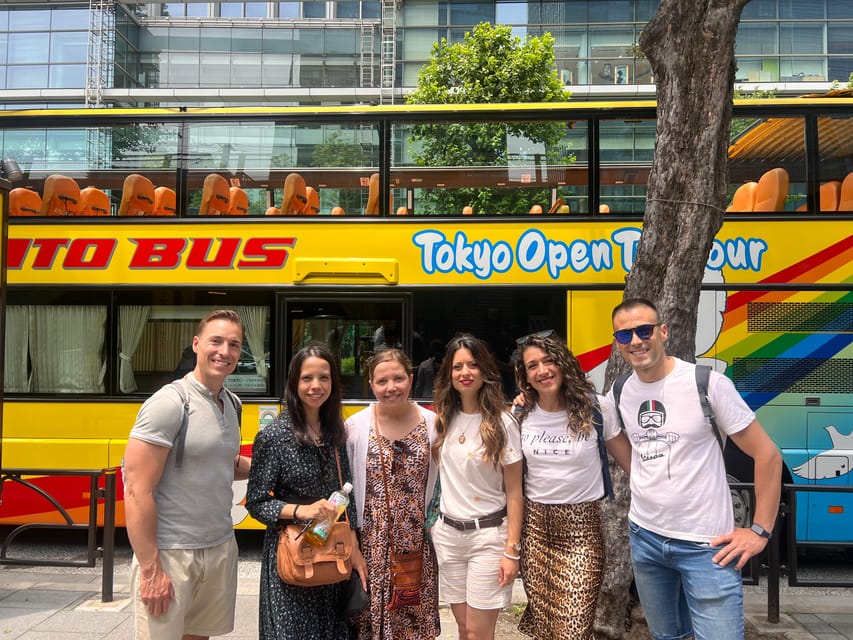
At $14 per person, this is one of the easier Tokyo activities to justify. You are paying for a full hour on a double-decker open-top bus, a broad central route, and multilingual automated guidance. There is no hotel pickup, food, or drink included, but the low price reflects that simple setup.
The value is strongest if you want an overview. You can pass many major areas without paying separate train fares, working out several transfers, or spending your first morning finding each district. You also get the upper-deck view, which public trains and ordinary buses rarely provide.
The value is weaker if you want to explore landmarks in detail. You do not get off at Hibiya Park, the National Diet Building, Tokyo Tower, Rainbow Bridge, Odaiba, Toyosu, Tsukiji, Kabuki-za, or Ginza. You will need separate visits for all of them.
The 4 out of 5 rating from 40 reviews fits the experience well. The strongest points are the comfortable one-hour format, the complete route guidance, and the unusual angles on Tokyo Tower. One three-star comment provides little detail, so I would not read too much into it. This is a straightforward city overview, and its success depends heavily on clear weather and working audio equipment.
Who should book this ride
I would recommend it to first-time visitors who want a quick orientation, especially if Tokyo feels too large to tackle district by district. It also suits anyone with limited time, since the whole activity takes only one hour and returns to the same central meeting point.
Families may find the short length manageable. Children under six can join free without a seat, with one child per adult. If a child needs a seat, the stated free arrangement does not apply, so check the booking terms before you go.
The tour also suits photographers who want changing views of Tokyo Tower and Rainbow Bridge. Keep in mind that you are photographing from a moving bus, so timing and weather will affect your results.
I would choose a different activity if you want a walking tour, a food stop, entry to Tokyo Tower, a visit inside Kabuki-za, or a personal guide speaking your language. This is a panoramic circuit, not an in-depth visit.
Cancellation is flexible up to 24 hours before departure for a full refund, and you can reserve now and pay later. That is helpful when your Tokyo schedule depends on weather. Still, a cancellation caused by heavy rain remains a real possibility, so avoid placing this ride immediately before an important train or flight.
My call: book it for the view, not the stops
I would book this tour if you want a low-cost introduction to Tokyo and can accept staying on the bus. The combination of Tokyo Tower, Rainbow Bridge, waterfront districts, Ginza, and multilingual GPS guidance gives you a lot in one hour.
Choose a clear-weather time if you can. The open roof and Tokyo breeze are central to the appeal, and the views lose some force when the roof is closed.
Skip it if your priority is getting inside attractions or spending time at each place. For everyone else, this is a practical first look at a huge city, with enough memorable views to help you plan the rest of your Tokyo visit.
FAQ
Where does the Tokyo open-top bus tour begin and end?
It begins and ends at the Hato Bus Tokyo Office near the Marunouchi South Exit of JR Tokyo Station. From the exit, turn left and walk straight for about two minutes to the yellow Hato Bus stop.
How long is the tour?
The tour lasts one hour.
Is this a hop-on hop-off bus?
No. You remain on the bus for the full circuit and return to the starting point.
Which sights does the bus pass?
The route passes Hibiya Park, the National Diet Building, Toranomon, Tokyo Tower, Rainbow Bridge, Odaiba, Toyosu, Tsukiji Outer Market, Kabuki-za, and Ginza.
What languages are available for the audio guide?
GPS automated guidance is available in English, Chinese, Korean, Spanish, French, Thai, Indonesian, and Vietnamese. The live guide speaks Japanese.
Do I need to bring anything?
Bring a smartphone that works in Japan and your own earphones. GPS devices and earphones are not provided.
What happens if it rains?
The roof may be closed in rainy conditions. The tour may also be canceled because of bad weather or heavy rain. Food is not allowed on the bus, but drinks in plastic bottles are permitted.
Latest audio tours in the world
- Seville Maestranza Bullring Tour with Audio Guide★ 3.5 · 6 reviews
- Seville Scavenger Hunt and Highlights Self Guided Audio Tour★ 5.0 · 5 reviews
- Seville Audio guided walking tour 3h20 and 28 audio commentaries★ 5.0 · 2 reviews
- Royal Alcazar of Seville Entry Ticket with Audio Guide★ 4.0 · 42 reviews
- Seville Cathedral and La Giralda Entry Ticket with Audio Guide★ 3.0 · 9 reviews
- Seville Cathedral and Giralda Entry Tickets with Audio Guide★ 4.0 · 56 reviews
- Essential Seville’s Ancient History: An Audio Tour★ 5.0 · 9 reviews
- Sequoia National Park Self-Guided Audio Tour★ 4.5 · 9 reviews
Bus Audio Tours, compared.
City Sightseeing Hop-on Hop-off Bus with Audioguide
Read our review →
City Sightseeing Hop-On Hop-Off Bus with Audio Guide
Read our review →
City Bus Tour with Audio Guide and Lake Cruise
Read our review →
Tootbus Panoramic by Night Bus Tour with Audioguide
Read our review →
City Sightseeing Hop-On Hop-Off Bus Tour with Audio Guide
Read our review →
Trakai Tour with Audio Guide and Minibus Transfers
Read our review →Browse the lists this tour appears in