Reviewed · ROME
Rome: Roman Forum Super Pass Entry with Audio Guide App
The best thing about this pass is the freedom to explore the Roman Forum and Palatine Hill at your own pace. You can pause at a temple, spend extra time with a fresco, or wander off the suggested route without being tied to a guide or a large group. The pass also opens several special areas that ordinary entry does not always cover, including the Houses of Augustus and Livia.
I especially like the access to the Palatine Museum and the compact digital audio guide, which helps turn scattered ruins into a readable story. The $25 price is fair if you give the site half a day. The main catch is that the map can be confusing, some areas may close for conservation, and this ticket does not include the Colosseum.
Key points at a glance

- Special rooms with ancient frescoes: See the House of Augustus, House of Livia, Aula Isiaca, and Loggia Mattei when open.
- Flexible entry: Use the ticket within 30 days of purchase, then explore on the day you validate it.
- More than the main Forum: Your pass covers Palatine Hill, the Imperial Forum, museums, Santa Maria Antiqua, and the Curia Iulia.
- Useful audio support: The app gives short explanations and can work offline, but download it before you reach the entrance.
- Plan for at least three hours: A half-day is a better fit if you want the museums and special sites rather than a quick walk.
- No Colosseum access: You need a separate ticket if the amphitheater is part of your Rome plan.
What the $25 Forum Pass actually gives you
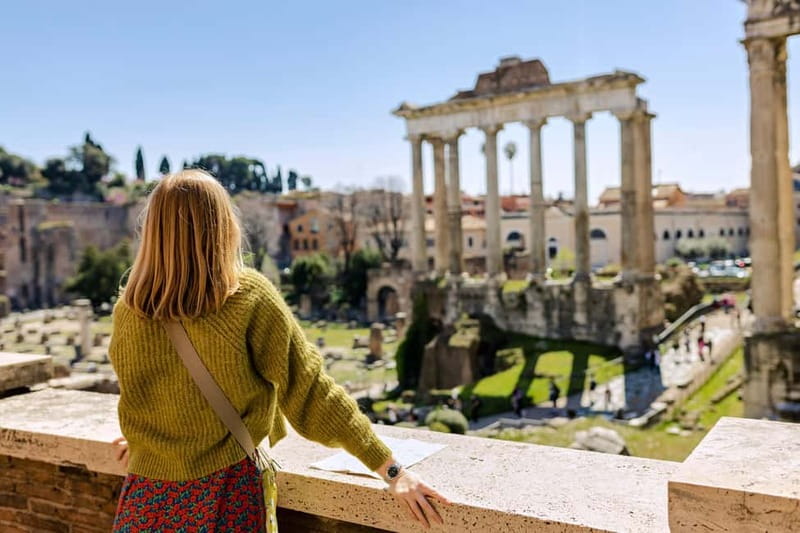
This is not simply a ticket to a field of broken columns. The pass brings together the Roman Forum, Palatine Hill, Imperial Forum, museums, imperial houses, and several archaeological rooms that are easy to miss if you only follow the main path.
At $25 per person, the value depends on how long you stay. A quick visit focused only on the central Forum may not make the pass feel essential. If you spend three to five hours moving through the museums, palaces, frescoes, and viewpoints, the price becomes much easier to justify.
There is no scheduled entry time. You can use the ticket at any point within 30 days of purchase, but once you validate it, it is valid only for that day. This gives you useful flexibility if rain, heat, or a crowded morning changes your plans.
The ticket is non-refundable, so check names carefully when booking. You must provide the name of each person in your party, or entry may be refused. The pass is a self-guided experience, not a personal tour with an archaeologist.
More History Audio Tours in Italy
- Colosseum, Roman Forum & Palatine Hill with Audioguide App
★ 4.4 · 6,291 reviews - Rome: Colosseum, Ancient Rome Tour or AudioGuided Tour
★ 4.4 · 2,879 reviews - Colosseum, Roman Forum & Palatine Hill Entry and Audioguide
★ 4.1 · 2,475 reviews
Choosing an entrance and getting oriented
You can present the voucher at several entrances: Via Sacra near the Arch of Titus, Via di San Gregorio, Via del Tulliano, Via del Foro Romano, or Piazza della Madonna di Loreto near Trajan’s Column.
This choice matters. Entering near the Arch of Titus puts you close to the Forum and can lead you through the site in a different order than the app expects. One practical problem is that the phone map may place you at a different point from the numbered stops. Take a few minutes at the entrance to identify where you are before following the audio route.
The app works best when you have already downloaded it and checked the instructions from your booking confirmation. The audio is generally short and focused. It may start automatically near important statues or buildings, which is handy when your hands are busy taking photographs. The map can be harder to follow on a small phone screen, so use the physical signs as well.
There is no staff member waiting at the meeting point. You go directly to an entrance and show your voucher. That keeps things simple, but it also means you need to solve basic orientation questions yourself.
Walking through the Roman Forum
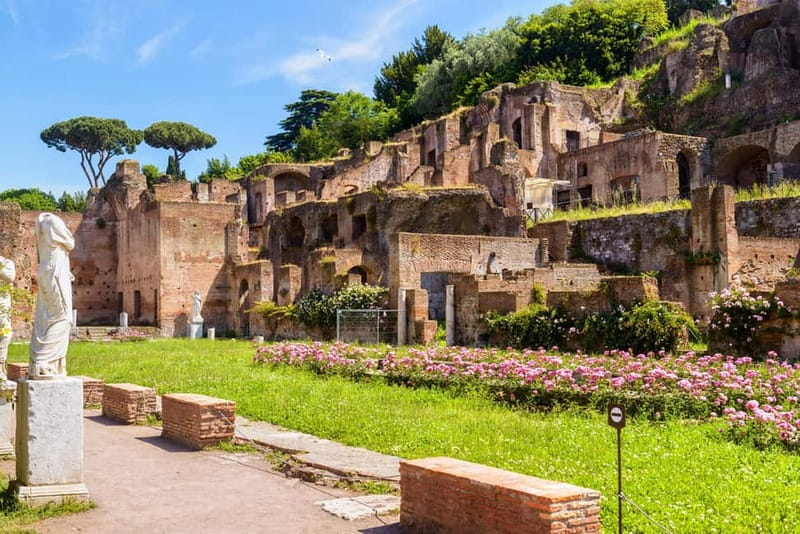
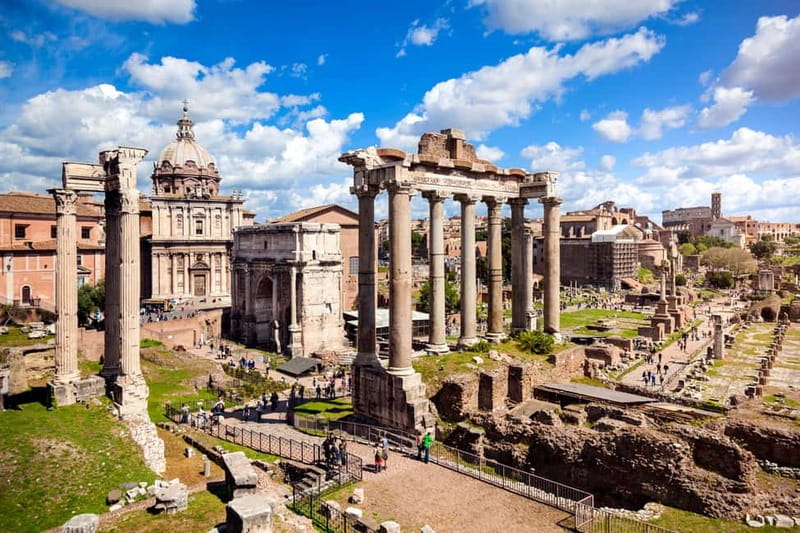
The Roman Forum is the heart of the visit. Here, ancient government buildings, temples, basilicas, and public spaces spread across a wide archaeological area. The scale is the point. Even when Rome is crowded, the site has enough open space that you can usually move away from the main flow.
I like to begin slowly. Look across the central Forum before chasing individual ruins. The surviving fragments make more sense when you understand that this was not one building, but a busy civic center used for politics, religion, law, ceremonies, and public life.
The audio guide helps by giving short explanations instead of asking you to read every sign. It is not a replacement for a live guide, and coverage does not extend equally to every corner. Still, the short format suits the site because you can listen, look, and then continue without waiting for a group.
Allow extra time for uneven ground, slopes, and detours. Archaeological work can close parts of the route or force the app’s suggested path to change. Signs are useful, but the route may not match the original plan exactly.
The Roman Forum Museum and Temple of Romulus
The Roman Forum Museum adds useful indoor context to the open-air ruins. Exhibits and artifacts help explain what the buildings looked like and how objects were used. After seeing a broken wall outside, a museum display can give you a clearer sense of the craftsmanship behind it.
The Temple of Romulus is also included. Its presence adds variety to the visit because you are not only looking at foundations and scattered stones. The museum and temple are good stops if heat or strong sun makes the outdoor route tiring.
The site has ongoing exhibitions, so what you see can change. Access to some special areas is restricted to protect valuable paintings. That is sensible conservation, but it means the exact experience can vary on the day you visit.
More History Audio Tours in Rome
- Rome: Colosseum, Roman Forum & Palatine Hill Visit + Audio Guide
★ 3.5 · 1,522 reviews - Colosseum, Roman Forum, Palatine Guided Tour or AudioGuide Option
★ 4.5 · 631 reviews - Colosseum, Roman Forum & Palatine Hill Admission With Audio Guide
★ 4.5 · 586 reviews - Colosseum & Roman Forum Entry with Audio Guide
★ 4.3 · 429 reviews
Palatine Hill, imperial palaces, and the best views
Palatine Hill is where the visit opens up. As one of Rome’s Seven Hills and the central hill of the ancient city, it gives you room to walk among palace remains and gardens while looking back toward the Forum and the Colosseum.
The views are one of the strongest reasons to include this pass. From the hill and museum areas, you can see the archaeological core from above instead of trying to understand it from ground level. The Palatine Museum also offers sculptures, frescoes, and displays about the hill’s long story. An interactive video about the hill’s development is a useful change from static ruins.
The Domus Tiberiana introduces the remains of an imperial palace complex. The Ninfeo della Pioggia adds another unusual stop, with water-related architectural remains that show how carefully Roman elite spaces were designed.
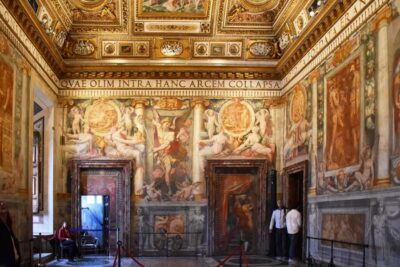
The House of Augustus and House of Livia are the special-access highlights for many people. Their frescoes give you something the broad Forum cannot: color, decoration, and a closer look at private imperial interiors. These rooms may be more memorable than another set of columns because the paintings make ancient life feel immediate.
Opening schedules matter. From March through September 2025, the Palatine Museum, Aula Isiaca and Loggia Mattei, House of Augustus, House of Livia, and Domus Tiberiana were scheduled for 9:00 AM to 6:00 PM, with last entry at 5:30 PM. Santa Maria Antiqua stayed open until 6:30 PM, with last entry at 6:00 PM. The House of Augustus closed Mondays, and the House of Livia closed Tuesdays. Check the current schedule before setting your route, since special sites can have different hours.
Santa Maria Antiqua and the frescoed rooms
Santa Maria Antiqua is one of the most rewarding places to slow down. It contains well-preserved wall paintings and gives you a sharper sense of how color shaped ancient and early Christian interiors.
The Aula Isiaca and Loggia Mattei are also included. These are not large headline monuments, but they reward close attention. The rooms and frescoes show why the Super sites matter: they add detail to a visit that might otherwise be dominated by grand ruins and sweeping views.
Access can be restricted to protect the paintings. Do not assume every special room will be open simply because it is listed on the pass. If a room is available, make it a priority rather than leaving it for the final half-hour.
The House of the Vestals and Curia Iulia
The House of the Vestals connects the Forum to the women who maintained Rome’s sacred fire. The remains are not a complete house, but the site gives you a place to think about the public duties and strict expectations placed on the Vestal Virgins.
The Curia Iulia, the ancient Senate house, offers a different kind of insight. It brings the political machinery of Rome into focus. Together, these stops balance religious life and government, two forces that shaped the Forum.
The route also includes the House of Augustus and House of Livia, so you move from public buildings into spaces linked with imperial power and domestic life. That range is what makes the pass feel broader than a basic ruin walk.
The Imperial Forum route
The Imperial Forum is a separate but connected part of ancient Rome’s center. The route includes the Forum of Caesar and Forum of Nerva, where you can see how later rulers expanded and reshaped the political heart of the city.
The walk works best after you understand the main Roman Forum. You begin to notice the changing ambitions of different emperors, rather than seeing every ruin as part of one undifferentiated ancient site.
Piazza della Madonna di Loreto near Trajan’s Column is one of the listed access points. If you are already near that area, it can be a convenient place to begin or finish. If you start at the Forum instead, pay attention to the route order, since entering from Via Sacra may put you on the suggested path in reverse.
How much time should you set aside?
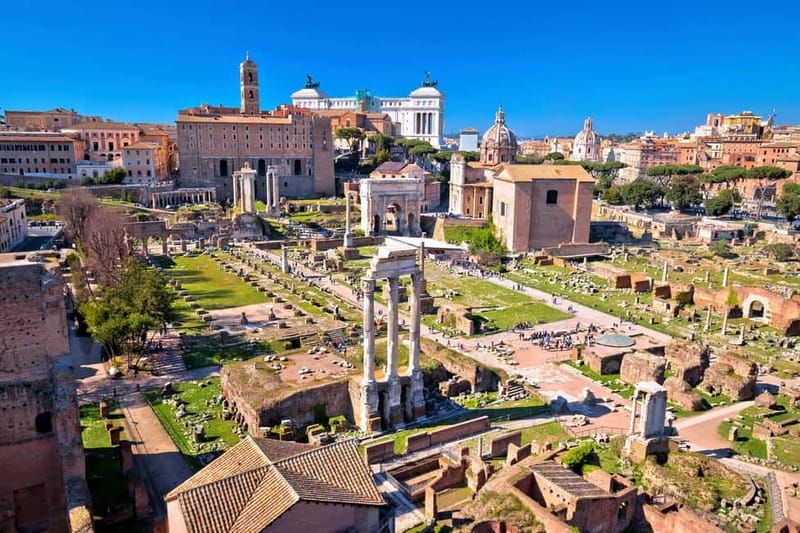
Three hours is the bare minimum for a meaningful visit. That allows time for the main Forum, Palatine Hill, a museum, and several special rooms without stopping at every display.
I would plan a half-day if ancient history is a main reason for your Rome trip. The site covers a lot of ground, and the best parts are spread out. Moving quickly from one landmark to another can leave you with a long list of names but little sense of how the city worked.
Bring water and food planning into your schedule. Food and drinks are not included, and there are long distances between sections. The information supplied does not promise food service inside the route, so do not count on finding a convenient meal once you are in the archaeological area.
Toilet queues can also be frustrating. Build in time rather than waiting until you urgently need a break. Comfortable shoes are a sensible choice because the visit involves extensive walking, slopes, and historic surfaces.
Closures, conservation, and free days
Archaeological sites change often. Excavations, repairs, and conservation work may close rooms or adjust the walking route. The audio guide may point toward a section that is temporarily unavailable, so treat it as a helpful aid rather than a guarantee that every stop will be open.
The Domus Transitoria is closed and cannot be visited. Access to the Super sites can also be limited to protect important paintings.
This pass does not work on free-admission days, including the first Sunday of the month and Liberation Day on April 25. On those dates, entry is first come, first served, and you must obtain an admission ticket through the public system instead.
The route is barrier-free and wheelchair accessible according to the activity information. Small dogs are allowed in special carriers, but dog prams are not permitted.
Who will get the most from this pass?
I would choose it for independent visitors who enjoy stopping often and setting their own pace. It is also a good match for anyone who has already taken a short Forum tour and felt that the main ruins received too little time.
Families and mixed-interest groups may appreciate the ability to split up briefly and meet later, although the scale of the site requires clear planning. The audio guide is short enough for people who do not want a long lecture.
You might prefer a live guided tour if you want a single person to explain the political and religious story as you walk. This ticket gives you access and information, but you must connect the pieces yourself.
Should you book the Roman Forum Super Pass?
Book it if you want more than a quick look at the Forum. The $25 cost makes sense when you use the Palatine Museum, imperial houses, frescoed rooms, Santa Maria Antiqua, and the Imperial Forum. The flexibility is valuable, especially since you can buy it ahead and use it within 30 days.
Skip it if your Rome schedule allows only a short visit, or if your main goal is the Colosseum. The Colosseum is not included, and the pass is non-refundable. For the best experience, download the audio guide before arrival, choose your entrance with care, check special-site opening days, and reserve at least half a day.
FAQ
Does this pass include the Colosseum?
No. Access to the Colosseum is not included and requires a separate ticket.
How long is the pass valid?
You can use the ticket within 30 days of purchase. After you validate it, it is valid only for that day.
Do I need to reserve a time?
No. This one-time admission ticket does not require a time reservation.
What sites are included?
The pass includes the Roman Forum, Roman Forum Museum, Palatine Hill, Palatine Museum, Imperial Forum, Temple of Romulus, Domus Tiberiana, Santa Maria Antiqua, Curia Iulia, Aula Isiaca and Loggia Mattei, House of Augustus, House of Livia, House of the Vestals, ongoing exhibitions, and other listed archaeological areas.
Is an audio guide included?
Yes. The ticket includes a digital audio guide app. Instructions are sent with the booking confirmation.
Should I download the app before arriving?
Yes. Download it before you go so you are not trying to set it up at the entrance. The audio guide can work offline.
How much time should I allow?
Allow at least three hours. A half-day is better if you want to see the museums, Palatine Hill, special rooms, and Imperial Forum without rushing.
Where can I enter?
You can enter through Via Sacra near the Arch of Titus, Via di San Gregorio, Via del Tulliano, Via del Foro Romano, or Piazza della Madonna di Loreto near Trajan’s Column.
Is the route wheelchair accessible?
Yes. The full route included in the Forum Pass is described as barrier-free, and the activity is wheelchair accessible.
Are dogs allowed?
Small dogs are allowed in special carriers. Dog prams are not allowed.
Is the pass valid on free-admission days?
No. It does not work on free days such as the first Sunday of the month and April 25. On those dates, admission is first come, first served.
More Smartphone Audio Tours in Rome
- St. Peter’s Basilica, Optional Dome Access & Rome Audio App
★ 3.8 · 2,052 reviews - Rome: Colosseum Express Entry with Audio Guide App
★ 4.0 · 1,507 reviews - Pantheon Full Experience With Host & Interactive Audio App
★ 4.3 · 587 reviews - Colosseum Entry with digital audioguide and arena option
★ 4.3 · 430 reviews
More Smartphone Audio Tours in Italy
- Rome: Colosseum & Forum with Audio Guide App -Optional Arena
★ 4.2 · 24,770 reviews - Rome: Castel Sant’Angelo Entry Ticket & Digital Audioguide
★ 4.7 · 5,347 reviews - Rome: Castel Sant’Angelo Entry Ticket & Audio App
★ 4.3 · 4,952 reviews - Rome: Pantheon Priority Entry Ticket & Audio Guide App
★ 4.1 · 3,234 reviews
Latest audio tours in Rome
- Pantheon Skip the Line Entry Tickets with Digital Audio Guide★ 3.5 · 52 reviews
- St. Peter’s Basilica: Dome Climb with Lift & Audioguide★ 4.5 · 13 reviews
- Audio guide in Vatican Museums and Sistine Chapel★ 4.5 · 12 reviews
- The Roman Jewish Ghetto: A Self-Guided Audio Tour★ 4.0 · 8 reviews
- Experience: The Pantheon Audio Tour★ 4.5 · 4 reviews
- Trastevere: A Self-guided Audio Tour of Rome’s Medieval Village★ 4.5 · 3 reviews
- Navova square underground with audioguide★ 4.5 · 17 reviews
- The Colosseum’s Attic with 3rd, 4th & 5th Levels with Audio Guide★ 4.5 · 20 reviews
Smartphone Audio Tours, compared.
Colosseum & Forum with Audio Guide App -Optional Arena
Read our review →
Timed Entry to Michelangelo’s David + Audio App
Read our review →
Cathedral & Brunelleschi’s Dome Ticket & Audio App
Read our review →
Michelangelo’s David Priority Ticket & Audio App
Read our review →
Uffizi Priority Ticket & Masterpieces Audio App
Read our review →
Castel Sant’Angelo Entry Ticket & Digital Audioguide
Read our review →