
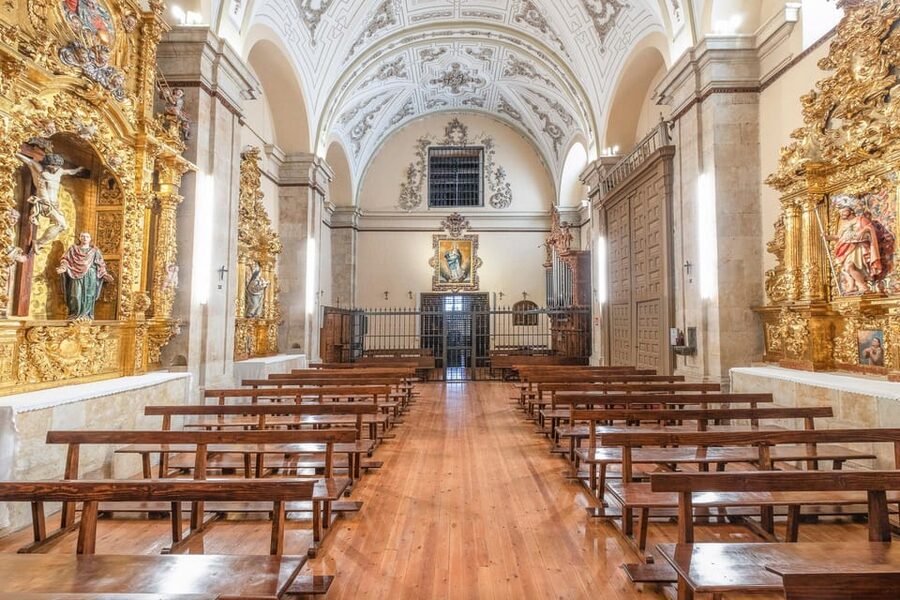
Reviewed · SPAIN
Salamanca: Convent of Las Claras with Free Audioguide
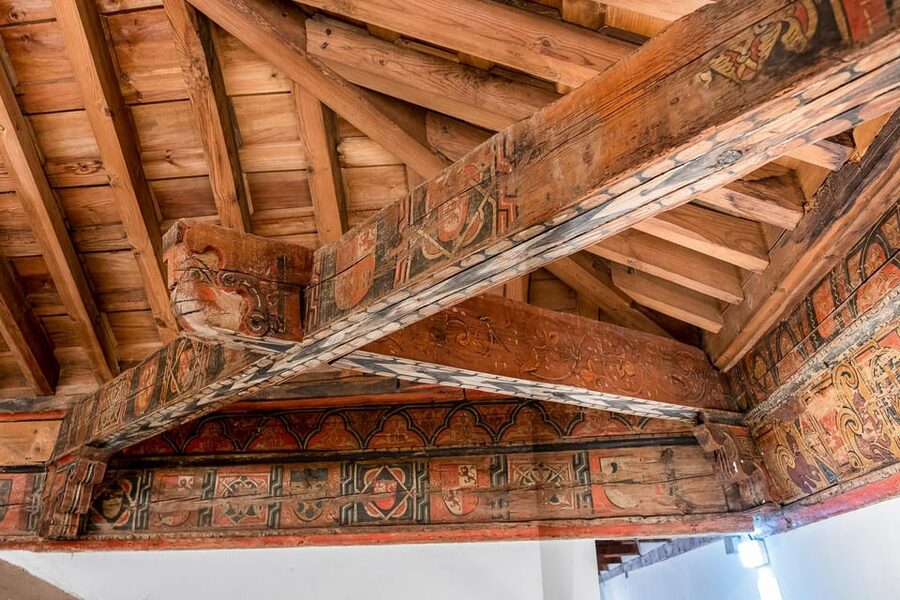
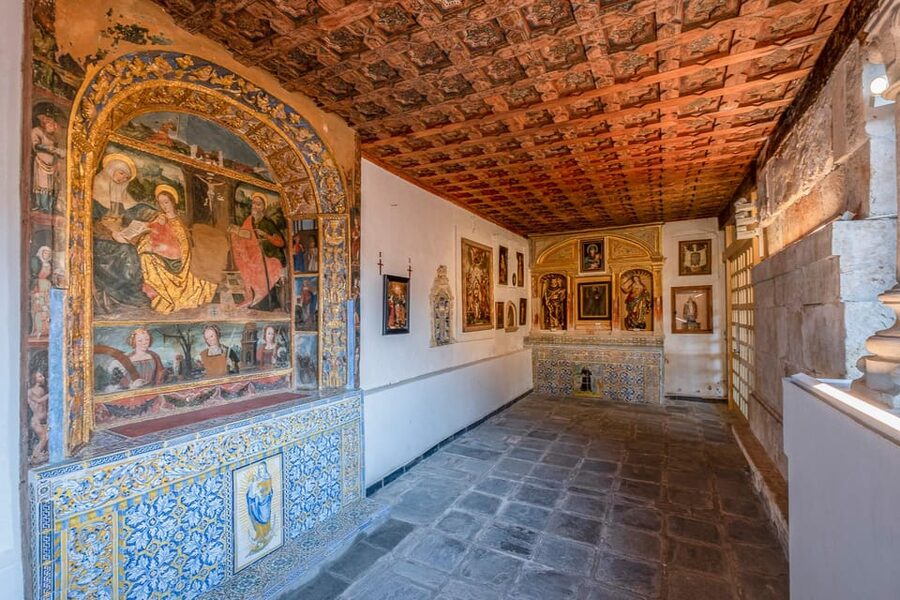
The most surprising part of the Convent of Las Claras is above you: a late-14th-century polychrome roof and medieval wooden coffered ceiling that once covered the church. You also get access to a tower with views across Salamanca, making this a small museum visit with a welcome outdoor payoff.
I like the chance to walk through the high choir and see the ceiling up close, and I like the personal scale of the former convent, where the nuns’ art and devotional objects remain part of the story. The main drawback is that the audioguide may feel slow or dull if you prefer reading labels or exploring at your own pace, and the upper viewpoint may not suit anyone uneasy with heights.
Key points to know
- The church ceiling is the star: See a medieval wooden coffered ceiling and late-14th-century painted decoration from close range.
- Two choirs add depth: Walk through the high choir and visit the lower choir as part of the convent route.
- The building is now a museum: The Ages of Man Foundation helped turn the former convent into a Museum of Medieval Painting.
- The tower adds Salamanca views: Look toward the city’s principal historic buildings from above.
- The price is modest: At $7 per person, this is an affordable stop for anyone interested in art, religious history, or unusual architecture.
- The audio is multilingual: Choose English, Spanish, or French, but plan your visit around your own pace and tolerance for recorded commentary.
Why the ceiling makes Las Claras worth your time
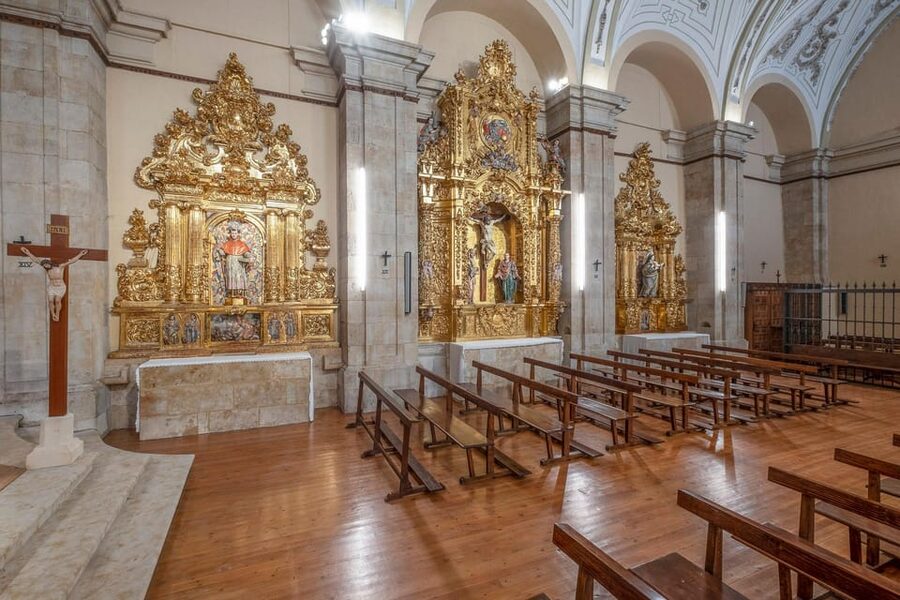
Salamanca is full of famous façades, university buildings, and grand churches. The Convent of Las Claras offers something different: a quieter interior where the details are overhead, partly concealed, and easy to miss if you hurry.
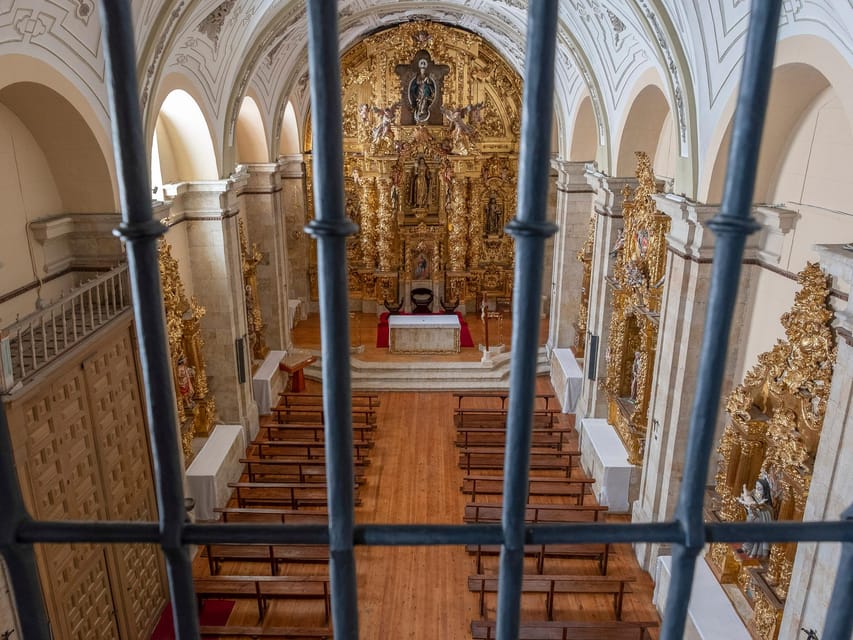
The former convent has been converted into a Museum of Medieval Painting. Its main appeal is not a long list of grand rooms. It is the chance to see a medieval church interior from several useful angles, including the high choir, where you can walk close to the wooden coffered ceiling.
I find this kind of access valuable. A ceiling viewed from the floor can seem decorative and distant. From the high choir, you can study its construction and painted surfaces more closely. Look for the relationship between the ceiling, the murals, and the chapel below. The building makes more sense when you see these elements as parts of one religious interior rather than as separate museum objects.
The late-14th-century date gives the artwork a clear place in Salamanca’s past. You are not simply looking at attractive decoration. You are seeing surviving traces of the visual world that shaped worship in a medieval convent.
More Audio Tours in Spain
- Barcelona: Sagrada Familia Entry Ticket with Audio Guide
★ 4.6 · 105,312 reviews - Barcelona: Casa Batlló Entry with Self-Audioguide Tour
★ 4.7 · 25,359 reviews - Granada: Alhambra Entry Ticket with Audio Guide
★ 4.1 · 5,950 reviews
Walking through the former convent
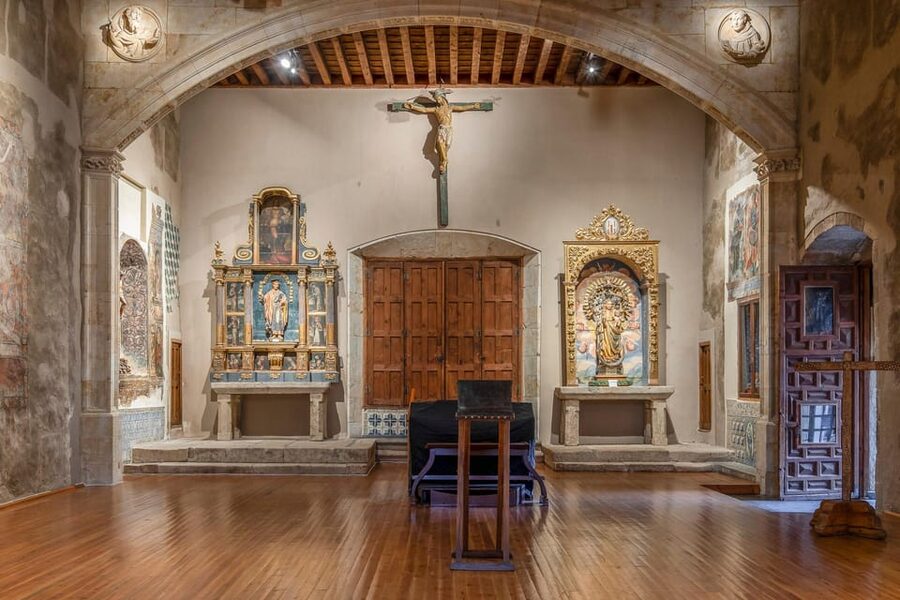
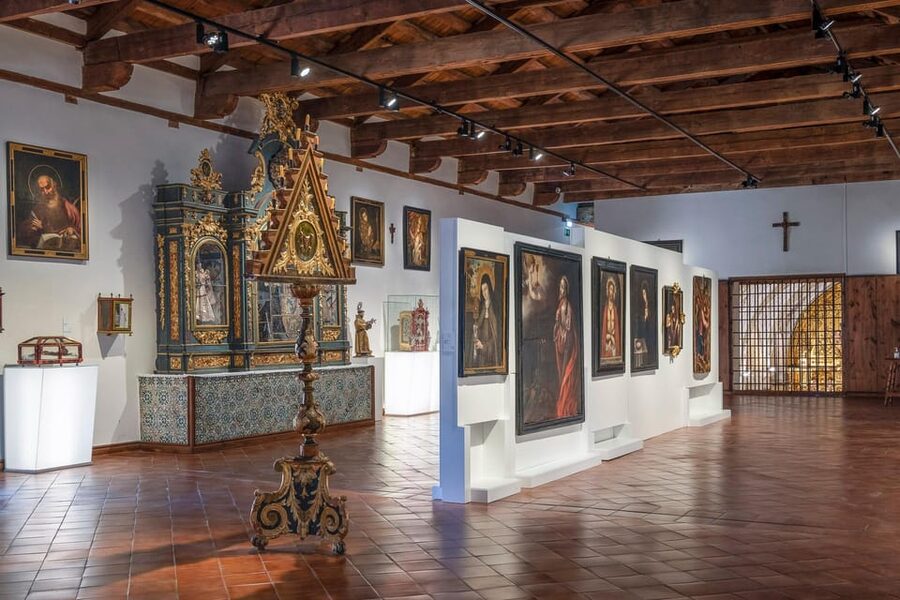
The visit takes you through the convent’s most notable rooms rather than along a simple church entrance route. The setting matters. Las Claras was a working religious house, and the collection includes art and devotional objects that belonged to the nuns.
That personal connection gives the displays a different feel from a standard gallery. Paintings and religious objects were used in daily devotion, not made only for public display. I would take time with the smaller pieces as well as the large architectural features. The objects help you imagine how the convent functioned and what the nuns saw during their religious life.
The building’s modest scale also helps. You are close to the surfaces, and the visit does not ask you to cross a huge museum. At $7, the experience works especially well as a focused stop between Salamanca’s larger sights.
The route includes both the high and low choirs. The high choir is the more unusual part because you can walk through it and inspect the medieval ceiling from near level. The lower choir gives you another view of the church space and helps show how the building was arranged for worship.
The murals discovered in the late 20th century
A series of murals was discovered at the end of the last century. Their presence changes the character of the visit because the paintings were not always obvious to modern eyes. You are seeing decoration that survived beneath later changes and was brought back into public view.
The murals, like the roof, date from the late 14th century. Take your time before moving on. Painted surfaces can lose their impact when you treat them like quick photo stops, especially when the audio is giving you dates and background at the same time.
I would first look at the murals without the audioguide running, then listen to the relevant section. That simple pause lets you form your own impression before the commentary directs your attention. It also helps if you find recorded guides too wordy.
The restoration and museum work were carried out with an important intervention by the Ages of Man Foundation. The result is a visit focused on medieval painting, but the building itself remains part of the exhibit. The architecture is not just a container for the art. It explains where the murals and ceiling belonged and why their survival matters.
A close look at the high choir and wooden roof
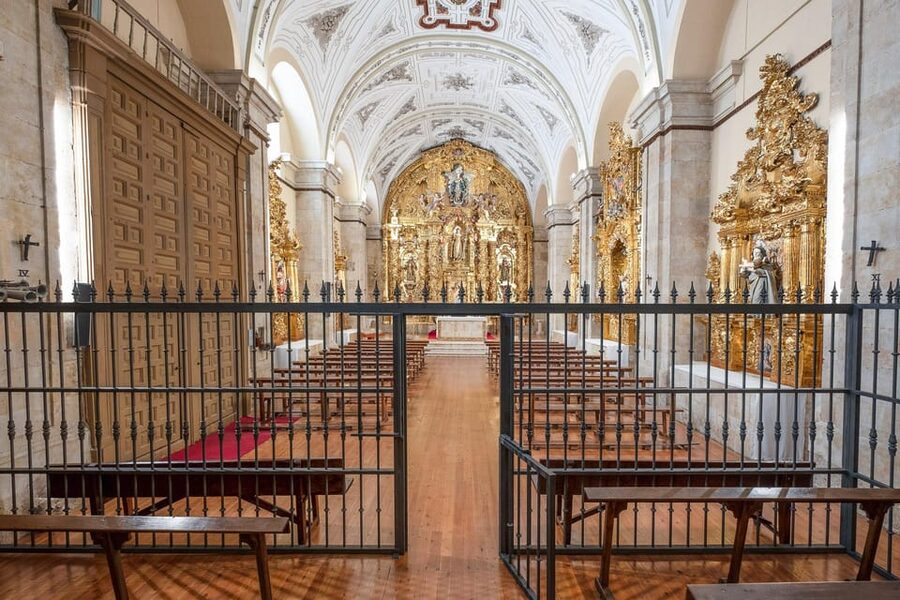
The high choir is the strongest architectural stop. You can walk through it and see the medieval wooden coffered ceiling up close, rather than viewing it from far below.
This is the place to slow down. Look at the repeated wooden sections, the color, and the way the roof covers the former church. You might find that the ceiling makes a stronger impression than the audio commentary because it gives you something physical to study.
The polychrome roof is another major feature. Polychrome simply means the surface used several colors, and here it helps show how much medieval interiors depended on painted decoration. The church would not have been a plain stone space. Its visual effect came from the combination of structure, paint, murals, and religious furnishings.
One practical point matters here. Upper-level routes and tower access can be uncomfortable for people with mobility limits, vertigo, or a fear of heights. The activity is described as wheelchair accessible, but the same information also says it is not suitable for people with mobility impairments. If you use a wheelchair or have difficulty with stairs or upper-level areas, confirm the exact accessible route before booking.
Another self-paced route in Spain:
- Casa Batllo Admission Ticket with Intelligent Audio Guide
★ 4.5 · 3,168 reviews - Madrid: Las Ventas Bullring Tour with Audio Guide
★ 4.6 · 3,154 reviews - Cordoba: Mosque-Cathedral E-Ticket with Audio Guide
★ 4.1 · 2,895 reviews - Nerja: Caves of Nerja Entry Ticket with Audio Guide
★ 4.6 · 1,616 reviews
The tower view over Salamanca
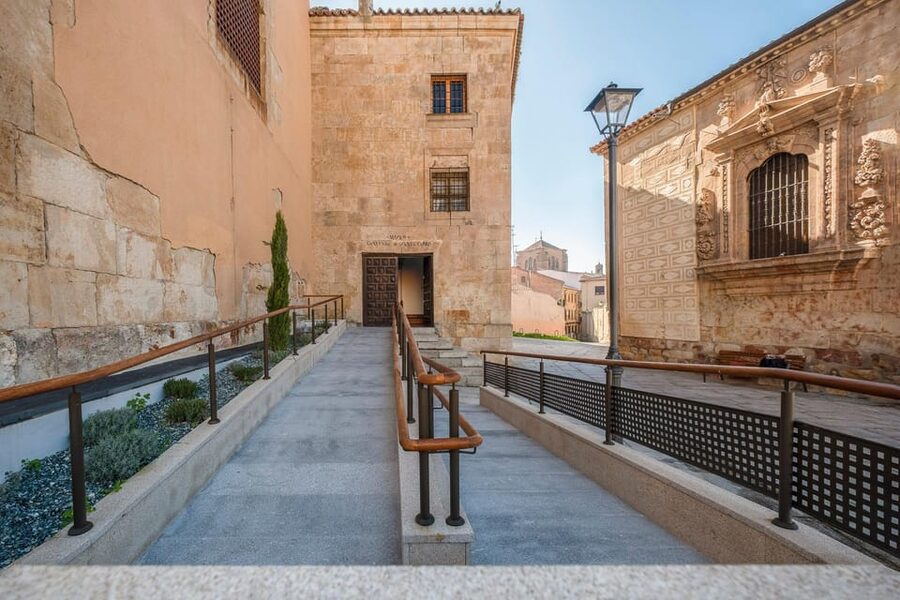
The tower is the final reward and gives the visit a change of pace. After looking closely at painted walls and a wooden ceiling, you can step up for a wider view of Salamanca and its main historic buildings.
The viewpoint is useful because it helps you place the convent within the city. Salamanca’s historic center is best understood from several angles. From the tower, you can connect the old religious complex with the larger group of historic buildings around it.
The view is not completely open for everyone. A metal grille at the upper lookout can hide part of the panorama, so you should keep expectations sensible. You still get a different perspective on Salamanca, but this is not necessarily the ideal viewpoint for unobstructed photography.
The tower may also feel exposed to anyone afraid of heights or prone to vertigo. People with heart problems, epilepsy, or other conditions affected by upper-level access should consider the restrictions carefully. The information also advises against the experience for pregnant women, people with claustrophobia, people with altitude sickness, people prone to seasickness, and anyone over 95 years old.
How the audioguide affects the visit
The audioguide is included, with English, Spanish, and French available. That makes the visit easy to follow if you do not speak Spanish, and it gives the rooms a clear sequence.
Still, the audio will not suit everyone. The commentary has been described as boring, so I would not book this solely for an entertaining guide. Think of it as a useful layer of background rather than the main attraction.
You can get the most from it by listening in short sections. Start the track for each room, pause when you want to look around, and move on only after you have examined the feature being discussed. That approach keeps the audio from turning the visit into a race.
You should also bring your own curiosity. Notice how the former convent’s devotional objects relate to the murals and chapel. Compare the lower and high choirs. Look up before you press play. The building provides much of the experience.
Is $7 good value?
At $7 per person, I consider Las Claras a good-value cultural stop. You receive access to the former convent, both choirs, the medieval ceiling, the mural collection, the rooms with devotional objects, and the tower viewpoint.
The value is strongest for you if you enjoy medieval art or historic religious buildings. A person who wants a quick panorama may find the visit too focused on paintings and architecture, while someone interested in Salamanca’s famous façades alone might prefer to stay outside.
The low price also makes it easy to add this visit without giving up a large part of your sightseeing budget. It is not a full-day guided excursion, despite the activity being valid for one day. You are booking entry with an audioguide, not hotel transportation, meals, or a personal guide.
There is no hotel pickup or drop-off, and food and drinks are not included. Food and drinks are not allowed inside, so plan to eat before or after the visit rather than expecting a café-style stop.
Who will enjoy Las Claras most
I would choose this experience for:
- Art lovers who want medieval murals and painted woodwork
- Visitors who enjoy religious architecture in a quieter setting
- Anyone looking for a reasonably priced indoor activity in Salamanca
- Photographers interested in ceilings, murals, and city views
- People who like small museums with a strong architectural focus
You may want to skip it if recorded commentary quickly loses your attention. The audioguide is included, but you can still appreciate the building visually. The greater concern is physical comfort, especially if the high choir and tower are important parts of your visit.
Families can judge the stop based on their children’s interest in paintings and historic interiors. The visit has clear visual highlights, but it is not presented as a hands-on activity. People who dislike enclosed spaces or heights should also think twice.
Planning your visit without rushing
Your booking is valid for one day, and you need to check availability for the starting times. That means you should fit Las Claras around your Salamanca sightseeing rather than assume you can arrive at any hour.
I would schedule it when you have enough time to listen, look up at the roof, study the murals, and visit the tower without hurrying. The building is affordable enough to deserve a slow visit, even if you only spend part of your day there.
The express security check can help you enter without a standard line, though you should still allow time for the audio equipment or instructions at reception. The receptionist has been praised for being especially friendly, which is useful if you need help getting oriented.
You can cancel up to 24 hours in advance for a full refund, and the reserve-now, pay-later option keeps your plans flexible. Those terms matter in Salamanca, where weather, opening times, and competing sights can affect your schedule.
What I would look for on arrival
Begin by getting familiar with the route. Find out where the high choir, low choir, mural displays, and tower fit into the visit. That makes it easier to pace yourself and prevents the most important features from becoming a blur of rooms.
Next, look upward. The roof and ceiling are the details most likely to be missed by anyone focused only on wall displays. Even if the audio spends more time on historical explanation, the wooden structure deserves your full attention.
Then look at the murals from a distance before moving closer. Their position within the former church matters, and you can better understand their scale when you do not begin with your nose against the wall.
Finish with the tower if conditions and your comfort allow. The Salamanca view gives the visit a clear ending, but the ceiling and murals are the core reasons to come.
Should you book the Convent of Las Claras?
You should book it if you want a short, inexpensive cultural visit with genuinely distinctive medieval features. The high choir and wooden coffered ceiling are the strongest reasons to go, while the murals, nuns’ devotional objects, and tower view give the visit enough range to feel worthwhile.
I would not choose it for lively guiding, a wide-open panorama, or an easygoing visit for anyone with mobility concerns. The audioguide may feel flat, the tower grille can limit the view, and the upper areas require care.
For most art and history lovers in Salamanca, $7 is a sensible spend. Go slowly, look up often, and treat the audio as support rather than the whole experience.
FAQ
How much does the Convent of Las Claras visit cost?
The listed price is $7 per person.
How long is the activity valid?
Your entry is valid for one day. You need to check availability for the available starting times.
Is an audioguide included?
Yes. The audio-guided tour is included.
Which audioguide languages are available?
The audioguide is available in English, Spanish, and French.
What will I see inside the convent?
You will see the high and low choirs, medieval wooden coffered ceiling, late-14th-century murals, notable rooms, works of art, and devotional objects that belonged to the nuns.
Can I visit the tower?
Yes. The activity includes access to the tower viewpoint, where you can see Salamanca and its main historic buildings.
Is the Convent of Las Claras wheelchair accessible?
The activity is described as wheelchair accessible, but it is also listed as unsuitable for people with mobility impairments. Confirm the exact route and upper-level access before booking if you have mobility needs.
Can I bring food or drinks inside?
No. Food and drinks are not allowed.
Can I cancel for a refund?
Yes. You can cancel up to 24 hours in advance for a full refund. You can also reserve now and pay later.
Latest audio tours in Spain
- Seville Maestranza Bullring Tour with Audio Guide★ 3.5 · 6 reviews
- Seville Scavenger Hunt and Highlights Self Guided Audio Tour★ 5.0 · 5 reviews
- Seville Audio guided walking tour 3h20 and 28 audio commentaries★ 5.0 · 2 reviews
- Royal Alcazar of Seville Entry Ticket with Audio Guide★ 4.0 · 42 reviews
- Seville Cathedral and La Giralda Entry Ticket with Audio Guide★ 3.0 · 9 reviews
- Essential Seville’s Ancient History: An Audio Tour★ 5.0 · 9 reviews
- Seville Cathedral and Giralda Entry Tickets with Audio Guide★ 4.0 · 56 reviews
- Segovia from the Aqueduct to the Alcazar: A Self-Guided Audio Tour★ 4.5 · 10 reviews
Spain Audio Tours, compared.
Sagrada Familia Entry Ticket with Audio Guide
Read our review →
Casa Batllo Admission Ticket with Intelligent Audio Guide
Read our review →
Nerja: Caves of Nerja Entry Ticket with Audio Guide
Read our review →
La Pedrera-Casa Mila Admission Ticket with Audioguide
Read our review →Browse the lists this tour appears in