
Reviewed · SPAIN
Nerja: Caves of Nerja Entry Ticket with Audio Guide
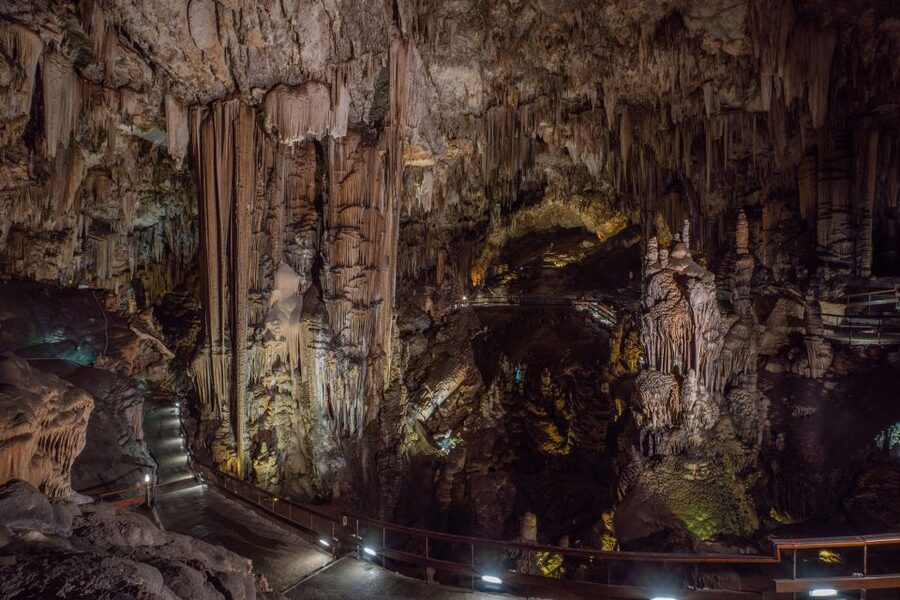
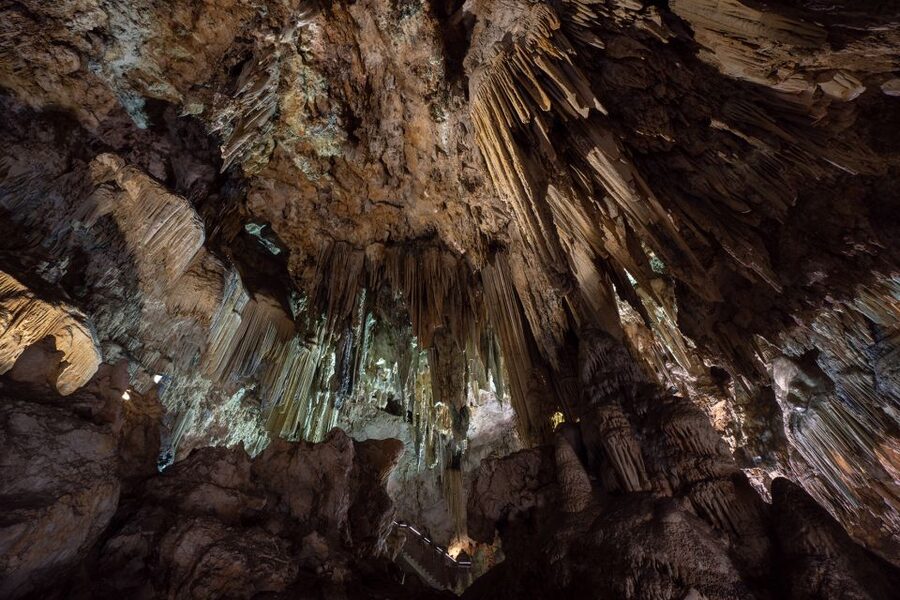
The Cataclysm Room is the star of this visit: a huge underground chamber with high ceilings, giant formations, and the world’s largest column, created where a stalactite and stalagmite met. I like that you can stop and look instead of being pushed along by a live group, and I like that the $18 ticket includes both the museum and the 360-degree virtual reality room. The audio guide adds useful context without filling the cave with tour chatter.
The main catch is practical: the guide works through a phone app, not necessarily a standard handheld device. Download it before you arrive, bring earbuds, and expect many stairs. If you have limited mobility or use a wheelchair, this is not a suitable visit.
Key points to know before you go
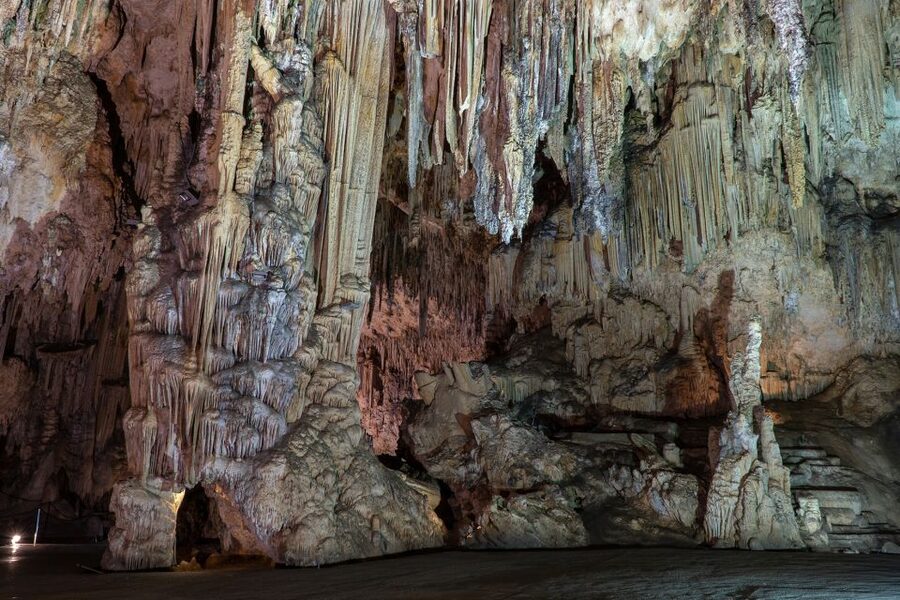
- The Cataclysm Room holds the biggest visual payoff: This enormous chamber contains the famous cave column, formed by a stalactite joining a stalagmite.
- The audio guide is self-paced: You can listen in English, Spanish, German, Arabic, Chinese, French, Dutch, Italian, Japanese, Korean, Norwegian, Polish, Portuguese, Russian, or Swedish.
- The cave art is hard to see underground: The paintings are protected from damaging light, so the museum is a better place to understand them.
- The $18 price covers more than the cave: Your ticket also includes the Museum of Nerja and the 360-degree virtual reality room.
- Arrive early for a quieter walk: Timed entry helps control numbers, but early visits make it easier to pause at the formations.
- Plan for stairs and uneven movement: The route includes many steps, including roughly 100 steps on the way out according to one visitor account.
Why the Nerja Caves are worth your time
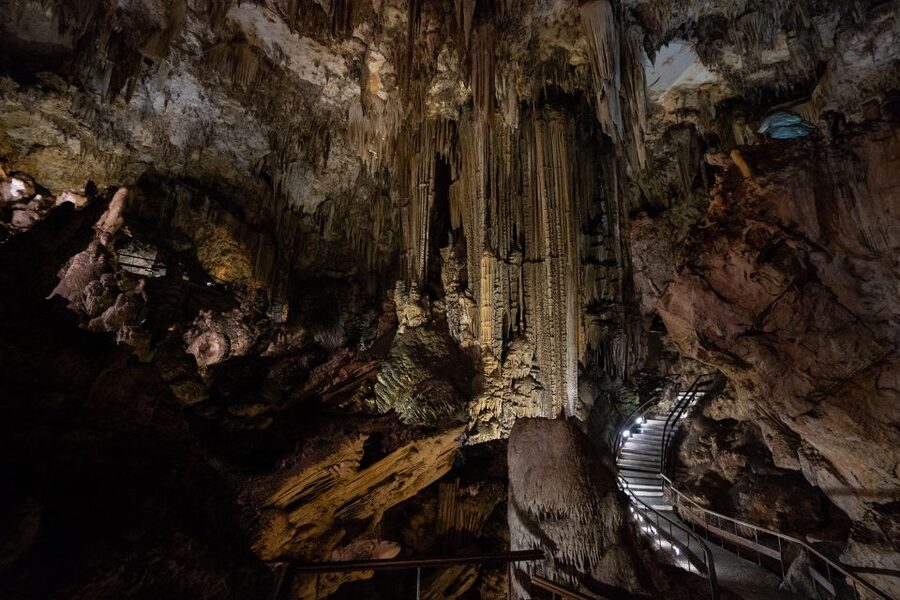
The Nerja Caves are not a quick peek into a narrow tunnel. They open into vast chambers where the rock seems to grow in every direction. Thin stalactites hang from the ceiling, thick stalagmites rise from the floor, and some formations meet to create solid stone columns.
The scale is what catches you first. The caves feel more like a sequence of underground halls than a simple walking passage. One chamber has ceilings around 20 meters high, and the Cataclysm Room gives the visit its grand finale.
I especially like the way this experience combines natural scenery with archaeology. The cave is a geological record, but it is also tied to human life in the area. Explorations and excavations have taken place since the caves were found in 1959. Some paintings may date to the time of Neanderthals, although you should not expect to stroll up and see clear prehistoric drawings on the cave walls.
That last point matters. The audio guide discusses the paintings, but the lighting needed to display them clearly would damage them. In the dark interior, you may see little or nothing of the art itself. The museum does a better job of explaining this part of the site.
More Audio Tours in Spain
- Barcelona: Sagrada Familia Entry Ticket with Audio Guide
★ 4.6 · 105,312 reviews - Barcelona: Casa Batlló Entry with Self-Audioguide Tour
★ 4.7 · 25,359 reviews - Granada: Alhambra Entry Ticket with Audio Guide
★ 4.1 · 5,950 reviews
Entering the cave and following the self-guided route
Your entry is arranged around a starting time, which helps prevent the cave from feeling packed. Once inside, you follow a marked route through the accessible chambers. Handrails and walkway lighting help, although one person found the lighting a little limited in places.
The audio guide lets you move at your own speed. You can pause to study a formation, replay information, or simply put the phone away and enjoy the quiet. That freedom is a real advantage over a fixed group tour. You do not need to keep up with a guide, and nobody needs to speak loudly over the natural hush of the cave.
The phone setup needs some care. You will use an app, and the download may require a reliable connection. Download the guide before you leave your hotel or apartment, then test it while you still have Wi-Fi. Bring your own earbuds because listening from a phone speaker can disturb the quiet and may make the commentary hard to hear.
A few people found the audio volume low or the controls fiddly. This is not a reason to skip the guide, but it is a reason to prepare. The numbered listening points can also be easy to miss, so look for them as you walk.
You might finish the cave route in less than 30 minutes if you keep moving. I would allow at least an hour if you want to stop often, take photographs, and listen to the commentary. One particularly patient visit lasted about two hours. The difference comes down to your pace, crowd levels, and how much time you give the formations.
The Cataclysm Room and the world’s largest cave column
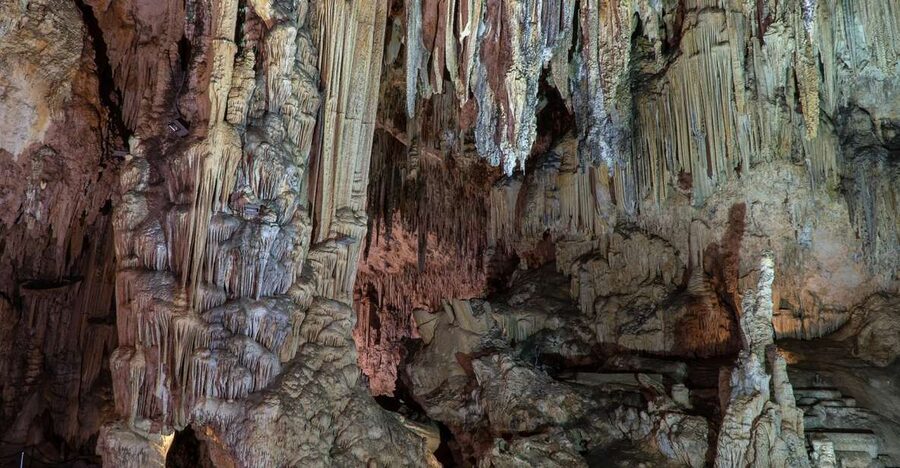
The Cataclysm Room is the point where the cave’s size becomes easiest to grasp. It is the largest and highest chamber open to the public, and it contains the famous column created when a stalactite growing downward met a stalagmite rising from the floor.
The result is not just a single pretty formation. It shows how slowly water can shape limestone over huge spans of time. The room also gives you a useful sense of scale: people appear small beside the stone forms, while the ceiling rises far above the walkway.
Take your time here. The route is designed to keep moving, but the best part of a cave is often the pause. Look upward, then back toward the floor. The formations change shape depending on the angle and the modest lighting.
Photography is possible, but the dark setting and limited light mean your pictures may not match what you see with your eyes. I would treat the camera as a way to remember the visit, not as the main reason to stop.
What the audio guide adds to the visit
Without the audio, the cave is still impressive. With it, the formations become easier to understand. The commentary explains the stages of cave formation and points out details that can blend into the rock if you only walk through.
The guide also gives the site a human dimension. It connects the cave to archaeological finds, biological research, and the people who have explored it since 1959. That turns a beautiful underground walk into a lesson about geology and early human life.
The choice of languages is unusually broad. You can select English, Spanish, German, Arabic, Chinese, French, Dutch, Italian, Japanese, Korean, Norwegian, Polish, Portuguese, Russian, or Swedish. Children also have an audio guide in Spanish and English.
The self-guided format suits independent visitors and families who do not all move at the same speed. The downside is that you have to manage your own device. If you forget to download the app, lose your signal, or arrive without headphones, the most informative part of the visit may be less useful.
Another self-paced route in Spain:
- Casa Batllo Admission Ticket with Intelligent Audio Guide
★ 4.5 · 3,168 reviews - Madrid: Las Ventas Bullring Tour with Audio Guide
★ 4.6 · 3,154 reviews - Cordoba: Mosque-Cathedral E-Ticket with Audio Guide
★ 4.1 · 2,895 reviews - Madrid: Prado Museum Ticket with In-App Audio Guide
★ 3.6 · 1,154 reviews
The paintings, archaeology, and the Museum of Nerja
The museum is not an optional extra to rush through if you have five minutes left. It gives you the clearest way to understand the human story connected to the caves.
Inside the cave, the paintings are difficult to see and are deliberately not lit in a way that would expose them to further damage. The museum provides a better setting for learning about them and for putting the archaeological discoveries into context.
You can also use the museum to slow down after the cave walk. The underground route gives you the wow factor, while the museum helps explain what you have just seen. If archaeology interests you, allow extra time here. One account suggests that two hours would be reasonable for a careful museum visit.
The combined ticket is therefore stronger than a cave-only admission. You get a dramatic natural attraction, then a place where the evidence and history are easier to interpret.
The 360-degree virtual reality room
The virtual reality room is included in the ticket and adds a very different layer to the visit. Instead of looking at the cave as a modern visitor, you see a 360-degree presentation of life on Earth 35,000 years ago.
This is especially useful for families and for anyone who finds archaeological dates hard to picture. The virtual presentation gives human prehistory a more immediate feel than a label or timeline can manage.
It is not a replacement for the cave itself. The real chambers are the main event, with their cold stone, high ceilings, and irregular formations. But the virtual reality show helps connect those spaces to the people who may have lived in the region long ago.
Some visitors have called this part a highlight, while others skipped it because the site was closing. Go earlier if you want to make sure you have time for both the cave and the virtual reality room. The ticket is valid for one day, but you still need to work around the available starting times.
Getting there and making the day easier
The caves are in Andalusia, near Nerja and the Maro area. If you are walking from Nerja, the route can take about 45 minutes, with a steep hill near the roundabout for Maro. Road signs may be more helpful than relying only on a map pin, since one walking route sent a visitor in the wrong direction near the end.
A red train connects Nerja with the caves for a small additional charge, according to one visitor account. That may be a more comfortable choice than walking uphill, especially in warm weather. If you drive, allow for parking costs. Parking is not necessarily free, and you should ask how to pay before leaving the car park because the exit instructions may not be obvious.
The site also has a café or terrace restaurant with wide views toward Nerja and the Mediterranean. That makes a good finish to the visit, particularly if you arrive early and have time to sit down afterward. Gardens and a large play structure add appeal for families.
Wear comfortable shoes and clothes. Water is sensible, especially if you are walking from town or visiting in hot weather. A jacket is suggested, although conditions inside can feel warm and humid rather than cold. The cave temperature is not the main challenge. The stairs are.
Who will enjoy this, and who should think twice
This is a strong choice for adults, children, history fans, geology enthusiasts, and anyone looking for a break from the beach. The combination of cave, museum, and virtual reality gives the day more substance than a single underground walk.
It also works well in poor weather. The cave and museum provide a useful rainy-day plan, and the controlled entry system helps keep the route manageable.
The visit is not suitable for wheelchair users or people with mobility impairments. There are many steps along the route, including a long climb out of the caves. Even fit visitors should wear proper shoes and avoid treating this as a casual stroll in sandals.
The audio guide may not suit everyone. If you prefer a live guide who answers questions, this is not that kind of visit. If you like silence, independence, and the ability to stop when you want, the phone-based commentary is a good fit.
Is $18 a fair price?
At $18 per person, the ticket offers solid value. The cave alone would justify much of the cost for many people, given the size of the chambers and the quality of the formations. Adding the museum and virtual reality room makes the price easier to accept.
You also avoid paying separately for a live tour, while still receiving commentary in a long list of languages. The tradeoff is that the guide depends on your phone, your preparation, and your headphones.
The value is best if you use all three parts of the visit. Walk slowly through the cave, spend time with the museum, and make room for the virtual reality show. If you rush through the cave in 30 minutes and skip the other attractions, you will get less from the ticket than you could.
Practical tips for a smoother visit
- Download the audio app before arriving, then test it with your headphones.
- Bring earbuds and keep your phone charged.
- Book an early time if you want less crowding and more freedom to pause.
- Follow road signs if a map app sends you toward the wrong approach.
- Allow at least an hour for the cave if you want to listen and take photographs.
- Leave time for the museum and virtual reality room before the site closes.
- Wear shoes suitable for stairs and walkways.
- Bring water, but do not assume you need heavy winter clothing inside.
- If you are driving, check the parking payment process before heading to the exit.
- Give the museum extra time if prehistoric art and archaeology interest you.
Should you book the Nerja Caves ticket?
Book it if you want one of Andalusia’s most striking natural attractions with useful context built in. The giant chambers, the world’s largest cave column, the museum, and the virtual reality room make this more than a quick photo stop.
I would be particularly happy to recommend it to independent visitors who dislike being hurried. The audio guide lets you set the pace, and the $18 ticket covers enough extras to make the price sensible.
Skip it only if stairs are a serious problem, you dislike phone-based guides, or you have no time beyond a rushed half hour. For everyone else, arrive early, prepare the audio app, and leave enough time to look up. The cave rewards attention.
FAQ
How much does the Nerja Caves ticket cost?
The ticket costs $18 per person.
How long is the Nerja Caves experience?
The ticket is valid for one day. The cave walk can take less than 30 minutes at a quick pace, but you can spend an hour or more if you stop to listen, take photographs, and study the formations. The museum and virtual reality room add further time.
Is an audio guide included?
Yes. A mobile audio guide for the cave is included. It is available in English, Spanish, German, Arabic, Chinese, French, Dutch, Italian, Japanese, Korean, Norwegian, Polish, Portuguese, Russian, and Swedish. A children’s audio guide is available in Spanish and English.
What else is included besides the cave?
The ticket includes entry to the Museum of Nerja and the 360-degree virtual reality room, which presents life on Earth 35,000 years ago.
Can wheelchair users visit the Nerja Caves?
No. The activity is not suitable for wheelchair users or people with mobility impairments. The route includes many stairs.
What should I bring?
Bring comfortable shoes, water, comfortable clothes, and a jacket if you prefer having an extra layer. You should also bring earbuds and download the audio app before arrival so you are not relying on a weak signal inside the site.
Latest audio tours in Spain
- Seville Maestranza Bullring Tour with Audio Guide★ 3.5 · 6 reviews
- Seville Scavenger Hunt and Highlights Self Guided Audio Tour★ 5.0 · 5 reviews
- Seville Audio guided walking tour 3h20 and 28 audio commentaries★ 5.0 · 2 reviews
- Royal Alcazar of Seville Entry Ticket with Audio Guide★ 4.0 · 42 reviews
- Seville Cathedral and La Giralda Entry Ticket with Audio Guide★ 3.0 · 9 reviews
- Seville Cathedral and Giralda Entry Tickets with Audio Guide★ 4.0 · 56 reviews
- Essential Seville’s Ancient History: An Audio Tour★ 5.0 · 9 reviews
- Segovia from the Aqueduct to the Alcazar: A Self-Guided Audio Tour★ 4.5 · 10 reviews
Spain Audio Tours, compared.
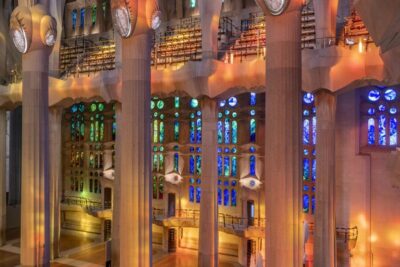
Sagrada Familia Entry Ticket with Audio Guide
Read our review →

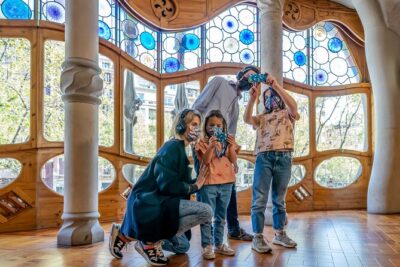
Casa Batllo Admission Ticket with Intelligent Audio Guide
Read our review →

La Pedrera-Casa Mila Admission Ticket with Audioguide
Read our review →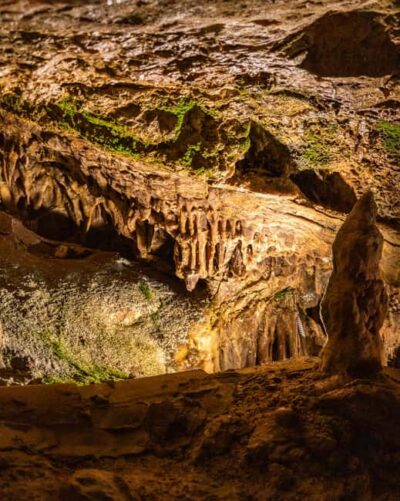
Palma: Caves of Genova Ticket & Digital Audio Guide
Read our review →Browse the lists this tour appears in