
Reviewed · ROME
Rome: Santa Maria Maggiore – Visit with Audio Guide and Reserved Access
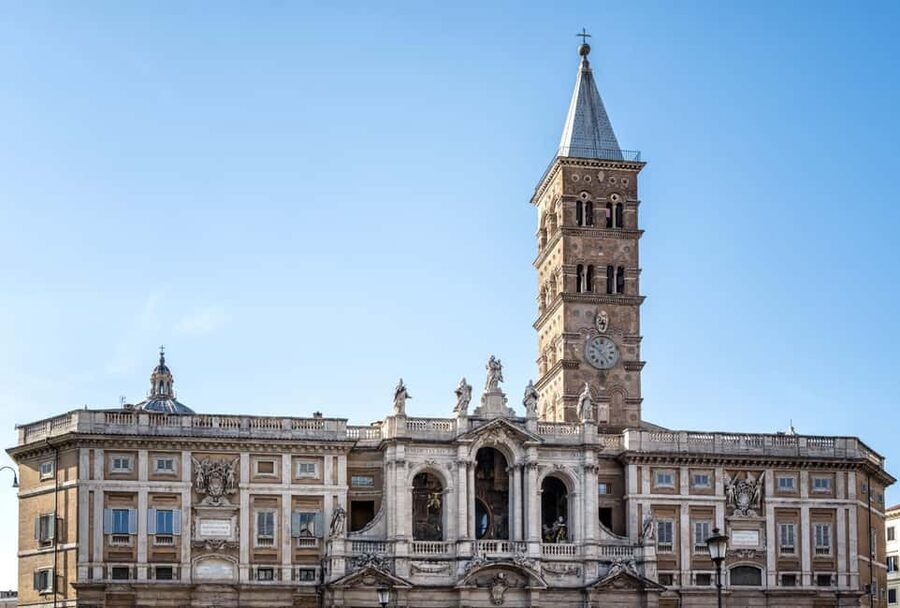
Santa Maria Maggiore gives you two important Roman sights in one visit: a major papal basilica filled with ancient mosaics, and the tomb of Pope Francis, when that area is open. The reserved entrance matters here because you can get inside without joining the general line, then begin at your own pace.
I like the 5th-century mosaics, which give the basilica a rare connection to early Christian Rome. I also like having a suggested audio route, since the chapels, relics, and layers of decoration can blur together without some direction. The main concern is the collection point: a few bookings have run into trouble when no one was available at the reception desk to provide the audio guide.
Key points
- Pope Francis’ tomb: Included when the tomb is open to the public, giving the visit a current spiritual and historical focus.
- 5th-century mosaics: Look for some of the basilica’s oldest and most important decoration.
- Reserved entrance: Show your voucher to reception staff in the portico and avoid the ordinary waiting line.
- Self-guided route: The multilingual audio guide lets you pause, move slowly, or skip sections.
- $18 price: A fair choice if you want context and reserved access, but less compelling if you only plan a quick look inside.
- Extra areas cost more: The Liberian Museum Complex and rooftop terrace are not part of this ticket.
Why Santa Maria Maggiore deserves your time
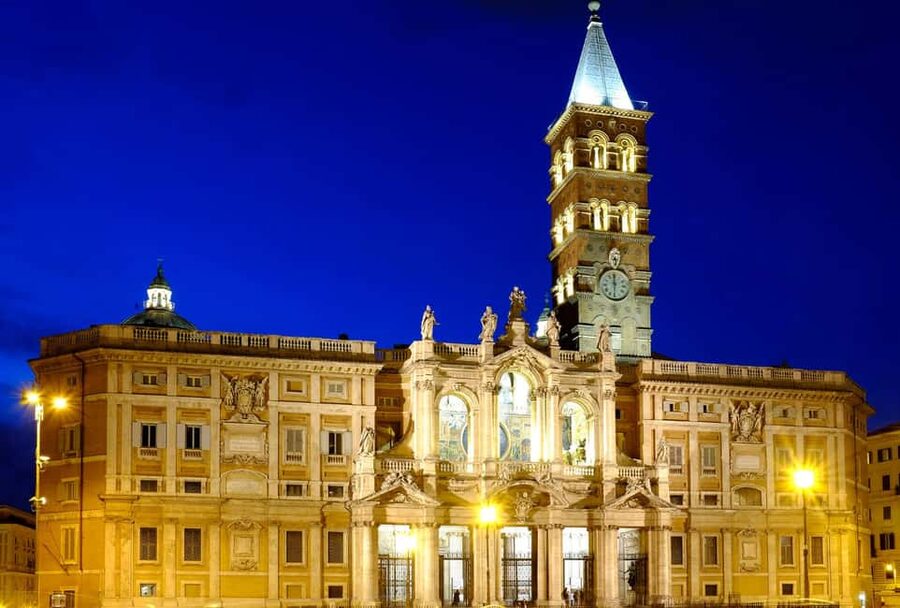
Rome has no shortage of churches, but Santa Maria Maggiore is not simply another ornate stop between larger attractions. It is one of the four Papal Basilicas, placing it among the city’s most important Catholic churches.
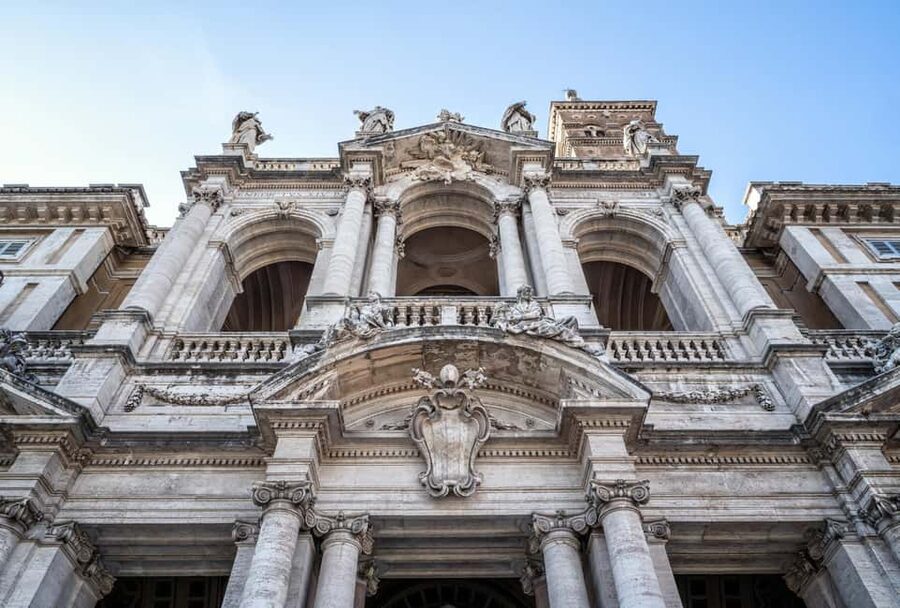
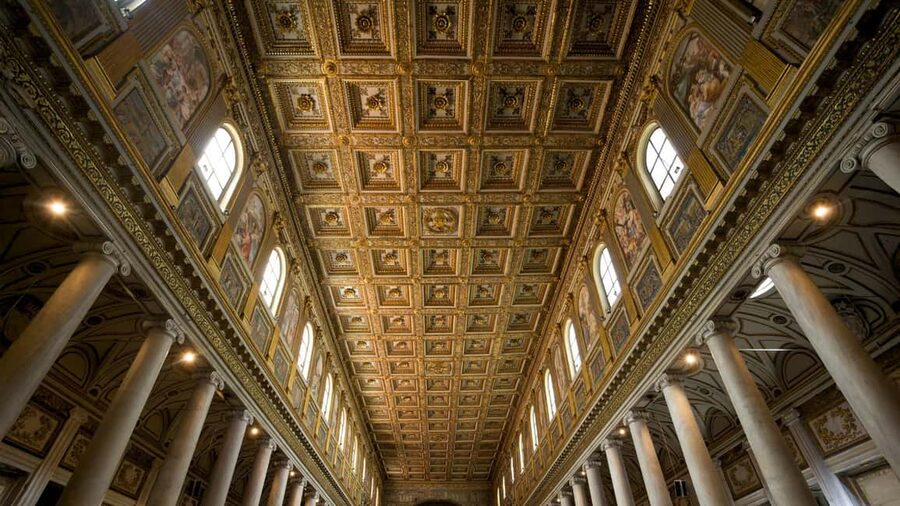
The basilica brings together several periods of Roman religious art. You can see early Christian mosaics, papal chapels, rare relics, and later works of art within the same building. That mixture is part of the appeal. You are not looking at a church designed in one neat period. You are reading centuries of worship and decoration layered onto one sacred site.
I would allow the full 2.5 hours if you care about art, architecture, or religious history. You can finish faster, but the audio guide is designed to give you more than a quick walk through the main nave. The extra time helps you look up, compare chapels, and notice details you might otherwise miss.
The basilica is also a practical choice for a first visit to Rome. It offers a serious cultural stop without requiring a full-day commitment or a live tour group. You can visit on your own, as a couple, with family, or as a solo sightseer who prefers to set the pace.
More Audio Tours in Rome
- Rome: Colosseum & Forum with Audio Guide App -Optional Arena
★ 4.2 · 24,770 reviews - Rome: City Sightseeing Hop-on Hop-off Bus with Audioguide
★ 4.0 · 16,045 reviews - Rome: St. Peter’s Basilica & Dome Entry Ticket & Audio Tour
★ 4.2 · 7,537 reviews
Entering through the reserved portico entrance
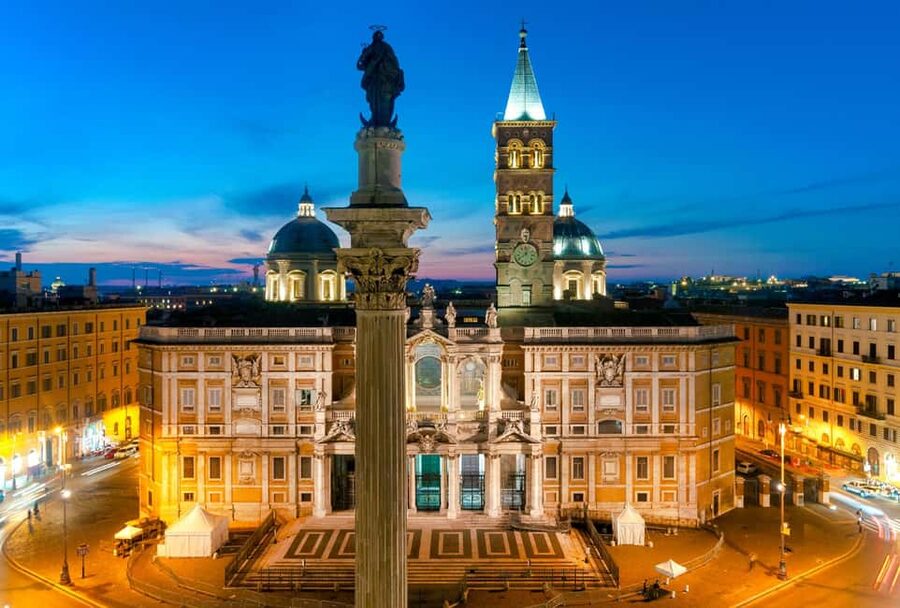
Your meeting point is Piazza Santa Maria Maggiore, at the entrance of the Papal Basilica of Santa Maria Maggiore. Instead of searching for a guide in the square, go to the Reception desk in the basilica’s portico and show your booking voucher.
That instruction is worth taking seriously. This is not a walking tour where a guide comes looking for you. The reception desk is the handoff point for your audio guide and access instructions. Bring your passport or identity card, since identification is listed as necessary for the visit.
The reserved entrance is one of the strongest practical features. Rome’s major churches can have changing lines and security arrangements, especially during busy periods or religious events. A separate entrance does not guarantee that every part of the basilica will be open, but it should make the initial arrival simpler.
I would arrive with your voucher easy to find on your phone and enough battery for the digital information and audio guide. Large bags and luggage are not allowed, so do not treat this as a place to store your suitcase between hotel check-out and a train.
One warning deserves attention. Some bookings have had trouble when nobody was available at the stated meeting point, leaving the audio guide uncollected. That makes the reception desk particularly important. If the desk is not immediately clear, ask basilica staff rather than wandering around the square looking for a person holding a sign.
Following the audio guide inside the basilica
This is a self-guided visit, not a live tour. Once you receive the audio guide, you follow a suggested route through the church and use the commentary to make sense of what you are seeing.
That format suits me when a building has many small details. You can stop beneath a mosaic, listen, and then look closely instead of trying to keep up with a group. You can also pause for prayer or silence without waiting for other people.
The audio guide covers the basilica’s symbolism, architectural details, lesser-known stories, and major works of art. Some content may be presented in its original language, so you should not expect every piece of material to be fully adapted into your chosen language.
The languages are described as multilingual, but the available choices can depend on the booking setup and the audio guide supplied on the day. Check what is offered when you collect it. One practical weakness is that the commentary may not always be easy to follow for every detail, especially if you are looking at a particular decorative feature and the explanation moves on quickly.
Treat the suggested route as a helpful outline rather than a strict command. If a chapel interests you, stay there. If a section feels repetitive, continue to the next stop. The value of a self-guided visit is control, but that also means you must keep track of the route yourself.
Looking closely at the 5th-century mosaics
The oldest material is among the best reasons to book this experience. The 5th-century mosaics connect the basilica to the early Christian period, when churches used bright images and biblical scenes to teach and inspire worshippers.
You do not need advanced art knowledge to enjoy them. Look for the way the figures, colors, and symbols are arranged. The audio guide can help explain meaning that is not obvious from the floor. Without commentary, you might notice beauty but miss why a particular scene or design matters.
The mosaics also show why Santa Maria Maggiore is different from a church decorated only in the Baroque period. The building contains later additions, but these early works give you a direct visual link to Rome’s first centuries of Christian art.
I would spend more time looking upward than you may expect. Churches often encourage visitors to move quickly from chapel to chapel, but the important work may be above eye level. Use the audio guide to identify the areas that deserve a slower look.
Another self-paced route in Rome:
- Colosseum, Roman Forum & Palatine Hill with Audioguide App
★ 4.4 · 6,291 reviews - Vatican & Sistine Chapel Ticket with Optional Audio Guide
★ 4.1 · 5,405 reviews - Rome: Castel Sant’Angelo Entry Ticket & Digital Audioguide
★ 4.7 · 5,347 reviews - Rome: Castel Sant’Angelo Entry Ticket & Audio App
★ 4.3 · 4,952 reviews
Papal chapels, relics, and centuries of art
After the mosaics, the route turns your attention to papal chapels, relics, and other masterpieces. The chapels give the basilica a more intimate scale than the main body of the church. Each one can feel like a separate room of devotion, with its own decoration and purpose.
The audio commentary is useful here because the visual information can be dense. You may see sculpture, colored stone, painted surfaces, and religious objects close together. A guide helps you separate the main points instead of treating every decorated wall as one large picture.
Rare relics add another layer. Their importance is spiritual as well as artistic, and your response may depend on your interests. If you care mainly about architecture, you may spend more time on the mosaics and chapels. If religious history matters to you, the relics can become one of the most meaningful parts of the route.
The basilica is still an active place of worship. Areas may close during liturgies or celebrations, and you should expect the route to change if services are taking place. That is not a flaw in the church, but it is a reason not to plan the visit around a very tight schedule.
Visiting Pope Francis’ tomb
Access to Pope Francis’ tomb is included when it is open to the public. This gives the visit a current point of focus and sets it apart from a standard art-and-architecture tour.
The tomb is not a separate full tour. It is one part of the basilica experience, and access can depend on opening conditions. If this is your main reason for booking, understand that the ticket does not promise access during a liturgy, celebration, or temporary closure.
The setting has spiritual importance for many people, regardless of religious background. You can approach it quietly, allow other visitors space, and then return to the wider basilica route. I would not expect a long presentation at the tomb itself. The audio guide and the church’s wider decoration provide the broader context.
This portion may be especially meaningful for visitors interested in recent Catholic history. It also gives families a clear point of interest, since children may find a specific destination easier to understand than a long tour of artworks with no obvious endpoint.
What the ticket does not cover
The basic ticket covers the reserved entrance, multilingual audio guide, suggested route, digital maps, practical information, and access to Pope Francis’ tomb when open.
It does not include a live guide. If you want to ask questions as you go, this is not the right format. You will need to rely on the audio commentary and the information provided at reception.
The Liberian Museum Complex is also outside the ticket. You can ask at the reception desk about purchasing an additional ticket, subject to availability. The rooftop terrace requires a separate special ticket as well.
This separation is useful when judging the price. At $18 per person, the ticket is reasonable if you want a reserved entry and structured interpretation of the main basilica. It becomes less of a bargain if you want every possible part of the complex, since those extras cost more.
The activity also does not include transportation. Santa Maria Maggiore is your destination, not a stop reached by a tour vehicle. Plan your own route to Piazza Santa Maria Maggiore and leave enough time to find the portico and reception desk.
Who will get the most from this visit
I would recommend this experience to you if you want a quiet, independent visit but do not want to walk into the basilica without context. The audio guide gives you a basic framework, while the reserved entrance cuts down on the uncertainty of arrival.
It is a good match for:
- Couples who want to explore at their own speed
- Families who prefer a flexible route instead of a long live talk
- Solo visitors who want explanations without joining a group
- Art lovers interested in mosaics, chapels, and decorative details
- Visitors with a personal or religious interest in Pope Francis’ tomb
You may want to skip it if you only have a few minutes for the church or if you strongly prefer a human guide. The audio system also requires some self-management. You must collect it, follow the route, and make sense of any sections that are not easy to track.
The format is simple, but simple does not mean foolproof. The experience depends on a smooth handoff at reception. Keep your voucher ready, carry identification, and avoid bringing large luggage.
A practical way to plan your 2.5 hours
Give yourself time before the official start to reach Piazza Santa Maria Maggiore and locate the portico. Once you have the audio guide, begin with the suggested route rather than trying to explore every corner immediately.
Spend the first part listening to the general explanation of the basilica. Then slow down at the 5th-century mosaics, where the audio information can add the most value. Continue through the papal chapels and relics, pausing when a detail catches your eye.
Visit Pope Francis’ tomb when directed and when it is open. Leave room for the possibility that a religious celebration could restrict access to certain areas. The basilica remains a place of worship first, so the sightseeing route must sometimes give way to church functions.
If you finish the main route early, ask about the Liberian Museum Complex or rooftop terrace. Those are optional add-ons, not hidden inclusions, and availability may vary. Do not assume that the $18 ticket covers them.
The cancellation policy is forgiving: you can cancel up to 24 hours in advance for a full refund. You can also reserve and pay later, which helps if your Rome schedule is still changing.
Should you book Santa Maria Maggiore with audio access?
Book it if you want reserved access, a clear route, and explanations for one of Rome’s major churches. The $18 cost is sensible for visitors who would otherwise arrive without context or dislike waiting in an ordinary line.
Think twice if your priority is a live conversation with a guide, the full museum complex, or guaranteed access to every area. The audio guide has had some practical and clarity issues, and the handoff at reception needs attention.
My advice is to choose this for a focused basilica visit, not as a catch-all ticket for every attraction connected with Santa Maria Maggiore. Bring your voucher and identification, leave large bags behind, and treat the Pope Francis tomb access as dependent on public opening conditions. With those limits understood, it is a useful, flexible way to see the mosaics, chapels, and religious art without rushing through the building.
FAQ
How long does the Santa Maria Maggiore visit last?
The stated duration is 2.5 hours. You follow a suggested audio route, but the self-guided format gives you control over how long you spend at each section.
What is included in the ticket?
The ticket includes a dedicated entrance, a multilingual audio guide, a suggested route, digital maps, practical visit information, and access to Pope Francis’ tomb when it is open to the public.
Is Pope Francis’ tomb always open during the visit?
No. Access is available when the tomb is open to the public. Areas may also close during liturgies or religious celebrations.
Where do I collect the audio guide?
Go to the entrance of the Papal Basilica of Santa Maria Maggiore in Piazza Santa Maria Maggiore. Show your booking voucher to reception staff at the desk in the basilica’s portico.
Is this a live guided tour?
No. The experience includes a multilingual audio guide, not a live guide.
Is transportation included?
No. You must arrange your own transportation to and from the basilica.
Can I visit the Liberian Museum Complex with this ticket?
No. The Liberian Museum Complex requires an additional ticket purchased directly at the reception desk, depending on availability.
Is the rooftop terrace included?
No. Access to the rooftop terrace is optional and requires a special ticket.
What should I bring, and what cannot I bring inside?
Bring your passport or identity card. Luggage and large bags are not allowed.
Latest audio tours in Rome
- Pantheon Skip the Line Entry Tickets with Digital Audio Guide★ 3.5 · 52 reviews
- St. Peter’s Basilica: Dome Climb with Lift & Audioguide★ 4.5 · 13 reviews
- Audio guide in Vatican Museums and Sistine Chapel★ 4.5 · 12 reviews
- The Roman Jewish Ghetto: A Self-Guided Audio Tour★ 4.0 · 8 reviews
- Experience: The Pantheon Audio Tour★ 4.5 · 4 reviews
- Trastevere: A Self-guided Audio Tour of Rome’s Medieval Village★ 4.5 · 3 reviews
- Navova square underground with audioguide★ 4.5 · 17 reviews
- The Colosseum’s Attic with 3rd, 4th & 5th Levels with Audio Guide★ 4.5 · 20 reviews
Rome Audio Tours, compared.
Colosseum & Forum with Audio Guide App -Optional Arena
Read our review →
City Sightseeing Hop-on Hop-off Bus with Audioguide
Read our review →
St. Peter’s Basilica & Dome Entry Ticket & Audio Tour
Read our review →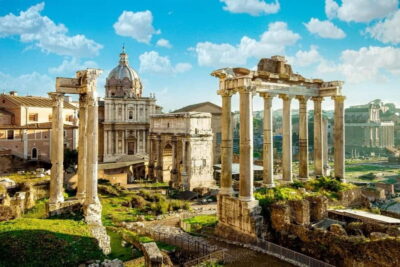
Colosseum, Roman Forum & Palatine Hill with Audioguide App
Read our review →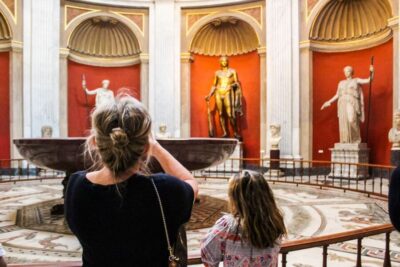
Vatican & Sistine Chapel Ticket with Optional Audio Guide
Read our review →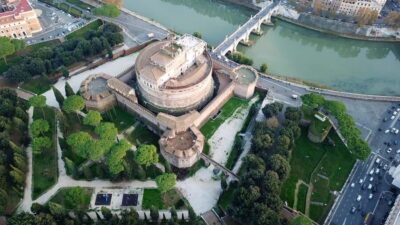
Castel Sant’Angelo Entry Ticket & Digital Audioguide
Read our review →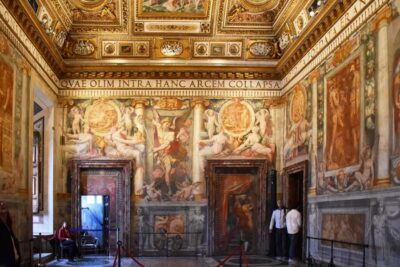
Colosseum, Forum, & Palatine Hill with Audio Guide
Read our review →Browse the lists this tour appears in