Reviewed · ITALY
Rome: Mamertime Prison Entrance Ticket with Audio guide
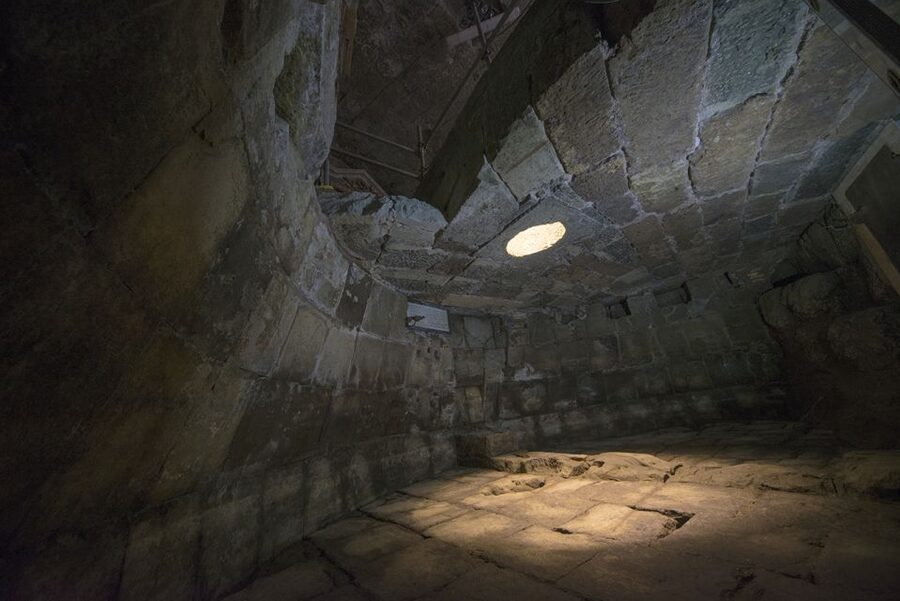
The most powerful part of Mamertine Prison is also the simplest: you stand in a cramped underground cell where Rome’s condemned enemies awaited death. This is the place traditionally linked with Peter and Paul, though the evidence is a matter of faith and tradition rather than a fully documented fact.
I like the visit for two reasons. First, it gives you a close look at an ancient Roman prison without the crowds and scale of the Colosseum. Second, the $11 price includes an audio guide, making it an easy addition to a morning around the Roman Forum. The main drawback is that the experience is short, and the phone-based audio guide can be awkward to download and use underground.
Key points to know before you go
- The prison is small: Plan on roughly 45 minutes to an hour, not half a day.
- Peter and Paul are the emotional focus: Their connection to the cell is central for Christian visitors, while Roman history buffs will appreciate the stories of Vercingetorix and Jugurtha.
- The audio guide is on your phone: Download the Vatican&Rome app and bring your own headphones.
- Reception can fail below ground: The guide may stop working in the cell, so prepare before descending.
- The entrance is easy to miss: Arrive 15 minutes early and look carefully for the ticket office and entrance.
- Mobility is a serious concern: Baby strollers, large bags, and luggage are not allowed, and the site is not suitable for people with mobility impairments.
Why Mamertine Prison feels different from Rome’s grand monuments

Rome usually presents its past in giant pieces: temples, arches, forums, and basilicas. Mamertine Prison works in the opposite way. You move through a compact, dark place built for confinement, not display.
The official ancient name is Carcer Tullianum. It was Rome’s oldest prison, and tradition holds that enemies of the state were kept here before execution. The setting gives the visit its force. You are not looking at a palace or a triumphal monument. You are looking at a place designed to remove people from public life.
The prison is associated with figures such as Jugurtha, king of Numidia, and Vercingetorix, the Gallic leader defeated by Julius Caesar. Supporters of Catiline were also said to have met their end here. These stories connect the room to Rome’s political violence and military expansion.
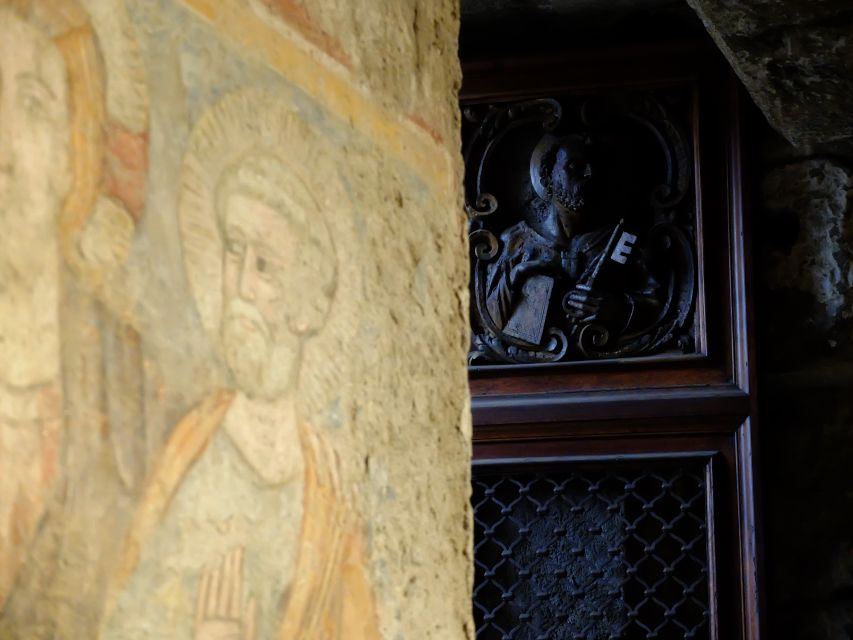
For Christian visitors, the site has another layer. It is traditionally identified as the place where Peter and Paul were imprisoned, along with other Christian martyrs. Some people come mainly for that connection. Others arrive for Roman history and discover that the Christian story gives the site a more personal weight.
I would keep both traditions in mind. The Roman prison story helps you understand the building. The Christian tradition explains why this otherwise modest site matters so much to people of faith.
More Audio Tours in Italy
- Rome: Pantheon Fast-Track Ticket and Official Audioguide
★ 4.5 · 27,353 reviews - Rome: Colosseum & Forum with Audio Guide App -Optional Arena
★ 4.2 · 24,770 reviews - Florence: Timed Entry to Michelangelo’s David + Audio App
★ 4.6 · 19,496 reviews
Finding the entrance near the Roman Forum
The prison is near the Roman Forum, but several people have found the entrance confusing. It is not the sort of attraction you can always spot instantly from a major road, so I would not arrive at the last minute.
Give yourself at least 15 minutes before your selected start time. The ticket office has the reservation on file, and the process can be quick once you reach the right desk. In some cases, staff print or provide the code needed to access the audio guide.
There is no transportation included, so you make your own way there. The location works well with a visit to the Roman Forum, Capitoline Hill, or other sights in central Rome. I would place it beside another nearby stop rather than make it the sole purpose of a long journey across the city.
The entrance area can feel less obvious than the major Roman monuments. Use your confirmation details, check the address carefully, and ask for the exact entry point if needed. Finding the site is one of the few parts of this inexpensive visit that can cause unnecessary stress.
The upper museum and the story of the prison
Your visit begins with the museum and interpretation areas before you reach the lowest cell. This section provides the basic order of the site and explains how the prison fits into Rome’s past.
The multimedia material covers the Roman prisoners associated with the building, the development of the structure, and the later religious use of the place. It also points out artistic details that you could easily miss if you simply walked through the rooms.
I like having this context before reaching the cell. Without it, the lower chamber is mainly a dark, rough space. With it, you can connect the physical room to Roman punishment, political power, and Christian memory.
The visit is not a large museum. You will not find a long series of galleries or a full reconstruction of prison life. The exhibition is compact, and you can usually see it in less than an hour. That is useful if your Roman schedule is tight, but it can disappoint you if you expect a major attraction with extensive displays.
The information also has limits. The audio material does not always explain daily prison conditions in the detail I would like. You may leave still wondering about food, illness, lighting, writing materials, visitors, and how many people occupied the cell at one time.
That gap matters especially to visitors interested in Paul’s imprisonment. The site connects him with the prison, but it does not fully answer practical questions about how he lived or wrote during confinement. I would treat the audio guide as an introduction, not a complete study of the prison.
Descending to the ancient cell
The lower chamber is the heart of the experience. It is small, plain, and atmospheric in a way that large monuments cannot match.
The room does not offer a long route or a series of prison blocks. You enter one principal underground space, look around, listen to the interpretation, and consider what the site represents. The lack of scale is part of the point. Rome’s enemies were not placed in a grand complex. They were shut away in a confined chamber.
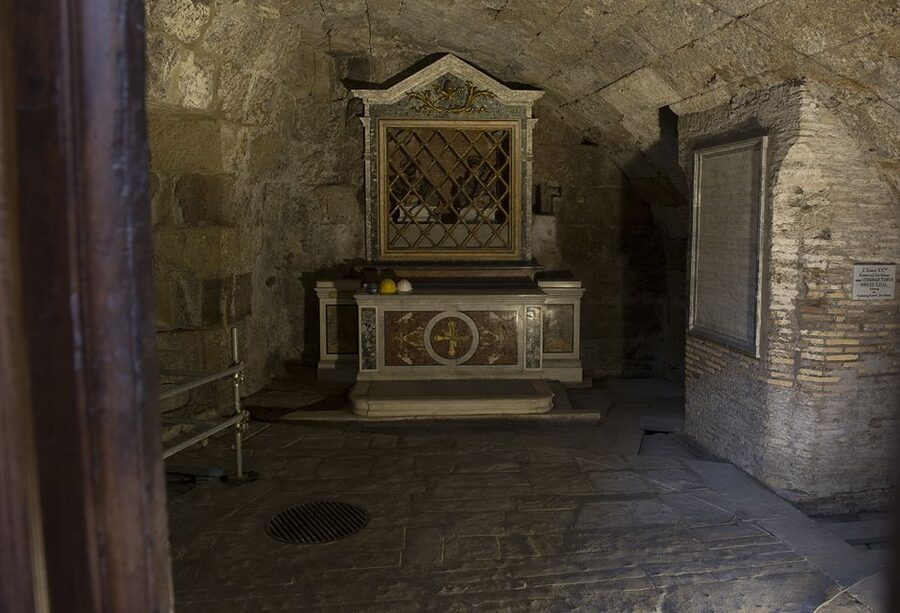
The cell is traditionally linked with Peter and Paul, and that connection gives the visit its strongest emotional charge. If you are interested in Christian history, you may find this more meaningful than the museum portion. The space is also important to those who want to reflect quietly on the apostles and the early Christian community.
The physical arrangement has changed over time. A staircase and protective barriers now shape the experience, and areas once approached more freely are sectioned off. That can make the site feel more controlled than it once did, but it also helps protect the historic remains.
I would not expect an untouched ruin. This is an ancient place that has been adapted for modern interpretation and religious use. You are seeing the old prison within a later architectural setting, including churches built above it.
The cell may take only a few minutes to see. Its meaning, not its size, makes the stop worthwhile.
Another self-paced route in Italy:
- Rome: City Sightseeing Hop-on Hop-off Bus with Audioguide
★ 4.0 · 16,045 reviews - Pompeii: Entry Ticket with Audio Guide
★ 4.1 · 13,491 reviews - Venice: La Fenice Opera House Entry Ticket with Audio Guide
★ 4.6 · 11,742 reviews - Rome: Colosseum, Forum, Palatine Hill Entry & Audioguide App
★ 4.4 · 10,957 reviews
Getting the audio guide to work
The included audio guide is available in Italian, English, French, German, Spanish, and Portuguese. It is meant to help you understand the rooms and identify artistic and historical details that are easy to overlook.
The important catch is that the guide uses your own phone. You need to download the Vatican&Rome app from the App Store or Google Play. Bring headphones, since the audio is not supplied as a personal device for every visitor.
I would download the app before reaching the prison if possible. The site may provide Wi-Fi, and the staff can provide a QR code or instructions, but the connection has not always been fast or reliable. Some people have had trouble finding the correct app, downloading the maps, or moving through the prompts.
Underground reception can also be poor. The guide may work on the upper level and then stop once you reach the cell. If that happens, return to a place with a connection and make sure the content is downloaded before going down again.
This is the largest practical weakness of the experience. The audio guide is valuable when it works, but it should not be the only thing you prepare. Charge your phone, bring headphones, install the app in advance, and ask the staff to explain where the exhibit begins and how the audio sequence works.
If your phone has no data connection or you do not use a smartphone, the experience becomes less convenient. Captions and displays may still help, but the paid audio guide will not offer much value unless you can access it.
How long the visit takes
The advertised activity is valid for one day, but the actual visit is brief. Most people should allow about an hour, including the museum, the cell, and time to work through the audio material.
You are not locked into a long group itinerary. Once inside, you can move at your own pace and spend longer in the sections that matter most to you. That works well for families with older children, history enthusiasts, and people who want a quiet moment rather than a formal lecture.
The short length is both an advantage and a limitation. You can fit Mamertine Prison between larger sights without exhausting yourself. At the same time, you should not buy this expecting a full morning of activities.
I would pair it with the Roman Forum or another nearby landmark. The location makes that easy, and the prison adds a very different mood to a day of temples and triumphal monuments.
Is $11 good value?

At about $11 per person, the ticket is reasonably priced for a central Rome attraction, especially if you use the audio guide successfully. The price covers entry and multilingual interpretation, with no separate guide fee.
The value depends on your interests. If you care about Peter, Paul, early Christianity, Roman political history, or unusual archaeological sites, the ticket is easy to justify. The setting is distinctive, and the visit can leave a strong impression despite its small size.
If you mainly want a large collection of objects or a detailed reconstruction of ancient prison life, the value is less certain. You may finish in under an hour and feel that there was not enough to see.
The price also compares well with the time required. You are not committing half a day or paying for transportation. If the prison fits naturally into your central Rome plans, it is a modest extra cost for a site that many people would otherwise miss.
Some visitors find that tickets can also be purchased at the site, but booking ahead gives you a cancellation option and helps you organize your day. You can cancel up to 24 hours before the activity for a full refund, and the reserve now, pay later option keeps the immediate cost at zero.
Who should visit Mamertine Prison?
I would recommend this most strongly to:
- People interested in the apostles Peter and Paul
- Christian visitors seeking a place connected with early church tradition
- History fans interested in Roman prisoners and political punishment
- Visitors who prefer small, focused sites to major crowds
- Anyone building a walking day around the Roman Forum
I would be more cautious if you have mobility limitations. The attraction is specifically listed as unsuitable for people with mobility impairments, and strollers, luggage, and large bags are not allowed.
I would also think twice if you dislike phone-based touring. The audio guide is useful, but downloading the app and maintaining a connection can take patience. The physical site remains worth seeing, yet the visit is better when the interpretation works properly.
Practical tips for a smoother visit
Arrive 15 minutes early. This gives you time to identify the office, confirm your reservation, and deal with the audio guide before entering the lower chamber.
Bring headphones and a charged phone. Download the app before you arrive, and do not assume that the on-site Wi-Fi will solve every problem.
Wear shoes suitable for a historic site. No special clothing requirement is provided, but the prison is an old, confined place within a religious setting, so modest, practical clothing is sensible.
Do not bring a stroller, suitcase, or large bag. The restrictions are clear, and you do not want to discover them at the door.
Plan your expectations carefully. You are visiting one compact prison room and a small museum, not a sprawling archaeological complex. The visit works because of the site’s associations and atmosphere, not because of its size.
Should you book this prison visit?
Yes, if the story of Peter and Paul matters to you, or if you enjoy unusual Roman sites that take less than an hour. The prison offers a direct physical connection to Rome’s punishment system and to a Christian tradition that has shaped the site for centuries.
I would also recommend it to history fans who have already seen the major monuments and want something more intimate. The $11 price is fair, especially when the audio guide functions well.
I would skip it if you need a fully guided tour, dislike downloading apps, or want a large museum with detailed displays. The audio system takes preparation, the entrance can be hard to find, and the cell is smaller than many people expect.
For the right visitor, Mamertine Prison is a quiet, serious stop in the middle of Rome’s grandest archaeological area. Go for the setting, the Roman stories, and the chance to reflect on Peter and Paul. Just prepare your phone before you descend.
FAQ
Where is Mamertine Prison located?
Mamertine Prison, also called Carcer Tullianum, is in Rome’s Lazio region near the Roman Forum.
How much does the entrance ticket cost?
The listed price is $11 per person.
How long does the visit take?
The visit usually takes about an hour or less, although you can move through the site at your own pace.
Is a tour guide included?
No personal tour guide is included. Entry and a multilingual audio guide are provided.
Which languages are available for the audio guide?
The audio guide is available in Italian, English, French, German, Spanish, and Portuguese.
Do I need to bring my own headphones?
Yes. The audio guide is accessed on your phone, so bringing your own headphones is recommended.
Which app do I need for the audio guide?
You need to download the Vatican&Rome app from the App Store or Google Play.
Can I bring a stroller or large bag?
No. Baby strollers, luggage, and large bags are not allowed.
Is the prison suitable for people with mobility impairments?
No. The attraction is listed as unsuitable for people with mobility impairments.
Can I cancel the booking?
Yes. You can cancel up to 24 hours in advance for a full refund.
Latest audio tours in Italy
- Orgosolo Multilingual Audioguide★ 4.5 · 42 reviews
- Pantheon Skip the Line Entry Tickets with Digital Audio Guide★ 3.5 · 52 reviews
- St. Peter’s Basilica: Dome Climb with Lift & Audioguide★ 4.5 · 13 reviews
- Audio guide in Vatican Museums and Sistine Chapel★ 4.5 · 12 reviews
- The Roman Jewish Ghetto: A Self-Guided Audio Tour★ 4.0 · 8 reviews
- Experience: The Pantheon Audio Tour★ 4.5 · 4 reviews
- Trastevere: A Self-guided Audio Tour of Rome’s Medieval Village★ 4.5 · 3 reviews
- Navova square underground with audioguide★ 4.5 · 17 reviews
Italy Audio Tours, compared.

Pantheon Fast-Track Ticket and Official Audioguide
Read our review →
Colosseum & Forum with Audio Guide App -Optional Arena
Read our review →
Timed Entry to Michelangelo’s David + Audio App
Read our review →
City Sightseeing Hop-on Hop-off Bus with Audioguide
Read our review →

La Fenice Opera House Entry Ticket with Audio Guide
Read our review →
Colosseum, Forum, Palatine Hill Entry & Audioguide App
Read our review →