
Reviewed · ROME
Rome: Colosseum Access with Official AI App & Arena Option
The big draw here is simple: you get prebooked Colosseum entry and then freedom to explore one of Rome’s greatest ancient sites without being tied to a live guide. The same ticket also covers the Roman Forum and Palatine Hill, turning a one-hour monument visit into a much fuller look at ancient Rome.
I like the flexible pace, especially if you want time for photographs or prefer to pause when something catches your eye. I also like the low price, $20.43 per person, which includes the ticket, presale fee, map, and app. The catch is that this is not a traditional guided tour. You must bring earphones, charge your phone, and understand that Arena and underground access cost extra.
Key points to know before booking
- Self-guided by design: Staff help you collect the ticket and enter, but the archaeological sites are yours to explore.
- Three major sites on one ticket: The Colosseum, Roman Forum, and Palatine Hill are included, with the Imperial Forums also covered.
- The AI app needs preparation: Download it before arrival, bring your own earphones, and make sure your phone is charged.
- Security is not skipped: Prebooked entry can reduce ticket stress, but security checks and crowd delays remain.
- Arena access is optional: The basic ticket does not include the Arena floor or underground areas.
- Plan for uneven walking: The archaeological park has stairs, rough surfaces, limited shelter, and few places to buy supplies.
What this Colosseum experience really offers
At first glance, this looks like a tour. In practice, it is a ticket-and-audio-guide service with staff assistance at the start. That distinction matters.
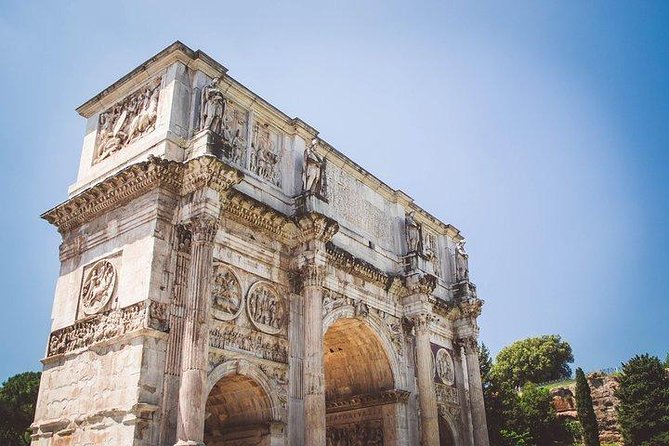
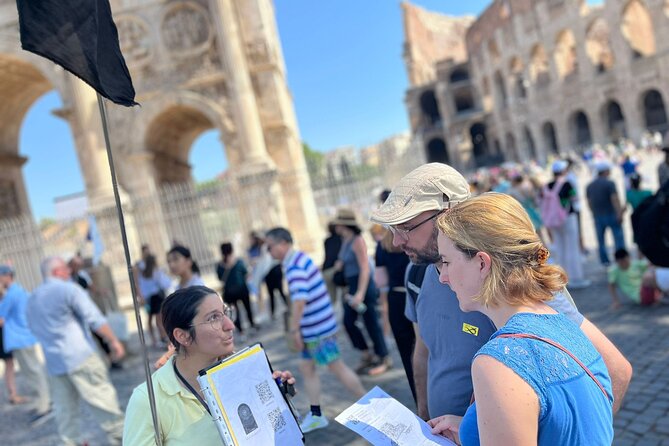
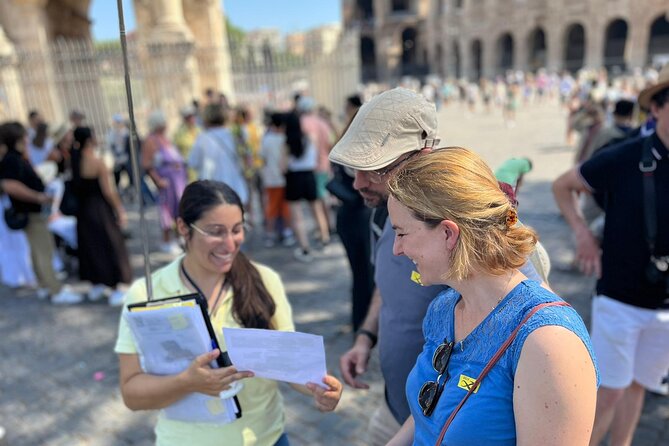
You meet near Via Marco Aurelio, 19, where staff provide your ticket and help direct you toward the Colosseum entrance. Some booking information also identifies the Arch of Constantine as the meeting point for the escorted handoff, so check your final voucher carefully. The office is roughly a 10-minute walk from the monument according to the practical directions provided for the experience.
Once you pass security, you are on your own. The supplied AI video and audio app gives you information on your phone, while a printed map with 3D reconstructions helps you find your way around. You can listen in English, Spanish, French, German, Italian, Hindi, Russian, or Portuguese.
This setup suits you if you want independence and do not need a human guide explaining every column and arch. It is less suitable if you expect a historian walking beside you, answering questions, or keeping the group moving through a carefully narrated route.
Other audio tours worth a listen in Rome:
- Rome: Colosseum & Forum with Audio Guide App -Optional Arena
★ 4.2 · 24,770 reviews - Rome: City Sightseeing Hop-on Hop-off Bus with Audioguide
★ 4.0 · 16,045 reviews - Rome: St. Peter’s Basilica & Dome Entry Ticket & Audio Tour
★ 4.2 · 7,537 reviews
Entering the Colosseum without a live guide
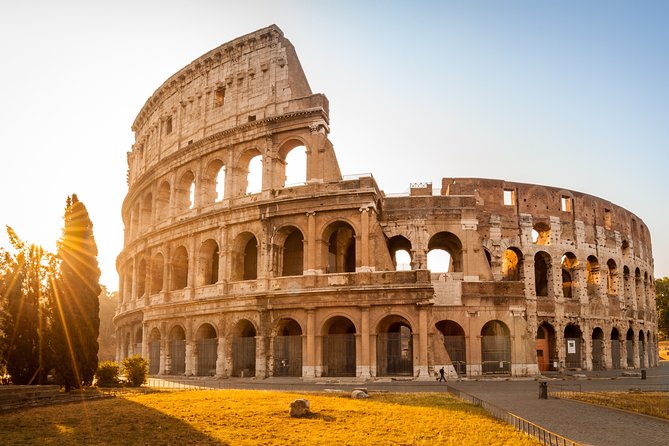
The Colosseum is still startling when you first see it. Its huge elliptical walls rise above the surrounding streets, and the broken stone makes it easy to picture the original four-story structure packed with spectators.
The basic visit includes the main Colosseum areas covered by the standard ticket. You can walk through the building at your own speed and use the app to learn about gladiatorial contests, animal hunts, Roman engineering, and the amphitheater’s role in public life.
The app is central to the experience, so prepare before you leave your hotel. Download it and its content in advance if possible. Bring your own earphones, since none are supplied. A few people have arrived without them and found the audio feature difficult or impossible to use in the noisy arena.
Phone reception can also be weak inside the Colosseum. The app is intended to work with limited connection, but it is still wise to open the program, check the download, and test the audio before entering. A fully charged phone is not a luxury here. It is your guidebook, map, and audio player all at once.
The app seems to work best when you use it as a supplement rather than expecting a polished human presentation. Some sections offer useful visual reconstructions and location-based information. Other parts may feel generic or hard to follow, especially if you want detailed historical analysis.
Roman Forum: the ancient city under your feet
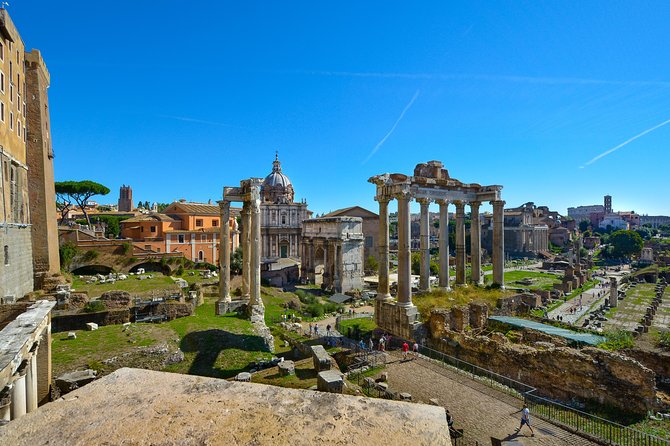
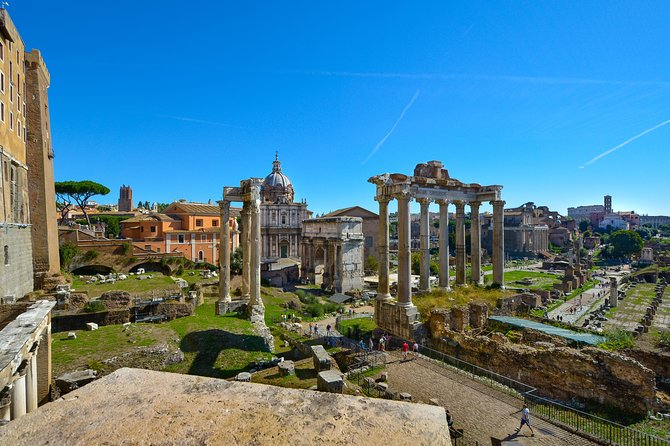
After the Colosseum, use the same ticket for the Roman Forum. This is not a neat museum with a single route. It is a broad archaeological area where temples, basilicas, arches, roads, and fragments of public buildings spread across an uneven valley.
The Via Sacra, the Forum’s main ancient road, gives you a sense of how people moved through the political heart of Rome. This was where public speeches, religious ceremonies, legal business, and commercial activity took place.
I find the Forum more rewarding when you slow down. The Colosseum delivers its impact quickly. The Forum takes patience because many ruins are partial and the original buildings require imagination. The app’s reconstructions can help you picture the missing walls and roofs, while the paper map gives you a rough route through the site.
Allow about an hour here if you want more than a quick look. You may need longer if you stop for photographs or want to follow the audio at each point. The paths can be uneven, and the site offers little shade or protection from rain. Carry water in a plastic bottle, not glass, and wear shoes with a solid grip.
One important planning point: the Colosseum, Forum, and Palatine Hill do not always feel like three short stops that fit neatly into a tight schedule. Security delays, crowded paths, and the distance between areas can eat into your time. Do not book this experience immediately before a train, flight, or fixed dinner reservation.
Palatine Hill and the best Forum views
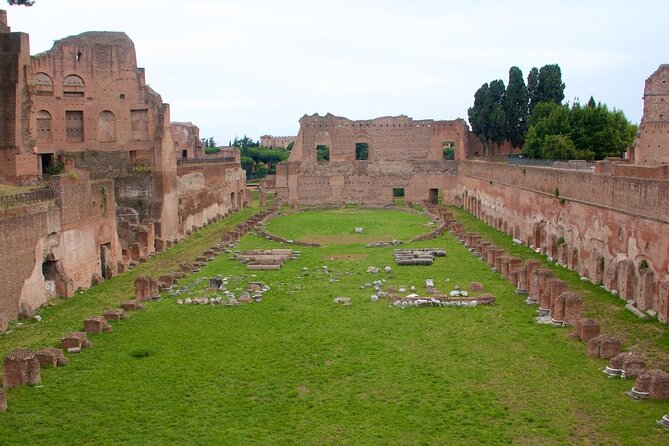
Palatine Hill rises above the Forum and is traditionally linked to Romulus, the legendary founder of Rome. The hill also became an imperial residential area, and its remains spread across a large, open archaeological park.
The reward is the view. From Palatine Hill, you look down over the Roman Forum and toward the Circus Maximus. This is one of the best places to understand how Rome’s political center, entertainment district, and imperial residences fitted together.
The hill is also where the visit becomes physically demanding. You will encounter slopes, stairs, rough ground, and exposed areas. One lift is available near the Colosseum entrance, but it does not remove all the walking, and the route back can be difficult for anyone who has trouble moving through crowds or walking for long periods.
For this reason, I would not choose this experience for someone with serious mobility limits without first checking the current access arrangements. The ancient buildings and preservation rules naturally limit ease of movement. The operator warns that the area is not fully equipped for mobility needs, and the combination of uneven paths and crowds can be stressful.
Another self-paced route in Rome:
- Colosseum, Roman Forum & Palatine Hill with Audioguide App
★ 4.4 · 6,291 reviews - Vatican & Sistine Chapel Ticket with Optional Audio Guide
★ 4.1 · 5,405 reviews - Rome: Castel Sant’Angelo Entry Ticket & Digital Audioguide
★ 4.7 · 5,347 reviews - Rome: Castel Sant’Angelo Entry Ticket & Audio App
★ 4.3 · 4,952 reviews
The extra sights around the archaeological park
The standard access also connects you with the Imperial Forums, including the area along Via dei Fori Imperiali. These monumental squares were built by later emperors to celebrate military victories and display imperial power.
Trajan’s Column is the star here. Its carved spiral tells a military story in stone, while the remains of Trajan’s Market show how ambitious Roman public construction could be. These areas help you see that the Roman Forum was only one part of a much larger civic center.
The Circus Maximus is included as a nearby point of interest, though it is not a ticketed stop in the same way. Today, you mainly see the long oval imprint of the ancient racing stadium. The scale is the main lesson. Even in ruins, the open space makes clear why chariot races could draw enormous crowds.
Treat these extra sights as optional extensions rather than guaranteed stops in a tightly managed tour. The ticket gives you access, but you set the pace. If you spend a long time inside the Colosseum and Forum, you may need to choose which surrounding ruins matter most to you.
Arena access and the underground question
The standard ticket does not include the Arena floor. It also does not include the underground areas.
If you want to stand on the Arena level, choose the clearly labeled Vip Arena Ticket option when booking. Read the wording closely. Several ticket types use similar names, and the basic Colosseum entry does not magically include every restricted section.
The Arena upgrade may appeal to you if standing closer to the center of the amphitheater matters. It offers a different angle on the seating and the underground structure, but access is controlled and limited. The add-on can cost noticeably more for a short portion of the visit, so I would choose it for the perspective, not because it transforms the whole experience.
The Underground Special Access option is separate again. If you are especially interested in the machinery, animal cages, and service passages beneath the Arena, confirm that your booking includes the underground before you arrive. Do not rely on a general reference to Arena access.
How the AI guide compares with a human guide
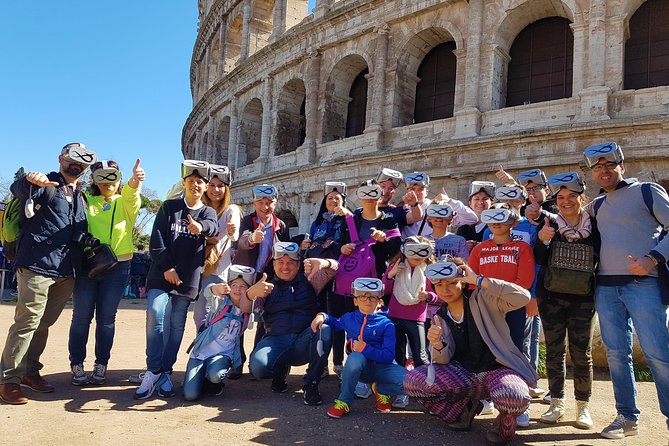
The app is useful for getting basic context without paying for a full guided tour. It also lets you stop, skip sections, and explore in your own order. That flexibility is a real advantage for independent visitors.
Still, an AI guide has limits. It cannot respond to your questions, notice that you are confused, or adjust the explanation to your interests. Some sections may feel broad rather than deeply researched, and location tracking may not always place you exactly where you expect.
If you enjoy learning through short videos and visual reconstructions, you may find the app helpful. If you prefer a personal storyteller, choose a live guided tour instead. Do not book this product expecting the same experience as a small group tour led by an archaeologist.
The paper map helps, though its numbered points can be hard to follow. Use it with the physical signs and the app rather than treating it as a perfect navigation tool.
Price, group size, and what you are paying for
At $20.43 per person, the price is reasonable if you want a reserved ticket and a basic self-guided aid. The stated ticket value is 18 euros, with a 2.44 euro presale fee included. You are mainly paying for the convenience of prebooking, staff assistance, the map, and the app.
That value becomes less convincing if you only want entry. The ticket office or official channels may offer a cheaper basic admission at some times, though availability and booking conditions can vary. The strength of this option is not luxury. It is having the ticket arranged in advance and receiving help with the initial entry.
The handoff group may include up to 30 people, while the overall activity information allows as many as 50. Either way, the group is mainly relevant before you enter. The actual visit is self-guided, so you are not walking shoulder to shoulder with a guide for the entire route.
The experience is often booked around 17 days ahead. That is a useful sign that planning early matters, particularly during high season, weekends, and holidays. Timed admission can be strict, and tickets may not be changeable once issued.
Timing, crowds, weather, and practical preparation
The advertised visit can take one to four hours. The Colosseum itself is often described as about an hour, with roughly another hour each for the Forum and Palatine Hill. In real use, security, walking time, photographs, crowds, and app stops can stretch the visit.
Do not assume that a short afternoon entry leaves unlimited time for every area. From October 27 to March 29, the listed opening hours are 8:30 a.m. to 4:30 p.m., with last entry at 3:30 p.m. Seasonal hours and timed entry make your chosen slot important.
The archaeological park has no reliable shelter from sun or rain and limited shopping facilities. Bring:
- Comfortable walking shoes
- A charged phone
- Your own earphones
- A plastic bottle of water
- Passport or valid identification, including for children
- Only a small bag with essentials
Bulky luggage and large handbags are not permitted, and there is no luggage storage at the meeting point or site. Knives and cutting objects are forbidden. These are easy rules to overlook if you are arriving straight from a hotel checkout.
Security can delay the start, especially on weekends, national holidays, and during peak season. Prebooked entry does not mean you walk past every queue. It mainly removes the uncertainty of finding an available ticket.
The operator cannot control closures caused by strikes, demonstrations, special events, or bad weather. If Rome has a major protest or transport disruption, reach the meeting point with extra time and check your messages before setting out.
Who should choose this experience?
I would recommend it to an independent visitor who wants the major ancient sights at a modest price and is comfortable using a phone as a guide. It is also a good fit for people who dislike being rushed through a fixed narration.
Families may appreciate the freedom to pause, though every child must carry identification and the walking can be tiring. History lovers may enjoy the chance to linger, but those seeking expert interpretation should choose a live guide.
I would be cautious if you have difficulty walking, dislike crowds, depend on reliable mobile service, or do not want to manage an app. I would also avoid booking it on the same day as another fixed activity. Same-day traffic problems, late buses, or a missed timed entry can leave little room for rescue, and rescheduling is not guaranteed.
Cancellation is more forgiving when handled early. Cancel at least three full days before the start for a full refund. One to three full days before the visit may qualify for a 50 percent refund, while cancellation less than one full day ahead is nonrefundable.
Should you book the AI-guided Colosseum visit?
Book it if your priority is reserved entry, low cost, and freedom to explore. The ticket covers far more than the amphitheater, and the Forum and Palatine Hill are essential parts of the ancient Rome story.
Skip it if you want a real guide, guaranteed technical ease, or extensive help with mobility. Bring earphones, download the app before arrival, read the ticket type carefully, and allow several hours rather than trying to squeeze the visit into a narrow gap.
My practical verdict: this is a useful self-guided entry package, not a full tour. At the price, it can be good value, but only if you understand exactly what you are buying.
FAQ
Is this a guided tour with a live guide?
No. Staff help you collect your ticket and reach the Colosseum entrance, but after security you explore independently with the AI video and audio app.
What sites are included?
The ticket includes the Colosseum, Roman Forum, Palatine Hill, and Imperial Forums. Circus Maximus is listed as a free nearby point of interest rather than a separately ticketed entry.
Is Arena access included?
No. The basic ticket does not include the Arena floor. You must select the Vip Arena Ticket option if you want that access.
Is the Colosseum underground included?
No. Underground access requires the separate Underground Special Access option.
Do I need to bring earphones?
Yes. The app is used on your own smartphone, and you must bring your own earphones.
What languages are available in the app?
The video and audio content is available in English, Spanish, French, German, Italian, Hindi, Russian, and Portuguese.
Where do I meet the staff?
The listed meeting point is Via Marco Aurelio, 19, Rome. The instructions also refer to the Arch of Constantine for the escorted entrance, so check your final voucher for the exact meeting details on your date.
How long does the visit take?
The activity is listed as lasting about one to four hours. The Colosseum, Forum, and Palatine Hill are each described as roughly one-hour areas, but crowds, security, walking, and your own pace can change the total time.
Latest audio tours in Rome
- Pantheon Skip the Line Entry Tickets with Digital Audio Guide★ 3.5 · 52 reviews
- St. Peter’s Basilica: Dome Climb with Lift & Audioguide★ 4.5 · 13 reviews
- Audio guide in Vatican Museums and Sistine Chapel★ 4.5 · 12 reviews
- The Roman Jewish Ghetto: A Self-Guided Audio Tour★ 4.0 · 8 reviews
- Experience: The Pantheon Audio Tour★ 4.5 · 4 reviews
- Trastevere: A Self-guided Audio Tour of Rome’s Medieval Village★ 4.5 · 3 reviews
- Navova square underground with audioguide★ 4.5 · 17 reviews
- The Colosseum’s Attic with 3rd, 4th & 5th Levels with Audio Guide★ 4.5 · 20 reviews
Rome Audio Tours, compared.
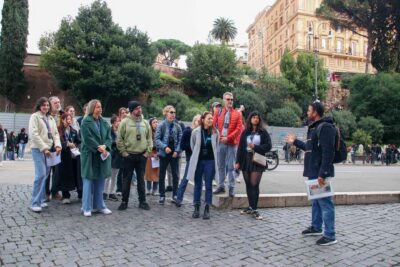
Colosseum & Forum with Audio Guide App -Optional Arena
Read our review →
City Sightseeing Hop-on Hop-off Bus with Audioguide
Read our review →
St. Peter’s Basilica & Dome Entry Ticket & Audio Tour
Read our review →
Colosseum, Roman Forum & Palatine Hill with Audioguide App
Read our review →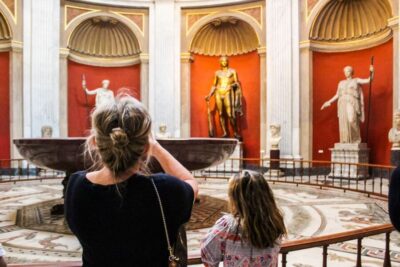
Vatican & Sistine Chapel Ticket with Optional Audio Guide
Read our review →
Castel Sant’Angelo Entry Ticket & Digital Audioguide
Read our review →

Colosseum, Forum, & Palatine Hill with Audio Guide
Read our review →Browse the lists this tour appears in