
Reviewed · ROME
Rome: Castel Sant’Angelo Entrance Ticket with Audioguide
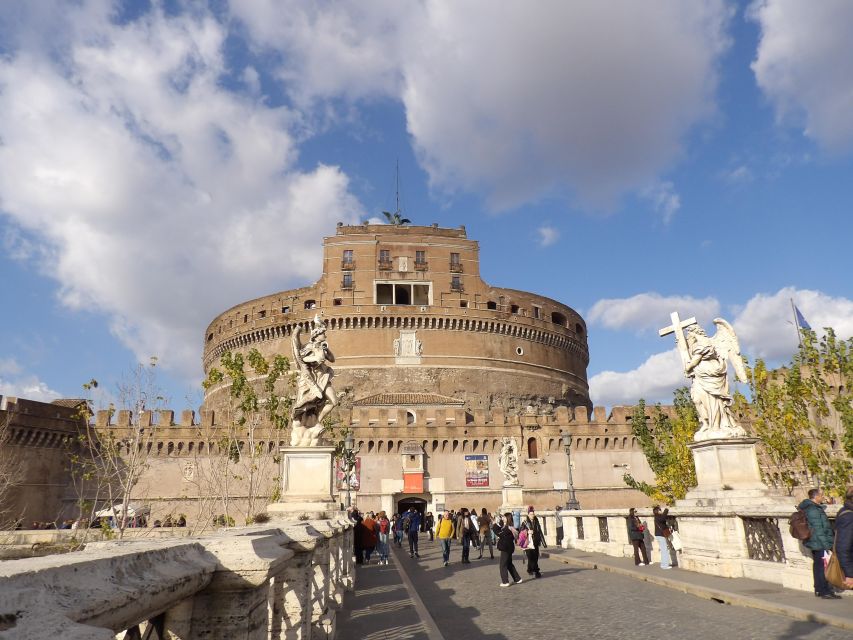
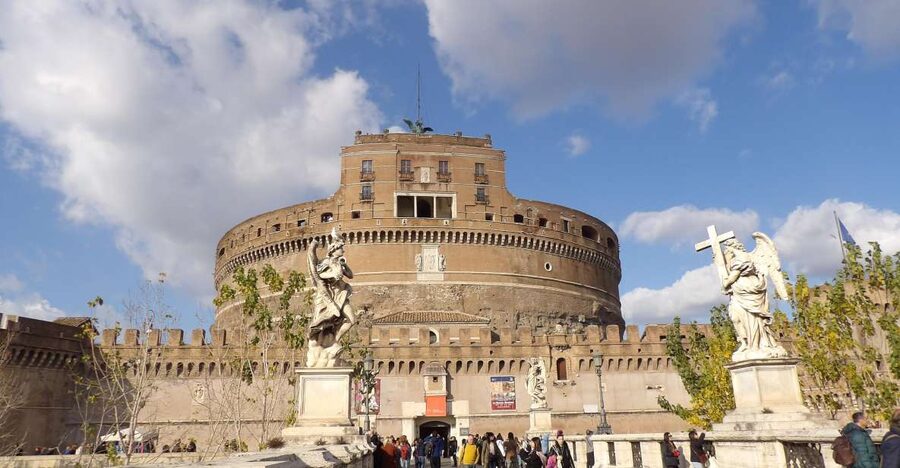
Castel Sant’Angelo is one of Rome’s most surprising buildings. It began as Emperor Hadrian’s tomb, then became a fortress, papal refuge, and prison. I like the way one visit lets you trace those changes in the stone itself. I also like the rooftop views, especially toward St. Peter’s Basilica and the Vatican.
The e-ticket keeps the arrival simple, and the audio guide gives you useful context without tying you to a group. The main catch is practical: you’ll climb a series of stairs to reach the panoramic terrace, so this visit is not suitable for wheelchair users or people with mobility impairments.
Key points to know before you go
- One building, several lives: See the original mausoleum, military fortress, papal residence, and prison in one visit.
- The terrace is the prize: Climb to the ramparts for views over the Tiber, Vatican, St. Peter’s Basilica, and central Rome.
- The audio guide sets the pace: You can move through the castle at your own speed instead of following a fixed group.
- Tickets arrive late: Your e-ticket is sent by email in the late afternoon before your entry date, so check your spam folder.
- Pack light and wear good shoes: Large bags, luggage, sprays, aerosols, weapons, and sharp objects are not allowed.
- The price reflects convenience: At $49 per person, this makes the most sense if you value easy entry and an independent visit.
Why Castel Sant’Angelo feels different from Rome’s other monuments

Rome has no shortage of ancient sites, but Castel Sant’Angelo offers a useful change of pace. You are not looking at one frozen moment in Roman history. You are walking through a building that kept changing jobs as the city around it changed.
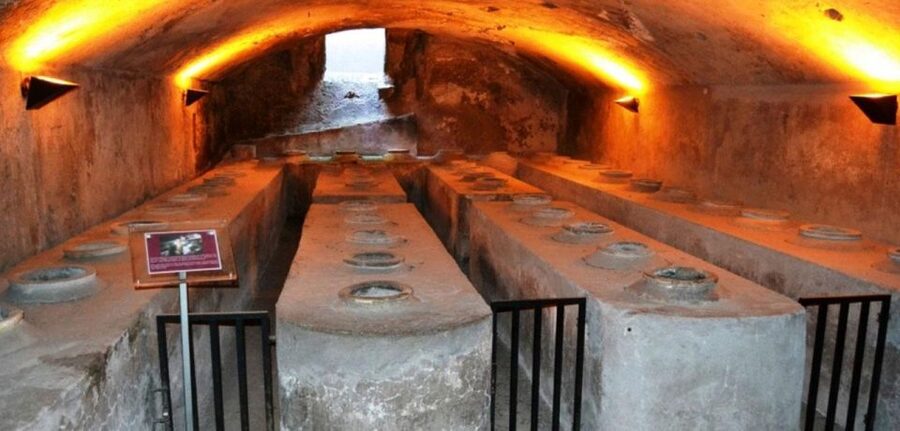
The central structure was built as a mausoleum for Emperor Hadrian. Its original purpose was burial, not defense. Over time, its thick walls and position beside the Tiber made it useful as a fortress. Later, popes used it as a refuge during dangerous periods, and the building also served as a prison.
I find that sequence more interesting than a simple museum visit. Each section asks you to look at the same building in a new way. A grand chamber may reflect imperial power, while a narrow passage suggests military use. The Papal Apartments bring decoration and ceremony into the picture, while the defensive areas remind you that this was a working stronghold.
The audio guide helps connect these pieces. Without some explanation, the castle can feel like a maze of corridors, stairs, rooms, and viewpoints. With the narration, the building’s changing purpose becomes easier to follow.
More Audio Tours in Rome
- Rome: Colosseum & Forum with Audio Guide App -Optional Arena
★ 4.2 · 24,770 reviews - Rome: City Sightseeing Hop-on Hop-off Bus with Audioguide
★ 4.0 · 16,045 reviews - Rome: St. Peter’s Basilica & Dome Entry Ticket & Audio Tour
★ 4.2 · 7,537 reviews
Getting inside with an e-ticket
There is no meeting point and no guide to find outside. Your entry ticket is sent by email in the late afternoon on the day before your reservation. You need to show it at the entrance, so download it or keep the email easy to reach on your phone.
This timing is worth noting. If you book several days ahead, you may not receive the actual voucher immediately. Check your spam folder if it has not arrived by the expected time. Do not wait until you are standing at the entrance to search through a crowded inbox.
The ticket is valid for one day, with starting times based on availability. The booking also allows free cancellation up to 24 hours before the visit, and you can reserve now and pay later. Those terms are useful if your Rome schedule is still shifting.
The entry arrangement is designed to be quick, but you should still allow time for any entrance checks. The practical advantage is that you do not need to meet a tour leader, find a meeting point, or wait for a group to assemble. You arrive, present the e-ticket, and begin exploring.
The mausoleum of Emperor Hadrian
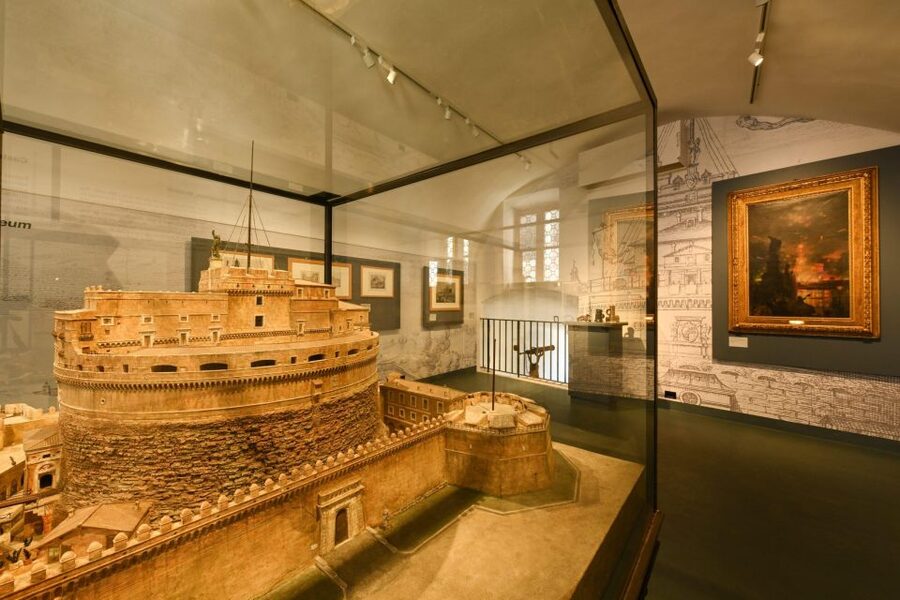
Start by remembering what this building was before it became a castle. It was the tomb of Emperor Hadrian, a massive imperial monument intended to project power even after death.
The structure’s first identity matters because it gives the lower and inner areas a different mood from the upper rooms. You are not entering a palace built for daily life. You are moving through a monument that was later adapted for military and papal use.
The available description does not provide a detailed room-by-room route, so the audio guide becomes particularly useful here. Listen for the explanations of the mausoleum’s original design and how later changes affected the building. You will get more from the visit if you pause when the narration points out architectural features rather than rushing straight toward the terrace.
I recommend treating this first section as the foundation of the visit. The castle’s later roles make better sense once you understand its beginning as an imperial tomb.
Corridors, chambers, and the castle’s defensive role

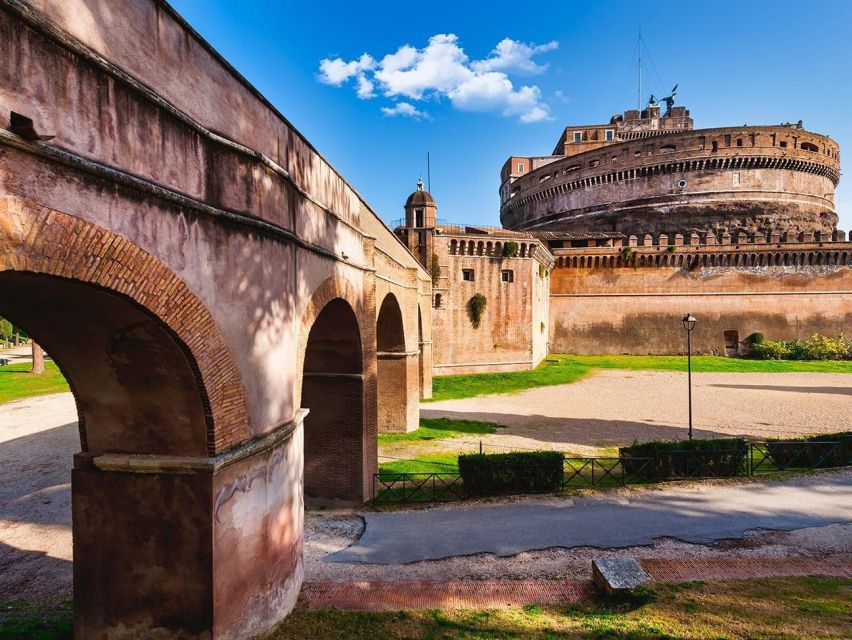
As you continue, the mood shifts from funerary monument to fortress. Castel Sant’Angelo’s location beside the Tiber helped make it a strategic point in Rome, and its defensive structures show how the building was adapted for protection.
The military side is not presented as a separate modern exhibit with a neat beginning and end. Instead, it is part of the building’s layout. Thick walls, controlled routes, and elevated positions help you picture how the castle could protect important people and watch over the city.
I like this part because it makes the monument feel functional. The castle was not only a grand symbol. It had a practical role during unsettled times. The audio guide can help you connect defensive details to the larger story, so listen closely as you move through these areas.
Be ready for uneven movement through the building. You will climb stairs and pass through corridors, and the visit is not designed around full step-free access. Comfortable shoes and comfortable clothing are sensible choices.
Another self-paced route in Rome:
- Colosseum, Roman Forum & Palatine Hill with Audioguide App
★ 4.4 · 6,291 reviews - Vatican & Sistine Chapel Ticket with Optional Audio Guide
★ 4.1 · 5,405 reviews - Rome: Castel Sant’Angelo Entry Ticket & Digital Audioguide
★ 4.7 · 5,347 reviews - Rome: Castel Sant’Angelo Entry Ticket & Audio App
★ 4.3 · 4,952 reviews
The Papal Apartments and Renaissance decoration
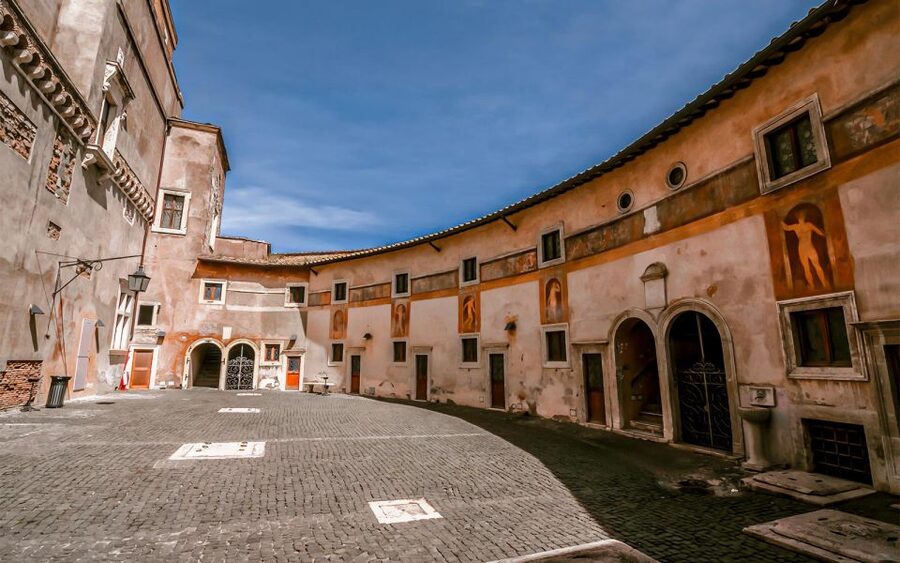
The Papal Apartments provide the biggest visual contrast in the castle. After seeing the fortress-like spaces, you enter rooms linked to papal life, with Renaissance frescoes, period furniture, and a more polished sense of comfort.
These rooms show how Castel Sant’Angelo could offer safety as well as status. Popes used the castle as a refuge in times of crisis, but the apartments also allowed the building to function as a residence. The decoration gives you a glimpse of the people who occupied these rooms, not just the soldiers who defended them.
I would not rush through the apartments. Take time to look at the frescoes and notice how different they feel from the bare, defensive sections. The contrast is one of the visit’s best features: imperial burial, military protection, and papal luxury all exist inside the same structure.
The supplied information does not name a live guide, and this is not a guided group tour. You use the audio guide independently. That suits you if you prefer to pause for photographs or spend extra time in a room without holding up a group.
Reaching the ramparts for Rome’s best views
The rooftop terrace is the high point of the visit, both literally and visually. You must climb a series of stairs to reach it, but the effort pays off with broad views across Rome.
From the ramparts, you can look toward the Tiber, St. Peter’s Basilica, the Vatican, and the Roman skyline. The view gives you a better sense of how the castle fits into the city. Down below, the streets and river can feel disconnected from the monument’s old military purpose. From above, its position becomes easier to understand.
I would plan this part with a little patience. The terrace is the obvious place for photographs, so you may need to wait for a clear position along the wall. The visit provides a strong setting for skyline pictures, but the experience is not only about taking a photo. Look back at the castle itself and consider how useful these elevated positions were for watching the city.
The stairs are the main limitation. People with mobility impairments or wheelchair users should not book this experience. If you have only mild difficulty with stairs, think carefully before reserving, since reaching the terrace is a central part of the visit.
How much time should you allow?
The ticket is valid for one day, but the information provided does not give a fixed visit length. I would avoid squeezing Castel Sant’Angelo into a rushed gap between two appointments. You need time for the entrance, audio commentary, interior rooms, Papal Apartments, defensive areas, and the climb to the terrace.
The best pace is self-directed. Move more slowly in the rooms with frescoes and furniture, then pause on the ramparts for the view. If you are mainly interested in photography, you may focus on the terrace and major interior spaces. If you care about Roman and papal history, give the audio guide more attention.
Because there is no scheduled live tour, you are not locked into a group timetable. That flexibility is a real advantage in Rome, where a delayed meal, crowded street, or long museum stop can throw off a tight plan.
Is the $49 ticket good value?
At $49 per person, this is not a cheap walk-in attraction. The value depends on what you want from the visit.
I think the price is easier to justify if you want a straightforward booking, an audio guide, and the freedom to explore without meeting a tour leader. The castle itself offers several different experiences in one place: ancient Roman burial architecture, military defenses, papal rooms, prison associations, and a major city view.
The value is weaker if you only want a quick look at the outside or if you are mainly seeking a formal guided tour with a historian. No live guide is included, and the listing only specifies entry tickets plus the audio guide arrangement. You are paying for access and independent interpretation, not a personal expert leading you through every room.
The ticket’s flexible cancellation and reserve-now, pay-later terms also have practical value. You can hold the visit while arranging the rest of your Rome schedule, then cancel up to 24 hours ahead for a full refund if your plans change.
What to bring and what to leave behind
Wear comfortable shoes. The castle requires stair climbing, and you will get more from the visit if you can move through the rooms and ramparts without worrying about sore feet.
Bring a passport or ID card, as identification is listed among the things to have with you. Keep your e-ticket available on your phone, since you must show it at the entrance.
Do not bring luggage or large bags. Pets, weapons, sharp objects, sprays, and aerosols are also not allowed. This is worth considering if you are visiting Rome between hotels or carrying a full daypack. Travel light, or arrange storage elsewhere before arriving.
Who will enjoy this visit most?
I would recommend Castel Sant’Angelo to you if you like places with several historical layers rather than a single period. The mix of Roman, military, papal, and prison history gives the visit variety.
It also suits independent sightseers. You can use the audio guide, stop for pictures, and spend more time in the apartments or on the terrace without following a group leader. The easy-to-use audio arrangement has been a strong part of the experience, and the booking process is built around simple entry.
The visit is less suitable if stairs are a serious concern, if you need step-free access, or if you want a detailed live tour. It may also feel expensive if your main goal is simply a view of St. Peter’s Basilica from outside.
My verdict on Castel Sant’Angelo with audio guide
Book this experience if you want an easy, self-paced way to see one of Rome’s most adaptable monuments. The strongest reasons are the mix of uses inside the castle, the Papal Apartments, and the views from the ramparts.
At $49, I would treat it as a focused sightseeing stop rather than a casual add-on. Check your email the afternoon before, travel light, wear good shoes, and leave enough time for the stairs. If those conditions suit you, Castel Sant’Angelo gives you a memorable look at Rome from below, within, and above its walls.
FAQ
What does the Castel Sant’Angelo ticket include?
The ticket includes entry to Castel Sant’Angelo. An audio guide is provided as part of the experience described.
How will I receive my ticket?
Your e-ticket will be sent by email in the late afternoon of the day before your entry date. Check your spam folder if you do not see it.
Do I need to meet a guide?
No. There is no meeting point, and you do not need to meet anyone before entering. Show your e-ticket at the entrance.
How long is the ticket valid?
The ticket is valid for one day. Available starting times depend on the selected availability.
Can I cancel my reservation?
Yes. You can cancel up to 24 hours in advance for a full refund.
Can I reserve now and pay later?
Yes. The booking option allows you to reserve your place and pay nothing today.
Do I need identification?
Yes. A passport or ID card is listed among the items to bring.
Are there stairs inside Castel Sant’Angelo?
Yes. You must climb a series of stairs to reach the panoramic terrace.
Is the experience suitable for wheelchair users?
No. The experience is listed as unsuitable for wheelchair users and people with mobility impairments.
Can I bring luggage or a large bag?
No. Luggage and large bags are not allowed. Pets, weapons, sharp objects, sprays, and aerosols are also prohibited.
Latest audio tours in Rome
- Pantheon Skip the Line Entry Tickets with Digital Audio Guide★ 3.5 · 52 reviews
- St. Peter’s Basilica: Dome Climb with Lift & Audioguide★ 4.5 · 13 reviews
- Audio guide in Vatican Museums and Sistine Chapel★ 4.5 · 12 reviews
- The Roman Jewish Ghetto: A Self-Guided Audio Tour★ 4.0 · 8 reviews
- Experience: The Pantheon Audio Tour★ 4.5 · 4 reviews
- Trastevere: A Self-guided Audio Tour of Rome’s Medieval Village★ 4.5 · 3 reviews
- Navova square underground with audioguide★ 4.5 · 17 reviews
- The Colosseum’s Attic with 3rd, 4th & 5th Levels with Audio Guide★ 4.5 · 20 reviews
Rome Audio Tours, compared.
Colosseum & Forum with Audio Guide App -Optional Arena
Read our review →
City Sightseeing Hop-on Hop-off Bus with Audioguide
Read our review →
St. Peter’s Basilica & Dome Entry Ticket & Audio Tour
Read our review →
Colosseum, Roman Forum & Palatine Hill with Audioguide App
Read our review →
Vatican & Sistine Chapel Ticket with Optional Audio Guide
Read our review →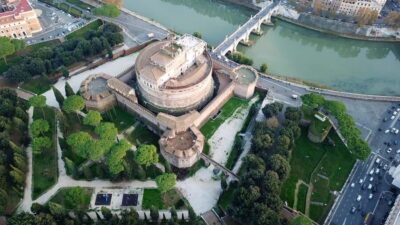
Castel Sant’Angelo Entry Ticket & Digital Audioguide
Read our review →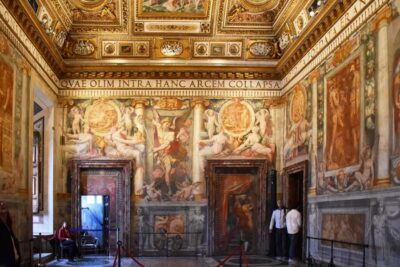

Colosseum, Forum, & Palatine Hill with Audio Guide
Read our review →Browse the lists this tour appears in