
Reviewed · ITALY
Ferrara Walking Tour with Audio and Written Guide
Ferrara’s best sights are tied together in one easy walk, from the medieval curve of Via delle Volte to the grand avenues built by the Este family. You use your phone, not a live guide, so you can stop for coffee, linger at the cathedral, or skip ahead when a museum catches your eye.
I like the choice between audio and written explanations, and I like the low price of $7.81. The main consideration is that this is a digital guide, not a person leading you through town. You need a working smartphone, internet access, and enough battery for the route.
Key points to know before you book
- Via delle Volte opens the walk with medieval Ferrara, following the line of the old Po River embankment.
- The audio and text guides work in five languages: English, Spanish, Italian, German, and French.
- Castello Estense is the one major paid stop, with a separate €12 ticket that is optional.
- You control the pace, making this useful if your day includes museums, shopping, or an unplanned lunch.
- Restaurant advice is included, a welcome extra for anyone who wants authentic local food rather than a meal near the busiest square.
- The route ends at the peaceful Certosa gardens, not back at the starting point, so plan your onward walk.
Why this self-guided Ferrara walk works
Ferrara is a city that rewards wandering. Its center is compact, but its story is layered: medieval streets sit beside Renaissance planning, and the Este court left grand public buildings close to narrow lanes. This tour gives you a route through both sides of the city without forcing you to keep pace with a group.
The format is simple. Download the digital material, reach the starting point in Ferrara, and use the audio or written guide as you move between stops. You can listen through your phone speaker or use headphones. If you prefer to read, the text gives you a quieter way to take in the details.
The price makes sense for independent visitors. At $7.81 per person, you are paying for a route, context, language options, and food suggestions rather than a live guide’s time. That keeps the cost low, but it also means you must handle navigation and technology yourself.
The tour usually takes two to three hours. That estimate covers the listed stops, but your actual time can change quickly. The castle alone is assigned about an hour, and you may want more time there if you buy the entrance ticket. The route also works well in sections. You can pause the walk for a museum or meal and return to the guide later.
More Audio Walking Tours in Italy
- Florence: 2.5 hour Audio Guided Walking Tour led by Host
★ 4.6 · 293 reviews - Verona Walking Tour with Audio and Written Guide by a Local
★ 4.5 · 157 reviews - Bologna Walking Tour with Audio and Written Guide
★ 4.5 · 132 reviews
Starting on Via delle Volte
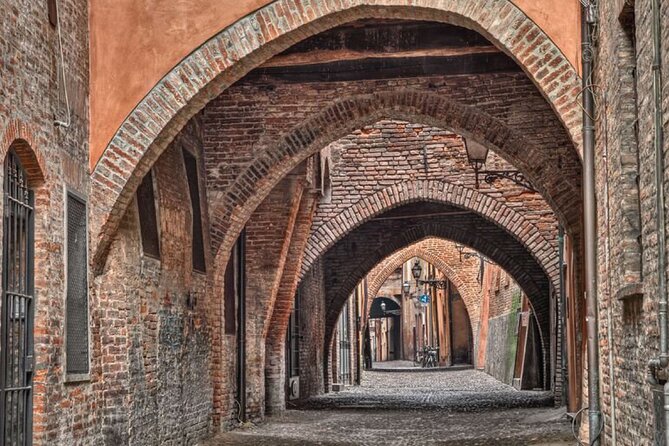
Via delle Volte is a strong first stop because it shows Ferrara at its most medieval. The straight street follows the route of the old embankment of the Po, Italy’s longest river, before the river was diverted in 1152.
The street is known for its arches and enclosed passages linking buildings on opposite sides. Even without entering a museum, you get a clear sense of how the older city was shaped by water, trade, and practical building needs. I like that the tour begins here rather than with a grand palace. You first meet Ferrara as a lived-in medieval town.
The suggested time is about 20 minutes. That is enough for a slow look and some photographs, though you may want to pause the audio if you are studying the buildings. Use this first stop to test your phone, volume, and route before you get farther into the city.
The starting information gives the address only as 44122 Ferrara, so finding the exact first point may require care. One person using the guide had difficulty locating the beginning, but found the route easier once underway. I would download the material before setting out and allow a few extra minutes to get your bearings.
A short turn into Ferrara’s Jewish ghetto
The route then makes a small detour into Ferrara’s Jewish ghetto. The Jewish community has been documented in Ferrara since the 13th century, long before the ghetto itself was created.
This ten-minute stop adds social history to the walk. You are not only looking at streets and palaces; you are also hearing about a community that has been part of Ferrara for centuries. The detour is brief, so it does not derail the main route, but it gives the city a broader human story.
Because the stop is short, I would treat it as an introduction rather than a full visit to Jewish Ferrara. The guide provides context, but the information supplied for this experience does not promise entry to specific religious or cultural sites. If this subject matters greatly to you, note the stop carefully and consider allowing extra independent time.
Piazza Trento e Trieste and the city center

Piazza Trento e Trieste is the city’s main square and one of the natural places to pause. In medieval times it was called Piazza del Mercato delle Erbe, or the Herb Market Square, which tells you how central commerce was to the area.
The ten-minute stop is useful for getting the layout of Ferrara. Instead of treating the square as a pretty open space, the guide connects it to the city’s older market life. You can look around and understand why major civic and religious buildings gathered here.
This is also a practical point for independent pacing. You may wish to pause the tour and spend time in the square before continuing. The digital format lets you do that without holding up anyone else.
Another self-paced route in Italy:
- Rome: Pantheon Fast-Track Ticket and Official Audioguide
★ 4.5 · 27,353 reviews - Rome: Colosseum & Forum with Audio Guide App -Optional Arena
★ 4.2 · 24,770 reviews - Florence: Timed Entry to Michelangelo’s David + Audio App
★ 4.6 · 19,496 reviews - Rome: City Sightseeing Hop-on Hop-off Bus with Audioguide
★ 4.0 · 16,045 reviews
Ferrara Cathedral’s many layers
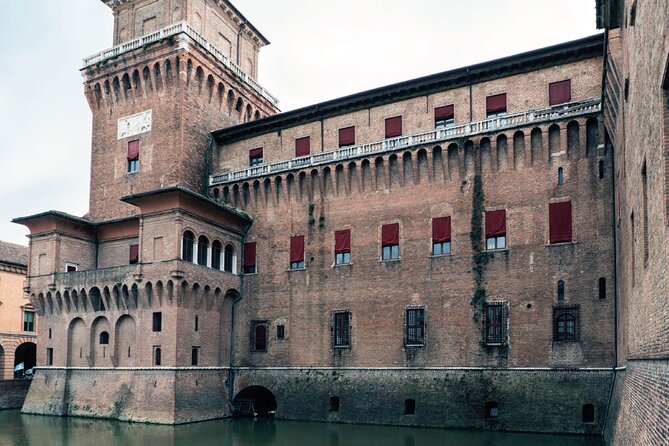
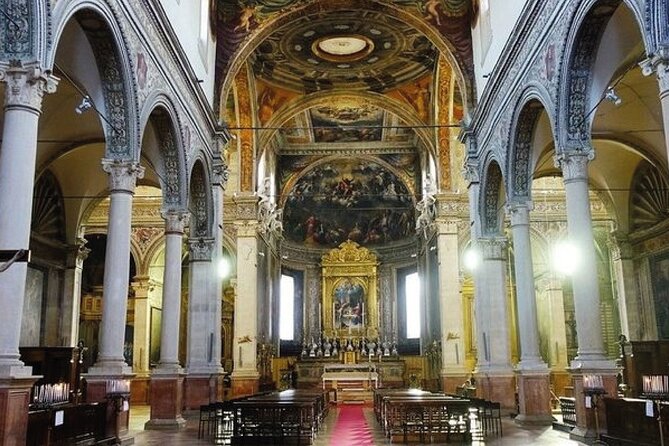
Ferrara Cathedral is the city’s most important church and receives about 15 minutes on the route. Its appearance reflects repeated changes, especially during the Renaissance and Baroque periods, so it is not a single-period building.
That mix is the point. The guide helps you read the cathedral as a building altered over time rather than as one fixed design. I like stops such as this because the audio can direct your eye toward changes you might otherwise pass without noticing.
Admission is listed as free for the walking route, but the tour information does not promise access to every interior area or confirm conditions at the time of your visit. Use the guide for the exterior and the supplied historical explanation, then check locally if you want to enter or spend longer inside.
Palazzo Municipale and the old ducal court

Next comes the Palazzo Municipale, now Ferrara’s municipal seat. The square occupies what was once the courtyard of the Ducal Palace, and the feature highlighted here is Lo Scalone, the grand staircase.
The stop lasts about 20 minutes, giving you more time than the brief square and ghetto visits. That makes sense. This area connects present-day civic life with the former court of Ferrara’s ruling Este family.
I would listen or read while looking closely at the staircase and surrounding space. The value of a self-guided explanation is that you can replay a section if the first pass feels too quick. You are not trying to memorize a lecture. You are building a picture of how power was displayed in the city.
Castello Estense and the optional €12 ticket
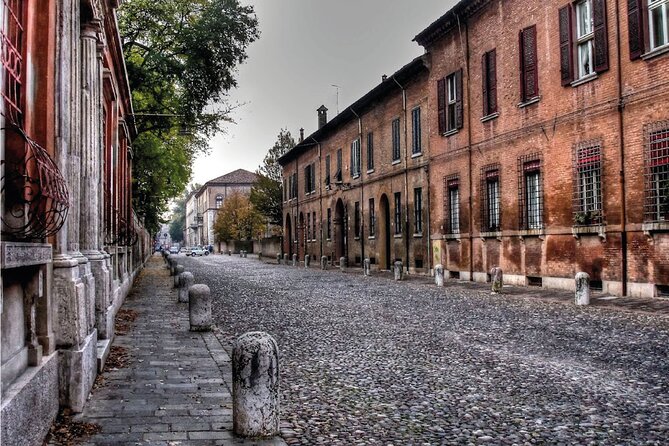
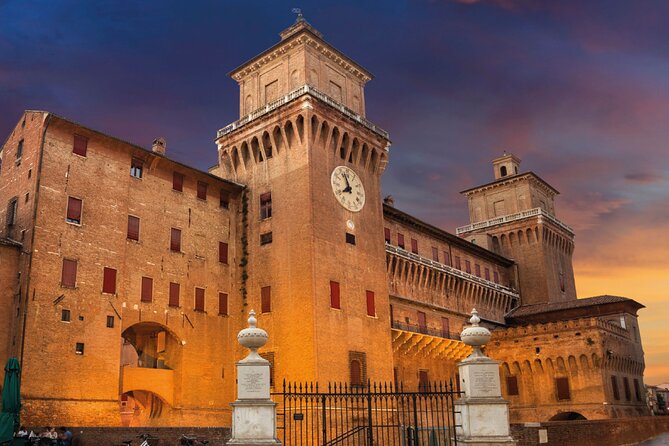
Castello Estense is the centerpiece of the walk and receives about an hour. It is also the only listed stop with a separate entrance fee. The ticket costs €12 and is not included in the tour price.
The castle is described as one of Ferrara’s defining sights, and the guide gives you its story before or during your visit. The important practical point is choice. You can walk around the castle and hear about it without buying admission, or add the ticket if you want to go inside.
This flexibility is especially useful if your day already includes museums. One person used the audio walk mainly to cover city highlights while spending much of the available time at the castle and other museums. That is exactly how I would use it: let the route provide structure, then give yourself permission to stop when a major sight deserves more attention.
Plan for the added cost. The experience is inexpensive at $7.81, but the total becomes roughly $19.81 if you also buy the castle ticket, before any other admission or food. That can still be good value, particularly if the castle is your main paid sight, but it is worth knowing before you book.
Rotonda Foschini and the view above you
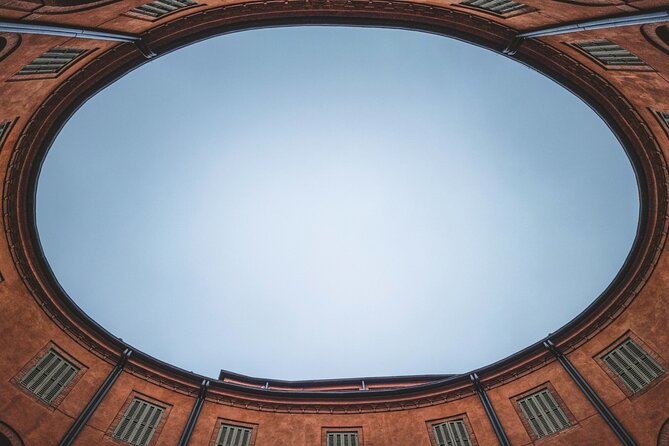
The five-minute stop at Rotonda Foschini is short but distinctive. This is the courtyard of Ferrara’s Municipal Theater, and you can enter on foot for free.
The advice here is simple: look up. The view from the courtyard is the reason to stop, and it is easy to miss if you hurry through while checking your phone. I appreciate that the route includes small architectural moments like this rather than only famous buildings.
Because the stop is brief, it works best as a visual break after the castle. You do not need to budget a long visit, but do not treat the five-minute estimate as a command. Pause the audio, look around, and continue when you are ready.
Corso Ercole I d’Este and Palazzo dei Diamanti
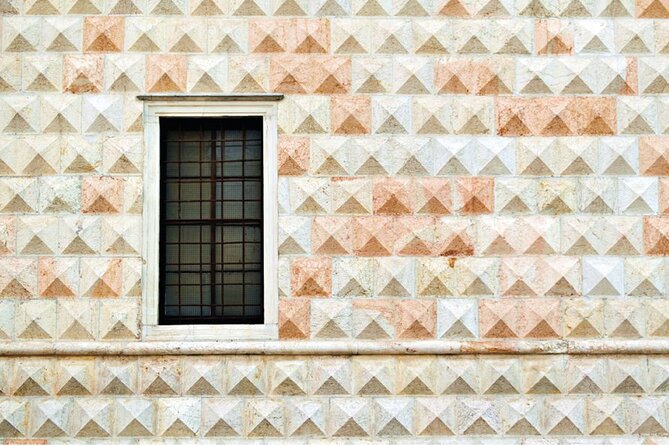
The final major street is Corso Ercole I d’Este, one of Ferrara’s most notable avenues. The guide asks you to look upward at the buildings, with Palazzo dei Diamanti as the key highlight.
The palace is named for its diamond-shaped exterior stonework, and the tour promises a story behind it. The route gives this section about 15 minutes, enough for a focused look rather than a full architectural study.
This stop shows the shift from medieval Ferrara to the planned Renaissance city associated with the Este court. The street itself matters, not just the palace at the end of it. Walk slowly enough to notice the buildings around you, since the guide’s advice is specifically to look above street level.
Ending at the Certosa gardens
The walk finishes at Giardini della Certosa, at Via Borso 9. The gardens are open daily from midnight to 11:30 p.m. according to the supplied hours, making the finish flexible in timing.
Ending here gives the route a quieter final note. You are not left at the busiest square after the last explanation. Instead, you reach a place described as relaxing, where you can stop, rest, and decide what to do next.
Remember that the endpoint is different from the beginning. If you need to return to a hotel, station, or parked car, allow time for that journey. The experience does not include transport back to the starting point.
What the app and audio are like to use
The guide comes with both audio and written material. This is one of its strongest practical features. You can listen while walking, read when traffic or street noise makes audio difficult, or switch formats when you want to save phone battery or concentrate on a building.
The content is available in English, Spanish, Italian, German, and French. The audio recording is described as pleasant to listen to, but no guide’s name is provided, so you should not expect a named host or live contact during the walk.
You need a smartphone with an internet connection. Initial downloading caused trouble for some people because of a hotel network, not because of the walk itself, and support from the operator and Viator helped resolve the issue. My advice is practical: download the guide before leaving your accommodation, check that it opens, and bring headphones if you have them.
The listed maximum is 104 participants, but this is not a traditional group march. You travel independently through the digital material, so the number matters less than it would on a live walking tour. Still, the route could feel less personal if you want spontaneous questions and local conversation.
Food advice adds real value
The tour includes suggestions for local restaurants serving authentic food. That is a small feature, but it may be one of the most useful parts of the purchase.
A short city walk can show you where to eat, but it rarely tells you what kind of restaurant suits the city. Restaurant advice at the end gives you a next step after the walk, especially if you are unsure where to have lunch or dinner.
The supplied information does not name the restaurants or list dishes, so I would treat the advice as a starting point rather than a reservation service. You will still need to check opening times and decide how far you want to walk from the route.
Who should book this Ferrara tour
I would choose this experience if you value control. It suits a short visit, a flexible sightseeing day, or a schedule built around museums and the castle. You can stop the tour, restart it, skip a section, or repeat an explanation without asking a guide to change the plan.
It also suits budget-conscious visitors. The base price is low, and the free outdoor stops provide most of the route. Add €12 only if Castello Estense is worth entering for you.
I would choose a live walking tour instead if you want questions answered on the spot, personal stories, or help with navigation from the first minute. The digital format asks you to manage the phone, route, battery, and timing yourself.
Most people can take part, and service animals are allowed. The route is near public transportation, though the supplied information does not give a specific bus or train connection. Confirmation arrives when you book, and free cancellation is available up to 24 hours before the experience begins. Changes or cancellations inside that 24-hour window are not accepted for a refund.
Should you book the Ferrara Walking Tour?
Book it if you want a low-cost, flexible introduction to Ferrara with both audio and text, a useful sequence of historic sights, and restaurant suggestions at the end. It is especially handy when your day cannot fit a fixed departure time.
Skip it if you want a human guide, detailed personal interaction, or a fully managed route from the moment you arrive. Also plan ahead for the €12 castle ticket, the separate endpoint, and the need for a reliable internet connection.
For the price, I see this as a practical city orientation rather than a substitute for every museum or a full local history lesson. Use it to connect Ferrara’s medieval lanes, civic center, Este monuments, and Renaissance avenues, then spend your extra time where your interests lead.
FAQ
How long does the Ferrara walking tour take?
The walk takes approximately two to three hours. Your timing may be longer if you enter Castello Estense, pause for food, or spend extra time at the cathedral and other sights.
Is the Castello Estense ticket included?
No. Entrance to Castello Estense is optional and costs €12. The rest of the listed outdoor stops have no admission charge for this experience.
What languages are available?
The audio guide and written guide are available in English, Spanish, Italian, German, and French.
Do I need a smartphone and internet connection?
Yes. You need a smartphone with internet access to use the digital guide. You can listen through your phone speaker or through headphones.
Where does the tour finish?
The route finishes at Giardini della Certosa, Via Borso 9, Ferrara. It does not finish at the starting point.
Can I cancel for a full refund?
Yes, if you cancel at least 24 hours before the experience start time. Cancellations or changes made less than 24 hours before the start time are not accepted for a refund.
Latest audio tours in Italy
- Pantheon Skip the Line Entry Tickets with Digital Audio Guide★ 3.5 · 52 reviews
- St. Peter’s Basilica: Dome Climb with Lift & Audioguide★ 4.5 · 13 reviews
- Audio guide in Vatican Museums and Sistine Chapel★ 4.5 · 12 reviews
- The Roman Jewish Ghetto: A Self-Guided Audio Tour★ 4.0 · 8 reviews
- Experience: The Pantheon Audio Tour★ 4.5 · 4 reviews
- Trastevere: A Self-guided Audio Tour of Rome’s Medieval Village★ 4.5 · 3 reviews
- Navova square underground with audioguide★ 4.5 · 17 reviews
- The Colosseum’s Attic with 3rd, 4th & 5th Levels with Audio Guide★ 4.5 · 20 reviews
Audio Walking Tours, compared.
City Monuments Guided Walking Tour with Audio Guide
Read our review →

Self Guided Classic Freedom Trail Location Aware (GPS) Walking Audio Tour
Read our review →
Self-Guided Historical Walking Tour (Audio Guide)
Read our review →
Cape Cod & Provincetown Self-Guided Driving & Walking Audio Tour
Read our review →
Verona Walking Tour with Audio and Written Guide by a Local
Read our review →
Royal Walking Tour and Buckingham Palace Audio Tour
Read our review →
Bologna Walking Tour with Audio and Written Guide
Read our review →Browse the lists this tour appears in