
Reviewed · ROME
Express Vatican & Sistine Pass with Audio Guide
The best reason to book this Vatican experience is simple: you avoid the standard entry queue, which can stretch far down the street. For $72, you get priority access to the Vatican Museums and Sistine Chapel, then set your own pace through one of Europe’s largest art collections.
I like the freedom to choose a morning or afternoon entry and stay inside as long as you wish. I also like the audio guide, which gives structure to a huge museum that can otherwise feel like a maze. The catch is that this is not a guided tour. Staff escort you to the entrance, but once inside, you are on your own, and heavy crowds can make the route slow and tiring.
Key points to know before booking
- Priority entry saves real time: The regular Vatican queue can run far down the road, while priority access generally gets you moving much faster.
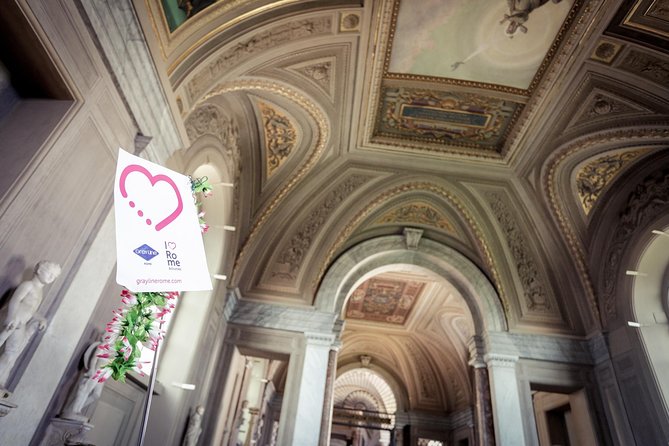
- The meeting point is Piazza del Risorgimento: Look for Gray Line Rome staff wearing the pink logo, and arrive early enough for the voucher exchange.
- This is an independent visit: You receive entry and an audio guide, not a professional guide explaining each room in person.
- The Sistine Chapel comes at the end: Expect to pass through galleries of sculpture, maps, paintings, and Raphael’s rooms before reaching Michelangelo’s frescoes.
- Crowds remain inside: Skipping the outside line does not mean having quiet galleries. The route can become a steady flow of people.
- Modest dress and identification are required: Bring a passport or valid ID, and avoid sleeveless tops, short shorts, miniskirts, and hats.
The main benefit: getting past the Vatican queue
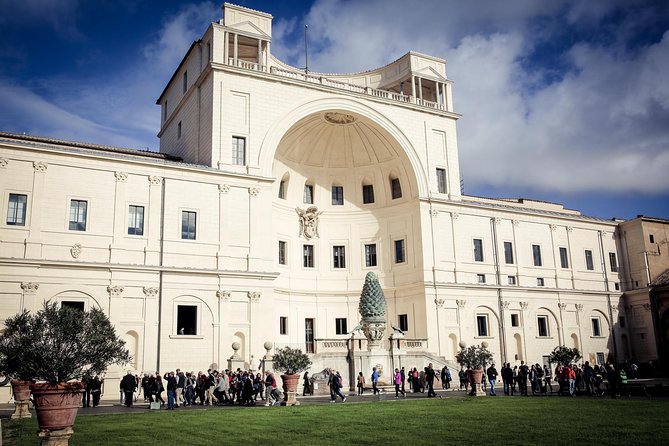
The Vatican Museums are one of Rome’s hardest sights for spontaneous visits. The standard line can run down the street, and a wait of several hours is possible during busy periods. Priority entry does not remove the security process or guarantee instant admission, but it can save a major block of your day.
That time matters in Rome. You may have a Colosseum booking, a papal audience, a meal reservation, or only a few days in town. I consider the $72 price mainly a payment for time and planning, not for personal instruction. If the regular line is already long, the ticket can earn its keep quickly.
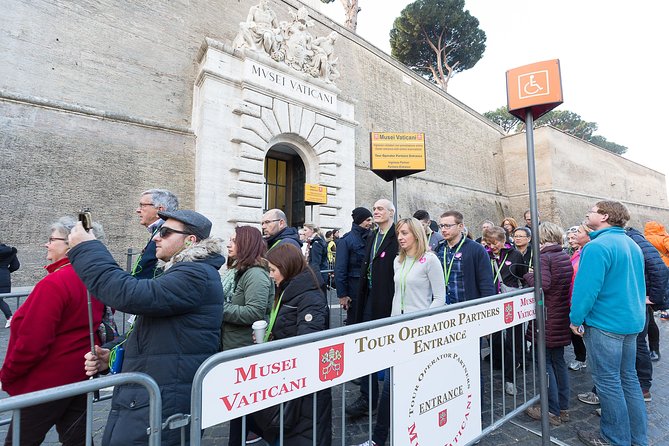
The process begins at Piazza del Risorgimento, near the Vatican. You meet staff wearing the Gray Line Rome pink logo, check in, and are escorted toward the museum entrance. Most of the time, the meeting point is easy to reach by taxi or Metro, but do not treat the appointment as casual. One poor experience described staff arriving right at the scheduled entry time, leaving the group waiting while tickets were checked and the walk to the entrance began.
Arriving late is risky. Your voucher is valid for the date and entry time shown, and the entrance time is not flexible. Driving is especially awkward around the Vatican, with one-way streets and difficult parking. Public transport or a taxi is the safer choice.
More Audio Tours in Rome
- Rome: Colosseum & Forum with Audio Guide App -Optional Arena
★ 4.2 · 24,770 reviews - Rome: City Sightseeing Hop-on Hop-off Bus with Audioguide
★ 4.0 · 16,045 reviews - Rome: St. Peter’s Basilica & Dome Entry Ticket & Audio Tour
★ 4.2 · 7,537 reviews
Piazza del Risorgimento and the ticket handoff
The meeting point is a practical staging area rather than a pleasant place to linger. You may encounter vendors selling water, selfie sticks, and souvenirs. Ignore them with a firm no and focus on finding the staff member with the pink logo.
At check-in, your voucher is exchanged for an official museum ticket and audio guide access. The escort portion is short, roughly 15 minutes according to the planned schedule. This is useful if you want reassurance that you are entering through the correct door, but it is not a sightseeing talk.
The biggest point to understand is the division of labor. Gray Line staff help you get inside. They do not remain with you to explain the collection, keep your group together, or lead you from masterpiece to masterpiece. If you want art history presented in person, choose a true guided tour instead.
Vatican Museums: a huge collection with no simple route
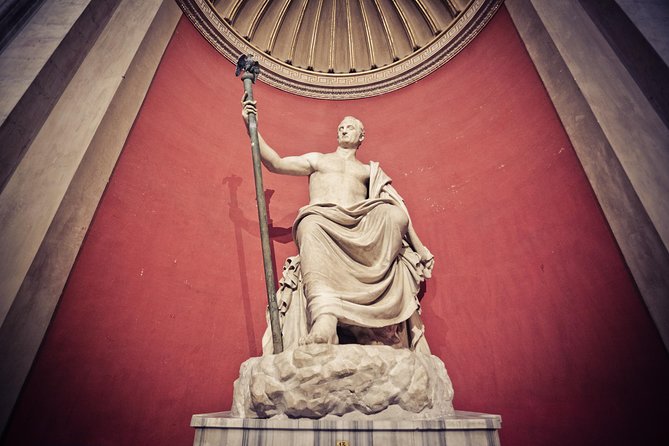
Once inside, the scale of the Vatican Museums becomes clear. The suggested visit lasts about three hours, with another 30 minutes set aside for the Sistine Chapel, but your ticket allows you to stay longer. The total experience is described as roughly four hours, though independent visitors can spend much of the day inside.
The collection covers far more than the famous ceiling. You may pass Greek and Roman sculpture, ancient Egyptian objects, Etruscan pieces, Renaissance paintings, modern religious art, ornate galleries, and papal rooms. The audio guide helps identify major works, but it cannot always solve the basic problem of direction. Several people found the museum hard to navigate even with recorded commentary, particularly because no paper map is guaranteed.
I recommend choosing a few sections before you enter. Otherwise, the museum can feel like an endless procession of rooms. You may find yourself following the crowd toward the Sistine Chapel while missing galleries that would suit your interests more.
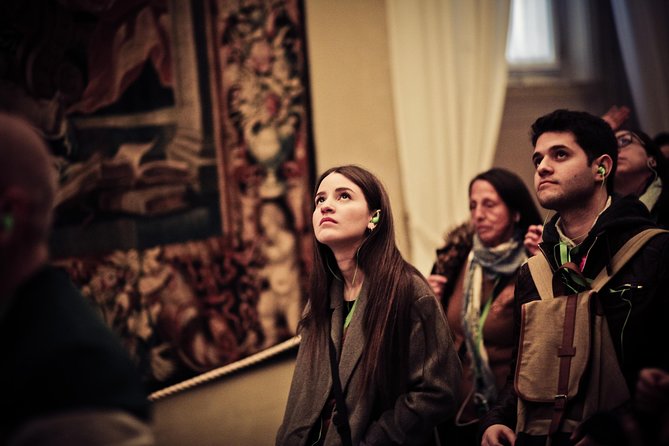
The audio guide is available in 10 languages and gives you a way to decide which works deserve your attention. It is best for independent visitors who like to pause, skip sections, and move without a group. It is less satisfying if you want lively storytelling, questions answered on the spot, or help understanding the larger religious and political setting of the art.
Ancient sculpture, Egypt, and the Etruscan collection

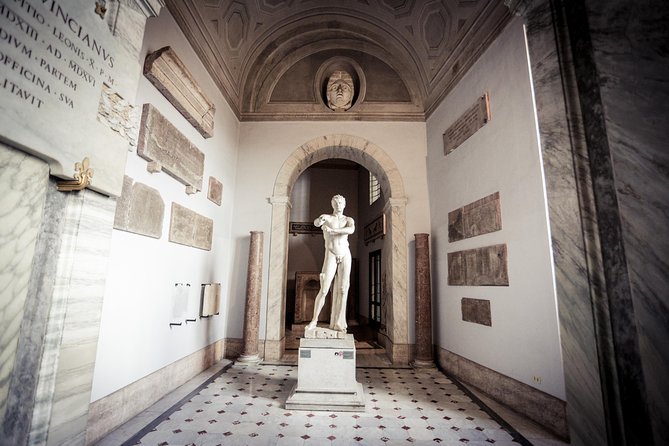
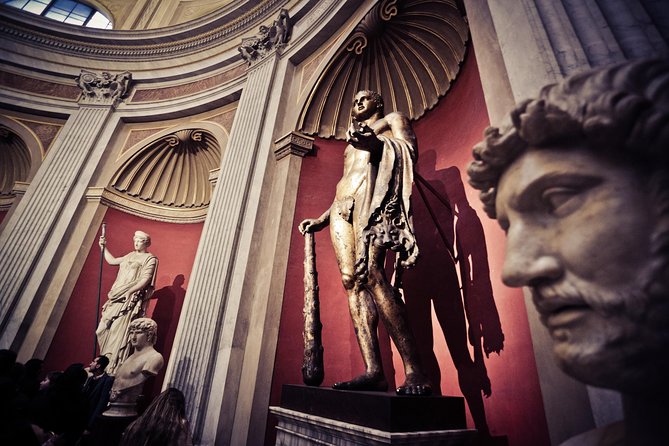
The visit begins with some of the Vatican’s oldest material. Greek and Roman sculptures give you a strong introduction to the collection, with idealized bodies, gods, emperors, and mythological figures filling the galleries.
The Museo Pio-Clementino is especially important for classical sculpture. You can see why the popes collected ancient works so aggressively: these objects shaped Renaissance ideas about beauty, anatomy, and the classical past.
The Egyptian collection changes the mood. Mummies and other ancient artifacts offer a reminder that the Vatican is not only a home for Renaissance painting. The Etruscan Museum adds another layer, with objects from the people who lived in central Italy before Roman power took over.
These rooms reward a slower pace, but crowd pressure can make that hard. Groups often stop at the same major pieces, creating bottlenecks. If you are interested in smaller objects or labels, step to the side when possible and listen to the audio guide after the group flow has moved on.
Another self-paced route in Rome:
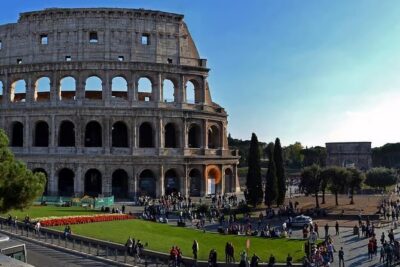
- Colosseum, Roman Forum & Palatine Hill with Audioguide App
★ 4.4 · 6,291 reviews - Vatican & Sistine Chapel Ticket with Optional Audio Guide
★ 4.1 · 5,405 reviews - Rome: Castel Sant’Angelo Entry Ticket & Digital Audioguide
★ 4.7 · 5,347 reviews - Rome: Castel Sant’Angelo Entry Ticket & Audio App
★ 4.3 · 4,952 reviews
Pinacoteca Vaticana and modern religious art
The Vatican Pinacoteca is one of the easier galleries to appreciate because it is organized around paintings rather than a long parade of mixed objects. The building was created for Pope Pius XI by architect Luca Beltrami, and the collection includes works associated with Caravaggio, Raphael, Pietro Lorenzetti, Fra Angelico, Titian, Leonardo da Vinci, and Michelangelo.
This is where an audio guide becomes especially useful. A painting can look familiar, but knowing who made it, why it was commissioned, and what to notice in the composition changes the experience. You do not need to listen to every stop. Choose the artists you care about and save your attention for those rooms.
The modern religious art collection may surprise you. Pieces connected with Picasso and Salvador Dalí show that the Vatican’s art holdings are not frozen in the Renaissance. If your interest is limited to Michelangelo, you might move quickly here. If you enjoy seeing how religious subjects changed in modern art, give it more time.
The Gallery of Maps and Gallery of Chandeliers
The Gallery of Maps is one of the most memorable walks in the museum. Its long walls are covered with painted maps of Italy, produced when cartography was still both a practical tool and a display of power. Look up as you walk, since the ceiling is part of the show.
You do not need to be a map expert to enjoy this gallery. It gives a sense of how people pictured Italy before modern surveying and satellite images. It also offers a welcome change from rooms packed with individual statues and paintings.
The Gallery of Chandeliers is more decorative. Large chandeliers, marble, and repeated patterns create a grand corridor leading you onward. It can be hard to stop for long because the route toward the Sistine Chapel keeps drawing people forward.
That forward motion is one of the central realities of this ticket. You are free to stop, but the crowd often encourages you to keep walking. If a room matters to you, pause at the edge and use the audio guide there rather than trying to block the center of the passage.
Raphael Rooms and the papal apartments
The Raphael Rooms, or Stanze di Raffaello, are a major highlight before the Sistine Chapel. These rooms were part of the papal apartments commissioned by Pope Julius II, and Raphael’s frescoes cover the walls with scenes from theology, philosophy, and history.
The School of Athens is the famous image, but do not focus only on one wall. The rooms work as a complete setting, with figures and architectural details arranged to support the pope’s intellectual and religious message.
The Raphael Rooms can be especially difficult to appreciate in a crush of people. Groups tend to stop here, and guides speaking to their own parties can add to the congestion. If you want time with the frescoes, try to step to the side and look up rather than staying directly in the central flow.
The audio guide should point you toward the principal frescoes, but you will need to manage your own time. A professional guide would help connect Raphael’s work with the Sistine Chapel and the papal apartments. This ticket gives you the freedom to make those connections yourself.
Sistine Chapel: the final and most important stop
The Sistine Chapel is the payoff. Michelangelo’s ceiling frescoes are the major draw, along with the Last Judgment behind the altar. The chapel is also the site of the papal conclave, so the room carries both artistic and religious importance.
Expect this to be a quiet area in the sense that it is a functioning sacred space, but do not expect solitude. The chapel is normally reached after moving through the museum route, and the crowd can remain dense. You may have to keep moving with the flow rather than choosing a perfect position beneath the ceiling.
Take time to look in stages. First, scan the overall design. Then focus on the central ceiling panels. Finally, examine the figures and architectural illusions around the edges. The Last Judgment deserves a separate look, since it has a different mood from the ceiling scenes above.
Photography rules and access can be affected by religious activity. During a Jubilee Year, parts of the museum may be closed for ceremonies. If the Sistine Chapel is inaccessible for reasons beyond the operator’s control, there is no partial refund, so consider that limitation before booking.
Crowds, pace, and comfort inside the museum
The outside queue is only half the issue. Once inside, the Vatican can feel as crowded as a busy shopping center. The route toward the Sistine Chapel is often a continuous stream, and you may have trouble stopping where you want.
This matters most if you imagine a calm art visit. The ticket is good for access, but it cannot control the number of groups in the building. A morning entry around 11 may be particularly busy. A later entry around 12:30 was suggested as a better choice by one visitor, though crowd levels change by day.
Wear comfortable shoes and keep your expectations realistic. The museum can be tiring for children and anyone with limited mobility. One family with children aged 7, 10, and 12 found the long visit enjoyable, while another party with a disabled family member had trouble keeping up with guides who walked quickly. Since this is self-guided once inside, you can set your own pace, but the group walk from the meeting point may still move briskly.
Restrooms and a restaurant are available inside. Food and drinks are not included, so a break can add to the total cost. You can stay for the full day if you wish, but many people will find three to four focused hours enough.
Is $72 good value for this Vatican ticket?
At $72, this is not a cheap museum admission. The value depends on what you are buying. You are paying for a reserved entry window, priority access, an audio guide, and a smoother start than walking up without a plan.
I think the price makes sense during high season or on a short Rome visit, especially when the regular queue is already huge. It is less attractive if you want expert interpretation, a printed route map, or a small group experience. In those cases, put the money toward a true guided tour.
The strongest value is time saved. Several people got inside in roughly half an hour while the ordinary line extended far down the road. That does not mean every entry will be that quick, but the difference can still be substantial.
Free cancellation is available if you cancel at least 24 hours before the start time. Changes or cancellations inside that window are not accepted for a refund.
Who should book this experience?
I would choose this option if you:
- Have limited time in Rome and cannot risk a long queue
- Prefer exploring without a fixed group route
- Want to focus on selected galleries rather than hear every explanation
- Are comfortable using a recorded audio guide
- Have older children or teenagers who dislike long guided talks
- Already know some art history and mainly need reliable entry
I would choose a guided visit instead if you want help with navigation, historical context, or a clear explanation of what matters in each room. The Vatican collection is too large to absorb casually, and an audio guide cannot react to your questions.
Should you book the Express Vatican and Sistine Pass?
Book it if saving queue time is your top concern and you are happy to explore alone. The priority entry works, the collection is extraordinary, and the freedom to stay inside is useful.
Skip it if you expect a personal guide or a quiet museum visit. You may still wait during check-in and security, and the galleries can be packed. For many people, though, getting inside without spending hours in the street is worth the $72, especially when Rome time is short.
FAQ
Is this a guided tour?
No. Staff meet you at Piazza del Risorgimento, help you check in, and escort you to the museum entrance. Inside, you explore independently with the audio guide.
What does the $72 price include?
It includes priority skip-the-line access to the Vatican Museums and Sistine Chapel, plus an audio guide in 10 languages.
How long does the experience take?
The planned experience lasts about four hours, including roughly three hours in the Vatican Museums and 30 minutes in the Sistine Chapel. You may stay inside the museums as long as you wish after entry.
Where do I meet the staff?
You meet at Piazza del Risorgimento. Look for Gray Line Rome staff wearing the pink logo.
Can I choose my entry time?
Yes. Morning and afternoon entry times are offered, but your ticket is valid only for the date and time shown on the voucher.
Do I need to bring identification?
Yes. You must bring your passport or a valid identification card on the day of the visit.
What should I wear?
Wear modest clothing suitable for a religious site. Sleeveless tops, miniskirts, shorts, and hats are not permitted.
Are food and drinks included?
No. Food and drinks are not included. The Vatican Museums have a restaurant, along with restrooms.
What happens if the Sistine Chapel is closed?
If the Sistine Chapel is inaccessible for reasons beyond the operator’s control, no partial refund is provided. Some museum areas may also be unavailable during Jubilee Year religious ceremonies.
Latest audio tours in Rome
- Pantheon Skip the Line Entry Tickets with Digital Audio Guide★ 3.5 · 52 reviews
- St. Peter’s Basilica: Dome Climb with Lift & Audioguide★ 4.5 · 13 reviews
- Audio guide in Vatican Museums and Sistine Chapel★ 4.5 · 12 reviews
- The Roman Jewish Ghetto: A Self-Guided Audio Tour★ 4.0 · 8 reviews
- Experience: The Pantheon Audio Tour★ 4.5 · 4 reviews
- Trastevere: A Self-guided Audio Tour of Rome’s Medieval Village★ 4.5 · 3 reviews
- Navova square underground with audioguide★ 4.5 · 17 reviews
- The Colosseum’s Attic with 3rd, 4th & 5th Levels with Audio Guide★ 4.5 · 20 reviews
Rome Audio Tours, compared.
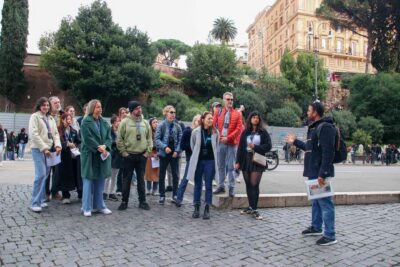
Colosseum & Forum with Audio Guide App -Optional Arena
Read our review →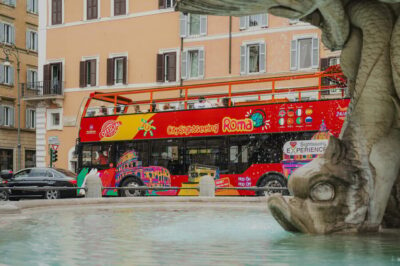
City Sightseeing Hop-on Hop-off Bus with Audioguide
Read our review →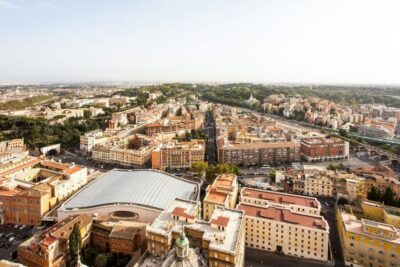
St. Peter’s Basilica & Dome Entry Ticket & Audio Tour
Read our review →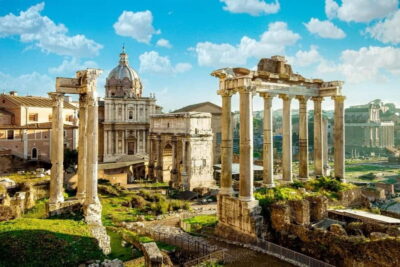
Colosseum, Roman Forum & Palatine Hill with Audioguide App
Read our review →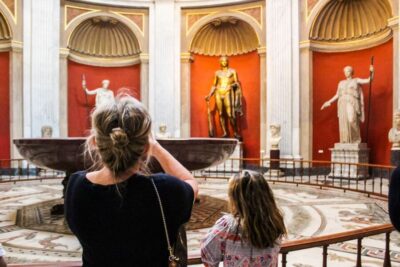
Vatican & Sistine Chapel Ticket with Optional Audio Guide
Read our review →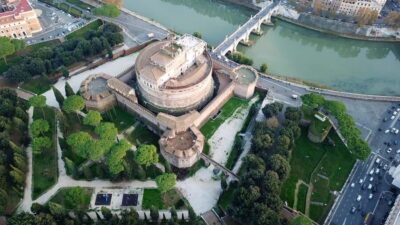
Castel Sant’Angelo Entry Ticket & Digital Audioguide
Read our review →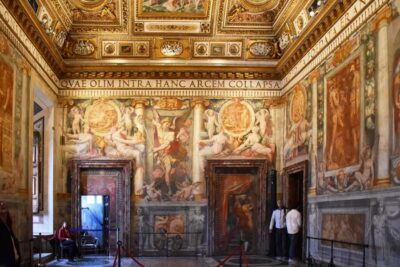
Colosseum, Forum, & Palatine Hill with Audio Guide
Read our review →Browse the lists this tour appears in