
Reviewed · COPENHAGEN
Explore Copenhagen: Self-Guided Audio Tour
Copenhagen’s best sights line up neatly on this self-guided walking route, from the red-brick City Hall to royal palaces, churches, theaters, and the kitchens of Christiansborg. You get historical narration, directions between stops, and a map, but no guide to keep you moving or answer questions.
I like the practical offline format. You download a ZIP file with 13 audio files, a map, and extra materials before setting out, so the tour does not depend entirely on a live GPS signal. I also like the route’s variety: grand royal buildings sit alongside a working city square, an old university complex, and Copenhagen’s theater district.
The main caution is audio quality. One account found the background effects muffled the narrator and became staticky at higher volume. The narration may also feel somewhat scripted, so bring patience, headphones, and a little preparation.
Key points to know before you walk
- Seven major stops connect City Hall, the Round Tower, Rosenborg, Marble Church, Amalienborg, the Royal Danish Theatre, and Christiansborg.
- Thirteen audio files and a map are included in the downloaded package, with directions between destinations.
- The route takes about two to three hours, though your own pace and time spent inside buildings will affect the total.
- Admission is not included, so you can choose which interiors are worth paying for.
- The tour is in English only, with no physical guide or audio device supplied.
- The starting and ending points are flexible, even though the suggested route begins at City Hall Square and ends near Tivoli Gardens.
How this Copenhagen audio walk works
This is a walking tour for people who like to set their own rhythm. The suggested start is at Rådhuspladsen, Copenhagen’s City Hall Square, at 9:00 in the morning. The route finishes at Tivoli Gardens on Vesterbrogade, but you are free to begin and end according to your plans.
Before you leave, download the audio package and unpack the ZIP file on your phone. The files include a map, 13 audio tracks, and other supporting material. That step matters. Do not wait until you are standing in the square with a weak connection and a full day ahead.
The audio gives you directions to each destination, which is a useful feature. Many phone-based tours simply wait for GPS to notice where you are. Here, the map and spoken directions give you a second way to stay on course.
You should bring your own phone and headphones. No audio device is supplied, and admission tickets, transport, food, and drinks are all extra. The route is near public transport, but transportation is not part of the price.
At $15.29 per person, the tour is inexpensive compared with a private guide. The value depends on how much structure you want. If you only need historical context and a route between central sights, the price is reasonable. If you want lively conversation, tailored recommendations, or help choosing which buildings to enter, you will need a different kind of tour.
More Self-Guided Audio Tours in the world
- Athens: Acropolis Ticket & Optional Self-Guided Audio Tours
★ 4.1 · 2,542 reviews - Gettysburg Battlefield Self-Guided Driving Audio Tour
★ 4.5 · 910 reviews - Joshua Tree National Park Self-Guided Driving Audio Tour
★ 4.5 · 762 reviews
City Hall Square and Copenhagen’s civic heart
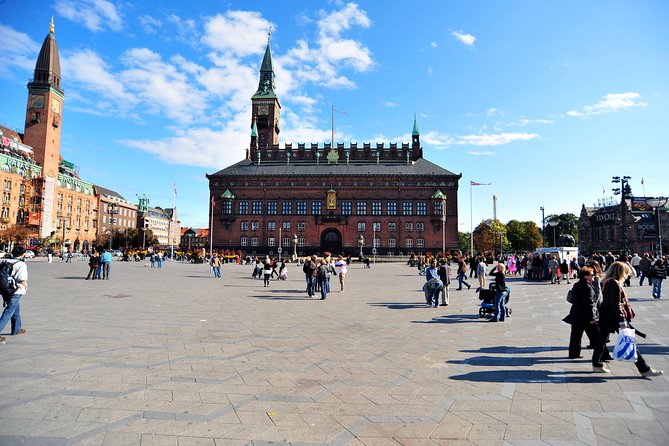
Your first stop is Copenhagen City Hall, set on the broad Rådhuspladsen. This is the city’s largest square, and it gives you a useful sense of Copenhagen’s scale before the route moves into narrower streets and palace districts.
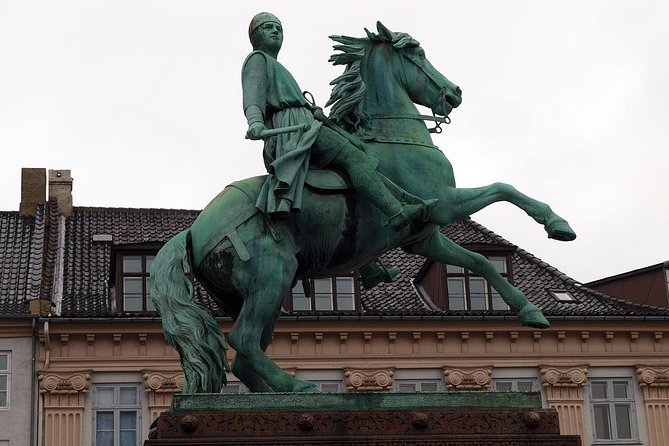
Look for the ornate brick facade, the clock tower, and the gilded statue of Bishop Absalon above the front balcony. Absalon is remembered as the city’s founder, so the building connects modern civic life with Copenhagen’s early story.
The City Hall was designed by Martin Nyrop in the National Romantic style. Its form was inspired by the City Hall in Siena, Italy, which gives the stop an interesting European connection rather than a purely local one.
The planned visit here is about 15 minutes. Admission is not included. Even if you do not go inside, the square is an easy place to begin because there is plenty to see from outside and the building is hard to miss.
The Round Tower’s unusual climb
The Round Tower belongs to the 17th-century Trinitatis Complex, alongside Trinitatis Church and an academic library connected with Copenhagen University. The complex helps you see how religion, scholarship, and royal ambition once shared the same part of town.
The tower served as an astronomical observatory. Its most memorable feature is the interior route upward: you walk a spiral ramp instead of climbing ordinary stairs. That makes the building especially interesting for anyone who likes the practical details behind old monuments.
The neighboring library opened in 1657 and once held the university’s entire collection, roughly 10,000 books. That number offers a useful reminder of how concentrated learning was before modern libraries and digital collections.
Plan on about 15 minutes for the audio stop, but the actual visit can take longer if you pay to enter and go up the tower. Admission is separate. The audio tour can explain the place from outside, but the ramp and observatory are the reason to consider going in.
Rosenborg Castle and Christian IV’s Copenhagen
Rosenborg Castle brings you into the world of King Christian IV, whose building projects shaped much of central Copenhagen. The castle was created in the Dutch Renaissance style, with high gables and spires that give it a strongly recognizable outline.
Construction began as one of Christian IV’s many architectural projects, but the castle continued to grow. It did not reach its current form until 1624. That gradual development gives you something specific to look for as you study the building: this was not simply one finished royal plan delivered all at once.
The audio portion allows about 15 minutes. Admission is not included, and you will need to decide if the exterior and explanation are enough or if the interior deserves a separate ticket.
I like this stop because it gives the route a clear royal focus without making every stop feel alike. The castle is also a good point to slow down. A self-guided tour can tempt you to rush from one audio file to the next, but Rosenborg rewards a careful look at its roofline and facade.
More Audio Tours in the world
- Barcelona: Sagrada Familia Entry Ticket with Audio Guide
★ 4.6 · 105,312 reviews - Rome: Pantheon Fast-Track Ticket and Official Audioguide
★ 4.5 · 27,353 reviews - Barcelona: Casa Batlló Entry with Self-Audioguide Tour
★ 4.7 · 25,359 reviews - Rome: Colosseum & Forum with Audio Guide App -Optional Arena
★ 4.2 · 24,770 reviews
Marble Church and the grand plan for Frederiksstaden
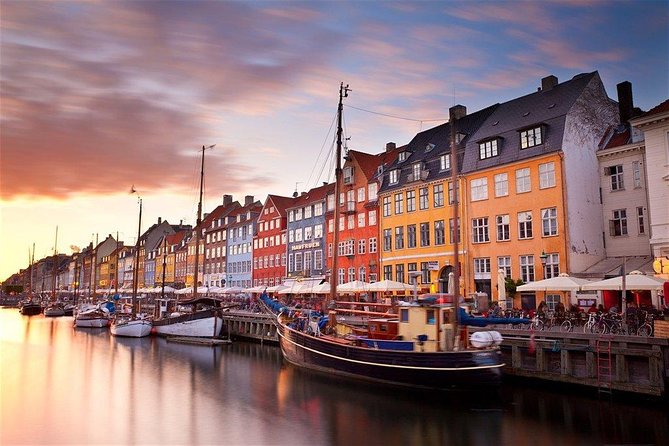
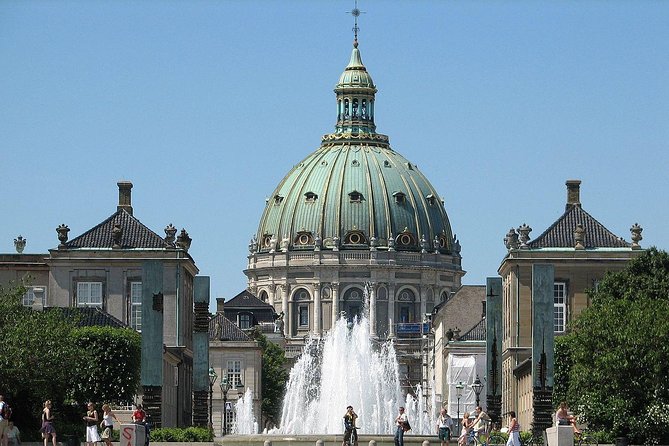
Frederiks Kirke is better known as Marble Church, and its enormous dome is the main visual event here. It is the largest church dome in Scandinavia, according to the tour material, so this is a stop where simply looking up does much of the work.
The official name, Frederiks Kirke, honors King Frederik V. In 1748, Frederik began planning Frederiksstaden, a grand district that would include several of the royal buildings you see later in the route.
The church gives the tour a useful change of mood. After civic architecture, university buildings, and a Renaissance castle, you get a monumental religious building tied to a planned royal neighborhood.
Again, the suggested audio time is 15 minutes, and admission is extra. You can hear the historical explanation without paying to enter, but the dome is the reason many people will want a closer look inside if access is available during their visit.
Amalienborg and the living Danish monarchy
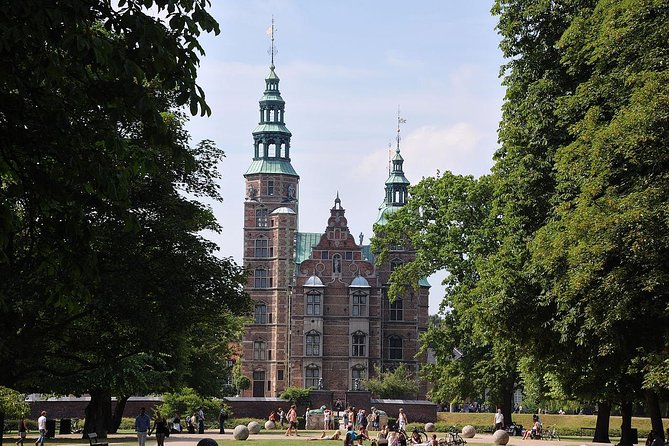
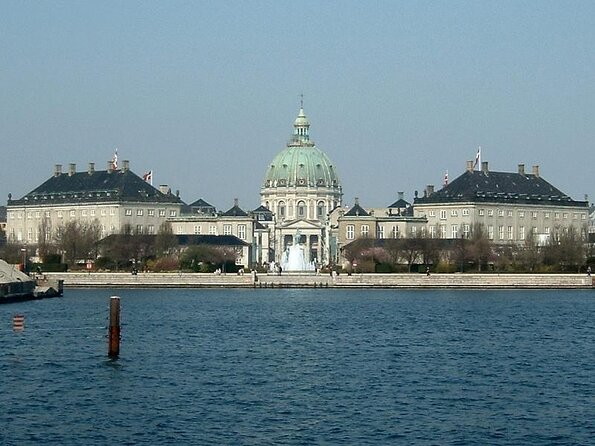
Amalienborg is the current home of the Danish royal family. The complex you see today is an octagonal arrangement created for Frederiksstaden, and it gives you one of the clearest views of Denmark’s continuing monarchy.
The first palace on the site was built between 1669 and 1673 by Queen Sophie Amalie, wife of King Frederik III. Later, Frederik V dismantled the existing palace and commissioned the octagonal complex that now defines the square.
The route allows about 15 minutes here. That is enough for the audio explanation and an exterior look, but you may want extra time to take in the unusual layout. Unlike a single palace facade facing one direction, Amalienborg asks you to understand the whole open square.
This is one of the route’s strongest stops for travelers who want a connection between past and present. You are not only looking at an old royal residence. You are looking at the current residence of Denmark’s royal family.
The Royal Danish Theatre Play House
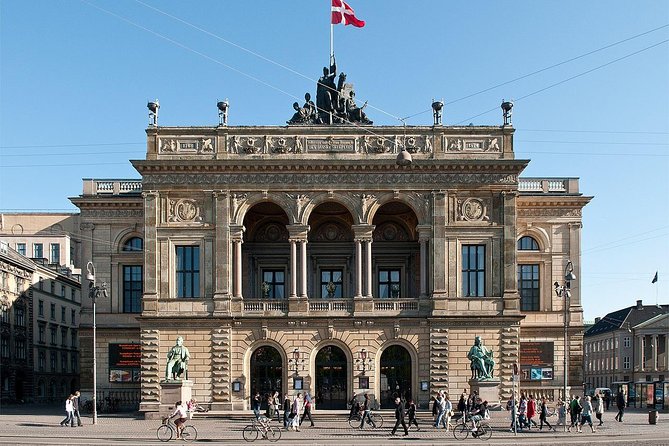
The theater stop adds Copenhagen’s performing arts to the route. The first theater on this site opened in 1748, with room for 800 people. Its company was small by modern standards, employing eight actors and four actresses, and performances focused mainly on French comedies.
The original building soon proved too small for Copenhagen. It was rebuilt in 1774 for a larger audience, and the Royal Danish Theatre later became a home for ballet, opera, and the royal orchestra.
This stop is useful because it broadens the tour beyond kings, churches, and government buildings. Copenhagen’s cultural life was also being shaped through public performance, and the theater’s growth reflects a city whose audience and ambitions were expanding.
The planned audio stop is 15 minutes. You can keep it brief if you are focused on the route, or pause longer to appreciate the building and its place in Danish arts.
Christiansborg’s royal kitchens and layers of power
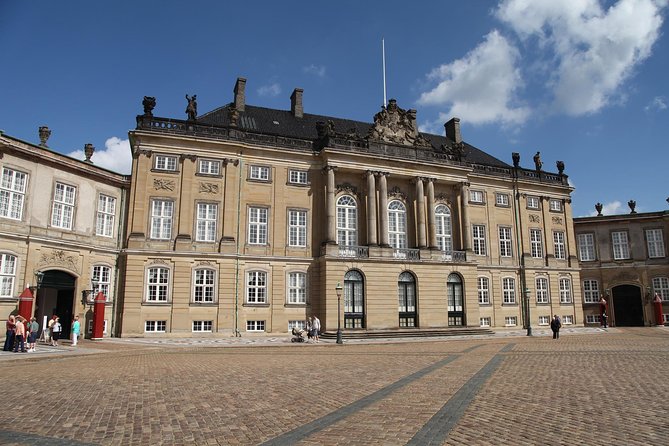
The Royal Kitchens of Christiansborg Palace are the final historical stop before the route reaches Tivoli Gardens. Christiansborg has been built over the remains of four earlier castles, making this part of Copenhagen especially useful for understanding how one seat of power can be rebuilt again and again.
In 1167, Absalon constructed the first castle on the island. The Hanseatic League later destroyed it, and Copenhagen Castle was built over the ruins. That castle remained for centuries and is remembered in part for its Blue Tower, where Leonora Christina, daughter of Christian IV, was held captive for almost 22 years.
The kitchen visit is planned for about 15 minutes, with admission charged separately. The stop is particularly appealing if you enjoy the working side of palace life. Grand rooms show ceremony, but kitchens reveal the labor and organization behind it.
Christiansborg also gives the route a strong historical ending. You have moved from the city’s founder and modern civic square through royal residences and cultural buildings, then arrived at a site layered over several earlier seats of power.
A useful route, with sound-quality limits
The most praised practical feature of this tour is that it provides spoken directions as well as a map. That matters in a self-guided walk. You are not left with a vague instruction to follow your phone’s blue dot and hope the next stop appears.
The package contains 13 audio files, although the main route is described through seven named stops. The additional files may support directions or separate sections, so prepare to manage more than seven tracks on your phone.
The weak point is the recording itself. Background sounds and effects can make the speaker difficult to hear, and one account found the sound became staticky when played loudly. Another concern is the narrator’s delivery, which can sound like a script being read rather than a story being shared.
You can reduce the problem by downloading everything in advance, using headphones that you know work well, and checking the volume before you leave. Do not rely on the audio alone. Keep the map handy, especially if you are moving through busy central streets.
Time, fitness, and who should book
The advertised duration is two to three hours. That estimate works best if you keep moving and treat the audio stops as short explanations. Add time if you enter the Round Tower, Rosenborg, Marble Church, Amalienborg, or the Royal Kitchens, since every admission fee is separate.
You should expect a moderate amount of walking. The tour asks you to move between seven central sights, and the booking information recommends a moderate level of physical fitness. The route is near public transport, but no transport is provided.
I would choose this for an independent visitor who wants orientation without joining a group. It also suits a first morning in Copenhagen, when the sequence of major sights can help you understand the city center.
I would be more cautious about booking it for someone who wants polished sound, rich narration, or personal conversation. It is also less suitable if you prefer a guide who can adjust the route, answer questions, or explain what you are seeing in response to your interests.
The tour is offered only in English. Service animals are allowed, and confirmation arrives when you book. You can cancel for a full refund if you do so at least 24 hours before the 9:00 a.m. start time. Changes or cancellations made later are not accepted for a refund.
Should you book this Copenhagen walk?
Book it if you want a low-cost, flexible introduction to central Copenhagen and are willing to prepare your phone before leaving. The route covers an unusually broad mix of civic, royal, religious, academic, and theatrical sights, and the map with spoken directions is more useful than a GPS-only tour.
Skip it if excellent audio production is essential or if you want a human guide. At $15.29, it is good value as a walking framework, not as a replacement for admission tickets or a full guided visit. Bring headphones, download the files early, and treat the audio as a helpful companion while you pay attention to the buildings around you.
FAQ
How long does the Copenhagen audio tour take?
The tour takes approximately two to three hours. Your total time may be longer if you enter any of the buildings, since the walking estimate and admission visits are separate.
Where does the suggested tour begin?
The suggested starting point is Rådhuspladsen, or City Hall Square, in Copenhagen.
Where does the suggested route end?
The suggested ending point is Tivoli Gardens at Vesterbrogade 3. Since this is self-guided, you can choose a different ending point based on your schedule.
Is a physical guide included?
No. This is a self-guided audio tour. You receive audio files and a GPS map, but no in-person guide.
Is the tour available in languages other than English?
No. The tour is offered only in English.
Are entrance fees included?
No. Admission fees are not included. You must pay separately if you choose to enter the Round Tower, Rosenborg Castle, Marble Church, Amalienborg, the Royal Danish Theatre, or the Royal Kitchens of Christiansborg.
What should I download before starting?
Download the audio package before you begin. The files are supplied as a ZIP file containing 13 audio files, a map, and other materials.
Can I cancel for a refund?
Yes. You can receive a full refund if you cancel at least 24 hours before the scheduled start time. Cancellations or changes made less than 24 hours before the start are not accepted for a refund.
Latest audio tours in the world
- Seville Maestranza Bullring Tour with Audio Guide★ 3.5 · 6 reviews
- Seville Scavenger Hunt and Highlights Self Guided Audio Tour★ 5.0 · 5 reviews
- Seville Audio guided walking tour 3h20 and 28 audio commentaries★ 5.0 · 2 reviews
- Royal Alcazar of Seville Entry Ticket with Audio Guide★ 4.0 · 42 reviews
- Seville Cathedral and La Giralda Entry Ticket with Audio Guide★ 3.0 · 9 reviews
- Seville Cathedral and Giralda Entry Tickets with Audio Guide★ 4.0 · 56 reviews
- Essential Seville’s Ancient History: An Audio Tour★ 5.0 · 9 reviews
- Sequoia National Park Self-Guided Audio Tour★ 4.5 · 9 reviews
Self-Guided Audio Tours, compared.

Acropolis Ticket & Optional Self-Guided Audio Tours
Read our review →


Ultimate Acadia National Park Self-Guided Driving Audio Tour
Read our review →

Akrotiri Ticket with Optional Self-Guided Audios
Read our review →
Browse the lists this tour appears in