Reviewed · ITALY
Castel Sant’Angelo Entry Ticket & Audioguide
Castel Sant’Angelo gives you one of Rome’s best history lessons in a single building. It began as Emperor Hadrian’s monumental tomb, then became a fortress, prison, defensive post, and papal residence. By the time you reach the roof terrace, you have watched Rome change around it.
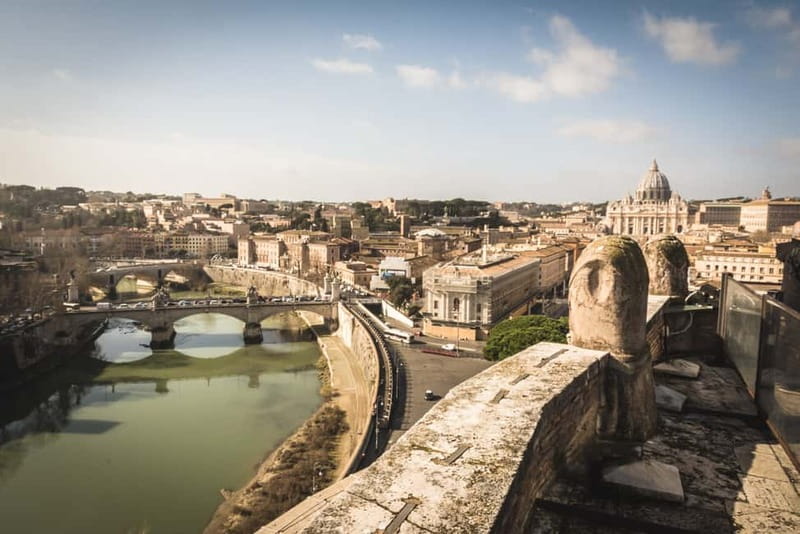
I like the audio guide at your own pace and the chance to see several eras without joining a formal group. I also like the terrace views, with the Tiber, Vatican City, and Bridge of Angels laid out below. The main caution is price: at about $34, this ticket costs much more than the official adult admission of 16 euros, and children under 18 enter free at the official rate.
I also like the easy entry when the ticket arrives properly and the process is working as planned. But you must check your email, download the app, carry headphones, and arrive at the correct time. This is not a guided tour, and there may be no person waiting to escort you inside.
Key points to know before you book
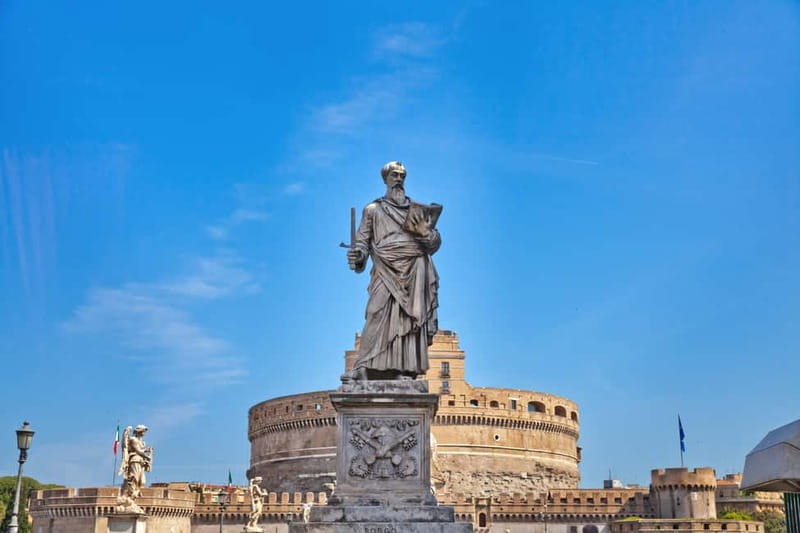
- Hadrian’s tomb became a papal fortress: The building’s changing purpose is the main reason to visit.
- Five floors lead to the roof terrace: Expect stairs, sloping passages, and plenty of walking before the best view.
- The audio guide is an app, not a live guide: Bring a charged phone, internet access, and your own headphones.
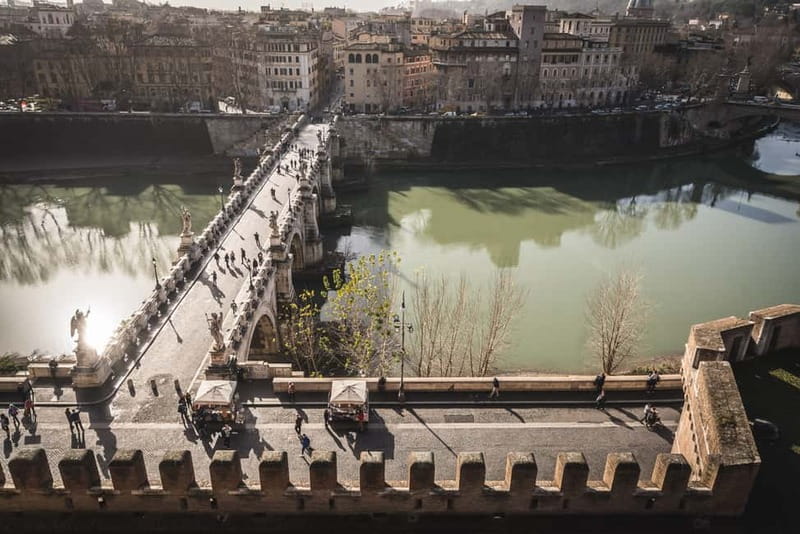
- The terrace is the payoff: You can see Vatican City, the Tiber River, and Ponte Sant’Angelo from above.
- The ticket can save queue time: Several visitors entered quickly, especially during crowded periods, but the convenience carries a premium.
- Under-18 visitors enter free officially: Compare the $34 reseller price with the 16 euro adult admission before booking.
Why Castel Sant’Angelo belongs on your Rome list

Rome has grander monuments, but few are as easy to understand from the inside as Castel Sant’Angelo. You are not looking at one frozen moment in history. You are walking through a building that kept changing because Rome kept needing something new from it.
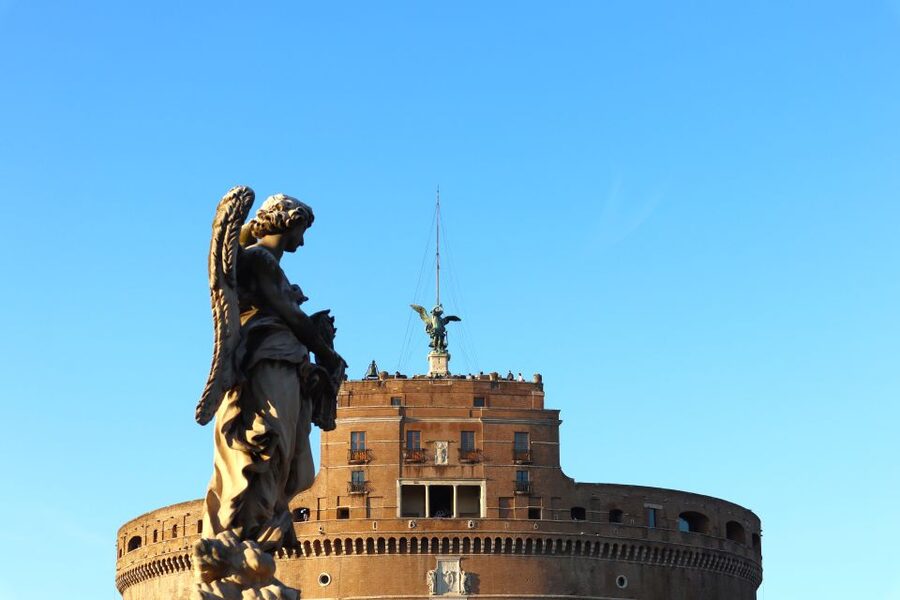
The original structure was built as a mausoleum for Emperor Hadrian. Its round, heavy form still feels more like a fortified tomb than a palace. Later rulers adapted it for defense, and the papacy used it as a refuge and residence. The museum lets you see those layers in sequence.
I find that useful because the building itself explains Roman history better than a long wall of text. Ancient imperial ambition, medieval military fear, papal power, art, and city defense all appear in the same visit.
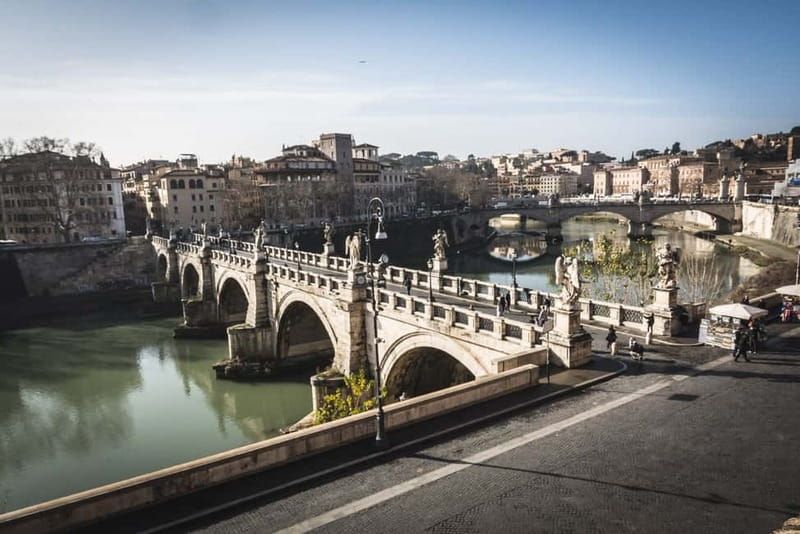
The castle also sits beside the Tiber, close to St. Peter’s Basilica. That makes it a practical stop before or after the Vatican area. You can pair the visit with a walk across Ponte Sant’Angelo, whose statues lead toward the castle and give you one of the city’s most recognizable approaches.
More Audio Tours in Italy
- Rome: Pantheon Fast-Track Ticket and Official Audioguide
★ 4.5 · 27,353 reviews - Rome: Colosseum & Forum with Audio Guide App -Optional Arena
★ 4.2 · 24,770 reviews - Florence: Timed Entry to Michelangelo’s David + Audio App
★ 4.6 · 19,496 reviews
Starting with the ancient mausoleum
Your visit begins with the building’s oldest identity: a monumental tomb. The structure was not designed as a cheerful public palace. Its thick walls, circular form, and enclosed passages give you a clear sense that this was meant to protect the dead and project imperial power.
The route takes you through five floors. A spiral ramp is one of the memorable features, though this is not a flat museum visit. You will climb stairs and walk along inclined passages, so comfortable shoes matter. The upper terrace requires additional stairs and is not suitable for wheelchair users or people with mobility impairments.
The chamber of ashes is especially important. It connects the building to its original purpose and to the Roman figures associated with the mausoleum. You can also see preserved frescoes and architectural details that make the castle feel less like a bare military shell.
This first section rewards a slower pace. The audio guide can explain why the building looked and functioned differently at different points in Roman history. If you rush toward the view, you will miss the part that makes the view meaningful.
Seeing the medieval fortress and defensive post
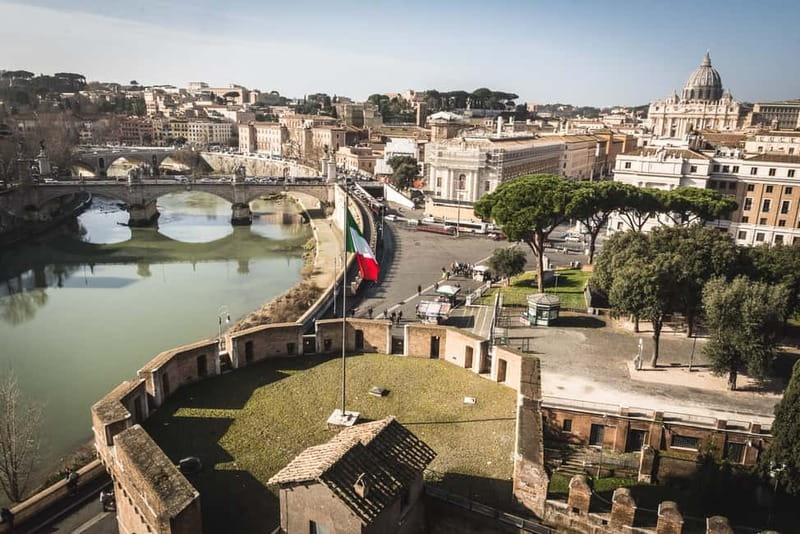
As you continue upward, the building’s defensive role becomes easier to imagine. The tomb was adapted into a fortress during the medieval period, when control of the Tiber and protection from invasion mattered more than imperial ceremony.
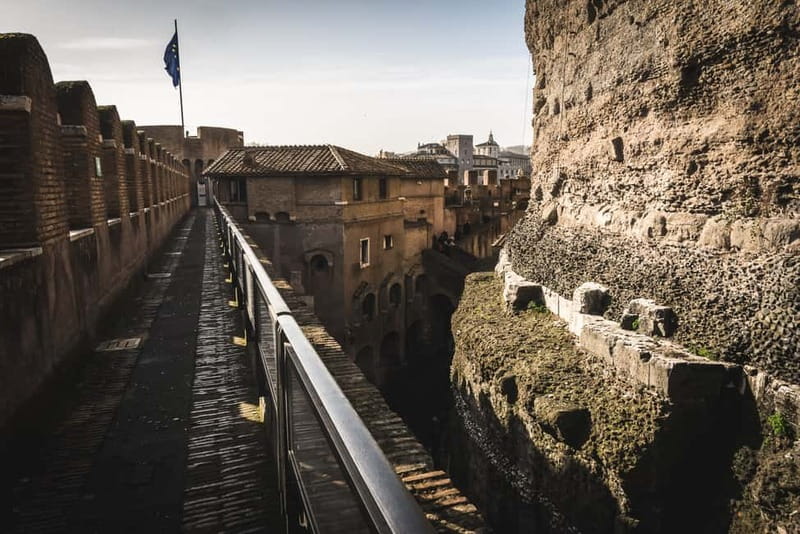
You will encounter cells and military spaces along the route. These areas are less polished than the papal rooms, and that contrast helps. Castel Sant’Angelo was not only a monument or art museum. It was also a place built for confinement, protection, and survival.
The castle’s history includes use as a defensive post against barbarian invasions. That detail may sound abstract in a guidebook, but inside the thick walls it becomes more concrete. The same mass that once enclosed a tomb could shelter defenders and protect powerful occupants.
The audio guide works best here if you stop at each section rather than playing it continuously while walking. You can use the information to connect the narrow passages, cells, and heavy construction with the building’s military role.
The papal rooms and Renaissance art
The upper rooms change the mood. You leave much of the fortress character behind and find papal rooms decorated with Renaissance and Baroque art. Frescoes, painted ceilings, and formal interiors show how the building became a residence as well as a stronghold.
This is one reason I would not treat Castel Sant’Angelo as only a viewpoint. The art gives the visit more weight, especially if you enjoy interiors and decorative details. The rooms help explain how popes could use a defensive building while still expecting comfort and ceremony.
The audio guide is useful for sorting out the changes. Without context, one room can blur into another after a full day of Roman churches and museums. With the guide, you can pay attention to the difference between a papal living space, a prison area, and a military passage.
You control the pace. That suits families and mixed groups because one person can stop for a fresco while another moves ahead. The tradeoff is that no live guide is there to answer a question or point out a detail you might miss.
Another self-paced route in Italy:
- Rome: City Sightseeing Hop-on Hop-off Bus with Audioguide
★ 4.0 · 16,045 reviews - Pompeii: Entry Ticket with Audio Guide
★ 4.1 · 13,491 reviews - Venice: La Fenice Opera House Entry Ticket with Audio Guide
★ 4.6 · 11,742 reviews - Rome: Colosseum, Forum, Palatine Hill Entry & Audioguide App
★ 4.4 · 10,957 reviews
The climb to the terrace
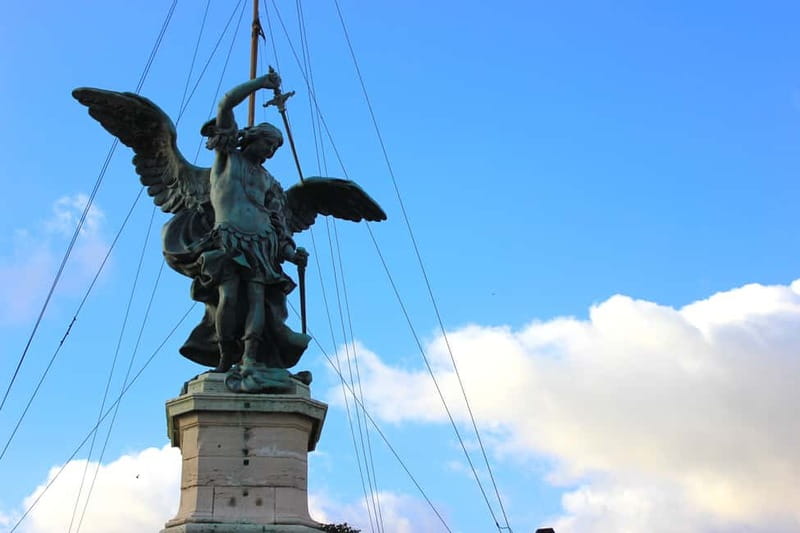
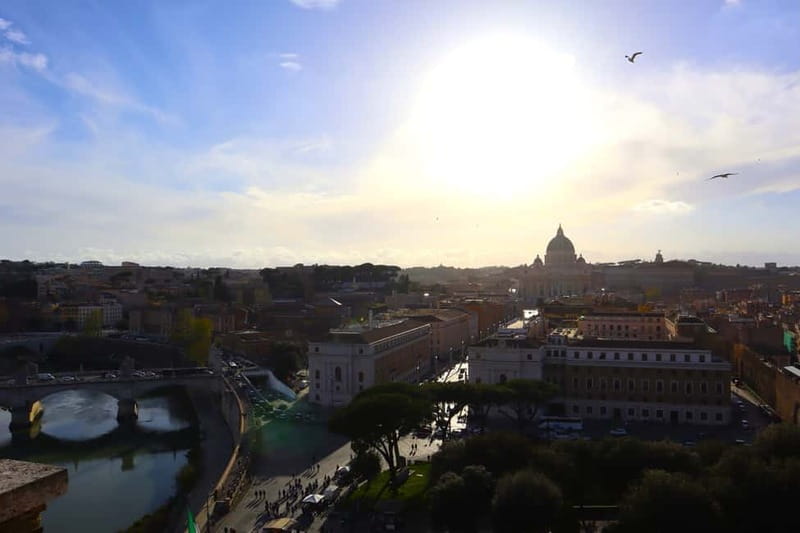
The roof terrace is the clearest payoff of the visit. From the top, you can look across Rome toward Vatican City, follow the Tiber, and see Ponte Sant’Angelo below. The view is broad enough to make the castle’s location immediately clear.
You should plan a little time here rather than treating it as a quick photo stop. The terrace gives you a useful view of the city’s layers: river, bridge, church domes, historic roofs, and the castle itself beneath your feet.
There is also a café or bar on an upper level, according to the available visit details. A short drink break can make sense after the stairs, especially in warm weather. Bring water, too. The route involves enough walking and climbing that a bottle is a sensible addition to your day bag.
The terrace has open edges and height, so it may be uncomfortable if you have a serious fear of heights. You can still enjoy the interiors, but the top level is the part that requires the most caution.
How the audio guide works
The digital guide is available in English, French, Italian, Chinese, German, and Spanish. You download the application to your smartphone before the visit, then use your own headphones while moving through the castle.
This arrangement gives you freedom. You can pause, replay information, and spend more time in the rooms that interest you. It also avoids being tied to a group’s pace.
There are practical catches. Your phone must be charged, and you need internet access for the setup. Headsets are not included, so pack your own headphones. The ticket includes audio access, but it does not include a live guide or staff assistance at the entrance.
Some visitors received help from a representative with the app, including assistance from a staff member called Adrian. Others found the ticket representative difficult to spot, particularly when the person was not holding a flag or wearing clear company clothing. Do not count on a greeter. Read the instructions in your email and go directly to the main entrance as directed.
Ticket value at about $34
The listed price is $34 per person, while the official adult ticket price is 16 euros. Under-18 visitors are officially admitted free. That is a large difference, so you should think of this purchase as a convenience package, not a discount.
The extra cost may make sense during busy periods if it helps you avoid the ticket office queue. Several visits were described as quick and smooth, with entry soon after arrival. In high season, that can protect a valuable part of your Rome day.
In quieter periods, the calculation changes. One visit in March found little waiting and no serious crowd pressure. If you are visiting outside the busiest months and can buy the official ticket easily, paying $34 may not be good value.
I would especially compare the price for families. Since children under 18 enter free at the official rate, a reseller ticket at $34 per person can become expensive quickly. Adults who value the multilingual audio app and queue convenience may find it worthwhile, but budget-minded visitors should check the official option first.
The ticket is valid only for the selected date and time slot according to the booking conditions. Arriving late or missing the slot can mean losing the booking, so do not schedule it too tightly against another timed attraction.
Getting inside without confusion
The meeting point is the attraction address, but the booking does not include a person to meet and escort you through the entrance. You must show the emailed ticket and valid identification at the main entrance.
The ticket is sent to the email used during booking, within 24 hours before the activity. This timing is important. Do not wait until you are standing outside the castle to check whether the message has arrived.
Use the full names of every participant exactly as they appear on passports or identification. Bring a valid passport or ID for verification. Also provide the correct phone number and email when booking, since both may matter if the provider needs to contact you.
Some people found a representative outside and received help collecting tickets or setting up the app. That support can be useful, but the official instructions say not to expect staff assistance. I would arrive early, keep the email open, and be ready to handle the entry yourself.
Weapons, sharp objects, luggage, and large bags are not allowed. Pack light. Comfortable shoes are far more useful than a large day bag here.
How long to allow
The advertised duration is one day because the ticket is valid for the selected date, not because you need to spend an entire day inside. The actual visit can fit into a couple of hours, depending on how carefully you study the rooms and how long you stay on the terrace.
One efficient visit can take about an hour, while a slower route with the audio guide, art rooms, and café break will take longer. I would allow at least two hours if Castel Sant’Angelo is important to you.
The building works well as a flexible Rome stop. You can visit in the morning, take a break at the upper café, and continue toward the Vatican area. Or choose a later time when the crowds may thin. A late time slot worked well for one visitor who wanted a calmer visit.
Do not assume the castle is a quick flat walk. The route includes a spiral ramp, stairs, and a climb to the panoramic terrace. Anyone with mobility concerns should choose another attraction or confirm current access arrangements before booking.
Who will enjoy this visit most
I would choose this experience for:
- First-time Rome visitors who want several historical periods in one place
- People who enjoy architecture, military history, papal rooms, and art
- Visitors who want a strong city view near the Vatican
- Families or friends who prefer moving at their own pace
- Fans of Rome-based historical games and stories, including Assassin’s Creed
- Anyone visiting during a crowded period who values faster ticket entry
I would be more cautious if you are traveling on a tight budget, visiting with several children, or expecting a live guide. The audio guide gives structure, but it is still a self-guided museum visit.
Should you book Castel Sant’Angelo with the audio guide?
Book it if you want an easy, self-paced visit and the $34 price fits your budget. The best parts are the building’s unusual transformation from tomb to fortress to papal residence, the preserved art and rooms, and the broad terrace view over Rome.
Skip the reseller ticket if you are visiting in a quiet period, are comfortable buying the official 16 euro adult ticket, or are traveling with under-18 visitors. You can still visit the castle, but the added cost may not earn its keep.
My practical choice would be this: use the ticket during high season or on a packed Rome schedule, arrive early, download the app in advance, bring headphones and water, and keep enough time for the terrace. If you want Rome’s history in one compact, climbable package, Castel Sant’Angelo is a strong pick.
FAQ
What does the Castel Sant’Angelo ticket include?
It includes access to Castel Sant’Angelo and a digital audio guide.
Is this a guided tour?
No. A live guided tour is not included. You explore independently with the audio guide on your smartphone.
Which languages are available for the audio guide?
The audio guide is available in English, French, Italian, Chinese, German, and Spanish.
Do I need to bring headphones?
Yes. Headsets are not included, so bring your own headphones for the smartphone audio guide.
Do I need a smartphone and internet access?
Yes. You must download the application before the visit, and the instructions state that you need a charged smartphone and internet access.
How much does the experience cost?
The listed price is $34 per person. The official ticket information gives an adult price of 16 euros, with free entry for visitors under 18.
Are children under 18 admitted free?
The official ticket information states that visitors under 18 enter free.
How long is the ticket valid?
The activity is valid for one day, but tickets are valid only for the selected date and time slot.
Can I visit the panoramic terrace?
Yes. The route ends at the roof terrace, where you can see Vatican City, the Tiber River, and Ponte Sant’Angelo. You must climb stairs to reach it.
Is the visit suitable for wheelchair users?
No. The experience is listed as unsuitable for wheelchair users and people with mobility impairments because of the stairs and walking route.
Latest audio tours in Italy
- Pantheon Skip the Line Entry Tickets with Digital Audio Guide★ 3.5 · 52 reviews
- St. Peter’s Basilica: Dome Climb with Lift & Audioguide★ 4.5 · 13 reviews
- Audio guide in Vatican Museums and Sistine Chapel★ 4.5 · 12 reviews
- The Roman Jewish Ghetto: A Self-Guided Audio Tour★ 4.0 · 8 reviews
- Experience: The Pantheon Audio Tour★ 4.5 · 4 reviews
- Trastevere: A Self-guided Audio Tour of Rome’s Medieval Village★ 4.5 · 3 reviews
- Navova square underground with audioguide★ 4.5 · 17 reviews
- The Colosseum’s Attic with 3rd, 4th & 5th Levels with Audio Guide★ 4.5 · 20 reviews
Italy Audio Tours, compared.
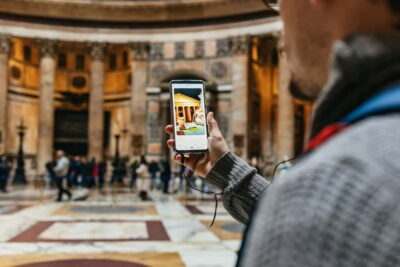
Pantheon Fast-Track Ticket and Official Audioguide
Read our review →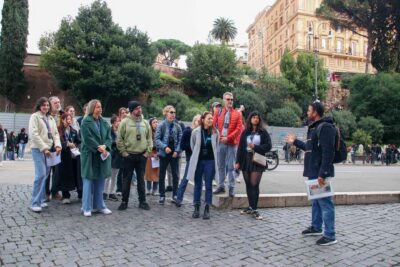
Colosseum & Forum with Audio Guide App -Optional Arena
Read our review →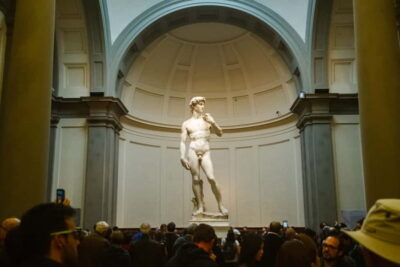
Timed Entry to Michelangelo’s David + Audio App
Read our review →
City Sightseeing Hop-on Hop-off Bus with Audioguide
Read our review →

La Fenice Opera House Entry Ticket with Audio Guide
Read our review →
Colosseum, Forum, Palatine Hill Entry & Audioguide App
Read our review →