
Reviewed · ROME
Audio Guided Tour of Colosseum, Forum, Palatine
The real strength of this experience is its three-hour route through ancient Rome, linking the Colosseum with Palatine Hill and the Roman Forum. You get an audio guide rather than a live guide, so you can stop, listen, and move on at your own pace. I like the included entry to all three sites, and I like the host support, especially when Sathya helped one visitor sort out a question by WhatsApp.
The main caution is simple: skip-the-line does not mean skip every queue. The Colosseum entry may save time, but Palatine Hill and the Forum still require security checks. Audio commentary may also cut out or need reloading, so bring patience and a charged phone.
Key points at a glance
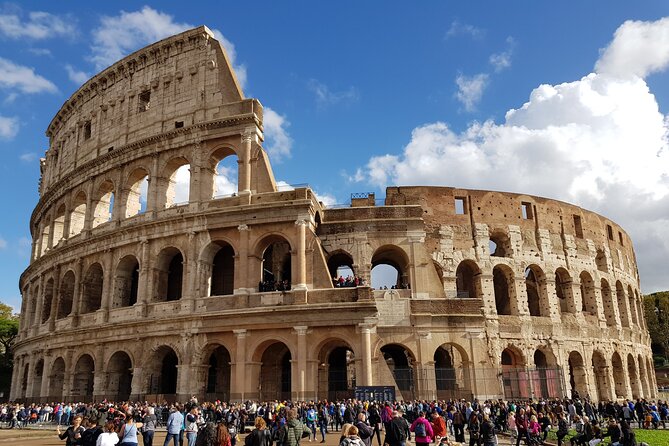
- Three ancient sites in about three hours: The Colosseum, Palatine Hill, and Roman Forum are covered in one outing.
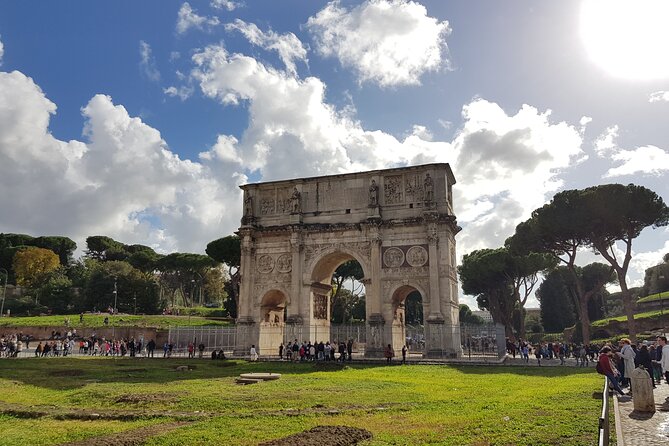
- Meet at the Arch of Constantine: The host gathers the group at Piazza del Colosseo before entry.
- Audio guide, not a live guide: You explore independently, with commentary available through the self-guided system.
- Security lines remain possible: The Colosseum may have timed access, but the Forum and Palatine Hill can still have long checks.
- Small maximum group: The activity is limited to 20 people, though the tour itself is not a private visit.
- WhatsApp assistance: The provider may contact you about availability, changes, and a possible later visit to Castel Sant’Angelo.
What you are really buying for $46.54
At $46.54 per person, this is not simply a ticket to one monument. Your admission covers the Colosseum, Palatine Hill, and Roman Forum, along with an audio guide and a host at the meeting point. That makes the price reasonable if you want one booking to handle the core ancient-Rome sights.
The value depends on how much help you need. If you want a historian beside you explaining every arch and political scandal, this is not the right product. A live guide is not included. If you prefer to move slowly, pause for photos, or skip sections that do not interest you, the self-guided format can be a better fit than a tightly managed walking tour.
The average booking time is 38 days ahead, so I would not leave this until the last minute, particularly during busy periods or the Jubilee year. The activity can be affected by monument restoration, and the provider may send messages about changes. Keep an eye on WhatsApp after booking.
More Audio Tours in Rome
- Rome: Colosseum & Forum with Audio Guide App -Optional Arena
★ 4.2 · 24,770 reviews - Rome: City Sightseeing Hop-on Hop-off Bus with Audioguide
★ 4.0 · 16,045 reviews - Rome: St. Peter’s Basilica & Dome Entry Ticket & Audio Tour
★ 4.2 · 7,537 reviews
Meeting at the Arch of Constantine
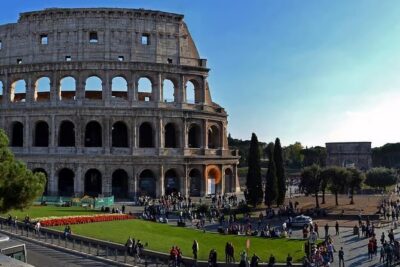
Your starting point is the Arch of Constantine, at Piazza del Colosseo. This is a practical meeting place because it sits beside the Colosseum and is easy to identify in the open area around the amphitheater.
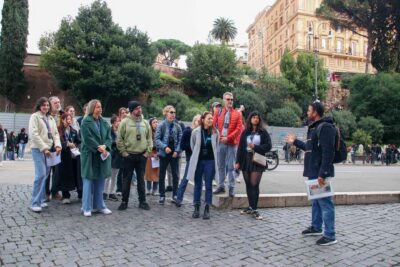
The host is there to help organize entry rather than lead a full historical tour. That distinction matters. You should arrive ready to follow instructions, show your booking details, and then use the audio guide once inside.
The group limit is 20 people. That is smaller than a large coach excursion, but it does not mean you will have a personal guide. The host’s role is mainly logistical, with WhatsApp available for questions and possible updates. One particularly useful detail is that Sathya has helped ease arrival worries through quick WhatsApp replies. For a first-time visit to Rome, that kind of contact can be reassuring.
The advertised duration is about three hours, with roughly one hour assigned to each major site. Treat those times as a framework rather than a stopwatch. Security checks, crowds, and your own pace can change the order and length of each stop.
Entering the Colosseum for the first hour
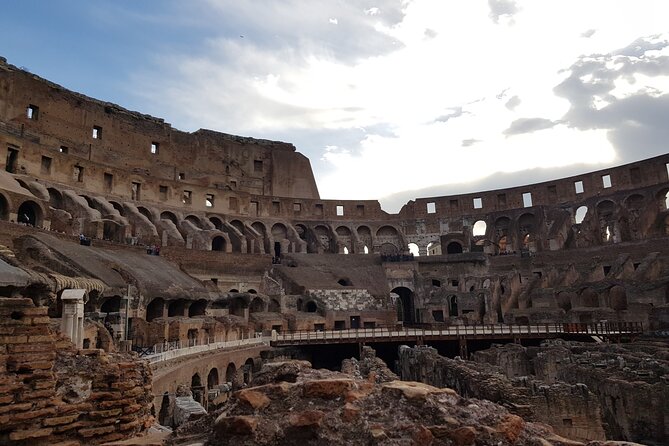
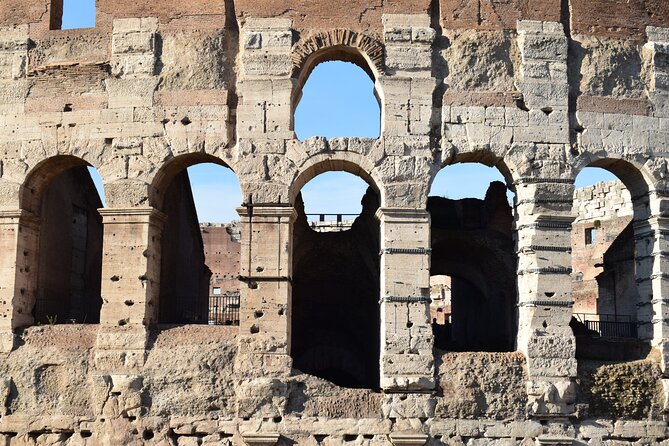
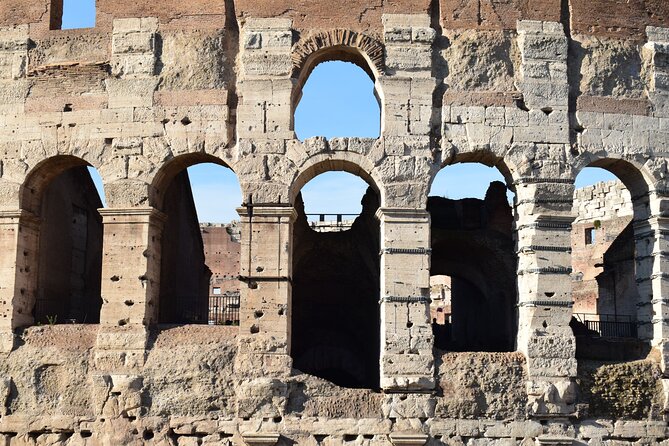
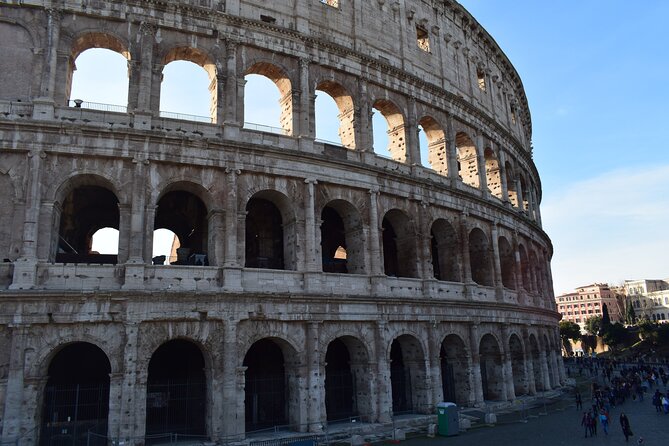
The Colosseum is the emotional high point of the route. Its huge exterior gives you an immediate sense of scale, but the views from inside explain why the building remains so powerful after nearly two thousand years. You can look across the seating levels, arches, and arena area while imagining the noise and spectacle that once filled the structure.
The included admission is useful because the Colosseum is usually the place where visitors most want a fixed entry arrangement. The phrase skip-the-line needs careful reading, however. It should not lead you to expect that every queue around the archaeological area disappears. The practical advantage is strongest at the initial entry point, while security controls can still slow you down.
Plan to use the first part of your visit to get oriented. The audio guide should give you a basic sequence for the building, but do not expect a live guide to notice what has caught your eye or answer a spontaneous question. You control the pace. That is excellent if you want to linger over the structure, and less helpful if you need someone to connect every detail into one flowing story.
There is one technical weakness to prepare for. Audio commentary has sometimes failed to load or stopped during the visit, requiring a reload. Before walking far from the entrance, check that the guide is working. If possible, keep your phone charged and avoid closing the app unnecessarily. The experience is still usable without perfect audio, but the historical context becomes thinner.
Palatine Hill and its gardens after the arena
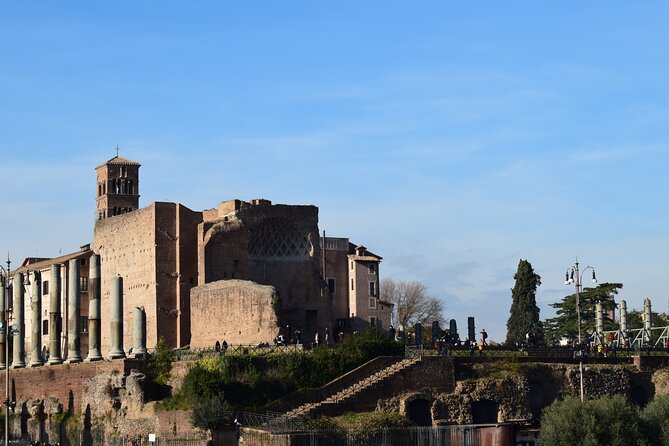
Palatine Hill gives the tour a welcome change of pace. Instead of enclosed arches and crowded viewing points, you walk among open ruins, gardens, and broad views over Rome. The hill was associated with emperors and elite Roman homes, and its remains help you picture how power was concentrated above the Forum.
I especially like this section for its outlook. The views from the hill provide a useful visual map of the ancient center. After seeing the Colosseum as an isolated monument, you begin to understand how it fits into a much larger complex of public buildings, residences, temples, and roads.
The one-hour estimate is enough for a purposeful visit, but not necessarily for every path and ruin. You might find yourself stopping often, particularly in the garden areas and at viewpoints. If you are interested in architecture, political history, or Roman daily life, this may become the most satisfying part of the route.
Do not assume the Palatine entrance will be free of waiting simply because your booking is described as fast track. Security checks can create long queues, and these checks cannot be bypassed. This is the most important practical point in the entire experience. If you arrive during a busy period, build some flexibility into the day and avoid scheduling an important appointment immediately afterward.
The hill also involves walking over ancient surfaces and uneven ground. A moderate level of fitness is recommended. Comfortable footwear matters more here than at a single indoor museum visit.
Another self-paced route in Rome:
- Colosseum, Roman Forum & Palatine Hill with Audioguide App
★ 4.4 · 6,291 reviews - Vatican & Sistine Chapel Ticket with Optional Audio Guide
★ 4.1 · 5,405 reviews - Rome: Castel Sant’Angelo Entry Ticket & Digital Audioguide
★ 4.7 · 5,347 reviews - Rome: Castel Sant’Angelo Entry Ticket & Audio App
★ 4.3 · 4,952 reviews
Walking through the Roman Forum
The Roman Forum completes the story. This was the center of public life in ancient Rome, where political meetings, religious ceremonies, markets, and government business took place. Today, you move through foundations, columns, temple remains, and basilica ruins spread across a broad archaeological area.
The Forum works best when you resist the urge to race through it. The remains can look confusing at first, especially without a live guide pointing out each building. Use the audio commentary, read the available information, and take time to connect the Forum with the Palatine Hill above it.
This is also the part most vulnerable to queue frustration. The Forum and Palatine Hill share long security procedures, so the useful entry arrangement at the Colosseum does not guarantee immediate access here. One person who arrived expecting to move straight through found the lines too long and skipped both areas. That is a real risk during crowded periods, not a minor technicality.
If the queue is manageable, the Forum is essential. It supplies the civic setting behind the Colosseum’s spectacles. You see where public decisions were made and where religious and commercial life unfolded. The ruins do not offer a neat museum route, so I recommend keeping the audio guide active and allowing yourself time to stop at the main remains.
How the audio format changes your visit
A self-guided tour gives you control. You can pause the commentary, take a photograph, wait for a clearer view, or move ahead if a section does not interest you. That flexibility suits independent visitors, couples with different interests, and anyone who dislikes being hurried from one stop to the next.
The trade-off is the lack of a person who can adjust the explanation to your questions. You will not have a live guide to point out a feature in real time or explain why one ruin matters more than another. The quality of the visit depends partly on the audio system working properly.
Because the commentary has occasionally cut out, I would treat it as a useful aid rather than the entire foundation of the day. Listen when it works, but also pay attention to the setting itself. The Colosseum’s structure, Palatine Hill’s views, and the Forum’s scale communicate plenty without a perfect recording.
The audio format is especially well suited to visitors who already know a little about Roman history. If this is your first introduction, you may want to read a short overview before arriving. That preparation can help the scattered ruins make sense.
Castel Sant’Angelo and the WhatsApp timing note
The tour information also refers to visiting Castel Sant’Angelo later, with flexible timing communicated through WhatsApp. Castel Sant’Angelo is not listed as one of the three timed stops, so you should confirm exactly what is included, when it can be visited, and how the arrangement works before relying on it.
That distinction is important when comparing this experience with a package that clearly includes a second monument. The advertised three-hour route is the Colosseum, Palatine Hill, and Roman Forum. Any later Castel Sant’Angelo plan should be treated as a separate timing arrangement unless the provider confirms otherwise.
The WhatsApp contact can still be useful. The provider may send availability updates or explain changes, and you can reach the emergency contact if a problem arises. Save the number and check your messages before leaving for the meeting point.
Timing, crowds, and the Jubilee year
The tour is listed at about three hours, but Rome’s archaeological sites do not always obey a neat schedule. The Colosseum, Forum, and Palatine Hill are connected in one area, yet each stage can be affected by entry control and crowd levels.
For a smoother day, I would avoid booking anything that starts immediately after the tour. Give yourself extra time for security and for the possibility that you will want to stay longer at Palatine Hill or the Forum. The provider also notes that the itinerary can change depending on availability.
During the Jubilee period, some monuments may be under restoration. That does not make the visit pointless, but it can alter what you see. Watch for messages from the provider, especially close to your date, since an affected monument may lead to a change in the planned route.
The activity requires good weather and a minimum number of participants. If the provider cancels for poor weather or because too few people booked, you are offered another date, a different experience, or a full refund. Otherwise, the booking is non-refundable and cannot be amended.
Who should book this experience?
I would recommend it to an independent visitor who wants the three main ancient sites in one booking and prefers freedom over a live lecture. It works particularly well if you are happy using an audio guide, walking for several hours, and handling some uncertainty at the security checks.
It also suits visitors who value a host and WhatsApp contact but do not need a guide beside them. Sathya’s helpful response shows the benefit of having a real contact for arrival questions, even though the experience remains self-guided.
I would hesitate if your main goal is guaranteed fast passage through every entrance. The Forum and Palatine Hill can have long security lines, and that limitation is central to the decision. I would also choose a live guided visit if you want detailed explanations without managing an audio system.
Should you book it?
Book this experience if you want flexible access to Rome’s ancient center, accept that security queues can remain, and are comfortable exploring with recorded commentary. The combination of three major sites, admission, a host, and a three-hour plan offers fair value at $46.54.
Think twice if you need a live historian, firm timing, or a guaranteed way around every queue. The best approach is to arrive with realistic expectations: the Colosseum is the most organized part, while Palatine Hill and the Roman Forum may require patience. For a self-directed visit with useful WhatsApp support, it can be a practical choice. For a fully managed tour, choose something with a live guide and clearer queue arrangements.
FAQ
How long does the experience last?
The visit lasts approximately three hours, with about one hour planned for the Colosseum, one hour for Palatine Hill, and one hour for the Roman Forum.
Where does the tour start?
The meeting point is the Arch of Constantine at Piazza del Colosseo, 00184 Rome, Italy.
Where does the activity end?
The activity ends back at the meeting point.
Is a live guide included?
No. An audio guide and a host are included, but there is no live guide.
Are the Colosseum, Palatine Hill, and Roman Forum admission tickets included?
Yes. Entry tickets for all three sites are included, along with fees and taxes.
Can I skip all the security lines?
No. The booking may help with entry arrangements, but Palatine Hill and the Roman Forum still require security checks, and these lines cannot be skipped.
Is Castel Sant’Angelo included in the three-hour itinerary?
The listed three stops are the Colosseum, Palatine Hill, and Roman Forum. A possible later visit to Castel Sant’Angelo is mentioned with flexible timing through WhatsApp, so confirm the exact arrangement with the provider.
Latest audio tours in Rome
- Pantheon Skip the Line Entry Tickets with Digital Audio Guide★ 3.5 · 52 reviews
- St. Peter’s Basilica: Dome Climb with Lift & Audioguide★ 4.5 · 13 reviews
- Audio guide in Vatican Museums and Sistine Chapel★ 4.5 · 12 reviews
- The Roman Jewish Ghetto: A Self-Guided Audio Tour★ 4.0 · 8 reviews
- Experience: The Pantheon Audio Tour★ 4.5 · 4 reviews
- Trastevere: A Self-guided Audio Tour of Rome’s Medieval Village★ 4.5 · 3 reviews
- Navova square underground with audioguide★ 4.5 · 17 reviews
- The Colosseum’s Attic with 3rd, 4th & 5th Levels with Audio Guide★ 4.5 · 20 reviews
Rome Audio Tours, compared.
Colosseum & Forum with Audio Guide App -Optional Arena
Read our review →
City Sightseeing Hop-on Hop-off Bus with Audioguide
Read our review →
St. Peter’s Basilica & Dome Entry Ticket & Audio Tour
Read our review →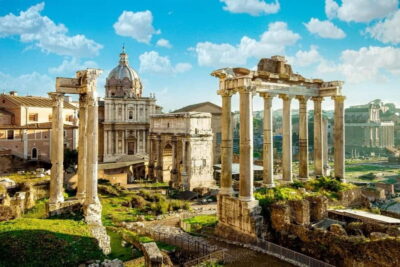
Colosseum, Roman Forum & Palatine Hill with Audioguide App
Read our review →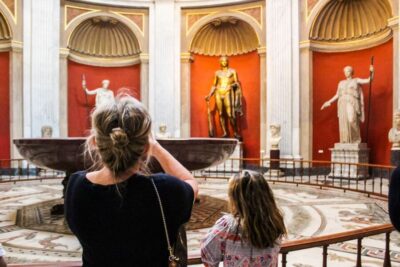
Vatican & Sistine Chapel Ticket with Optional Audio Guide
Read our review →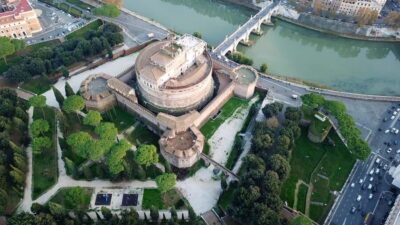
Castel Sant’Angelo Entry Ticket & Digital Audioguide
Read our review →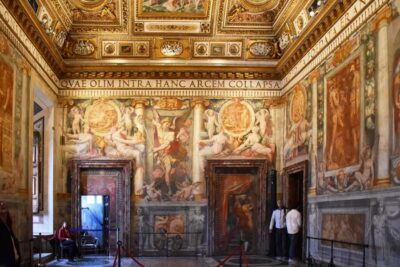
Colosseum, Forum, & Palatine Hill with Audio Guide
Read our review →Browse the lists this tour appears in