Reviewed · ATHENS
Athens: National Archaeological Museum Ticket w/ Opt. Audio
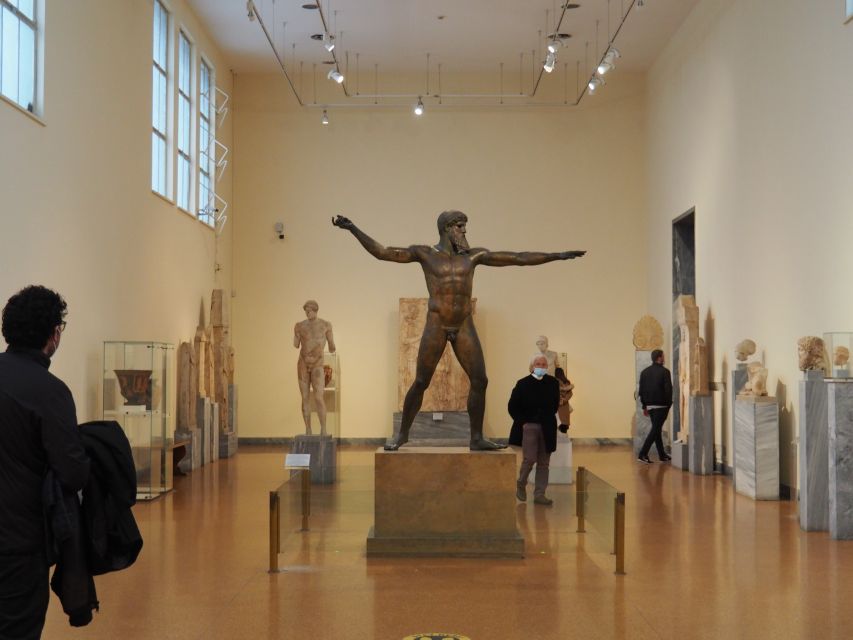
The National Archaeological Museum is where you come face to face with the Greece of textbooks: the Mask of Agamemnon, the Antikythera mechanism, and grand statues of Zeus and Poseidon. This is not a quick collection of highlights. It is a large, serious museum covering prehistoric Greece through later antiquity.
I like the pre-booked entry, which can save time at the ticket counter, and the freedom to move at your own speed. I also like the chance to see famous objects alongside less familiar finds from Crete, Mycenae, Santorini, and other parts of Greece. The main drawback is the optional audio guide. It can add useful context, but its route and app have been unreliable for some people.
Key points to know before you go
- See the Antikythera mechanism: This remarkable ancient device is one of the museum’s most unusual objects.
- Follow Greece through the ages: Galleries cover prehistoric periods, Mycenae, Athens, Crete, Santorini, sculpture, pottery, and more.
- Use your own pace: A focused visit can take about an hour, but the collection deserves much longer.
- Book ahead for convenience: Your e-ticket is scanned at the entrance, though you may still need to pass through bag checks.
- Choose the audio option carefully: The English guide is self-guided and phone-based, so bring headphones and a full battery.
- Check Tuesday hours: The museum opens at 1:00 PM on Tuesdays, not in the morning.
Why this museum deserves a place in your Athens plans
Athens is packed with famous ancient sites, but the National Archaeological Museum gives you something different. Instead of standing among ruins, you see the objects themselves at close range. You can study a carved face, a painted vase, or a small gold ornament in a way that is difficult at an outdoor site.
I especially like the museum’s broad sweep. You do not see only Classical Athens. The displays reach back to prehistoric periods and move through the cultures of the Aegean and mainland Greece. That larger story helps you understand that Greek art did not appear fully formed in the fifth century BC. It changed over many centuries.
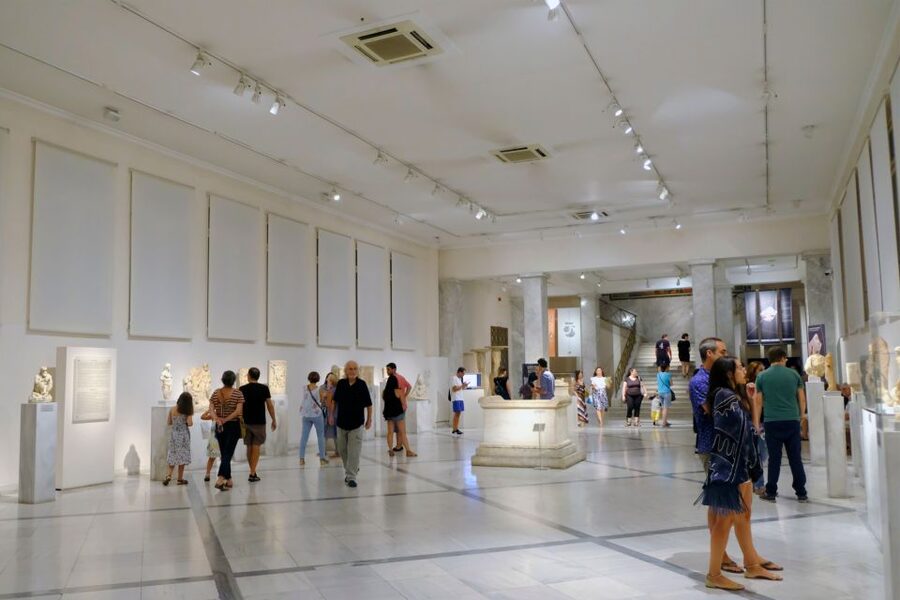
The museum is housed in a grand building with plenty of natural light in many areas. The rooms are generally spacious, and the collection is displayed at a comfortable viewing height in many galleries. Still, this is a large museum with a lot of information. You can easily reach the point where every vase and statue begins to blur together.
That is why I recommend deciding on your visit length before you enter. If you have only an hour, pick a few areas and accept that you will miss plenty. If you have two or three hours, you can build a more satisfying route through the major collections.
More History Audio Tours in Athens
- Athens: Ancient Agora E-Ticket and Audio Tour
★ 3.9 · 413 reviews - Athens: Roman Agora & Ancient Agora E-ticket & 2 Audio Tours
★ 4.1 · 107 reviews - Half Day Ancient Corinth and Canal VR Audio Guided Tour
★ 5.0 · 104 reviews
Getting there from Omonoia
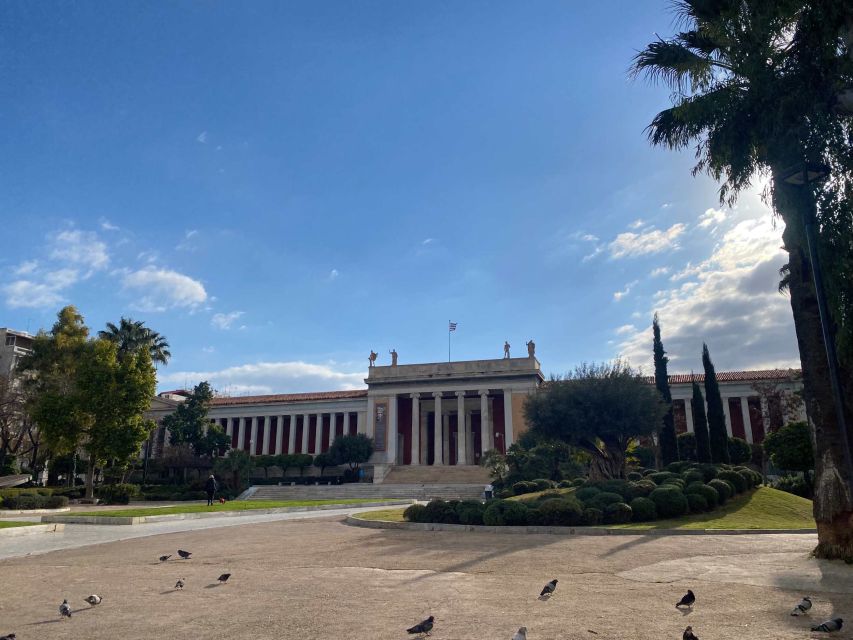
The nearest metro station is Omonoia. From there, you walk toward the museum and arrive at the large historic building that houses the collection. The exact approach is not part of a guided group, so you are responsible for finding your way from the station and following the entrance signs.
Your ticket is sent by email and is scanned at the gate. Pre-booking can be useful during busy periods, especially if you want to avoid first joining a line to purchase a ticket. It does not mean every queue disappears. You may still need to use the correct entrance line and pass through bag inspection.
Pay attention to the different lines. There can be separate areas for people buying tickets, people with pre-booked tickets, and people collecting an electronic audio device. If you already have your ticket on your phone, look for the line for ticket holders rather than joining the sales queue.
Bring your passport or identity card, or an accepted copy. The listed ticket is for people over 25. Children under five and EU citizens under 25 may receive free or reduced admission at the ticket booth with suitable identification. Non-EU citizens under 25 may receive reduced admission from April through October with identification. Reduced-price tickets are not sold online, so check your eligibility before paying the adult price.
Entering the National Archaeological Museum
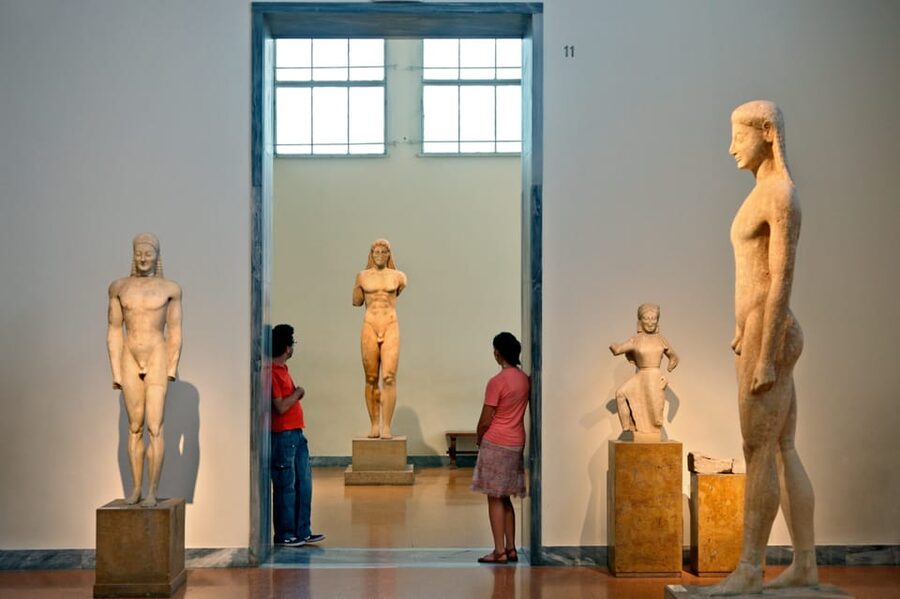
Once inside, you can explore independently. There is no live guide leading you from room to room, and there is no hotel pickup or transportation included. That is a limitation if you prefer a ready-made route, but it is a real advantage if you want to linger over one object or skip a section that does not interest you.
The building contains enough material for several different visits. One route might focus on famous sculpture. Another could trace early Aegean cultures. A third might concentrate on pottery, jewelry, and everyday objects. You can make the museum as broad or as focused as your schedule allows.
The layout is mostly organized by period and collection, but the flow is not always obvious. I would not rely on simply walking forward and assuming you are following a perfect chronological route. Some sections can feel less clearly signposted than expected, and you may find yourself crossing a room or returning to an earlier area.
That is not a serious problem if you treat the museum as a collection of rooms rather than a fixed procession. Take a moment near the entrance to look at the floor plan or general information, then choose your first section.
Mycenaean treasures, including the Mask of Agamemnon
The Mycenaean material is one of the strongest reasons to come. The famous gold death mask traditionally called the Mask of Agamemnon is the object many people know in advance, but it works best when you see it alongside the other burial goods and archaeological finds from the same broad period.
The mask’s fame can make it easy to rush past everything else. Slow down. Look at the goldwork, the tools, vessels, and smaller objects nearby. Together, they show the wealth, craft, and burial customs of the Mycenaean world more clearly than one celebrated object can do alone.
The Cup of Nestor and the Ring of Theseus are also among the named highlights. The value here is not only in seeing recognizable pieces. You get a sense of how much survives from periods that are often treated as a short chapter in a history book.
Descriptions are generally useful, though not every label is placed at an ideal reading height. In some rooms, visitors have found the text difficult to read when the lighting is low. If you care about details, give yourself time and use the available descriptions rather than trying to race through the displays.
More History Audio Tours in Greece
- Ancient Agora Self-Guided Tour with 3D & Audio (No Ticket)
★ 3.9 · 59 reviews - Athens National Archaeological Museum E-Ticket with Audio Guide
★ 3.0 · 57 reviews - Athens: Archaeological & Acropolis Museum Entry & Audio Tour
★ 4.3 · 21 reviews - Ancient Agora of Athens E-Ticket and Audio Tour
★ 3.5 · 5 reviews
Santorini and the prehistoric Aegean
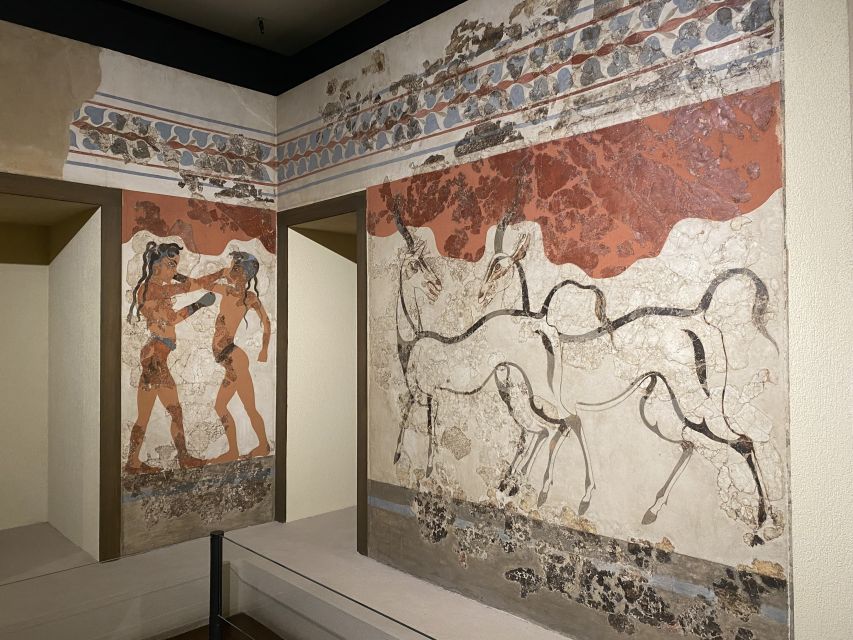
Do not skip the upper-floor material connected with Santorini. This section adds color and human detail to the museum’s early Aegean story, with images, pottery, amphorae, and jugs preserved by volcanic ash.
The Santorini displays are especially helpful if you have already seen references to the island’s volcanic past but want to understand the archaeological evidence. The preserved objects show that the ancient Aegean world was not limited to marble statues and temples. It also included painted rooms, useful household vessels, and artistic traditions that feel surprisingly lively.
This area can be a welcome change of pace from the larger sculpture galleries. I like the way it widens your view of ancient Greece beyond Athens. You see different places, different periods, and different forms of creativity.
The museum’s material from Crete and other Aegean locations also helps fill out the picture. If you have a strong interest in prehistoric cultures, this part alone may justify spending more than an hour inside.
Statues of Zeus, Poseidon, and Aphrodite
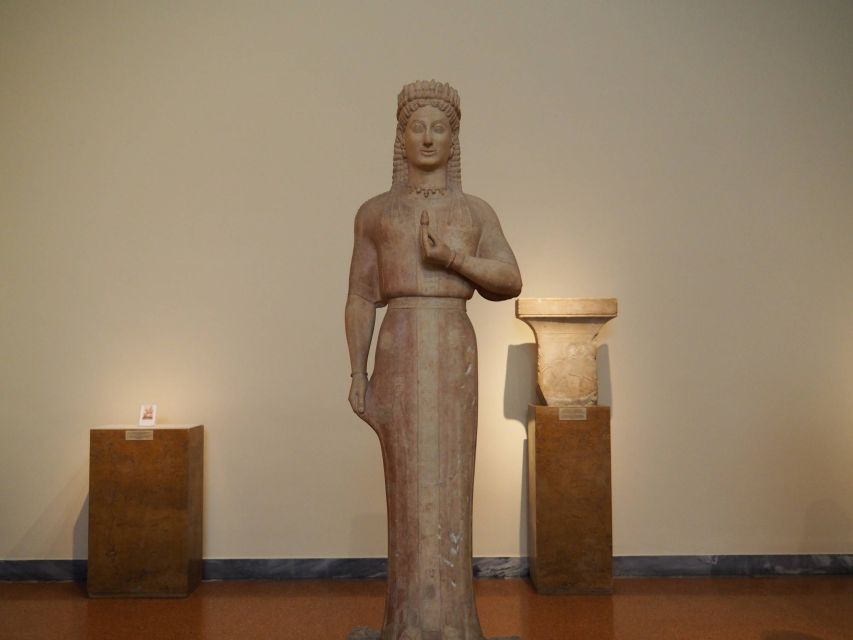
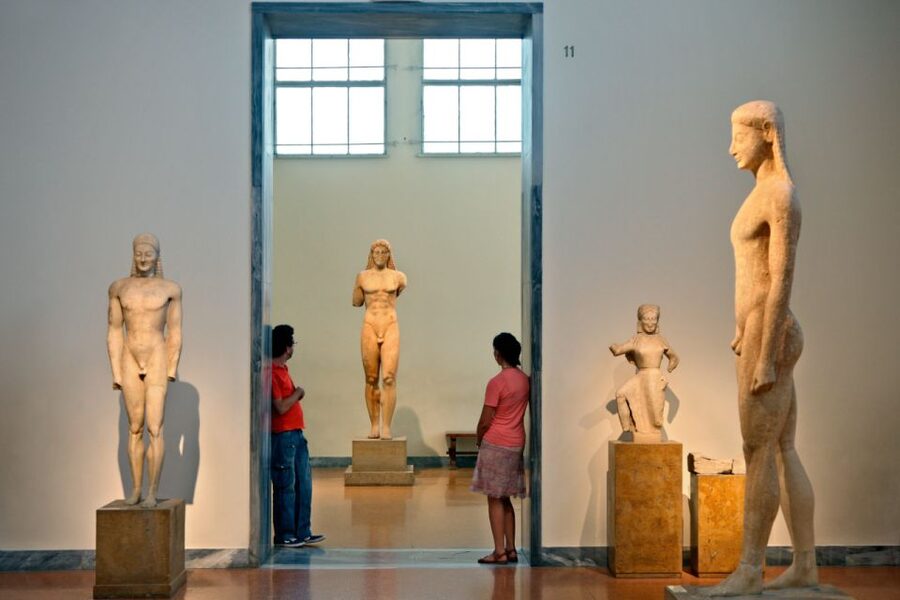
The sculpture galleries provide the museum’s most immediate visual impact. Large statues of gods and other figures give you a chance to examine posture, movement, clothing, and the treatment of the human body at close range.
The statues of Zeus and Poseidon are among the major attractions. Their scale and presence make them easy to find, but the surrounding sculpture deserves attention too. Look at the differences between idealized gods, ordinary human figures, and later works with more movement or emotion.
Aphrodite adds another angle to the collection. Together, these works show how Greek sculptors used marble and bronze to suggest weight, balance, motion, and personality. You are not simply looking at old stone. You are seeing decisions about how a body should stand, turn, or meet your gaze.
Some people come expecting more statues of the gods because of the subject matter. The museum has important sculpture, but it is not a single-theme gallery. Pottery, jewelry, metalwork, burial objects, and smaller archaeological finds occupy a great deal of space too.
The Antikythera mechanism and other unusual objects
The Antikythera mechanism is a must-see. It is a very different kind of object from a statue or painted vase, and it reminds you that ancient technology cannot be reduced to simple tools and building methods.
If this is the object you most want to see, locate it early in your visit. The museum is large, and it is easy to spend your available time in the sculpture and Mycenaean rooms. One visitor specifically planned a visit around the mechanism and found the stop worthwhile.
The Cup of Nestor and Ring of Theseus offer another useful contrast. They are smaller objects, so the experience depends more on careful looking than on dramatic scale. I find that these pieces reward a slower pace, especially after you have seen the major statues.
The museum works best when you alternate between famous works and modest objects. The famous pieces give you landmarks. The smaller pieces reveal how people used, wore, buried, or valued objects in daily life.
How useful is the English audio guide?

The audio guide is optional and self-guided. If you select it, you receive access to an English audio tour for the National Archaeological Museum. The package also lists a self-guided audio tour for Athens’ Old Town and Plaka with all options.
You need your own headphones. You also need enough phone battery for the app, since extended audio use can drain a phone quickly. I would bring a portable charger if you plan to listen throughout the museum.
The guide can provide historical background that short object labels cannot. That is especially helpful when you are looking at a familiar name such as Agamemnon or Poseidon but want to understand the object’s wider setting.
The weak point is navigation. The audio route may not guide you cleanly from one object to the next. Some references may not activate, and the app has not always worked smoothly. You may be sent across a room or toward a different gallery from the one you expected.
For that reason, I would treat the audio as an extra source of information, not as your only map. Use the museum’s room layout and signs to get oriented. If the app becomes frustrating, stop using the route and listen only to the sections that work.
A live guide would give you a more coherent path, but no live guide is included here. This ticket suits independent visitors who want background on selected objects rather than a fully narrated tour.
Timing, crowds, and comfort inside
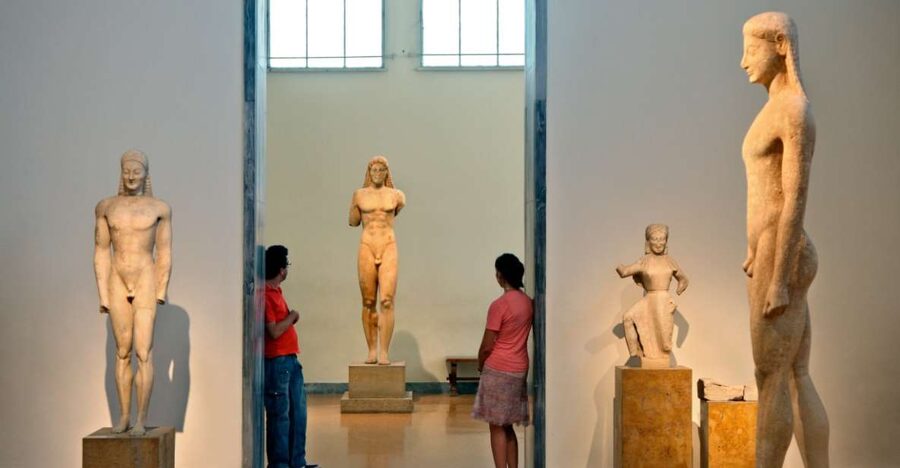
A focused visit can take about an hour. That is enough to see several major highlights, but it is not enough to appreciate the whole collection. I would allow two hours if the museum is a main part of your day, and longer if you are interested in prehistoric Greece, sculpture, or the Antikythera mechanism.
Early morning can be a smart choice during the longer opening season. The museum may be less crowded before larger sightseeing groups arrive. It can also be a useful midday stop when you want a break from Athens’ heat.
Do not assume every room will feel cool in summer. Air conditioning has not been consistent throughout the building, and some rooms can feel hot in July or August. Seating can also be limited, so wear comfortable shoes and avoid carrying more than you need.
Some galleries may occasionally be closed during your visit. Special occasions can change the opening hours as well. Check the current schedule before setting out, especially if you are visiting on a Tuesday.
From November 1 through March 31, the listed hours are 8:30 AM to 3:30 PM from Wednesday through Monday, with Tuesday hours from 1:00 PM to 8:00 PM. From April 16 through October 31, the museum is listed as open from 8:00 AM to 8:00 PM Wednesday through Monday, and from 1:00 PM to 8:00 PM on Tuesday. The schedule for April 1 through April 15 is not specified here, so confirm it before booking.
Is the $30 ticket good value?
At $30 per person, this is not the cheapest museum admission in Athens. Its value depends on how much you want from the collection and how much time you have.
If you only want a quick look at one famous object, the price may feel high. If you plan to spend two or three hours examining major works from across Greece, the ticket becomes easier to justify. You are paying for access to one of the country’s major archaeological collections, not a small single-room exhibit.
The pre-booked ticket is most useful when it saves you from waiting at the sales counter. In winter, when lines can be short, buying ahead may not save much time. You may still need to queue for bag inspection, so do not expect the ticket to remove every delay.
The optional audio guide affects the value calculation. It can help you understand what you are seeing, but the app’s weak navigation means I would not pay for it simply because you expect a polished guided route. Choose it if you want extra English commentary and are comfortable using your own phone.
Who should book this experience?
I would recommend it to first-time visitors who want a broad introduction to Greek antiquity, museum lovers, and anyone who wants a quieter alternative to a day spent only at outdoor archaeological sites.
It is particularly good for you if you enjoy setting your own pace. You can spend ten minutes with the Antikythera mechanism, pass quickly through a less familiar section, then return to a statue that caught your eye.
Families with young children may need to keep the visit short. The collection is impressive, but the amount of material can be tiring, and there are not many places to sit. Anyone with mobility needs should note that the museum is wheelchair accessible.
I would be more cautious if you want a perfectly planned audio route or a live expert explaining each room. The ticket does not include a guide, and the audio app can be uneven. In that case, you may prefer to visit independently with a printed plan or arrange a separate guided visit.
Should you book it?
Book this ticket if the Mask of Agamemnon, Antikythera mechanism, Mycenaean finds, or Greek sculpture are high on your Athens list. The collection is broad, important, and rewarding even when you ignore the most famous objects.
Choose the ticket without the audio guide if you mainly want easy entry and freedom to explore. Add the English audio option if you value extra context, but bring headphones, a charged phone, and patience with the route.
For the best value, visit early during the long summer hours, allow at least two hours, and check Tuesday opening times before you go. If you have only an hour, make a short list of must-see objects and accept that this museum is too large to conquer in one pass.
FAQ
Where is the National Archaeological Museum?
The nearest metro station is Omonoia. The museum is in central Athens, and you make your own way there because hotel pickup and drop-off are not included.
How long is the ticket valid?
The ticket is valid for one day, for the selected date and time slot.
Is an audio guide included?
The National Archaeological Museum audio guide is included only when you select that option. It is self-guided and available in English. A self-guided audio tour for Athens Old Town and Plaka is listed with all options.
What should I bring?
Bring your passport or identity card, or an accepted copy, along with headphones if you use the audio guide. A portable phone charger is also useful for extended app use.
Can children and younger EU citizens get reduced admission?
Children under five and EU citizens under 25 may receive free or reduced admission at the ticket booth with identification. Non-EU citizens under 25 may receive reduced admission from April through October with identification. The online ticket described here is for people over 25.
Is the museum wheelchair accessible?
Yes. The activity information lists the National Archaeological Museum as wheelchair accessible.
More Museum Audio Tours in Greece
- Athens: Acropolis Museum Ticket with Self-Guided Audio tour App
★ 3.5 · 40 reviews - Acropolis Hill & Acropolis Museum E-Tickets with 3 Audio Guides
★ 4.0 · 34 reviews - Athens: Acropolis & 2 Museums E-Tickets with 3 Audio Tours
★ 4.1 · 18 reviews - Athens Hop-On Hop Off w/ Acropolis & Acr.Museum tickets & 3 audio
★ 3.0 · 5 reviews
More Museum Audio Tours in Athens
- Athens: Acropolis Museum Ticket with optional Audio Guide
★ 4.4 · 2,652 reviews - Athens: Acropolis Museum Ticket with Audio Guide
★ 4.1 · 835 reviews - Athens: Acropolis & Acropolis Museum Ticket with Audio Guide
★ 4.1 · 556 reviews - Acropolis Museum E-Ticket and Multilingual Audio Guide
★ 4.0 · 42 reviews
Latest audio tours in Athens
- Athens Ticket Pass: Acropolis & 6 Sites with 5 Audio Guides★ 3.5 · 84 reviews
- Temple of Olympian Zeus: Self-Guided Audio Tour on your Phone (without ticket)★ 4.0 · 8 reviews
- Self Guided Tour In Athens With 100 Captivating Audio Stories★ 4.0 · 4 reviews
- E-ticket for Kerameikos with Audio Tour on Your Phone★ 5.0 · 4 reviews
- Ancient Agora of Athens: A Self-Guided Audio Tour★ 3.5 · 3 reviews
- Private Audio Guided Walking Tour in Athens★ 3.5 · 2 reviews
- Audioguided tour of Athens’ alternative neighbourhood of Exarchia★ 5.0 · 2 reviews
- Athens Hop-On Hop Off w/ Acropolis & Acr.Museum tickets & 3 audio★ 3.0 · 5 reviews
Museum Audio Tours, compared.

Uffizi Priority Ticket & Masterpieces Audio App
Read our review →
Louvre Museum Hosted Entry and Mona Lisa Audioguide
Read our review →
St. Mark Basilica Ticket, Audioguide+History Gallery
Read our review →
Borghese Gallery Skip-the-Line Ticket & Audioguide
Read our review →
Borghese Gallery Ticket + Audioguide or Guided Tour
Read our review →
Orsay Museum Entry Ticket and Digital Audio Guide App
Read our review →
Uffizi Gallery Timed Entry Ticket & Audio Guide
Read our review →