Reviewed · ITALY
Agrigento: Valley of the Temples Entry Ticket & Audio Guide
The Valley of the Temples is one of Sicily’s great outdoor museums, with Greek temples spread across a long archaeological park above the Strait of Sicily. This ticket lets you go straight to the entrance and explore at your own pace, without being tied to a tour group.
I like the flexible two to three hour visit and the chance to see some of the best-preserved Doric temples in the Greek world. The audio guide is offered in eight languages, and entry to the Treasures of Italy exhibition is included.
The weak point is the phone-based audio guide. Several stops have only brief explanations, and finding the correct audio point can be awkward. If you want a fuller account of the site, a live guide or a good printed guidebook may serve you better.
Key points at a glance
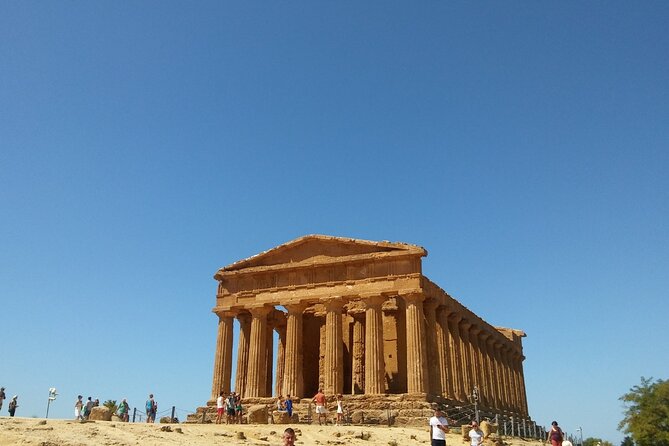
- Ancient Akragas in one long walk: Follow the remains of Hera, Concordia, Heracles, and Zeus across a large archaeological park.
- Temple of Concordia is the star: Its remarkably complete Doric form gives you the clearest sense of how imposing these temples once were.
- Audio is self-guided, not live: You listen through your own smartphone and headphones, with no guide accompanying you.
- Allow two to three hours: The route covers substantial ground, so this is more than a quick photo stop.
- Kolymbethra Gardens costs extra: The garden is not part of this ticket and requires an additional €6 entrance fee.
- Best for independent sightseers: You get flexibility and a lower price, but less explanation and personal help than with a proper guided tour.
What the $17 ticket really gives you
At about $17 per person, this is a reasonable way to enter the Valley of the Temples if you mainly want access to the ruins. The ticket includes the archaeological park, the self-guided audio tour, and the Treasures of Italy exhibition.
That price is not the same as paying for a private historian or a fully guided walk. You receive a digital narration through your phone, and you manage the route yourself. For an independent visit, that can be good value. You can pause for photos, skip sections, or linger beside the temples without waiting for a group.
The value drops if you expect long, detailed explanations at every monument. The audio stops can be short, sometimes about a minute for an individual temple, and the information may not go much beyond the signs placed around the park. I would book this ticket for easy entry and basic orientation, not as your sole source of ancient Greek history.
A live guide costs more, but the difference matters here. The ruins are spread across a wide area, and a guide can point out what you are looking at, explain how the buildings relate to one another, and answer questions as you walk.
More Audio Tours in Italy
- Rome: Pantheon Fast-Track Ticket and Official Audioguide
★ 4.5 · 27,353 reviews - Rome: Colosseum & Forum with Audio Guide App -Optional Arena
★ 4.2 · 24,770 reviews - Florence: Timed Entry to Michelangelo’s David + Audio App
★ 4.6 · 19,496 reviews
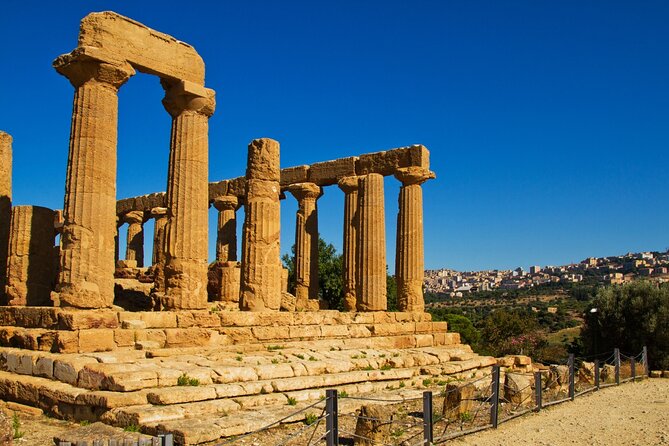
Starting at Hera’s Temple
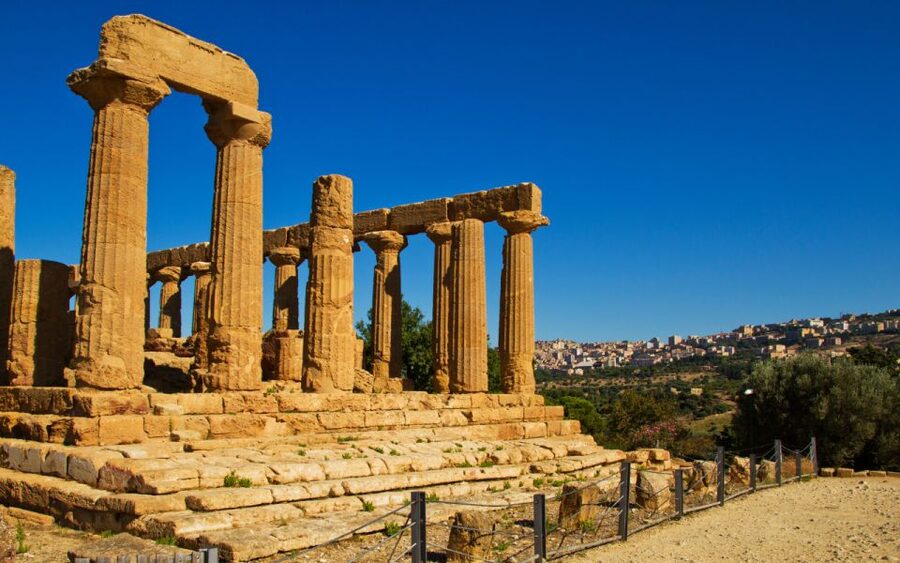
Your route begins near the Temple of Hera, also called Juno. This gives the visit a strong opening, since you start among major Greek ruins rather than working up to them through a modern museum.
The route leads along ancient paths beside fortifications and other remains. You are not simply moving from one isolated temple to another. The site reveals parts of a former city, including agoras, sacred spaces, and later Christian use.
That broad setting is important. Ancient Akragas was not just a row of temples. It was a major Greek settlement with religious, civic, and defensive areas. The scattered remains help you picture a working city, even though many structures survive only as foundations or fragments.
The route is outdoors, so your experience depends on the weather and your footwear. Bring water, wear practical shoes, and keep your phone charged. The park is open daily from 8:30 a.m. to 7 p.m., with visitors required to leave by 8 p.m.
Temple of Concordia: the clearest ancient Greek monument
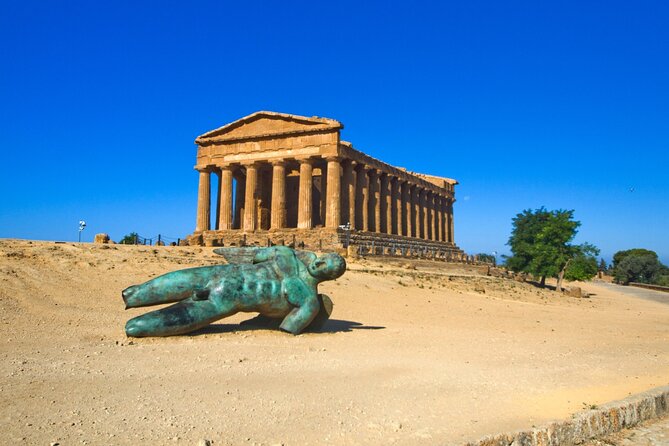
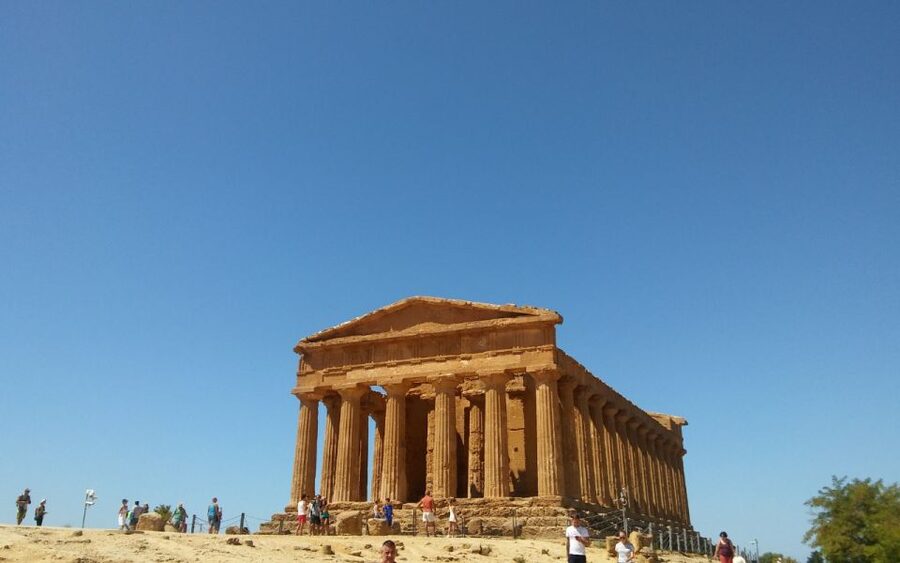
The Temple of Concordia is the highlight for many people, and I can see why. Its columns, steps, and overall form remain unusually complete, giving you a much better idea of the original scale than most ancient temple ruins can provide.
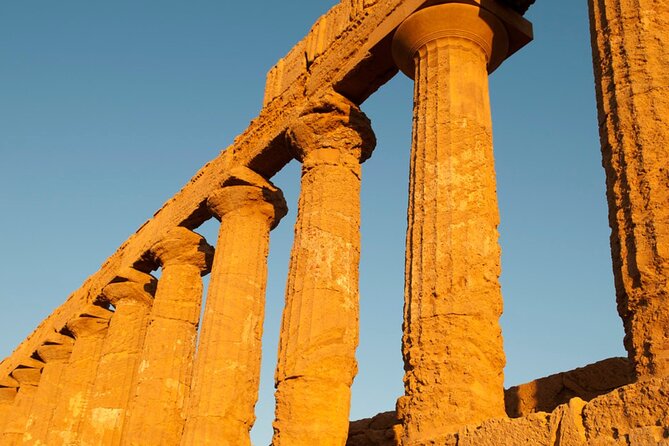
Take time here instead of treating it as another stop on a checklist. Look at the repeated Doric columns, the heavy proportions, and the way the temple sits along the ridge. The structure has also survived because it was converted into a Christian basilica in late antiquity, which helped protect it from total destruction.
The audio guide can provide a short introduction, but this is one place where the physical sight does much of the work. You can understand the power of the building even if the narration feels thin.
The area is also a good place to pause and take photographs. If you visit near sunset, the warm light can make the stone especially appealing. The park’s long opening hours give you some freedom to choose a later visit, though exact conditions and entry timing should be checked before you go.
Heracles and the ruined Temple of Zeus
Further along, the remains linked with Heracles show a different side of the site. Instead of a nearly complete temple, you see broken columns and scattered blocks. The contrast is useful: one monument helps you picture the finished building, while another shows how much has been lost through earthquakes, reuse, and time.
The monumental Temple of Zeus, or Olympieion, is one of the most ambitious remains in the park. It was designed on a huge scale, with enormous architectural elements that hint at the power and wealth of ancient Akragas.
Do not expect an intact temple here. Much of the interest comes from the size of the surviving pieces and the challenge of reconstructing the building in your mind. This is where a more detailed guide would be valuable, since the ruins can be difficult to read without context.
The audio tour gives you a basic route through the main monuments. Still, you may want to supplement it with the information panels around the park. If you use the app and the signs together, you will get more from the visit than you would from either one alone.
Another self-paced route in Italy:
- Rome: City Sightseeing Hop-on Hop-off Bus with Audioguide
★ 4.0 · 16,045 reviews - Pompeii: Entry Ticket with Audio Guide
★ 4.1 · 13,491 reviews - Venice: La Fenice Opera House Entry Ticket with Audio Guide
★ 4.6 · 11,742 reviews - Rome: Colosseum, Forum, Palatine Hill Entry & Audioguide App
★ 4.4 · 10,957 reviews
Fortifications, agoras, and the early Christian necropolis
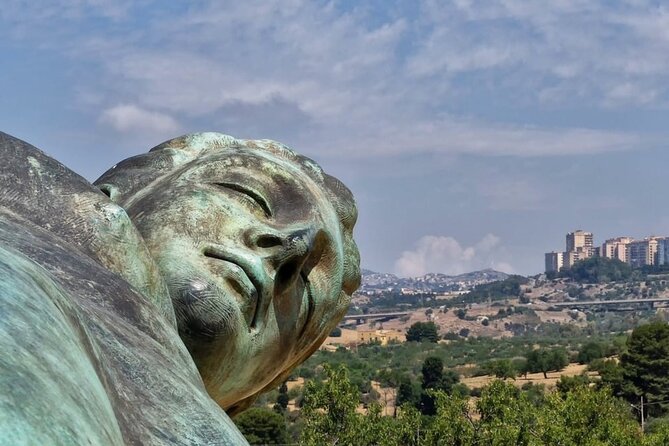
The Valley of the Temples is also about layers of use. Ancient Greek sacred buildings are only one part of the story. Along the path, you encounter fortifications, public spaces, and an early Christian necropolis.
The necropolis is a reminder that the area changed purpose over the centuries. A place first shaped by Greek religion later became part of a Christian community. That change makes the park more interesting than a simple collection of classical ruins.
The agoras help fill out the civic picture. These spaces belonged to public life, not only worship. You will need to use your imagination, since the remains are often low and spread out, but the route shows how religion, politics, defense, and daily life once shared the same city.
This is also where pacing matters. If you rush from one major temple to the next, you may miss the quieter remains along the way. Give yourself the full two to three hours if you want more than the standard postcard views.
The audio guide on your own phone
The audio guide is available in English, French, German, Italian, Spanish, Chinese, Korean, and Japanese. That range is useful, especially if you prefer listening in your first language.
The setup requires some preparation. Bring a charged smartphone and your own headphones. You scan the QR code on your voucher to download the audio guide before arrival, and the electronic tickets are made available within 24 hours of your travel date. They are also sent through WhatsApp by Vox City.
I would not wait until you are standing at the entrance to sort this out. Download the material before arriving, check that the app opens, and bring headphones that are comfortable for an outdoor walk. The site has enough to see without adding a technical problem to the day.
The audio points are not always easy to locate. You may need to check your phone repeatedly to match the narration with the correct temple, and using the same phone for photographs means switching between the camera and the guide. That is a small nuisance, but it can interrupt the flow of the visit.
The audio is best treated as a helpful layer, not a full tour. It gives you a basic explanation of the main places, but the short entries may leave you wanting more. A printed guidebook at the entrance, or a proper live guide, can offer a more connected account.
The Treasures of Italy exhibition
Entry to the Treasures of Italy exhibition is included. This gives you an indoor element to add to the outdoor ruins, which can be useful if you want a change of pace during the visit.
The supplied information does not specify the exhibition’s full contents or layout, so I would treat it as an added benefit rather than the main reason to buy the ticket. The temples and archaeological route are the core experience.
If you are planning a tight schedule, allow your time for the outdoor park first. The open-air monuments are the part that requires the most walking and the one you cannot replicate elsewhere in the same way.
Should you add Kolymbethra Gardens?
Kolymbethra Gardens is not included. Entry costs an additional €6.
That separate fee is worth knowing before you arrive, since the garden may appear on maps or in plans for the Valley. The ticket described here covers the archaeological park and the exhibition, not the gardens.
If you want to keep costs low, skip the garden and focus on the temples. If you have extra time and want to add another part of the site, budget for the separate entrance rather than assuming it is included.
Timing, entry, and practical planning
The park is open every day from 8:30 a.m. to 7 p.m., and you must exit by 8 p.m. The stated activity length is two to three hours, which is realistic for seeing the main monuments without racing.
You can show the mobile ticket at the park entrance at 92100, Agrigento. The booking information notes a separate entrance for skip-the-line access, but your exact meeting point can vary according to the option booked. Check your voucher rather than relying on a general meeting point.
Free cancellation is available up to 24 hours before the scheduled visit. Starting times depend on availability, so check the date and time options before paying.
A small-group option is available, but this particular product is fundamentally self-guided. Do not assume that a small group means a historian will accompany you. The included guide is digital.
For the smoothest visit, I would:
- Download the audio guide before reaching the park.
- Save the ticket to your phone and make sure your screen brightness is high enough for scanning.
- Bring headphones and a portable charger if you have one.
- Wear shoes suited to an archaeological path.
- Keep two to three hours free, with extra time if you want the exhibition or a slower photo stop.
- Decide in advance if you want to pay the extra €6 for Kolymbethra Gardens.
Who will like this visit most?
This ticket suits independent sightseers who want control over the day. You can arrive during the opening hours, move at your own speed, and listen in one of eight languages. It also works well for people who already know something about Greek temples and mainly need entry plus a little orientation.
It is a good match for a self-guided Sicily itinerary. You do not need to coordinate with a group once inside, and the mobile ticket keeps the booking simple.
Families may appreciate the freedom to stop and restart, though the phone audio may be less engaging for children than a live guide. Anyone with limited patience for apps should prepare the audio before arrival or plan to rely on the signs.
I would choose a live guide instead if this is a major bucket-list stop and you want to understand the full story of Akragas. The scale of the ruins rewards explanation, especially at the Temple of Zeus and among the less complete remains.
The product also mentions a sightseeing app with self-guided walking routes for Naples. That is a separate extra rather than part of the Agrigento archaeological experience, so do not book this expecting a second guided destination in Sicily.
Is this Agrigento ticket worth booking?
Book it if your priorities are straightforward entry, flexible timing, and a low price. The Valley of the Temples is worth seeing, and the ticket gets you to its finest monuments, especially Concordia, Hera, and the remains of Zeus.
Think twice if the audio guide is the main reason you are buying. Its short explanations and phone-based setup may feel basic, and you may have trouble matching each recording to the right spot. In that case, buy the entry ticket and use a stronger guidebook, or pay more for a live guide.
My practical choice would be this: use the $17 ticket for an independent visit, prepare the app before you arrive, and treat the audio as a supplement. If you want the temples explained in a clear story rather than a series of short clips, spend more on a proper guide.
FAQ
How long does the Valley of the Temples visit take?
The suggested duration is two to three hours. The park is open from 8:30 a.m. to 7 p.m., and you must exit by 8 p.m.
What languages are available for the audio guide?
The audio guide is available in English, French, German, Italian, Spanish, Chinese, Korean, and Japanese.
Do I need to bring my own headphones?
Yes. Headphones and a mobile device are not included, so bring both along with a charged smartphone.
How do I use the mobile ticket?
Show the electronic ticket on your phone to staff at the Valley of the Temples entrance. The tickets are available for download within 24 hours before your visit and are also sent through WhatsApp by Vox City.
Is Kolymbethra Gardens included?
No. Kolymbethra Gardens requires a separate ticket costing €6.
Can I cancel the booking?
Yes. You can cancel up to 24 hours in advance for a full refund.
Latest audio tours in Italy
- Orgosolo Multilingual Audioguide★ 4.5 · 42 reviews
- Pantheon Skip the Line Entry Tickets with Digital Audio Guide★ 3.5 · 52 reviews
- St. Peter’s Basilica: Dome Climb with Lift & Audioguide★ 4.5 · 13 reviews
- Audio guide in Vatican Museums and Sistine Chapel★ 4.5 · 12 reviews
- The Roman Jewish Ghetto: A Self-Guided Audio Tour★ 4.0 · 8 reviews
- Experience: The Pantheon Audio Tour★ 4.5 · 4 reviews
- Trastevere: A Self-guided Audio Tour of Rome’s Medieval Village★ 4.5 · 3 reviews
- Navova square underground with audioguide★ 4.5 · 17 reviews
Italy Audio Tours, compared.
Pantheon Fast-Track Ticket and Official Audioguide
Read our review →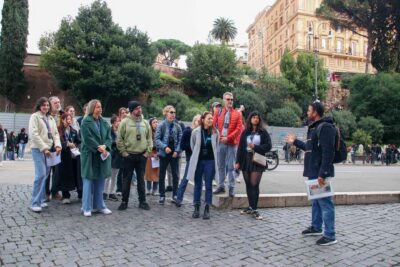
Colosseum & Forum with Audio Guide App -Optional Arena
Read our review →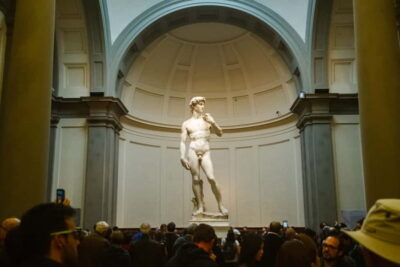
Timed Entry to Michelangelo’s David + Audio App
Read our review →
City Sightseeing Hop-on Hop-off Bus with Audioguide
Read our review →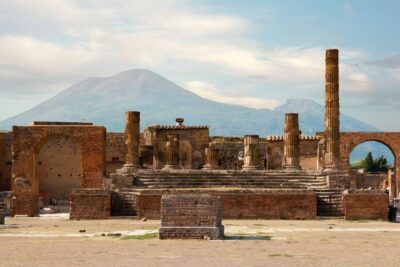

La Fenice Opera House Entry Ticket with Audio Guide
Read our review →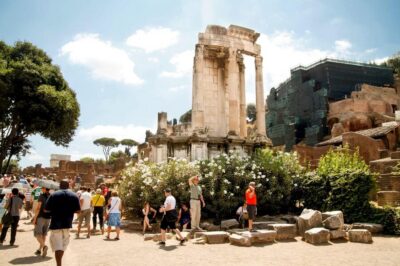
Colosseum, Forum, Palatine Hill Entry & Audioguide App
Read our review →