

Reviewed · ROME
From Naples, Florence and Rome: Pantheon and smart audio
The Pantheon is one of Rome’s great surprises: a plain street opens into a vast ancient dome with a round hole to the sky. This self-guided visit gives you time to look up, listen, and move at your own pace. I like the low $6 price and the extra Rome audio route, which reaches far beyond the Pantheon. I also like the choice of starting in Rome, Naples, or Florence.
The main catch is that this is not a live tour. You need a charged smartphone, headphones, and the audio files downloaded before entering. The Pantheon has no free Wi-Fi, and mobile coverage can be weak inside, so last-minute preparation matters.
Key points to know before booking
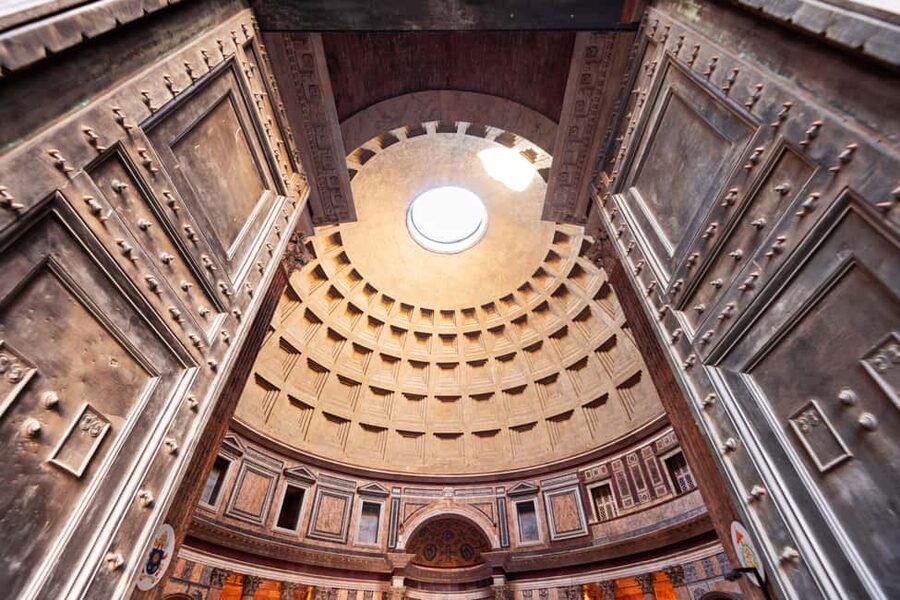
- The Pantheon audio lasts about 20 minutes: It gives you a focused introduction to the building and its unusual structure.
- The phone guide continues through central Rome: More than 20 additional audio descriptions cover places such as Piazza Navona, the Trevi Fountain, Piazza del Popolo, and several churches.
- Naples and Florence departures include trains: Round-trip rail transportation is included with those options, while the Rome choice provides the entrance ticket and audio guide only.
- Your ticket arrives by WhatsApp: You should watch for contact from the provider the day before your visit.
- Five audio languages are available: Choose Italian, English, Spanish, French, or German.
- You set the pace: There is no live guide or fixed walking group, which gives you freedom but also leaves you responsible for navigation.
A low-cost way to meet the Pantheon

At $6 per person for the Rome option, this is priced more like a useful orientation tool than a full guided tour. You receive the Pantheon entry ticket and a downloadable audio guide, then explore independently.
That price is attractive if you already know your way around Rome and do not need a guide beside you. The audio route adds value because it is not limited to one monument. After the Pantheon, you can use it to hear about other central sights, including Piazza Navona, the Fontana di Trevi, Piazza del Popolo, and important churches.
I would not treat the $6 price as a promise of a full day of organized sightseeing. The activity is described as lasting one day because you can use the material during your available time, but the Pantheon portion itself is about 20 minutes. The wider route is self-guided, so the amount you see depends on your own plans.
The 4.6 rating from 10 reviews suggests a well-received small experience, though the sample is limited. The sensible way to judge it is by its format: it offers an inexpensive ticket and audio support, not personal storytelling, group management, or a local guide’s answers to your questions.
More Audio Tours in Rome
- Rome: Colosseum & Forum with Audio Guide App -Optional Arena
★ 4.2 · 24,770 reviews - Rome: City Sightseeing Hop-on Hop-off Bus with Audioguide
★ 4.0 · 16,045 reviews - Rome: St. Peter’s Basilica & Dome Entry Ticket & Audio Tour
★ 4.2 · 7,537 reviews
Entering the Pantheon and looking up
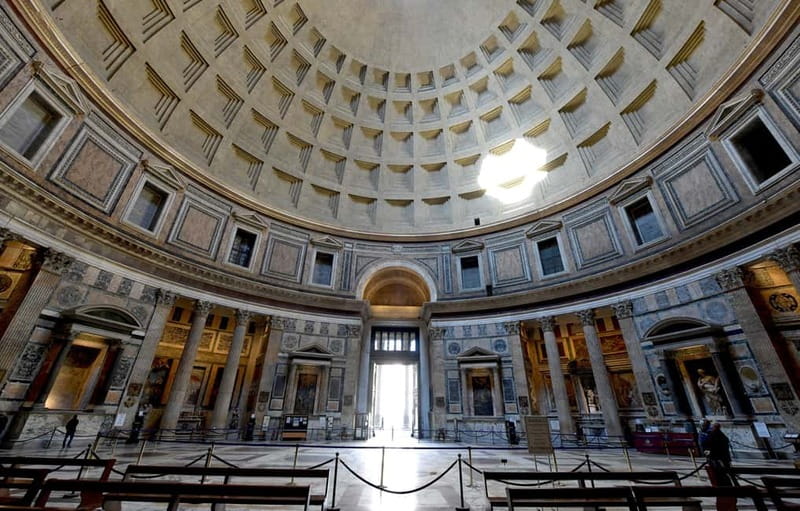
The Pantheon is the heart of this experience. Once inside, the first thing to notice is the building’s balance. The large interior is organized around the famous dome, whose central opening, the oculus, lets in daylight and weather.
The audio guide spends about 20 minutes explaining the monument. That is enough time to give the building context without turning the visit into a long lecture. You can listen while standing beneath the dome, then pause to study the interior or replay a section if a detail catches your attention.
The Pantheon also connects ancient Roman religion with Christian worship. Its sanctuary was given to Pope Boniface IV in 608 by the Byzantine Emperor Phocas, and the building became a Christian church. That change helps explain why this ancient structure survived while many other Roman monuments were damaged or dismantled.
The guide also refers to legends tied to the Pantheon, including stories involving evil and Satan. These tales are part of the building’s long cultural life, though you should treat them as legends rather than historical evidence.
The visit works best if you resist the urge to rush in, take one photo, and leave. Look at how the light moves through the oculus. Notice the contrast between the simple geometric form and the layers of religious and civic meaning attached to it. Since nobody is waiting for your group, you can take a quiet moment before moving on.
How the smart audio guide works

You will be contacted by the provider to download the smart audio guide. The contents need to be saved on your phone before you begin. This is the most important practical instruction for the visit.
There is no free Wi-Fi at the Pantheon, and mobile coverage is not always reliable. Download everything while you have a dependable connection. Bring a fully charged phone, since the audio, map, and ticket information all depend on it.
Headphones are not included. You need to bring your own pair, which is especially useful if you plan to listen in the Pantheon and continue around Rome. A phone speaker may be possible in quieter moments, but it is less considerate in a sacred and crowded interior.
The guide is available in Italian, English, Spanish, French, and German. That makes it useful for different members of a family or group, though each person will need access to the audio on a phone if you want to listen separately.
The format is simple: listen to the Pantheon section, use the indoor map, and then follow the additional Rome descriptions at your own speed. This is a good setup for independent sightseers. It is less suitable if you want a person to point out small details, adjust the route to your interests, or answer questions as they arise.
From the Pantheon to Rome’s other monuments
The wider audio route turns the ticket into more than a single-stop visit. After the Pantheon, you can use more than 20 additional descriptions to explore central Rome.
Piazza Navona is included, along with the Trevi Fountain and Piazza del Popolo. These are major stops in a compact part of the city, so the guide can help you connect monuments rather than viewing the Pantheon in isolation.
The route also includes churches with important art. At San Luigi dei Francesi, you can hear about Caravaggio’s paintings. Santa Maria del Popolo has more Caravaggio, while Santa Maria sopra Minerva includes Michelangelo’s statue of the Redeemer. Bernini’s statues in Piazza Navona are also covered.
This art focus is one of the strongest reasons to download the full guide. Rome’s churches can look plain from the outside, yet a single chapel or sculpture inside may be the reason the building matters. Audio descriptions can help you know what to look for before you walk through the door.
Still, the material does not turn these locations into reserved visits or guided entries. You receive information about them, but you remain responsible for reaching each place and checking any local opening arrangements. The supplied details do not promise admission to every church or attraction on the route.
You can use only the Pantheon section if you have a tight schedule. If you have more time, the extra stops give you a flexible outline for a self-guided walk through central Rome.
Another self-paced route in Rome:
- Colosseum, Roman Forum & Palatine Hill with Audioguide App
★ 4.4 · 6,291 reviews - Vatican & Sistine Chapel Ticket with Optional Audio Guide
★ 4.1 · 5,405 reviews - Rome: Castel Sant’Angelo Entry Ticket & Digital Audioguide
★ 4.7 · 5,347 reviews - Rome: Castel Sant’Angelo Entry Ticket & Audio App
★ 4.3 · 4,952 reviews
Choosing Rome, Naples, or Florence
The starting city changes the value of the experience.
The Rome option is the simplest. You receive the Pantheon ticket and audio guide, then make your own way to the monument. This choice suits you best if you are already staying in Rome and want an inexpensive addition to your sightseeing day.
The Naples option includes round-trip train transportation from Napoli Centrale, along with the Pantheon visit. The Florence option includes round-trip train transportation from Firenze Santa Maria Novella. These choices may appeal if your base is outside Rome and you want transport arranged as part of the booking.
The supplied details do not give exact train departure times, journey lengths, seating arrangements, or a full schedule for the day. Check the available start time carefully before booking. You should also make sure the train timing leaves enough room for the Pantheon visit and your return journey.
For a short stay in Naples or Florence, the train options can make Rome possible without arranging rail tickets separately. The tradeoff is the length and structure of a day trip. You will spend part of the day in transit, and the experience in Rome remains self-guided rather than organized around a live escort.
The meeting point varies by the option you select. It may be Napoli Centrale, Firenze Santa Maria Novella, or the Pantheon itself. Read the confirmation closely so you do not go to the wrong station or monument.
What the itinerary feels like on the ground
The itinerary has three possible starting points but one main sightseeing stop. You begin at the selected departure location, then reach the Pantheon in Rome. From there, the activity is a self-guided visit.
In Rome, there is no live tour leader waiting to gather a group. You use the ticket and phone guide independently. That gives you freedom to arrive prepared, listen at your own speed, and continue to other central sights when you are ready.
The audio content includes an indoor map, which should help you understand the Pantheon visit. The additional route is also useful for planning the next part of your day, especially if you want to see art by Caravaggio, Michelangelo, and Bernini.
The end point is described as the meeting point. For the Rome choice, that means the experience begins and finishes around the Pantheon visit, while the Naples and Florence options include the return train to the original station. Since the details do not specify a guided walking route with a fixed endpoint, plan to manage your own movement after the Pantheon.
This arrangement is particularly good for people who dislike being hurried. You can spend more time at the oculus, skip an audio stop that does not interest you, or pause for lunch before continuing. The price of that freedom is responsibility: you must track the route, monitor the time, and keep your phone ready.
Practical details that affect your decision

Bring your passport or ID card. You should also bring a charged smartphone and headphones. These are not minor extras, because the ticket and audio content depend on your phone.
Download the full guide before the visit. Do not assume you can retrieve missing files at the Pantheon. Poor mobile coverage can leave you standing at the entrance with a ticket but no usable commentary.
Your entrance ticket is listed as non-refundable. At the same time, the booking terms allow cancellation up to 24 hours in advance for a full refund, and reserve-now-pay-later booking is available. Because the ticket itself is described as non-refundable, check the exact cancellation terms attached to your booking before making changes.
The activity is wheelchair accessible. The information provided does not describe the exact route conditions inside every church included in the wider audio guide, so you may want to confirm those details if access is a major concern.
The ticket is sent through WhatsApp the day before your visit. Keep the phone number used for booking active and check WhatsApp in advance. If you have limited data access, download the ticket and audio files before leaving your hotel or station.
Who should book this Pantheon visit?
I would recommend it to an independent visitor who wants a low-cost introduction to one of Rome’s most important buildings. It also suits someone who enjoys art and wants audio commentary for several central sights rather than only one monument.
It is a practical choice for a Rome stop that needs flexibility. You can use the Pantheon section alone, or build a larger walking day around Piazza Navona, the Trevi Fountain, Piazza del Popolo, and the listed churches.
The Naples and Florence versions are more useful if you want round-trip rail transportation included. Just remember that the transport details are not fully spelled out, so you should check the departure information before committing to a day trip.
I would choose another format if you want a live guide, group companionship, or detailed answers about Roman architecture on the spot. The audio guide can explain the building and suggest what to see, but it cannot react to your questions or adjust the tour for you.
Should you book it?

Book this experience if you want Pantheon entry, a short audio explanation, and a wider Rome route for $6 in the Rome version. The extra stops covering Caravaggio, Michelangelo, Bernini, Piazza Navona, and the Trevi Fountain make the package more useful than a ticket alone.
Choose it only if you are comfortable managing your own visit. Download the audio in advance, bring headphones, check WhatsApp for the ticket, and confirm the starting time. For a self-directed day in Rome, it offers good value. For a personal, live interpretation of the city, it will feel too basic.
FAQ
What is included in the Pantheon experience?
The Rome option includes the Pantheon entrance ticket and a downloadable smart audio guide. Naples and Florence options also include round-trip train transportation.
Is there a live tour guide?
No. This is a self-guided visit using audio on your smartphone. A live tour guide is not included.
Which languages are available for the audio guide?
The audio guide is available in Italian, English, Spanish, French, and German.
How long is the Pantheon audio description?
The main Pantheon audio description lasts about 20 minutes. The guide also includes more than 20 descriptions for other Rome sights.
Does the audio guide cover places beyond the Pantheon?
Yes. It includes information about Piazza del Popolo, Piazza Navona, the Trevi Fountain, San Luigi dei Francesi, Santa Maria del Popolo, Santa Maria sopra Minerva, and other Rome monuments and churches.
How do I receive the ticket and audio guide?
The provider contacts you through WhatsApp, with the ticket sent the day before your visit. You should download all audio content before starting.
What should I bring?
Bring your passport or ID card, a charged smartphone, and headphones. Headphones are not included.
Can I cancel the booking?
The activity allows free cancellation up to 24 hours in advance for a full refund. The entrance tickets are also described as non-refundable, so check the specific booking terms before cancelling.
Latest audio tours in Rome
- Pantheon Skip the Line Entry Tickets with Digital Audio Guide★ 3.5 · 52 reviews
- St. Peter’s Basilica: Dome Climb with Lift & Audioguide★ 4.5 · 13 reviews
- Audio guide in Vatican Museums and Sistine Chapel★ 4.5 · 12 reviews
- The Roman Jewish Ghetto: A Self-Guided Audio Tour★ 4.0 · 8 reviews
- Experience: The Pantheon Audio Tour★ 4.5 · 4 reviews
- Trastevere: A Self-guided Audio Tour of Rome’s Medieval Village★ 4.5 · 3 reviews
- Self-Guided Audio Tour – The gods of the Palatine★ 3.5 · 5 reviews
- Navova square underground with audioguide★ 4.5 · 17 reviews
Rome Audio Tours, compared.
Colosseum & Forum with Audio Guide App -Optional Arena
Read our review →
City Sightseeing Hop-on Hop-off Bus with Audioguide
Read our review →
St. Peter’s Basilica & Dome Entry Ticket & Audio Tour
Read our review →
Colosseum, Roman Forum & Palatine Hill with Audioguide App
Read our review →
Vatican & Sistine Chapel Ticket with Optional Audio Guide
Read our review →
Castel Sant’Angelo Entry Ticket & Digital Audioguide
Read our review →

Colosseum, Forum, & Palatine Hill with Audio Guide
Read our review →Browse the lists this tour appears in