
Reviewed · ITALY
Neustift Monastery: Admission with audio guide
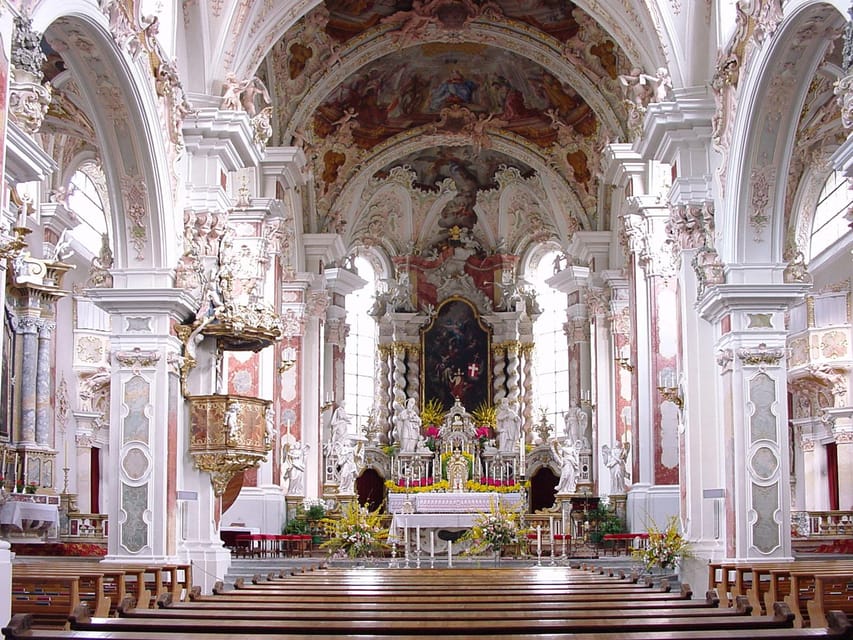
Neustift Monastery gives you a lot to see for a $15 admission: a baroque church filled with marble and 365 angels, a cloister, a museum, and one of South Tyrol’s most memorable library interiors. The 18-chapter audio guide lets you set your own pace instead of following a fixed group.
I like the freedom to pause wherever you wish, and I like that the audio guide covers more than architecture. It connects the complex with music, education, economics, and nearly 900 years of cultural history. The main drawback is practical: finding the correct entrance can be confusing, and the booking system has caused problems for some visitors.
Key points to know before you go
- A baroque basilica full of detail: Look for the 365 angels and the pink imitation marble described inside the church.
- Four major areas are included: The visit covers the abbey church, cloister, museum, and famous old library hall.
- The audio guide is free: Download the HEARONYMUS app and enter Kloster Neustift.
- You explore independently: There is no live guide, fixed group, or required walking pace.
- Admission costs about $15: That is a fair price if you plan to see every included area.
- Bring your own headphones: Audio is available in English, Italian, and German, with some material in its original language.
Why Neustift Monastery is worth your time
Neustift is not just a church visit. The complex presents almost nine centuries of monastic life through buildings, art, music, learning, and economic activity. That wider story gives the visit more weight than a quick look at a pretty baroque interior.
The monastery is in the Bressanone, or Brixen, area of Trentino-South Tyrol. You can reach it by car, train, or local bus, making it a useful stop if you are staying in or passing through Bressanone.
I especially like the way the visit joins several types of sights. The church gives you visual drama. The cloister slows things down. The museum adds historical objects and context, while the library hall shows how learning and book culture shaped the monastery.
You are free to spend a few minutes in one room or linger with the audio. That makes this a better fit for independent visitors than for anyone who wants a guide constantly directing the group.
More Church Audio Tours in Italy
- Rome: St. Peter’s Basilica & Dome Entry Ticket & Audio Tour
★ 4.2 · 7,537 reviews - Florence: Cathedral & Brunelleschi’s Dome Ticket & Audio App
★ 4.4 · 6,973 reviews - Vatican & Sistine Chapel Ticket with Optional Audio Guide
★ 4.1 · 5,405 reviews
Begin with the HEARONYMUS audio guide
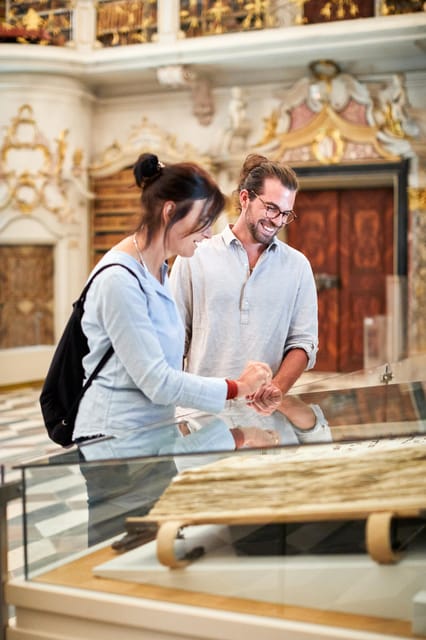
The audio guide is central to the experience, even though it costs nothing beyond the admission. Before arriving, download the HEARONYMUS app from the App Store or Google Play. Search for the keyword Kloster Neustift, then download the Neustift content.
The guide is arranged in 18 chapters. This format is helpful because you can move through the complex in manageable sections rather than trying to absorb everything at once. You can listen in English, Italian, or German.
Bring headphones. This is not a small detail. You will get more from the visit if both hands are free and you can hear the commentary without holding a phone to your ear. Some content appears in its original language, so do not expect every piece of material to be translated into your chosen language.
The guide does not turn this into a live guided tour. You will not have a person answering questions or setting the pace. Instead, it gives you the background needed to read the rooms and buildings with more understanding.
The old collegiate church and its 365 angels
The church is likely to be the visual high point of your visit. One description calls attention to its 365 angels, a detail that gives you an easy way to start looking closely. Count them if you have the patience, or simply use the number as a reminder that this interior was designed to reward careful observation.
The church also uses pink imitation marble. That detail matters because it shows how appearance and craftsmanship worked together in a baroque setting. The effect is theatrical without requiring actual solid marble everywhere.
The basilica is the part of the complex most likely to stop you in your tracks. You can enter, look upward, examine the decorative program, and then return to the audio when you are ready. This is a good place to avoid rushing. Baroque interiors often reveal more when you stop looking at the room as one grand image and start noticing individual figures, surfaces, and details.
The church is also a useful introduction to the monastery’s long story. The complex is not only about religious worship. It reflects the role of the Augustinian community in art, music, education, and daily institutional life.
If you have limited time, make the church a priority. Still, stopping there alone would leave out much of what makes the admission worthwhile.
The cloister, where the pace changes
The cloister offers a different mood from the decorated church. Rather than presenting one large visual statement, it gives you a quieter route through the complex. The audio guide helps place the cloister within the monastery’s broader architectural and cultural development.
I like this part of the visit because it gives your eyes a rest. After the church’s decoration, the cloister provides a more measured setting in which to notice the structure and movement of the building.
You should not treat it as a passageway to the next stop. Pause here and listen to the relevant chapter. The value is not just in taking a photograph, but in seeing how the monastery works as a connected place.
The self-guided format is useful in the cloister. You can move ahead if another area interests you more, or stay longer without holding up a group. That flexibility is one of the strongest reasons to choose this admission instead of a fixed tour.
Another self-paced route in Italy:
- Rome: Pantheon Fast-Track Ticket and Official Audioguide
★ 4.5 · 27,353 reviews - Rome: Colosseum & Forum with Audio Guide App -Optional Arena
★ 4.2 · 24,770 reviews - Florence: Timed Entry to Michelangelo’s David + Audio App
★ 4.6 · 19,496 reviews - Rome: City Sightseeing Hop-on Hop-off Bus with Audioguide
★ 4.0 · 16,045 reviews
The museum and the monastery’s wider story
The museum broadens the visit beyond the church interiors. Here, the audio guide addresses the monastery’s art and cultural history, along with its role in education and economic life.
That context helps answer a basic question: why did a monastery need such a large and complex group of buildings? The answer is tied to the many functions a long-running religious institution could serve. Neustift’s story includes worship, learning, artistic production, music, and the practical work needed to support community life.
The museum is especially useful if you enjoy understanding how a place developed over time. The church may impress you immediately, but the museum gives you a better sense of the people and institutions behind the building.
Allow time to listen rather than treating each display as a quick stop. Eighteen audio chapters can add a lot of information, and the experience works best when you let the story unfold at a comfortable rate.
The museum also makes this visit suitable for people who are less interested in church decoration alone. You are getting an introduction to a living historical institution, not only an ornate interior.
The famous old library hall
The old library hall is another major reason to visit. The supplied information identifies it as one of the highlights of the complex, and it belongs to the educational side of Neustift’s story.
A historic library is more than a room filled with books. It shows how knowledge was collected, preserved, and used within the monastery. The audio guide can help you connect the room’s design with the broader role of learning at Neustift.
You may find this space more rewarding after seeing the museum and church. The church shows the community’s public religious identity. The library points toward study, teaching, and the long work of preserving written material.
The listing does not provide details such as the number of books, the exact decoration, or whether every section is open at all times. I would avoid arriving with a fixed picture of precisely what you will see. Go for the hall as part of the complete route, and let the audio explain what is available during your visit.
A self-guided visit with no fixed schedule
Your admission is valid for one day, with starting times based on availability. That gives you useful flexibility while planning a day around Bressanone and Neustift.
You are not joining a timed walking group. You can move between the church, cloister, museum, and library hall at your own speed. This is ideal if you like to stop for photographs, replay an audio section, or spend extra time with one type of art.
The tradeoff is that you need to manage yourself. There is no live guide to point out the next room or adjust the explanation to your interests. Downloading the app and preparing your headphones before you arrive will make the visit easier.
The experience is described as a one-day activity, not as a fixed-length tour. The actual time you need depends on how many audio chapters you hear and how carefully you inspect each area. You can make it a focused cultural stop or a slower half-day visit within a larger Bressanone plan.
Getting to Neustift from Bressanone
By car, take the Brenner highway A22 and leave at the Brixen/Pustertal exit. Follow signs toward Vahrn, then continue toward Kloster Neustift. A free parking lot is located at the entrance to the monastery grounds.
By train, travel to Bressanone/Brixen station. From there, buses connect with Neustift Monastery.
Local bus lines also run directly from Bressanone to the monastery, with the stop close to the complex. This is the simplest choice if you do not have a car, provided the bus timing fits your plans.
Give yourself extra time to locate the entrance once you arrive. The entrance signage has been described as unclear, and one specific complaint concerned the main entrance being poorly marked. This is the kind of small problem that can waste time at an otherwise straightforward attraction.
If you booked online, keep your confirmation available. One visitor had trouble with paid tickets being accepted at the entrance, so it is sensible to check your reservation details before arriving and ask staff for help if the ticket does not scan or appear valid.
Is $15 a fair price?
At about $15 per person, the admission is fairly priced if you visit the full complex. You are paying for access to several distinct areas, not just the basilica, and the audio guide adds useful context without an extra charge.
The value depends on how you visit. If you only want a quick look at the church, the price may feel high for a short stop. If you walk through the church, cloister, museum, and library hall and listen to several of the 18 chapters, the cost makes more sense.
There is no live guided tour included. Some people will prefer that because they can explore privately. Others may feel the lack of a guide is a weakness, especially if they want direct answers or a more personal explanation.
The reserve-now-and-pay-later option can help if your schedule is still changing. Free cancellation is available up to 24 hours before the visit for a full refund. Check the available start times before booking, since the activity is valid for one day but availability still matters.
Who will enjoy this experience most?
I would recommend Neustift Monastery to you if you like historic buildings, church art, old libraries, and self-guided cultural visits. It also suits anyone who wants to connect architecture with music, education, and institutional history.
The experience works well for independent visitors who prefer not to follow a group. You can spend longer in the places that interest you and move quickly through sections that do not.
It may be less suitable if you need a live guide, dislike using an app, or want a short attraction with little reading or listening. The audio guide is free, but you must download it yourself and bring headphones.
Families and mixed-interest groups may appreciate the flexible pace, though the supplied information does not specify child pricing, family programming, or special activities for children. I would choose this for adults and older children who can engage with an audio-based cultural visit.
Practical tips for a smoother visit
Download the guide before you arrive, then search for Kloster Neustift inside HEARONYMUS. Do not wait until you are standing at the entrance with weak phone service or a full schedule.
Bring headphones and keep your phone charged. The audio is available in English, Italian, and German, but some material remains in its original language.
Plan to see all four main areas rather than stopping after the church. The baroque interior may be the most dramatic section, yet the cloister, museum, and library hall explain why Neustift is more than a handsome basilica.
If driving, use the free parking lot at the monastery entrance. If arriving by train, check the bus connection from Bressanone station. The nearby bus stop makes public transport practical.
Pets are not allowed, although assistance dogs are permitted. Keep the unclear entrance signage in mind and allow a few extra minutes to get oriented.
Should you book Neustift Monastery?
Book it if you want a flexible, self-guided look at a remarkable Augustinian complex and you are willing to explore beyond the main church. The combination of a decorated basilica, 365 angels, pink imitation marble, cloister, museum, and old library hall gives the $15 admission solid value.
I would be more cautious if you expect a personal guide or a completely effortless ticket experience. Download the audio in advance, bring headphones, and double-check your entry details.
For most visitors interested in art, religious architecture, or South Tyrol’s cultural past, Neustift is worth placing on the Bressanone itinerary. The church may draw you in, but the full route gives you the better understanding.
FAQ
How much does admission to Neustift Monastery cost?
Admission costs $15 per person.
Is an audio guide included?
Yes. A free audio guide is included with admission.
In which languages is the audio guide available?
The audio guide is available in English, Italian, and German. Some content is presented in its original language.
How do I download the audio guide?
Download the HEARONYMUS app from the App Store or Google Play Store, then enter the keyword Kloster Neustift.
What does the visit include?
Admission includes the abbey church, cloister, museum, and famous old library hall, along with the audio guide.
Is this a live guided tour?
No. The experience is self-guided. A live guided tour is not included.
How long is the admission valid?
The admission is valid for one day. Available starting times depend on the date you choose.
Can I bring a pet?
Pets are not allowed inside the experience. Assistance dogs are allowed.
Latest audio tours in Italy
- Orgosolo Multilingual Audioguide★ 4.5 · 42 reviews
- Pantheon Skip the Line Entry Tickets with Digital Audio Guide★ 3.5 · 52 reviews
- St. Peter’s Basilica: Dome Climb with Lift & Audioguide★ 4.5 · 13 reviews
- Audio guide in Vatican Museums and Sistine Chapel★ 4.5 · 12 reviews
- The Roman Jewish Ghetto: A Self-Guided Audio Tour★ 4.0 · 8 reviews
- Experience: The Pantheon Audio Tour★ 4.5 · 4 reviews
- Trastevere: A Self-guided Audio Tour of Rome’s Medieval Village★ 4.5 · 3 reviews
- Navova square underground with audioguide★ 4.5 · 17 reviews
Church & Cathedral Audio Tours, compared.

St. Peter’s Basilica & Dome Entry Ticket & Audio Tour
Read our review →
Basilica Cistern Fast-Track Entry and Audio Guide
Read our review →
Cathedral & Brunelleschi’s Dome Ticket & Audio App
Read our review →
Vatican & Sistine Chapel Ticket with Optional Audio Guide
Read our review →
St. Mark Basilica Ticket, Audioguide+History Gallery
Read our review →
Skip the Line: Vatican & Sistine Chapel Ticket with Audio Guide
Read our review →
St. Peter’s Basilica with Optional Dome Ticket & Audioguide
Read our review →
Browse the lists this tour appears in