
Reviewed · MILAN
Milan: City Sightseeing Hop-On Hop-Off Bus with Audio Guide
Milan’s four-route sightseeing bus does more than circle the Duomo. It carries you from the medieval Castello Sforzesco and La Scala to Navigli, San Siro, City Life, and the less central parts of town that you might skip on foot. I like the freedom to change routes and the chance to get an overview before choosing where to spend your limited time.
I also like the $26 starting price, especially if you use the ticket for two or three days and make several rides. The main drawback is Milan traffic. Buses can run late, and some connections may leave you waiting close to an hour, while a few audio sockets or speakers may not work.
Milan’s four bus lines at a glance
- Line A visits the classic center: Castello, Cadorna, the Last Supper area, Corso Magenta, Duomo, Monte Napoleone, Manin, and Moscova.
- Line B reaches the central station and northern Milan: Duomo, Monte Napoleone, Repubblica, Palazzo Lombardia, Stazione Centrale, Buenos Aires, Porta Venezia, and San Babila.
- Line C heads west to San Siro: Castello, Triennale, Arco della Pace, City Life, Casa Milan, the convention center, San Siro, and several residential districts.
- Line D links the center with Navigli and Brera: Castello, Cadorna, the Last Supper area, Navigli, Piazza XXIV Maggio, Duomo, Monte Napoleone, and Brera.
- The audio guide adds local flavor: Along with buildings and streets, it covers cotoletta alla Milanese and the story of panettone.
- The best value comes from using more than one line: One ride gives you an overview. A full day lets you connect central sights with neighborhoods that are harder to cover efficiently on foot.
What the $26 ticket really buys you
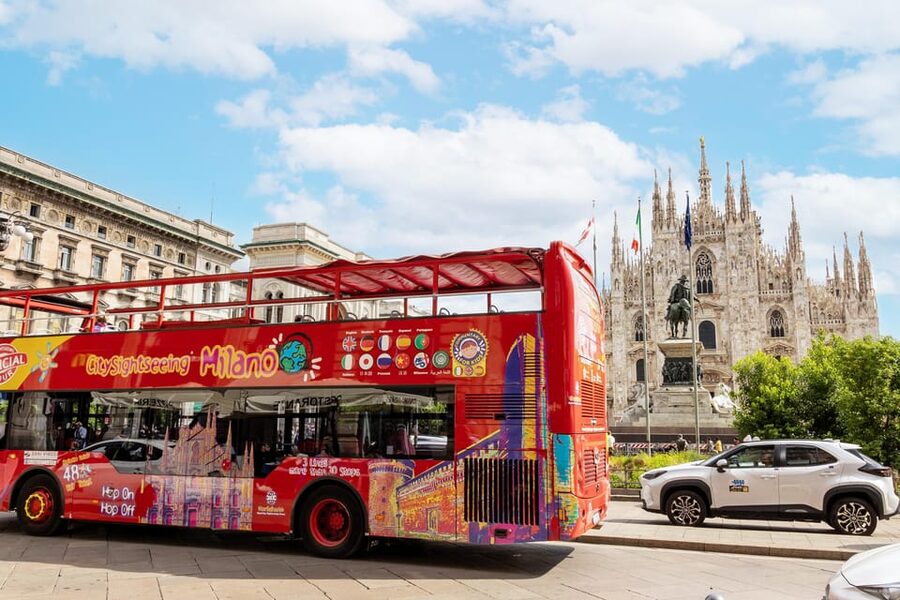
The ticket covers four separate but connected routes, not just one loop. That matters in Milan because the city center is compact around the Duomo, but attractions such as San Siro, City Life, and Navigli spread well beyond the main sightseeing core.
For $26, you are paying for transport with a view, not admission to the sights. You still need separate tickets for the Duomo, La Scala, the Last Supper, museums, and San Siro. If you only ride once or twice, walking and public transport may cost less. If you use the bus as both a sightseeing ride and a way to reach several districts, the price makes more sense.
You can choose a one, two, or three-day duration. I would pick one day if you want a quick city orientation or have a tight schedule. Two days gives you time to stop at major sights without racing back to the bus. Three days works best if you want to combine sightseeing with relaxed neighborhood visits.
The ticket also includes Wi-Fi, a city map, child-focused commentary, and a free walking tour through the mobile app in five languages. Those extras are useful, but the real value is the route network. The more deliberately you plan your stops, the less likely you are to spend your day sitting through repeated sections of road.
More Hop-On Hop-Off Audio Tours in Milan
- Rome: City Sightseeing Hop-on Hop-off Bus with Audioguide
★ 4.0 · 16,045 reviews - Rome: Hop-on Hop-off Sightseeing Bus Tour with Audioguide
★ 4.1 · 4,801 reviews - Los Angeles: Hop-On Hop-Off Bus Tour with Audio Guide
★ 3.7 · 2,030 reviews
Starting at Foro Bonaparte and finding the first bus
For Lines A, C, and D, the first stop is in Foro Bonaparte. For Line B, start at Piazza Duomo. These locations sound simple, but Foro Bonaparte is large, and finding the exact boarding point can be frustrating if you rely only on a general map pin.
I would allow extra time for the first boarding. Look for the tour information point and confirm the corner with staff rather than wandering around the entire square. The Duomo stop is more obvious, but it can be crowded and hectic.
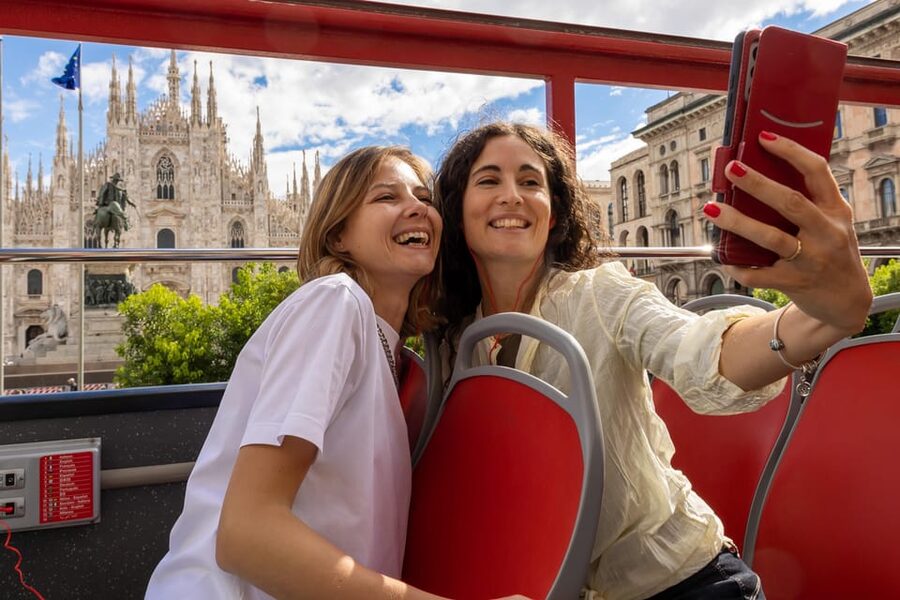
The buses are open-top and easy to spot. On sunny days, the upper deck gives you a broad view of Milan’s façades, monuments, and street life. On hot days, though, the lower deck and air conditioning may be more comfortable. Carry water and keep your audio equipment secure when the bus is moving.
Line A: Milan’s old center and grandest sights
Line A is a strong first ride because it covers the essential central landmarks. From Castello Sforzesco, you can see one of Milan’s great historic anchors. The route then moves through Cadorna and Corso Magenta, bringing you close to Santa Maria delle Grazie and the Last Supper site.
A bus ticket does not include admission to the Last Supper. You need a separate reservation and timed entry for that artwork, so treat the Cenacolo stop as a useful drop-off point, not as part of the bus ticket itself.
The Duomo stop is the natural center of the network. You can leave the bus for the cathedral, Galleria Vittorio Emanuele II, and nearby streets. The square is busy, and boarding can take patience, but it is also the easiest place to switch lines.
Monte Napoleone introduces Milan’s luxury shopping district. You do not need to shop to enjoy the area, since the elegant streets and storefronts offer a different view of the city from the medieval buildings near Castello. Manin and Moscova continue toward central neighborhoods with cafés, offices, and a more everyday feel.
Line A is good for first-time orientation, but it overlaps with other routes at Duomo, Monte Napoleone, and Castello. Do not assume that every loop gives you a wholly new part of Milan.
Line B: Stazione Centrale, Porta Venezia, and modern Milan
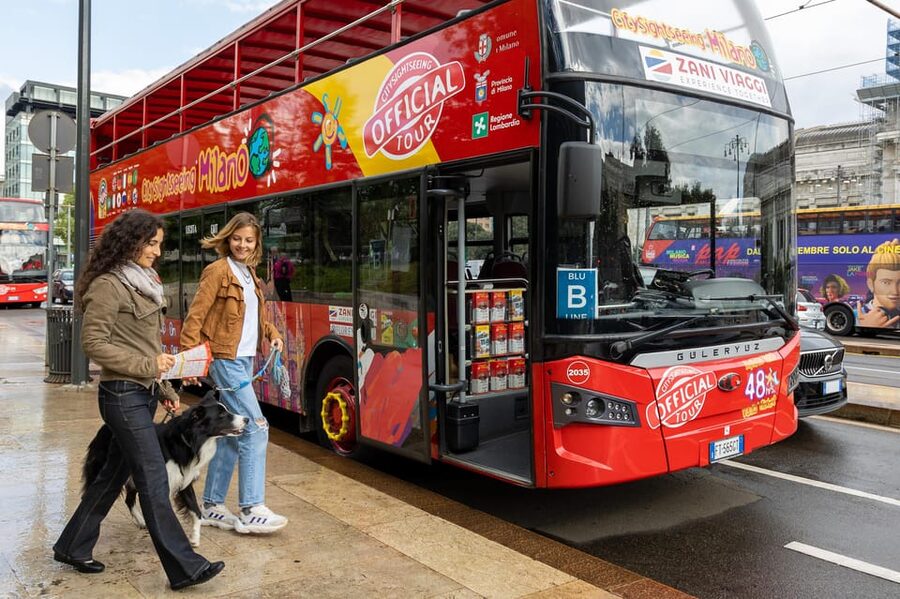
Line B begins at Piazza Duomo and heads north. Its most useful stop is Stazione Centrale, Milan’s huge railway station and a practical transport hub. The station itself is worth seeing for its monumental architecture, even if you are not catching a train.
Palazzo Lombardia gives you a look at modern Milan and its office district. The route continues through Buenos Aires, a long shopping avenue, and Porta Venezia, an attractive neighborhood with a different rhythm from the tourist center.
San Babila brings you back toward the Duomo and the central shopping streets. This loop is particularly helpful if your hotel is near the station or Porta Venezia, since you may be able to use the bus for part of your transfer instead of returning to the Duomo.
Line B is less about famous monuments at every stop and more about understanding how Milan changes as you move away from the cathedral. The downside is that the central routes can feel repetitive, especially if you ride several lines back to back.
More Bus Audio Tours in Milan
- Trieste Bus Tour with Audio Guide
★ 4.4 · 2,170 reviews - Zurich: City Bus Tour with Audio Guide and Lake Cruise
★ 4.3 · 1,195 reviews - Paris: Tootbus Panoramic by Night Bus Tour with Audioguide
★ 4.3 · 1,126 reviews - City Sightseeing Hop-On Hop-Off Bus Tour with Audio Guide
★ 3.0 · 1,083 reviews
Line C: Triennale, City Life, and San Siro
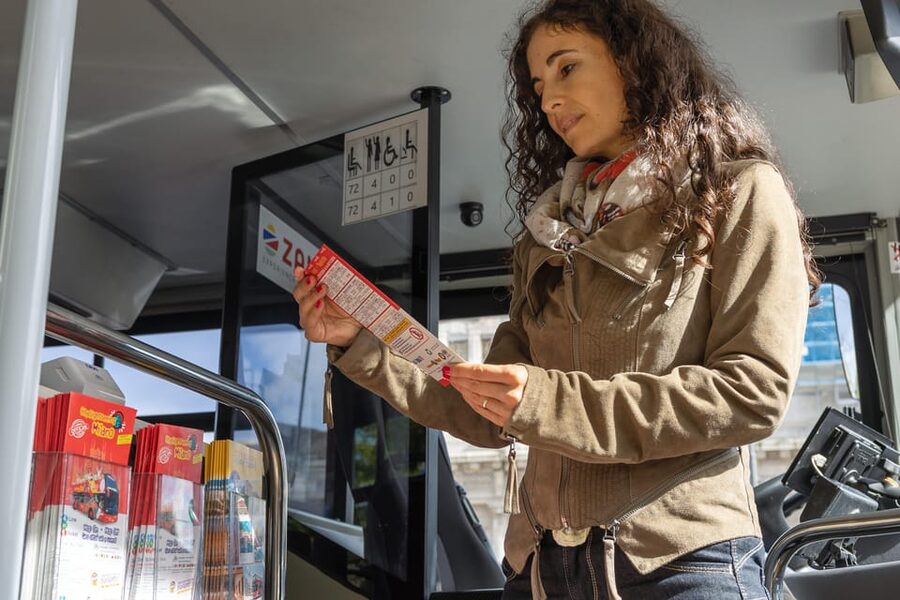
Line C is the longest and most varied route. It begins at Castello and passes the Triennale, Milan’s design and arts center, before reaching Arco della Pace and Parco Sempione.
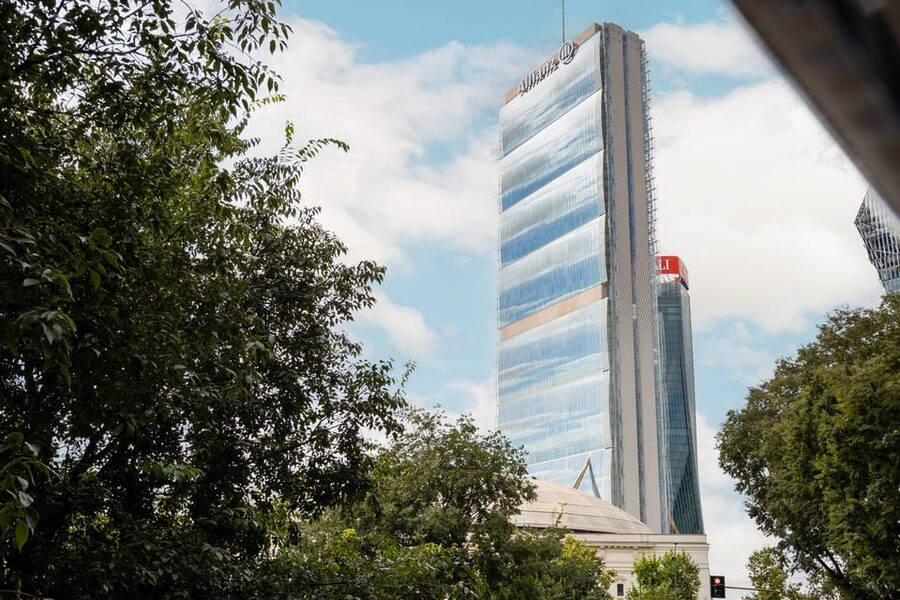
City Life offers a sharp contrast to the historic center, with contemporary architecture and a modern redevelopment district. Casa Milan is the stop for football fans, while the Mico Congress Centre serves a more practical business district.
The route continues to Lido, Ippodromo, and Stadio San Siro. This is one of the most distinctive reasons to buy the four-line ticket. San Siro is far enough from the center that you may not visit it on foot, yet the bus lets you see the stadium as part of a broader city ride.
Plan this section carefully. If you get off at San Siro, the next bus may not arrive quickly. You may have to wait around 90 minutes, depending on the schedule, so check the timing before leaving the bus. If you only want a photograph, staying aboard may be more practical.
Lotto appears at two stops, Montebianco and Monterosa, followed by Buonarroti, Pagano, and Conciliazione. These stops are useful for seeing western Milan, but they are not all major sightseeing destinations. Line C rewards anyone who wants to see beyond the postcard center, but it is not the most efficient choice if your only goal is the Duomo and La Scala.
Line D: Navigli and Brera in one ride
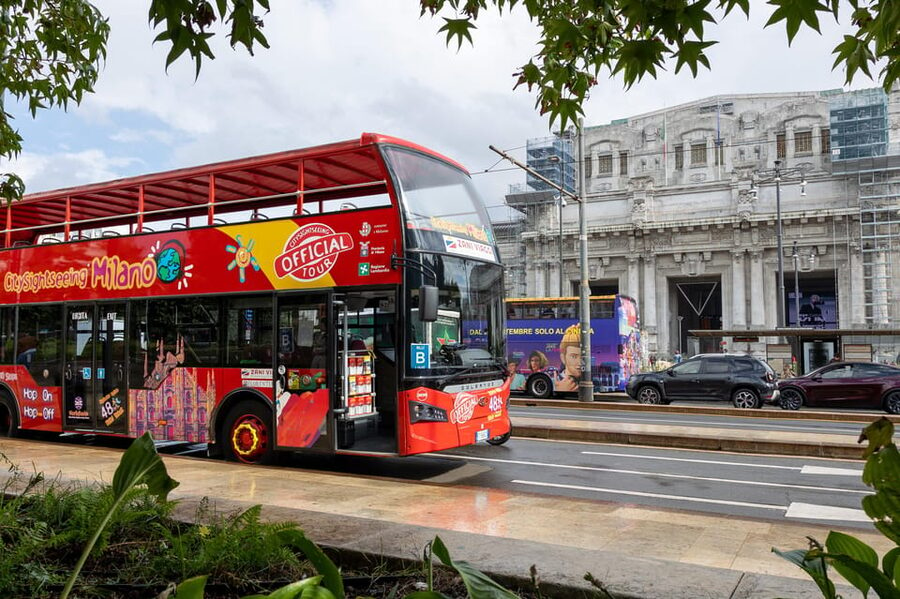
Line D is the route I would choose for two of Milan’s most enjoyable areas: Navigli and Brera. It starts near Castello, follows Cadorna and the Cenacolo area, then heads to the canals at Navigli.
Navigli is especially appealing in the late afternoon or evening, when the canal-side district becomes a place for a stroll and a meal. The bus lets you reach it without making the journey from the Duomo on foot. It also gives you a useful look at a part of Milan that can feel quite separate from the historic center.
Piazza XXIV Maggio continues the southern section of the route. After returning toward the Duomo and Monte Napoleone, the bus reaches Brera, one of the city’s most attractive central neighborhoods.
Brera is a good place to leave the bus and walk. It has galleries, restaurants, narrow streets, and the Pinacoteca di Brera, which requires its own admission. Line D works well for visitors who want a mix of major sights, canals, shopping, and neighborhood atmosphere.
The audio guide, food stories, and practical comfort
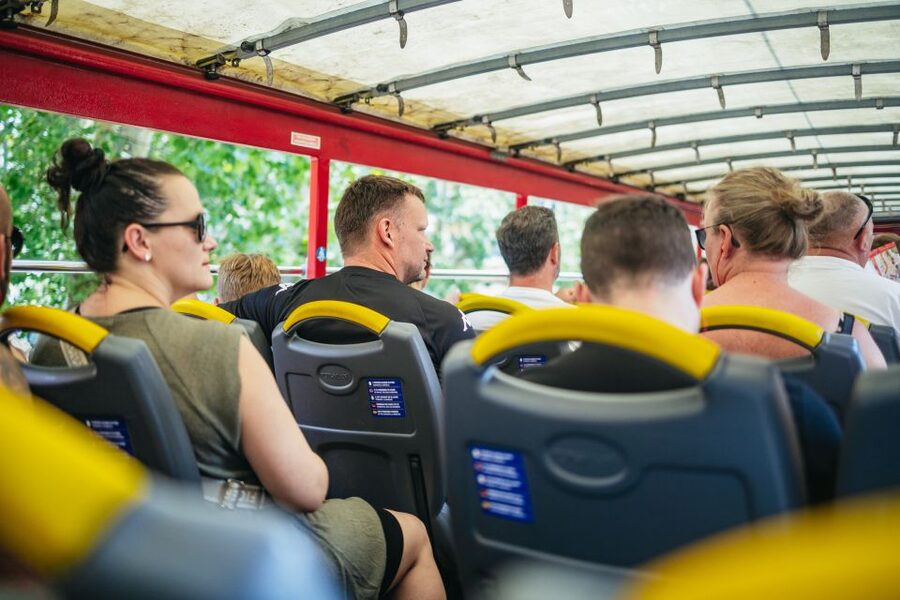
The recorded commentary is available in English, Italian, Spanish, French, German, Russian, Portuguese, Japanese, Chinese, and Arabic. The child version gives families another way to keep younger passengers interested.
The commentary covers major buildings such as La Scala and Castello Sforzesco, but the food segments add a more local touch. You can hear about cotoletta alla Milanese, the city’s breaded veal specialty, and panettone, the sweet bread closely linked with Milan.
Audio equipment is not perfect on every seat. A few passengers have found that a socket or speaker did not work, while others have had no trouble. If you cannot hear anything, change seats or ask staff for replacement headphones. This is worth doing early, since a silent seat can make a long loop feel much less useful.
Wi-Fi is included, and staff are present at the main stops. The buses are generally clean, and some rides may provide water. Still, traffic can slow every route. Milan has busy intersections, and a timetable that looks generous on paper can become less predictable during the day.
How to plan one, two, or three days
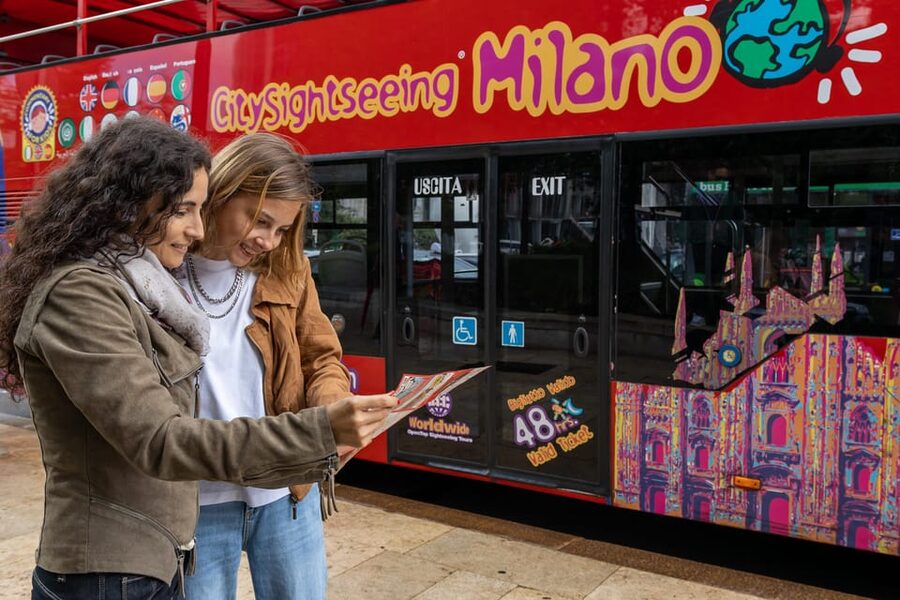
With one day, start with a full overview ride on Line A or D. Get off at the Duomo, then choose one additional area such as Castello, Brera, or Navigli. If San Siro is a priority, use Line C and accept that you will have less time in the center.
With two days, use the first day for the historic core. Visit the Duomo, La Scala, Castello, and the Cenacolo area. Use the second day for Line C, City Life, San Siro, and Line D through Navigli and Brera.
With three days, you can ride more slowly. Use one day for central Milan, one for the western route and San Siro, and one for Navigli, Brera, Porta Venezia, and Stazione Centrale. This is also the best length if you want to hop off often rather than spend most of the day on board.
A 72-hour weekend ticket bought for Saturday and Sunday between June and September includes the Milan Night Tour. That can add value, but check the exact operating details when booking because seasonal schedules can change.
When the bus works best, and when it does not
I would recommend this experience if you have one full day, want an easy overview, are traveling with children, or do not want to spend the whole day walking. It is also useful if you want to visit San Siro, City Life, and Navigli without piecing together several journeys.
The bus is less useful if you are staying near the Duomo and plan to visit only central attractions. Milan’s main historic sights are close enough to connect on foot, and traffic can make the bus slower than expected.
It also requires realistic expectations. Four lines do not mean four completely separate city tours. They overlap at several central stops, especially Castello, Duomo, Monte Napoleone, and Cadorna. Use the route map before boarding so you do not repeat the same streets by accident.
Seasonal disruptions matter too. The supplied information notes that Green Line Stop 2 may be closed for the full Winter Olympic period, and Castello may be suspended on Saturday, February 21. Check current stop conditions before setting out.
Should you book the Milan sightseeing bus?
Book it if you want a broad first look at Milan, need transport between scattered districts, or have only one or two days. The strongest reasons are the four connected lines, the easy hop-on hop-off format, the San Siro and Navigli coverage, and the useful audio commentary.
Skip it if your plans focus only on the Duomo, La Scala, Brera, and Castello, all of which can be linked on foot. If you do book, use the first ride to get your bearings, then choose stops with purpose. The ticket earns its keep when you treat it as both a city tour and a flexible way to reach neighborhoods beyond the center.
FAQ
How much does the Milan hop-on hop-off bus cost?
The listed price is $26 per person. Prices and available durations can vary, so check the current booking details before paying.
How long can I use the ticket?
You can choose a ticket lasting one, two, or three days. The available starting times depend on the selected date.
How many bus lines are included?
All four routes are included: Lines A, B, C, and D. They connect at several central stops.
Where do I catch the bus?
Lines A, C, and D begin at Foro Bonaparte. Line B begins at Piazza Duomo.
Is the Duomo entrance included?
No. The bus ticket includes transportation and commentary, but attraction admission is not included.
Is the Last Supper included?
No. The Cenacolo stop takes you near the Last Supper site, but entry requires a separate ticket.
Which languages are available for the audio guide?
Audio commentary is available in Spanish, Chinese, English, French, German, Italian, Russian, Portuguese, Japanese, and Arabic.
Is there commentary for children?
Yes. A special audio commentary for children is included.
Does the bus have Wi-Fi?
Yes. Wi-Fi is included onboard, along with a city map and access to a free walking tour in the mobile app in five languages.
Can I cancel the booking?
You can cancel up to 24 hours in advance for a full refund. A reserve-now, pay-later option is also available.
More City Audio Tours in Milan
- Riga: Canal Boat Sightseeing Tour With Audio guide
★ 4.5 · 1,827 reviews - Florence: Eco-Friendly Golf Cart City Tour with Audio Guide
★ 4.6 · 1,094 reviews - Toulouse: City Sightseeing Tour by Bus with Audio Guide
★ 4.2 · 956 reviews - Paris: Openair Double Decker Bus Audio-Guided City Tour
★ 3.5 · 938 reviews
Latest audio tours in Milan
- Self Guided Tours In Milan With 100 Captivating Audio Stories★ 5.0 · 2 reviews
- Mysteries of Milan: Uncover the city’s lesser-known tales on this audio tour★ 4.5 · 2 reviews
- Milan Walking Tour with Audioguide on Your Smartphone★ 5.0 · 6 reviews
- Milan: Museum of the 900 Fast-Track Entry Ticket & Audio Guide★ 4.0 · 12 reviews
- Milan: Sforza Castle Entry Ticket & Audio Guide★ 3.5 · 13 reviews
- Milano Walking Tour with Audio and Written Guide by a Local★ 4.5 · 13 reviews
- Best of Milan audio tour: From the gorgeous Duomo to Castello Sforzesco★ 5.0 · 2 reviews
- Audio Guide for the Duomo – Milan Cathedral (no ticket)★ 4.0 · 5 reviews
Hop-On Hop-Off Audio Tours, compared.
City Sightseeing Hop-on Hop-off Bus with Audioguide
Read our review →

City Sightseeing Hop-On Hop-Off Bus Tour with Audio Guide
Read our review →
Hop-On-Hop-Off with Optional Audio Tour or Cruise
Read our review →
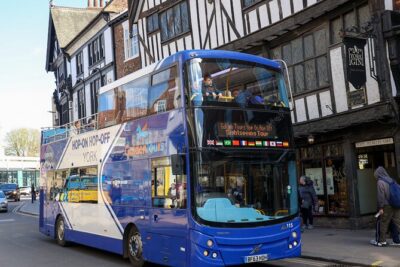
Golden Tours York Hop-on Hop-off Open Top Bus Tour with Audio Guide
Read our review →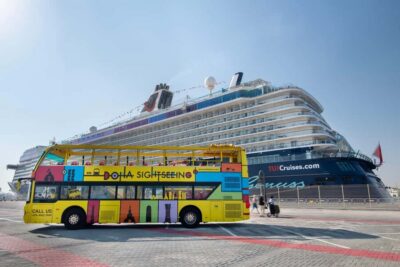
Doha: 24-Hour Hop-On Hop-Off Bus Ticket with Audio Guide
Read our review →
Browse the lists this tour appears in