Reviewed · VERONA
Verona: Juliet’s House Fast-Track Entry Ticket & Audio Guide
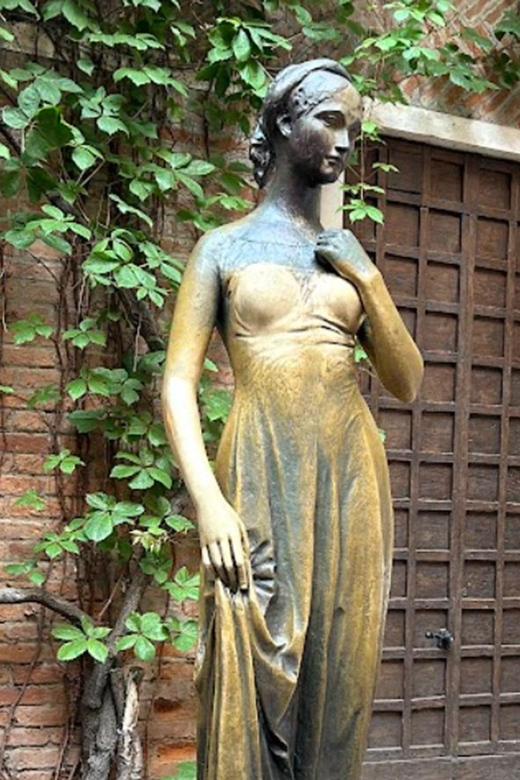
Juliet’s House is less about proving Shakespeare’s story and more about stepping into Verona’s most famous romantic stage set. You’ll enter a medieval home linked to the Cappelletti family, look out from the balcony, and pose beside the bronze Juliet in the courtyard. The balcony is the headline, but the old rooms, frescoes, costumes, and displays give the visit more substance than a quick photo stop.
I like the fast-track entry, especially in summer, when the regular queue can stretch into the heat. I also like the audio guide because you can listen at your own speed instead of following a group. The catch is that you must first exchange your voucher at the Verona Luggage Room on Via Stella 16, and the small pickup office can be hard to spot.
Key points to know before you go
- Pick up the official ticket first: Bring your voucher to the Verona Luggage Room at Via Stella 16. The voucher alone does not get you inside.
- Use your own phone and headphones: Scan the QR code and download the audio guide before arrival, since connection problems can spoil the start.
- Go early or book the 10:30 slot: The house is small, and the courtyard and balcony area become crowded later in the day.
- The balcony is only part of the visit: You’ll also see medieval rooms, art, frescoes, costumes, and displays tied to Shakespeare’s Verona.
- Allow up to two hours, but expect less inside: A careful visit can fit comfortably into the time slot, though some visitors finish in about an hour.
- Best for independent sightseers: This suits you if you want a flexible visit, not a live guide or a formal group tour.
Why Juliet’s House still works as a Verona stop
Verona’s Juliet is a mixture of literature, local legend, and carefully presented heritage. Shakespeare never visited Verona, and the balcony is not proof that Juliet lived there. Still, the house is linked with the Cappelletti family, whose name is connected with the feuding families behind the famous tragedy.
That blend of fact and romance is the point. You are not entering a preserved Shakespearean home. You are visiting a medieval residence later tied to the story of Romeo and Juliet, then presented in a way that lets you enjoy both the building and the legend.
I find the attraction most rewarding when you treat it as a short cultural stop rather than a grand palace. The house is small. The famous balcony takes only a few moments to see. The charm comes from the setting, the old structure, the theatrical displays, and the shared ritual of taking a photo with Juliet.
The attraction has earned a strong overall rating of 4.2 from 1,121 bookings, which fits the experience well. Most of the value comes from saving time at the entrance and seeing the house without waiting in a long line. The attraction itself is not large enough to fill a whole afternoon.
More Audio Tours in Italy
- Rome: Pantheon Fast-Track Ticket and Official Audioguide
★ 4.5 · 27,353 reviews - Rome: Colosseum & Forum with Audio Guide App -Optional Arena
★ 4.2 · 24,770 reviews - Florence: Timed Entry to Michelangelo’s David + Audio App
★ 4.6 · 19,496 reviews
Collecting your ticket on Via Stella
The first practical task is not at Juliet’s House. You must exchange your voucher for an official entry ticket at the Verona Luggage Room, Via Stella 16. This is an important detail, and it is easy to miss when planning a quick visit.
The office can be difficult to find because the sign is small. Give yourself extra time, especially if you have booked a timed entry. A few people have found the pickup process unclear, while others collected the ticket without trouble. The difference usually comes down to knowing exactly where to go before you arrive.
The official ticket is strictly required. Do not assume that showing the booking voucher at the house will be enough. Once you have the ticket, follow the instructions for the fast-track entrance rather than joining the long queue for general access or courtyard photos.
The ticket pickup arrangement is the weakest part of the experience. A digital ticket sent directly to your phone would be simpler. Still, once the ticket is in hand, the main benefit becomes clear: you avoid spending a large part of your Verona visit waiting outside.
Entering the courtyard and meeting Juliet
The courtyard is the emotional center of the attraction. It is a tight medieval space framed by old walls, balconies, and the famous statue of Juliet. The gleaming bronze figure draws a crowd, with many people stopping for the familiar photo.
The courtyard can be confusing because not everyone is there for the same reason. Some people wait to enter the house, while others come only to see or touch the statue. At busy times, the photo area lacks a clear line, and visitors can gather around it in a rather loose knot.
If you want a calm photo, arrive early. Morning visits, especially around 10:30, have been much easier for some visitors than later hours. At quieter times, you can look closely at the courtyard instead of treating it as a quick stop between elbows and phone cameras.
The famous tradition of touching Juliet’s right breast is part of the attraction’s folklore. You can take a photo with the statue, but the area may be crowded and poorly organized. Be patient, keep your belongings close, and do not expect a peaceful courtyard at the busiest time of day.
The fast-track ticket is especially useful here because it lets you focus on entering the house rather than standing in the longer outside queue. It does not guarantee an empty courtyard. Numbers are controlled inside at times, which helps, but crowd levels still vary.
Walking onto Juliet’s balcony
The balcony is the moment most people have come to see. You step out above the courtyard, look down at the people below, and get the familiar Romeo and Juliet picture. It is a small platform, not a broad terrace, so the experience depends heavily on crowd control.
You may need to wait your turn for a photograph. Some people take quick pictures, while others stage a full proposal or photo session. That can make the balcony feel cramped, especially when several visitors are trying to use it at once.
A little courtesy matters. Have your camera ready before stepping out, take your picture, and make room for the next person. Staff have asked people over the loudspeaker to be considerate, but those reminders do not always keep the queue moving.
I would not book this experience only for a guaranteed private balcony moment. You cannot count on having the platform to yourself. But when the crowd is modest, the balcony delivers exactly the playful, sentimental memory most people want. One visitor even used the setting for a proposal, which tells you how strongly the place works on the imagination.
Another self-paced route in Italy:
- Rome: City Sightseeing Hop-on Hop-off Bus with Audioguide
★ 4.0 · 16,045 reviews - Pompeii: Entry Ticket with Audio Guide
★ 4.1 · 13,491 reviews - Venice: La Fenice Opera House Entry Ticket with Audio Guide
★ 4.6 · 11,742 reviews - Rome: Colosseum, Forum, Palatine Hill Entry & Audioguide App
★ 4.4 · 10,957 reviews
Exploring the medieval rooms
The house itself deserves more attention than the balcony usually gets. Inside, you’ll see a medieval residence connected with the Cappelletti family and presented alongside the Romeo and Juliet story. The rooms contain art, frescoes, costumes, and other displays that help explain how the building became linked with Shakespeare’s tragedy.
The interior is not vast. You might finish the main visit in about an hour without feeling rushed, particularly if the house is quiet. The two-hour duration gives you breathing room for the courtyard, the audio commentary, photos, and a second look at the rooms.
Some sections may be closed for renovation, and the available rooms can change. At one point, visitors found more floors open than the app suggested, while another visit had several areas under renovation. Think of the tour as a compact house museum rather than a complete look at every floor.
The building’s small scale is both a benefit and a limitation. You can see the main displays without tiring yourself out, and the old interiors are easy to appreciate. On the other hand, anyone expecting a large historic residence may feel that there is not enough inside to justify a long visit.
The house becomes more interesting when you listen to the background rather than rushing toward the balcony. The displays connect the physical building with the family names and conflicts that later fed the Shakespearean tale. You get a clearer sense of where history ends and literary legend begins.
Using the audio guide on your phone
The self-guided audio tour is included in English, French, Italian, German, Spanish, and Mandarin Chinese. It covers the house and courtyard, and one booking description also includes audio commentary at key points around Verona, so check the current app instructions to see exactly what your package provides.
You need your own mobile device and headphones. No headset is supplied. The audio works through an app, and you should scan the QR code and download it before arriving, not while standing in the entry area.
This preparation matters. Some people have had trouble getting the audio to download, especially where Wi-Fi or mobile data was weak. One useful improvement would be sending the download link immediately after purchase, but you should take responsibility for preparing the guide before your time slot.
When it works, the audio is a good match for the house. You can pause, replay, or skip sections, and you do not need to keep pace with a live guide. That flexibility is valuable in a small, crowded building where you may need to wait for a clear view.
The audio does not replace looking closely at the displays. Use it as background, then put the phone away for the balcony and courtyard. Some information is also available on the displays, so the visit remains possible if you decide not to use the app. Still, if you want the fullest explanation, download it in advance and bring charged headphones.
Timing, crowds, and the two-hour window
The listed duration is two hours, with starting times based on availability. That is enough time for most people to collect the ticket, enter, listen to sections of the audio, see the house, and take photos.
The best crowd advice is simple: go early. The 10:30 time has worked well for a quieter visit, and morning entries can make the balcony and rooms much easier to enjoy. Later in the day, the queue can become enormous, especially during the summer heat.
Timed entry helps control the number of people inside. It does not remove all congestion. The balcony remains a popular photo point, and the courtyard can become disorganized. If you have flexibility, choose an early slot and avoid treating the visit as a late-afternoon filler.
The fast-track ticket has its greatest value on hot, crowded days. If you visit during a quiet period, the saving may be smaller, and the house itself may not keep you occupied for the full two hours. At $28 per person, the price is reasonable for a high-demand attraction when the regular line is long, but less compelling if you expect a large museum.
Is $28 good value?
I see the price as payment for time and convenience as much as admission. You get entry to the house, balcony, and courtyard, along with the multilingual audio guide. You do not get transportation, a live guide, or headphones.
For a first visit to Verona, the ticket makes sense if Juliet’s House is high on your list and you are visiting during a busy period. Waiting in a long line for a small attraction can quickly turn a pleasant stop into a poor use of your day. Fast-track access protects your schedule.
The value is weaker if you are not especially interested in Romeo and Juliet, or if you expect an extensive historic house. The building is compact, and some areas may be closed. You are paying for a short, memorable experience rather than hours of museum viewing.
I would also count the flexible audio format as part of the value. A live guide could provide more interaction, but the audio lets you move at your own pace and listen in one of six languages. For independent visitors, that is a useful middle ground.
Free cancellation up to 24 hours before the start and the option to reserve now and pay later reduce the risk of booking ahead. The key is to read the meeting instructions carefully and prepare the audio before leaving for the house.
Who should book Juliet’s House?
I would recommend this for couples, Shakespeare fans, first-time visitors to Verona, and anyone who wants the classic balcony photo without spending an hour in a queue. Families may also like the short length, though the tight courtyard and crowd around the statue can test patience.
It is less suitable if you want a quiet, scholarly museum or a fully guided tour. There is no live guide, and the audio depends on your own phone, headphones, and a successful download. If you prefer personal explanation and questions answered on the spot, this is not the right format.
Photography matters here, but the best pictures require cooperation. Go early, keep the balcony visit brief, and expect other people to appear in the courtyard below. The attraction feels most pleasant when you accept its public, theatrical nature.
Should you book this experience?
Book it if you want the classic Juliet’s House visit and expect crowds. The fast-track access is the main reason to pay for this ticket, while the audio guide adds context to a house that can otherwise take only a short time to see.
Skip it if you are looking for a large museum, a private balcony experience, or a live historical tour. If you do book, collect the official ticket early, arrive for a morning slot, download the app before arrival, and bring headphones. Done that way, Juliet’s House is a charming and efficient Verona stop, with just enough history behind the romance to make the photo feel worthwhile.
FAQ
Where do I collect the official ticket for Juliet’s House?
Exchange your voucher for an official entry ticket at the Verona Luggage Room, Via Stella 16. The voucher itself is not the admission ticket, so allow time to find the office before your entry slot.
Does the ticket include the balcony and courtyard?
Yes. The ticket includes fast-track entry to Juliet’s House, access to Juliet’s Balcony, and access to Juliet’s Courtyard.
Is there a live guide?
No. This is a self-guided audio visit. Commentary is available in English, French, Italian, German, Spanish, and Mandarin Chinese.
Do I need my own phone and headphones?
Yes. You need a mobile device to use the audio guide, and you should bring your own headphones. Scan the QR code and download the app before arrival.
How long does the visit last?
The listed duration is two hours. You may finish sooner, with some visits taking about an hour, depending on crowd levels, renovation closures, and how much time you spend with the audio guide and photos.
Can I cancel the booking?
Yes. You can cancel up to 24 hours in advance for a full refund. The booking also offers a reserve-now-and-pay-later option.
Latest audio tours in Italy
- Orgosolo Multilingual Audioguide★ 4.5 · 42 reviews
- Pantheon Skip the Line Entry Tickets with Digital Audio Guide★ 3.5 · 52 reviews
- St. Peter’s Basilica: Dome Climb with Lift & Audioguide★ 4.5 · 13 reviews
- Audio guide in Vatican Museums and Sistine Chapel★ 4.5 · 12 reviews
- The Roman Jewish Ghetto: A Self-Guided Audio Tour★ 4.0 · 8 reviews
- Experience: The Pantheon Audio Tour★ 4.5 · 4 reviews
- Trastevere: A Self-guided Audio Tour of Rome’s Medieval Village★ 4.5 · 3 reviews
- Navova square underground with audioguide★ 4.5 · 17 reviews
Italy Audio Tours, compared.
Pantheon Fast-Track Ticket and Official Audioguide
Read our review →
Colosseum & Forum with Audio Guide App -Optional Arena
Read our review →
Timed Entry to Michelangelo’s David + Audio App
Read our review →
City Sightseeing Hop-on Hop-off Bus with Audioguide
Read our review →

La Fenice Opera House Entry Ticket with Audio Guide
Read our review →
Colosseum, Forum, Palatine Hill Entry & Audioguide App
Read our review →