
Reviewed · ROME
Pompeii: Entry Ticket w/ Guide and Transfers or Audio Guide
Pompeii is not just a pile of old stones. It is a Roman city you can walk through, with streets, bakeries, villas, baths, shops, and a forum still laid out beneath Mount Vesuvius. I like the choice between a live guide and an audio guide, and I like that some options include transport from Rome, taking the strain out of a long day trip. The main catch is that the booking choices differ, so check exactly what your price includes before paying.
I also like the mix of guided structure and free time. You can hear the story of the eruption, then pause over a mosaic or wander into a quiet side street on your own. The site is large, uneven, and not suitable for wheelchair users or people with mobility impairments, so comfortable shoes and an honest look at your walking ability matter.
Key points at a glance
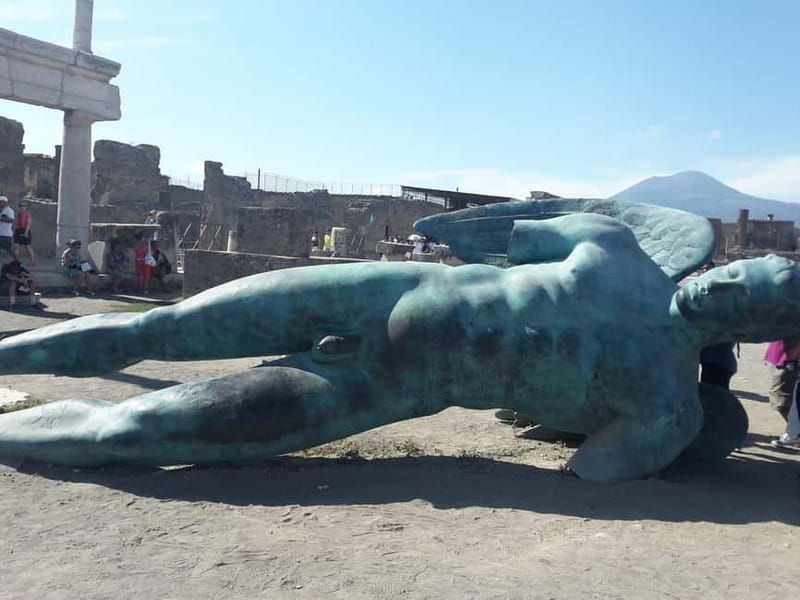
- Pompeii’s main landmarks include the Forum, amphitheater, villas, baths, bakeries, and shops.
- The plaster casts offer the most moving glimpse of the people caught in the eruption of 79 AD.
- Guided options are available in English, French, Spanish, and German, with an English audio guide as another choice.
- Rome transport is optional, with selected packages using a bus or train through the Italian countryside.
- The listed starting price is $5.55, but the final cost depends on the option you choose.
- The site requires walking, and the tour does not wait for late arrivals.
Why Pompeii feels different from an ordinary ruin
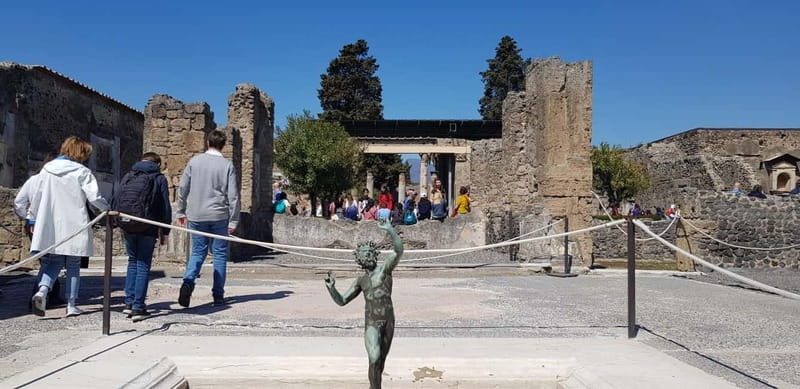
Pompeii gives you the rare chance to walk through an entire Roman town rather than view a few isolated monuments. The eruption of Mount Vesuvius in 79 AD covered the city and preserved details of ordinary life, from public buildings to household decoration.
That everyday quality is the real draw. The Forum shows where public and political life centered, while nearby streets lead toward homes, shops, bakeries, and baths. You are not simply looking at a grand temple. You are tracing the routines of people who lived, worked, shopped, relaxed, and argued in the same streets you are walking today.
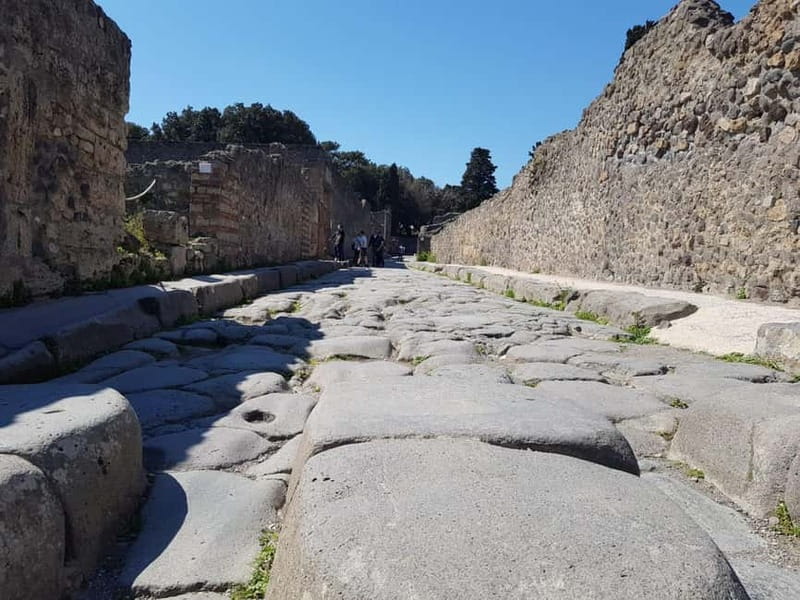
I find the scale helpful. Once you see the grid of roads and public spaces, Pompeii becomes easier to picture as a living town. The broad stones underfoot, the walls of private homes, and the remains of commercial spaces give the place a human size.
Mount Vesuvius adds emotional weight, but the experience is not only about disaster. A good guide can explain how Roman society worked, point out small details in the buildings, and connect the eruption to the evidence you are seeing. The guided option is especially useful if you want the ruins to make sense rather than simply photograph well.
More Audio Tours in Rome
- Rome: Colosseum & Forum with Audio Guide App -Optional Arena
★ 4.2 · 24,770 reviews - Rome: City Sightseeing Hop-on Hop-off Bus with Audioguide
★ 4.0 · 16,045 reviews - Rome: St. Peter’s Basilica & Dome Entry Ticket & Audio Tour
★ 4.2 · 7,537 reviews
Choosing the right version of the experience
There are several ways to book this activity, and they are not interchangeable.
The guided Pompeii option gives you a live host or guide in English, French, Spanish, or German. This is the better choice if you want help understanding the Forum, amphitheater, villas, and plaster casts as you go. Giuseppe is one guide praised for being friendly, helpful, and engaging, although the assigned guide depends on the date and option you book.
The English audio guide gives you more control. You can move at your own speed, linger in a house that catches your attention, or keep going if a particular stop does not interest you. The tradeoff is simple: you must manage your own route and timing, and an audio guide cannot answer a question or adjust the explanation to your interests.
Some packages include round-trip transport from Rome, by bus or train. This makes the trip easier if you are staying in Rome and do not want to arrange the journey yourself. Other options require you to make your own way to Pompeii, so read the meeting point details carefully.
The advertised price begins at $5.55 per person. That is a very low starting figure, so treat it as an option-dependent price rather than the likely cost of every package. Transport and a live guide may change the total. Before booking, confirm three things: your departure point, whether transportation is included, and whether you selected a guide or audio guide.
Getting from Rome to the ancient city
If you choose the Rome departure option, the trip itself takes a meaningful part of the day. The experience may last from two to twelve hours, depending on the package and starting time. The transport option is intended to make the long outing simpler, but it does not turn Pompeii into a quick stop.
You may travel by bus or train through the Italian countryside. That can be pleasant, but remember that the return trip is part of the day. Pompeii is not a practical add-on for a tightly packed Rome schedule.
The meeting point varies by option. There is no hotel pickup or drop-off, and the activity ends back at the meeting point. Give yourself extra time to find it. The tour does not wait for latecomers, which is especially important when your transport leaves Rome at a fixed time.
Large bags and oversize luggage are not allowed. Food and drinks are also not permitted in the vehicle, and alcohol and drugs are prohibited. Pack lightly and keep the day simple.
If you are already in the Pompeii area, a direct-entry option may suit you better. It avoids paying for transport you do not need and may give you more flexibility. If you are based in Rome, the transport package can be worth the extra cost because it reduces the number of connections and decisions.
Walking into the Forum and public heart of Pompeii
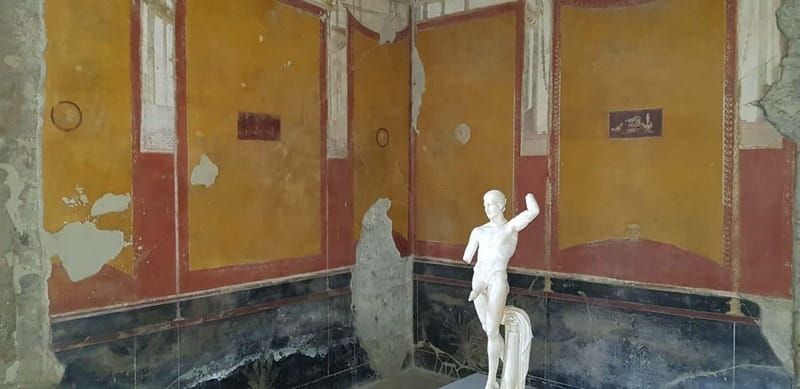
The Forum is one of the essential stops. This was the center of civic and social life, and it helps you understand the city’s organization before you move into the smaller streets.
I recommend taking a moment here before rushing toward the villas. Look at how the open public area relates to the surrounding buildings. With a guide, this is where the wider story of Roman politics, religion, trade, and daily business begins to take shape.
The Forum can also be crowded and visually busy, especially when several groups gather around the same important remains. A live guide helps by giving you a clear explanation rather than leaving you to guess which fragments matter most.
From here, the route can lead into the residential and commercial parts of the city. You may see bakeries, shops, baths, and homes. These less grand sites are often the most revealing because they show how Pompeii functioned between public ceremonies and famous monuments.
Another self-paced route in Rome:
- Colosseum, Roman Forum & Palatine Hill with Audioguide App
★ 4.4 · 6,291 reviews - Vatican & Sistine Chapel Ticket with Optional Audio Guide
★ 4.1 · 5,405 reviews - Rome: Castel Sant’Angelo Entry Ticket & Digital Audioguide
★ 4.7 · 5,347 reviews - Rome: Castel Sant’Angelo Entry Ticket & Audio App
★ 4.3 · 4,952 reviews
Villas, frescoes, and the private side of Roman life
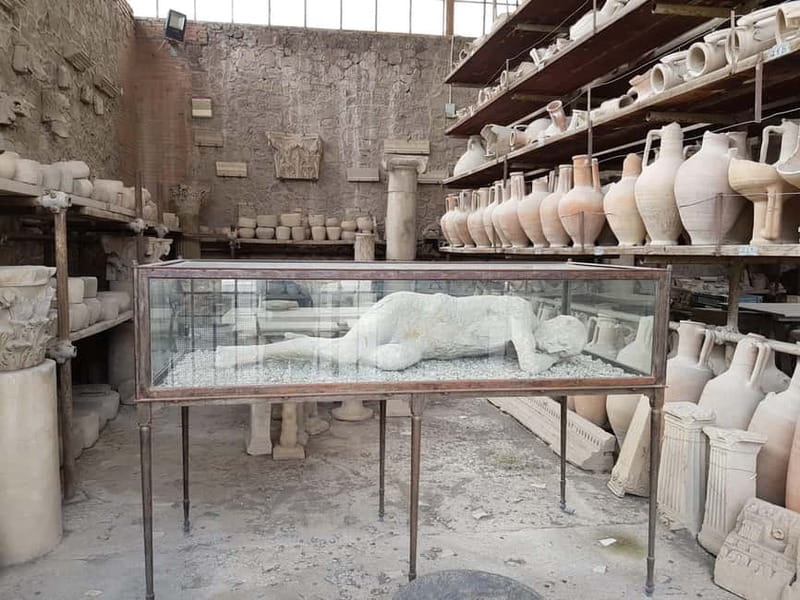
The homes of Pompeii’s wealthier residents reveal a different side of the city. Intricate frescoes, mosaics, courtyards, and decorative details show how much effort went into private surroundings.
The House of the Vettii is one of the named highlights. It helps you see the contrast between the public streets and the carefully decorated world inside a prosperous Roman home. A guide can point out how the layout and artwork reflect status and taste.
The Villa of the Mysteries is another major stop. Its importance comes from the artwork and the questions it raises about Roman belief and private life. You may find that this visit rewards patience more than speed. Look closely at the painted walls instead of treating the villa as a quick photo stop.
Conditions inside buildings can vary. Some rooms may be closed, and access can change if officials restrict areas for preservation or safety. The tour runs in rain or shine unless the archaeological park is officially closed, so carry sensible clothing and expect the day to continue in poor weather.
The amphitheater and Pompeii’s public spectacle
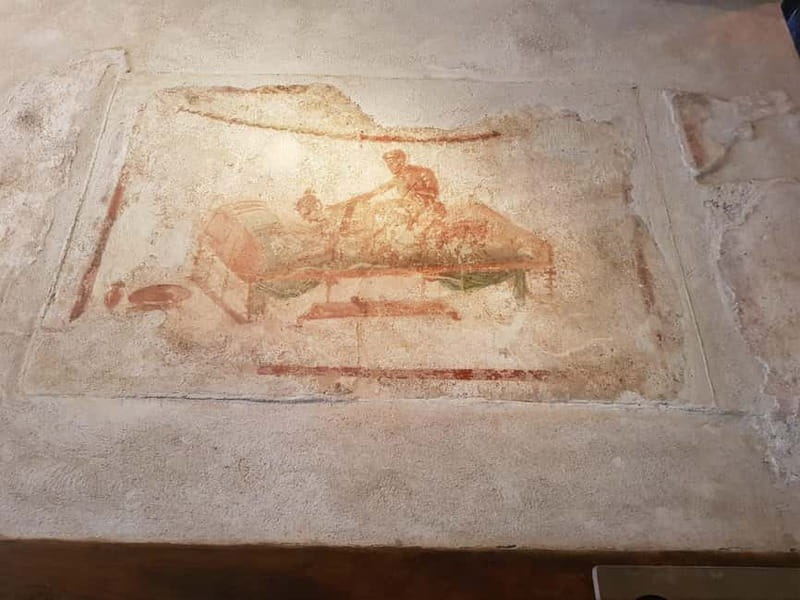
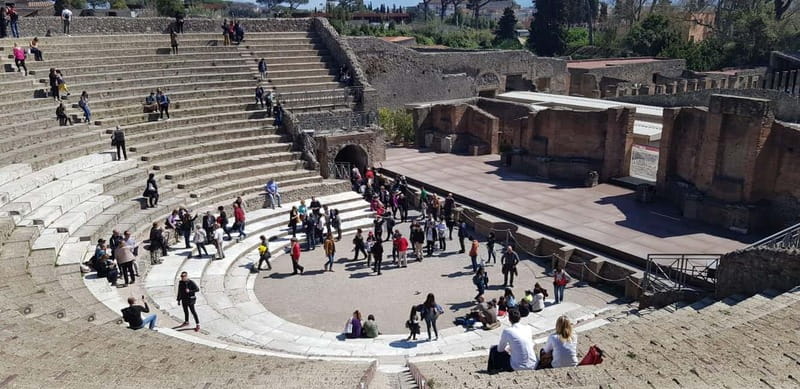
The amphitheater gives you a strong sense of Pompeii as a place of entertainment. This is where gladiatorial contests took place, and its scale helps explain how public spectacles fit into Roman society.
I like this stop because it is easy to picture the crowd and the energy of the venue, even when the structure is quiet. The amphitheater is also a useful reminder that Pompeii was not only a residential town. It had large public spaces designed to gather people and display power.
A guide can add context about the role of games and public events. With the audio guide, you can spend as long as you wish examining the seating and structure, but you will need to keep track of your route and the meeting time.
The plaster casts and the human cost of 79 AD
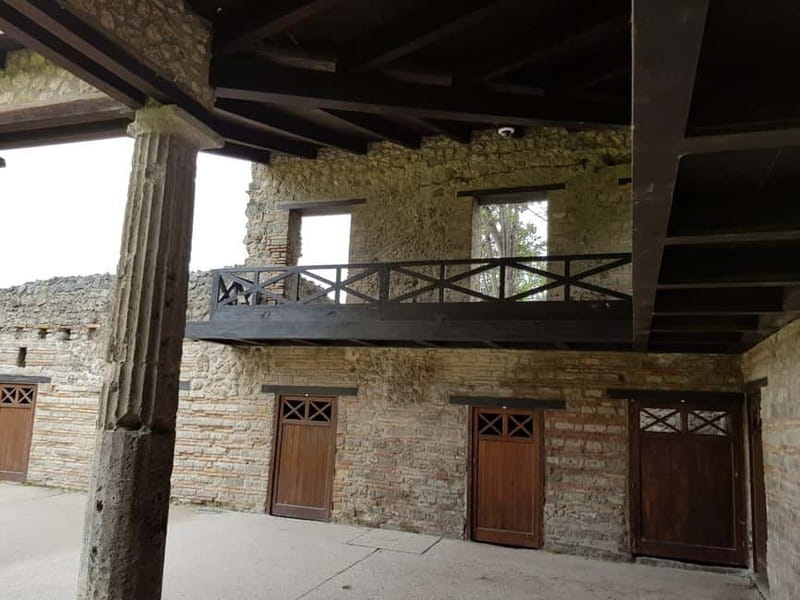
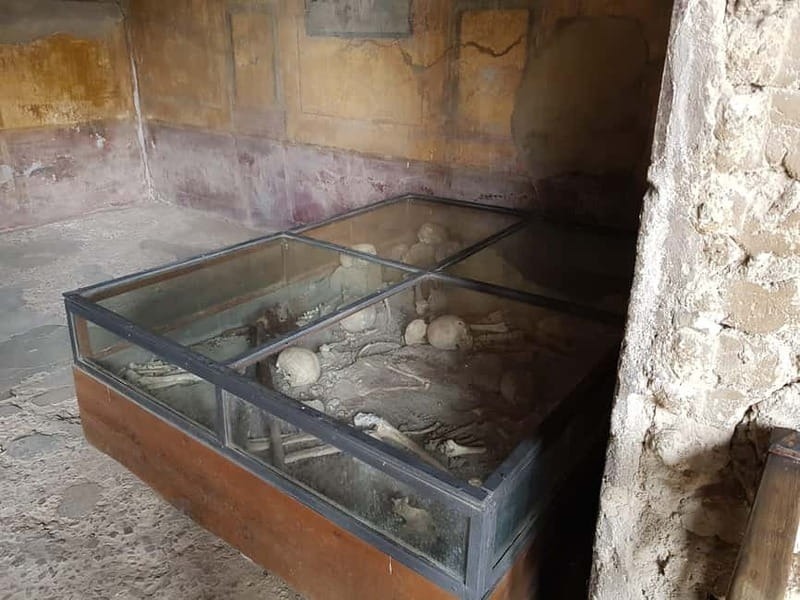
The plaster casts are the most poignant part of the visit. They preserve the forms of people who died during the eruption, turning an ancient disaster into something personal and difficult to forget.
This stop deserves quiet attention. The casts are not simply archaeological objects. They show the suddenness and human cost of the event, and they can affect children and sensitive visitors more strongly than the buildings do.
The wider Pompeii experience works best when you hold both sides of the story in mind. You see a functioning city with beautiful homes and busy public spaces, then you confront the people who never escaped. The contrast is what gives the site its lasting force.
Families should decide how much detail children can handle. The activity has been described as suitable for families, and a good guide can keep younger visitors interested with stories about daily life. Still, the casts may call for a brief explanation before you arrive.
What a guide adds, and what an audio tour changes
A live guide is the easiest way to get a coherent introduction. Pompeii can feel confusing because so many walls, streets, and rooms look similar at first. A guide gives you a route and explains why each stop matters.
The strongest guide experience depends on communication and pacing. Giuseppe, mentioned by name in connection with a particularly well-received outing, was praised for being friendly and helpful. Show Me Italy is the provider, and the guide language options include English, French, Spanish, and German.
The audio guide is better for independence. You can pause, replay information, and set your own pace. It is offered in English, so this option makes the most sense if you are comfortable following historical explanations in that language.
You may prefer the audio choice if you dislike fixed commentary or want time for photography. You may prefer a live guide if this is your first ancient site or if you want help separating major landmarks from minor remains.
Is the long day from Rome worth it?
For someone with only a few days in Rome, Pompeii demands a serious time commitment. The total duration can reach twelve hours, and the journey is not a minor transfer. You should not book this if you want a relaxed Rome day with no long outing.
I think the trip is worth considering if Pompeii is high on your list of priorities. The site offers something Rome itself cannot: a complete Roman town preserved in place, with homes and streets that let you follow ordinary life at ground level.
The transport package is valuable for convenience, not speed. It takes care of the main journey and gives you a set plan, which can be reassuring if you do not want to coordinate trains or buses yourself. The drawback is less flexibility and a stricter meeting schedule.
If you are already near Pompeii, choose direct entry if available. You can save time and avoid duplicating transport. Either way, check the precise duration and start time because the options range widely.
Practical advice before you go
Wear shoes with good support. Pompeii’s streets and surfaces are uneven, and you will be walking outdoors for much of the visit. The activity is not suitable for wheelchair users or people with mobility impairments.
Arrive early at the stated meeting point. The tour does not wait for latecomers, and the meeting location may differ depending on your chosen package. Keep your booking details easy to access.
Bring weather-appropriate clothing. The tour operates in rain or shine unless officials close the site for safety. Since the ruins cover a broad area, sun, rain, or heat can change how comfortable the day feels.
Do not bring large luggage or oversize bags. Food and drinks are not allowed in the vehicle, so plan around the transport rules rather than arriving with a large picnic or suitcase.
Free cancellation is available up to 24 hours before the activity for a full refund, and reserve-now, pay-later booking is offered. These policies help if your Rome plans are still shifting, but they do not remove the need to be at the meeting point on time.
Who should book this Pompeii experience?
I would recommend it to first-time Pompeii visitors who want the major sites explained without arranging every part of the day. It is also a good fit for families, solo visitors, and couples who value a clear plan and a safe return to the meeting point.
History lovers should choose the live guide if possible. The Forum, villas, amphitheater, baths, and plaster casts make more sense when someone connects them to Roman life and the eruption.
Independent visitors may prefer the audio guide or direct-entry option. You get more control, but you must handle your own navigation and timing.
I would hesitate to recommend it to anyone with limited mobility or to someone who dislikes long day trips. I would also avoid booking the lowest advertised price until you confirm what it covers. The value depends heavily on the selected package.
Should you book it?
Book this Pompeii experience if you want to see more than a few famous ruins and appreciate having entry, guidance, or transport organized for you. The combination of public monuments, private villas, working shops, and plaster casts creates a powerful visit, and the live guide can make the ancient city far easier to understand.
Choose the Rome transport option if convenience matters more than flexibility. Choose the audio guide or direct-arrival option if you are already nearby or prefer to explore independently. Check the meeting point, duration, transport, language, and final price before confirming.
For a visitor willing to spend most of a day on the outing, Pompeii is a memorable choice. It asks for time and walking, but it gives you an unusually clear look at how a Roman city worked before Vesuvius brought its life to a sudden stop.
FAQ
Where does the Pompeii activity take place?
The activity takes place at Pompeii Archaeological Park in Campania, Italy.
Is transportation from Rome included?
Round-trip transportation from Rome is included only with selected options. Other options require you to make your own way to Pompeii.
Is a guide included?
A guided tour is included if you select the guided option. You can also choose an English audio guide.
Which languages are available for the live guide?
Host or guide support is available in English, French, Spanish, and German.
How long does the activity last?
The available duration ranges from two to twelve hours, depending on the option and starting time you select.
What can I see at Pompeii?
The experience includes access to landmarks such as the Forum, amphitheater, House of the Vettii, Villa of the Mysteries, ancient baths, bakeries, shops, and plaster casts of victims.
Is the activity suitable for wheelchair users?
No. The activity is listed as unsuitable for wheelchair users and people with mobility impairments.
Can I cancel the booking?
You can cancel up to 24 hours in advance for a full refund. Reserve-now, pay-later booking is also available.
Latest audio tours in Rome
- Pantheon Skip the Line Entry Tickets with Digital Audio Guide★ 3.5 · 52 reviews
- St. Peter’s Basilica: Dome Climb with Lift & Audioguide★ 4.5 · 13 reviews
- Audio guide in Vatican Museums and Sistine Chapel★ 4.5 · 12 reviews
- Experience: The Pantheon Audio Tour★ 4.5 · 4 reviews
- Trastevere: A Self-guided Audio Tour of Rome’s Medieval Village★ 4.5 · 3 reviews
- The Roman Jewish Ghetto: A Self-Guided Audio Tour★ 4.0 · 8 reviews
- Navova square underground with audioguide★ 4.5 · 17 reviews
- The Colosseum’s Attic with 3rd, 4th & 5th Levels with Audio Guide★ 4.5 · 20 reviews
Rome Audio Tours, compared.
Colosseum & Forum with Audio Guide App -Optional Arena
Read our review →
City Sightseeing Hop-on Hop-off Bus with Audioguide
Read our review →
St. Peter’s Basilica & Dome Entry Ticket & Audio Tour
Read our review →
Colosseum, Roman Forum & Palatine Hill with Audioguide App
Read our review →
Vatican & Sistine Chapel Ticket with Optional Audio Guide
Read our review →
Castel Sant’Angelo Entry Ticket & Digital Audioguide
Read our review →

Colosseum, Forum, & Palatine Hill with Audio Guide
Read our review →Browse the lists this tour appears in