Reviewed · SELF-GUIDED
Seoul Self-Guided Audio Tour
Seoul’s story is told in sharp contrasts here: royal courtyards sit near glass towers, Buddhist temples share the city with shopping centers, and a restored stream runs where a highway once cut through downtown. For $9, this self-guided audio tour gives you commentary for 16 major sights without tying you to a guide or fixed group.
I like the freedom to choose your own start and finish, and I like having both a SoundCloud audio playlist and a Google My Maps route. The main caution is that this is a listening aid, not a walking guide. It will not give you turn-by-turn directions, and the three-hour estimate is tight if you enter museums or palaces.
Key points at a glance
- Sixteen major Seoul sights: Cover royal palaces, hanok homes, temples, museums, parks, towers, and modern design.
- Two useful mobile links: Play the commentary through SoundCloud and locate each stop with Google My Maps.
- Flexible timing: Start anywhere, end anywhere, and split the experience across several days.
- Short audio segments: Each stop is planned around roughly 10 minutes of commentary.
- Extra costs matter: Palace, tower, museum, and observation deck admission is not included.
- Best for independent visitors: You get context and structure, but you must handle navigation, transport, and opening times yourself.
What the $9 Seoul audio tour really offers
This experience is best understood as a portable introduction to Seoul, not a traditional guided tour. You receive private access links on your selected travel date, before your chosen starting time. One link opens the audio content, with each attraction available separately or in one playlist. The other opens an interactive map with all 16 locations.
That setup gives you control. You can listen to the full playlist before setting out, select only the sights that interest you, or follow the suggested order. You can also stop for lunch, return to a favorite neighborhood, or spread the visits across the link’s six-day validity.
At $9 per person, the value is clear if you want background information for a low cost. It is less compelling if you expect someone to lead you from one sight to the next. The audio explains what you are seeing, but the map is not an automated navigation system. You still need to work out the route between stops and allow time for Seoul’s size.
The three-hour estimate also needs a little common sense. Sixteen stops at about 10 minutes each already fill most of that time, before walking, public transportation, queues, photographs, meals, or interior visits. Treat three hours as a quick overview, not a full day of sightseeing.
More Self-Guided Audio Tours in the world
- Athens: Acropolis Ticket & Optional Self-Guided Audio Tours
★ 4.1 · 2,542 reviews - Gettysburg Battlefield Self-Guided Driving Audio Tour
★ 4.5 · 910 reviews - Joshua Tree National Park Self-Guided Driving Audio Tour
★ 4.5 · 762 reviews
Gyeongbokgung and Bukchon begin the royal story
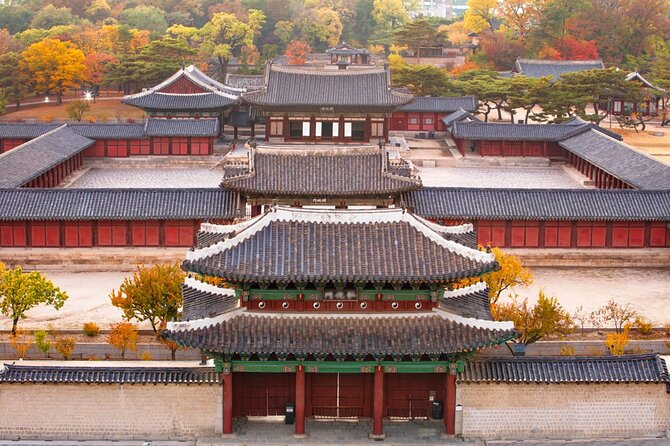
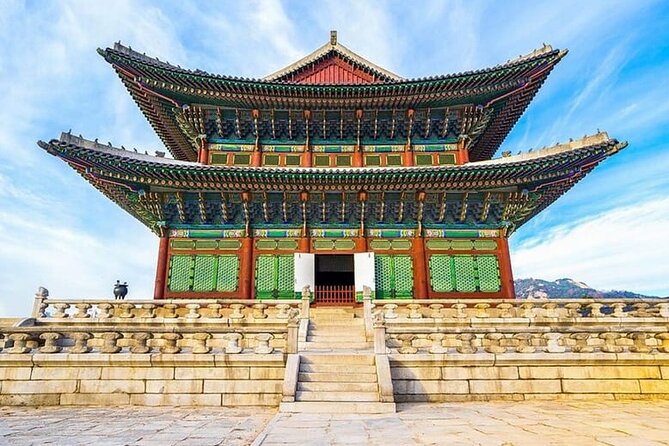
Gyeongbokgung Palace is the natural place to begin if you want to understand Seoul’s royal past. The audio focuses on Joseon royal power, palace design, and the site’s painful history. You can expect commentary that helps you read the courtyards, gates, halls, and formal arrangement instead of simply walking through attractive buildings.
Admission is not included. That matters because the audio can be used outside the entrance, but its full value comes when you are standing inside the palace grounds and can match the explanation to the architecture.
Next comes Bukchon Hanok Village, a historic residential district filled with traditional Korean houses. The commentary explains the basic ideas behind hanok design and how the neighborhood changed into a popular cultural area.
I like this pairing because it moves from official royal architecture to everyday traditional homes. Give yourself time to walk carefully here, since the audio stop is only about 10 minutes and the village is not just a single monument. The supplied plan calls admission free, but you should still remember that this is a living residential area, so quiet behavior and respect for homes matter.
Changdeokgung Palace adds a different royal mood. Rather than focusing only on ceremonial scale, the audio points to the palace’s relationship with nature and its UNESCO World Heritage status. The Secret Garden is the major draw, and entry fees are not included.
If you want the palace interiors or garden, check the timing before you set out. The self-guided format does not protect you from closing hours, and one poor booking experience came from reaching a palace after it had closed. The practical lesson is simple: treat the selected date as the delivery date for your links, not as a guarantee that every attraction will be open at the time you arrive.
Jogyesa and Cheonggyecheon show Seoul’s changing identity
Jogyesa Temple gives the route a quiet pause in central Seoul. The audio introduces Korean Buddhism, temple symbols, and the site’s role in modern Korean history. Admission is free, so this is one of the easier stops to fit into a busy day.
The commentary is useful here because a temple can look simple at first glance. Details in the buildings, decorations, and rituals carry meaning, and a short explanation can help you notice more than the surface color and shape.
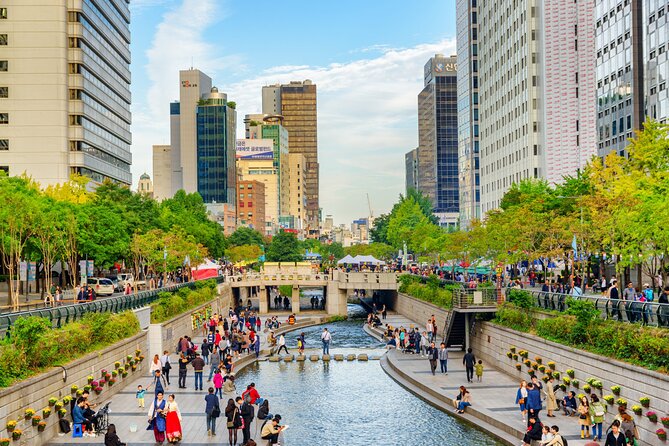
Cheonggyecheon Stream offers one of the clearest examples of Seoul’s urban change. The audio explains how a covered highway was transformed into a public stream and discusses the project’s effect on the city’s ecology.
This stop is especially valuable for visitors interested in planning and city life. It shows that Seoul is not only a collection of old buildings and new towers. It is also a city that has remade parts of itself. The stop is free, but walking between sections of the stream can take longer than the 10-minute audio segment.
DDP and Myeong-dong Cathedral bring design and democracy into view
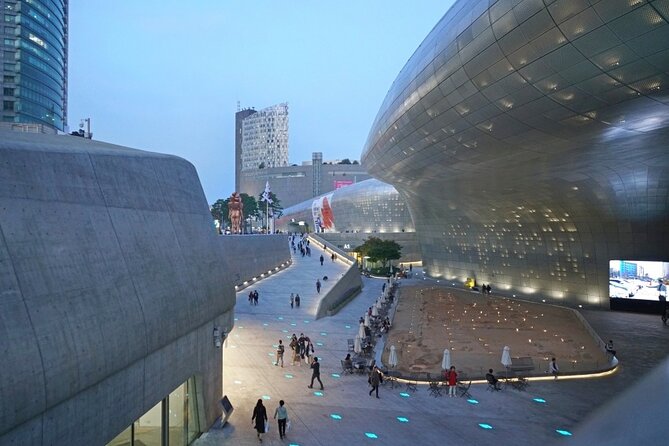
Dongdaemun Design Plaza, usually called DDP, shifts the focus to futuristic Seoul. The audio covers Zaha Hadid’s design, the building’s unusual form, and its role in design and fashion.
This is a good place to hear the commentary while looking closely at the curves and open spaces. You do not need an entry ticket for the basic stop, although any special exhibition or interior program would be a separate matter. The audio gives the structure context, which is helpful when the building itself can feel more like a giant piece of sculpture than a conventional museum.
Myeong-dong Cathedral adds a serious historical note. Its Gothic revival design makes it visually different from the palace and temple buildings, while the audio explains its connection to Korea’s democracy movement.
The pairing works well. DDP represents forward-looking design, while the cathedral connects architecture with social and political change. Both stops are free to visit, and both fit easily into a city day, though you should not assume the 10-minute segment covers every detail of either place.
More Audio Tours in the world
- Barcelona: Sagrada Familia Entry Ticket with Audio Guide
★ 4.6 · 105,312 reviews - Rome: Pantheon Fast-Track Ticket and Official Audioguide
★ 4.5 · 27,353 reviews - Barcelona: Casa Batlló Entry with Self-Audioguide Tour
★ 4.7 · 25,359 reviews - Rome: Colosseum & Forum with Audio Guide App -Optional Arena
★ 4.2 · 24,770 reviews
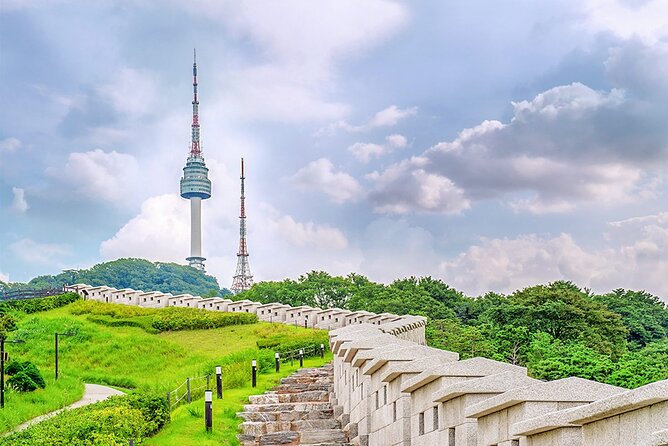
N Seoul Tower and Namsan Park make a natural pair
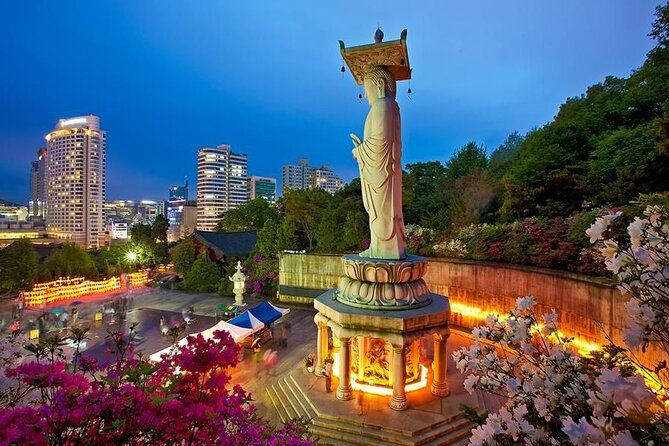
N Seoul Tower offers one of the route’s strongest visual payoffs. The audio covers the tower’s communication role and the love-lock tradition that helped turn it into a popular romantic stop. Admission is not included, and the ascent is an extra cost.
The tower is best treated as more than a quick audio point. The view is the reason to go up, and weather or haze can affect what you see. The guide cannot control those conditions, so check the sky before paying for admission.
Namsan Park surrounds the tower with a green break from the dense city. The audio explains the mountain’s importance in feng shui and its role as a central park.
Since both stops are in the same general area, they make sense together. You can use the audio for the cultural background, then spend more time outside than the schedule suggests. The park itself is free, but do not confuse a free stop with a zero-effort stop. Walking uphill or moving through the park may take more time than the audio plan allows.
Leeum and the War Memorial add art and difficult history
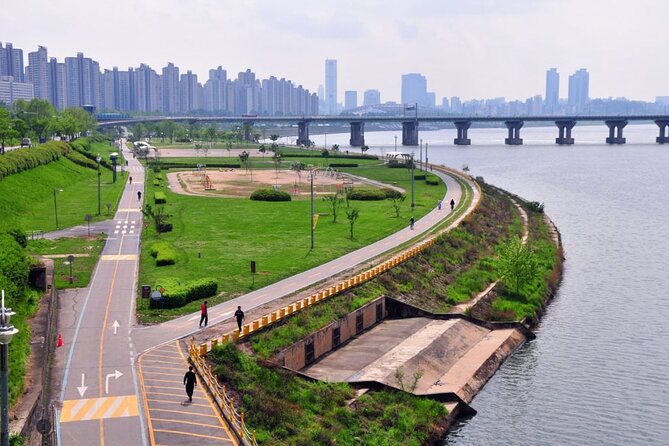
Leeum Art Museum gives the route a strong art focus. Its collection combines traditional Korean art with contemporary works, and its buildings were designed by well-known architects. Admission is not included.
This is one of the stops where a 10-minute audio segment should be seen as an introduction, not a complete museum visit. If art interests you, plan extra time and check the museum’s schedule separately. The audio can help you understand the contrast between old Korean works and newer pieces, but it cannot replace time in the galleries.
The War Memorial of Korea turns to the country’s modern conflicts. Its exhibits cover the Korean War and the continuing effects of the peninsula’s division. Admission is free.
This stop deserves more than a rushed photograph. It provides necessary context for understanding modern South Korea, including the fact that the division of the peninsula is not simply a closed chapter. The audio offers a framework, while the exhibits give the subject physical weight.
The National Museum and Han River widen the picture
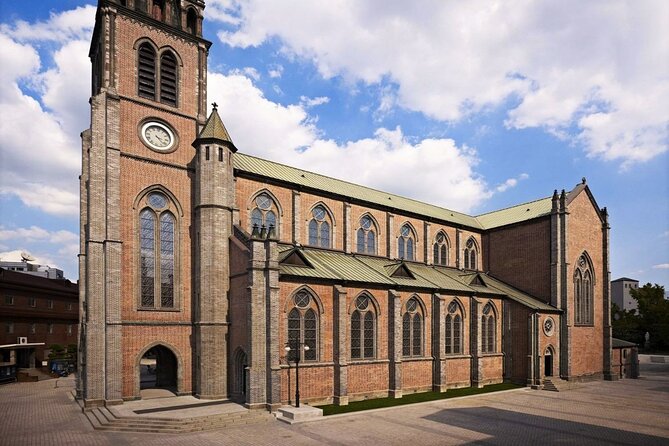
The National Museum of Korea covers 5,000 years of Korean history and culture, from prehistoric periods to the modern era. The audio points you toward important objects and the ways they shaped Korean identity.
Admission is free, which makes this a strong value stop, but the museum is far too large to absorb in 10 minutes. Use the commentary to decide what kind of visit you want. You might listen first, then choose a few galleries rather than trying to see everything.
Hangang Park provides a change of pace along Seoul’s main river. The audio explains the Han River’s role in the city’s development and its place in Korean culture.
This is less about a single building and more about seeing how Seoul uses open space. You can pause here, rest, and let the city’s scale register. The stop is free, though the route does not include transportation, food, or any other personal expenses.
Bongeunsa, Starfield Library, and Seoul Sky finish with modern Seoul
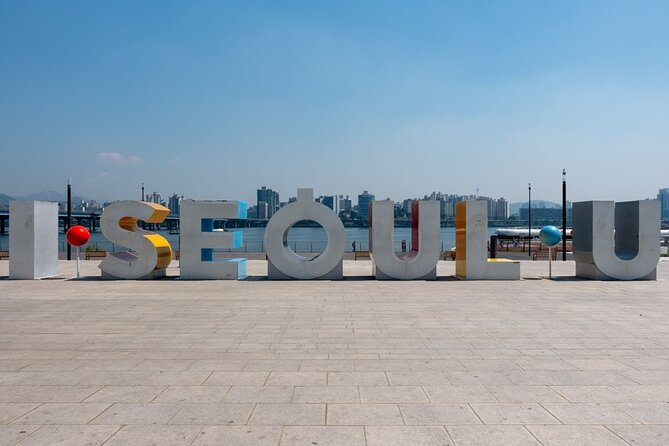
Bongeunsa Temple brings Buddhism into Seoul’s most modern business district. The audio covers its 1,200-year history and its role in the spread of Korean Buddhism. Admission is free.
The contrast is the point. You can move from a quiet temple setting to high-rise offices and major commercial spaces without leaving the same city district. This stop works well for anyone who wants to see how old traditions remain part of daily urban life.
Starfield Library offers a distinctly modern public space inside a commercial setting. Its towering bookshelves and open design have made it a popular photo stop, while the audio explains how literature and shopping are combined in a Korean setting.
There is no admission fee listed for this stop. Expect it to be more visual and social than museum-like. The audio adds context, but you will probably want time to look around rather than simply play the 10-minute segment and leave.
Seoul Sky closes the route at the top of Korea’s tallest building. The audio explains the engineering behind the skyscraper and connects it to Seoul’s rapid growth. Admission is not included.
This is another paid stop where timing matters. The view is the main attraction, and the experience can take longer than the commentary. If you are trying to complete all 16 sites in three hours, this is one of the places most likely to turn the schedule into a race.
Planning the route without a guide
The most useful habit is to group the stops by area rather than blindly follow all 16 in order. The map lets you make that choice, and you can start at any point in Seoul. The description does not provide pickup, drop-off, or transportation, so you are responsible for moving between neighborhoods.
Before leaving, open both links on your phone. Test the SoundCloud page, review the map, and save the attraction names somewhere easy to reach. The access email is promised on the selected date before your starting time, but the experience is not designed as an instant book-and-go product at any hour.
That distinction matters. Someone who booked at 9:50 in the morning and received the link at 1:00 PM had already left a palace. Even though the audio has no fixed entry time, waiting for same-day access can cost you valuable sightseeing time. If you need to begin early, book ahead and confirm that the links have arrived before setting out.
You can also listen to the audio before visiting. That is a smart way to decide which stops deserve admission fees and which ones work well as short outdoor visits. Since the links remain valid for up to six days, splitting the experience is more sensible than cramming every location into one afternoon.
Who gets the best value from this format
I would choose this tour if you like independent sightseeing and want a low-cost layer of explanation. It suits solo visitors, couples, and small private groups who prefer to stop, pause, and change plans without waiting for a guide.
It also works for a first look at Seoul. The route touches enough different subjects to help you decide where to return: Joseon palaces, Korean Buddhism, modern art, the Korean War, river parks, design, and skyscraper views.
I would not choose it if you need detailed directions, a live expert for questions, or a tightly managed schedule. It also is not ideal if you want to tour every museum and paid attraction fully. The audio stops are short, and the city’s distances make the full 16-stop plan ambitious.
The overall score of 3.3 from 12 ratings suggests a mixed experience, and the reasons are easy to understand. The strongest feature is the broad overview and low price. The weak points are delayed access, limited route guidance, and the gap between a 10-minute audio stop and the time needed to properly visit a major palace or museum.
Should you book the Seoul Self-Guided Audio Tour?
Book it if you want inexpensive orientation, flexible timing, and a broad selection of Seoul sights. At $9, it can save you from walking past an important building without knowing why it matters.
Skip it if you expect a person to guide you, if you need automatic navigation, or if you are booking at the last minute for an attraction that may close soon. For the best result, receive the links before you leave, group nearby stops, check opening times yourself, and use the six-day validity to spread out the experience.
FAQ
How much does the Seoul Self-Guided Audio Tour cost?
The price is $9.00 per person.
How long does the tour take?
The estimated duration is about three hours, with roughly 10 minutes planned for each of the 16 stops. Visiting interiors, walking between locations, and using transportation will take additional time.
Can I choose where the tour starts and ends?
Yes. You decide both the starting point and ending point in Seoul.
Is this a private activity?
Yes. Only your group participates, since it is a self-guided experience.
How do I access the audio guide?
You receive a private SoundCloud link for the audio content and a private Google My Maps link showing the 16 attractions.
How long do the access links remain valid?
The access links remain valid for up to six days.
Does the tour provide turn-by-turn directions?
No. The map shows the attractions and connects each point to its audio guide, but it is not an automated navigation system.
Are admission fees included?
No. Entry fees are separate wherever they are required. The listed paid stops include Gyeongbokgung Palace, Changdeokgung Palace, N Seoul Tower, Leeum Art Museum, and Seoul Sky.
Is transportation included?
No. Pickup, drop-off, and transportation between stops are not included.
When do I receive the access links?
On your selected travel date, before your starting time, you receive an email with the two access links. Since access may not arrive immediately after booking, confirm that the email is available before leaving for your first attraction.
Latest audio tours in the world
- Seville Maestranza Bullring Tour with Audio Guide★ 3.5 · 6 reviews
- Seville Scavenger Hunt and Highlights Self Guided Audio Tour★ 5.0 · 5 reviews
- Seville Audio guided walking tour 3h20 and 28 audio commentaries★ 5.0 · 2 reviews
- Royal Alcazar of Seville Entry Ticket with Audio Guide★ 4.0 · 42 reviews
- Seville Cathedral and La Giralda Entry Ticket with Audio Guide★ 3.0 · 9 reviews
- Essential Seville’s Ancient History: An Audio Tour★ 5.0 · 9 reviews
- Seville Cathedral and Giralda Entry Tickets with Audio Guide★ 4.0 · 56 reviews
- Sequoia National Park Self-Guided Audio Tour★ 4.5 · 9 reviews
Self-Guided Audio Tours, compared.
Acropolis Ticket & Optional Self-Guided Audio Tours
Read our review →


Ultimate Acadia National Park Self-Guided Driving Audio Tour
Read our review →

Akrotiri Ticket with Optional Self-Guided Audios
Read our review →