
Reviewed · ROME
Self-Guided Audio Tour – The gods of the Palatine
The Palatine is where Rome’s founding legend takes root: Romulus is said to have established the city here after the story of the twin brothers Romulus and Remus. This 40-minute audio tour turns the hill’s ruins into a myth-led walk, linking imperial palaces with the oldest stories of Rome.
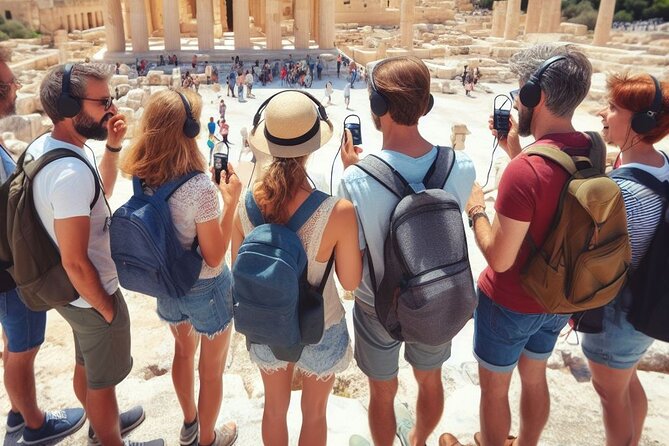
I like the offline chapters and maps, which are useful in a large archaeological area where you may not want to rely on a live connection. I also like the freedom of a self-guided format: you can pause, repeat the narration, and move at your own speed.
The main drawback is important: admission is not included, and you need your own smartphone and headphones. The access instructions also need careful reading, since some people have had trouble finding the correct starting point and one visitor was unable to enter without photo ID.
Key points to know before you go
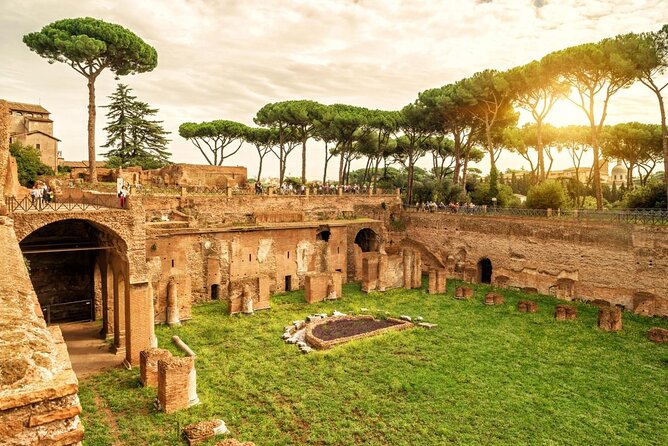
- Romulus and Remus take center stage: The tour connects the Palatine’s ruins to the legendary founding of Rome.
- Domitian’s palace is the main archaeological highlight: Spend time around the Domus Flavia and its former public rooms.
- This is audio only: You do not meet a live guide. The narration is accessed on your mobile device, with Apollo identified as the audio voice.
- Admission costs extra: The $10 price pays for the audio content, not entry to Palatine Hill.
- Download before arriving: Offline access, maps, and repeat listening make the tour easier to use once you are inside.
- Check entry requirements: Bring photo ID and confirm your admission arrangements before setting out.
Why the Palatine works so well as an audio walk
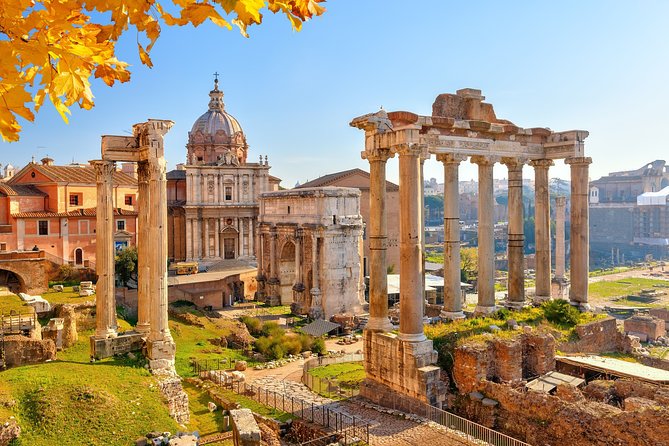
The Palatine Hill is one of Rome’s most important archaeological areas, but it can be hard to read at a glance. You see broken walls, terraces, columns, and wide spaces. Without context, it is easy to walk past a palace room without understanding who used it or why it mattered.
This audio walk gives the site a clear theme. Rather than treating the Palatine as a random collection of ruins, it follows the link between myth, kingship, and imperial power. The story begins with Rome’s legendary founders and moves toward the emperors who later made the hill their official address.
I find that approach helpful because the Palatine is not only about stones and palace remains. It is also about the way Romans explained their own beginnings. The story of Romulus gave the city a heroic origin, while the grand imperial buildings showed how later rulers connected themselves to that past.
The tour lasts about 40 minutes, though you should allow extra time to find the entrance, deal with admission, stop for views, and replay sections that interest you. The audio can be repeated, so you are not forced to absorb everything in one pass.
More Self-Guided Audio Tours in Italy
- Self Guided Audio Tour-Coliseum & the Gladiator’s Legends
★ 3.5 · 49 reviews - The Roman Jewish Ghetto: A Self-Guided Audio Tour
★ 4.0 · 8 reviews - Self Guided Audio Tour with 100 Captivating Stories in Rome
★ 4.5 · 7 reviews
Starting near Domus Tiberiana and the Farnese Gardens
The listed starting point is at Domus Tiberiana, near the Orti Farnesiani on the Palatine, on Via della Salara Vecchia. You are directed to locate yourself in front of the Domus Augustana, while the end point is also listed within the Palatine archaeological area near Via di San Gregorio.
That wording deserves attention. The Palatine has several access points and several important buildings with similar names. Before you arrive, open the map, read the start instructions, and download the audio chapters. Do not assume the ticket office, tourist information office, or a nearby representative will be able to explain the audio tour’s meeting point.
This is not a live gathering with a guide waiting for you. It is a mobile product, so the responsibility for getting to the correct place falls on you. That independence is useful once you are inside, but it can be frustrating if you arrive without a clear plan.
The nearby Farnese Gardens are part of the Palatine’s upper area and help you understand the hill’s later development. The tour’s opening location also places you close to the imperial palace complex, so the transition from Rome’s legendary beginnings to its emperors begins quickly.
Circus Maximus and the scale of ancient Rome
One stop looks out toward the Circus Maximus, the enormous racing venue associated with Lucius Tarquinius Priscus, traditionally counted as Rome’s fifth king. The Circus was built for chariot racing and became one of the city’s great public entertainment spaces.
The value of this stop is scale. From the Palatine, you can connect the hilltop palaces with the broad open area below. The Circus was not a small neighborhood track. Its presence helps explain how Roman public life worked, with huge venues designed for mass spectacle and political display.
The audio’s mythological framing also adds a useful contrast. Rome began, according to legend, with a small settlement founded by Romulus. Centuries later, the city had immense racing grounds and palace complexes for emperors. You can hear that change in the sequence of the tour, even though the physical ruins are often fragmentary.
Do not expect a fully restored stadium. This stop is about understanding the relationship between the Palatine and the Circus Maximus, not entering an intact ancient building.
Domus Flavia and Domitian’s imperial palace
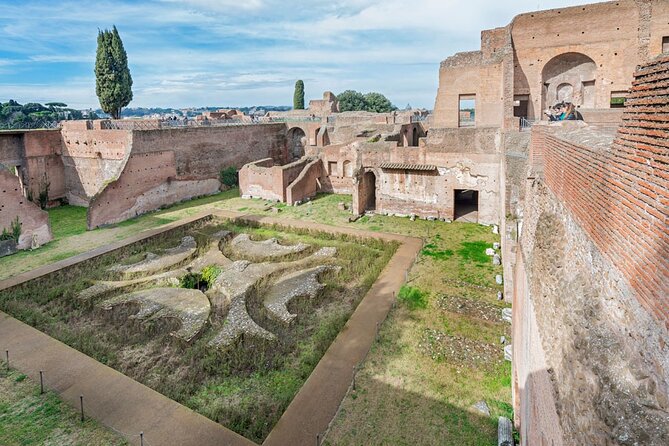
The Domus Flavia is one part of the larger Palace of Domitian on the Palatine. Built during Emperor Domitian’s reign, it served as a formal section of the imperial residential complex.
This is likely the tour’s strongest architectural stop. The Domus Flavia was not simply a private home. It included ceremonial and public areas where the emperor could receive people and conduct imperial business. The remains give you a sense of how Roman power was staged through architecture.
The audio helps you picture a palace that is now mostly open air and broken masonry. The central spaces, walls, and former rooms become easier to understand when you know they belonged to a planned complex rather than separate ruins.
The stop is listed as taking about five minutes, but I would not rush it. Five minutes is enough for the narration, yet you may want longer to study the layout and look across the hill. Since this is a self-guided tour, you can pause without holding up anyone else.
Admission to the Domus Flavia is not part of the $10 purchase. You must arrange access to the Palatine archaeological area separately.
More Self-Guided Audio Tours in Rome
- Trastevere: A Self-guided Audio Tour of Rome’s Medieval Village
★ 4.5 · 3 reviews - Discover Marvellous Rome: Self-Guided Audio Tour
★ 5.0 · 2 reviews - Athens: Acropolis Ticket & Optional Self-Guided Audio Tours
★ 4.1 · 2,542 reviews - Gettysburg Battlefield Self-Guided Driving Audio Tour
★ 4.5 · 910 reviews
Titus’ triumphal arch and the politics of victory
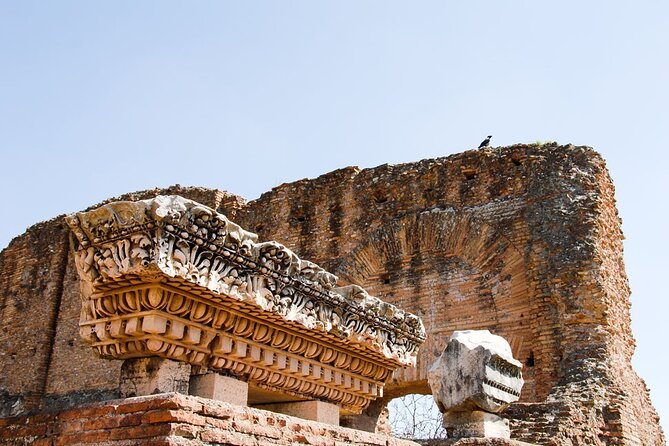
Another stop focuses on a triumphal arch honoring Emperor Titus’ military victories. Its inscriptions and sculptures were designed to make imperial success visible in stone.
A Roman triumphal arch was more than a decorative gateway. It presented military achievement as public memory. The emperor’s victories were turned into a permanent political message, placed where people could see and remember them.
This stop broadens the tour beyond founding myths and palace life. The Palatine was not only where emperors lived. It was part of a city filled with monuments that celebrated conquest, authority, and the emperor’s role as Rome’s leader.
The audio format works well here because inscriptions and reliefs can be difficult to interpret on your own. You may notice the carving first, then understand how the monument fits into Roman ideas about power and victory.
The legendary founding site of Rome
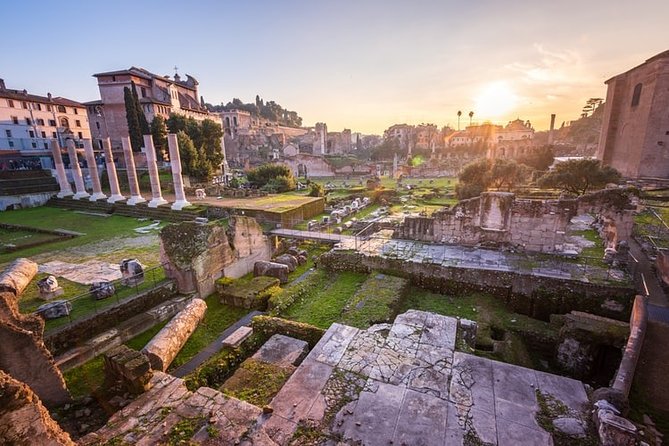
The central emotional point of the walk is the place associated with Rome’s founding. According to tradition, Romulus founded the city on the Palatine and made his home here after the conflict with Remus.
You should treat this as a legendary setting, not a simple archaeological proof of every event in the story. That distinction matters. The Palatine is genuinely ancient, but the story of Romulus and Remus belongs to Rome’s foundation mythology, shaped and retold over centuries.
The audio uses that myth to help you imagine the hill before the imperial palaces. This is one reason the experience may appeal to you if you enjoy stories as much as architecture. The narrator, identified as Apollo in the supplied tour information, guides the walk through a past that mixes tradition, politics, and physical remains.
This stop also gives the whole route its purpose. The later palaces are impressive, but the Palatine became important in Rome’s imagination because it was tied to the city’s first chapter.
Augustus’ former home and the imperial household
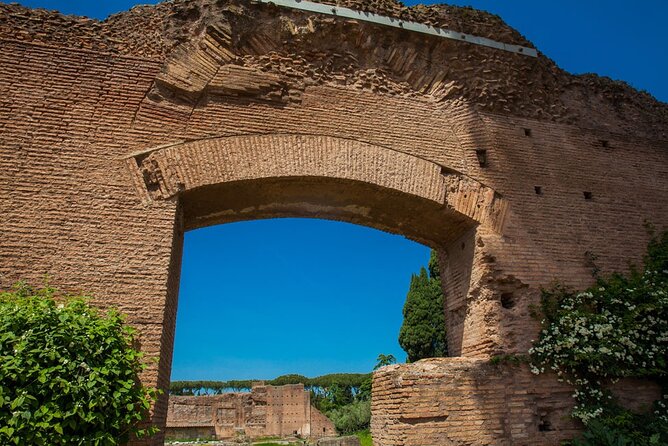
The route also points to the former home of Emperor Augustus. Augustus was Rome’s first emperor, though he carefully avoided presenting himself as a king. His residence on the Palatine helped give the hill its lasting association with imperial power.
The word palace can make Roman imperial residences sound like a single grand building. In practice, the Palatine developed into a broad collection of houses, ceremonial rooms, courtyards, gardens, and service areas. The tour helps you connect Augustus’ residence with the wider imperial complex that followed.
This stop is useful for understanding a change in Roman government. The city still remembered the old kings, but Augustus built a new political system centered on one ruler while preserving the appearance of traditional Roman institutions.
The remains of Augustus’ home may not offer the same dramatic visual impact as a standing monument. Their importance comes from the person who lived there and from the way the residence fits into the wider development of the Palatine.
Public rooms, courtyards, and the life of a palace
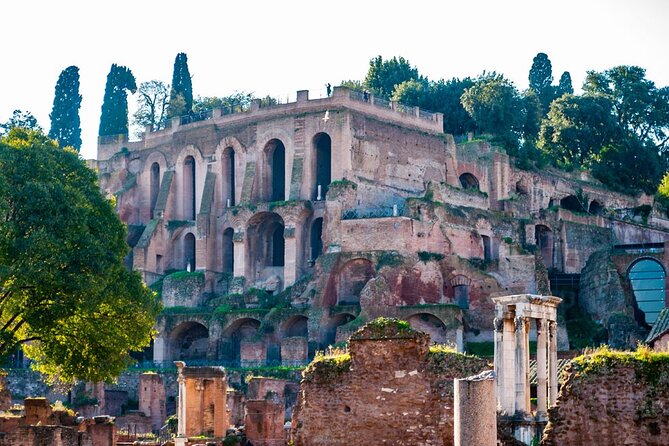
The route includes public areas and a central courtyard from an ancient palace. These spaces help explain how an imperial residence functioned beyond private rooms.
A courtyard could organize movement, bring light into the complex, and provide a formal setting for gatherings. Public rooms allowed the emperor to control access and turn ordinary meetings into ceremonies. The layout itself expressed rank.
I like this part of the route because it shifts your attention from famous names to daily use. Instead of only asking which emperor lived here, you can ask what happened in each space. Who entered? Who waited? Which rooms were formal? Which were private? The audio gives you a way to think about those questions while looking at the surviving walls.
The ruins may require imagination. You will not see a complete palace interior, and the tour does not replace a full archaeological guide. Still, the short narration gives enough structure to make the courtyard and public rooms more meaningful.
What the $10 price really covers
At $10 per person, the tour is inexpensive compared with a private guide, but the price needs to be judged correctly. You are paying for a self-guided audio experience with offline chapters, maps, and Rome tips. You are not paying for admission to Palatine Hill.
That makes the tour a reasonable add-on if you already plan to enter the archaeological area and want more context than the ruins provide on their own. The ability to download the material and repeat it adds practical value, especially if you prefer to stop often or listen to a section twice.
The value is weaker if you expect a complete entry package or personal assistance at the gate. You still need a valid admission ticket, a smartphone, and headphones. Snacks are not included either, though that is easy to handle before or after the visit.
I would think of the cost as a modest audio guide fee, not as the price of a Palatine Hill ticket. That single distinction prevents the most common disappointment.
Mobile use, timing, and the access problem
You need your own smartphone and headsets. Download the chapters before arriving rather than waiting until you are standing at the entrance. Offline use is one of the product’s better features, but it only helps if the content is saved to your device in advance.
The tour is listed as available every day around the clock, but that does not mean admission to the archaeological site is always unrestricted. The operating information shows 24-hour availability for the audio product, while entry to the Palatine remains subject to the venue’s own rules and opening arrangements.
Bring photo ID. One person paid for the audio tour but could not enter because a photo ID was required at the site. The audio provider does not control those admission rules, so you should confirm what the venue requires before going.
The experience is described as a private activity for your own group. In practice, that means you are not joining a shared walking group or following a live guide. You can stop, restart, and listen privately, but you also need to solve navigation and entry questions yourself.
The location is near public transportation, and most people can take part. Service animals are allowed. The hill itself is an ancient archaeological site, so you should still expect uneven outdoor conditions, though no additional accessibility details are provided.
Who will get the most from this tour
I would recommend it most strongly to independent visitors who already have Palatine admission and want a short, focused story rather than a long guided program. It suits you if you enjoy moving at your own pace and using your phone as a guide.
It is also a good match for anyone interested in Rome’s founding myths, imperial residences, and the way political power was displayed through buildings. The connection between Romulus, Augustus, Domitian, and Titus gives the route a useful narrative arc.
Families and mixed-age groups may appreciate the repeatable audio chapters. You can pause when someone needs a break and resume without trying to keep up with a guide.
I would be cautious if you want detailed archaeological interpretation, help finding the entrance, or a person to answer questions on site. The low price comes with less support. The access confusion reported around the starting point is a real concern, so careful preparation matters.
Should you book the Gods of the Palatine audio tour?
Book it if you already plan to enter Palatine Hill, like mythology and Roman political history, and want an affordable audio layer for the ruins. The offline maps, repeat listening, and flexible 40-minute format are useful strengths.
Skip it if you need admission included, do not carry a smartphone and headphones, or want a live guide to meet you at the site. Before paying, confirm your Palatine ticket, bring photo ID, and save the audio content. With those details handled, the tour can give a confusing archaeological area a clear story without tying you to a group schedule.
FAQ
Does the audio tour include admission to Palatine Hill?
No. The audio tour price does not include the admission ticket. You need to arrange entry separately.
How long does the audio tour take?
The tour lasts approximately 40 minutes. You can spend longer at the stops because the format allows you to pause and repeat the audio.
Do I need a smartphone and headphones?
Yes. A smartphone and headsets are not included, so bring your own equipment.
Can I use the tour without an internet connection?
Yes. The purchase includes chapters for offline use, along with maps and tips for exploring Rome. Download the material before you arrive.
Is photo ID required?
Photo ID may be required for admission to the Palatine site. Bring identification with you and check the venue’s current entry rules before visiting.
Can I cancel for a refund?
Yes. You can cancel at least 24 hours before the local start time for a full refund. Cancellations or changes made less than 24 hours before the start time are not accepted.
Latest audio tours in Rome
- Pantheon Skip the Line Entry Tickets with Digital Audio Guide★ 3.5 · 52 reviews
- St. Peter’s Basilica: Dome Climb with Lift & Audioguide★ 4.5 · 13 reviews
- Audio guide in Vatican Museums and Sistine Chapel★ 4.5 · 12 reviews
- The Roman Jewish Ghetto: A Self-Guided Audio Tour★ 4.0 · 8 reviews
- Experience: The Pantheon Audio Tour★ 4.5 · 4 reviews
- Trastevere: A Self-guided Audio Tour of Rome’s Medieval Village★ 4.5 · 3 reviews
- Navova square underground with audioguide★ 4.5 · 17 reviews
- The Colosseum’s Attic with 3rd, 4th & 5th Levels with Audio Guide★ 4.5 · 20 reviews
Self-Guided Audio Tours, compared.
Acropolis Ticket & Optional Self-Guided Audio Tours
Read our review →


Ultimate Acadia National Park Self-Guided Driving Audio Tour
Read our review →

Akrotiri Ticket with Optional Self-Guided Audios
Read our review →
Browse the lists this tour appears in